The horizon is not so far as we can see, but as far as we can imagine

Category: Iran

Short Take on Iran, Russia and the Ukraine: Cui Bono?

~by Sean Paul Kelley

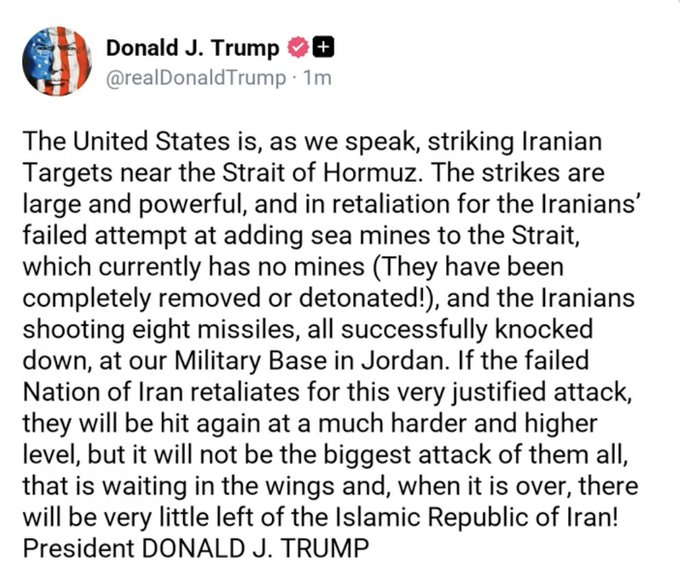
Cui bono? (From the Latin, who stands to gain?) Who benefits from our war on Iran, internationally speaking? And who loses?

First, the Ukraine loses bad the longer the attack on Iran continues, as all the oxygen is sucked into a vortext surrounding the Persian Gulf. All the weapon systems the Ukraine desperately needs are being consumed rapidly over the skies of Iran and the Gulf States. This will undoubtedly hasten the Ukrainian Armed Forces collapse as a meaningful battlefield foe. Score one for Russia.

Second, energy prices will rise, and if the Straits of Hormuz get shut the Europeans will have to re-evaluate their energy supplies vis-a-vis Russia. Score two for Russia. Also, score one for Texas oilmen, who have watched WTI rise from $58 a barrel a month ago to $73.78. Royalty checks be getting phat!

Third, diplomatic pressure will decrease on Pootie-poot and Lavrov due to European energy desperation and all the diplo-oxygen being sucked out of the UN and other multi-lateral forumns, as if a thermobaric bomb went off. This widens Putin’s and Lavrov’s room to manuever even more. It also increases the chance Russia delivers a devastating denouement to the ‘Rules Based Order’ with an unmistakable battlefield victory. As my teachers said about school-yard fights when I was growing up (I went to an all boys school most of my life): you get your ass whooped, you probably deserved it. Score three for Russia.

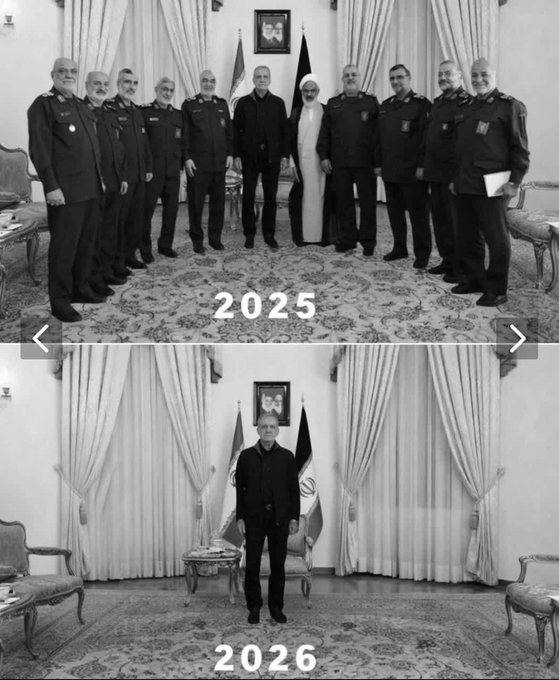
Fourth, with the US murder/assassination of Iran’s Surpreme leader the precedent has been set, nay, locked the fuck in, for Russia to lob an Oreshnik or two Zelensky’s way and damn the consequences. The US could hardly protest. Not with a straight face. Score four for the Russkis.

Not to beat a frog at the bottom of a well, as the Chinese proverb goes, but the Ukraine is the biggest loser thus far and Russia the biggest winner as of today. The Euros are losing as well, but seem determined to snatch fantasy from the maw of reality. Israel is also on the losing end. Have you seen some of the explosions in Tel Aviv? This Iranian strike is positively surreal. Looks like that Israeli Iron Dome has turned into an Iranian Golden Shower.

Then again, if Bibi pops off a nuke or two, all bets are off.

Short Take On Possible/Probable War On Iran

~by Sean Paul Kelley

I don’t know if we’re going to bomb Iran or not. I hope we don’t but hope is not a policy. All I’m left with is my personal experience in Iran and how I go about analyzing foreign affairs.

As many of you know, I’m a realist. Once upon a time, my realism was based on the correlation of powers and what the United States could and couldn’t do with its capabilities so long as they were in line with political adjectives that were achievable.

Today I’m a realist, a chastened realist; more a pragmatist who has withnessed war after war after war lost. I’ve witnessed “Western powers often wage wars disconnected from achievable political outcomes (Afghanistan, Iraq, Libya),” instead of aligning the wars with achievable political aims. You know, the exact opposite of Uncle Carl Clausewitz!

Moreoever, my hardcore realism has ameliorated over the years after several long discussions with Ian. Ian’s never been afraid to upbraid me publicly and privately for my quasi imperial impulses. I’m grateful to Ian for helping me see the error of my ways.

But I digress.

I know for certain two things will happen if we attack Iran.

First, based on my experience in Iran, the Iranians will rally around their legitimate government and support it to the end. When I was there the Iranians were warm and engaging. Even the Mullahs at the mosques we visited. But when it came to the subject of US interference in internal Iranian affairs, all were a unified voice: stay out of our government. Seems like a reasonable request, if you ask me.

Take a close look at the photo. A young couple enjoying pizza with my father and I in 2006. This is who we’ll be kiling. They have faces and names.

Second, we will use an enormous amount of ordinance attacking Iran and leave ourselves even more vulnerable than we already are because we have such a shitty military industrial complex that can’t make anything without a long lead time and shit tons of profits. Our defense industry is dominated by general and flag officers on the grift.

Like I said, I don’t know if we’re just posturing or if we’re really gonna attack.

I hope we’re not but I’m afraid we are.

Nota bene: In the comments Nat mentions a depressing X thread worth a read. But if you really want to be depressed check this X thread out where Col. Wilkerson says, “I think Israel will cease to exist unless Netanyahu does turn to a nuclear weapon or two.”

A Story of Iran from 2006 That Deserves To Be Retold

~by Sean Paul Kelley

This narrative originally appeared in the San Antonio Express News on 3/17/2007, which is no longer online. 

Tehran’s Mehrabad Airport is a cheerless backwater, especially at four in the morning, after enduring a ten hour flight to Amsterdam, a nine hour delay, followed by the six hour flight to Tehran. At this hour clearing customs takes an eternity and the only stimulus in the lonely, echoing arrival hall, other than young female passport inspectors sporting lumpy black chadors and henna tattooed hands, is the faded portrait of the Ayatollah Khomenei grimly staring down at those unlucky enough to remain in the customs queue. But that’s how my pilgrimage to Iran began last October, bone-tired, bleary-eyed and ready for whatever came next.

Then, like the click of a slide show I was off to the golden domes of Qom, through elegant Isfahan, the desolate, ancient beauty of Pasagardae and Persepolis and graceful Shiraz. I dashed across the Dasht-i Kavir desert, passing through Yazd long enough to explore its underground aqueducts. I spent one lonely night in Tabas, Queen of the Desert and then to Nishapur the gateway to Khorasan and Iran’s most wrecked, ruined and rebuilt city, which has survived earthquakes, Scythians, Turks, Mongols and Timurids. It was two short weeks of grasping memories from the jealous clutches of time; three thousand years of culture rushed by me in a blur until I arrived in Iran’s holiest city, Meshed, the chief object of my journey.

Once known as Sanabad, it was here, in 817 AD, that the eighth Shi’ite Imam, Reza, a direct descendant of the Prophet Muhammad, arrived after a triumphant tour of the Shi’a heartland. The Abbasid Caliph Ma’mun, a Sunni, grew jealous of the Imam’s rising popularity and imprisoned him. Fearing the Imam’s growing spiritual authority might mature into something more temporal, something the greedy Caliph could not allow, Ma’mun devised a plot involving pomegranates and poison, which were fed to an unsuspecting Imam who soon fell ill and died.

Immense waves of grief washed over the sands of Persia and the martyred Imam’s tomb quickly became a site of pilgrimage, one that attracted the scattered Shi’a of the Caliph’s far flung empire. Surviving invasions, earthquakes, rapine and ruin, the site, and even the name changed. Sanabad became known as Meshed—‘place of Martyrdom’—and Meshed turned into a booming modern metropolis sitting astride the old Silk Roads, some lead north to Samarkand and China and others west to the Levant and the Italian city states.

I crawled out of the car just as the sun set and walked into the hotel. Members of the Tajik national soccer team milled about the small, two-star hotel lobby; a curious mélange of Tajik, Farsi and Russian filled my ears.

“Passport please,” the attendant asked. I fumbled through my money belt but quickly complied.

I looked up, behind the desk stood a clean shaven young man with slightly receding hair and cheerful, pecan colored eyes.
“American?”

“Yes.”

“How awesome!” he exclaimed in perfect iomatic American English.
“Never met an one of you before,” he blurted excitedly

He came out from around the lobby desk, arms outstretched, exclaiming all in one breath, “This is the best day of my life.”

And hugged me.

After two weeks of kind salutations, warm welcomes and polite, almost infectious pride I still wasn’t prepared for an outpouring quite like this.

“So, now that I’ve hugged a complete stranger, do you have a name?” I joked, awkwardly.

“Amir Isazysadr,” he said, stretching out his hand.

“Sean-Paul Kelley,” I replied.

We shook hands vigorously. Full of contagious enthusiasm, I liked him instantly.

“Why Meshed? It is a big, dusty, ugly city, filled with too many people.”

“Gohar Shad,” I told him, as if in a whisper. “If I’m lucky I will see the Gohar Shad.”

“The mosque surrounding the Shrine of the Imam Reza is splendid,” he said.

“Are you Muslim?” he asked.

“No, I am not.”

“That is a pity my friend, because one pilgrimage to the Shrine of the Imam Reza is equal to 17,000 Meccan pilgrimages, or so say the mullahs.”

Between the late 9th and 14th centuries the area surrounding Meshed witnessed the collapse of the Abbasid Caliphate, an irruption of Turkic hordes into Persia and then the Mongol cataclysm. Through it all the pilgrims returned. Finally, Tamerlane’s son Shah Rukh, who, faced with the growing demands of pilgrims, enlarged the shrine in the early 15th century. His formidable wife, Gohar Shad, ordered the construction of a new congregational mosque around the Imam’s tomb as well, commissioning the Persian architect Qavam al-din Shirazi with the task. In the 1930s the shrine, by now a burgeoning complex in need of restoration, was again enlarged by Reza Shah. After the revolution it was enlarged once more to its present size encompassing more than 75 hectares in the heart of the city.

Since the revolution non-Muslims have been prohibited entry into the Shrine housing Imam Reza’s tomb, but the rules regarding the Sacred Precinct and mosque surrounding the Shrine are more confusing. Some guards let non-Muslims pass. Others do not. Sometimes it just depends on what day one visits. Aware of this maddening state of affairs long before I arrived in Meshed, it wasn’t until the night before my visit that I asked Amir and his brothers, who had come for dinner at the hotel, for help.
“What should I do? I want to get in, but I don’t want to see the Shrine, that would be disrespectful. I only want to see the Gohar Shad.”

“Talk to the guards, express to them your deep admiration for the art of our land,” he told me, winking.

“No,” said Ali, with a strange grin, “it would be best if he said nothing. Just act like an Iranian.”

Adel, the youngest suggested that I hire a local guide, one who might be able to bribe the guards.

“No bribes, not for this,” I replied.

The brothers looked at each other, said something in Farsi and laughed.

“What’s so funny?” I asked.

“You are funny. This is such a serious matter for you. But Ali is right. Just walk in. Say nothing to the guards. Act like you belong there.”

“So, I’ll have to brazen it out, yes?”

They laughed again, as if in on some secret.

“Yes,” said Adel. “I’m certain you will be fine.”

The next day I set off before late afternoon prayers. The walk from my hotel to the Sacred Precinct in the heart of the city was easy. I only stopped once for directions before I arrived.

I crossed the street, dodging traffic, stepped onto the large plaza and strode towards the entrance gates. A large family ambled slowly in front of me, the mother pushing a baby stroller. I followed them closely, better to blend in. A guard waved a security wand over and around me as nervous fear and excitement pulsed through me. He patted me down for good measure and sent me through the gates. Not a word was spoken until I was about ten meters away. I said nothing and kept walking.

Once inside the main gates I took a moment to absorb the outer plaza. Polished and sparkling in the sun the immense outer courtyard was paved in bluish marble. A thick wall of brick geometrical shapes rose up in front of me, not, however, high enough to block out the sun, as I shielded my eyes. Finally, I caught a glimpse of a small passageway, took three deep breaths and walked into the main quadrangle of the Gohar Shad.

For a moment all activity around me stopped. The colors were mesmerizing, as turquoise, pink, purple, yellow and green danced along the walls. Tall bands of ivory white kufic calligraphy topped four high iwans (monumental arches). Arabesques and floral patterns blended into the right angles of the courtyard. A perfect symmetry of light and beauty collided and caromed up and across the walls climaxing in a narrowing pointed arch, its niche filled with deep blue muqarnas. Sitting against a wall in a small niche I watched pilgrims enter the courtyard, hundreds of them milling about under the cerulean sky. Like the sacred spaces of any religion, they all come to participate in something personal but paradoxically bigger than themselves. Perhaps a few came, like me, hoping to snatch a hint of inspiration, to touch the walls and feel the echoes of the past on my fingertips. Or maybe there were others seeking surcease from their own troubles, finding peace at the foot of the Imam’s tomb.

A thick cloud covered the sun while the faint prayers of the devout rose up into the cool air of the courtyard. An inner calm came over me, that wondrous calm which is reserved for the summits of mountains, perfect sunsets and the birth of one’s children.
The call to prayer sounded. Thus, like many other more famous travelers before me, my time was cut short. Out of respect for traditions not my own, I left. I walked back to our hotel in contented silence.

Later that evening I ate a last meal with the Brothers Isazysadr. All three asked me the finer points of certain English words and taught me a few similar Farsi words, but cautioned me not to speak them in public or in mixed company. Towards the end of the night, Adel asked me about my day.

“I hear you made it into the Gohar Shad today, yes?”

“I did. It was worth coming all this way just to have ten minutes there.”

“Indeed, they let many foreigners in at this time, especially Americans. I think the Mullahs are trying to, how do you say it, ‘play nice’ with your government?”

Slightly crestfallen, I replied, “I didn’t know that. I thought I was sneaking in. Like a real adventurer, you know? You three knew all along I would get in, didn’t you?” The table erupted in laughter.

“Sean-Paul, my good friend,” said Ali, “nothing is ever as it appears in Iran. Surely you have learned this by now.”

Apparently I hadn’t. But I was catching on.

Powered by WordPress & Theme by Anders Norén