“The banks, as we know, are centres of modern economic life, the principal nerve centres of the whole capitalist economic system.”
–Vladmir Lenin
Deng had four principles for his changes to Chinese Communism:
- Upholding the socialist road (or socialist path).
- Upholding the people’s democratic dictatorship (originally often referred to as the dictatorship of the proletariat; the phrasing was later standardized as “people’s democratic dictatorship”).
- Upholding the leadership of the Communist Party of China (CCP).
- Upholding Marxism-Leninism and Mao Zedong Thought.
Chinese and American flags flying together
In Marxist thought the capitalist industrial stage is necessary before the final condition of a state completely controlled by the workers, without class.
This is because a significant surplus is required for everyone to have a good life, and it’s capitalist industrialism which creates that.
You can easily create a heavy industrial state in a command economy: both the Soviets and the Chinese under Mao did so. What they could not do was create a state with a lot of consumer goods.
Mao created the pre-conditions: heavy industry, basic infrastructure, and an educated people.
But notice the principles are all “stay socialist and stay in charge.”
The major banks in China are state controlled. The banks that aren’t state controlled are under strong supervision, and in most cases have party members in leadership positions.
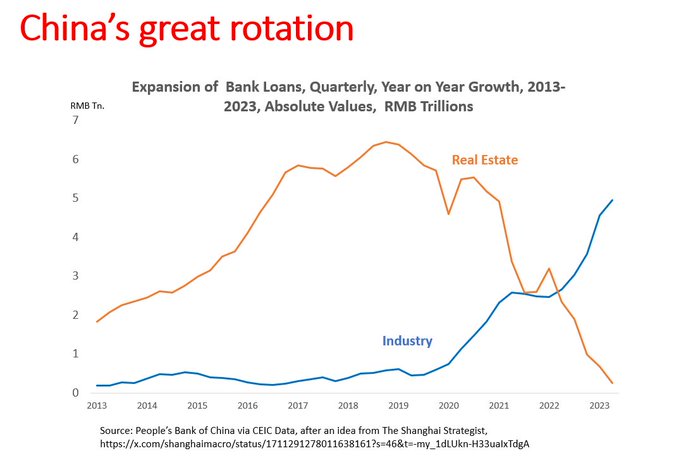
Banks (and various shadow banks in the West) are the main way firms get money. If the banks won’t loan, your business won’t happen or won’t survive. If they will loan to you at preferential rates because you are doing what the Party wants, usually based on the five year plan, then you’ll have a good chance of success.
When I wrote my article on principles for running a left wing government I included taking control of the banks and taking control of media as absolute, immediate, necessities.
China has kept control of both.
This issue became especially urgent after the fall of the USSR and the CPC spent a LOT of time studying why the Soviet Union fell.
But despite Deng’s principles what was happening before Xi was the corruption of the CPC and its mingling with the new capitalist rich: after all, if as a party official you helped a firm, they could kick back to you and you’d get rich. Do enough of this and you could become obscenely rich.
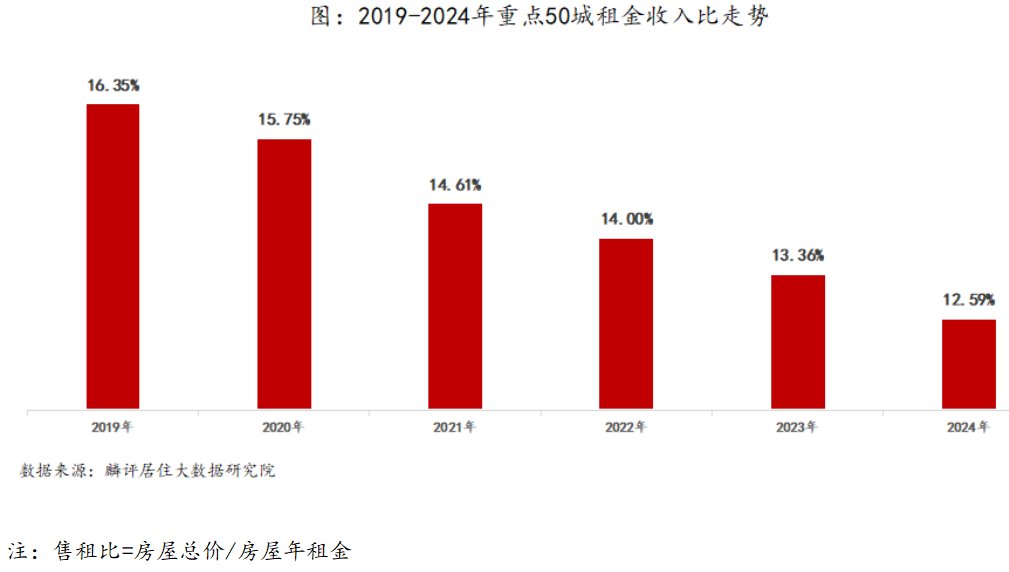
This imperiled all four of Deng’s principles, as decision making around loans and regulation was increasingly made not in alignment with the CPC’s goals, but to make people rich. (One example is the massive housing bubble which Xi has since popped.) This is not the issue the Soviets had specifically, but is related: people with power no longer really believed in Communism or put the Party’s power first. (Gorbachev deliberately removed power from the party.)
When Xi took charge his first and most important programs was anti-corruption. At the time I cynically assumed it was a way of taking out his enemies, and that he would tolerate corruption for his faction.
I was, mostly, wrong. Xi’s anti-corruption is real. He’s a sincere Communist who wants to keep the CPC genuinely in charge and not let it be corrupted.
The goal is simple enough: stay in charge, make China vastly prosperous and transition to full socialism. Markets are useful for this, but must be kept under control or they will take control of the party, and capitalists aren’t going to be committed socialists.
Xi, in this light, is just an extension of Deng: actually making Deng work. Deng’s policies caused rapid technological advance and improved light industry massively, but the principles were not actually being enforced.
Xi enforces them. Not just anti-corruption but changes in how the party recruits and trains and promotes, all intended to keep the CPC on the path to socialism.
Will they succeed? Well the transition will come, if it does, with the next leader, most likely. Xi is putting his successor in a good position. AI and robotics are being directed towards physical activities, there are dark factories with no workers, and so on.
Genuine socialism means people shouldn’t have to work a lot if they don’t want to, and should still live a good life. AI and automation, done properly, offers that possibility.
Of course huge problems around distribution and production remain and will have to be figured out. If China stays the course they’re trying to create something which has never existed: something genuinely new. Westerner’s might call it “fully automated luxury communism” though I don’t know if it’ll get that far.
But the ducks are in a row: massive productive capacity, ways to reduce the amount of workers needed, and keeping control of politics and the economy.
This is the plan. No one knows if it will succeed, but it’s not a stupid plan or one that will obviously fail, IF China can deal with resource depletion, ecological collapse and global warming (all of which it is doing more to mitigate than any other country, though it’s far from perfect.)
China is the future. It’s success or failure will determine what political/economic models are considered usable and successful. The age of liberal democracy is near its end.
What I write here is for the benefit of everyone, but alas, I live in capitalism and I, and the site, take money to keep running. If you value the writing here and can, please subscribe or donate.