The horizon is not so far as we can see, but as far as we can imagine

Category: Russia and Eastern Europe Page 1 of 19

The Oreshnik

~by Sean Paul Kelley

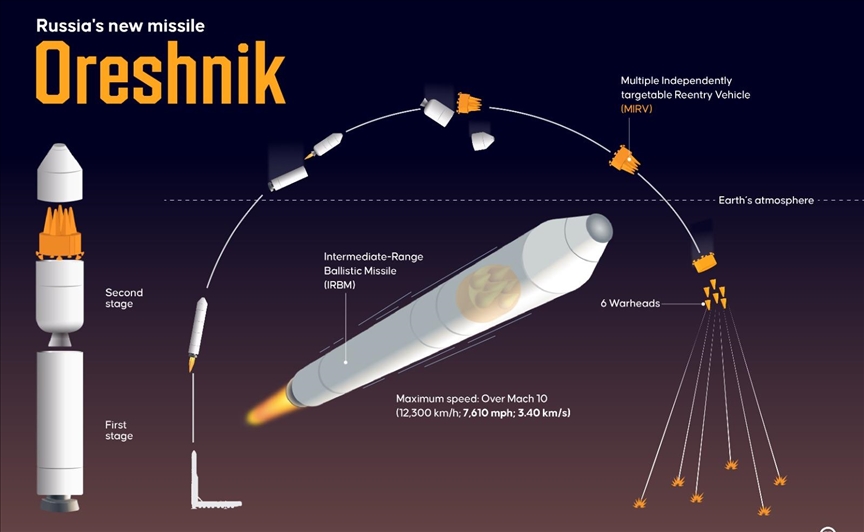
I’ve spoken to a handful of nuclear weapons and arms control analysts/experts and all pretty much agree that the Oreshnik, while a terrifying weapon, is actually a very positive development in regards to making nuclear weapons obsolete. Here’s why: prior to the successful deployment of the Oreshnik, there were only two weapon systems capable of bunker busting crucial enemy C3 nodes: thermobaric weapons, like the US MOAB fuel-air explosive bombs and the Russian Tosochka-2 and Tos-3 Drakon missiles. These weapons are useful for eliminating hardened C3 bunkers/nodes just behind the front lines but aren’t capable of striking hardened intermediate range targets. The only weapon capable of eliminating hardened C3 bunkers deep behind the lines are intermediate range city-busting nukes. Think a nuke that can take out Cheyenne Mt. or its Russian equivalent, or perhaps the NATO C3 bunker in Brussels.

Enter the Oreshnik.

The Oreshnik rarely carries an explosive load. It derives its destructive power from kinetics; physics; sir Isaac Newton’s laws at work. The Oreshnik moves so fast when it releases its MIRVed warheads that it is enveloped in plasma from friction with the air molecules.

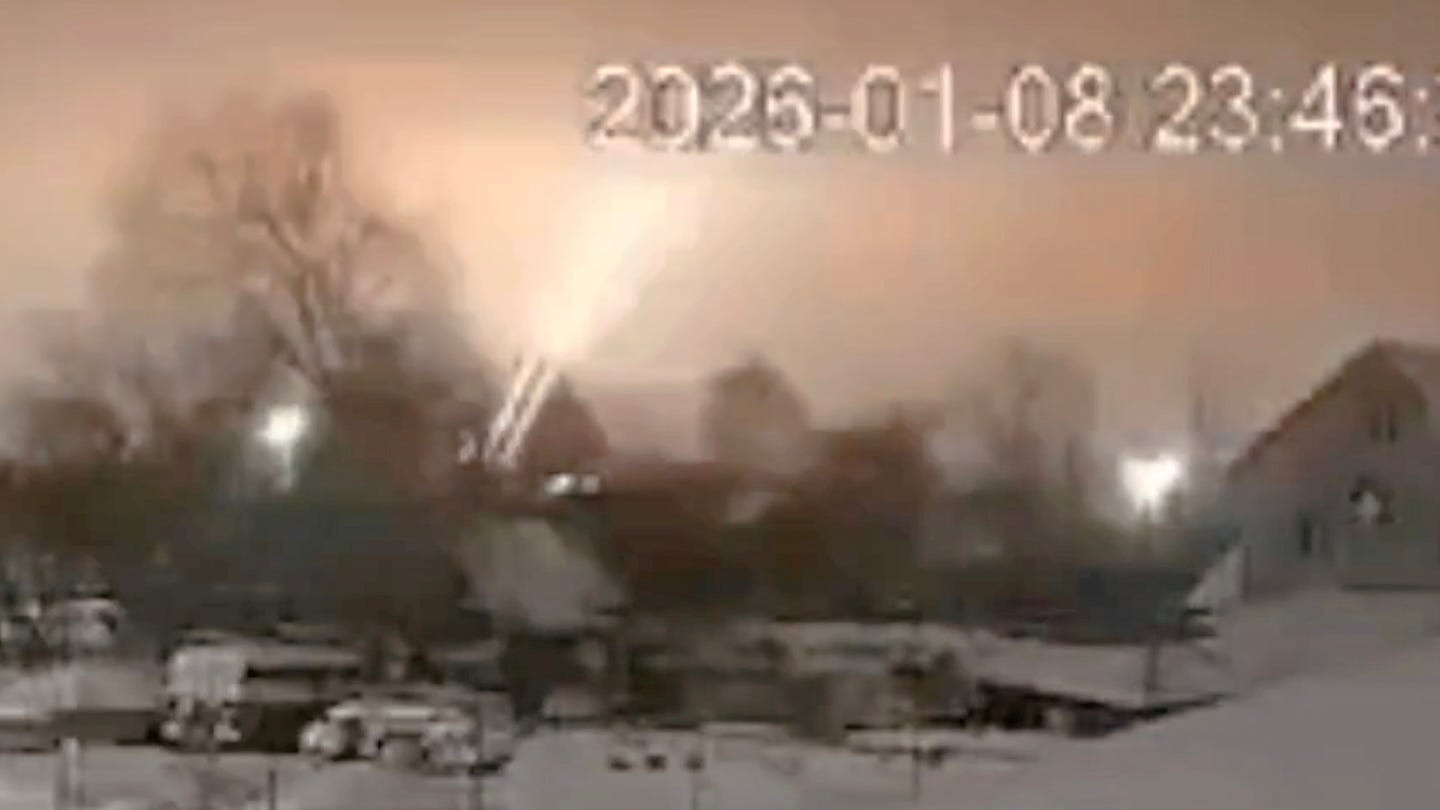
Its warheads separate and move at such a stupendous speed that when they fall out of the sky it resembles a lighting strike. When they strike their target the speed and force is so immense they penetrate up to 150 meters. They leave no impact crater, but the reactive metal they are made of—a Russian state secret to be sure—for all intents and purposes becomes lava, shattering the bedrock, steel, liquifying concrete and discharges a shockwave that eviscerates everything within 300 meters or more.

After this cataclysmic ruination a molten material bubbles up through the point of entry, like a volcano bleeding liquids that were once solid. Such a scene was attested by onlookers in the Ukraine after a 2025 Oreshnik strike on a covert-NATO-Ukraine C3 bunker near Lviv.

It is the Oreshnik’s ability to accurately strike an intermediate range target—accurate to within 5 meters, +/- a small margin of error Mea culpa. The missile is accurate to within 100 meters. I regret the error.—that obviates the needs for city-busting nukes.

Why destroy an entire city to wreck a single C3 bunker when you can preserve the lives and assets of an entire city whilst destroying the C3 bunker with ease?

That’s not to say the Oreshnik is ushering in some new golden age of nuclear arms reduction.

That’s absurd.

But, it does eliminate a great deal of past risk.

And that’s not a bad thing, if you ask me.

Russo-Ukraine War: Strategic Pause

~by Sean Paul Kelley

Amidst the chaos, propaganda, and war porn that is our attack on Iran news of the Russo-Ukrainian war has been hard to come by. One thing is certainly clear after my deep dive into recent developments along the front is that there is a strategic pause on the part of Russia and to a lesser degree that with the Ukraine.

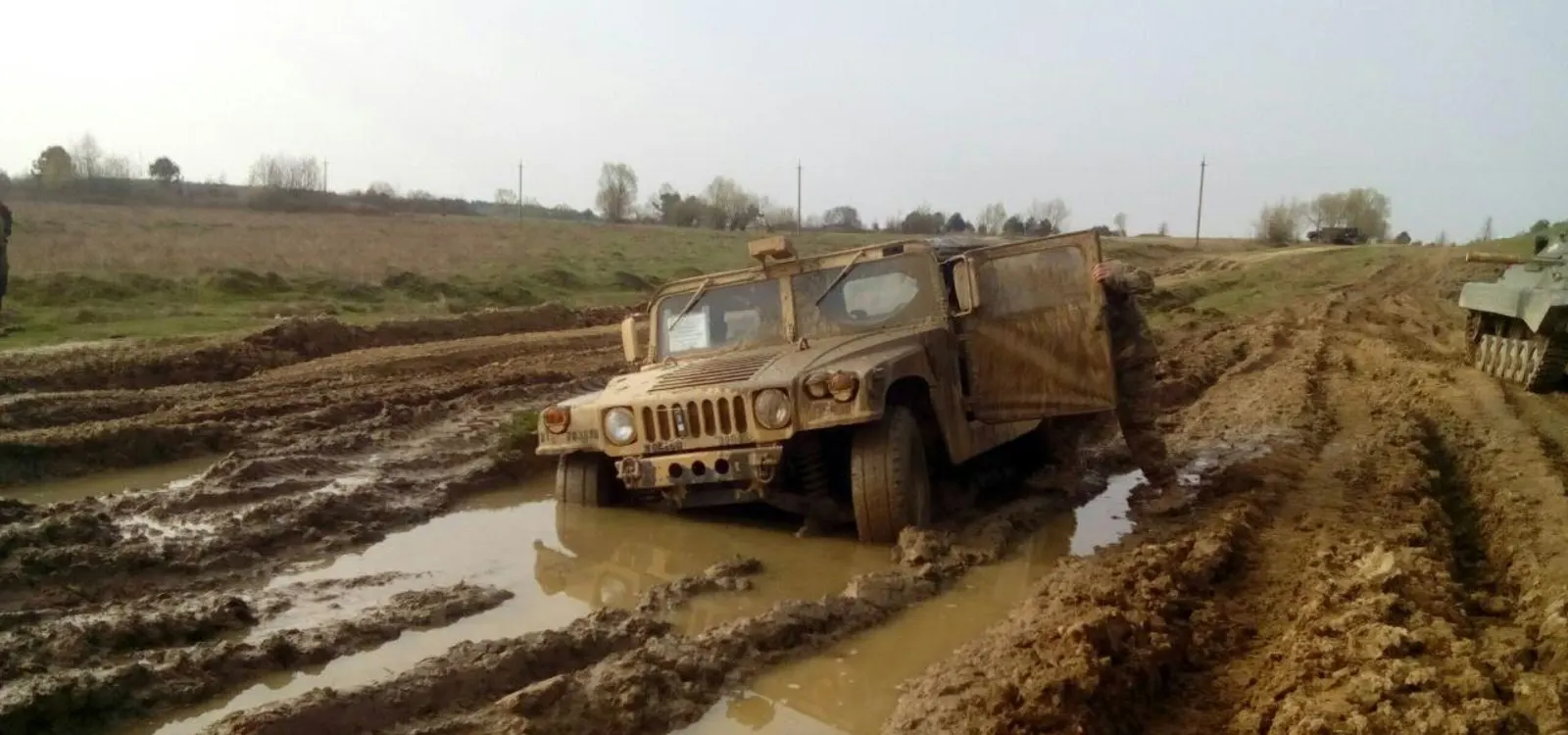
First, the lines have not moved much in the last few months. There are a few reasons for this. One is the Russians are having a tricky time consolidating some of their gains. The reasons for this are two fold: one is it it’s the mud season. It’s rainy and it’s thawing and that is not a good combination for an offensive mechanized or infantry. And two, when your opponent knows the lay of the land better than you do – they are after all fighting in the Ukraine – they take advantage of it. The Ukrainians have done just that.

There’s a bigger reason for the moderate successes that the Ukrainians are having. The Ukraine has ceased launching large offensives– mostly because they don’t have large scale units to launch large offensives with any longer, those units have been attrited by the Russians. The AFU underwent a serious reorganization on operational levels-there are now a handful of semiautonomous Corps running the war. No longer being micromanaged from Kiev makes for quicker decision making and faster counter-attacks.

Considering the Ukrainians know the lay of the land, their drone production has either apparently grown a bit, or it stayed steady because the drone wall has kept the Russians from concentrating their forces. If you can’t concentrate your forces, you can’t pursue a serious offensive. Then again it is the mud season so the Russians might just be consolidating their lines and waiting till things dry up to bring up reinforcements.

As History legends noted in his Q&A yesterday, Russian columns are identified sometimes 10 klicks from the front and the drones descend on them and wreak havoc. Moreover, the Russians had seen a great deal of success sending 6 to 8 men teams to assault Ukrainian positions, but this success has been transitory as of late as the Russians have been sending in teams of 3 to 5 men only to get obliterated by drones. The Ukrainians are making excellent use of first person, drones, and other drones as well.

This aids the Ukrainian small scale counter-attacks. This is smart from the point of view of the Ukrainians having less soldiers. And as I said before they know the lay of the land and they can use the geography to their advantage, mud thaw and all.

The Russians don’t yet have an answer to the wall of drones, but I have heard some rumors that the Russians have developed an FPV drone operated with a fiber optic cable that is automatically reeled out and reeled in like an open face fishing rod. I would certainly like to see one of those because that’s a pretty clever innovation. It would literally be like fishing. You just don’t want to get tangled up in brushes or trees on a tree line, which is where most of the individual soldiers are to be found.

The Russian army, smaller than official Russian claims, but larger by far than that of the Ukraine needs to find an answer to this. I’m extrapolating from some of Legends comments here but it seems to me the Russian answer to the drone wall, which for all intents and purposes equates to short range air superiority, is to find a way to dominate air space between the lines, No Man’s Land, which now stretches some 10 kilometers in places. But that’s a tech issue, not a man power issue, which Russia might be facing in the near future. It makes one wonder if a Russian version of the A-10 Warthog might accomplish under such circumstances? But I digress . . .

Russian official pronouncements say they are recruiting 25,00 to 30,000 soldiers a month. If they were doing that they would have an army of 700,000 men plus on the front lines in the Ukraine. With that many soldiers they could walk over the Ukrainians. But that isn’t the case.

Adjacent to Russian recruits are casualties. Russian KIAs are much less than the Ukraine claims. The most recent transfer of dead bodies between the Ukraine and Russia handled by the Red Cross was 1000 Ukrainian bodies to 41 Russians. That’s a KIA ratio of almost 25 to 1. This occurred on April 9. These numbers, if this ratio holds up, are absolutely surreal. How the Ukraine can continue to fight is a question for historians 100 years hence.

That said on January 29 of this year 1000 bodies were returned to the Ukraine and 38 were returned to Russia. Between December 19 and the 20th of 2055, 1003 bodies were returned to the Ukraine and 26 were returned to Russia. In June 2005 under the auspices of the Istanbul Deal up to 6000 bodies were returned to the Ukraine none were reported to have been returned to Russia.

I’m not accusing the Red Cross of accounting fraud, but the numbers for Russian KIAs have to be larger. If the 41 bodies transferred in January are the result of the capture of Pokrovsk then damn, that’s simply generalship on a galactic level. Alas, those numbers won’t hold up, but if they did that means we’re looking at a ratio of about 9000 Ukrainian KIA to 104 Russian KIA. My guess is it is more like the 12-1 range based on personal observations and conversations with Russians in Russia.

In reality, the Russians are doing a better job of collecting their dead and wounded (and those of their foes). Moreover, as Ian mentioned to me, “doing a better job of collecting dead implies control of the ground where the casualties happen.” That does not bode well for the Ukraine. I hate to make assumptions, but that’s my bet. And they’re using the Red Cross numbers to score propaganda points.

Regardless, I don’t expect to see much movement either way on the front lines– except for a few skirmishes here and there – until the mud season dries up and summer arrives. Then Russia will begin it’s assault on the big banana.


Pokrovsk Has Fallen, Now What?

~by Sean Paul Kelley

With the encirclement of the Pokrovsk-Myrnohrad pocket by Russia now complete, it is only days, a week or two at most, until mopping up operations are complete. This is an indisputable Russian victory, but don’t expect the war to change much. Russia’s strategy of attrition is about incremental gains that create unsustainable enemy losses, not the acquisition of territory. A fact that Western, especially retired American generals consistently get wrong. They expect the Russians to fight like Americans. That’s a terrible assumption to make.

On June 30 of this year I wrote that Russia was beginning its advance on Pokrovsk in earnest.  Now, a lot of Western commentators, like Gen. Keane, have made the claim in the legacy media, along with other retired US generals, that the Russian’s have been bogged down in and around the Pokrovsk area for a year and only have 30-something kilometers to show for their efforts. This is why I cite the above link about the start of Russia’s encirclement of Pokrovsk. American generals obsesses about big red arrows on maps, rapid armor advances taking territory, breakthroughs while Russia’s attrition of Ukrainian soldiers massively degrades the Ukraine’s ability to prosecute the war. US generals, however, display staggering amounts of hypocrisy in discussions about Russia’s massive and successful strategic bombing campaign. Those selfsame generals who cheered American Shock and Awe war porn that dominated the news coming out of places like Iraq, Afghanistan, and Libya. Funny how they now label the same strategy, employed now by evil Russia, as war crimes and focus on Russia’s killing of civilians, which the Russians are studiously trying to avoid and largely succeeding. But I digress.

American generals, think tankers and media personalities are ignorant, be it vincible ignorance or supererogatory, of what a strategy of attrition really is and what it looks like. Here’s the best definition I’ve got for you: using military power to gradually degrade an opponents military resources, i.e. killing as many of your adversary’s soldiers and wrecking as much of his kit as possible and/or breaking his will to fight. Nowhere in the generally accepted definition of attritional warfare does it say a word about occupying as much land as possible. That comes later. Much later.

With Pokrovsk surrounded what should we expect from the Russians? The landscape west of Pokrovsk is mostly open fields for many, many kilometers, with few tree lines, villages or ravines for Russian forces to utilize for an effective defense against the Ukraine’s drones; hardly an ideal landscape for attritional warfare. In fact, with the Ukraine’s ability to manufacture drones still intact it would be a killing field, littered with Russian armor, APCs, infantrymen and anything else the Russians might send into the open.

Make no mistake, the Russians are going to have to march across the landscape west of Pokrovsk at some point, but I posit the following near-term moves by the Russians. I’ll follow up with some developments I expect later in 2026.

First, Russia will continue encircling other salients, or cauldrons as the Russians prefer to call them, they appear to be enveloping, like the Kupyansk-Senkove salient or the potential envelopment of Konstantinivka. These areas offer excellent defensive positions and landscapes for Russia’s small-teams based attritional style of attack along the line of contact. It begins with artillery and/or missile bombardment, small teams then attack and destroy Ukrainian positions, kill or capture soldiers, retreat, then let the Ukrainians return. Rinse and repeat with drone coverage dominating overhead and you’ve got a style of war that chews up time like Andre the Giant hoovered up food at all you can eat buffets. It’s efficacy is not in doubt so long as you understand Russian strategy. If you’re ignorant of it, well, then you are expecting a big armored break-out after Pokrovsk, which won’t happen, because that’s not how Russia is conducting this war.

Second, Russia will consolidate its gains in and around Pokrovsk, after the Ukrainian soldiers in the pocket are killed or surrender. For some time after I foresee Russia utilization of tactical defense within an offensive framework, much like what American generals called the strategic defensive during our Civil War. In essence, at first they’ll capture positions, then dare the Ukrainians to take them back by appearing weak, digging in, rotating out tired soldiers, and firming up logistics. Subsequent Ukrainian attacks lead to mounting casualties. Then do it again.

In the context of capturing Pokrovsk, Russia will continue targeting the Ukraine’s industrial base, especially drone manufacturing sites. And it will hammer the nearby cities of Kramatorsk and Slovyansk with drones, missiles and FAB glide bombs, but it will be some time until Russian ground forces are within reach of mounting an attack on either city. Much will also depend on how well the Ukraine’s armed forces perform.

In war your opponent gets a vote on whether you succeed or not. Will the Ukraine’s armed forces hold up or might we see a general collapse in 2026? The Ukraine is now engaged in the widespread press ganging of men to fight on the front, reports this story at Responsible Statecraft. Some of the men press-ganged into service have reportedly died from blunt-force trauma, after beatings with iron bars and one young man died from injuries sustained attempting to jump out of the vehicle he’d been forced into. Most of the ‘busificaiton’ as it is euphemistically called has taken place in 2025 and thousands of such videos can be found here, proof that the Ukraine’s manpower shortages are growing to crisis levels. Such activities by Ukrainian recruiters also bodes ill for the armed forces, and adjacently indicative of the efficacy of Russia’s strategy of attritional warfare. Although press-ganging is not something Russia directly influences, it’s a clear symptom of the unsustainably large amounts of casualties the Ukraine has and continues to sustain.

In the near-term expect the war on the ground to continue as it has since 2023. Russia will grind it out, slowly and patiently. I always find it laughable when commentators claim that hardliners in the Kremlin are chomping at the bit for Putin to launch a massive offensive. This is stupid, Western group-think. Why is it so hard to understand that Russians are naturally endowed with a deep well of patience to draw upon? Especially Putin. That is not to say there will be no fireworks in the near future. But they will be arriving from a different direction than Russian soldiers will. They will come from above.

A near-term imperative for Russian forces is a way to achieve drone dominance along the line of contact. Russia has, by and large, achieved a hybrid-kind of air superiority. This has largely been achieved by its manufacturing prowess, producing, according to some sources, nearly a thousand Geran-2 drones a month. One report dated this September describes a new jet-powered version, the Geran-3, that is operational, largely resistant to electronic warfare and can be fitted with a 90 kilo thermobaric warhead, making them extremely lethal, inexpensive and plentiful. Russia also manufactures and utilizes on a daily basis hundreds of Gerbera decoy drones. By using the Geran-2 and 3s in conjunction with Gerbera decoys and higher value missiles like the Iskander and the hypersonic Kinzhal the Ukraine’s ability to mount anything approaching an effective air defense is nullified.

Achieving drone superiority over the line of contact is another matter altogether. The Ukraine can still manufacture enough FPV drones to give the Russians pause, forcing their continued use of small-teams to attack, destroy and then retreat. But, the Russian’s are innovating. For example, there are recent reports of the deployment of a mother-ship drone with two FPV drones attached with fiber optic cables. The mother ship drone flies at altitudes above the FPV’s alleged EW bubble and by connecting its two FPV drones via fiber optic cables achieves complete EW avoidance. While not a game changer, widespread deployment of such drones would make the war that much more difficult for the Ukraine to prosecute effectively.

Pokrovsk is a major victory for Russia, a significant morale booster for the troops and those on the home front and proves the efficacy of Russia’s strategy of attrition. But don’t expect much to change after Pokrovsk. It’s a loss for the Ukraine. The question, how big of a loss? How many troops died or will be captured once the pocket is completely mopped up remains the most important variable of the battle; how badly will it effect the Ukrainian armed forces morale is what bears watching, by Putin and Zelensky alike.


The New Cold War Is Taking Form

We’re near the end of our fundraiser, and now about $1,100 out from our fundraising target. If you read regularly and value the site and have the money to spare, please consider subscribing or donating. Over 10k people read this site every day, and it’s free, but it and Ian do take money to run. Huge thanks to all who have given so far, a number which is now slightly over 100 people.

This speech by Russian Secretary of State Glazyev is important, and underlines how the days of dollar hegemony are close to an end:

“The easiest way to stop the arms race is by ceasing the use of NATO countries’ currencies,” he stated unequivocally. “Because to the extent that we use the dollar, euro, and pound, we finance their defense expenses.”

He provided a staggering figure: “The total volume of [Western] monetary issuance last year was five trillion dollars. Of this, two and a half trillion dollars is what the Eurasian states, among others, have taken on. If we stop using these currencies… we will practically halve the financial potential of the global hybrid war.”

“In the US, their satellites have completely destroyed international law… The World Trade Organization is not functioning, the norms of the global financial system are violated, and the generally accepted norms of business ethics are ignored,” he said, endorsing the Belarusian-led “Charter of Multipolarity and Diversity” as the ethical alternative.

He announced concrete steps to build this new system, revealing that work is “already underway to create a large social network that would unite hundreds of millions, maybe billions of citizens, who are ready to adhere to traditional norms, ethics, and follow their commitments.”

But it’s not just about money. For example the Power of Siberia pipeline means more than a hundred billion cubic meters of natural gas, which once went to Europe, will now go to China. Europe gets to buy much more expensive American natural gas. African countries are kicking France and the US out, ending their base leases, at an increasing rate, and from Japan I read:

Japan must stop importing liquefied natural gas from Russia. It means developing alternative energy sources, including the restarting of nuclear power plants.

Even as the G7 countries are stepping up sanctions against Russia, Japan finds itself in the position where it is now procuring just under 10% of its LNG from Russia.

However, there is a chance that Japan will not be treated as an exception. US Secretary of the Treasury Scott Bessent has said that he is “expecting” Japan to cease energy imports from Russia.

Japan’s public and private sectors need to prepare to ensure that LNG availability is not disrupted.

Japan does roughly equal trade with the West, and with BRICS, with about a 2% edge to BRICS. This is a terrible position to be in, though I’d suggest that going with the rising powers rather than the falling ones is the way to go.

The problem is that America is forcing nations to choose. Playing both sides: trading with both, may not be possible going forward. There will be two payment systems, so simple financial sanctions won’t work, but other types of market controls like tariffs and import/export controls have come roaring back into use.

Trade that can be cut off or curtailed at any point, apparently arbitrarily, can’t be counted on. When one looks at America and China’s strategy, China’s is mostly “punch back”. They rarely initiate sanctions except in cases where a country chooses to side with Taiwan. America, on the other hand, is… erratic. One can’t make plans, because one never knows when the rules of trade may change.

This is another reason why I think joining BRICS and that trade bloc is the sensible move. The old “rules based order” as Glazyev has pointed out, no longer exists in practice: the rules change at a whim and aren’t fairly enforced. While this was always true to some extent (Canadians remember how the US just ignored rulings against it on softwood lumber) it has become so common that the rule is now “whatever the US wants, and who knows what that will be tomorrow?”

America is trying to force a clean split into two blocs. But the other bloc is richer, more trustworthy and arguably stronger. And if it isn’t stronger yet, it will be in a decade, guaranteed.

This also relates to America’s actions in South America, an attempt to try and keep the America’s “American”, which is bound to fail. But as the declining power America wants to use its military force while it still has local superiority and before China and Russia can sell or give local nations enough weapons to become effectively immune to US force.

This process is the culmination of one of the major themes of my writing for almost a quarter century. The US era of sole supremacy has now ended. It can no longer force China to do what it wants, and it can’t even keep the sea lanes open, as Yemen has proved.

The old era is dead. There will be a brief period of co-equality, then America and Europe will fade into has-beens. I thought at one point we might have a new real cold war. We will, but not for very long. America isn’t going to be as strong as the old USSR, it won’t be able to hold up its end, and its current policy is to bleed its vassals, especially Europe, white. That will make them virtually worthless as vassals and will most likely lead to a revolt sometime between ten and fifteen years from now, as the European standard of living collapses under de-industrialization and without its sub-vassals selling it under-priced resources.

Centuries of Western rule of the world are coming to an end, and the Middle Kingdom is resuming its accustomed role as the most important country in the world. It’s a fascinating change-over to live thru, if not much fun if one lives among the Golden billion, who are being demoted  to the Bronze or perhaps Copper billion.

The Tiny Dictate to the Large

After reading this article at @RStatecraft by @connor_echols I am more convinced than ever that admitting the Baltic States into NATO was the biggest mistake NATO ever made: three miniscule states with three tiny militaries dominate policy yet contribute nothing but acrimony and accusations towards Russia. 

Just read the stridency of their claims towards Russia. Former Latvian PM: “Putin acts the way he acts, and the only options for the West are either to submit or to resist.” Or the present Estonia FM: “Russia’s war against Ukraine is driven by one thing and one thing only: its refusal to accept the Soviet Union’s collapse and its unrelenting imperialist ambitions.”

It’s our annual fundraiser. We’ve raised a little over $7,620 from 65 people in the last twelve days, out of our goal of $12,500. If you’re a regular reader and can afford to support our writing, please subscribe or donate. Over 10,000 people read every day, but without those who give the site would not survive.

Look, I get the Baltics are paranoid about chimerical Russian irredentism towards the three republics. NATO can’t and shouldn’t allow alliance policy to be dictated by its three smallest members, who are tiny, paranoid and are lead by some critically undereducated fools, like Kaja Kallas, who said, “Chinese are very good at technology but they are not that good in social sciences . . . . The Russians… are not good at technology at all, but super good in social sciences.”

I’ll let that one go without comment. The bottom line is tiny states are dictating the policy of huge institutions and nations, just take a look at how the Israeli tail wags the American dog.

We’re supposed to make peace with enemies, folks, not friends.

Dialogue is essential more than ever. Not paranoia.

It’s Our Annual Fundraiser. If you read us a lot, please Subscribe or Donate.

Bad Faith and Criminality

~by Sean Paul Kelley

In the aftermath of the 1905 Russo-Japanese War, US president Teddy Roosevelt brought together negotiators from Russia and Japan to hammer out a peace. This was the first time the US was ever seen as an ‘honest broker’ in international relations. In 1919 President Wilson sailed to Paris with his 14 Points doing his level best to get the Europeans to negotiate an honorable peace. The wily Europeans outfoxed the rigid and moralizing Southerner in just about all the negotiations. Nevertheless, the US retained the aura of ‘honest broker’ until this century. I can’t say exactly when we lost it—probably when Colin Powell lied to the UN in testimony before the Second Iraqi War—but lost it we did. Somewhere in there we lost the aura of exceptional power we possessed by pissing away a metric shit-ton (yes, an American who can do metric!) of blood and treasure in the sands of Iraq and mountains of Afghanistan—and with that loss, we shot whatever credibility we retained right in the foot. But those, shall I say, are different discussions for a different day.

Lost auras being the one thing—at least we still got a chakra, right? (Ugly and poisoned though it may be.) It’s the second thing that grates the teeth at night: an everlasting chronicle of bullshit deeply eroding any sense of diplomatic norms that’s transfigured us into OG rogue nation. So, grab some popcorn, rewind the Wayback Machine and head back to 2014 cause I got a whopper to tell you.

It’s late summer of 2014 and a brushfire war is simmering between Russia and the Ukraine. The US and its European allies are eager to see the Ukraine join NATO. They bring Russia and the Ukraine together and pretty much force feed them the Minsk Accords. Then, over the course of the next eight years the NATO allies string the Russians along encouraging the Ukraine in its ever persistent demands to renegotiate the Minsk Accords.

Nota bene: yes, I write it as the Ukraine. I know the Ukrainians desire their benighted lot to be call Ukraine.

Do I care?

Not one iota.

It was always called the Ukraine—I mean, the Russians use the partitive genitive (don’t ask) when describing the Ukraine as a nation—and it will ever thus be called the Ukraine.

Now, it took the Russians—rarely gullible—a long time to figure out our stunning acts of “bad faith.” But “bad faith” it was. The US and its European allies had no intention of ever compelling the Ukraine to live up to its international agreements with Russia. They were only ever playing for time, waiting for the day they could present Ukrainian membership in NATO as a fait accompli, hoping for a démarche, a dénouement. Damned if we got war in its place.

But the forever-war nation ain’t gonna let a little war-war stop it, no, no, no! Once America sets a precedent it’s game on, bitches! So, in late May-early June 2025 the US negotiated directly with Iranian diplomats signaling that no military action was imminent. While negotiations were held, the US and Israel agreed on America logistical support for an Israeli attack on Iran. A week after Israel launched its first strikes against Iranian nuclear sites, the United States followed suit. Not only is this acting in “bad faith” it’s outright deceit, a line no nation should ever cross in the conduct of negotiations. It’s one thing to bring two sets of instructions to negotiations, one always needs a fall-back position. But deceit? WTF?

Twice then, the US has acted in “bad faith.” It’s at number three when the wise recognize a pattern, three also being proof of outright illegality in the conduct of international affairs, at least according to international and domestic law. So, there is that, you know?

Domestic law, you ask? How so?

“Young grasshopper,” says Master Po, “sit and I will tell you.” (Anyone who gets the reference wins a cookie.)

Treaties signed by the United States and ratified by the Senate are, in accordance with the 1920 Supreme Court ruling Missouri v Holland, the supreme law of the land.

Skeptical-like, you query, “what treaty did we violate, Sean Paul?”

Easy, the 1961 Vienna Convention on Diplomatic Relations. This treaty enshrined, in international and domestic law, a norm of diplomacy dating back 575 years to the city-state of Milan and its then ruler Francesco Sforza—a norm, or custom only violated three or four times in the last century it’s so sacred. So basic, so important is the principle of the personal sanctity of the negotiator, aka the diplomat, that it is respected by every nation on the goddamned planet.

It is the singular, fundamental law of diplomacy from which spring all the other elements of reciprocity evident in the conduct of international relations. And in typical American fashion, just days ago, we nuked that norm into oblivion when we in concert with Qatar and Israel arranged for an attack on credentialed Hamas negotiators.

I don’t have anything else to add except a few questions. Why would any nation enter into negotiations with us ever again? Who would be that stupid and reckless? And what, if anything, can ever be done to regain international trust? What I’ve detailed are fundamentally outrageous betrayals of diplomatic norms, norms developed over 500 years ago and used for centuries.

It’s not rocket sceince. Hell, it ain’t even algebra. Christ, it’s more basic than fractions. It should be easy to comprehend. And the behavior is so fucking counter-productive I would expect even the stupid to fathom.

I would be wrong.

P.S. And consequences,those things be bad, like ju-ju bee tree bad shit. Didnae take long, aye?

P.P.S. Oh, and by the way, this leads directly to the massive diversification away from petrodollar settlements, which gets us a fuckton closer to the end of the dollar as global reserve currency. That’s going to be one serious painful adjustment for Americans to make, domestic production notwithstanding.

If you’ve read this far, and you’ve read some of my articles and most if not all of Ian’s, then you might wish to Subscribe or donate. Ian has written over 3,500 posts, and the site, and Ian, need the money to keep the shop running. So please, consider it.

Four Randon Econonic, Political, Geopolitical and Scientific Musings

First economic: The US dollar is down 5% over the last six months against a basket of currencies. And over the past year, it’s lost 9.6%. The biggest winner against a dollar has been the euro which has gone up 13% however, which truly is a win for Europe because it makes their natural gas imports from the US less expensive. But their natural gas imports are still a poison chalice. Expect the dollar to continue its slide, perhaps precipitously at some point in the New Year.

There were large moves out of US equities in the spring confirming the adage “sell in May and go away.” What September will look like is anyone’s guess, especially as Israel is more than likely to start the second phase of its war against Iran? Or October—that worst of months for Wall Street? What happens if Iran closes the Straits of Hormuz and oil goes above 100 dollars a barrel? That would be great for oil producers, but it would be terrible for markets across the globe, even China, possibly leading to a worldwide recession, especially with Chinese growth being somewhere between 4% and 5% at present.

Regardless of what happens in September or October—both always being bad month’s economically for the US economy, America’s bond market and the value of the dollar will continue its downward trajectory because America’s lenders are now demanding gold for loans instead of treasuries. This smells to me like the beginning of the end of dollar hegemony.

It makes me wonder what kind of “store of value” the BRICS will adopt to support their currency? Will it be a basket of their currencies? Will it be backed by gold and petroleum? That would be truly hard-core, because it would mean we were in for a long era of tight money. Our entire lives, actually, the entire history has been based on easy money. And as you know money creation is only possible when using a fiat currency.

There are many ways to imagine what they’ll do. Maybe blockchain? Who really knows? But there are other commodities that do have a store value, silver among them, maybe even rare earths and others they could use. It certainly is an interesting time to live.

Second domestic political: Niall Ferguson in his interview by Charlie Rose posted a week ago on the Internet was asked about Trump‘s challenges of outright ignoring the constitution with the following question: are we the Roman Republic, is this or are we witnessing the collapse of the constitutional order like the Roman republic. Rose asks if Trump is Augustus. He clearly is not. I would say that Trump is more like Marius and the Kennedys were more like the brothers Gracchi. In fact, I made this argument on a graduate school paper that I got a very good grade on, but in which my professor seriously disagreed with my analogies. Regardless I would say that we are at the beginning of the end of our constitutional order, and that we are looking down the barrel of Caesarism. It’s on the way. Maybe two years, maybe four years but it’s coming. Will it be a general? Will it be a politician? Those are questions we simply can’t answer. But as Ian Welsh has consistently predicted America is heading for a collapse, be it constitutional or economic or both it’s gonna happen and there isn’t anything anyone of us can do about it. Besides, Ferguson, while whip-smart, is kind of a tool.

Third is about some weaknessess the SCO currently must contend with if they are to become the anti-NATO military block. Here they are in no particular order of importance: One, the nations that make up the SCO are too diverse and often times their interests do not align with everyone in the SCO. For example, China and India have serious border issues. Pakistan and India have serious issues in Kashmir. Those are just two examples of several potential conflicts between members of a block, supposedly to oppose NATO. The issues between Pakistan and India make the intra-NATO issues between Greece and Turkey look like a family arguement on Thanksgiving.

Second, as the former director general of Russian international affairs Council said in a recent interview, “ the mandate of the SCO is too general.” The SCO can focus on security, development, or terrorism. Not all three.

Third, China is by far the most powerful member of the SCO and that creates a dangerous asymmetry in the organization. Much like the United States dominated NATO for so long and skewed it’s purpose after the Cold War for its own unfathomable means.

Fourth: This essay on the relative merits of “Superradiance,”.  Is well worth the three minutes it will take to read, plus it is comprehensible to the layman. The essay describes Superradiance as “a collective quantum optical effect in which a group of emitters, such as atoms or molecules, emit light in a highly coherent and amplified manner.  In the context of mammalian neural systems, superradiance occurs when a group of neurons collectively emit photons, resulting in a stronger and more coherent signal compared to individual neuron emissions. This coordinated emission of photons across vast networks of microtubules within neurons could potentially achieve the long-range coherence necessary for the emergence of consciousness.”

The essay stands as a correction of sorts to Sir Roger Penrose’s “Orchestrated objective reduction (Orch OR)” theory of human consciousness, which Wikipedia describes thusly: Orch Or “is a controversial theory postulating that consciousness originates at the quantum level inside neurons (rather than being a product of neural connections).” In short, says Penrose, “Consciousness does not collapse the wave function; instead it is the collapse of the wave function that produces consciousness.”

One thing we do know is that consciouness is decidely not computational and most likely occurs in the quantum realm.

As you can tell, I dig this kind of stuff.

If you’ve read this far, and you’ve read some of my articles and most if not all of Ian’s, then you might wish to Subscribe or donate. Ian has written over 3,500 posts, and the site, and Ian, need the money to keep the shop running. So please, consider it.

Come and See: A Belarussian and Russian Film On The Partisan War In 1943

I just watched the first half of иди и смотри, in English, “Come and See.”  I had to stop. It was just too much. It’s not like the first 25 minutes of Saving Private Ryan, it is random, crazy, evil violence committed on peasants who are not really supporting the partisans.

This rarely happens to me, but on minute I smiled, the next I wanted to wretch, and the next I got misty eyed.  I’m attemping to watch it in the original Russian but it is hard because it is in essence peasant Russian and their accents are pretty damned hard to unpack at times so sometimes I have to rewind and turn the subtitles back on.

I was told by a dear Russian friend–who lives in Russia–that Come and See captures the wanton brutality of war in its essentially random nature.

I can not say yet as I reccoment this film from 1987–that was damn near shitcanned by Soviet censors and I can understand why. It is harsh, beautiful, tender, cruel and arbitrary in equal measures. If you have the stomach, go ahead but be warned.

More when I finish.

If you have seen it, please share.

If you’ve read this far, and you’ve read some of my articles and most if not all of Ian’s, then you might wish to Subscribe or donate. Ian has written over 3,500 posts, and the site, and Ian, need the money to keep the shop running. So please, consider it.

Page 1 of 19

Powered by WordPress & Theme by Anders Norén