
 Every once in a while a complete tool graces the comments and inspires a post with their sheer stupidity.
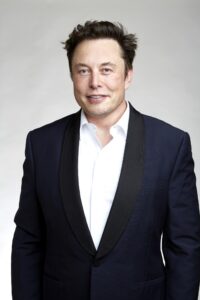
A trillion dollars is a million million dollars. Elon is worth over a trillion dollars. Let us say that all of that minus 20 million was taken from him and it added up to on trillion. He should be fine on just 20 million. (I sure would be. Perhaps your need to snort cocaine off naked models is greater than mine. Hey, I’m not judging.)
Now let’s take that trillion dollars and give it to the homeless. Supposedly there’s about 750K, but we’ll give the next poorest 250K money too.
That’s a million each.
“But Ian”, you cavil, “they must be irresponsible people because only bad, stupid drug addled bad bad bad people wind up homeless. They can’t manage a million dollars and they’ll just spend it all on drugs in a few months and be homeless again!”
That’s not actually what the evidence shows. When you just give homeless people money, they mostly use it on smart stuff, but let’s pretend it is and admit that some of them, like some of us, don’t make the best decisions.
We’ll buy them annuities. Assuming age 40, that’s about $3,500 a month. Age 60, over $5,000 a month.
So, Elon has enough money to make every homeless person not homeless. And he’s only one billionaire+.
All total America’s billionaires hold about 8.5 trillion dollars. If we knock them all down to 20 million we could give at least 8 million of the poorest people in America annuities that pay about $3,500 a month. (One does feel for the cocaine dealers and models in this scenario, however. Oh, an the mega-yacht builders. No progress without someone suffering, I guess.)
Now do “use the money corporations spend on stock buybacks.” Left for the reader, but… there won’t be any poor people left in America.
The fact is that the really rich people are, well, so amazingly rich that it boggles comprehension. They don’t have a lot of money. They don’t have a LOT of money. They don’t have a LOT of money.
They have a LOT of money.
OK?
And yes, they do get a lot of it by making other people poor, they receive massive public subsidies, blah, blah, blah. I’ve written a bunch of those articles and if you’re making the argument that they did it all on their own Atlas Shrugged’esque, you an idiot. A very useful idiot for the people with so much money.
(This proposal is illustrative, not expected and yes, if taken seriously it would cause a lot of economic re-balancing and lots of people would whine it wasn’t fair. It’s illustrative. Illustrative. Repeat after Ian, “illustrative”. It’d still be a better way of using the money than the AI bubble though.)
America has poor people because the people with money and power want it that way. The details of how it is done are complicated, but it really is that simple.
What I write here is for the benefit of everyone, but alas, I live in capitalism and I, and the site, take money to keep running. If you value the writing here and can, please subscribe or donate.
Jan Wiklund
Putting someone on the dole is perhaps not the best thing you can do. Let’s say one invest the money in some reasonable productive activities instead, and employ these people? You have frequently complained that US as an industrial society is going to the dogs – and how right you are! Perhaps the best would be to change the course, but soon.
And why not with the billionaires’ money? After all, the excuse for a capitalist is, according to Joseph Schumpeter, to spend the money on people who produce.
bruce wilder
Elon’s “wealth” is money, a fiction, and not even mostly “real money” (that is, money symbolically representing control of resources currently dedicated to producing goods and services for consumption).
That fiction is conjured by financial markets, which process speculative fevers into exchange values for assets (legal bundles of rights of resource control and income claims). The theoretical wealth of the wealthy in the U.S. has been amplified into earth orbit by the policy response and follow-up to the 2006-2009 global financial crisis, which in turn was the product of ill-advised financial deregulation.
The institutions of the financial system manage the money system that organizes the global political economy — the system of trade and production.
It is a system that the political class, left, right and center in the U.S. has taken progressively less responsibility for governing for forty or fifty years. The Right, a faction of which is always ready to stupidly celebrate mobsters and cheaters, led the way in disestablishing the capacity of the state to regulate finance. The Center embraced a Third Way for the money, no doubt. The Left just got bored with fighting for the interests of a general public and working class they prefer to deplore.
That the economy generally and money finance in particular must be governed is an obvious truth systematically denied by neoliberal ideology, supported by the mythmaking of neoclassical economics.
The economy is fundamentally an arena of diverse conflicts of interest. Institutions to arbitrate and resolve those conflicts in the general, public interest are necessary for a shared prosperity. The services of those institutions must be public goods.
The disinterest of the Left in understanding or governing the system seems to me to be likely to a fatal shortcoming to any hope of effective reform. Redistribution without regulatory, institutional reform seems to me to be beyond unlikely.
In my reading of history, the Right can be helpful on technicalities, but left to their own lights they tend to embrace the state as Leviathan, which tendency incubates fascism.
Soredemos
If someone ‘only’ had twenty million, and pocketed, say two million of that as readily available liquid cash, then dumped the rest of it in a boring S&P 500 Index, the dividends alone would probably be around 30,000 a month. This is reasonably paid MD territory. Let’s assume they already own a nice house (if they somehow don’t, they can buy one cash and have a bit less to dump in the stock market). Probably no car payments or other debt. They could likely always find some sort of job to work (though maybe not…).
With money mostly just piling up every month, 30k can buy a lot of sex and drugs.
Purple Library Guy
Ayup.
Planter of Trees
Granddad was a salesman who, like any sensible American small-time operator, kissed up to every rich person he was fortunate enough to come across. He liked to have his kids around for that because they made him look good. He needed the help, he was a bit shady-looking. One of these upstanding capitalists once complained to dad, who was 9 or 10 at the time, “Do you know, if I need a million dollars, I have to make TWO million!”
He was complaining about the onerous progressive taxation of the 1960s. In hindsight, this scheme incentivized the capitalist class to put their money to work productively rather than hoarding it for the sake of increasing their relative social power. Funny how ‘hardship’ is good for the character of everyone but their own fine selves.
Like & Subscribe
It’s not just the trillion dollars but the direct and indirect knock-on effects of that trillion dollars. That trillion buys him more and more influence on policy and those policies are detrimental to the citizenry. They are policies that will result in many more deaths than the lives the trillion dollars may have saved not to mention the quality of life implications in regard to both the policies the trillion helps deliver and what the trillion will ultimately be used for versus being used for the greater good of the people.
spud
We know that capitalism is a complete failure if there are millionaires, billionaires and now trillionairs. The rich parasites and leeches know full well that capitalism is a failure, and cannot work without socialism.
Smith, Marx, Franklin, and others warned that capitalism cannot work if rich leeches and parasites control capitalism. Yet by its own design, capitalism not only encourages, even lays out the roadmap and opens the doors widely for rich parasites and leeches, to take over and become the capitalists.
The rich parasites and leeches bemoan what’s become of capitalism, yet by capitalisms own design, if one deviates to a race to the bottom, the other rich leeches and parasites have to deviate also, and if one of them does not deviate to a race to the bottom, the others will eat the one that does not deviate alive, and that is pure capitalism. So if they all bemoan it, whilst funding the parasitical politicians to keep the rich parasites and leeches in charge of capitalism, nothing will change. That’s why the rich parasites and leeches fund capitalism demise. Lenin laid that out clearly.
This language here “steady-state economies”, is of course a sly mealy mouthed apology, it really means socialism
—————
Rich people, including billionaires, are increasingly pointing to a failure of capitalism, citing rising inequality and inadequate economic opportunities for the majority. They argue that the system needs reform to better distribute wealth and address the struggles faced by ordinary people.
 Oxfam America monbiot.com
Rich individuals, particularly billionaires, are increasingly vocal about the shortcomings of capitalism. They highlight several key issues that indicate a need for reform in the economic system.
Rising Inequality
• Wealth Disparity: Billionaires have seen their wealth grow significantly, while many people struggle to meet basic needs.
• Economic Opportunities: There is a growing perception that capitalism is not providing adequate opportunities for the majority of the population.
Inadequate Economic Results
• Systemic Failures: Many wealthy individuals argue that capitalism is failing to deliver satisfactory economic outcomes for most Americans.
• Need for Reform: They suggest that the system must evolve to better distribute wealth and address the challenges faced by ordinary citizens.
Billionaires are advocating for reforms that would lead to a more equitable distribution of resources. They believe that without significant changes, the current trajectory could lead to increased social unrest and conflict.
This perspective reflects a broader concern that capitalism, in its current form, is not sustainable and requires a reevaluation to ensure it serves the needs of all people, not just the wealthy elite.
 WBUR Oxfam America
Billionaires like Warren Buffett and Jamie Dimon suggest reforms such as higher taxes on the wealthy to address income inequality and under-investment in public education. They believe that these changes are necessary to ensure that capitalism works for a broader segment of society, not just the wealthy elite.
 CNBC
Rising inequality limits economic opportunities for ordinary people by concentrating wealth and income among the richest, which often leads to stagnant wages and reduced access to resources for the lower and middle classes. This growing disparity can hinder social mobility and exacerbate economic instability, making it harder for individuals to improve their financial situations.
 piie.com Wikipedia
Alternatives to capitalism include economic democracy, participatory economies, and steady-state economies, which aim to better meet the needs of people and the planet. These systems propose various models that intentionally replace or evolve beyond traditional capitalist structures.
 Wikipedia Medium
——–
Professor Richard Wolff critiques capitalism for generating instability and inequality, arguing that it primarily benefits the wealthy while exploiting the working class. He emphasizes that capitalism does not deliver prosperity for all, but rather creates crises that disproportionately affect the less affluent.
Current Affairs Wikipedia
Richard Wolff’s Critique of Capitalism
Professor Richard Wolff argues that capitalism fundamentally generates instability and inequality. He believes that the system primarily benefits the wealthy while exploiting the working class. This critique highlights several key points:
• Wealth Concentration: Capitalism tends to concentrate wealth in the hands of a few, leading to significant disparities in income and living standards.
• Economic Crises: Wolff asserts that capitalism is prone to crises, which disproportionately affect the less affluent. These crises can lead to unemployment, poverty, and social unrest.
Wolff emphasizes that the rich play a crucial role in perpetuating the capitalist system:
• Influence on Policy: Wealthy individuals and corporations often have significant influence over political decisions, shaping policies that favor their interests.
• Exploitation of Labor: The pursuit of profit leads to the exploitation of workers, who may face low wages and poor working conditions while the rich accumulate more wealth.
Wolff’s analysis presents a critical view of capitalism, suggesting that it fails to deliver prosperity for all. Instead, it creates a system where the rich benefit at the expense of the working class, leading to ongoing economic and social challenges.
 WikipediaCurrent Affairs
Professor Richard Wolff argues that capitalism generates instability, inequality, and crisis rather than delivering broad prosperity, and he highlights how it obscures power imbalances such as the employer’s power to hire and fire workers.
Current Affairs
Capitalism contributes to wealth inequality by creating a system where a small group of capitalists controls the means of production and profits from the surplus value generated by workers, who receive only a fraction of the value they create. This dynamic leads to a significant wealth gap, as the majority of workers experience economic insecurity while a small elite accumulates wealth.
 rdwolff.com thedissenter.net
Richard Wolff proposes Workers’ Self-Directed Enterprises (WSDEs) as an alternative to capitalism, where workers control and manage enterprises democratically rather than owners or managers. He argues that this model redistributes economic power and surplus more equitably to address systemic inequality and instability.
 truthout.org Current Affairs
——
Monopoly was originally created to demonstrate the evils of capitalism and to show how different approaches to property ownership can lead to vastly different social outcomes. The game encourages players to engage in ruthless competition, which contrasts with its inventor Elizabeth Magie’s original intent of promoting equitable land use.
 BBC aeon.co
Monopoly’s Original Purpose
Monopoly was created to illustrate the negative aspects of capitalism. Its inventor, Elizabeth Magie, designed the game to show how different property ownership approaches could lead to various social outcomes. The game was intended to promote equitable land use rather than the cutthroat competition it encourages today.
The Game’s Mechanics
Monopoly features two sets of rules that reflect contrasting economic philosophies:
Rule Set
Description
Prosperity
Players gain when others acquire properties, promoting shared success.
Monopolist
Players compete to acquire properties and charge high rents, leading to bankruptcy of others.
Intended vs. Actual Outcomes
• Intended Outcome: Players would learn about equitable land use and the benefits of shared wealth.
• Actual Outcome: The game promotes ruthless competition, encouraging players to celebrate the very capitalism Magie sought to critique.
While Monopoly is a popular game, it diverges significantly from its original intent. Instead of fostering understanding of equitable land use, it reinforces competitive behaviors that reflect the flaws of capitalism.
 BBC aeon.co
Monopoly illustrates the criticism of capitalism by demonstrating how it can lead to monopolies that eliminate competition and create wealth inequality. The game was originally designed to show the negative consequences of land ownership and the exploitation inherent in capitalist systems.
 Medium BBC
Monopoly is a competitive board game where players aim to bankrupt each other, while cooperative games focus on players working together towards a common goal, such as winning against the game itself. This difference creates a more supportive atmosphere in cooperative games, as all players either win or lose together.
 Wikipedia toadbird.com
Alternative games that reflect equitable land use principles include those that focus on community engagement, resource management, and sustainable development. These games often encourage players to consider the impacts of their decisions on various stakeholders and promote collaboration for equitable outcomes.
 urban.org U.S. Environmental Protection Agency
Monopoly was originally created to demonstrate the evils of capitalism and to show how different approaches to property ownership can lead to vastly different social outcomes. The game encourages players to engage in ruthless competition, which contrasts with its inventor Elizabeth Magie’s original intent of promoting equitable land use.
 BBC aeon.co
Monopoly’s Original Purpose
Monopoly was created to illustrate the negative aspects of capitalism. Its inventor, Elizabeth Magie, designed the game to show how different property ownership approaches could lead to various social outcomes. The game was intended to promote equitable land use rather than the cutthroat competition it encourages today.
Monopoly features two sets of rules that reflect contrasting economic philosophies:
Rule Set
description
Prosperity
Players gain when others acquire properties, promoting shared success.
Monopolist
Players compete to acquire properties and charge high rents, leading to bankruptcy of others.
• Intended Outcome: Players would learn about equitable land use and the benefits of shared wealth.
• Actual Outcome: The game promotes ruthless competition, encouraging players to celebrate the very capitalism Magie sought to critique.
•
While Monopoly is a popular game, it diverges significantly from its original intent. Instead of fostering understanding of equitable land use, it reinforces competitive behaviors that reflect the flaws of capitalism.
 BBC aeon.co
Monopoly illustrates the criticism of capitalism by demonstrating how it can lead to monopolies that eliminate competition and create wealth inequality. The game was originally designed to show the negative consequences of land ownership and the exploitation inherent in capitalist systems.
 Medium BBC
Monopoly is a competitive board game where players aim to bankrupt each other, while cooperative games focus on players working together towards a common goal, such as winning against the game itself. This difference creates a more supportive atmosphere in cooperative games, as all players either win or lose together.
 Wikipedia toadbird.com
Alternative games that reflect equitable land use principles include those that focus on community engagement, resource management, and sustainable development. These games often encourage players to consider the impacts of their decisions on various stakeholders and promote collaboration for equitable outcomes.
 urban.org U.S. Environmental Protection Agency
————
Trump is simply using the powers that bill Clinton gave to him on a silver platter .
https://jacobin.com/2022/08/nazi-germany-national-socialism-hypercaptialism-social-darwinism-liberalism
The Nazis Weren’t Socialists — They Were Hypercapitalists
Interview with
Ishay Landa
Right-wingers love to insist that members of Adolf Hitler’s party were socialists. But Nazism’s real economic policies upheld hypercapitalist principles rooted in social Darwinist ideas about the value of human life.
They weren’t socialists at all.
“One of the most tiresome arguments leveled against socialism claims that Nazism was somehow “socialist,” and so something the Left needs to answer for. Adolf Hitler’s men marshaled the economy for war, put the state above the individual — and, as the killer argument, they even called themselves “National Socialists.”
Checkmate? Not quite. Even aside from the fact that other conservative and liberal parties actually voted for full powers to Hitler in 1933, his regime was characterized by massive interventions to help out private business. And the social Darwinism championed by the Nazis, counting the “unproductive” as mere wasteful expense, obeyed the logic of judging human life by the yardstick of profit.
In 2009, Israeli historian Ishay Landa published the book The Apprentice’s Sorcerer: Liberal Tradition and Fascism, an extensive study of the economic and social interests the Nazis really pursued.
In this interview with Jacobin, he explains what the term “socialism” meant to Hitler, how his political and economic views were connected — and why we can see the dangers of economic liberalism in Elon Musk today.”
…
NGG
Great post Ian!! I am so tired of politicians telling us —we can’t have nice things!
Carborundum
The thing I find most striking about this decomposition is how few people one can unilaterally lift into not large incomes via transfer. Eight million people might sound like a lot, but it’s less than a quarter of the number living below the official poverty line. I don’t think redistribution via transfer cuts it – clearly need to redistribute for greater production (mainly public goods).
Bob
I’m not leaving them twenty million.
Not sure even one million should someone have.
mago
Is ugliness required to attain trillionaire status?
If so, guess I’m doomed to remain a poor.
david lamy
Claw their winnings at the rigged dog track back!
Put the politicians with bulging pockets stuffed with cash out of business!
Ian, your righteous rant resonated with this choir member.
Ian Welsh
Direct transfer isn’t the main reason to do wealth and high income taxes and so on.
But 8 trillion means you could lift 64 million people, which means twice as many as are below the poverty line.
Now take all the money spent on stock buybacks and add it to the pool.
No, actually, direct transfers could do a lot.
Anthony Noel
I’ve never understood the “it’s not fair” argument. The fact that Elon Musk, a idiot and con artist was worth a trillion dollars is deeply unfair, the fact that a few hundred people control more wealth the the bottom 50 percent of the entire global population is so unfair that we should be rolling out the guillotines, but somehow the idea of literally providing a decent standard of living for every homeless person “is not fair” for some nebulous reasons that are only ever applied to those icky poor.
Carborundum
You say 8 million above and the numbers broadly work out in the range of what it would take to purchase a $3,500 monthly annuity for someone 40 years of age (roughly $1 million). What am I missing that gets us to 64 million beneficiaries?
Ian Welsh
Carborundum,
you’re absolutely right, not sure what fizzled in my brain on that one.
Bukko Boomeranger
To amplify what Bruce Wilder said above about (f)Elon NOT having a trillion dollars because “money” is imaginary — it’s a belief system, folks! — I’ll add that that so-called trill is based on shares of stock that he has not sold.
skuM created all these shares in his company out of thin air. (yada yada authorised by the board of directors, etc. So much hot air!) Then XAi or whatever they’re calling it ,”went public” and put a small percentage of the company’s shares up for sale to suckers on the Schlock Market. They had, IIRC, a $164 per share initial public offering price. So all of skuM’s vast holding of shares became worth $164 x however many he had ginned up for himself. An instant trillionaire!
But Apartheid Boy hasn’t sold the stash of shares he controls. They represent a POTENTIAL trillion dollars. If he tried to unload the lot of them, speculators would not award him a cool trill in green American dollars. That would flood the market with pieces of purported part-ownership of a company that loses heaps of money. There’s only so many schmoes willing to fork over their wealth so they can feel like they’re a part of (f)Elon’s circle. I reckon it would result in a “no bid” situation where nobody would offer a no-longer-minted U.S. penny for a share. And that “trillion” based on the price of shares that have not been sold goes “poof.”
I haven’t been following the daily gyrations of SpaceXAiTwaater’s share price, but the last time I saw a number it was below the IPO level. The headline about that which I saw on the snarky site about the deal said that Mars-Man had already been knocked out of the Big-T Club due to the falling share price. This is why it shits me — a common Australian expression which is not as dirty here as it would be if an American said it! — whenever I see skuM referred to as a trillionaire. He ISN’T, and he never was. The trillion was “unrealised” as they say.
It’s like me claiming to be a millionaire because I still have a Willie Mays baseball card from 1968, only slightly creased from when I put it in my Schwinn bicycle spokes to make that cool noise when I rode. That thing’s gotta be worth a mint, if only I can find a chump — I mean, “collector” — to pay me. My “Mays million” is just as good as skuM’s spacey trillion.
Ian Welsh
If a bank will take it as collateral, then it’s money.
mago
Banks may seem real and all the rest of it, too including famine, disease and war, which nobody can deny, except, yeah, it’s all delusional even if it seems solid, fixed and real in the relative world.
Any way you look at it what’re you gonna do about it?
The wealthy poop and pee and die just like you and me. A corpse is a corpse is a stinking corpse to be disposed of quickly, unless maybe you’re a pharaoh.
I dunno. It’s a crazy mixed up world any way you slice or dice it.
Take a trip take a drive and enjoy the summertime while you’ve got it at your disposal.
What’s that in the road? A head?
Dagnarus
If you give a poor person money they will spend it on buying goods and services.
If you give a rich person money they will spend it bidding up the price of houses, stocks, bitcoin, if your lucky they might invest in a factory (probably not).
This is why it is so much more efficient to give money to rich people than poor people. When you give money to poor people your economy needs to generate more goods and services to meet there needs. If you give money to rich people your economy just needs to generate various ponzi schemes to make line go up. The ponzi scheme being the most efficient method of generating wealth.
The problem with the ponzi scheme is that when people start pulling their money out in a serious way, it all disappears.
Should we tax the rich. Yes. It is necessary in order to transform the economy from ponzi to real. But don’t get confused, its a ponzi economy, if you started to seriously tax the rich you will find out why the S&P 500 is detached from the real economy.
The ponzi scheme can go on so long as
spud
Dagnarus:
correct. the rich have little in real income. most of them tie up their wealth in stocks, bonds, real estate, and of course off shore banking secrecy rat holes.
that’s how you get them. not a income tax, but things like stiff capital gains taxes, real estate taxes, no free trade, capital controls, gift taxes, high inheritance taxes, etc.
Mark Pontin
Also amplifying Bruce Wilder, Musk is cash poor and in reality has only $20 billion of liquid assets. *
All the rest is fictitious capital structured as it is so that Musk remains the majority shareholder in his companies.
*Yeah, I know, ‘only.’
NGG
Many years ago I was bemoaning to a friend about Corporations doing away with their pension plans. I was fortunate to have a small guaranteed pension. He said— why do you care — you got yours. That is the attitude of a lot of the rich.
different clue
Here is a tangentially related little video from Mr. Farming While Beige. It touches on what most of us are faced with some version of in order to keep rich people rich.
“Stop telling poor people they need to get better at being poor.”
https://www.reddit.com/r/fixedbytheduet/comments/1ukirm6/stop_telling_poor_people_they_need_to_get_better/
Dan
Back circa 2021 when Musk had but a measly $100,000,000,000+ net worth, I used to say to people, “You do understand you could take away 99% of everything he owns and he’d still be a billionaire, right?”