
The traditional revolutionary change requirements are:
- An inability to pay military, police and functionaries.
- A split in the elite.
- Popular revolt.
As a rule, all three are necessary.
In the Russian revolution, the military was noticeably absent, or in the case of the Navy, actually revolted. Near the end, with the old government in the Winter Palace and protestors outside, the cadets being used as guards refused to fight, the Cossacks which the government expected to come rescue them never showed up, and navy sailors helped organize the crowds outside and storm the Palace.
There’s a lot of confusion around this issue, and a fair bit of comes from the idea that money doesn’t matter, because you can always print more.
Sure.
How’d that work for the Weimar Republic?
The bottom line is that money is only good for buying what exists or what is close to existing.
What we’ve been seeing for about 60 years now is:
- price increases higher than wage increases.
- Deindustrialization.
This means the West is making less of what its own populations need, and the populations can afford less of what does exist. Internal capacity is collapsing. (Ignore CPI, it’s not just a lie, it’s a damned lie. Expenses have risen far faster than it suggests.)
The solution to this, such as it was, was to trade: buy what is needed from other countries. The West was almost the sole supplier of goods that other countries wanted: planes, cars, advanced electronics, weapons and so on. For a while the USSR was an alternative, but as time went by that alternative became less and less viable, until the collapse of the USSR, at which point the West was pretty much the only game in town.
But Western elites were drinking their own kool-aid. They wanted reduced wages and environmental protection costs, so they decided to move production overseas, especially to China. Now China can make almost everything that any country might want: they don’t have to buy from America, and as the technical ability to avoid the dollar payment system increases, that means they don’t need the West.
Recently, what we’ve seen is a reduction in Western coercive ability. Not a complete loss of it (yet), as Venezuela and Cuba and Greenland show, but a serious loss in power. In fact the pivot to coercing weak nearby states and vassals is due to the weakness: the US can’t win far from its territory, but it’s still scary to Latin America and Europe.
This isn’t just about the US though, France had its own sphere of African interests, with military bases throughout multiple ex-colonies. It essentially ran multiple countries. Almost all of them have now run the French out. The French nuclear system, for example, used heavily discounted uranium from African vassals.
Trump seized Venezuela’s oil and has locked down Greenland’s resources, but he’s lost the Middle East. (Yes the war continue. Yes the US has lost and the American Middle Eastern Raj is dying and will not be saved.) Africa would far rather do business with China.
So would Latin America, but American military might, “NGOs”, diplomats and intelligence services have so far mostly been able to keep Latin America in the American sphere. So far. As the ability to use naval forces to project forces declines (and it is and will) this will end, though the process may take a couple decades and a lot of pain.
All of this is a roundabout way of saying that the US is becoming much more poor and will continue to do so. Its coercive abilities are low, it has lost Africa and is losing the Middle East. Even Asian countries which have disputes with China (Vietnam, for example) are integrating with China’s economy.
Can’t make it. Can’t force as many countries to sell to the US for cheap. Has much less to sell to the world that it wants at a reasonable price, since China sells all the same things for less.
At this point the system’s only remaining pillar is dollar privilege. Everything is bought and sold in dollars, the US can print dollars, and the US can thus keep buying what it needs.
Except when it can’t, as with rare earths, industrial magnets, and other resources and goods China has decided to stop selling to America, which it can’t make itself and for which there is no adequate alternative supply. These goods, by the way, are necessary for American weapons, and without them the US military will keep becoming weaker and unable to rebuild its arsenal. (On the other hand, Russia and Iran and North Korea all get as much of these goods from China as they need.)
And dollar privilege is ending. Oh it goes back and forth, the US is fighting tooth and nail to keep it going, but the trend is clear. Abuse of sanctions, in particular, has made it clear to everyone outside the West, and even to some inside the West, that being in the dollar system: settling trades in dollars, is a huge vulnerability.
I assume the picture is clear: America can’t make as much, can’t force other countries to sell for cheap, has less to trade that can’t be bought for less somewhere else, and soon won’t just be able to print dollars and buy it anyway.
This brings us back to the enforcer class. Police in America are paid VERY well.
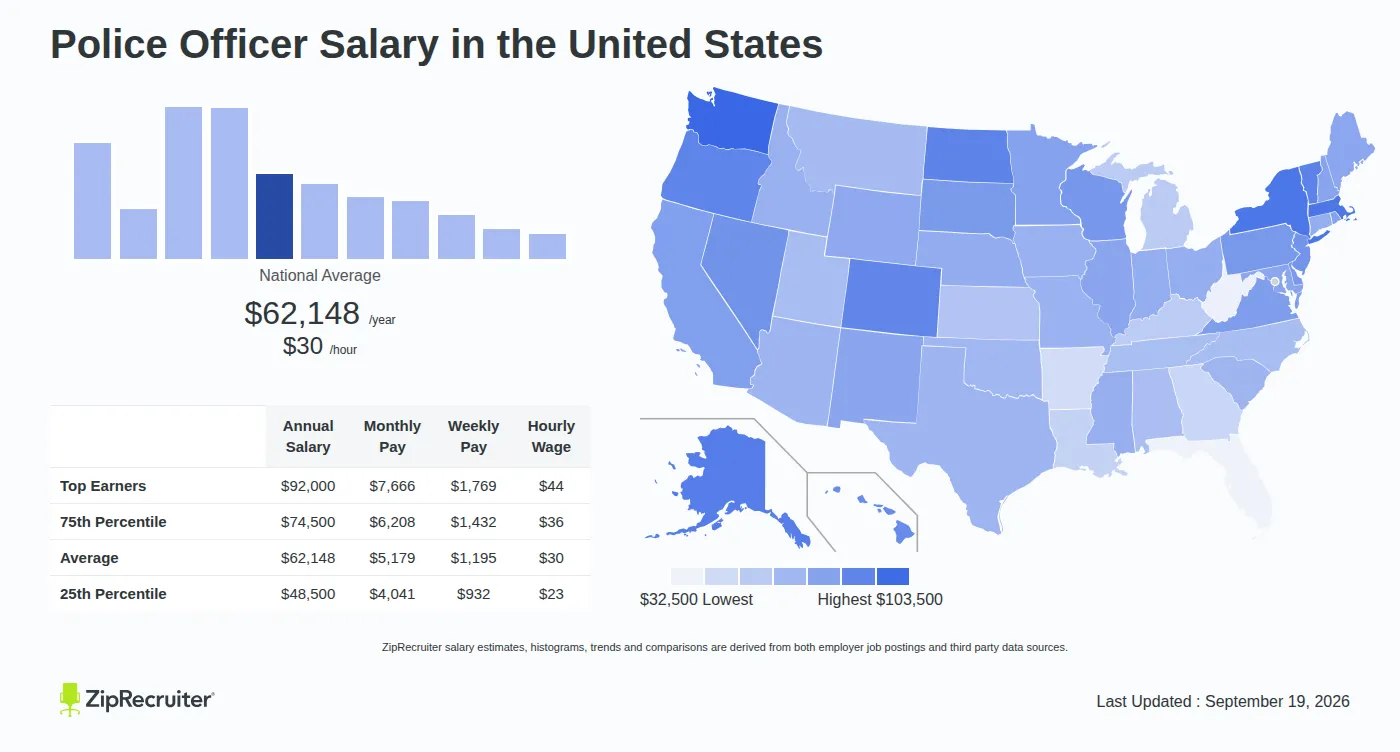
With overtime it’s not unusual for police salaries to hit the mid hundred thousands.
Cops are, generally, pretty well paid.
The military is less so, with salaries in the mid 30K range being common for non-NCO enlisted members.
Cops are well paid because they enforce the laws.
“Duh,” you say, but the point I’m making is that they break strikes, intimidate protesters, enforce property laws and steal more money from people than burglars do–but not from elites. Laws are set up to favor elites and cops are how laws that are unfair are enforced.
They’re frontline against the possibility of change. During the American revolution, those unhappy with officials would gather in large groups and go “have a talk” with their representatives. That sort of thing is basically impossible now.
It should be obvious why it’s necessary for the enforcer class: military and cops, to break from the elites for a revolution to succeed. They don’t all have to, but either you need some on the side of the new order, or you need them to refuse to do their jobs: as was the case with the Cossacks in the Russian Revolution.
A lot of people think that the first requirement of revolution: being unable to pay cops, military and functionaries (someone does need to keep things running) is impossible now in the US.
They’re right.
Now
But as the US becomes poorer and as prices continue to rise faster than wages, even police wages, and especially as actual shortages occur (sorry, we just don’t have any) that will change. You could pay them 10 billion dollars, but if it won’t buy the food, medicine, housing, internet and so on that they need or want, it amounts to “not being able to pay”.
And that’s where the US is in danger of heading. Can’t make a lot of stuff. Can force fewer and fewer countries to sell or “give” resources to them, can’t earn an honest buck in trade because China’s good are cheaper, and soon can’t just print dollars.
(I also expect that a lot of US copyright laws may be overthrown in other countries in about a decade to two decades. No reason to pay that ransom if you aren’t buying from the US, and it’s better to have domestic industry or your own internet companies.)
Every great nation thinks “it can’t happen here” till it does. For the US the endgame grows closer.
What I write here is for the benefit of everyone, but alas, I live in capitalism and I, and the site, take money to keep running. If you value the writing here and can, please subscribe or donate.
Jeff Guinn
“Cops are, generally, pretty well paid.
The military is less so, with salaries in the mid 30K range being common for non-NCO enlisted members.”
Wrong.
According to an AI query asking about *total* compensation: “The average annual Regular Military Compensation (RMC)—which includes basic pay, allowances for housing and food, and the federal tax advantage—for a U.S. enlisted service member typically ranges from roughly $53,000 to over $82,000, depending heavily on rank, location, and years of service. Junior enlisted personnel (E-1 to E-3) generally start near the lower end or around $53,000 including non-cash benefits like housing, while mid-career NCOs (E-5/E-6) average upwards of $82,000.”
spud
very good Ian. i have thoughts along those lines also. Jefferson said that local prosecutors and the police were engines of oppression, and madison and adams said they will become militarized and take away out liberties, and they were right.
but like all entitled elites with immunity, they have become drunk with power and contempt, fat budgets for unlimited hookers and blow, ganging up and beating five year old, or 75 year old people to death, bodes ill for their ability to take on a real threat.
i can’t wait to see the looks on the western oligarchs faces when they find out that their ill gotten gains, are not anywhere near the worth that they thought it would be.
if i were south korea, i would make nicey nicey pronto with the north, japan better get real nice with russia, china, and north korea, it to has free traded and financed away its ability to create what they need, and keep turning to the old guard who have dreams of conquest and elitism.
Taiwan, we are happy to be part of china again.
the Philippines, treat their citizens like dirt, and rely on america for everything, just got that stupidity smeared into their faces, the U.S. bases make them a target.
Indonesia looks like something might be dawning on them.
Australia and New Zealand are cooked.
today the oligarchs are so afraid of losing asia, that they are arranging with the U.K. to renege on the U.K. giving back the Chagos islands back to its original people. and giving it to the u.s.a., in vain attempt to still project power in asia. its a tiny postage stamp where the base takes up a lot of room, its a prime target for missiles, if i was in the airforce or navy, i would get out fast if you are to be stationed on a small dot with no real ability to escape the incoming.
https://en.wikipedia.org/wiki/Chagos_Archipelago
https://en.wikipedia.org/wiki/Diego_Garcia
the utter stupidity and incompetence of the capitalists is on full display here.
when you get a leader like this, its all down hill from here.
Bill Clinton emphasized that free trade allows the government to purchase what it needs on the open market, which is part of a broader strategy to open foreign markets and enhance economic growth. This approach was a key aspect of his administration’s trade policies, including the North American Free Trade Agreement (NAFTA).
William J. Clinton Presidential Library and Museum UC Santa Barbara
———-
Lenin was right.
StewartM
Unfortunately, I have no optimism for the “change” any coming revolution would bring. The Russian Revolution you cite as an example was followed by a bloody civil war, and the French Revolution by the revolutionaries eating their own during the Terror (no, it wasn’t just the aristocrats that got axed) followed by invasion and war.
Moreover, if the Ukraine-Russia war holds any example, coming wars would resemble more the static bloodbaths of WWI more than the blitzkriegs of WWII.
Speaking for myself, I put the blame on what the US became both on a combination of hardhats who, when pushed came to shove, voted for their own impoverishment rather than have people of different skin hue have equal rights, coupled with purist lefties who steadfastly believed in magical unicorn options when there were only a choice of evils, some greater and some lesser. In 1968 seeing HHH go down to defeat saved nary a single Vietnamese, and in fact killed not only more Vietnamese but also Cambodians, Laotians, Indonesians, and Bangladeshis (Henry Kissinger’s contribution to humankind). Ditto, Harris’s defeat, already had resulted in some 781,000 dead by the termination by USAID alone:
https://healthjournalism.org/blog/2026/07/how-pulitzer-finalists-traced-the-human-toll-of-usaid-cuts
Add to that now Iranian schoolgirls, Yemens, Saudis, Cubans, and Venuzeulans, and just like 1968, not a SINGLE PALESTINIAN SAVED. Nixon tops the “most killed” category of US presidents with an estimated 750,000 dead in his tenure (Reagan is 2nd or 3rd in that metric), so this means that Trump beat Nixon from just USAID cuts, not counting the war dead that’s still piling up.
Bernie Sanders (whom many of you I know consider a sellout, like AOC) sums it up best: a political party or candidate isn’t a marriage, you’re not looking for the Perfect One or even a good one, it’s a bus route, and you’re looking for the bus that takes you closer to your final destination. Yes, the US has shitty bus service, but in our elections there is usually a lesser evil that contains some good elements that will push the Overton Window in a more favorable location on most things (not all things, on some issues I find the modern “progressives” just as horrible as the righties). But I have faith that pushing for liberation for at least some eventually openns the door for future liberations (the Civil Rights movement spun off women’s rights, gay rights, disabled rights, rights for the elderly, and Native American rights).
spud
we simply cannot escape this. it became pretty much written in stone by 2001. there may have been a slight chance in 2008, instead obama bailed out those destructive policies, then doubled down on them.
clinton was a admirer of Hayek, and Friedman.
the die was cast in 1993.
Bill Clinton’s economic policies were often based on the assumption that financial markets would self-regulate and that globalization would lead to positive outcomes for the U.S. economy. Critics argue that this reliance on unproven assumptions contributed to significant economic challenges later on.
washingtonmonthly.com democracyjournal.org
Bill Clinton’s Economic Assumptions
Overview of Economic Policies
Bill Clinton’s economic policies were characterized by a belief in the self-regulation of financial markets and the positive effects of globalization. His administration operated under the assumption that these factors would lead to sustainable economic growth and stability.
Key Assumptions
Self-Regulating Markets: Clinton’s administration believed that financial markets would manage themselves effectively without heavy regulation. This assumption led to a lack of oversight on financial derivatives and other complex financial instruments.
Globalization Benefits: There was a strong belief that integrating the U.S. economy with global markets would yield significant benefits, including increased trade and investment opportunities. This perspective underestimated potential risks and challenges associated with globalization.
Criticism of Assumptions
Critics argue that these unproven assumptions contributed to economic vulnerabilities, particularly in the years following Clinton’s presidency. The reliance on deregulation and the expectation that markets would correct themselves are seen as factors that led to significant economic challenges, including the financial crisis of 2008.
Consequences
The consequences of these assumptions included:
Consequence Description
Increased Economic Vulnerability Lack of regulation contributed to financial instability and crises.
Trade Deficits The U.S. current account deficit increased significantly during his tenure.
Stagnation of Real Wages Many workers experienced stagnant wages despite economic growth.
Clinton’s economic legacy is complex, with both successes and failures stemming from these foundational beliefs.
Dissent americanprogress.org
Critics argue that Clinton’s embrace of deregulation and the Washington Consensus contributed to speculative bubbles and financial instability, while his administration’s focus on fiscal austerity and free trade deepened trade deficits and set the stage for later economic crises.
Dissent Wikipedia
————-
here is a economist coming in from the cold, there is a saying, its better late then never. i moded it, its better late than never, unless it involves politics and economics, then its to late.
https://www.youtube.com/watch?v=UQ0dQo4PhEQ
40 years as an economist taught me the truth: we’re all lying.
Sep 18, 2026
Inside the modern economics profession exists an unwritten script. Economics is a self-reinforcing cult where reality is forced into tidy algebraic models just to make human life look neat, manageable and controllable. In the process, authentic human truth gets systematically discarded. For decades, I watched as complex social realities were sanitized into equations to justify corporate agendas but I am no longer willing to peddle those institutional half-truths for a fee. Here is the truth from the inside of mainstream economics. I’m not prepared to lie any more.
ventzu
Thanks Ian. Totally agree that the US fall will be driven by loss of dollar privilege and concomitant economic collapse. Still a long way to go given much non-US debt is denominated in USD and the US attracts global capital for investment in equities / bonds, both of which create dollar demand.
On revolutionary conditions, wasn’t a large part of the Russian revolution driven by opposition to fighting WW1, in addition to the poverty of the peasant-soldiers? In China it was catalysed by Japan’s invasion, the feudal system and KMT’s corruption.
On a ’split in the elites’ – is that true of the Russian revolution? Granted many of the leaders came from middle class families, but not exactly elites. Ditto China. Also we don’t see much of a split in the West; if anything they are closing ranking with uni party policies.
You make a good point re: US’ declining ability to pay enforcers. But then there is the massive investment in AI and robotics to be less reliant on human enforcers and to nip things in the bud, before they get out of hand?
As for Global South, many are run by US-installed kleptocracies, like the GCC, and many countries in S America. And if an opposition candidate achieves any power, the intelligence and NGO services will work with local oligarchs to undermine / remove them.
All to say that the end game is further than we may wish it to be . . . unless the dragon enters the fray, though no sign of that.
I hope I am wrong.
bruce wilder
On an institutional level, revolutions often get started in earnest as conservative counter-revolutions, attempts to block and then to pre-empt impending reforms as much as to restore an imagined past.
This was true of the French Revolution, as institutions of only antiquarian interest were conjured up from more than a century past to deal with an impasse created by the weakness of a theoretically absolute monarchy unable and unwilling to face down its intransigent aristocracy, the corrupt tax collectors and moneylenders.
A lot is made today of “elite overproduction” in explaining the French Revolution. It is true that the ancien regime was an envious, litigious polity that gave part-time employment to hordes of lawyers. These lawyers conveniently staffed the debating societies and drafted the documents of revolution. What drove revolution forward in its early hours, though, was not high-sounding liberal principles; it was hunger and paranoid fear from below.
Drawing parallels is what I should do now in my comment. I cannot go far in that exercise because 1) few know much about the course of the French Revolution, which went on interminably through many generations and across Europe and the Americas, and 2) few appreciate fully the novelties of the present historical moment.
Ian has written above of shortages and declining standards of living. The French mob marched on Versailles to demand action on famine and bread from Jacobins who would rather debate the Rights of Man.
Much of the sturm and drang of revolution is the heat generated by the passage of current against the resistance of those who do not want to solve common practical problems, practically. There is such resistance among the reactionaries and soi disant revolutionaries alike. A classic argument from conservatives looking back on hard fought revolutions is that the changes they “now” concede would have happened anyway without all the unpleasantness. The slaves would have been freed because slavery was a dying institution. The monarchy was rationalizing and centralizing the French state anyway; Napoleon was so unnecessary! The greatest European Revolution of all time — the two World Wars — is often not recognized as a revolution at all.
The two novelties I see in our present moment are the surveillance state and the propaganda state. It is one thing, one big thing really. All precedent for this one big thing are just feeble, pale antecedents, more important in their own time for their lack of reach than for actual effectiveness.
Louis XVI had his standing army of 100,000 and his Swiss Guards and the Church and its abbes and his intendants in every province and his net of informants and the arbitrary power in detail of the lettres de cachet. Lot of good it did him.
The thing is, the apparatus of the ancien regime was limited and enfeebled by the technology of its time. The Duke of Orleans could turn his Parisian palace into a high-end shopping mall and book sellers there escape the censor. Voltaire only had to keep within a days ride of Geneva.
Our one great thing — the monolith of the surveillance cum propaganda state — is so much greater. I don’t think it even needs psychopathic petty policeman with their search warrants and Miranda warnings when they can debank someone.
Public politics has already become a boring form of entertainment, an opportunity to cosplay heroes of old at Thanksgiving dinner with a hated uncle or while doomscrolling YouTube or TikTok.
I don’t think we know what’s going on. If there were to be a genuine split among political elites, would we even know it or know what was in dispute?
Why is Congress in thrall to Israel? The War against Iran is deeply unpopular among The People. No one can explain its objectives in a way that makes any sense. Of course, that’s true of every war since 9/11.
I am particularly concerned about assassination as a tool — actual killing, credible threats and mere political elimination by coordinated propaganda. Since the 1960s, we have grown accustomed to not knowing who has done what to whom or why. That is a critical aspect of political leadership selection to just redact. But, we watch it happen routinely now.
Maine Democrats went thru a primary contest and the establishment chose for the them anyway, cynically using the conventions of sexual scandal, Woke 1.0 edition.
Or, Charlie Kirk. The left, including our gracious host Ian, had already pegged him as practically the secularist’s Antichrist, which stereotype was already a remarkable achievement for targetted propaganda. But, then Kirk edged toward questioning the Zionist program for using the American war machine, and *poof* problem solved.
Or Trump himself. The Butler, PA attempt remains deeply mysterious. Which spawns wild theories, but provides no political clarity.
The monolithic secret state, combining awesome powers of surveillance and financial sanction as well as propaganda now has dozens of giant data centers supporting Artificial Intelligence — both a potential means of targeting and a way to take over Authority to Say What is Real. This “code is law” is also Wikipedia, customer service and peer review for university research. Ancien regime censorship was a pale thing, indeed, in comparison. How many tweets are invoking Grok to settle an issue?
cc
“Trump seized Venezuela’s oil and has locked down Greenland’s resources”
Both have now been forced to subserviently serve the pimp and his gang. They’re still viciously beating and kicking at Cuba to try to break her into submission and compliance. That decades-long oppression is also meant to serve as an example to convince others to meekly go along with the gang’s demands.
“France had its own sphere of African interests, with military bases throughout multiple ex-colonies. It essentially ran multiple countries. Almost all of them have now run the French out.”
Those countries finally broke free from the French pimp’s control after decades of exploitation, and are fighting to maintain their independence from the gang’s control.
Plunder. Loot. Exploit. Mafia thuggery, extortion, and “bust-outs”. That’s been the M.O. of the West’s elite for hundreds of years.
It’s the criminal syndicate’s “business model”. From Indrajit (Indi) Samarajiva in Sri Lanka:
“You might be like, ‘but why would a country do this, it’s suicidal’ and this is again missing a vital point. America is not a country, it’s White Empire, and the White Empire is not run by people but corporations. From the Dutch East India Company to the East India Company to this present company of rogues, it’s nothing personal, it’s strictly business. I call the actual rulers of White Empire Corporate AI because it’s accurate. Corporations are algorithmically driven to only increase profits and they are completely agnostic to political concerns except as marketing slogans. And they’ll crash the whole system before they have a bad quarter, they’re quite happy hard restarting. You have to think not like a state, which is outdated, but like a corporate. A corporate raider, to be exact.
So what is the actual business model of White Empire? Look to private equity (white word for oligarchy). When PE raider take over a company, they do not care about the actual needs of the company, its employees, and certainly not society. They care about money. So they drive up debts in the company’s name, fire the people that actually make things, sell off assets, and profit as much as possible in the short term before leaving the company for dead and moving onto the next one. This is how White Empire operates. Ask Portugal, Spain, the Netherlands, and now America. It’s the same game with different shells.”
(from https://indi.ca/the-logistics-war-part-1-the-oil/)
Joe
Corey Doctorow has pointed out that the copyright regime of the US is backed up by threats of tariffs…
Since they’re doing that anyway there is little incentive to continue honoring US copyright, especially with internet technology.
brtrain
Another aspect of the inability to pay police, military or functionaries properly is that they will make up the salary gap themselves through corruption and bribes, as is done in most of the world.
I’ve read plenty of stories of “unofficial” checkpoints manned by Mexican police/ African soldiers/ Egyptian customs officers etc. etc. where they top up to a living wage.
In some American towns you’re more than halfway there, eg. places like Ferguson where the police department funds itself through fining and hassling people who cannot contest them.
It’s possible, even likely that in time these forces will split themselves along factional lines – not ideological or political ones necessarily, but by which “family” pays better and makes it possible for them to survive another day.
A form of corporate feudalism.
mago
The enforcers like the masters they serve consider others as non human and inconsequential, so it’s easy to beat and maim and kill, plus they get their jollies from inflicting pain and harm on those who are perceived as the enemy. It’s an power pleasing erectile fueling activity. That is to say cops get off on it and they love the pay that comes with satisfying their sadistic desires.
No. To protect and serve is horseshit. Don’t kid yourself about who’s attracted to wearing a uniform and carrying a gun and with the impunity from inflicting pain and death that comes with it.
Should the well run dry, I’ve often thought that the men and women in blue would continue their abuse and violence because they get off on it and it’s habitual and they blame the victims, not their overlords. But what do I know?
One thing is certain, the years from now until 2030 will put us to the test. Doesn’t matter what I say. We’re all going to live through it unless we die first.
Ian Welsh
You’re including the value of benefits in military wages, I’m just counting the wages.
Oakchair
In the Russian revolution
—–
Of the political groups in Russia at the time the Bolsheviks were staunchly anti-ww1. The result is that soldiers and military personal sided with them more so then they would have. The argument can be made that this is one major reason they came out on top.
bruce wilder
In the French Revolution, too, the aristocratic claim on authority thru exclusive access to the officer corps created a reservoir of resentment among the rank-and-file, who knew well the dangerous incompetence of those above them.
When the people took the field at Valmy, the French Revolution became a European Revolution. Trotsky took a while to make the Red Army function but he did the job, well enough to beat most of the Whites if not the Poles.
When the police are facing feckless leftists “come to Chicago” for a televised “revolution”, sure the police do their part, but it does seem to me that the Praetorian Guard are somewhat unreliable supports to the nominal hierarchy of the established order. The Janissaries, well-paid enough to undergo civilianization with expansion, became a reactionary force resisting modernization that might have maintained their effectiveness and the Sultan destroyed them.
bruce wilder
One amazing feature of the French Revolution was the Peasant Revolt, quite distinct from either urban marches and riots or the grand rhetoric of the National Assembly. Grande Peur — the Great Fear — spread almost magically across the countryside as the peasantry, made anxious by signs of another failed harvest to come, conjured into rumor conspiracies against them by the feudal lords, the ruling class or foreign invaders.
I wonder whether a Great Fear isn’t simmering on the stove in 21st century USA. AI is going to destroy office jobs and eliminate much of even crappy gig work like Uber — that is what people are told relentlessly.
The increasingly naked power of Zionists over media and government is on full display.
As I’ve said, I have begun taking conscious note of assassinations, literal and figurative, in the political selection processes. People talk openly if guardedly in media of Sam Altman’s “potential” for eliminating whistleblowers. The two Boeing whistleblowers disappeared after being steered to a law firm supposedly specialized in representing them. People routinely look back to JFK or RFK or MLK and read stuff into those events, some of which may actually be there — paranoid suspicion has been chiseled into the national mythology as much as the Day of the Jackal is part of the history of modern France.
Purple Library Guy
The thing is that if a civilization’s elites pull so much out of society for their personal gain that things stop working, the machineries of oppression stop working too. If nobody can afford internet any more, or private equity firms cannibalized your local internet monopoly and it went bankrupt, then the surveillance/propaganda state also can no longer reach you. Again, we’re not there yet, but that’s the kind of direction we’re heading. People who think that shiny new technologies for manufacturing or enforcing consent can save today’s elites even as they destroy the broader society are mistaken. The reach of those shiny technologies depends on the society still functioning.
spud
brtrain:
small towns, big cities, it does not matter. minneapolis is shutting down 16 schools because of a shortage of funds. but look at where those funds are going.
The Minneapolis Police Department has been over budget for several years, with 2025 overspending reaching $21.1 million and 2026 projected to exceed $23 million, primarily due to overtime costs. Overtime spending alone hit $32.9 million in 2025 and $31 million in 2026, far above budgeted amounts.
MinnPost fox9.com
Overview of Minneapolis Police Budget Issues
The Minneapolis Police Department (MPD) has faced significant budget overruns in recent years, primarily driven by excessive overtime costs.
Recent Budget Overruns
Year Budget Overrun Overtime Spending Budgeted Overtime
2025 $21.1 million $32.9 million $5 million
2026 Over $23 million $31 million $6 million
Key Factors Contributing to Overspending
Overtime Costs: The majority of the budget overruns stem from overtime pay for officers, which has escalated sharply since 2020.
Staffing Issues: The department has been understaffed, leading to increased reliance on overtime to meet operational demands.
Hiring and Training: The MPD has hired numerous new officers, but the training process delays their availability for active duty, exacerbating the need for overtime.
Implications
The ongoing overspending threatens the city’s financial health, prompting concerns from city council members about the impact on other critical services. The city is facing a potential deficit, which could lead to tax increases or cuts in other areas.
MinnPost fox9.com
——-
yet, the extra officers are not needed.
Crime rates in Minneapolis have been declining, with a reported 30% decrease in homicides in 2026 compared to the previous year. Overall, violent crime rates have also dipped to levels not seen since 2019.
kare11.com MPR News
——————
where is all of the money going to in minneapolis,
Minneapolis police officers received a 21.7% pay raise over three years under a new contract approved in 2024, making them some of the highest paid in the state. The raises were intended to address staffing shortages and rebuild the police force after hundreds of officers left since 2020.
MPR News lris.com
Overview of the Pay Raise
Minneapolis police officers received a significant pay increase as part of a new contract approved in 2024. This contract includes a 21.7% pay raise over three years, making officers among the highest paid in Minnesota.
Reasons for the Pay Raise
Addressing Staffing Shortages
The pay raise aims to tackle severe staffing shortages within the Minneapolis Police Department.
Since 2020, the department has lost hundreds of officers, leading to a staffing level that is approximately 40% below what it was before the pandemic.
Rebuilding the Police Force
The increase in salaries is part of a broader strategy to rebuild the police force and improve retention rates.
Minneapolis Mayor Jacob Frey emphasized that higher salaries are necessary to attract and retain officers in a challenging environment.
Implications of the Pay Raise
Community Concerns
Critics have raised concerns that the pay increase should have been accompanied by more substantial reforms in policing practices.
City Council President Elliott Payne highlighted the need for ongoing community engagement to ensure that police reform continues beyond just financial agreements.
Future of the Police Department
The contract is seen as a step towards stabilizing the department, but there are ongoing discussions about the need for cultural changes within the police force to address past issues.
This pay raise reflects the city’s efforts to improve its police department while balancing community expectations for reform and accountability.
MPR News lris.com
Minneapolis police pension costs are significantly burdening local governments, primarily due to a surge in disability claims related to post-traumatic stress disorder (PTSD), which has increased costs by an estimated $40 million annually. This situation has led to staff shortages and challenges in hiring and retaining officers.
route-fifty.com Police1
Overview of Minneapolis Police Pension Costs
Minneapolis police pension costs are heavily impacting local governments, primarily due to a significant rise in disability claims related to post-traumatic stress disorder (PTSD). This increase in claims has created financial strain and operational challenges for the police department.
Financial Impact
Annual Cost Increase
The surge in PTSD-related disability claims has raised costs by approximately $40 million annually.
This financial burden is primarily felt by local governments, which are responsible for funding these pensions.
Workers’ Compensation Claims
The costs associated with workers’ compensation for PTSD have also escalated dramatically.
By March 2023, there were 393 claims related to PTSD, resulting in total costs of $45 million.
Staffing Challenges
Officer Departures
The rise in disability claims has led to a notable increase in the number of officers leaving active duty.
This has exacerbated staff shortages within the police force, making it difficult to hire and retain qualified personnel.
Legislative Response
In response to these challenges, legislation is being considered to address the rising costs of PTSD disability pensions.
The goal is to reduce the financial burden on local governments while keeping more officers in active service.
The combination of increased pension costs and staffing shortages poses a significant challenge for the Minneapolis police department and local government budgets.
route-fifty.com Police1
The lawsuits against the Minneapolis Police Department, particularly regarding staffing and civil rights violations, are creating significant financial and operational challenges for the city. These legal actions have led to increased scrutiny and demands for reforms, which can strain city resources and budgets.
smartcitiesdive.com CBS News
Overview of Lawsuits Against Minneapolis Police
The city of Minneapolis is currently facing multiple lawsuits concerning its police department, which are significantly impacting its financial and operational resources. These legal challenges stem from issues related to police staffing levels and civil rights violations.
Key Lawsuits and Their Implications
Staffing Lawsuit
Plaintiff: Upper Midwest Law Center
Demand: Hire an additional 100 police officers
Current Staffing: 617 sworn officers, with 32 in training
Legal Basis: A Minnesota Supreme Court ruling mandates a minimum of 731 officers based on the city charter.
Civil Rights Violations
Findings: The Justice Department identified a pattern of excessive force and discrimination by the Minneapolis Police Department (MPD).
Consequences: The city has agreed to a consent decree to address these violations, which requires ongoing reforms and oversight.
Financial and Operational Impact
The lawsuits are straining the city’s budget and resources in several ways:
Impact Area Description
Financial Strain Legal fees and costs associated with compliance and reforms are increasing.
Operational Challenges Staffing shortages hinder effective policing and community safety efforts.
Resource Allocation Funds are diverted from other city services to address legal and reform needs.
The ongoing lawsuits against the Minneapolis Police Department are creating significant challenges for the city, affecting its financial stability and operational effectiveness. The demands for increased staffing and compliance with civil rights standards are critical issues that the city must navigate to restore public trust and ensure community safety.
U.S. Department of Justice smartcitiesdive.com
Reforms proposed for the Minneapolis Police Department include preventing excessive force, stopping racially discriminatory policing, improving interactions with youth, and enhancing officer accountability. These reforms are part of a consent decree aimed at ensuring constitutional policing and promoting community trust.
U.S. Department of Justice minneapolismn.
Local prosecutors can face lawsuits for actions like misconduct, wrongful convictions, or policy decisions, which may lead to financial strain on offices and taxpayers when judgments or settlements are paid. Some critics argue that such litigation, alongside broader lawsuit abuse, contributes to rising costs in the legal system.
atra.org Harvard University
Impact of Lawsuits Against Local Prosecutors
Lawsuits against local prosecutors can significantly affect both their offices and the broader legal system. These lawsuits often arise from allegations of misconduct, wrongful convictions, or controversial policy decisions.
Financial Strain on Prosecutors’ Offices
Cost of Litigation: Legal battles can lead to substantial financial burdens. When local prosecutors face lawsuits, they may incur high legal fees and, if they lose, may have to pay settlements or judgments.
Taxpayer Burden: The financial implications of these lawsuits often fall on taxpayers, as local governments may need to allocate funds to cover legal costs and settlements.
Broader Legal System Consequences
Rising Legal Costs: Critics argue that the prevalence of lawsuits against prosecutors contributes to a broader issue of lawsuit abuse, which is already straining the legal system. This can lead to increased costs for all parties involved in legal proceedings.
Erosion of Trust: Frequent lawsuits can undermine public confidence in the legal system. When prosecutors are frequently challenged in court, it may lead to perceptions of inefficiency or misconduct within the justice system.
Summary of Key Points
Aspect Impact
Cost of Litigation High legal fees and potential settlements
Taxpayer Burden Increased financial strain on local budgets
Rising Legal Costs Contributes to overall legal system expenses
Erosion of Trust Decreased public confidence in the justice system
The combination of these factors highlights the complex challenges local prosecutors face, as they navigate their responsibilities while dealing with the repercussions of lawsuits.
atra.org yalelawjournal.org
Wrongful convictions can lead to lawsuits against local prosecutors when official misconduct—such as withholding evidence or relying on flawed forensic science—is identified during reinvestigations or exonerations. Prosecutors may face civil rights lawsuits if victims or exonerated individuals can prove malicious intent or willful misconduct in their handling of cases.
ebsco.com nij.ojp.gov
Reforms that focus on reducing excessive punitive measures for low-level offenses and implementing diversion programs can help decrease lawsuits against local prosecutors. These changes can alleviate the financial burden by minimizing the number of cases that lead to litigation and improving community relations.
Cato Institute
———-
i just think the american misjustice industrial complex, is already running close to dry, and many areas of the country, already stay home in fear of being robbed, beaten and murdered.
the high standard of living, the hookers and blow, make ransacking average americans a short lived finite commodity.
unlike a third world country, where most are poor, including the police.
the money that’s needed by the corrupt american misjustice industrial complex, is so huge, its like a debt that can’t be paid back, just like how wall street operates.
when the Janissaries plundered all they could in the ottoman empire, they turned on the sultan and the government. it took two years and many many deaths, to finally bring them under control, and disband them.
the population just could not feed the Janissaries ferocious appetite for ever more. i see this here in the U.S.A., its why so many sitting on town and city councils, are being arrested right in broad daylight, when concerned citizens speak out, and a councilor shows empathy.
——
we are witnessing the beginning of the american janessaries moment now.
Elected councilors who speak out against the police can face arrest, as seen in recent incidents where opposition figures were detained during protests or elections. This reflects ongoing tensions between law enforcement and political dissent in various regions.
PBS aclusocal.org
Arrests of Elected Councilors
Elected councilors who criticize or oppose police actions can face significant risks, including arrest. This trend highlights the ongoing tensions between law enforcement and political dissent.
Recent Incidents
Detentions During Protests: Councilors have been detained while participating in protests against police conduct.
Election-Related Arrests: Some councilors have been arrested during elections, particularly when they speak out against police practices.
The arrests of elected officials raise concerns about:
Freedom of Speech: The ability of councilors to express dissenting opinions without fear of retribution.
Political Climate: A chilling effect on political discourse, where officials may hesitate to voice concerns about law enforcement due to potential legal consequences.
These incidents reflect broader issues of civil rights and the relationship between government authorities and elected representatives.
U.S. Department of Justice aclusocal.org
In April 2026, New York City Councilman Chi Ossé was arrested during a Brooklyn eviction protest while defending a constituent against an eviction linked to deed theft allegations.
fox5ny.com ABC7 New York
Recent Arrests of City Council Members
Overview of Arrests
In recent months, there have been notable incidents involving city council members being arrested during protests or demonstrations. One significant case occurred in April 2026, involving New York City Councilman Chi Ossé.
Case Study: Chi Ossé
Detail Information
Date of Arrest April 22, 2026
Location Brooklyn, New York
Reason for Protest Defending a constituent against eviction
Allegations Linked to deed theft and displacement issues
Charges Obstruction of governmental administration, disorderly conduct
Outcome Released with a desk appearance ticket
Chi Ossé was protesting the eviction of an elderly woman, Carmella Charrington, who had lived in her home for over sixty years. The eviction was reportedly tied to allegations of deed theft.
During the protest, Ossé attempted to block the eviction, leading to his arrest by the NYPD. He claimed that he was physically restrained and injured during the arrest.
The incident has raised concerns about the treatment of public officials during protests and the broader implications for housing justice in New York City.
The arrest of council members like Chi Ossé highlights ongoing tensions between local governments and community activists, particularly regarding housing issues and the rights of long-term residents. Such events may influence public perception and policy discussions surrounding housing justice and law enforcement practices.
fox5ny.com ABC7 New York
Elected councilors who speak out against the police can face arrest, as seen in recent incidents where opposition figures were detained during protests or elections. This reflects ongoing tensions between law enforcement and political dissent in various regions.
PBS aclusocal.org
Elected councilors who criticize or oppose police actions can face significant risks, including arrest. This trend highlights the ongoing tensions between law enforcement and political dissent.
Detentions During Protests: Councilors have been detained while participating in protests against police conduct.
Election-Related Arrests: Some councilors have been arrested during elections, particularly when they speak out against police practices.
Implications
The arrests of elected officials raise concerns about:
Freedom of Speech: The ability of councilors to express dissenting opinions without fear of retribution.
Political Climate: A chilling effect on political discourse, where officials may hesitate to voice concerns about law enforcement due to potential legal consequences.
These incidents reflect broader issues of civil rights and the relationship between government authorities and elected representatives.
U.S. Department of Justice aclusocal.org
What are the legal consequences for elected councilors criticizing police actions?
Elected councilors have the First Amendment right to criticize police actions, which protects their speech from government retaliation. However, if their comments are deemed defamatory or incite violence, they could face legal consequences such as lawsuits or censure.
fire.org publicwise.org
Elected councilors have the First Amendment right to criticize police actions, which protects their speech from government retaliation. However, if their comments are deemed defamatory or incite violence, they could face legal consequences such as lawsuits or censure.
fire.org publicwise.org
How do protests against police influence political dissent in various regions?
Protests against police can significantly influence political dissent by mobilizing public opinion, shifting voter sentiment, and prompting policy changes. They often serve as a critical tool for expressing collective grievances and demanding accountability, particularly in contexts of racialized police violence.
tminstituteldf.org Harvard University
Jan Wiklund
It would take some time in Latin America. They can still buy their middle class with underclass salaries being so low that even a lower bureaucrat can afford a maid. They can even, to some extent, keep unemployment down with the same methods.
And they do permit the middle classes to buy luxuries from abroad instead of making mandatory investments in industry. In fact, such investments have been so low that labor productivity hasn’t improved since the military dictatorships took power in the 60s-70s.
All this according to papers by José Gabriel Palma, Chilean economist at Cambridge University, UK.
He can’t tell why it is so, and why they are unable to change into something more sustainable, even when they call themselves “socialist”. He proposes that the Latin Americans take European/US fads as religious creeds, but that is hardly an explanation.
Brian M
A few thoughts…
First, it’s important to remember that “To Protect and To Serve” is nothing more than a marketing slogan. It has no legal basis. In fact, the courts have found that police are not required to put themselves in danger in order to “serve” the public.
Second, even with that said, to the extent any basis exists, it’s good to ask, “Protect and serve who?” As this essay points out, it ain’t the average citizen.
Finally, in terms of the ability to pay cops eventually running out, I’m not so sure. At least, I’m not sure it would happen even as soon as somebody might imagine. The US is now a wildly unequal society, economically. A very small number of people have truly unfathomable amounts of wealth. These are the exact people who, ultimately, are served and protected by the law. They have the ability to pay for whatever “law” they need. Absent a complete collapse of the dollar system, including its value for buying domestic goods like food, it’s hard to see a situation where that would change.
Of course, the future is unknowable, so, we will see.