
The horizon is not so far as we can see, but as far as we can imagine

Tag: American Iranian war Page 1 of 2

The Iran War Has Just Had A Major Phase Change

Recently the US started hitting Iranian oil tankers. The Iranians had said that if this happened, they would escalate and they have done just that. This is a very serious change in their strategy: before they retaliated, but did their best to keep casualties low, rarely made serious attacks on US naval ships, and their attacks were relatively small. That’s all changed.

(Footage of the US firing off more than 100 patriot missiles to try and stop an attack in Jordan.)


As best I can tell the interceptors also mostly failed to stop the missiles. The attack was much larger than normal, 30 to 50 missiles, showing that the previous smaller attacks were a choice, not an operational necessity. According to CBS 9 planes were damaged on the ground.

The change in doctrine was also confirmed:

Iran Threatens 20 Strikes For Every 2 Targets Hit

General Mohammadi says Iran has reached a new stage of retaliation and laid out its demands to END the War:

1) Completely END the war and military attacks

2) STOP further threats against Iran

3) WITHDRAW Israeli forces from Lebanon

4) END the siege of Yemen

5) RELEASE $24 BILLION in frozen Iranian assets

6) STOP interference in Iran’s NUCLEAR program 7) STOP interference in Iran’s MISSILE program

He says the era of limited retaliation is over.

Attacks on US ships have yet to take any out, but they force the use of interceptors and ships have very limited stockpiles. When they run out they have to pull back and wait for naval resupply or go to Diego Garcia for resupply, since all closer naval bases are no longer operational.

Jordan is the last shield before Israel. They routinely intercepted attacks against Israel from Iran during the early part of the war. Once their ability to do so is damaged, Israel lies open. In addition, the US is running very low on patriots – less than 900 before this attack seems to be the consensus estimate. And they just burned off 100 to protect from one attack.

As I said day one of the war, the math is on Iran’s side: the US will run out of interceptors long before Iran if Iran chooses to go all out. They didn’t because once the Strait was at least partially interdicted, they figured that the long term math favored them economically: the US and world economies would crack before they did. But that calculus changes if the US is going after Iranian tankers, so they’ve escalated. They’ve also been hitting far more tankers from other other countries than previously, again showing that hitting only 3 or 4 a day was a choice, not something they had to do.

Since Iran keeps saying that Israeli occupation of Lebanon is a red line (they’ve dropped Gaza, as I suspected they might) and since the war won’t end as long as Israel tells America to keep going, this war is moving back towards direct attacks on Israel.

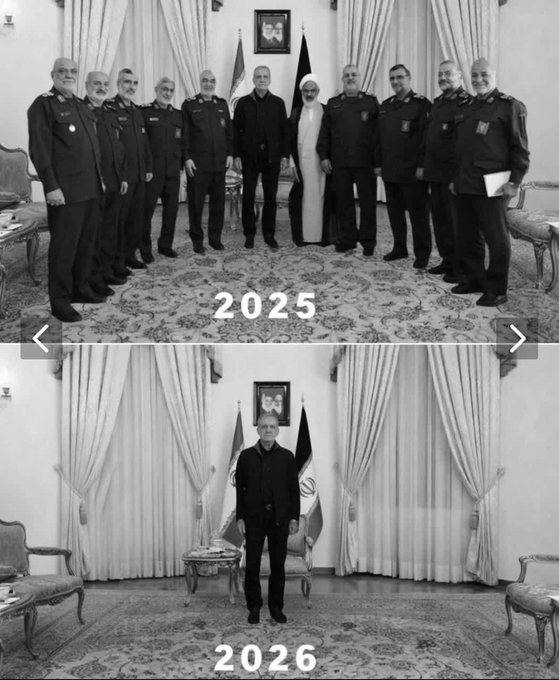
This follows the Supreme Leader replacing moderates with hawks in various key positions.

To put it simply, Iran is now on the offensive. It does show that they have a weakness: they need at least some oil sales getting thru, but it also shows that they are militarily dominant in the region, especially against land based assets. And my guess is they still aren’t seriously trying to take out naval ships, but are just firing enough missiles and drones to drain interceptors and force a withdrawal.

Iran also needs to put more pressure, fast, on the US economy before the mid-terms.

Meanwhile, in Yemen, the Houthis are advancing aggressively.

The Yemeni Armed Forces through a series of rapid operations, have achieved significant advances in the Taiz and Hodeidah provinces within just a few hours, covering an area of approximately 2,600 square kilometers, and have liberated numerous areas, including the strategically important port of Al-Mokha.

On the Taiz front, the Yemeni Armed Forces have made rapid progress in the districts of Al-Wazi’iyah and Mozah in western Taiz province. During these rapid advances, with the support of popular committees, the Yemeni Armed Forces have cleared the Al-Wazi’iyah and Al-Mokha, the important Khaled bin Walid base, and areas in the Al-Wazi’iyah district, including Al-Hania, Al-Aqma, and Al-Gheil, extending to the outskirts of Al-Shaqira, the center of the Al-Wazi’iyah district.

In southern Hodeidah province, the Yemeni Armed Forces have taken control of the important towns of Hays and then Al-Khukhah, and by continuing their advance along the coastal strip and liberating Yahtal, they entered and took control of the strategically important port of Al-Mokha.

The advances of this morning are reminiscent of the rapid advances made five years ago in the Hodeidah province, when, in November 2021, the Saudi-led coalition forces were forced to withdraw from the entire coastal strip, from within the city of Hodeidah to north of Al-Khukhah in southern Hodeidah province.

The intense pressure exerted by the Yemeni fighters on all fronts in western Taiz province and southern Hodeidah continues, and the forces of Tariq Saleh are reportedly fleeing the fronts towards Aden.

Overall, with the advances made over the past three days, the conditions have been created for the complete liberation of the southwestern coast of Yemen, and also for the strategic Bab-el-Mandeb Strait.

The Houthis are just better fighters than the mercenary forces Saudi Arabia is using, and the Saudi Army is a joke in any case.

The real battle of the Iranian war is yet to come: once Iran has cleared away the US forces protecting Israel, they will need to force Israel to tell the Americans to go to peace. By clearing the forces they will also make it much harder for America to hit Iranian tankers and infrastructure

Stay tuned. This is the most important war of the last 50 years.

Update:

What I write here is for the benefit of everyone, but alas, I live in capitalism and I, and the site, take money to keep running. If you value the writing here and can, please subscribe or donate.
 

Tit for Tat US/Iranian Strikes Resume

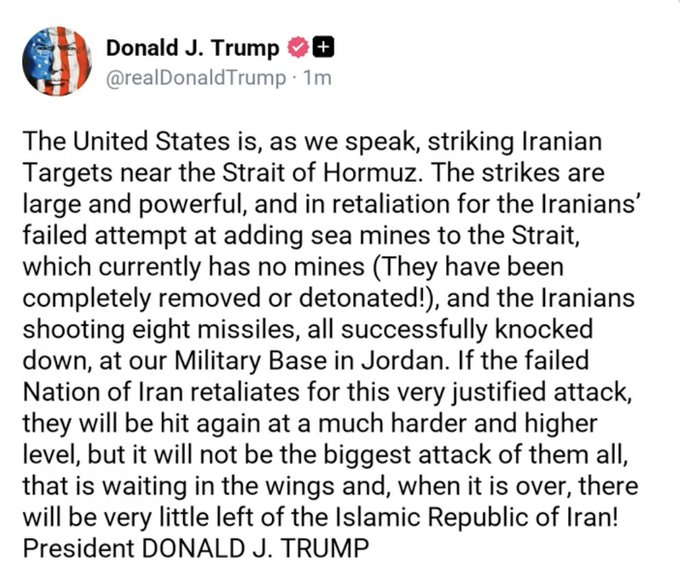
America hit Iran last night, taking out a couple launchers and radar aiming at ships the US is trying to get out of the Strait. Iran responded by hitting a US base in Jordan.

Today, around 8pm Iranian time, the US hit a variety of targets, some civilian (a fish powder plant?) and some military. Iran has now started its retaliation, which includes a lot of anti-ship missiles going after US naval vessels.

Last night’s attack by Iran:

launched its attack on U.S. bases in response to an American strike on Iranian naval facilities, which caused multiple casualties. The reported expenditure of more than 80 PAC-3 interceptors in a single engagement by some estimates represents more than ten percent of the entire American arsenal, at a time when interceptors are in very short supply across the Western world primarily due to mass use against Iran, but also due to mass donations to Ukraine. While U.S. government sources claimed that there was no damage to facilities from Iranian strikes, footage from the ground and satellite imagery has confirmed damage, compounding longstanding concerns regarding the Patriot’s limited effectiveness.

This comes back to what I said day one of the war: that the math favors Iran—the US and Israel will run out of interceptors long before Iran runs out of missiles and drones.

Both sides have been degrading the other sides radar (the US was late on this, but is now hitting the hard), but both sides still have satellite imagery to work from. (I’m 99% sure that China, Russia or both are providing real time feeds to Iran.) Loss of radars degrades defense more than offense, so more attacks can be expected to get thru on both sides, but, of course, Iran never had a lot of AD to begin with so this effects the US more.

Today’s attacks seem to mostly be tomahawks launched from US naval vessels, which are also in short supply.

The US attacks came as:

just yesterday, the U.S. Secretary of the Army AND the U.S. Deputy Undersecretary of the Army both reportedly resigned from their roles, leaving the United States without the Army’s number one and number three man.

Three of the remaining five regional commanders also gave Hegseth a non-concur on the plans, which means “we’ll do it because it’s a legal order, but we think it’s stupid.”

After the second set of American attacks Trump bloviated:

Once again, America can’t do this without indiscriminate use of nukes. Those nukes would not take out Iran’s missiles, which are deep in mountains, and Iranian commanders would then take out Israel, which yeah, they can do. Probably effectively destroy the physical economy of every US vassal within range and those regimes would not survive the fallout. Saudi Arabia is already in enough trouble that they’re negotiating an 8 billion dollar loan.

Iran was willing to let the war drag out because their calculation was that they could take the economic pain for longer than the US, and it avoided a lot of damage to Iran. But that doesn’t mean they can’t win a hot war, by my calculations they can, will and in fact, really already have except that Trump (unlike most of his generals) won’t admit that America has lost.

We’ll see if this keeps going. I don’t really see how it should, given American weaknesses, but Trump isn’t a rational actor. though I’d guess he really wants the war over before the midterms.

As for Iran, they’re digging their heels in hard, saying that peace only happens if Trump and Israel obey the MOU (which includes an end to Israeli attacks in Lebanon, where they are bulldozing entire towns that have existed for thousands of years.)

Since Trump can’t or won’t rein in Israel, if Iran’s serious, this is going to go on until Israel is begging for peace.

And folks? You’re living thru a war which will be studies by historians for ages as the war that marked the end of America as a superpower.

Update: interceptor depletion is real

What I write here is for the benefit of everyone, but alas, I live in capitalism and I, and the site, take money to keep running. If you value the writing here and can, please subscribe or donate.
Capacity v.s. Desire: What I Got Right & Wrong At The Start of the Gaza Genocide

Regular readers will remember that I thought the resistance could defeat Israel over the genocide in Gaza. Iran, Syria, Iraqi militias, Hezbollah and Ansar-Allah.

I was right.

They could. But the decision was made not to.

I base this on the fact that Iran is defeating the US and Israel.

If they can do it now, they could have done it then, when they still had Syria and Hezbollah hadn’t been mauled.

They didn’t because they didn’t want to. They still don’t: what has changed with the leadership is a willingness to defend Iran and Hezbollah in southern Lebanon. The MOU failed, ultimately, because Israel would not stop attacking in Lebanon.

When the US and Israel took out the previous leadership, they changed the desire: what Iran wanted to do. Iran is no longer willing to play nice, and it is willing to stay at war to help Hezbollah. It wasn’t willing to go to war to help Hezbollah or stop the Gaza genocide before, and it won’t stay at war to stop the genocide now. It will, however, try and stop the ongoing ethnic cleansing in Southern Lebanon, which is more than the Lebanese government will do, so there’s that.

There are three parts to understanding in situations like this

  1. What can be done.
  2. What elites will do.
  3. What the consequences of action or inaction are. The real world has the final say.

The consequence of Iran not intervening was the death of substantially all of their senior leadership, and the same happened to Hezbollah. Oh, and at least half a million deaths in Palestine (if you believe the official numbers you’re so stupid I’m surprised you can breathe.) And, of course, the loss of Syria.

(Slightly inaccurate, one other person survived)

There was a complete insistence on never seizing the initiative or even responding significantly to Israeli or American attacks, so they just sat their and let Mossad and the CIA line up their ducks and knock them down.

This is always the hardest part of analytic prediction of events. There really is a lot of freedom at the top: they have a great deal of choice about what to do and what not to do. (Trump has shown that, contra arguments I heard for decades, that in fact, the President can “just do things”.)

Constitutionally cautious, Iran’s leadership was unwilling to ever fire first, or if fired on, to even fire back in a genuinely painful fashion. They certainly weren’t willing to shoot a missile to save an ally.

And so, emboldened by their apparent weakness, the Israelis and America eventually went to war with them: after stripping them of their Syrian ally, shattering Hamas and badly damaging Hezbollah: after weakening their allies, whom Iran refused, repeatedly, to defend.

But, and this is the important point: Iran always had more missiles and drone and production ability to run the US and Israel out of interceptors. It always had the ability to win a war, its leaders just didn’t have the desire.

I got the capability right, and the intention wrong. A lot of people got it the other way around: they assumed America and Israel were stronger than Iran in a local fight, and that Iran was holding back because they were weak. Since they thought Iran was weak, starting a war made sense.

It’s good that Iran’s new leadership has decided there’s an ally they won’t let die rather than do nothing, even if it comes after half a million dead Palestinians and the capture of Syria by actual terrorists. And it’s also true that Iran has done more than anyone nation except Ansar-Allah (oddly, the only actually ethical nation in the entire world: the only one actually willing to go to war to stop a clear genocide). So I don’t want to be too harsh.

But the bottom line is that if Iran, under its old leadership, had fought sooner they’d have had a lot more allies, and been in a stronger position militarily. Perhaps being 100% the clear victim and reasonable party is worth the losses, there are those who argue it is so.

But that’s a lot of dead, maimed, tortured and raped people to get to “we’re the reasonable victim.”


What I write here is for the benefit of everyone, but alas, I live in capitalism and I, and the site, take money to keep running. If you value the writing here and can, please subscribe or donate.
Oilpocalypse Incoming

So, it seems that Ansar-Allah (the Houthis) struck an oil refinery in Jizan, Saudi Arabia. They also took a shot at a refinery in Yanbu, apparently intercepted by a battery the Greeks had there (what?)

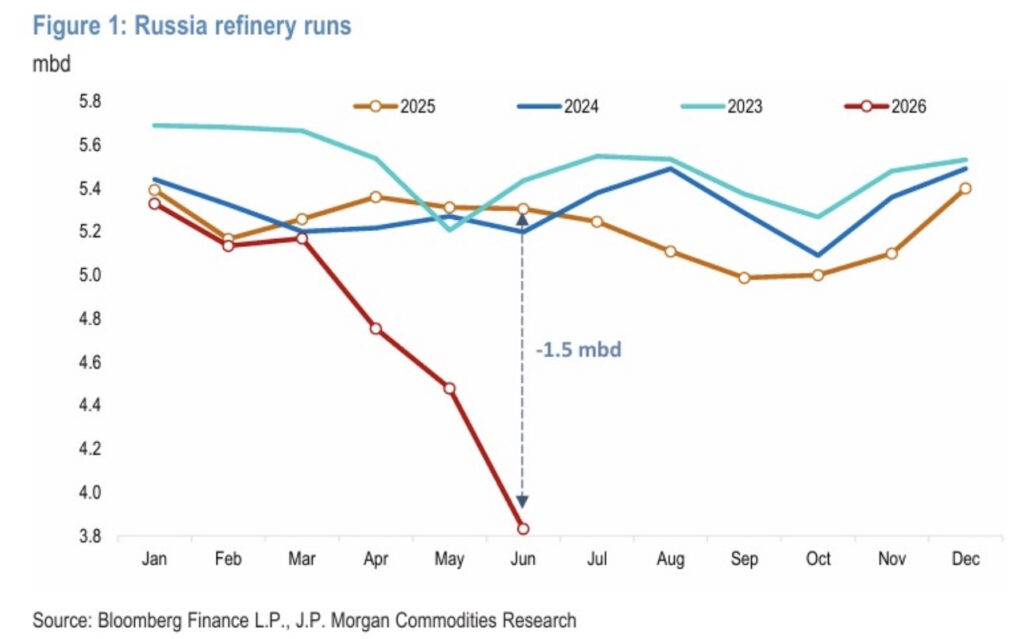
Anyway, this is getting real. Between the Ukrainian strikes on Russian refineries, which have been very successful, Iranians hits, and now the Houthis, I don’t see how we avoid serious shortages. It’s the refineries that matter most: crude is worthless without refineries and they’re expensive, take a long time to build and aren’t always easy to repair, depending on what exactly got hit.

I also don’t see how we avoid massive famines and increased food prices in places that don’t have a formal famine. A lot of fertilizer runs from oil thru refineries.

The irony here (conspiracy theorists of elite intentions to depopulate the world, here you go) that Trump confirmed he OK’d the Saudi strike on the Houthi airport which set Ansar-Allah off. They’ve closed the strait and they’re going right for the jugular vein with these refinery strikes. If they keep shooting, the missiles will get thru. The defenders have to be lucky every time, they only have to be lucky on occasion.

Beans and rice. If you need distillates like diesel or motor oil, stock up now. It’s hard to stock up on medicine, but a lot also used petrochemicals, so do what you can: even simple things like aspirin are included.

Anyway, I don’t think Trump is together enough to have a diabolical super villain plan. To the extent he can plan at all, it’s about his next corrupt scam or bribe. But it amounts to the same thing in the end.

It’s hard to overstate how much this will destroy all goodwill for America in the globe. I mean all of it. Everyone knows the US started the war and refuses to stop it, whatever their reasons are. And when people can’t eat, the hatred will be immense. Iran will catch some backlash, but most people get that they’re defending themselves.

Empires end ugly and stupid. The rule of incompetence in late Imperial rulership maintains its record. I expected stupid, but it’s still flabbergasting to witness late Imperial Roman levels of moronitude.

Amazing.

Amazing is not a synonym for good.


What I write here is for the benefit of everyone, but alas, I live in capitalism and I, and the site, take money to keep running. If you value the writing here and can, please subscribe or donate.

America Doesn’t Have Enough Missiles To Fight Iran

Readers will remember that at the start of the Iran war I said that if it got serious, the Iranians would win, because they would run the US out of missiles, especially air defense missiles.

The math is simple. If Iran keeps firing, and the US/Israel does not take out the launchers and missile stockpiles in large numbers, Iran will run the US and Israel (it has its own variants, but the same supply issues) out of interceptors. At that point Iran hits everything it shoots at.

If Iran just keeps going long enough, it WILL win the war. The main danger is Iran’s leaders accepting a cease-fire too soon.

Well, confirmation from within the government:

“The U.S. is planning for a wider war,” said one U.S. official familiar with internal administration discussions, adding that the Pentagon was increasing the number of military aircraft in the region.
But the official, speaking on the condition of anonymity because they were not authorized to talk to the media, cautioned that the expansion of U.S. operations will be limited by dwindling stockpiles of air defense and long-range munitions and constraints on the ability to surge more troops and aircraft into the area because of battle damage.
“We do not have enough to safely sustain operations, and I don’t think the White House is aware of that,” the official said.

You will notice that I said the main mistake the Iranians could make was going to peace too soon. At least militarily speaking, there were diplomatic reasons to do so, since both Pakistan and China wanted a peace deal, and Pakistan has a defense pact with Saudi Arabia. Iran needed to prove that they had made all possible efforts, to continue receiving the support they need from China and to keep Pakistan out of the war.

There were also significant internal political reasons. What most people don’t understand is that the supreme leader almost never over-rides government consensus. Elijah Manjier is reliable on this (part behind a paywall). He has a lot of contacts in Iran, Hezbollah and Hamas.

The Leader of the Islamic Revolution, Sayyed Mojtaba Khamenei, never trusted the Memorandum of Understanding negotiated with Washington that was too good to be true. From the outset, he reportedly expressed reservations about American real and honest intentions and questioned whether the United States would ultimately implement its commitments. Nevertheless, despite his scepticism, he did not impose his personal assessment on the country’s political institutions or prevent the agreement from proceeding once it had secured substantial institutional support equivalent to the majority of the National Security Council voting.

In doing so, Sayyed Mojtaba Khamenei reportedly followed the political approach adopted by his assassinated father, Ayatollah Ali Khamenei, during the negotiations that produced the 2015 Joint Comprehensive Plan of Action. Although the late Ayatollah Ali Khamenei repeatedly warned that the United States could not be fully trusted, he allowed President Hassan Rouhani, Foreign Minister Mohammad Javad Zarif and the majority supporting them within the Supreme National Security Council to pursue the nuclear agreement because they believed diplomacy remained preferable to confrontation.

This position reflected a broader principle within Iran’s strategic decision-making system. The Leader establishes the general direction of national policy, but crucial security decisions are debated within institutions that include officials elected directly or indirectly by the population and their representatives, among them the president, the parliamentary speaker and senior government and military representatives. When a substantial institutional majority supports a particular course, the Leader permitted that collective judgement to be tested, even where it conflicts with his personal assessment of the risks involved.

However, the MOU’s failure strengthens those in the government who thought it was a waste of time.

The damage extends beyond the current political leadership. Future Iranian governments, regardless of their ideological orientation, will judge the risks of dealing with Washington against the combined experiences of the JCPOA and the more recent Memorandum. Even officials inclined towards negotiation may conclude that engagement carries prohibitive domestic costs unless future arrangements include enforceable guarantees, simultaneous implementation and mechanisms preventing one party from receiving concessions before abandoning its own obligations…

…Yet diplomatic options have not disappeared completely. The Memorandum itself showed that both sides remain capable of negotiating when the military, political and economic costs become sufficiently high. Any renewed process, however, would require a substantially different structure based on reciprocal implementation, verifiable sequencing, the release of assets alongside measurable Iranian steps, and guarantees sufficiently credible to survive political change in Washington or Tehran.

Manjier’s connected. I’d assume the last paragraph reflects what the Iranian government wants said about any possible new agreement.

Meanwhile in the war itself the Iranians are concentrating on taking out US bases, radars, supply depots, command/communications centers and so on. They’re systematically degrading the infrastructure the US uses. Note that they have started attacking in Jordan, which they had rarely done before. Jordan could be considered the “last shield” before Israel, and Israel’s basing of US assets is the next big goal, I suspect.

It seems clear that Iran is taking apart US logistics and command and control, and depleting weapon stocks faster than the US is doing this to Iran.

Again, the simple math.

Anything can happen in war, but I don’t see any way for the US to win this war if Iran stays the course, and we haven’t even included all the shortages coming down the line, especially now Ansar-Allah has closed another strait. The only people with serious leverage over Iran are China and Pakistan (and Pakistan’s is limited. There’s a deal, but they’d have mass riots if they tried to attack Iran. Pakistan’s population support for Iran polls around 80%.)

If America were even marginally competently run this would be the point where Congress would impeach Trump. He won’t admit defeat and oil stockpiles are running low. He has no viable part to victory, but keeps acting as if he does. He’s turning a military defeat into an economic catastrophe thru his delusional disconnect from reality, or perhaps because he’s being blackmailed. Whatever the reason for his behaviour, he needs to go. (Yes, I’m aware this won’t happen, that’s the point.)

In all my life, and I’m getting old now, I have never seen a stupider war or an American elite more determinedly detached from reality.


What I write here is for the benefit of everyone, but alas, I live in capitalism and I, and the site, take money to keep running. If you value the writing here and can, please subscribe or donate.


x

Manipulating Numbers Rather Than Logistics (Oil Version)

If you’ve been following oil prices since the Iran war started you’ve probably been surprised at how low prices have often been. I certainly was, at first.

The issue is fairly simple: most governments are worried about the price of oil, and not the supply of oil. So they’ve taken various measures to keep prices low. Some of those have been manipulative financial and some of them have been massive releases of oil from reserves.

IEA chief Fatih Birol told Bloomberg that a historic 400-million-barrel emergency release, equal to roughly 2.5 million barrels a day, helped push oil prices down by $20.

The price of oil, though, isn’t really the issue. One part of it is refinery capacity. A fair bit went off line in the Middle East, but ironically, even more in Russia. Why is Russia systematically destroying ever gas station in Ukraine? It’s retaliation for constant hits on Russian refineries.

Marathon Petroleum’s own management flagged on the Q1 earnings call that roughly 6 million barrels per day of global refining capacity is offline, about 6% of the world total. Ukraine’s drone campaign against Russian refineries is the largest single piece, but Middle Eastern facilities inside the Persian Gulf export corridor, and Chinese refiners voluntarily throttling to preserve inventory, add to the shortfall.

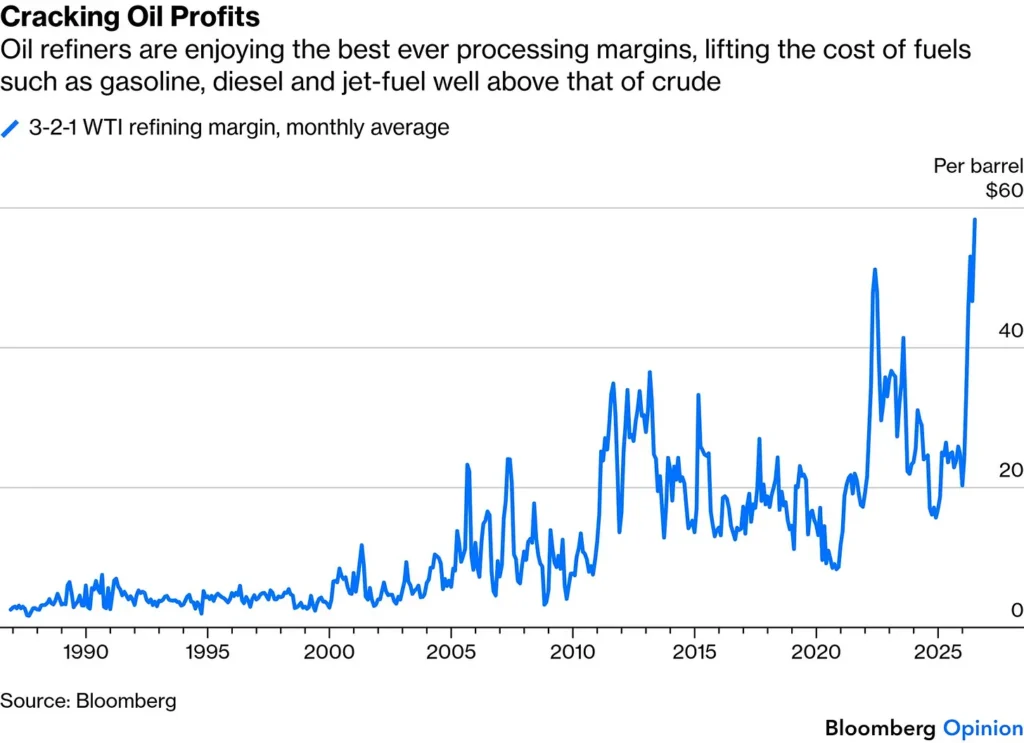
As a result Russia is no longer exporting diesel. And even though oil prices are low, gasoline prices are not as low as one would expect, because short refinery capacity means this:

Amusingly the Europeans and Americans have been encouraging Ukraine to hit refineries.

Now you may think “but America is an excess oil producer.”

Yeah, but it doesn’t matter. What matters is refineries and the type of crude oil involved. We aren’t just talking about gasoline, diesel, jet fuel and bunker fuel (ships), we’re talking about fertilizers, sulfuric acid (used for amazing amounts of processes) and so on. This cascades out into medicine (your aspirin for example), packaging, semiconductor production (hey, even higher prices) and whatnot.

But with rare exceptions (hello, China, again) most governments have not managed the actual supply situation.

In a rational economy prices and supply of crucial goods would be managed. For example farmers would get fertilizer and diesel at subsidized prices. Truckers shipping important goods would get subsidized diesel. Drug manufacturers would get guarnteed supplies (though not subsidized in most cases, they make tons of profits, just force them not raise prices.)

Rational governments would say “OK, what parts of the economy are actualy important (food, medicine, transport)?” and act to protect those parts of the economy, and would ration and subsidize those goods.

Instead our elites manipulate the price numbers and make the actual physical situation worse as they do so, by not allowing high prices to lower use and by not allocating key parts of the economy what they need at reasonable prices. Oh, and by releasing absurd amounts from the reserve to manipulate prices rather than using the reserve for actual necessities. They’re so used to an economy where just manipulating prices seems like all you need to do because there’s a global market with surplus. They don’t know how to handle an economy with actual, genuine shortages.

Anyway, as best I can tell if the Strait stays closed we are now weeks to about two months away from actual physical shortages in the first world. (They’ve already hit in the developing world.)

Then the fall harvest comes in and we get terrible numbers from that, and food prices surge.

This is the stupidest war of my entire lifetime and I’m old enough that this includes Vietnam, which was stupid beyond belief, but not one-tenth as moronic as the Iran war. A war of complete choice which the US has lost, won’t admit it has lost and is in danger of running the world into a decade long depression.

If it stops now or soon, it will suck, but we’ll get thru. But if Trump dismantles Iranian infrastructure like he’s threatened (by no means sure, this is Trump, but also not impossible, this is Trump) the Iranians have said they will respond by dismantling Gulf infrastructure: that means refineries that will take years and years to rebuild. Oil fields. Facilities producing helium. A decade of not enough fertilizer.

There is a real goddamn economy and if this happens, a lot of people will DIE due to famines and fuel shortages. Tens of millions. Maybe much more. You can’t just take 20 to 30% of the world’s supply of key resources offline and think “it’ll all be OK, the market will sort it out.”

I mean, the market will, sort of. But along the way will be a LOT of deaths and suffering

If the US had an even remotely operational governing system Trump would be impeached and removed in record time. He’s a fiasco, and he’s one itchy trigger finger away from being a catastrophe.


What I write here is for the benefit of everyone, but alas, I live in capitalism and I, and the site, take money to keep running. If you value the writing here and can, please subscribe or donate.

Brief Iran Update

So, Iran closed the Strait because Israel wouldn’t leave Lebanon. Some ships tried to leave to Iran struck the ships. Trump called that a violation of the truce and struck targets in Iran.

As predicted, there is no peace possible if the US won’t control Israel.

Meanwhile in Lebanon the government signed an agreement with Israel saying that Hezbollah is to be disarmed. Hezbollah straight up said:

Hezbollah MP Hassan Fadlallah: ‘Hezbollah considers the Lebanese presidency and government illegal and unconstitutional. We shall not permit this unconstitutional institution to implement any deal on the ground.’

The Lebanese army can’t disarm Hezbollah, Hezbollah is far stronger. I doubt they’ll seriously try, whatever Aoun orders. The deal would amount to ceding southern Lebanon to Israel permanently. Aoun might not care, it’s all Shia land, but Hezbollah won’t go along.

No peace is possible if the US won’t either restrain Israel or cut it loose. “If Iran and Israel fight, we will not intervene.”

Controlling Israel is easy. What Kissinger and Nixon did was just stop weapon shipments. That’s all it takes.

Oh, and Israel lost its battle to take Ali Taher Hill. Wound up begging Hezbollah to allow them to retrieve the corpses of their fallen soldiers. The Israeli ground forces really are absolute crap.

The MOU was very one sided: everything was what Iran wanted, not what the US wanted. That’s because the Strait being closed really will wreck America. This remains true. Iran appears to believe this, and they are willing to go back to war or semi-war until the US disciplines Israel. No signs of cutting Hezbollah loose.

Hope you’re looking forward to very high food prices, bare shelves and eventual food riots. Because if the US doesn’t make peace these are all coming to America. Oil prices have been held artificially low by market manipulation, but there is a real world and in that real world distillates like diesel are running very low.

At this point it’s clear Trump has to go, for America’s sake. Vance is scum, but he’s realistic scum. If it was up to him, there’d be peace.

Here’s hoping the MOU gets back on track. I don’t like the world where it doesn’t.

What I write here is for the benefit of everyone, but alas, I live in capitalism and I, and the site, take money to keep running. If you value the writing here and can, please subscribe or donate.

Israel’s Support Is Eroding In the US

A friend pointed out to me that Israel’s support is eroding hard. The elite consensus is shifting. Point in case:

The hard core Zionists will keep opposing this deal, of course, but there are two groups that are shiftable. The first is the one that Tapper belongs to: he’s an authority follower. He’s been hardcore pro-Israel and loathes Muslims, but his first instinct is to follow the leader. Trump’s made a clear turn, and Jake is following.

The second group are those who need administrative favor. Their livelihood or plans depend on the levers the President controls favoring them. They were for Iraq, for Ukraine, etc… but they have no strong ideological commitment, only self-interest.

Trump made a mistake letting hard core Zionists roll up media and social media, but there’s still enough run by self-interested or follow the leader types that if Trump stays solid, the American elite zeitgeist will shift towards his stance. Israel is an ideological commitment, it’s not, for most elites and courtiers, all that involved with making lots of money or being part of the in-group. If the window shifts, they’ll shift with it.

At a fundamental level what happened is that America got itself involved in a war which it couldn’t just walk away from. Losing in Vietnam was embarrassing but really, who cares? Just walk away. Losing in Afghanistan, likewise.

But the Iranians have the West’s balls in a vise and the vise was slowly tightening. Key reserves were way down. Oil at Cushing OK is near historic lows. Distillates are getting scarce. Market manipulation of the price of oil was very successful, but actual physical shortages were on the way, starting in a month or so. (Ironically, price manipulation meant that oil reserves drew down faster than if actual price discovery had been allowed.)

There is a real world, and a real economy and Iran had control of it. The econo-morons talking about how the effect of this has been less than the oil shocks are right when looking at market numbers, but it wasn’t going to stay less and even Trump figured that out.

So the neocons and the hard Zionists will attack, but if Trump had the least concern for the actual economy, he had to make a choice.

Meanwhile Israel is still fighting in Lebanon and the first real battle of the Lebanese invasion is taking place.

Both Hezbollah and Israel are concerned there’ll be a new, actually real ceasefire and Israel is seeking to create facts on the ground. Ali Taher hill is an important strategic objective, giving whoever controls it sight lines for miles around. This is the first large engagement I’m aware of in this invasion where Hezbollah has chosen to stand and fight, instead hitting and fading. (That’s not a criticism. Guerilla warfare makes sense for them.)

And so far they’re doing well, because the Israeli ground forces are actually crap.

The Iranians have not gone to Geneva for the signing or negotiations. They are holding firm on Lebanon. And that means Trump can either rein in the Israelis or the vise starts tightening around America’s balls again.

America cannot win this war. It is impossible. Even using nukes probably wouldn’t work fast enough. That’s why they agreed to a deal that is very pro-Iranian.

That has not changed. They can rein in Israel or cut it loose now, or they can do it in two months when the US is in much more pain, or in 4 months when there are food riots.

There’s a real world. America lost a war that matters. There’s going to be a price for that. If America is smart and not completely controlled by Israel, they’ll pay that price now and if necessary cut Israel lose, because the price will go up every day if the MOU fails.

What I write here is for the benefit of everyone, but alas, I live in capitalism and I, and the site, take money to keep running. If you value the writing here and can, please subscribe or donate.


Page 1 of 2

Powered by WordPress & Theme by Anders Norén