
Lula came back to win in Brazil. Flavio Bolsonaro, his opponent had more votes in the first round, but lost in the second. There are a few issues here to unpack.
First: there’s very little question in my mind that Flavio is corrupt and has engaged in criminal acts much like Trump and Biden and so on, indeed much like virtually all American elites.
As I pointed out about US lawfare, what makes this contentious is not the question of Flavio’s guilt or innocence, but that, as a rule, elites in Brazil are allowed to be corrupt. There are laws that are simply not enforced against them. So this is, in a sense, political: if Flavio (and his father) had stayed out of politics, they would have been left alone.
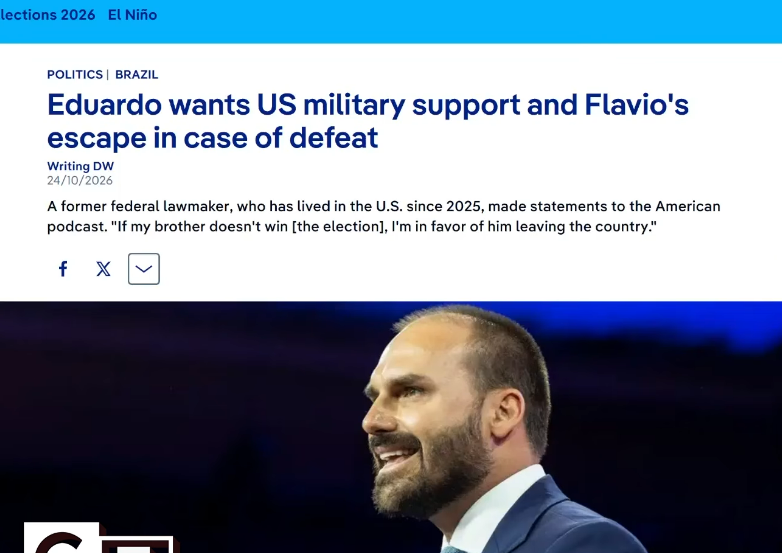
Given what just happened in Venezuela, such threats can’t just be waved aside.
But going after just the Bolsonaro clan doesn’t fix the problem. They didn’t come from nowhere: they came from a deeply corrupt oligarchical class which is becoming more, not less powerful, as they engage in mergers and acquisitions. Their power is growing.
They are also allied to Brazilian evangelicals (who are much like American evangelicals, complete with love for Israel and voting as their pastors tell them to), and evangelicals worship is growing FAST.

Evangelicals tend heavily conservative, and not traditional conservative, but authoritarian, even fascist.
Lula’s eighty. This is probably his last term. If he doesn’t break the power of the oligarchs and do something about the Evangelic virus, Brazil is heading right wing authoritarian and hard.
But doing anything will be very difficult. Why?
Ouch.
It’s my annual fundraiser. This allows us to cover the changeover of hegemony from America to China, environmental collapse, internal US fascism, what a better society would look like, Gaza, AI, the coming stock market crash and various other issues. As of this writing we’ve raised about $3,845 out of a $14,500 goal, from 47 people. It’d be great if you can help out (please don’t donate if your financial situation is dire.) You can Subscribe or Donate here or contact me at admin-at-ianwelsh-dot-net if you need another way to donate (mail, usually. A lot of cash apps don’t work in Canada.)
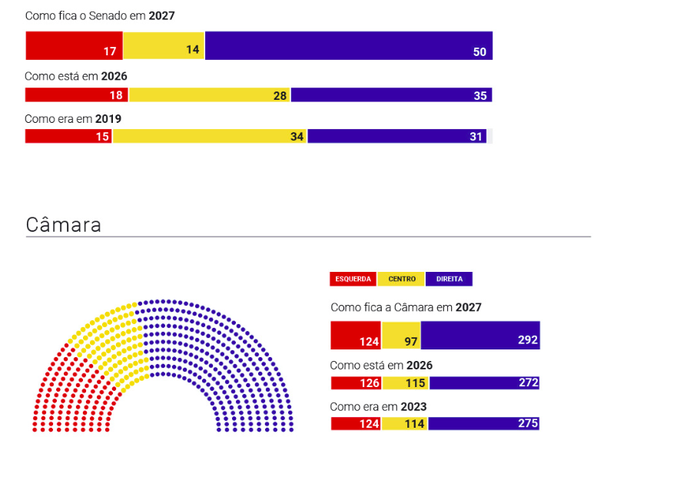
Now there’s some silver lining here. The non Bolsonarist right hates the Bolsonaro right, so some of them will support Lula in taking them down. The liberals/center likewise, but even so, Lula’s going to have a lot of trouble with congress.
The weakness of Catholicism is a real problem thru the world. Whatever one thinks of Catholics, there’s a real social gospel, take of the poor, works not jut faith part of Catholicism that makes it infinitely preferable to Evangelicism (which I regard as straight up anti-Christian, and people whom Jesus will not recognize.)
Although people tend to concentrate on the Church’s problems finding enough priests, I think the real problem is nuns. Nuns are the people who actually womanned Church: they ran the schools, did most of the food aid, were the backbone of Catholic hospitals, etc, etc. The collapse in vocations for nuns has been devastating to the strength of the Church. Without nuns they simply can’t create the community that was the core of Catholicism before the 70s.
Being a nun used to be a pretty good deal. If you were a woman who didn’t want to marry, and did want a career of sorts, it was one of the only ways out. Yes, men are in charge of the Catholic Church, but practically speaking the nuns mostly ran their own affairs. It was a way out of a society that offered women very little but “be a legal slave to your husband.” As things got better for women, they could get that and more without becoming a nun.
I don’t know the solution. I expect monasticism to revive as things get worse, but that’s not going to be fast enough to turn things around.
As for cracking down seriously on corruption and breaking up the Brazilian oligarch class, well, that too seems unlikely, they’re just too powerful.
So while I’m very glad Lula won, I don’t like the looks of what the future holds for Brazil.
Jessica
I was in Brazil in 1985. By coincidence, it was just as the 2-decade long US-backed military dictatorship ended. The mood of the country was quite upbeat. Even today, if I run into Brazilians and mention that I was there when Tancredo Neves was president, it triggers a wistful nostalgia. (Neves won against the military’s candidate, took office, and died of natural causes after barely a month. So he remains in memory as part of that utopian moment.)
Catholicism in Brazil felt dead, ethnic, museum-like even then. People identified as Catholic and were baptized, but that was as far as it went. Most I met had not been to church in years. Coming from a US Catholic background, it felt so odd, even though I had read about it years before.
US right-wing evangelical/fundamentalist Christianity is about a certain line through society. About the attempt to stay above that line or climb above it. That line is about respectability and being part of the modern world, the first world part of it. For many people near that line, staying afloat above it or clawing your way up and over it from below requires extra discipline. Those well above the line can play around but those too close to it risk falling if they don’t stay disciplined. Those below the line have quite little chance of climbing over it unless they are extra disciplined. This includes the discipline to stay away from the pleasures of those not trying to climb up.
I think that a fair portion of Korean Christianity is like this too.
In all this, there is also an attempt to link one’s fate to that of a certain vision of America, a very materialist, straight-laced America. This is largely the America that The Sixties were a revolt against.
Going farther afield, I suspect that Christianity may have been like this in late 200s Rome just before it became socially acceptable. Church leaders seeking martyrdom, big fights after the persecution ended about whether those who had caved to Rome’s threats could ever be forgiven. Perhaps a lot of that was about trying to stay above the rising tide of degeneration and decay. (Though the rise of Christianity to acceptability, then to intolerant domination did coincide with a period of stabilization in the Western Roman Empire, just before the final collapse.)