
The difference is huge:
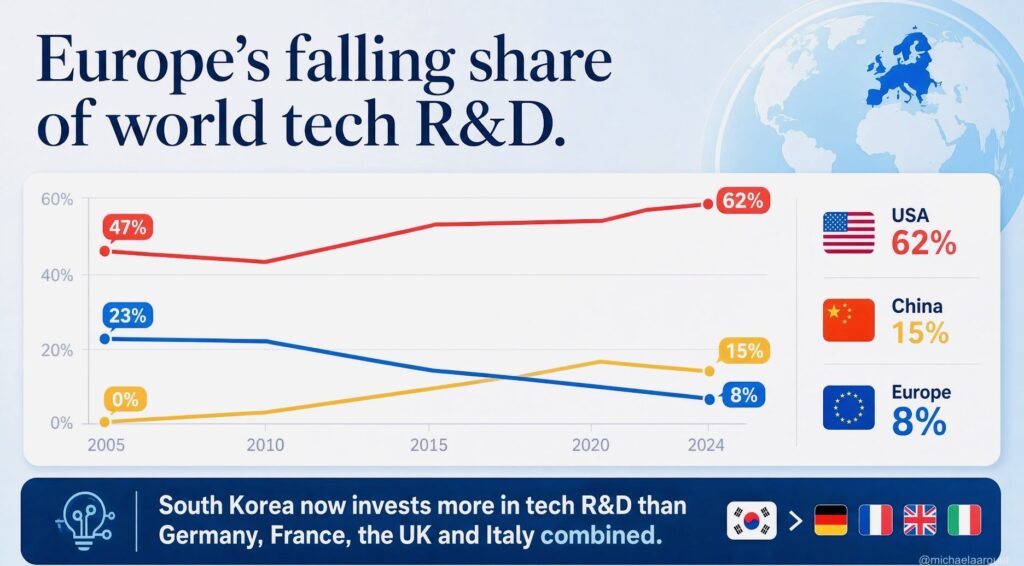
Europe’s share of global tech R&D has collapsed from 23% in 2005 to just 8% today, while the US has climbed to 62% and China has risen from near zero to 15%. South Korea now outspends Germany, France, the UK, and Italy combined in tech R&D. Yep, you read that right.
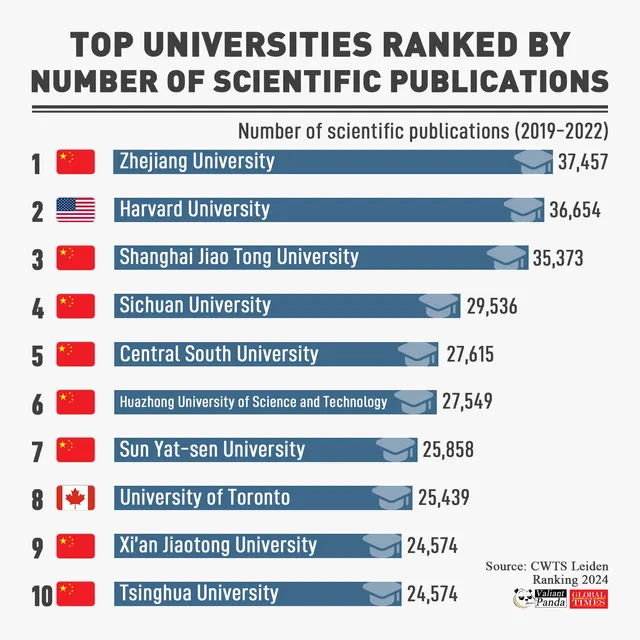
The funny thing is that China’s ahead in over 80% of techs, and has 8 of the top 10 research universities as measured by papers.
Tech:
New research from the Australian Strategic Policy Institute (ASPI) shows that China is now leading the way in 57 out of the 64 technologies assessed by its Critical Technology Tracker, which has now been updated to cover the last 20 years.
But the point here is that America is spending four times as much as China, and China’s so far in the lead they’ve essentially lapped America. (Europe is irrelevant, the other tech leaders are Korea and Japan.)
It’s my annual fundraiser. This allows us to cover the changeover of hegemony from America to China, environmental collapse, internal US fascism, what a better society would look like, Gaza, AI, the coming stock market crash and various other issues. As of this writing we’ve raised about $5,120 out of a $14,500 goal, from 58 people. It’d be great if you can help out (please don’t donate if your financial situation is dire.) You can Subscribe or Donate here or contact me at admin-at-ianwelsh-dot-net if you need another way to donate (mail, usually. A lot of cash apps don’t work in Canada.)
It’s probably a bit tiresome for regular readers, but I bring this all up to emphasize a few points.
First: GDP means nothing. Nothing. Everything in the US is way more expensive, inefficient and unless it’s a luxury sector serving the wealthy, of low quality.
Second: there is NO possibility of the West catching up with China without reducing costs and increasing efficiency. It just can’t be done. That means health care, real-estate, food costs: practically everything.
Third, though not obvious in the above data, much of the efficiency comes from the fact that China has a massive ecosystem of tech firms, including huge clusters of small and middle sized businesses. You want to prototype in China, you can walk right into a factory in Shenzen and have it days to weeks. In the US it takes months or years.
Once you lose this ecosystem, and the US has lost much of theirs, getting it back is unbelievably hard. You’ve got to control costs, and so on, but it also takes decades of industrial policy. There’s no quick cure for what ails the West, too much is gone already, and that is compounded by the scarcity of rare resources and key manufacturing, like machine goods, basic electronics (including things like magnets) and so on.
And since the West sanctioned the hell out of China, they’re now returning the favor. Their sanctions on Japan are likely to destroy multiple market leading tech companies. US and European companies can’t get what they need for many advanced technologies. It’s… well, not hopeless, but pretty damn close.
AI is the last big US tech advance, and my bet is that China, with its open source models that are up to thirty times cheaper (and can run on local systems) are going to win that race where it matters: in adoption. It’s just safer to use Chinese models, which, at least so far, also tend to have a lot less usage restrictions.
If the West didn’t want this to happen we had to act decades ago. The tech lead ALWAYS goes to where the manufacturing floor is, that was true for Britain to America and it’s true for America to China.
But cheer up, America being weak is one reason why Iran can win. America’s weakness is the best hope for Palestinians, since without America, Israel is toast. And, as an added bonus, America has lots and lots of billionaires. That’s what American policy was meant to do, and it succeeded. Chinese policy was meant to lift hundreds of millions of people out of poverty and to make China strong, and it succeeded.
The West got what it wanted: impoverished weak workers and the richest rich the world has ever known
spud
Bill Clinton faced challenges regarding supply chains, particularly as his administration’s policies led to significant trade deficits and the outsourcing of jobs. This shift was partly due to the embrace of free trade agreements and deregulation during his presidency.
Wikipedia Dissent
Challenges Faced by Bill Clinton Regarding Supply Chains
Trade Deficits and Outsourcing
During Bill Clinton’s presidency, the U.S. experienced significant trade deficits, which were partly attributed to his administration’s policies. Key factors included:
Free Trade Agreements: Clinton supported various free trade agreements that facilitated international trade but also contributed to job outsourcing.
Deregulation: The deregulation of markets allowed companies to relocate production to countries with lower labor costs, impacting domestic supply chains.
The shift in supply chains during Clinton’s administration had several consequences:
Job Losses: Many manufacturing and service jobs moved overseas, leading to concerns about job security for American workers.
Increased Trade Deficit: The U.S. current account deficit grew significantly, indicating a decline in trade competitiveness.
Clinton’s policies aimed at fostering economic growth through globalization and free trade, but they also raised alarms about the sustainability of domestic supply chains and the potential loss of jobs.
Wikipedia Dissent
Bill Clinton was warned that free trade agreements like NAFTA could lead to the loss of research and development in U.S. manufacturing as companies moved production and related R&D overseas.
Wikipedia freightwaves.com
Concerns About Research and Development Loss
Background on Free Trade Agreements
Bill Clinton’s administration actively promoted free trade agreements, notably the North American Free Trade Agreement (NAFTA). While these agreements aimed to enhance trade and economic growth, they also raised significant concerns regarding the potential negative impacts on U.S. manufacturing.
Clinton was cautioned that such free trade agreements could result in:
Outsourcing of Manufacturing: Companies might relocate production facilities overseas to take advantage of lower labor costs, which could lead to a decline in domestic manufacturing jobs.
Loss of Research and Development (R&D): As manufacturing moved abroad, related research and development activities could also shift, diminishing the U.S.’s capacity for innovation in manufacturing sectors.
The implications of these warnings were significant:
**Job Losses**: Critics argued that NAFTA contributed to the loss of approximately 700,000 American jobs, particularly in manufacturing.
**Economic Dislocation**: The shift in production and R&D overseas could weaken the U.S. economy’s overall competitiveness and innovation capacity.
The concerns raised during Clinton’s presidency about free trade agreements like NAFTA highlighted the complex trade-offs between promoting free trade and protecting domestic manufacturing and innovation.
freightwaves.com Wikipedia
——–
bill clinton left us with his visionary economy for the 21st century. online sales of dog food, self driving cars, spacex and artificial intelligence, which chews up massive amounts of capital, not much to show for it, except massive stock market bubbles, that benefit the rich.
https://theblundervault.substack.com/p/from-mascot-to-meltdown-the-petscom
From Mascot to Meltdown: The Pets.com IPO Disaster
How a Sock Puppet, Super Bowl Ads, and Wall Street Hype Turned Pet Food Into a $300 Million Cautionary Tale
Kaizen Lee
Sep 23, 2025
“In February 2000, America tuned into the Super Bowl and met an unlikely celebrity: a wise-cracking sock puppet dog, shouting about how you could finally buy pet food online. The ad was everywhere – on TV, in parades, even on late-night talk shows.
For a moment, Pets.com wasn’t just another dot-com startup; it was the dot-com startup. Backed by Amazon, beloved by Madison Avenue, and adored by investors who couldn’t get enough of anything with “.com” in its name, the company seemed destined to define the future of e-commerce.
But behind the barking mascot was a business bleeding cash so fast it might as well have been pouring kibble into a shredder. The idea of shipping 40-pound bags of pet food across the country – often at a loss -looked visionary in glossy commercials, but brutal in accounting ledgers.
In less than two years, Pets.com went from IPO darling to dot-com disaster, collapsing so spectacularly that its sock puppet outlived the company itself. This is the story of how hype, hubris, and the illusion of inevitability created one of the most infamous IPO flops in business history.”
—————
https://cepr.net/publications/president-clinton-the-economy-started-losing-manufacturing-jobs-while-you-were-in-office/
President Clinton, The Economy Started Losing Manufacturing Jobs While You Were in Office
Jun 20, 2011
By Dean Baker
“Actually, if President Clinton paid attention to economic data he would have noticed that not only were we losing manufacturing jobs during his last three years in office, but the trade deficit was soaring. The trade deficit grew from just over 1 percent of GDP in 1996 to over 4.0 percent of GDP by the 4th quarter of 2000. President Clinton’s team must have been doing one heckuva job enforcing trade laws.
More importantly, the rest of his story makes no sense either. The United States borrows from China, Japan and other countries because of our trade deficit, not our budget deficit. We were borrowing huge amounts from Japan and China at the end of the Clinton presidency, but most of their loans went to buy stocks, private bonds, and mortgage backed securities, not government bonds. In fact, by the end of the Clinton presidency, because of the large trade deficit, the country was accruing debt to foreigners at a then record pace.
Anyone who thinks that this didn’t matter because the foreigners were holding private assets and not government debt should realize that if they desired for some reason to own government debt, any day of the week they could sell their stock, bonds, or mortgage backed securities and buy government debt. The issue is indebtedness to foreigners and the potential drain on future income. It matters not at all whether the debt is on the public or private side.
This raises the final point, why did the trade deficit soar in the last years of the Clinton administration (aside from the fact that President Clinton apparently was not paying attention)? The answer is simple. The value of the dollar soared.
This was the result of Treasury Secretary Robert Rubin’s high dollar policy. This was a rhetorical point when he first took over as Treasury secretary in 1995. He put the muscle of the IMF behind it in the East Asian bailouts of 1997. These bailouts forced the East Asian countries to repay debts in full. This could only be done by allowing the value of their currencies to plunge against the dollar, making their exports hyper-competitive.
Also, the IMF bailouts were considered so onerous by the rest of the developing world that every country that could decided it had to accumulate massive amounts of reserves to avoid ever being forced to turn to the IMF. This meant pushing down the value of their currencies against the dollar as well. In the late 90s, the normal flow of capital from rich countries to poor countries was reversed in a major way, with developing countries becoming massive lenders to the United States.
This was definitely bad policy, but it was President Clinton’s policy, not President Bush’s. The dollar actually depreciated moderately under President Bush. He certainly should have done more to push down its value, which would have corrected the imbalances built up in the Clinton years, but President Clinton has events seriously backward in this piece.”
————–
bill clinton threw away two hundred years of american wealth and knowledge, to extend and goose a stock market bubble. now his disastrous policies will take decades to reverse, if it can be reversed, i have my doubts.
Greg
Couldn’t agree more – I work in tech R&D, I’m a Linux kernel engineer employed in that sector and you’re making a great point.
I have a Linux system in my home lab with an Nvidia RTX 5070 and I run it as an AI system locally with Qwen3.5-9b fitting nicely into the available VRAM. It’s reasonably fast and works well for me and I don’t have to let the Cloud AI assholes steal my data and train their models on my inputs.
cc
Like the way you ended the post: “the West got what it wanted”. So very true.
Feral Finster
What do those numbers look like with AI stripped out?
Carborundum
A couple of comments:
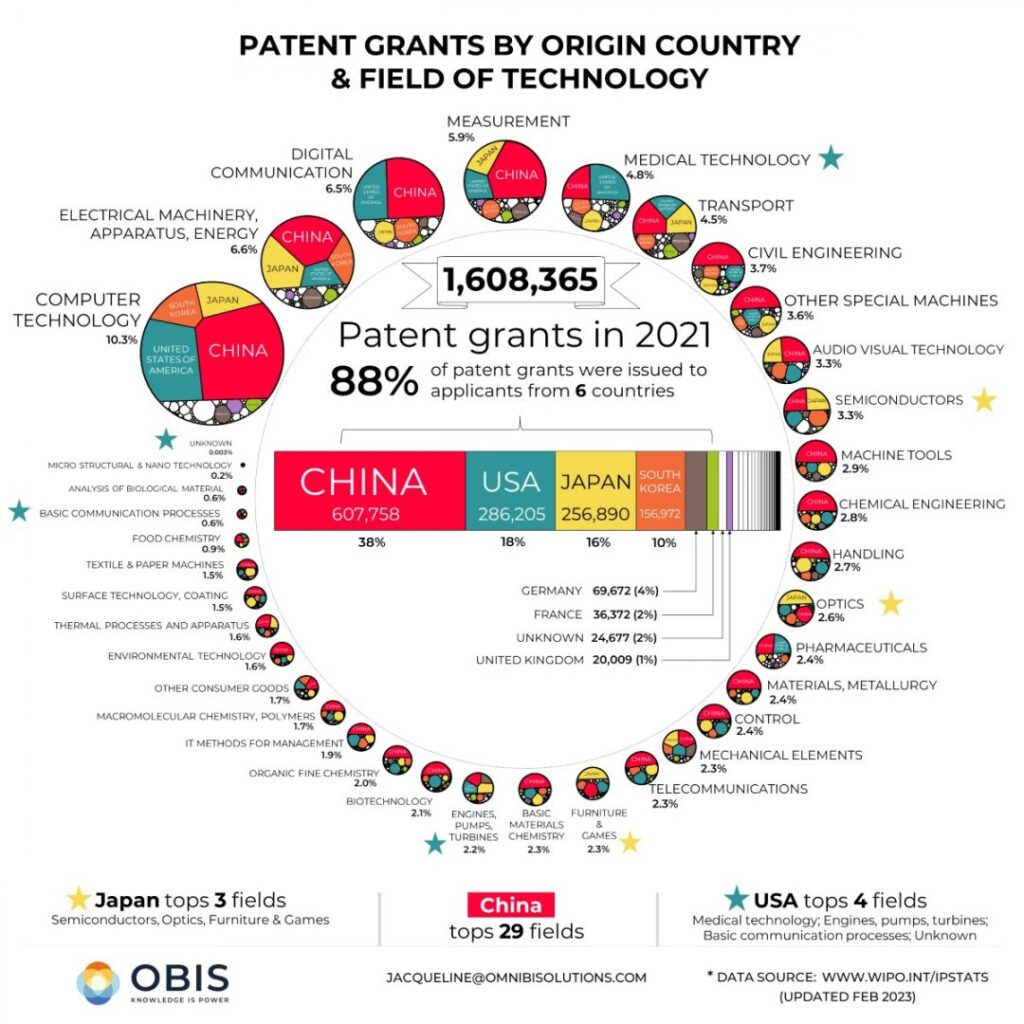
1) Raw numbers of academic papers and patents are not great metrics. The bar for both is so low that quantity alone doesn’t tell you a lot; additionally, both are very susceptible to juicing (what it takes to get published and what it takes to get a patent issued have both declined quite a lot over the years). The ASPI report’s focus on high impact papers is a much better approach.
2) Directly comparing US and Chinese data from the EU Industrial R & D Scorecard (the source of data for the first viz) is a bit apples and oranges. The scorecard describes spending by the the global 2,000 largest corporate R & D investors – that grouping captures a much larger fraction of total US business R & D spending than Chinese business R & D spending (i.e., more Chinese R & D business spenders aren’t in the global top 2000). When one compares *total* Chinese and American R & D spending (corporate and public), adjusted for PPP, the levels are virtually identical. American intensity (i.e., as a fraction of GDP) is a bit higher, but not nearly so dramatically higher as this viz makes it seem.
3) I don’t think the success of the Chinese system is mainly attributable to their corporate ecosystem, laudable though it is in many respects. The ASPI report, which I think produces a much more robust measure, properly highlights the key role of the Chinese Academy of Sciences here.
spud
but we got crypto currency, surely a ground breaking technology, a product of the american 21st century miracle which will carry americans into the promised land. no need for anyone to get dirty or work with their hands. no need to make anything at all, and will help cement america into a super power.
and we know their is no need for regulation, investors are sophisticated, and bill clinton said finance learned their lessons from the depression.
————–
The largest cryptocurrency heist in history occurred recently when hackers stole $6.3 billion from Binance, the world’s largest crypto exchange. This incident is believed to be linked to North Korean cybercriminals, marking a significant event in the ongoing issue of crypto thefts.
BBC Yahoo
————–
Bill Clinton’s deregulation of financial markets, particularly through the repeal of the Glass-Steagall Act and the deregulation of derivatives, contributed to the conditions that allowed for the rise of cryptocurrencies. This deregulation facilitated a more speculative financial environment, which set the stage for innovations like digital currencies.
americanyawp.com Wikipedia
Bill Clinton’s Deregulation and Its Impact on Cryptocurrency
During Bill Clinton’s presidency from 1993 to 2001, significant financial deregulation occurred, which laid the groundwork for the rise of cryptocurrencies. Key actions included:
Repeal of the Glass-Steagall Act: This act, which had established a barrier between commercial banks and investment banks, was repealed, allowing for greater risk-taking in financial markets.
Deregulation of Derivatives: Clinton’s administration deregulated the trading of derivatives, including complex financial instruments like credit default swaps. This created a more speculative financial environment.
Consequences of Deregulation
The deregulation policies contributed to several conditions that facilitated the emergence of cryptocurrencies:
Speculative Financial Environment: The removal of regulatory barriers encouraged speculative investments, paving the way for innovative financial products, including digital currencies.
Increased Financial Innovation: The deregulated landscape allowed for the development of new technologies and financial instruments, which included blockchain technology and cryptocurrencies.
Clinton’s financial deregulation played a crucial role in shaping the modern financial landscape, ultimately contributing to the conditions that enabled the rise of cryptocurrencies. The changes made during his administration fostered an environment ripe for financial innovation and speculation.
americanyawp.com Dissent
What were the specific effects of the Glass-Steagall Act repeal on financial markets?
The repeal of the Glass–Steagall Act’s affiliation restrictions in 1999 allowed commercial banks to affiliate with securities firms, leading to the creation of large financial conglomerates that combined commercial and investment banking activities. This change was followed by increased concentration and interconnectedness among financial institutions, which some commentators link to the 2008 financial crisis.
Wikipedia Cato Institute
How did the deregulation of derivatives influence the rise of cryptocurrencies?
The deregulation of derivatives, particularly with the Commodity Futures Modernization Act of 2000, created a more complex and less regulated financial environment, which has parallels to the current landscape of cryptocurrencies. This history suggests that, like derivatives, cryptocurrencies may also face regulatory challenges and volatility as they seek to gain acceptance in financial markets.
blockworks.com Harvard University
What are the long-term implications of financial deregulation on future economic stability?
The long-term implications of financial deregulation include increased vulnerability and risk for the financial system, potentially leading to devastating financial crises, lower economic growth, and significant job losses. These risks outweigh the short-term benefits that deregulation may provide, as history has shown that financial instability can result in severe and prolonged economic harm.
mondovisione.com Federal Reserve Board
StewartM
As I’ve written before, the destruction of Western corporate science began almost 50 years ago, starting with Jack Welsh and GE. Others followed his slash-and-burn tactics to corporate science and capabilities, while public science (i.e., the national labs) withered on the vine. What took up the slack were universities, because universities provided free labor (i.e., grad students) but with everything else you get what you pay for. The kids may be smart, but being inexperienced, they’ll make lots of rookie mistakes that an experienced scientist in the same field would not make.
Also, in corporate science, the hardware itself was not replaced when it became obsolete or broke, so that’s another loss.
What I found were that my Chinese coworkers by contrast were a joy to work with–they were smart, humble, and eager to learn. They wanted to become experts in the specific fields they were working in.. The American kids we hired in, by contrast, often wanted only the shortest of stints doing actual tech work before they would bolt at the first opportunity to the management ladder (which paid better). That’s in contrast to the old way we did things, where you had to spend at least a decade proving your mettle in one or more technical fields before even being considered to be management material. The result is that not only do we have Wall Street-trained upper management (all the old corporate leaders were engineers, like Boeing) but even our middle management only had the thinnest glazing of technical know-how.
I can understand why the American kids wanted to become managers–they’re probably saddled with crushing student debt (or hailed from rich enough backgrounds
to not worry, our educational system, especially “elite education” is a mighty fine
affirmative action program for the children of the rich). But you end up with managers who don’t understand what their scientists do and can’t judge good work from not-so-good work, so it breaks the employee assessment system.
david lamy
The USA is a dumpster dive for most residents. But I’ve connected with some prep school classmates who are thrilled that they will never run out of money according to their financial advisors.
Very few of my prep school peers went into physical or material sciences. Even fewer into mathematics. A large plurality went into medicine, law, and banking. Those in law and banking helped to tear down the New Deal safeguards against financial misconduct and we reap the rewards (not!) today.
I am beginning to hold a seemingly counterintuitive view that a financial collapse is necessary to foment the outright rebellion against the oligarchs that run the current show.
Jan Wiklund
I think it’s not only about lack of small businesses but also lack of big.
Ther reason why Boeing can’t build a new aircraft is that they have outsourced everything they don’t need for the routine production, says my friend the retired project manager at Boeing. So they can’t start anything new. It’s too expensive to find everything you need on the market. So it can’t be done in a competitive way.
And the reason why tiny Holland could beat the Habsburg empire was, says historian Jan Glete, that they had their warriors inhouse, while Habsburg had to find them on the market. And that was not only expensive, but the warriors they could find were also opportunists and raised their prices whenever the buyer was in dire straights. They didn’t identified their interests with that of the buyers, as the Dutch soldiers did.
One can generalize these arguments into one: Western societies have learnt to translate whatever into short-term profitability. And development is not short-term.
marku
JMG makes the cogent point that today’s “information workers” are the last to get ground under neoliberalism’s boot. (“Office Fauna”, he calls them )The manufacturing workers from 30 years ago have already been reduced to penury for the benefit of the rich. They can’t be driven any lower. And in fact, will now have to be incented.
The long haul trucker who loses money on his coast run, won’t do the next one if it’s just a money loser due to high diesel. The farmer who sells his crop at a loss–won’t plant.
These are functions the oligarchs can’t ignore. They will be compensated to keep them afloat. Trump is already proposing $8billion to the farmers.
Now, if you are a low level coder, a university admin, a grant writer at an NGO, I think the next decade will be very hard on you.
And if you smugly sneered down your nose at the mill worker whose plant closed, Hmm, karma may be a thing.
Jorge
The claimed numbers in the US are due to juiced tax benefits for claiming you are doing R&D (capex, investment in the future) rather than opex (normal costs for ongoing operations). They’re not real.
different clue
@David Lamy,
Those lucky-few prep school classmates you found may indeed never run out of money.
But what will they do if their money runs out of value?
david lamy
@different clue,
That paper assets will devolve to the value of the paper itself is my silent daily invocation.
My former peers are clueless to the storms ahead. Partly because they are truly uneducated.
What the magical market gave them, the real market will take away.
Brian M
The two most important words in this piece are “industrial policy”. China embraces the concept and the US rejects the concept.
Both countries are running a never-ending road race, but one of the countries has scouted the terrain, evaluated the road conditions, considered the weather, trained accordingly, and paced itself to never tire out. The other country refuses to look ahead, considers it cheating, thinks that the course and the runners will naturally select a winner, buys the most expensive equipment possible, and hits the road at a full sprint…. before becoming exhausted, having to rest, recover, rethink (and, of course, buy new, more expensive sneakers).
It’s funny, but leaders in the US regularly regurgitate the idea that “hope is not a strategy”, but then they are willing to rely on The Market ™ and hope that things work out. The Chinese decided that strategy, and appropriate planning/policy, was a better approach. They are not unique in this understanding, but they may well be in their implementation of the plan.