
 I see a lot of discussions about how to read more. Most of them are of the flavor of “I know broccoli and liver are good for me, but I hate how they taste, how do I eat more?”
This leads to people who are proud they read a book a month, or maybe a week, numbers that make actual readers, who often read a book a day, laugh. By the time I was ten, I was reading about fifteen books a week. (I know because I know what the library lending limits were.) I didn’t do it because it was good for me, I did it for fun.
Even in non fiction, find something you’ll enjoy reading. Love knights and chivalry? Plenty of books. Food or cooking? Same. Seashells? Music? Math? Hunting? Anime? Weird esoteric shit like the different breeds of sheep or the history of whale hunting? Whatever it is, there are books on it. Probably many books, even for niche interests.
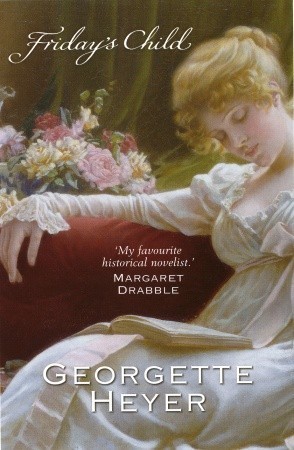
Then there’s fiction. I read fiction because I enjoy a break from being Ian and/or living in this particular world. That’s why I read a lot of science fiction and fantasy, but I read all genres, even some romance novels. The Regency romance novels of Georgette Heyer are often both funny and touching and you’ll learn a lot about Regency England without even realizing it, for example. (Try “The Corinthian” or “Friday’s Child” and stay away from her historical novels.)
The people who do a lot of anything either love doing it, or they’re doing it for money. (The ideal is both, but paid book reviewers are largely a thing of the past.)
If you want to be a better writer, read books by authors whose style you admire. Read the first time for fun, then re-read analytically, then write pastiches. Read a scene, put the book down and see if you can write the same scene the same way without looking.
Once you’ve done that with a few authors, try to write the a scene more than once, in each style. You can do the same with non fiction. It’s really hard to write like Machiavelli, for example. It sounds simple when you read it, but… no.
More instrumental advice. From 2018 to Covid, I wanted to get back into reading more as I’d gotten out of the habit. So I went to a coffee shop in a bookstore and didn’t take any screens except an e-reader. I’d sit and read for hours.
If you’re screen addicted, you may need to enforce some “no screen” time or set your phone so it only alerts you if key people call like your wife and ask them not to call unless it’s an emergency. Once Covid started up I read less, but I had the habit/enjoyment back.
Well, I never really lost the enjoyment. I still enjoyed it, but the dopamine twitch reflex of social media and so on had become an issue, not as fun overall, but it’s more immediate.
Reading books has a different “brain feel” than reading short form let alone social media. You just need to get a taste for it. It’s sort of stretchy — you get entire full stories or entire world models in ways articles can’t give you, let alone some social post or video.
That, I find, sparks a lot more ideas for me, and I LOVE the feeling of new ideas. Barbara Hambly once called it the the “cold clear ecstasy of intellectual discovery” and while I won’t say it’s the best feeling, it’s unique. Books really help get that.
If you want to read more: reduce your screen addiction and read books you’ll enjoy. Don’t treat it like forcing down liver and broccoli. Have fun.
Everyone reads these article for free, but the site and Ian take money to run. If you value the writing here and can, please subscribe or donate.
Purple Library Guy
Yeah. I spend too much screen time these days. More articles than anything else, which is OK, but still . . . I need to shift a bit more back to books.
Net Neutrality
Ian, what are you thoughts on reading fanfics?
jemand
I’ve never quite understood the “book as unit” type of thinking about reading.
Michener’s “Alaska” at 1152 dense pages isn’t really the same universe of experience as “The Hunger Games book 1” at 387 young-adult audience tuned pages.
I’m currently about two thirds of the way through a ~2,500 book manifesto on details of 600 different species of frogs. This is not a book that gets finished in a day. It is, however, a banger if you like frogs.
“The Ancient History of the Egyptians, Carthaginians, Assyrians, Babylonians, Medes and Persians, Macedonians and Grecians (Vol. 1 of 6)” written by Charles Rollins in 1730 is a truly remarkable ~500 pages that really drives home the distance in time between a modern reader, the very firmly non-modern author who still has quite a lot of similar cultural touchpoints, & the actual substance of the distant past, the culture, life and times of ~3k-2k years ago.
It took dramatically longer to get through Rollins’ history than the apparently-longer 750 pages of “Carthage Must Be Destroyed: The Rise and Fall of an Ancient Civilization” published in 2011.
And both of those took probably more than an order of magnitude longer than the fascinating, but easy-to-read, “The Last Days of the Dinosaurs: An Asteroid, Extinction, and the Beginning of Our World”, weighing in at about 300 pages.
I’ve read all the above (although not all this year), and really some of the longest & slowest reads are the ones that stick hardest. Certainly I’ve had my share of “afternoon books,” which are super fun, but I’ve just never really quite seen the fungibility of book size as being a meaningful value for my personal reading. I just read the amount that is fun, and I would like to read more than I do. Unfortunately, work gets in the way. On average I read more than one book per month and less than one book per week, but they’re often very long, dense books.
I will agree that short-form anything is poison to a good reading habit. Personally I had a bit over a decade with relatively little book reading before I remembered how much I loved it growing up and made some changes to get back into the habit. Your “go somewhere with an e-reader and a specific intention to read” worked for me, but I picked a different venue than coffee shop since I prefer to read outside when I can. Doesn’t work in winter because it’s really not so fun, but it’s good enough to just get in the habit and then it stays in play at home, too.
Ian Welsh
I don’t read fanfic much at all, but if it’s well written and a good story, why not?
Mark Ohe
@ianwelsh.net
Indeed they are.
And possibly better at swimming than flying.
mago
I was a voracious reader from age five onwards. Like Ian every Saturday I checked out the maximum number of books allowed, a habit that endured from childhood through my university years. I had a library work study job at the university and even considered becoming a librarian, I mean come on, but that’s how enamored I was with books.
I had a library card everywhere I lived in the States, and I lived in many places. Likewise bookstores were my favorite haunts, even in Europe and Latin America.
I usually had five books going at the same time, and often switched genres. One year I got heavy into sci fi, another year only nonfiction. I shipped boxes of books from one coast to the other as I moved around.
In Costa Rica I scored books wherever I could, from travelers returning home to a used bookstore run by an expat.
When I returned to the States 13 years ago my reading addiction persisted for a few years, and then suddenly and inexplicably I lost interest in holding a book in hand and reading. I can’t explain it. I don’t do social media, and my blog reading is limited to maybe five sites, this one being primary.
As the Beatles sang on Abbey Road, and oh, that magic feeling where did it go?
I don’t know.
As Ian states, if you want to be a writer, you gotta be a reader. Glad to have a long lifetime history behind me as both.
Sunday’s on the phone to Monday and Tuesday’s on the phone to me.
Hang it up and pick up a book. Discover worlds you never knew.
CB
My mother was a real reader of the book a day variety. Read all of dickens before her 14th birthday.
Anyway, Georgette Heyer was always one of her personal favorites. Thanks for calling that to mind, Ian
vmsmith
I come from a family where education (along with knowing how to swim) was the highest value. My mother and her siblings believed that inculcating a love of reading was one of the first steps towards attaining a good education, and they all began reading to their kids from the earliest time. For many of us cousins, being read to at night was our evening entertainment (until television seeped in).
The first time I walked into the school library in 12th grade, I saw we had a new librarian . . . Mrs Aiken. She immediately recognized me from seven years earlier, when she was the school librarian at my elementary school and I was in 5th grade. She recognized me because at that time I would take a book every day out of the library and return it the next day after having read it. The thing that really stuck with her was that I read the entire Hardy Boy series in about six weeks.
Eventually I drifted away from fiction and became immersed in nonfiction, and eventually technical, books.
But over the past few years I’ve gotten back into fiction in a big way. Alas, even though I am not much of a social media kind of guy, modern life has taken its toll on my attention span, and it’s way more challenging to snuggle up with a good book and read for hours the way I used to.
One of the things I’ve done is adopt the Pomodoro Method to my reading. I read for 25 minutes first thing in the morning (with my coffee), take a short break to do a little yoga, then read for another 25 minutes. For me, it’s a great way to do it, and I’m delighted that it’s helped me read so many of the books I’ve always wanted to read.
Old Jake
Does reading Ian Welsh writings count. Naked Capitalism? I think yes. Ikm not so good at reading non-fiction, and am not interested in being a writer. In passing, I think it was Taleb who wrote that the most valuable library is one full of things one has not yet read.
Jan Wiklund
It’s a pity the books I love usually cost some 100 USD because they are published by academic publishers who usually print 100 copies of each book. I used to download from z-lib, but they were closed because they broke the outrageous copyright laws (shouldn’t there be copyduties as a counterweight to copyright?).
They are rumoured to still be around but there are also copycats who call themselves z-lib but aren’t, and all of them seem to want a lot of facts about me, so I stay aloof.
And that sets an economic limit. I can’t read long texts on a screen because of bad eyesight.
StewartM
When I was a child, growing up in a lower-middle class home (only kid in the family to get a college degree) there wasn’t a lot of stuff to read. I did read Felix Salten’s “Bambi” (and yes, the book is better and much darker than the Disney movie) when I was about 12. We also had books I didn’t read, but I should have: “Wizard of Oz” by Frank Baum, “Little Women” by Louisa May Alcott, and others. I did read a couple “Power Boys” adventure series about two teenage boys solving mysteries that among other things, made me think that having a jeep was awesome.
But mostly it was nonfiction. There was “Heroes in Blue and Gray” and “Heroes of World War One” I read (biographical sketches of war heroes). But to top the list was the World Book Encylopedia and the Yearbooks that we had available. On a dreary day with nothing much to do, I’d pick up a volume and start flipping through the pages.
One last (sorta kinda) embarrassing reading habit I had. My family had an illustrated Bible collection of multiple books, with illustrations by the French engraver Gustave Dore. I also spent quite some time looking at that; the text wasn’t in King James English but more modern English so haven’t found it via Googling.
My parents probably thought approvingly of my perusing this Bible collection. However, they probably wouldn’t have approved of the real reason why. You see, Dore’s illustrations were all of very handsome and beautiful people in robes where the robes seemed to be barely clinging to them and just about ready to slide off. It was softcore Bible porn, it was.
Like & Susbcribe
I prefer to think more than I read. If reading is a metaphor for food for the brain, I chew my food at least a thousand times. To say I mull ideas is an understatement.
I don’t know this for certain but I would imagine this is how it was for civilization’s original thinkers such as Aristotle. If he was reading a book a day we never would have known his name and he never would have had the influence he had on civilization.
As it stands now, our civilization is in information overload and yes, that includes too many damn books. The noise to substance ratio is off the charts and parsing that is an arduous mental endeavor. All this serves to fragment us further since no one is on the same page, pun intended.
Mark Level
Great piece, Ian, despite its brevity. 100% agree, there’s no super-arcane maze required to read thoroughly and well, broaden your intellectual view, insight into topics that interest you. It’s as simple as picking up a book, or tuning in to a worthwhile podcast. I was doing The History of Rome during Covid Shelter, only had to go into work literally a couple times a month, and attend program chair and staff meetings online via Zoom.So lotsa free time to more thoroughly learn a history I’d long had an interest in.
Of course for many of us reading is fun, those dopamine hits you reference. Your neurotransmitters are making more connections, you feel smarter. There is intrinsic interest (except when you find a dud book, realize it’s not what you were looking for, drop it) and you are rising higher toward self-actualization on Maslow’s pyramidal hierarchy. Screens are worthwhile to the extent they are. When I moved across country recently, the Moving company lost over 20% of my vast collection of books, magazines, comics and graphic novels, etc. I have to wait 9 months for the settlement, had to work from memory to detail what went missing. Before my next move, I’m employing a friend and we’re cataloging the books I still have. Now, I’m not poor, paid my dues and got a decent pension, but it turns out some of my rare books have greatly appreciated in value. I’ll never be a Sean P. Kelly, exploiting the market, I can’t follow that fake shit, but buying quality books was an accidental investment that will pay off “bigly.” I’ll give only 2 examples: I bought Manly P. Hall’s oversize Codex Rosa Crucis: DOMA in the 90s, not just OS but has fold-out Hermetic charts linked to Qabalah and planetary lore. Probably paid up to $50 for it. Current value on Amazon is over $700. Also, when I bought Robert Crumb’s Sex Obsessions in 2009 I’d just gotten a lateral promotion from the classroom to the Library that my principal (who I was one of 6-8 people who got him fired for racial and sexual harassment of female counselors and teachers of color 4+ years later) very badly wanted to deny me. The book was a limited edition of 1,000, numbered, one extra page/plate included in every one, cost $1,000 up front. Today it’s worth $5,000 at least.
This wasn’t a deliberate investment strategy, however, it’s an example of doing well by doing good. Now I’ll drop the grubby money talk and return to the main topic. Perusing your post, I note the rather provocative cover of Friday’s Child by Margaret Drabble. Sex sells, I never read it. Friday is Venus’ day, and the redheaded beauty on the cover is of the type you see for classical Venus paintings. But the name Drabble puts me off, is she a “drab” writer.
A cover only covers so much. I got donations from staff (for tax reductions) and the community, took what was valuable and put it into circulation, gave away or pulped at school year’s end the unwanted stuff, which was a majority. (The district got some kind of payback for pounds of books/magazines pulped.) One teacher donated a cheap paperback of Larry McMurtry’s Up In Honey’s Room, little fiduciary value, perhaps of interest to students. Salacious cover, a young woman’s legs crossed shot from a low angle, only up to waist . . .I read it to see the subject. It wasn’t a sexual romp, it was about WW II, people fighting Nazi traitors at home (a guy who was born the same day as Heinrich Himmler in the same hospital in Berlin, he believed, & looked like his identical twin) set in Texas. There was an older cowboy-detective nemesis of the Nazi, who was plotting to shoot FDR at his Atlantic Coast Retreat, and a younger woman also anti-Fascist who lusted for the older guy, who was both faithful to and afraid of his own glamorous wife, so didn’t take the bait. A fun story, things mostly work out well, you learn a bit of WW II era crime/ noir lore.
In non-fiction, I started out early, had an interest in US history (to a point) and also in European history, especially the Mediterranean countries, very early, by my teens. Some faves, from memory–Jacques Barzun’s From Dawn to Decadence came out in 2000, when I was in my early 40s, bought and devoured it. A conservative guy, but a good conservative, for instance he had testified on behalf of Both Ginsburg’s Howl and Henry Miller’s books in the famous anti-censorship trials of the late 50s of Grove Press (which had a great catalog.) The book is a lament of the West’s clear failure (as we see much more now) and not one of those stupid Oswald Spengler “White Civilization is great, we gotta keep the darkies under our heel” screeds. A cri de coeur that is more in lamentation than in anger. Also during Shelter, I read former Time Editor David Thomson’s Television: A Biography. By the end it also warned, the current system is unsustainable, it will topple sooner or later. (It got some pretty bad reviews, but was Aces in my view, covered early, challenging “adult” content on the BBC, American TV lowbrow and Quality (The Sopranos, Breaking Bad), etc.
Just passed 5,000 characters, so will break here, and add more in a 2nd post. Some topics to cover: Books/Authors who saved my life as a youth, Did Bob Dylan deserve a Nobel Prize in Literature (most certainly) and Point-Counterpoint reading to form an opinion.
Joan
I read around 50-100 books a year, and the books are usually 70-100k words. While out on walks or waiting for the bus, I like to think about the books I’m reading. I’m also a fiction writer, so I love when books make me feel something and I can examine what it is and why.
mago
McMurtry’s writing sucks big time in my not oh so humble opinion.
I have some R Crumb autographed comics with personal correspondence stashed in a box, and I don’t care fuck all about their commercial value.
Also stashed away are some signed Allen Ginsberg prints and books that are probably worth some bucks to the cognoscenti, but they’re not worth a lottery ticket to me as concerns a retirement plan.
What I’ve read and who I’ve known and what I own won’t matter jack when I’m dead and gone.
Mark Level
Like others (mago for instance & NWT) I learned to read early, before Kindergarten. Directly from my parents. I was able to read independently the K-level books we were given, always ahead of the curve in subsequent years. (Which is how it generally works, as most educators know.)
I want to write now about books of my youth that I recall influencing–
I was reading a nerdy historical fiction about the 1812 war about 5th or 6th grade when we were visiting relatives. There was a scene where a man and woman were alone in a carriage, traveling, and the subject of “making love” came up. I was like, oh, what’s that?
As I shared previously, the little Mad paperback anthologies of their early comics, pre-magazine (all the EC stuff was attacked by Congress’ Kefauver Commission in 1954, prior to my birth, “Comics Code” sticker for censorship imposed). It taught me about subversive satire, as my parents were insane about the need to seem “normal.” They never objected to these comics, kid stuff I guess, despite some borderline Adult Content.
Later in my teens and after, this led me to other socially subversive satire. Actually as square as my parents wanted to be, they both enjoyed Monty Python’s Flying Circus on NPR or the BBC (?) We were teens when this was coming out, Saturday Night Live was pretty good the first few years too, broke my Senior year in high school. Made fun of Generalissimo Francisco Franco, e.g., political even. Also of those stale, stupid TV “debate” shows of the era, “Jane, you ignorant slut–.” In my early 20s I was exposed to The Church of the Subgenius, high level satire of UFO Cults, Sales Techniques, drug-signaling, general twisted surrealism.
Hating the Empire since High School, I read Malcolm X’s biography with Alex Haley when I was no older than 20-21 and was very impressed. “Roots” had already been on TV, more liberal views allowed in the 70s. This is a little embarrassing to admit but I got turned on to Norman Mailer’s books in my teens also. I read “The Naked and the Dead,” based on his own time fighting, I think on the Pacific islands, in WW II. It had a strong impact on me, I started shaking when they were climbing this mountain to engage with the enemy, there was a weak, cowardly soldier, Mailer made him Jewish actually, who was clearly about to die, and I shook with visceral identification. I went on to other books by him, The Deer Park, etc. He openly praised Marxist thought, an early exposure. He was a Hipster for sure, the essay “The White Negro” was about his desire to participate in black culture, smoke dope, love of Jazz, etc. One of those things that didn’t age well. Still, he was a good writer at least until his Essay in Harper’s “The Armies of the Night” was published as he was at the ’68 Pentagon demos against the Vietnam War. It was expanded into a full book. He wrote some good things later too, the book about Gary Gilmore was excellent, everybody panned his book Ancient Evenings about Egypt as sensationalist trash. I had a pagan girlfriend in my late 20s who was a fan, don’t think I met many others.
Like some other writers, he didn’t age well. I think of others like John Dos Passos, loved his 20s–30s Revolutionary Left writings. But by the 60s he was a reactionary Piece of Shit, he attended the Repub. convention in ’64 and made a speech for Goldwater, who’d already been defeated by LBJ with the little girl in the field blown up by a nuke TV ad. Octavio Paz comes to mind too, he coined “No Pasaran” during the Spanish Civil War (accd. to most sources), once I’d learned Spanish (my Major in College, History Minor, always into the Humanities) I read his Laberinto de la Soledad in Spanish. By the 80s when I was in Central America, he was supporting Reagan and the Contras.
Back to Mailer: he did turn me onto Henry Miller, which I appreciate to this day. A true Bohemian, though in a pre-drug age (okay, he probably drank absinthe) abandoned his wife and daughter age 40 to go live on the Streets of Paris (literally homeless, but later lovers with Anais Nin and well-connected), a voracious reader who sought cosmic consciousness, a big fan of Hindu myths, Occult Lore, etc. He drank a lot with friends, wrote that the only happy married couple he’d ever seen were 2 gay men. Influenced greatly by Arthur Rimbaud’s poetry to become a writer himself, this led me to the classic Enid Starkie bio, also to Charles Baudelaire and Paris Spleen, other lesser lights in the genre. He hated priests as much as his Surrealist contemporaries, but did not have himself photographed on the street spitting on them as he did. A great scene in Tropic of Cancer when he and his friend are attending a morning Catholic Mass after getting drunk all night on the town, laughing at their frocks and gestures until they are forcibly expelled. Later books like his Greece book when he had to flee Paris before the Nazis arrived, his paean to Big Sur, The Oranges of Hieronymous Bosch a great late work. He didn’t make money on his work for a long time due to it being censored in the US until like 1960, his French publisher had to flee and couldn’t pay his residuals for at least 10-15 years. He praised Anarchy, ridiculed his Communist Friends.
Orwell influenced me to go to Central America, Homage to Catalonia. He didn’t age well either, he was right to hate the Stalinists who doomed the Anarchist brigades, but snitching in late life is unappealing. He was a British prig and snob at heart, big-time Anti-Semite also.
I had a profound experience when I was reading a long Miller Rant about age 23 in New Orleans, sitting outside on the porch. My crown chakra opened, I felt light pouring into my cranium and body, actual (temporary) catharsis and enlightenment . . . Years later in NorCal, deeply involved in the pagan scene, we turned several friends onto him and would have an anti-Christmas party on Dec. 26th on his birth date, we would buy exotic, rich foods and lotsa booze, snacks like halvah, and read favorite passages, we sustained it at different houses for 4-5 years, got some pretty good crowds, 25 or so.
I’m not sure if Miller turned me on to “The Comte de Lautremont,” Poesies in particular, a sui generis work of genius from a young Uruguayan, written in French. His 2nd book (& that’s all he wrote) was a “pious” rebuttal to the first. Strange, twisted Gnosticism, a favorite scene when God descended to a brothel on Earth, fucked some whores, tortured some men to death, then fled back to Heaven, leaving a (giant) hair behind. The hair was enraged by God’s iniquity, massive denunciations thereof until God returns to hide the crimes. Speaking of Gnosticism, also reading Elaine Pagel’s Gnostic Gospels from the Essenes by no later than my mid-20s.
I could say a lot about sci-fi and fantasy as well. I was a borderline poor kid, working hotel security, returned to college at University of New Orleans after coming back from Central America, age 24. Did a Summer Semester at Universidad de Guadalajara in 1985, we read Los De Abajo in the Mexican Lit class, dark story of the ignorance and violence of many of the Revolutionary Forces, also got some great Museum Catalogs, like for Orozco’s works. But I referenced sci-fi and fantasy coz I’d taken one Spanish Class at Tulane before leaving for Central America, I saw Jorge Luis Borges speak about a year before he died, also Ursula K. Leguin. Her “The Lathe of Heaven”, original film on PBS led me to Philip K. Dick’s works, as well as her other works. The 3 Stigmata of Palmer Eldritch my #1 fave, Ubik a close 2nd. (About a dead soul in the Bardo?) Major fan of William S. Burroughs also, the Western Lands Trilogy my top selection, but his spoken work stuff brilliant.
Had a great English teacher at UNO, turned us on to William Blake. Somewhat pro-Tennyson, others as well of the period. Later on I became a great fan of the Romantic Movement, spoke in last post of reading books with opposite POVs, so here’s an example:
MH Abrams’ The Mirror & the Lamp: Romantic Theory and the Critical Tradition is brilliant pro exegesis, lots of psychology therein. Contra is Mario Praz’s sensationalist denunciation of Romanticism “The Romantic Agony.” All about “sick” imagery, perverts, he starts with long passages of de Sade in French (could generally handle it given English-Spanish cognates) I will at least say that like other obsessives de Sade went on too much at length about his obsessions. He moves on to other Decadents, and the dark, pervy side of Romanticism, kidnapped girls dying of starvation in caves (kind of suggests Epstein class), decadent poetry, La Bas, etc. His outrage seems a little fake at times, since he spends so much time and energy on the subjects. He was born in 1896, final version of the book published in late-40s or ’50s. His biggest antipathy and fear was, he couldn’t even say it, just hinted– Lesbians!! Now Miller was a man of his era, made a few homophobic comments, lost a lover to a lesbian but was never anti-lesbian, in fact his competition had turned him on to Rimbaud, which made him an artist.
I might do a post later about the Occultists, Aleister Crowley (who met Miller in Paris), Mircae Eliade (a fascist but also a gnostic) etc. Also didn’t even get to the Greek Classics and other mythology, topic (possibly) for another post. Didn’t even get to Hopkirk’s The Great Game, or history at all.
Henden
sorry, I’m late, but I’d like to ask about the “Trump Library” which has been promoted all over the media by showing the model of the future Trump-Tower-Library.
I can’t see any book in it, but a huge plane, a golden escalator – and than what? No books in it? Maybe THE ONE: “TRUMP – The Art of theDeal” and the other one called BIBLE = meaning book, which is why, where I live, a library is called Bibliotheke, – thèque, -teca, with most of them not containing that book.
I follow since a while the destruction of the book-culture; the little bit which has been “digitalized” has been quite often also edited or redacted in length and depth, sometimes completely overwritten. Luckely I live in a country where Books are still respected and appreciated. And now this: TRUMP Library.
Me frankly feels confused.
different clue
I used to read more books than I read now. Now I read so much internet that I have somewhat neglected the reading of actual books. I should do something about that and maybe I will.
The nice thing about books is that they will still work even if/when the internet goes down. Even if the power grid goes down and all the electricity dies and goes to electricity heaven. The books will still work.
I enjoy the PRO-cess of reading. I enjoy running the lines of type over my face-mounted ocular reader-heads.
I still remember a particular “scene” ( if we can call it that) from The Hobbit which I read decades ago. It was about ” the run through Mirkwood” and the imaginary forest which came into my visual-mind was a powered-up improved version of the woods and forests I remembered from East Tennessee.
I tried reading something with a head full of marijuana once. I found it intensely pleasurable. Some time later, I tried reading something with a head full of alcohol, for comparison. I found it intensely irritating.