The horizon is not so far as we can see, but as far as we can imagine

Author: Sean Paul Kelley Page 5 of 13

'89-'93 BA History, Houston
'95-'07 Morgan Stanley, Associate Vice President
'99-'02 MS International Relations and Economic Development, Saint Mary's University
'07-'13 International Software Sales Manager, Singapore
'13-'16 MA, History, Thesis on Ancient Silk Road City of Merv, UTSA
Kelley lives in San Antonio, Texas.

Silver Short Take

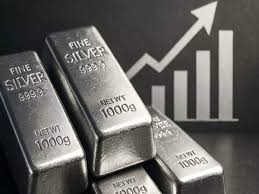
Jaysus on a popsicle, Mary and all the Saints do I have some egg on my face. Since January 27 silver has been on one seriously wicked ride. I’ve been banging my head to Metallica’s Whiplash for the last ten days.

So, WTF happened?

In short: from where I sit the paper markets are trying to create a force majeure situaiton for March contracts. The market is incredibly volatile and highly illiquid. Traders are draining the vaults of bullion. Indeed, as Dario notes,Silver physical deliveries at the Comex just crossed 4,000 contracts (~20m/oz)and we are only 6 days into February.” That’s nucking futs. 

If the Comex defaults to force majeure (SHFE is a bit of a different matter) the Comex will lose all credibility as a fair functioning market dedicated to price true discovery. Never mind that silver prices in the USA has been a cozy Fed-supplied rentiers market for decades, should this happen businesses will begin a mad scramble to source silver for themselves. That leads to supply and demand chaos. Bad. Vewwy bad.

On the SHFE–Shanghai–one day last week over 1.3 billion ounces of silver volume were traded. That’s one year of global demand in a day. The Chinese government’s motto regarding traders shorting silver on the SHFE seems to be FAFO. The Chinese are cracking down hard. Why? Well, to produce one gigawatt of power using solar panels requires 1 million ounces of silver.

You read that right. One million ounces.

Fundamentals matter. Global demand is strong. Businesses need silver for industrial applications beyond just solar panels and dentistry. But traders can keel-haul fundamentals sometimes with epically shitty consquences. Watch this video by Dario starting at minute 6:43 for how this possibly plays out.

It’s ugly. And it seems to me that maintaining a viable silver market is now fully in the hands of the Chinese. US traders are determined to destroy price discovery and reinstate the cozy rentiers market in the US.

I have no idea how this will end.

Just How High Can Silver Really Go?

~by Sean Paul Kelley

Everyone is talking about gold topping $5k an ounce. The yellow metal is captivating and big moves by it tend to suck all the oxygen out of the media space regarding other metals. In 2025 gold rose a whopping 64% against all comers, i.e the dollar, the S&P 500, oil, Bitcoin and on and on.

Gold’s meteoric rise last year is a fucking piker compared to what silver did. Silver was the best performing asset of 2025 rising an astonishing 147%. Yeah you read that right. 147% from January 1, 2025 to December 31, 2025. This raises some important questions, such as why did silver, after decades of disappointing performance, blow past every asset this planet has to offer and consequently how high can it go? Does silver have a ceiling?

So, questions asked, let’s now examine the known and/or knowable variables affecting silver prices at present.

First, what’s silver’s all time inflation adjusted high? This depends on who you ask and how you measure inflation. By our current CPI measurement silver’s all time, inflation adjusted high was roughly $150 an ounce. This was in February 1980 when the Hunt Brother’s tried to corner the silver market. Now, as most of you know, Ian and I both distrust current inflation measures, like the CPI, because it overweights consumer goods with stable or falling prices, using accounting legerdemain like hedonic pricing which equates increasing computer chip power and/or efficiency as disinflationary. At the same time the CPI underweights prices of goods that are rising, like food and other non-durables.

Seriously, I defy anyone to tell me food prices are stable or falling: you can’t do it. The CPI does this primarily to avoid COLA adjustments on entitlements, cheating retirees.

Other measures of inflation, indices, weighting using purchasing power parity or other yardsticks, delivers an all time silver high closer to $190. So, I’m going to channel King Solomon and split the baby in half and call the all time high at $170. But however you measure inflation it’s clear silver isn’t even close to its 1980 Hunt Brother’s high.

Second, price moves in gold and silver are not coupled and have not been for at least 150 years. They don’t correlate. Gold is considered a safe-haven against fiat currency hyper-inflation or economic collapse. Silver, on the other hand, is essential to modern electronic manufacturing. So gold had a nice run last year, but silver was number one by a very, very wide margin, outperforming gold, the way Shohei Ohtani outclasses everyone else on a baseball diamond. Even as silver and gold have been decoupled since the late 19th century evidence is mounting that last year’s silver move might have been the opening act of their long awaited re-coupling.

Perhaps a précis on how and why they decoupled and what a re-coupling would look like is in order.

The first question is to ask, “how long were gold and silver coupled?” Well, from ancient times—yes, fucking Greeks and Romans ancient times—until the 19th century silver and gold traded at a 15:1 ratio.

Don’t believe me?

Consider then how the 1792 US Coinage Act established a 15:1 ratio between the two in our newly constituted republic. That said, during the next century—the 19th—a handful of rare developments coalesced to break the two thousand year old linkage between the two royal metals, thereby widening the ratio nearly exponentially.

First, the gold standard for measuring currency values between nations was established. It soon became the, well, gold standard for all international trade.

Second, the conventional wisdom prophesied the end of America’s silver boom—never mind that the aggregate value of silver mined in Arizona and Nevada had a notional dollar value greater than the California, Yukon, Deadwood, Montana and Alaska gold rushes combined. Gold’s price during the 19th century, due in large part by its merciless acquisition by European banks, blew out the ratio, decoupling the two metals for a century and a half. The ratio between the newly decoupled metals had widened from 15:1 to 50:1 by the turn of the 20th century. By the turn of the 21st the gap was nearly 100:1, in large part due to US government manipulation of silver prices. The US government sheltered a rentiers market in silver bullion for decades. Wholesalers got silver at spot prices. They then charged retail buyers high premiums and pocketed the sizable difference. This cozy arrangement, due to silver’s recent price moves is breaking down, and fast. Good I say.

That said, I argue, based on a reasonable man’s assumption, that the spread, now roughly 50:1, will continue narrowing and sometime in the next few years complete a reversion to its 2,000 year historical mean. That puts a potential price of an ounce of silver at $320 an ounce and might even overshoot a little bit, as reversions are wont to do at times. Overcorrections are a real thing. Hitting the Hunt Brother’s high of $170 an ounce is just a mental milestone, nothing more. The silver bugs are getting their revenge and how.

Now, my assumption is based on a single premise, a reversion to the mean/norm. Not a bad premise to base an assumption on, but not enough for intellectual coherence and honesty. So, let’s explore another variable: silver’s supply versus demand forecast.

What is the global supply versus demand picture like? In short, extremely unbalanced. The numbers are staggering. Aggregate global demand per year is 1.3 billion ounces. Annual global mining supply maxes out at roughly 850 million ounces. Let’s be generous and toss in recycling raising global supply to 1 billion ounces of silver a year available for industrial purposes.

The maths paints a grim supply picture: a whopping 23% gap between supply and demand. Because silver is the single most important industrial metal—it is in every electronic we own— demand is not going down any time soon. A single tomahawk missile requires 500 ounces of .999 grade silver. Yes, 500 ounces. See where I’m headed with this demand equation?

Why is it in everything? It’s the goldilocks of metals. Silver might not be as conductive as some but it’s less resistant than most. It doesn’t overheat like some and burn through plastic coating, but its best left exposed and uninsulated. It’s place in the bell curve of the electrical performance of all metals is right before the big bulge grows. Most of the time we want things good and fast. In reality, however, we must choose between good or fast, but silver? Well, silver gives you good and fast together. Goldilocks!

One big variable exists concerning global silver supply that has no easy short or even medium term fix. It’s physically impossible for global mining companies to ramp up mining production enough to even begin closing a 23% gap between supply and demand in any time frame less than 2-3 years. And this assumes no economic growth leading to increased global demand. That is some wicked nasty inelastic demand for silver and it has zero supply side answers, except very high prices that lead to retail silver owners cashing out. Central banks would have to print precisely three metric shit-tons of fiat currency to induce silver bugs to sell. I know some of them—they make rabid dogs seem like puppies—and they are adamant: no selling until the ratio reverts to 15:1. Until they get their ring there will be no huggy or kissy.

Another fundamental we ought mention are draconian export controls on bullion instituted by the Chinese central government. Note: China is the world’s leading consumer of industrial silver. It also has an extremely long and complex history using silver as its monetary base. Much, much less so with gold. If you want a book recommendation on the subject just ask.

Then there is our southern neighbor, Mexico, our number one supplier of silver to this day, is considering retaliatory tariffs on silver for United States because of Trumpian fuckery. Much fuckery there and I applaud Mexico’s president for sticking to her guns.

Consider as well dollar weakness and potential QE. Both point directly towards higher silver prices. Add to all this a wildcard fundamental hiding in plain sight: the magic price point that compels the addition of physical silver to the portfolios of Central, Commercial and Investment Banks around the globe. It’s a simple equation: storage costs fall as prices rise. At $40 an ounce there is no reason to hold silver in a vault. At $170? We’re getting close. At $300? Bingo! You’re goddamned right there is a reason. Such a development would spike demand by an order of magnitude as it would reinforce the powerful upward trend already in place. This is the dynamic that could at long last force the reversion of the gold to silver ratio back towards 15:1. Gold’s present price of $5000 an ounce implies a target of $333 per ounce of silver. In my opinion, and this is not investment advice, this is where we are heading. Right now. It may take 18-24 months, but it’s going to happen.

These are just some of the fundamentals. I can’t cover them all. If you think I missed an important one, add it in the comments, please.

Let’s talk about some technicals followed by sentiment.

Late in 2025 silver achieved a triple top breakout. Triple top breakouts are very rare in any asset. But when they occur they are an extremely bullish signal, conveying that there is no predictable upper limit to the assets potential advance. This is silver today. Silver hit $50 in October, backed down to the low $40s, made another run in November to try and overcome $50 and didn’t make it. But then in late November and all of December during the Santa Claus Rally silver blew through $50 and ended the year at $72.05. Market observers I respect, all unsure but all equally intuitive, explained the triple top breakout as the result of a handful of factors coalescing in the short term, such as Chinese export control tightening, high retail demand, Mexico threatening tariffs on silver, and a short squeeze on the Comex. This confluence makes sense to me.

The underlying technicals that lead to triple top breakouts are usually either a short squeeze or a gamma squeeze. In late 2025 silver underwent a short squeeze. But in early 2026 led by a bank frenzy to cover what were in essence some very large naked shorts in the SLV and PSLV ETFs, coupled by a bizarre change in margin requirements—from a straight percentage to one based on the notional value of the contracts (I mean, WTF?)—backfired spectacularly, leading to the rarest of rare technical developments, one I’ve only seen once in my life as an investor—the mythical unicorn, the gamma squeeze.

In short, a gamma squeeze “is a rapid [asset] price surge from [futures] trading, where heavy retail (read: investment banks, spk) call buying forces market makers to buy shares to hedge risk, creating a feedback loop that pushes the price even higher.” A gamma squeeze can be viewed as one powerful force intent on creating and sustaining an upwardly positive feedback loop “[where the] cycle escalates because as the [asset] price rises, market makers must buy more [futures or the hard asset] to cover their increasing delta risk, driving prices up further and attracting more call buying, often in low-float, i.e. low-volume [assets].” Silver is now, for all intents and purposes, in a virtuous rising feedback loop, leading to higher prices which force more buying to cover expected demand thus leading to higher prices. When it comes to shorting a gamma squeeze FAFO. You will lose your ass.

These developments all serve to reinforce my call late last year that silver is not on a cyclical bull run. It is engaged in a secular bull stampede.

Cyclical trends last between 3-5 years, represent basic price discovery and a market composed of two healthy opposing forces: supply and demand. Cyclical bull or bear runs tend to predict the business cycle as well, serving as a leading economic indicator.

Secular trends, however, are a different animal altogether. Like Earl Campbell, that human rhinoceros, running over middle linebackers like they were children, a secular bull or bear is powerful, based on large scale structural economic rearrangements, demographic realignments, and/or crushing but ‘unforeseeable’ externalities—like the Arab Oil Embargo of the 1970s or losing wars like Vietnam, Iraq, and Afghanistan——that leave robust long-term consequences, like inflation, busted supply chains, broken armies, revanchist politicians, rising internal violence and other variables, in their wake. Secular bulls or bears last decades, some as long as 40 years.

Now a word on sentiment. Sentiment is a fickle bitch, much like the muse. Nothing can bankrupt an investor with more rapidity and totality than a sudden turn in sentiment. Two forces, ultimately rule investing: fear and greed. Beware the latter and respect the former, said my mentor at Morgan Stanley.

Right now silver is flying under the radar. Everyone is talking about gold. It’s gold, why the hell not? Gold makes people febrile. I’ve literally seen it with my own eyes. I’ve felt my forehead warm up and my fingers get a sudden subtle itch when I’ve held certain gold coins in my life. I had a Julius Caesar gold aureus in the palm of my hand once. Wow! So I get why silver remains the red headed step-child of the metals market. And the lack of commentary on silver reinforces my conviction of silver’s inevitable rise to $250-$300. As I used to say when I worked on Wall Street, “buy the rumor, sell the news.”

It worked every time. And right now silver is hardly a whisper much less a rumor.

So, realistically at what price would I begin selling my silver?

$275-$300 an ounce.

I’m patient.

And certain.

Are Multiple Russian Breakthroughs Imminent?

In my Nov. 7 analysis of the Russo-Ukrainian War I missed two serious developments on the line of contact that I simply didn’t have the bandwidth to notice. After paying closer attention I came away with a big picture question: has Russia pierced the line of contact in three places or are my sources exaggerating? For the last two weeks there has been talk and rumors, some of which I have been guilty of passing along, that Russia achieved such a goal. But where?

Most observers are in rough agreement that the following five Kupyansk, Siversk, Lyman, Huliapole, and Constantinovka are under dire threat. Pokrovsk and Myrnograd are done. Finis.

But these three are the standouts.

The first, and most obvious, is in the immediate environs of Pokrovsk. As I noted November 7, west of Pokrovsk—is all open steppe land with little to no defensive terrain—all the way to Pavlograd. Will the Russians move forward? Doubtful. I stand by what I wrote two weeks ago: “Russia will consolidate its gains in and around Pokrovsk, after the Ukrainian soldiers in the pocket are killed or surrender. For some time after I foresee Russia utilization of tactical defense within an offensive framework.” But the Russians, when they are ready, will move across the steppe towards Pavlograd, en masse.

The second and most unlikely involves troops now taking Lyman, who afterwards will move south, in tandem with troops north of Pokrovsk, to encircle both Slovyansk and Kramatorsk, two large towns serving as the final obstacles on the road to Poltava. This encirclement, if attempted, would make the Pokrovsk-Myrnograd cauldron look likes child’s play. It is doable, however, and an encirclement of Slovyansk and Kramatorsk might be just the right bait for the last of the Ukraines reserves; with only enough reserves to fight in one place, this is where they’d stand. Russia can afford to tease the Ukraine as it retains the strategic initiative. It can feint, sucker punch and attack pretty much with impunity at this point in the war. Yes, Ukrainian forces can mount local counter-offensives, but the days of counter-offensives across the entire line of contact are long past.

The third—which is the most serious for the Ukraine—is in the south, where an imminent encirclement of Hulyiapole, will wrap up the flank of Ukrainian forces in the south elimanating all resistance to Zaporozhye. This operations seems well on its way to success. The Ukrainians have no answer to the Russians here.

As I mentioned above there are other places the Russians are pressuring: Kupyansk, Siversk and Constantinovka. In all three places Ukrainian defenses crumble, Russia hammers supply lines, drops FAB-500 on mustering points, lobs Iskanders on ammo dumps and bridges, and hurls thermobaric bombs at makeshift barracks and more. The Russians are doing this as near to the line of contact as possible. Everything to a purpose: shattering the will of the Ukrainian soldier to continue the fight.

Meanwhile, Russia’s strategic bombing and drone campaign against the whole of the nation escalates sans mercy.

Of the three points I mentioned above, I see the Russians grinding away deliberately and slowly; advancing at speeds of their choice around the Pokrovsk environs, and in and around Lyman. In other words, more attrition. Maybe a feint at encirclement will draw in the last of the Ukraine’s strategic reserves, which would then be attrited away as the Russians have been doing so since 2023.

Poor US TV generals, still have no big flashy red arrows or armored movements to get their war porn on.

Only in the south might we see a real breakout; a breakout that posisbly rolls up of the entire Ukrainian flank to Zaporozhye. The Russians might be at the gates in two weeks. Maybe less, maybe more. Maybe we’ll see an operational pause and then a deliberate resumption of the churn.

One fact is beyond obvious at this point: the Ukraine has lost. The question now is: how much more will they lose.

Short Take on What I’d Be Doing To Prepare for the Pending Economic S**t-show

I’ll keep this mercifully short. One commenter in my Friday night econ news post asked, in a kind of oblique way, what would I do in this environment.

Okay, I’ll play — but not without stating firmly and loudly that I am not dispensing investment advice, nor am I licensed any longer to do so. We clear on that?

A liquidity crisis is already here. But this may not be like your father’s ’08 crisis. In ’08, the USD rose — counterintuitively — against every other major currency. Why? The need for USD to cover credit losses was global, and NYC became a literal blackhole for USD. I made an absolute killing on the USD during the ’08 crisis, and afterwards even more on the banks and zero coupon bonds. I made several people fortunes they still retain.

But the crisis now unraveling doesn’t look like one of confidence, it looks like an animal out of a medieval grotesque, certainly not something the Fed can backstop.

Fire in the hole!

Sure, the Fed might do QE. But Congress can’t do a bailout with almost $1trillion in interest payments on US debt imminent and Trump offering $2k bribes to every citizen in America. It’s impossible. What would one call inflation with QE?

What would you call that?

Hyperinflationary?

It’ll be damned ugly whatever happens; whatever you want to call it.

Were I still advising investors I’d be putting them in Yuan interest bearing accounts, I’d be buying silver on the dips, JPY, SKW, and buying way out of the money puts on S&P 500 and NASDAQ. In short, if you can find an affordable way to buy puts on things that are impossible to happen, buy them, because one or two will hit big, and you’ll rake in the money. 

Silver’s in what’s called a secular bull market, not a cyclical one — cyclical means three to five year cycles, whereas secular means, “We don’t fucking have any idea how long ‘dis bitch is going up or down.” This particular secular bull is being driven by a massive externality: China’s draconian export controls of the metal. The problem, right now, from a technical trading perspective, is a failed double-top breakout. This is bearish in the near term, so an under $40 buying opportunity might be realistic. As a side note: China has a VERY long history with the white metal, but not so much the yellow one. I can recommend a good book if you are interested. 

You can invest in the Yuan in several US banks/investment firms. Some accounts are interest bearing, others are just a pure play on the currency. If you want specifics, send me a DM. But the current T-bill replacement is silver, but buy it under $45 if you can. Under $40 is best.

But, for fuck’s sake, avoid paying premiums for silver. What does that mean? If you buy silver coins, buy 99 percent silver grade coins — not the overpriced ones from the US Mint. Buy the off-market ones. Otherwise, the US silver cartel will clean out your gains before you even begin.

Your Late Friday–ermmm, Early Saturday–Dose of Crap Economic News

~by Sean Paul Kelley

Good heavens, the economic bad news is piling up like a bad car wreck. So, let’s do some serious rubbernecking, folks, because there is a lot of fucked up shit to watch. Just don’t step in it, okay?

We begin with widepsread reports of large institutional investors (hedge funds, investment banks, boutique investment firms) selling off services stocks like leisure, luxury, hotels, and some retail outlets, like Home Depot. That’s a lot of cash leaving equities. But for what safe harbor? It certainly isn’t private credit, like Blackrock which lost 100 percent on one investment. UBS also lost 100 percent on another private credit deal. Now, Blackrock lost $150 million on the deal, which, for Blackrock, is naught but a silly little rounding error, but as they say, $150 million here, a $150 million there and pretty soon you’re talking real money. That cash won’t go into US treasuries, that’s for damn sure. Seriously, who’d invest in US dollars? I wouldn’t fuck a US treasury with Magic Johnson’s dick.

Yeah, I said it. It needed to be said.

Want news even more ominous: JP Morgan Chase, Goldman Sachs and my alma mater (for full disclosure) Morgan Stanley were the lead underwriters of a $1 billion increase in AI firm Coreweave’s $2.5 billion revolving credit facility. The term sheet expands the maturity date from 2028 to 2029. Just a year? Did they attempt any due dililgence on Coreweave’s burn rate? It’s gotta be a fuckton fast — see, Americans can do metrics. FTW!

But really, you know that kind of high-tech equipment becomes obsolete and depreciates faster than that loan reaches maturity. There is zero, zilch, nada, niente, nyet, nein, no way Coreweave’s earning increases that rapidly. To quote Yoda, “Coreweave, Apple certainly not you are.”

Apple’s so profitable it prints money.

I mean, seriosuly, Christ on a popsicle stick: Where’s the due diligence? Do investment firms even have compliance departments any more? Where are the regulators?

Yeah, yeah, I know, I know.

But it gets worse: On Nov. 4, Meta agreed to an off-balance sheet $27 billion loan (also known as a Special Purpose Entity, henceforth SPE) from Blue Owl Capital (OBCD). This is financial shenanigans and identical to the accounting legerdemain that led to Enron’s ruin. Pay attention, people. This is getting ugly. Enron butt-hurt ugly is how bad this is starting to look. Let me break this down for you, in case you forgot. An SPE is off-balance sheet. That means the company is under no obligation to report it on its SEC required filings. Get it now? Investors have absolutely no way of knowing how much off-balance sheet debt a particular company has. SPEs = bad juju.

To wit: Oracle has a debt-to-equity ratio approaching 500 percent, and that’s just what’s on the their balance sheet. Has Oracle borrowed any money where the debt is accounted for in an SPE?

Guess what, folks? There is literally no way to know if Oracle has any SPE loans outstanding.

My bet: They do.

Speaking of shit credit, or is it credit shit?

Whatever. Moving on.

JP Morgan notes AI-linked debt now accounts for 14 percent of its investment grade corporate index (CGI IG), surpassing US commercial banks as the dominant sector. Who the fuck knew US commercial banks have turned into stingy mozafukas? Can haz dolerz, puleeze?

“What does it mean?” you query, doing your best to ignore my increasingly insulting expletives.

“I know I’m right about the housing market,” he says, repeating it like a mantra.

Well, it means that not only are AI firms taking on loads of traditionally-financed debt, they are also bulking up with the anabolic steroid equivalent of debt: unknowable and NON-REPORTABLE SPE debt. They pump this iron to finance AI hyper-scaling. No wonder the main character of the (mostly) true movie, The Big Short, Michael Burry, is closing his fund. Dude shorted Palantir and Nvidia and got caught with his pants down. Sadly, Burry forgot John Maynard Keynes keen paroemia (from the ancient Greek, meaning maxim or proverb) from when he lost all his money in the 1929 crash: “Markets can remain irrational longer than you can remain solvent.”

Also: Beware neologisms created on Wall Street. Today’s new phrase is “data center credit.” Sounds positive, aye? It ain’t. It’s a bullshit phrase referring to debt financed for the AI sector by private credit shops. Tons and tons of bullshit, yes?

“Ha-ha,” he said. “Stupid, stupid!”

There is also news that insurers are placing more than 50 percent of the assets needed to guarantee/backstop annuities and life insurance policies into private credit shops. This is a terrible idea. Annuities are insurance policies designed to pay out in the event you live too long. Life insurance is, well, insurance against not living long enough. This is stupid. Epic stupid and civilization-ending risky. It’s like giving the nuclear football to Beevis and Butthead stupid.

Oil prices are soft/down to flat. Texas rig counts are down again this month (rig counts are considered a leading economic indicator).

Now to news out of the Big Apple tonight, that absolutely shrivels me testes. Say it with me like a pirate! As my little sister used to say to me, “You are so not fun.”

Anywho: The head of the NY Fed convened an emergency meeting of bank heads to discuss one of the Fed’s key lending facilities. I’m almost certain this is in response to the rising private credit losses, and how they resemble Bear Stearns blowing up two subprime hedge-funds in 2007, the precise moment the 2008 financial crisis began.

Most distressing is today’s down volume high. It’s one like we’ve never seen before. The downward volume and amount of stocks closing on the downside blew out a 35 year high. This screams louder than Rob Halford singing “Victim of Changes” live at the US Festival in 1983. It’s also an indicator of deeper stresses affecting equity markets.

This is what we now call, in the algorithm-trade dominated age, a mechanical sell-off. All of Wall Street’s proprietary algorithms saw red and initiated the mother of all sell offs. This already spectacularly, terrifyingly narrow advance is getting narrower, and it is growing more brittle by the day. Why worry? Are markets worried about private credit shops lending to off-balance sheet AI SPEs? Is liquidity getting tighter? Risk limits getting ripped to shreds? Doesn’t really matter. It’s a big signal that should overpower the noise. But it won’t. 

Wall Street’s useful idiots will do their duty and cheer until the real crisis begins to unravel. Sooner now, than later. You can bank on that. Just don’t do it in US dollars. That would be dumb. Epic-like dumb. 

Piling the shit higher and higher: Sallie Mae off-loaded $6bn worth of student loans to KKR recently. How better to clean up a balance sheet than selling debt with a 10 percent non-performing rate? Makes sense to me, but I’m just some guy in pajamas.

More great economic news: Large corporate bankruptcy filings, as of mid-November, rise to a 15 year high. That’s higher than the COVID-19 crisis. To date, 655 public companies have filed for bankruptcy. Good times, aye?

Finally, a positive thought, in a manner of speaking. The only thing the equity markets have going in their favor right now is this: the almost impossible to prevent or deny Christmas rally. It’s damn near as reliable as the Monsoons.

So, if the econ shit does hit the fan, it’ll happen after January 1.

On the Necessity of Bearing Witness

Some stories are too difficult to tell in the hours, days or weeks after you experience them. Over time, however, they fester; begging to be told; becoming more insistent as the months and years pass. Some even begin to haunt a writer more and more, day by day until the tale must be told. Last night’s nightmare compels me to relate my tale now.

In late November of 2008 my bus from Vietnam to Siem Reap developed issues and required a stopover in the Cambodian capital, Phnom Penh. It had been a sleeper bus so we were told we’d have a full day in the capital and the bus would leave the next day. Traveling plans like war plans rarely survive contact with the road. Growing ever more patient with detours, I inspected my guidebook, back when using Lonely Planet’s was a thing, and planned my day.

Let me be clear: I am no fan of war or atrocity porn, but I do understand its allure, although I am, thankfully, largely immune to it. On the other hand and possibly more importantly, I also recognize and empathize with the need to preserve places where truly reprehensible atrocities of human history occurred. They are to be preserved that future generations witness, feel, and have the opportunity to comprehend even the smallest portion of the enormity that took place underfoot. Maybe, just maybe, such lessons might be passed on to others who will never be able, or be allowed, to experience such hallowed ground.

Many practicing and secular Jews make pilgrimages to sites where the Shoah occurred. I’ve inquired why and each query has been answered universally. They describe a compulsion to bear witness, to honor the fallen, that they remain alive in living memory. Hard to argue with. Because the Armenian genocide occurred in a more dispersed manner Armenian pilgrims face much more significant hurdles. But, when possible Armenians likewise honor their ancestors. I cannot speak to what happened in Rwanda in 1994. I am aware of such places in Guatemala, heard in faint whispers where no gringos are welcome, nor visit, quite understandably.

How to explain how my choices that day were made? I may have only been 13 years-old but the 1984 movie ‘the Killing Fields’ left me with a powerful impression. An impression I recalled that November day and I felt oddly, inexplicably, duty-bound to see what I did not want to see. The killing fields were not my first stop that day however. That honor (poor word choice, I know) fell to the former interrogation and torture center of the Pol Pot Regime’s perceived enemies Tuol Sleng. Here I endured, what I can only describe as a feeling of almost unbearable witness to sickening crimes.

Two, and only two, examples need suffice.

First, in one room of the prison sat a metal frame bed where regime “enemies” were restrained. Once restrained, electrical leads were attached to the frame. Most expired for no reason at all. Sometimes the guards just left the room to have a smoke. At others they left to eat lunch. But most often the guards let them die because they knew no questions they might ask would be satisfactorily answered. They knew they were killing regular people, completely innocent.

The second example is this photo, a photo that haunts me to this day. The walls of Tuol Sleng are papered with them, all of them innocent and to this day they go unnamed. If you cannot feel the fear radiating from this photo you are devoid of the empathy gene.

In all I spent about two hours wandering through Tuol Sleng. I will never return.

But, my day was far from over. After walking out of Tuol Sleng I hailed a tuk-tuk and asked him to take me to the killing fields, which are about two kilometers outside of Phnom Penh. What I recall most vividly about this horrifying place was the care I had to take where I walked. (NOTE: click on the following links at your own risk.) The ground was uneven and I was told at the entrance to stay on the high ground, as the sunken spaces were mass graves. Christ, I shudder visualizing it even now. Then there were what I can only describe as large glass cases, best suited as terrariums for large pythons or boa constrictors. Each case was filled with one of the following: femurs of the dead, human ulnae and radii, and hip bones. Piling Pelion on top of Ossa, mason jars filled with human teeth sat atop each glass case. Finally, the Cambodians being Buddhists made a four story glass stupa—a Buddhist reliquary—filled with human skulls.

Towards the end of my increasingly heavy-hearted meanderings I noted crimson rays filling the sky. I hailed a cab to my hotel, shambled up to my room, slouched off my backpack and sank onto the bed, sighing deeply from emotional exhaustion. I didn’t know what I felt—except despair. I walked downstairs and asked where the nearest bar was. Now, I am not one to drink alone; but, I confess that I was incapable of dealing with what I was feeling at the time. So, I sat down, alone and in silence and got drunk. Not tipsy, but drunk. I barely recall making it back to my room, but I did. The last thing I recall thinking before I passed out was, “I’m going to be haunted by this for a long time.”

The next morning after dreamless sleep, no ghosts woke me up. All that greeted me were overcast skies, a wicked hangover and my noon bus ticket to Seam Reap.

The Evolution of Richard Bruce Cheney’s Foreign Policy Ideology

~by Sean Paul Kelley

Former Vice President Richard Bruce Cheney, the human manifestation of the US Deep State, died four days ago.

Good riddance.

The man was a war criminal. He is also the man singularly responsible for the US’s accelerating international decline. His policies effected the death of thousands of American soldiers and Marines, and the death of hundreds of thousands, perhaps millions of innocents. Here is Col. Larry Wilkerson, Gen. Colin Powell’s outspoken chief of staff, in a video from a few days ago everyone should watch, unequivocally called him a war criminal.

If there is a hell, he’s there.

If there is such a thing as reincarnation he’ll soon return as a cockroach. But I’m not here to discuss his afterlife.

It’s the evolution of his ideology that I want to consider.

Cheney was President Ford’s Chief of Staff from 1975-77. While Chief of Staff, he engineered Donald Rumsfeld’s appointment as the youngest SecDef ever. He did so on the basis that Rumsfeld would act as a successful counterweight to Kissinger, whose power and influence over President Ford was almost total in the foreign policy realm. All his life, Rumsfeld cultivated a persona of intelligence and wisdom, but ultimately he was an incompetent boob, losing himself in detail and missing the big picture, always. Sure, his comment about known-unknowns was actually insightful, but it was deriviative of a better thinker than he.

Rumsfeld’s two tenures as SecDef were both failures. But back in the 70s, he and Cheney stood no chance against Kissinger. They lost virtually all their foreign policy battles with the maestro. While National Security Advisor and then Secretary of State, Kissinger dominated American foreign policy-making like no other Secretary of State since John Quincy Adams and like no other since. Kissinger was a briliant man, a cunning bureaucratic infighter and skilled leaker. He was also an extremely self-serving memoirist.

Whether you like Kissinger or not, when in office, he co-created a diplomatic framework with Nixon and Chou Enlai that lasts, in many respects, to this day. They built something few men ever accomplish, and it deserves respect and an urgent reappraisal. Kissinger promoted detente, linkage, triangular diplomacy, and most importantly, prudence in the conduct of US foreign policy. Yes, I realize the irony of using prudence to describe Kissingerian foreign policy, but it’s true. Taking the long view, it’s hard to deny — especially when comparing his diplomacy with every SecState that came after him.

The world order Kissinger and Nixon created between 1969-74, endured for decades. But, as Nixon said, “in politics, nothing lasts.” Their order lasted until it was wrecked by a resentful Dick Cheney and his neocon acolytes during the presidency of Bush II. While Kissinger and Nixon engineered a time of great global stability, whatever you think of their politics or their actions while in office, they laid the foundations for the end of the Cold War, not to mention an era of relative peace between Israel and its enemies that endured until the assassination of Yitzakh Rabin in 1994. Cheney and Rumsfeld, on the other hand, inaugurated the era of the Empire of Chaos. When and where American power has been used since Dick Cheney’s rise, the result has been chaos. Name me a single American intervention since Cheney’s ascension as Vice President and after that has resulted in success. You can’t do it. Every single one is a master-class in the creation of chaos. We don’t nation-build; we manufacture failed states.

Ford’s loss to Carter in 1976 imbued Cheney and Rumsfeld with a lifetime resentment of Kissingerian diplomacy. Cheney and Rumsfeld took different paths, but had the same ultimate policy goal for the US: “Project for a New American Century with the central goal of promoting its “clean break” policy prescriptions. PNAC ideas soon became the sole driver of post-Cold War foreign policy in the US, especially when President Clinton adopted them, damn near wholesale.

This is a crucial point. Clinton adopted regime change in Iraq as a policy goal. He beefed up the no-fly zones over Iraq, as well. Indeed, Clinton’s foreign policy was totally incompetent. Seriously, we still have troops in the Balkans. And don’t forget the illegal partition of Kosovo from Serbia, which opened up the nasty can of worms affecting us even now. The main point here is: WE DID IT FIRST. The USA — not China, not Russia. The indispensable nation created the precedent. At the time, partition was vehemently opposed by the Russians. Russia was so incensed (though mostly impotent at the time) that they sent troops to occupy Pristina’s airport. US forces were ordered to overpower them. US Gen. Mike Jackson, to my eternal gratitude, defied the order saying, “I’m not having my soldiers responsible for starting World War III.”

I recount this episode of Bubba’s presidency because it represents what international relations scholars and historians call a “revolutionary diplomatic moment.” Spoiler: This is a big fucking deal. The partition of Kosovo was the exact moment when the US went from being a status quo power, defending the pre-existing order, adhering to the principle of non-interference in the internal affairs of sovereign nations (a principle established in 1648, by the way), to a revolutionary power, engaging in regime change, and the conduct of illegal aggressive war — neoconservatism in action. The kind of action whose results form a straight line from Kosovo to the war in the Ukraine. Bubba ain’t blameless by any stretch of the imagination. But Cheney represents “Boss Level” culpability.

Cheney’s final acts were many and deleterious, directly causing the decline he sought to avoid by abusing American power. First, he got himself appointed to Bush II’s Veep selection committee. He then chose himself. The rest of the story is a tragic recital of ignored intelligence, spilled blood, criminal invasions, vast American fortunes pissed away in the sands of Iraq and Afghanistan, and the senseless death of millions of innocents. All this because he got his feefees hurt by Henry Kissinger.

He may be dead, but his influence persists like a zombie, and I have no idea when it will finally be killed.

Pokrovsk Has Fallen, Now What?

~by Sean Paul Kelley

With the encirclement of the Pokrovsk-Myrnohrad pocket by Russia now complete, it is only days, a week or two at most, until mopping up operations are complete. This is an indisputable Russian victory, but don’t expect the war to change much. Russia’s strategy of attrition is about incremental gains that create unsustainable enemy losses, not the acquisition of territory. A fact that Western, especially retired American generals consistently get wrong. They expect the Russians to fight like Americans. That’s a terrible assumption to make.

On June 30 of this year I wrote that Russia was beginning its advance on Pokrovsk in earnest.  Now, a lot of Western commentators, like Gen. Keane, have made the claim in the legacy media, along with other retired US generals, that the Russian’s have been bogged down in and around the Pokrovsk area for a year and only have 30-something kilometers to show for their efforts. This is why I cite the above link about the start of Russia’s encirclement of Pokrovsk. American generals obsesses about big red arrows on maps, rapid armor advances taking territory, breakthroughs while Russia’s attrition of Ukrainian soldiers massively degrades the Ukraine’s ability to prosecute the war. US generals, however, display staggering amounts of hypocrisy in discussions about Russia’s massive and successful strategic bombing campaign. Those selfsame generals who cheered American Shock and Awe war porn that dominated the news coming out of places like Iraq, Afghanistan, and Libya. Funny how they now label the same strategy, employed now by evil Russia, as war crimes and focus on Russia’s killing of civilians, which the Russians are studiously trying to avoid and largely succeeding. But I digress.

American generals, think tankers and media personalities are ignorant, be it vincible ignorance or supererogatory, of what a strategy of attrition really is and what it looks like. Here’s the best definition I’ve got for you: using military power to gradually degrade an opponents military resources, i.e. killing as many of your adversary’s soldiers and wrecking as much of his kit as possible and/or breaking his will to fight. Nowhere in the generally accepted definition of attritional warfare does it say a word about occupying as much land as possible. That comes later. Much later.

With Pokrovsk surrounded what should we expect from the Russians? The landscape west of Pokrovsk is mostly open fields for many, many kilometers, with few tree lines, villages or ravines for Russian forces to utilize for an effective defense against the Ukraine’s drones; hardly an ideal landscape for attritional warfare. In fact, with the Ukraine’s ability to manufacture drones still intact it would be a killing field, littered with Russian armor, APCs, infantrymen and anything else the Russians might send into the open.

Make no mistake, the Russians are going to have to march across the landscape west of Pokrovsk at some point, but I posit the following near-term moves by the Russians. I’ll follow up with some developments I expect later in 2026.

First, Russia will continue encircling other salients, or cauldrons as the Russians prefer to call them, they appear to be enveloping, like the Kupyansk-Senkove salient or the potential envelopment of Konstantinivka. These areas offer excellent defensive positions and landscapes for Russia’s small-teams based attritional style of attack along the line of contact. It begins with artillery and/or missile bombardment, small teams then attack and destroy Ukrainian positions, kill or capture soldiers, retreat, then let the Ukrainians return. Rinse and repeat with drone coverage dominating overhead and you’ve got a style of war that chews up time like Andre the Giant hoovered up food at all you can eat buffets. It’s efficacy is not in doubt so long as you understand Russian strategy. If you’re ignorant of it, well, then you are expecting a big armored break-out after Pokrovsk, which won’t happen, because that’s not how Russia is conducting this war.

Second, Russia will consolidate its gains in and around Pokrovsk, after the Ukrainian soldiers in the pocket are killed or surrender. For some time after I foresee Russia utilization of tactical defense within an offensive framework, much like what American generals called the strategic defensive during our Civil War. In essence, at first they’ll capture positions, then dare the Ukrainians to take them back by appearing weak, digging in, rotating out tired soldiers, and firming up logistics. Subsequent Ukrainian attacks lead to mounting casualties. Then do it again.

In the context of capturing Pokrovsk, Russia will continue targeting the Ukraine’s industrial base, especially drone manufacturing sites. And it will hammer the nearby cities of Kramatorsk and Slovyansk with drones, missiles and FAB glide bombs, but it will be some time until Russian ground forces are within reach of mounting an attack on either city. Much will also depend on how well the Ukraine’s armed forces perform.

In war your opponent gets a vote on whether you succeed or not. Will the Ukraine’s armed forces hold up or might we see a general collapse in 2026? The Ukraine is now engaged in the widespread press ganging of men to fight on the front, reports this story at Responsible Statecraft. Some of the men press-ganged into service have reportedly died from blunt-force trauma, after beatings with iron bars and one young man died from injuries sustained attempting to jump out of the vehicle he’d been forced into. Most of the ‘busificaiton’ as it is euphemistically called has taken place in 2025 and thousands of such videos can be found here, proof that the Ukraine’s manpower shortages are growing to crisis levels. Such activities by Ukrainian recruiters also bodes ill for the armed forces, and adjacently indicative of the efficacy of Russia’s strategy of attritional warfare. Although press-ganging is not something Russia directly influences, it’s a clear symptom of the unsustainably large amounts of casualties the Ukraine has and continues to sustain.

In the near-term expect the war on the ground to continue as it has since 2023. Russia will grind it out, slowly and patiently. I always find it laughable when commentators claim that hardliners in the Kremlin are chomping at the bit for Putin to launch a massive offensive. This is stupid, Western group-think. Why is it so hard to understand that Russians are naturally endowed with a deep well of patience to draw upon? Especially Putin. That is not to say there will be no fireworks in the near future. But they will be arriving from a different direction than Russian soldiers will. They will come from above.

A near-term imperative for Russian forces is a way to achieve drone dominance along the line of contact. Russia has, by and large, achieved a hybrid-kind of air superiority. This has largely been achieved by its manufacturing prowess, producing, according to some sources, nearly a thousand Geran-2 drones a month. One report dated this September describes a new jet-powered version, the Geran-3, that is operational, largely resistant to electronic warfare and can be fitted with a 90 kilo thermobaric warhead, making them extremely lethal, inexpensive and plentiful. Russia also manufactures and utilizes on a daily basis hundreds of Gerbera decoy drones. By using the Geran-2 and 3s in conjunction with Gerbera decoys and higher value missiles like the Iskander and the hypersonic Kinzhal the Ukraine’s ability to mount anything approaching an effective air defense is nullified.

Achieving drone superiority over the line of contact is another matter altogether. The Ukraine can still manufacture enough FPV drones to give the Russians pause, forcing their continued use of small-teams to attack, destroy and then retreat. But, the Russian’s are innovating. For example, there are recent reports of the deployment of a mother-ship drone with two FPV drones attached with fiber optic cables. The mother ship drone flies at altitudes above the FPV’s alleged EW bubble and by connecting its two FPV drones via fiber optic cables achieves complete EW avoidance. While not a game changer, widespread deployment of such drones would make the war that much more difficult for the Ukraine to prosecute effectively.

Pokrovsk is a major victory for Russia, a significant morale booster for the troops and those on the home front and proves the efficacy of Russia’s strategy of attrition. But don’t expect much to change after Pokrovsk. It’s a loss for the Ukraine. The question, how big of a loss? How many troops died or will be captured once the pocket is completely mopped up remains the most important variable of the battle; how badly will it effect the Ukrainian armed forces morale is what bears watching, by Putin and Zelensky alike.


Page 5 of 13

Powered by WordPress & Theme by Anders Norén