The horizon is not so far as we can see, but as far as we can imagine

Author: Sean Paul Kelley Page 4 of 12

'89-'93 BA History, Houston
'95-'07 Morgan Stanley, Associate Vice President
'99-'02 MS International Relations and Economic Development, Saint Mary's University
'07-'13 International Software Sales Manager, Singapore
'13-'16 MA, History, Thesis on Ancient Silk Road City of Merv, UTSA
Kelley lives in San Antonio, Texas.

A Story of Iran from 2006 That Deserves To Be Retold

~by Sean Paul Kelley

This narrative originally appeared in the San Antonio Express News on 3/17/2007, which is no longer online. 

Tehran’s Mehrabad Airport is a cheerless backwater, especially at four in the morning, after enduring a ten hour flight to Amsterdam, a nine hour delay, followed by the six hour flight to Tehran. At this hour clearing customs takes an eternity and the only stimulus in the lonely, echoing arrival hall, other than young female passport inspectors sporting lumpy black chadors and henna tattooed hands, is the faded portrait of the Ayatollah Khomenei grimly staring down at those unlucky enough to remain in the customs queue. But that’s how my pilgrimage to Iran began last October, bone-tired, bleary-eyed and ready for whatever came next.
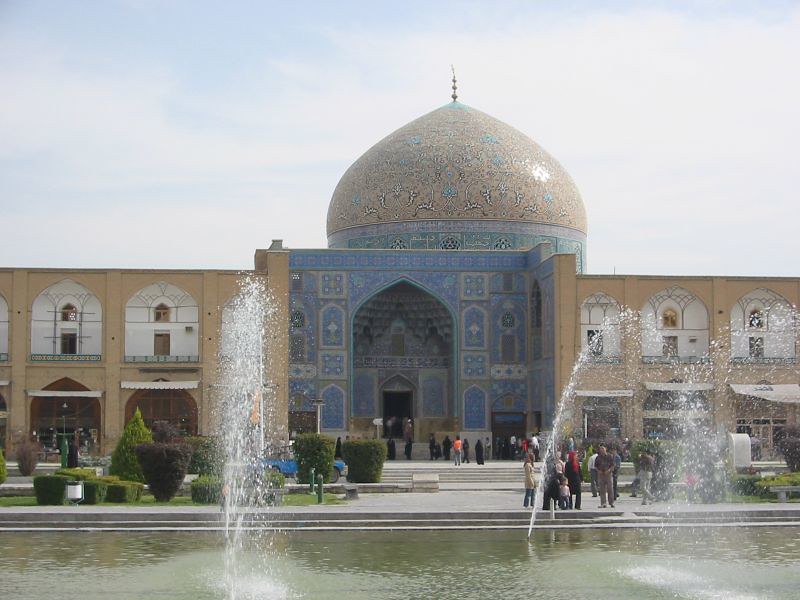
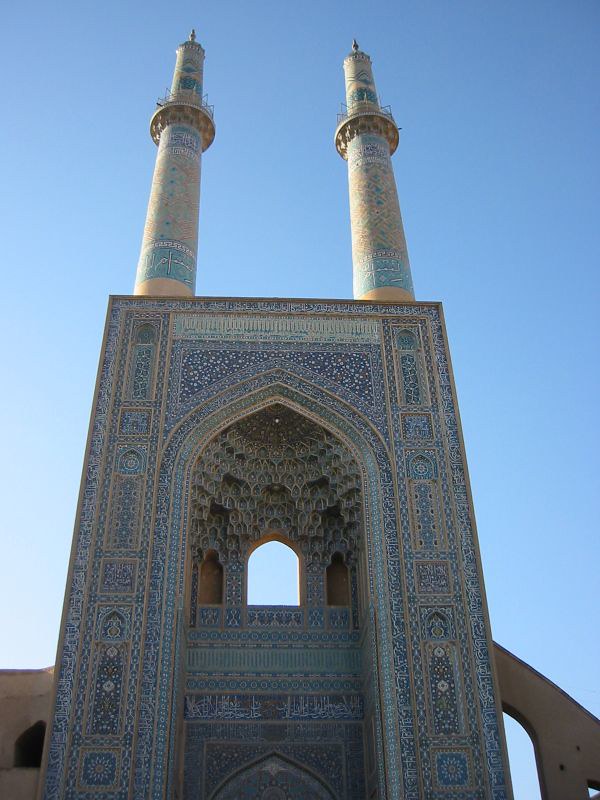
Then, like the click of a slide show I was off to the golden domes of Qom, through elegant Isfahan, the desolate, ancient beauty of Pasagardae and Persepolis and graceful Shiraz. I dashed across the Dasht-i Kavir desert, passing through Yazd long enough to explore its underground aqueducts. I spent one lonely night in Tabas, Queen of the Desert and then to Nishapur the gateway to Khorasan and Iran’s most wrecked, ruined and rebuilt city, which has survived earthquakes, Scythians, Turks, Mongols and Timurids. It was two short weeks of grasping memories from the jealous clutches of time; three thousand years of culture rushed by me in a blur until I arrived in Iran’s holiest city, Meshed, the chief object of my journey.

Once known as Sanabad, it was here, in 817 AD, that the eighth Shi’ite Imam, Reza, a direct descendant of the Prophet Muhammad, arrived after a triumphant tour of the Shi’a heartland. The Abbasid Caliph Ma’mun, a Sunni, grew jealous of the Imam’s rising popularity and imprisoned him. Fearing the Imam’s growing spiritual authority might mature into something more temporal, something the greedy Caliph could not allow, Ma’mun devised a plot involving pomegranates and poison, which were fed to an unsuspecting Imam who soon fell ill and died.

Immense waves of grief washed over the sands of Persia and the martyred Imam’s tomb quickly became a site of pilgrimage, one that attracted the scattered Shi’a of the Caliph’s far flung empire. Surviving invasions, earthquakes, rapine and ruin, the site, and even the name changed. Sanabad became known as Meshed—‘place of Martyrdom’—and Meshed turned into a booming modern metropolis sitting astride the old Silk Roads, some lead north to Samarkand and China and others west to the Levant and the Italian city states.

I crawled out of the car just as the sun set and walked into the hotel. Members of the Tajik national soccer team milled about the small, two-star hotel lobby; a curious mélange of Tajik, Farsi and Russian filled my ears.
“Passport please,” the attendant asked. I fumbled through my money belt but quickly complied.

I looked up, behind the desk stood a clean shaven young man with slightly receding hair and cheerful, pecan colored eyes.
“American?”

“Yes.”

“How awesome!” he exclaimed in perfect iomatic American English.
“Never met an one of you before,” he blurted excitedly

He came out from around the lobby desk, arms outstretched, exclaiming all in one breath, “This is the best day of my life.”

And hugged me.

After two weeks of kind salutations, warm welcomes and polite, almost infectious pride I still wasn’t prepared for an outpouring quite like this.

“So, now that I’ve hugged a complete stranger, do you have a name?” I joked, awkwardly.

“Amir Isazysadr,” he said, stretching out his hand.

“Sean-Paul Kelley,” I replied.

We shook hands vigorously. Full of contagious enthusiasm, I liked him instantly.

“Why Meshed? It is a big, dusty, ugly city, filled with too many people.”

“Gohar Shad,” I told him, as if in a whisper. “If I’m lucky I will see the Gohar Shad.”

“The mosque surrounding the Shrine of the Imam Reza is splendid,” he said.

“Are you Muslim?” he asked.

“No, I am not.”

“That is a pity my friend, because one pilgrimage to the Shrine of the Imam Reza is equal to 17,000 Meccan pilgrimages, or so say the mullahs.”

Between the late 9th and 14th centuries the area surrounding Meshed witnessed the collapse of the Abbasid Caliphate, an irruption of Turkic hordes into Persia and then the Mongol cataclysm. Through it all the pilgrims returned. Finally, Tamerlane’s son Shah Rukh, who, faced with the growing demands of pilgrims, enlarged the shrine in the early 15th century. His formidable wife, Gohar Shad, ordered the construction of a new congregational mosque around the Imam’s tomb as well, commissioning the Persian architect Qavam al-din Shirazi with the task. In the 1930s the shrine, by now a burgeoning complex in need of restoration, was again enlarged by Reza Shah. After the revolution it was enlarged once more to its present size encompassing more than 75 hectares in the heart of the city.

Since the revolution non-Muslims have been prohibited entry into the Shrine housing Imam Reza’s tomb, but the rules regarding the Sacred Precinct and mosque surrounding the Shrine are more confusing. Some guards let non-Muslims pass. Others do not. Sometimes it just depends on what day one visits. Aware of this maddening state of affairs long before I arrived in Meshed, it wasn’t until the night before my visit that I asked Amir and his brothers, who had come for dinner at the hotel, for help.
“What should I do? I want to get in, but I don’t want to see the Shrine, that would be disrespectful. I only want to see the Gohar Shad.”

“Talk to the guards, express to them your deep admiration for the art of our land,” he told me, winking.

“No,” said Ali, with a strange grin, “it would be best if he said nothing. Just act like an Iranian.”

Adel, the youngest suggested that I hire a local guide, one who might be able to bribe the guards.

“No bribes, not for this,” I replied.

The brothers looked at each other, said something in Farsi and laughed.

“What’s so funny?” I asked.

“You are funny. This is such a serious matter for you. But Ali is right. Just walk in. Say nothing to the guards. Act like you belong there.”

“So, I’ll have to brazen it out, yes?”

They laughed again, as if in on some secret.

“Yes,” said Adel. “I’m certain you will be fine.”

The next day I set off before late afternoon prayers. The walk from my hotel to the Sacred Precinct in the heart of the city was easy. I only stopped once for directions before I arrived.

I crossed the street, dodging traffic, stepped onto the large plaza and strode towards the entrance gates. A large family ambled slowly in front of me, the mother pushing a baby stroller. I followed them closely, better to blend in. A guard waved a security wand over and around me as nervous fear and excitement pulsed through me. He patted me down for good measure and sent me through the gates. Not a word was spoken until I was about ten meters away. I said nothing and kept walking.

Once inside the main gates I took a moment to absorb the outer plaza. Polished and sparkling in the sun the immense outer courtyard was paved in bluish marble. A thick wall of brick geometrical shapes rose up in front of me, not, however, high enough to block out the sun, as I shielded my eyes. Finally, I caught a glimpse of a small passageway, took three deep breaths and walked into the main quadrangle of the Gohar Shad.

For a moment all activity around me stopped. The colors were mesmerizing, as turquoise, pink, purple, yellow and green danced along the walls. Tall bands of ivory white kufic calligraphy topped four high iwans (monumental arches). Arabesques and floral patterns blended into the right angles of the courtyard. A perfect symmetry of light and beauty collided and caromed up and across the walls climaxing in a narrowing pointed arch, its niche filled with deep blue muqarnas. Sitting against a wall in a small niche I watched pilgrims enter the courtyard, hundreds of them milling about under the cerulean sky. Like the sacred spaces of any religion, they all come to participate in something personal but paradoxically bigger than themselves. Perhaps a few came, like me, hoping to snatch a hint of inspiration, to touch the walls and feel the echoes of the past on my fingertips. Or maybe there were others seeking surcease from their own troubles, finding peace at the foot of the Imam’s tomb.

A thick cloud covered the sun while the faint prayers of the devout rose up into the cool air of the courtyard. An inner calm came over me, that wondrous calm which is reserved for the summits of mountains, perfect sunsets and the birth of one’s children.
The call to prayer sounded. Thus, like many other more famous travelers before me, my time was cut short. Out of respect for traditions not my own, I left. I walked back to our hotel in contented silence.

Later that evening I ate a last meal with the Brothers Isazysadr. All three asked me the finer points of certain English words and taught me a few similar Farsi words, but cautioned me not to speak them in public or in mixed company. Towards the end of the night, Adel asked me about my day.

“I hear you made it into the Gohar Shad today, yes?”

“I did. It was worth coming all this way just to have ten minutes there.”

“Indeed, they let many foreigners in at this time, especially Americans. I think the Mullahs are trying to, how do you say it, ‘play nice’ with your government?”

Slightly crestfallen, I replied, “I didn’t know that. I thought I was sneaking in. Like a real adventurer, you know? You three knew all along I would get in, didn’t you?” The table erupted in laughter.

“Sean-Paul, my good friend,” said Ali, “nothing is ever as it appears in Iran. Surely you have learned this by now.”

Apparently I hadn’t. But I was catching on.
Short Take: Modern Infrastucture Miracles

~by Sean Paul Kelley

The Chinese rail network now carries 23 million passengers a day. Multiply that by 365 and it carries 8.365 billion passengers a year. And does not account for the increase in passengers during major holidays.

Now consider these two facts. First, India’s rail network carries 23 million passengers a day also. But it took the Brits and Indians 172 years to build out the network. China did it in under 30 years.

Second: California voted in 2008 to build a high speed rail network between Los Angeles and San Francisco with a completion date of 2022. Operations are projected to start in 2030 now.

Ponder that for a moment and then puke.

The future does not happen in America anymore.

Nota bene: Jan’s comment reminded me of something I saw in China. It was the summer of 2003. After the first big SARs outbreak. I was in far west China trying to get to India. At the time there was zero high speed rail. Understand? Zero. To get to Tibet and then Nepal and finally India I had to travel across Qinghai, starting in Goldmud where I ended up in Lhasa, Tibet.

If you’ll allow an old backpacking traveller a brag, I’d be grateful. At the time, every backpacker I ever met considered the Golmud to Lhasa bus trip the sine qua non of the complete backpacker/traveller. You could not consider yourself a true traveller if you had never made this journey. 40 hours above 10,000 ft. (3,050 meters), often times as high as 14,000 feet (4,267 meters) on a sleeper bus, in which every passenger has altitude sickness of one degree or another. Puke in the aisles. No clean up. Restroom breaks rare, maybe five the entire journey. It is a badge of honor I wear with pride to this day.

Late at night about 24 hours into the journey we drove in to a traffic jam of epic proportions. A crazed, disorganized, enormous traffic jam on a dirt road somewhere between Golmud and Lhasa high up on the Himalayan Plateau. It took an hour to get through. But what I saw mezmerized me like nothing else and I will never forget it. The Chinese, busy at Buddha knows what hour, building a High Speed Rail Link between Golmud and Lhasa, much constructed on damn near permafrost conditions. Look it up if you disbeleive me.

They did it. It’s a first class wonder, the new rail link, complete with oxygen bars, etc. . .

But me, I’m glad I did it the hard way. It has more meaning.

Lamentatio finalis: Our mad rush to adopt technology in every aspect of our lives has robbed us of many beautiful and rare experiences, many of which are gone forever. I’ll leave you with one example. In 2008 I took the ferry from Penang, Malaysia across the Straits of Malacca. It was a leisurely six hour ride from Penang to Medan, Sumatra. While making the crossing I saw just how strategic a waterway it was: the sheer mass of container ships was mind boggling.

When I returned to Malaysia in 2011 specifically to share with my father the experience of the ferry ride acrosss the Straits, the ferry had been shuttered by low cost airlines flying from Penang to Medan. To me that is a loss equivalent to someone torching a Rembrandt in a Dutch museum. Irrevocable. Gone forever.

Following Up My Silver Post By Answering A Damn Good Comment

~by Sean Paul Kelley

So, Marku asks:

But aren’t most of those contracts never expecting to take physical delivery? Just gambling, er excuse me, investment hedging?

Or is the problem that given that Comex price is under the real, that all those contracts *want* to be exercised in delivery so they can arbitrage to China (who has a real price?)

I’ve always found futures confusing, thanks for any help.

Answer is complex by I’ll do my best to simplify. I’m going to base my answer on much of what Dario says in this video, so it might be worth a watch for anyone interested in how the contracts are viewed at the Comex versus SHFE.

All contracts traded on Comex are designed to take physical delivery. Understood? They are designed for industrial hedging so corporations can smooth out their expenses on needed commodities. That said, under Clinton and accelerating under Bush, the CTFC made a whole raft of rule changes that changed the PRIME AIM of the commodities markets from honest price discovery into something resembling a casino. I’ll spare you the details, but I was in the business at the time and I still can’t believe what they did.

As for arbitraging Comex prices over those on the SHFE. Rumor is someone tried it–a Chinese trader–and got hammered hard. Main reason: the cost of shipping and arranging for delivery, even if, as rumored, he made the trade when there was a $20 USD premium at SHFE, and all the subsequent logistics of physical delivery, added up rather too quickly. But as a former arbitrage clerk myself, kudos to the brother for trying. Fortune does favor the bold. Until she doesn’t: fickle bitch she is.

Futures are identical to stock options: calls-are the expectation a stock will rise-and puts are the opposite. On the commodities exchanges you buy long exepcting the price to go up, but your buying price of the long give you the right to exercise it at that price not its current high, if it did go up. Buying short means you expect the commodity to go lower. You can also combine the two into a hedging bridge of sorts, where you give yourself the right to exercise the contracts within a range. This is what hedging truly is. Not hedgefund bullshit. I used to know the head commodities trader at Pioneer Flour Mills here in San Antonio and how he explained it was elegant. One of the reasons I went into the business.

I’ve never mentioned this before but what made me leave was a long time ago I was sitting first class next to a former international business man. He asked most of the questions, but the upshot is I was sitting next to John Perkins and the questions he asked me opened my eyes to what I was truly participating in. It was only a matter of time til I left.

The US commodities exchanges were originally established, and this was hammered into me when I took my commodities trader’s exam, for price discovery and sanctity of the market mechanism. Used to be you had to own or expect to take delivery of the underlying commodity you were hedging/selling/buying. Now you don’t.

At the SHFE the rules are much similar to the pre-Clinton era rule changes. And Chinese regulators are hardcore. They’ve shutdown at least 25 trading groups accounts last week alone for breaking the rules, which Dario explains in his video.

Hope this helped.


Silver: East Versus West

In my long post about silver prices, I talked about a reversion to the mean. This is something that frequently happens in life: something overshoots the norm and then it swings back and overshoots the abnormal. Slowly but surely it finally settles smack in the middle of the bell curve, to use a shit metaphor.

This is what we’re seeing in silver right now. For 150 years silver has underpinned a great deal of US monetary decisions. Then, for the last 50 years the United States fostered and protected a rentiers silver market by turning a blind eye to manipulations in the paper markets at the Comex and simultaneously creating a rentier situation for the distributors of silver buillon in the country. If I went into detail how that happened this post would never end. Needless to say it was a very cozy arrangement that is unraveling every day and it’s something that has the large silver distributors very, very worried.

I’ll give you the short version: the US mint prints the coins, proofs, bars, etc. It then sells that silver to about five large national distributors for a little bit under the spot price of silver. Then those large distributors turn around and mark up the silver bulliion by about 25% and charge huge premiums for every coin, bar, proof, etc., Cozy! Like I said, and like all good rent markets it produces no value. N0w, sometimes this has been done to keep silver in a stable range for industrial purposes, but after the US wholesale deindustrialized beginning with Clinton but turbocharging under Bush–to fund our illegal wars–the justitication fell apart.

While we sold off all our capital stock to China, its demand for silver became unslakable. As I noted in a previous post one gigawatt [error corrected, mea culpa, SPK] hour of power from solar panels requires 1,000,000 ounces of silver and that’s just for solar panels. Silver goes into so many more things than we can possibly imagine. Pick someting electronic in your house; its got silver in it. Silver is the single most important industrial metal in the world because it is the most conductive and oxidizes less than only one other metal: gold.

But I’ve digressed from my argument.

For at least 150 years, starting with the opium wars, the balance of trade from East to west was very much skewed to the west: let’s call it what it was: economic pillage masquerading as lifting up all our little brown sisters and brothers. All of the wealth in the east, and that includes India, was over the course of 350 years, siphoned west. That’s economic fact, although people don’t teach economic history, which is a shame. They should.

I say all of this because the Comex has literally become a casino. For example, the total number of registered bars, registered meaning it’s in the vaults and it’s there for delivery has fallen under 100,000,000 ounces it’s now 98,000,000 ounces.

To make matters worse, there are 65,000 contracts of open interest on silver futures at the Comex right now, due in two weeks, that if optioned require the delivery of 325,000,000 ounces of physical silver. Where is that kind of silver going to come from? Pawn shops? Coin dealers? GTFO! Comex is in the grips of a slow, existential crisis, that it’s going to lose.

If those contracts are exercised at the end of February, because they’re March contracts, there is absolutely no telling what kind of chaos the US financial system might endure. Why do I say the entire financial system? The dreaded ‘D’ word.

Remember mortgage backed securities, CDOs, CDO2, synthetic CDOs etc. . .

There are similar derivatives in the silver market, but they exist in a black box, undisclosed so nobody really knows how much the open interest or notional value really is or who owns the risk—although the prevailing guess is about $1trillion USD notional. If the Comex implodes the cascade effects might well resemble what happened to those two Bear Stearns Hedge Funds in the summer of 2007 that set off the 2008 Financial Crisis.

Even if the Comex manages to extend contracts out a few more months, the physical supply of silver does not exist. I repeat there is no physical supply anywhere that can meet this year‘s demand for silver. Only two places comes close to the silver necessary for global demand: one is already fully allocated in the Canadian vaults in Ottawa in Toronto and that silver is not going to be let go of. The other is silver owned by retail investors. But as I have said before: silverbugs aren’t going to sell for $95, not $120, not $175. Not going to happen.

So in two weeks time, it looks like the Comex is going to implode.

How about over in the East? What’s China doing?

Chinese market regulators are actually doing their job. Here’s how, as I am quoting Dario at this link:

“What the Shanghai future exchange just did and what they did yesterday is effectively saying that starting from the last month of February that (it’s not a coincidence is the same day when the settlement for March 2026 futures contracts and the Comex begins starting) from that day any participant in the exchange that is not purchasing contracts for [physical] hedging purposes and even if purchased for hedging purposes they haven’t been allocated [a] physical delivery quota all their quota for silver in the front end contract is going to be brought down to zero.

So what the Shanghai future exchange here is saying is like okay game is over. We have to restrict the physical silver that we have left here for settlement for those that need it from an industrial perspective. So for hedging purposes and we need to keep the real purpose of the exchange going otherwise if things continue in this way we can effectively shut for business and that is going to be a huge mayhem not only across China but across Asia.

What’s China doing? Well, those communist bureaucrats that oversee the Shanghai Futures Exchange are doing something remarkable: they are working as hard as they can to preserve the sanctity of a free and fairly functioning market dedicated to true price discovery. Listen to the full podcast. You’ll listen in disbelief. The Chinese are better free-marketeers than the corrupt managers of the SEC. I’m dead serious. Chinese regulators make our SEC look like a collection of jackasses at a rodeo-clown show.

So, here is how this plays out: if Comex implodes—which is probable—but Shanghai muddles through, which given its bottom of the barrel minimum silver reserves is going to be extremely hard to pull off, but not impossible, massive amounts of wealth will accelerate their repatriation into the mainland. For over a thousand years silver formed the basis of Chinese monetary policy. They know what they are doing.

And the West? The West will reap what it sowed for near on 500 years. Our wealth is soon to be a multi-century river filling the current account surplus of the East.

Just watch.

IT SHOULD GO WITHOUT SAYING, EXCEPT IT MUST BE SAID: THIS IS NOT INVESTMENT ADVICE. THIS IS OPINION, FULL STOP. DYOR. 


Silver Short Take

Jaysus on a popsicle, Mary and all the Saints do I have some egg on my face. Since January 27 silver has been on one seriously wicked ride. I’ve been banging my head to Metallica’s Whiplash for the last ten days.

So, WTF happened?

In short: from where I sit the paper markets are trying to create a force majeure situaiton for March contracts. The market is incredibly volatile and highly illiquid. Traders are draining the vaults of bullion. Indeed, as Dario notes,Silver physical deliveries at the Comex just crossed 4,000 contracts (~20m/oz)and we are only 6 days into February.” That’s nucking futs. 

If the Comex defaults to force majeure (SHFE is a bit of a different matter) the Comex will lose all credibility as a fair functioning market dedicated to price true discovery. Never mind that silver prices in the USA has been a cozy Fed-supplied rentiers market for decades, should this happen businesses will begin a mad scramble to source silver for themselves. That leads to supply and demand chaos. Bad. Vewwy bad.

On the SHFE–Shanghai–one day last week over 1.3 billion ounces of silver volume were traded. That’s one year of global demand in a day. The Chinese government’s motto regarding traders shorting silver on the SHFE seems to be FAFO. The Chinese are cracking down hard. Why? Well, to produce one gigawatt of power using solar panels requires 1 million ounces of silver.

You read that right. One million ounces.

Fundamentals matter. Global demand is strong. Businesses need silver for industrial applications beyond just solar panels and dentistry. But traders can keel-haul fundamentals sometimes with epically shitty consquences. Watch this video by Dario starting at minute 6:43 for how this possibly plays out.

It’s ugly. And it seems to me that maintaining a viable silver market is now fully in the hands of the Chinese. US traders are determined to destroy price discovery and reinstate the cozy rentiers market in the US.

I have no idea how this will end.

Just How High Can Silver Really Go?

~by Sean Paul Kelley

Everyone is talking about gold topping $5k an ounce. The yellow metal is captivating and big moves by it tend to suck all the oxygen out of the media space regarding other metals. In 2025 gold rose a whopping 64% against all comers, i.e the dollar, the S&P 500, oil, Bitcoin and on and on.

Gold’s meteoric rise last year is a fucking piker compared to what silver did. Silver was the best performing asset of 2025 rising an astonishing 147%. Yeah you read that right. 147% from January 1, 2025 to December 31, 2025. This raises some important questions, such as why did silver, after decades of disappointing performance, blow past every asset this planet has to offer and consequently how high can it go? Does silver have a ceiling?

So, questions asked, let’s now examine the known and/or knowable variables affecting silver prices at present.

First, what’s silver’s all time inflation adjusted high? This depends on who you ask and how you measure inflation. By our current CPI measurement silver’s all time, inflation adjusted high was roughly $150 an ounce. This was in February 1980 when the Hunt Brother’s tried to corner the silver market. Now, as most of you know, Ian and I both distrust current inflation measures, like the CPI, because it overweights consumer goods with stable or falling prices, using accounting legerdemain like hedonic pricing which equates increasing computer chip power and/or efficiency as disinflationary. At the same time the CPI underweights prices of goods that are rising, like food and other non-durables.

Seriously, I defy anyone to tell me food prices are stable or falling: you can’t do it. The CPI does this primarily to avoid COLA adjustments on entitlements, cheating retirees.

Other measures of inflation, indices, weighting using purchasing power parity or other yardsticks, delivers an all time silver high closer to $190. So, I’m going to channel King Solomon and split the baby in half and call the all time high at $170. But however you measure inflation it’s clear silver isn’t even close to its 1980 Hunt Brother’s high.

Second, price moves in gold and silver are not coupled and have not been for at least 150 years. They don’t correlate. Gold is considered a safe-haven against fiat currency hyper-inflation or economic collapse. Silver, on the other hand, is essential to modern electronic manufacturing. So gold had a nice run last year, but silver was number one by a very, very wide margin, outperforming gold, the way Shohei Ohtani outclasses everyone else on a baseball diamond. Even as silver and gold have been decoupled since the late 19th century evidence is mounting that last year’s silver move might have been the opening act of their long awaited re-coupling.

Perhaps a précis on how and why they decoupled and what a re-coupling would look like is in order.

The first question is to ask, “how long were gold and silver coupled?” Well, from ancient times—yes, fucking Greeks and Romans ancient times—until the 19th century silver and gold traded at a 15:1 ratio.

Don’t believe me?

Consider then how the 1792 US Coinage Act established a 15:1 ratio between the two in our newly constituted republic. That said, during the next century—the 19th—a handful of rare developments coalesced to break the two thousand year old linkage between the two royal metals, thereby widening the ratio nearly exponentially.

First, the gold standard for measuring currency values between nations was established. It soon became the, well, gold standard for all international trade.

Second, the conventional wisdom prophesied the end of America’s silver boom—never mind that the aggregate value of silver mined in Arizona and Nevada had a notional dollar value greater than the California, Yukon, Deadwood, Montana and Alaska gold rushes combined. Gold’s price during the 19th century, due in large part by its merciless acquisition by European banks, blew out the ratio, decoupling the two metals for a century and a half. The ratio between the newly decoupled metals had widened from 15:1 to 50:1 by the turn of the 20th century. By the turn of the 21st the gap was nearly 100:1, in large part due to US government manipulation of silver prices. The US government sheltered a rentiers market in silver bullion for decades. Wholesalers got silver at spot prices. They then charged retail buyers high premiums and pocketed the sizable difference. This cozy arrangement, due to silver’s recent price moves is breaking down, and fast. Good I say.

That said, I argue, based on a reasonable man’s assumption, that the spread, now roughly 50:1, will continue narrowing and sometime in the next few years complete a reversion to its 2,000 year historical mean. That puts a potential price of an ounce of silver at $320 an ounce and might even overshoot a little bit, as reversions are wont to do at times. Overcorrections are a real thing. Hitting the Hunt Brother’s high of $170 an ounce is just a mental milestone, nothing more. The silver bugs are getting their revenge and how.

Now, my assumption is based on a single premise, a reversion to the mean/norm. Not a bad premise to base an assumption on, but not enough for intellectual coherence and honesty. So, let’s explore another variable: silver’s supply versus demand forecast.

What is the global supply versus demand picture like? In short, extremely unbalanced. The numbers are staggering. Aggregate global demand per year is 1.3 billion ounces. Annual global mining supply maxes out at roughly 850 million ounces. Let’s be generous and toss in recycling raising global supply to 1 billion ounces of silver a year available for industrial purposes.

The maths paints a grim supply picture: a whopping 23% gap between supply and demand. Because silver is the single most important industrial metal—it is in every electronic we own— demand is not going down any time soon. A single tomahawk missile requires 500 ounces of .999 grade silver. Yes, 500 ounces. See where I’m headed with this demand equation?

Why is it in everything? It’s the goldilocks of metals. Silver might not be as conductive as some but it’s less resistant than most. It doesn’t overheat like some and burn through plastic coating, but its best left exposed and uninsulated. It’s place in the bell curve of the electrical performance of all metals is right before the big bulge grows. Most of the time we want things good and fast. In reality, however, we must choose between good or fast, but silver? Well, silver gives you good and fast together. Goldilocks!

One big variable exists concerning global silver supply that has no easy short or even medium term fix. It’s physically impossible for global mining companies to ramp up mining production enough to even begin closing a 23% gap between supply and demand in any time frame less than 2-3 years. And this assumes no economic growth leading to increased global demand. That is some wicked nasty inelastic demand for silver and it has zero supply side answers, except very high prices that lead to retail silver owners cashing out. Central banks would have to print precisely three metric shit-tons of fiat currency to induce silver bugs to sell. I know some of them—they make rabid dogs seem like puppies—and they are adamant: no selling until the ratio reverts to 15:1. Until they get their ring there will be no huggy or kissy.

Another fundamental we ought mention are draconian export controls on bullion instituted by the Chinese central government. Note: China is the world’s leading consumer of industrial silver. It also has an extremely long and complex history using silver as its monetary base. Much, much less so with gold. If you want a book recommendation on the subject just ask.

Then there is our southern neighbor, Mexico, our number one supplier of silver to this day, is considering retaliatory tariffs on silver for United States because of Trumpian fuckery. Much fuckery there and I applaud Mexico’s president for sticking to her guns.

Consider as well dollar weakness and potential QE. Both point directly towards higher silver prices. Add to all this a wildcard fundamental hiding in plain sight: the magic price point that compels the addition of physical silver to the portfolios of Central, Commercial and Investment Banks around the globe. It’s a simple equation: storage costs fall as prices rise. At $40 an ounce there is no reason to hold silver in a vault. At $170? We’re getting close. At $300? Bingo! You’re goddamned right there is a reason. Such a development would spike demand by an order of magnitude as it would reinforce the powerful upward trend already in place. This is the dynamic that could at long last force the reversion of the gold to silver ratio back towards 15:1. Gold’s present price of $5000 an ounce implies a target of $333 per ounce of silver. In my opinion, and this is not investment advice, this is where we are heading. Right now. It may take 18-24 months, but it’s going to happen.

These are just some of the fundamentals. I can’t cover them all. If you think I missed an important one, add it in the comments, please.

Let’s talk about some technicals followed by sentiment.

Late in 2025 silver achieved a triple top breakout. Triple top breakouts are very rare in any asset. But when they occur they are an extremely bullish signal, conveying that there is no predictable upper limit to the assets potential advance. This is silver today. Silver hit $50 in October, backed down to the low $40s, made another run in November to try and overcome $50 and didn’t make it. But then in late November and all of December during the Santa Claus Rally silver blew through $50 and ended the year at $72.05. Market observers I respect, all unsure but all equally intuitive, explained the triple top breakout as the result of a handful of factors coalescing in the short term, such as Chinese export control tightening, high retail demand, Mexico threatening tariffs on silver, and a short squeeze on the Comex. This confluence makes sense to me.

The underlying technicals that lead to triple top breakouts are usually either a short squeeze or a gamma squeeze. In late 2025 silver underwent a short squeeze. But in early 2026 led by a bank frenzy to cover what were in essence some very large naked shorts in the SLV and PSLV ETFs, coupled by a bizarre change in margin requirements—from a straight percentage to one based on the notional value of the contracts (I mean, WTF?)—backfired spectacularly, leading to the rarest of rare technical developments, one I’ve only seen once in my life as an investor—the mythical unicorn, the gamma squeeze.

In short, a gamma squeeze “is a rapid [asset] price surge from [futures] trading, where heavy retail (read: investment banks, spk) call buying forces market makers to buy shares to hedge risk, creating a feedback loop that pushes the price even higher.” A gamma squeeze can be viewed as one powerful force intent on creating and sustaining an upwardly positive feedback loop “[where the] cycle escalates because as the [asset] price rises, market makers must buy more [futures or the hard asset] to cover their increasing delta risk, driving prices up further and attracting more call buying, often in low-float, i.e. low-volume [assets].” Silver is now, for all intents and purposes, in a virtuous rising feedback loop, leading to higher prices which force more buying to cover expected demand thus leading to higher prices. When it comes to shorting a gamma squeeze FAFO. You will lose your ass.

These developments all serve to reinforce my call late last year that silver is not on a cyclical bull run. It is engaged in a secular bull stampede.

Cyclical trends last between 3-5 years, represent basic price discovery and a market composed of two healthy opposing forces: supply and demand. Cyclical bull or bear runs tend to predict the business cycle as well, serving as a leading economic indicator.

Secular trends, however, are a different animal altogether. Like Earl Campbell, that human rhinoceros, running over middle linebackers like they were children, a secular bull or bear is powerful, based on large scale structural economic rearrangements, demographic realignments, and/or crushing but ‘unforeseeable’ externalities—like the Arab Oil Embargo of the 1970s or losing wars like Vietnam, Iraq, and Afghanistan——that leave robust long-term consequences, like inflation, busted supply chains, broken armies, revanchist politicians, rising internal violence and other variables, in their wake. Secular bulls or bears last decades, some as long as 40 years.

Now a word on sentiment. Sentiment is a fickle bitch, much like the muse. Nothing can bankrupt an investor with more rapidity and totality than a sudden turn in sentiment. Two forces, ultimately rule investing: fear and greed. Beware the latter and respect the former, said my mentor at Morgan Stanley.

Right now silver is flying under the radar. Everyone is talking about gold. It’s gold, why the hell not? Gold makes people febrile. I’ve literally seen it with my own eyes. I’ve felt my forehead warm up and my fingers get a sudden subtle itch when I’ve held certain gold coins in my life. I had a Julius Caesar gold aureus in the palm of my hand once. Wow! So I get why silver remains the red headed step-child of the metals market. And the lack of commentary on silver reinforces my conviction of silver’s inevitable rise to $250-$300. As I used to say when I worked on Wall Street, “buy the rumor, sell the news.”

It worked every time. And right now silver is hardly a whisper much less a rumor.

So, realistically at what price would I begin selling my silver?

$275-$300 an ounce.

I’m patient.

And certain.

Are Multiple Russian Breakthroughs Imminent?

In my Nov. 7 analysis of the Russo-Ukrainian War I missed two serious developments on the line of contact that I simply didn’t have the bandwidth to notice. After paying closer attention I came away with a big picture question: has Russia pierced the line of contact in three places or are my sources exaggerating? For the last two weeks there has been talk and rumors, some of which I have been guilty of passing along, that Russia achieved such a goal. But where?

Most observers are in rough agreement that the following five Kupyansk, Siversk, Lyman, Huliapole, and Constantinovka are under dire threat. Pokrovsk and Myrnograd are done. Finis.

But these three are the standouts.

The first, and most obvious, is in the immediate environs of Pokrovsk. As I noted November 7, west of Pokrovsk—is all open steppe land with little to no defensive terrain—all the way to Pavlograd. Will the Russians move forward? Doubtful. I stand by what I wrote two weeks ago: “Russia will consolidate its gains in and around Pokrovsk, after the Ukrainian soldiers in the pocket are killed or surrender. For some time after I foresee Russia utilization of tactical defense within an offensive framework.” But the Russians, when they are ready, will move across the steppe towards Pavlograd, en masse.

The second and most unlikely involves troops now taking Lyman, who afterwards will move south, in tandem with troops north of Pokrovsk, to encircle both Slovyansk and Kramatorsk, two large towns serving as the final obstacles on the road to Poltava. This encirclement, if attempted, would make the Pokrovsk-Myrnograd cauldron look likes child’s play. It is doable, however, and an encirclement of Slovyansk and Kramatorsk might be just the right bait for the last of the Ukraines reserves; with only enough reserves to fight in one place, this is where they’d stand. Russia can afford to tease the Ukraine as it retains the strategic initiative. It can feint, sucker punch and attack pretty much with impunity at this point in the war. Yes, Ukrainian forces can mount local counter-offensives, but the days of counter-offensives across the entire line of contact are long past.

The third—which is the most serious for the Ukraine—is in the south, where an imminent encirclement of Hulyiapole, will wrap up the flank of Ukrainian forces in the south elimanating all resistance to Zaporozhye. This operations seems well on its way to success. The Ukrainians have no answer to the Russians here.

As I mentioned above there are other places the Russians are pressuring: Kupyansk, Siversk and Constantinovka. In all three places Ukrainian defenses crumble, Russia hammers supply lines, drops FAB-500 on mustering points, lobs Iskanders on ammo dumps and bridges, and hurls thermobaric bombs at makeshift barracks and more. The Russians are doing this as near to the line of contact as possible. Everything to a purpose: shattering the will of the Ukrainian soldier to continue the fight.

Meanwhile, Russia’s strategic bombing and drone campaign against the whole of the nation escalates sans mercy.

Of the three points I mentioned above, I see the Russians grinding away deliberately and slowly; advancing at speeds of their choice around the Pokrovsk environs, and in and around Lyman. In other words, more attrition. Maybe a feint at encirclement will draw in the last of the Ukraine’s strategic reserves, which would then be attrited away as the Russians have been doing so since 2023.

Poor US TV generals, still have no big flashy red arrows or armored movements to get their war porn on.

Only in the south might we see a real breakout; a breakout that posisbly rolls up of the entire Ukrainian flank to Zaporozhye. The Russians might be at the gates in two weeks. Maybe less, maybe more. Maybe we’ll see an operational pause and then a deliberate resumption of the churn.

One fact is beyond obvious at this point: the Ukraine has lost. The question now is: how much more will they lose.

Short Take on What I’d Be Doing To Prepare for the Pending Economic S**t-show

I’ll keep this mercifully short. One commenter in my Friday night econ news post asked, in a kind of oblique way, what would I do in this environment.

Okay, I’ll play — but not without stating firmly and loudly that I am not dispensing investment advice, nor am I licensed any longer to do so. We clear on that?

A liquidity crisis is already here. But this may not be like your father’s ’08 crisis. In ’08, the USD rose — counterintuitively — against every other major currency. Why? The need for USD to cover credit losses was global, and NYC became a literal blackhole for USD. I made an absolute killing on the USD during the ’08 crisis, and afterwards even more on the banks and zero coupon bonds. I made several people fortunes they still retain.

But the crisis now unraveling doesn’t look like one of confidence, it looks like an animal out of a medieval grotesque, certainly not something the Fed can backstop.

Fire in the hole!

Sure, the Fed might do QE. But Congress can’t do a bailout with almost $1trillion in interest payments on US debt imminent and Trump offering $2k bribes to every citizen in America. It’s impossible. What would one call inflation with QE?

What would you call that?

Hyperinflationary?

It’ll be damned ugly whatever happens; whatever you want to call it.

Were I still advising investors I’d be putting them in Yuan interest bearing accounts, I’d be buying silver on the dips, JPY, SKW, and buying way out of the money puts on S&P 500 and NASDAQ. In short, if you can find an affordable way to buy puts on things that are impossible to happen, buy them, because one or two will hit big, and you’ll rake in the money. 

Silver’s in what’s called a secular bull market, not a cyclical one — cyclical means three to five year cycles, whereas secular means, “We don’t fucking have any idea how long ‘dis bitch is going up or down.” This particular secular bull is being driven by a massive externality: China’s draconian export controls of the metal. The problem, right now, from a technical trading perspective, is a failed double-top breakout. This is bearish in the near term, so an under $40 buying opportunity might be realistic. As a side note: China has a VERY long history with the white metal, but not so much the yellow one. I can recommend a good book if you are interested. 

You can invest in the Yuan in several US banks/investment firms. Some accounts are interest bearing, others are just a pure play on the currency. If you want specifics, send me a DM. But the current T-bill replacement is silver, but buy it under $45 if you can. Under $40 is best.

But, for fuck’s sake, avoid paying premiums for silver. What does that mean? If you buy silver coins, buy 99 percent silver grade coins — not the overpriced ones from the US Mint. Buy the off-market ones. Otherwise, the US silver cartel will clean out your gains before you even begin.

Page 4 of 12

Powered by WordPress & Theme by Anders Norén