
Ian Welsh

The horizon is not so far as we can see, but as far as we can imagine

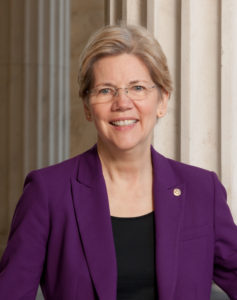
Elizabeth Warren’s “What Am I Moment”

Warren Elizabeth

So, Warren has been the second most progressive candidate in the primaries on domestic issues. But now she’s dropping out, and she has a decision to make: Should she endorse Bernie, endorse Biden, or stay neutral?

Back in 2016, Warren declined to endorse anyone during the primary, even though she and Sanders were closer politically than she and Clinton. I assumed then that she believed Clinton was likely to be President and wanted to not estrange her. Clinton is famously vindictive.

That time, her endorsement only really mattered in Massachusetts. This time, she’s a former front-runner with a stack of delegates. She’s been hitting Sanders for a few months, trying to find a road to victory, but now her campaign is over.

I said in 2016 that Warren had shown she wasn’t an ally, that she put herself and her own viability before the movement.

I hope I was wrong, or that I was right and that she feels that she has a future on the left to protect. This, after all, is Sanders last Presidential run, he’ll be too old next time. She can be the heir apparent if she moves hard behind him.

Alternatively, she can try and get the VP slot with Biden. He’s clearly got dementia, so she could wind up as the power behind the throne or even as President, if he declines fast enough.

Finally, she could decide to stay in the Senate, and she might be thinking that Biden is likely the next President and wants to be able to work with him.

This is a close race, however, and her endorsement could make the difference between who wins. Bernie will do far more of what she says she believes in, so much so that there is no comparison.

Does that matter to her? Do her principles come first? Does she care about the policies she says she believes in and the good of Americans (because, yes, Bernie will help far more Americans)? Is she an ally, a member of the progressive movement, or just a politician, maneuvering for advantage and ambition?

We’ll see.


The results of the work I do, like this article, are free, but food isn’t, so if you value my work, please DONATE or SUBSCRIBE.

Bernie’s Road Forward

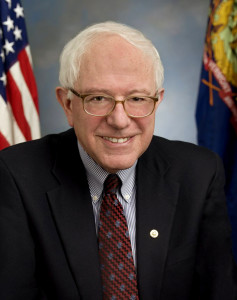
As we all know now, Obama’s intervention for Biden worked, and Biden won more delegates on Super Tuesday than Bernie.

Biden has 397 delegates.

Bernie has 356 delegates.

Bernie Sanders

This isn’t a large lead, though it is exacerbated by the existence of super-delegates. Nonetheless, in a 1:1 first round race, Sanders could easily win before the second round.

The states to come include many that are very strong for Sanders, including the Rust-Belt states. Of course there will be voter suppression, as there was yesterday, mostly by closing polling places where poor and non-white people live, but it was always the case that Bernie would have to win against an unfair opposition.

The race is far from over, and while shock over the loss is understandable, there’s still plenty of road ahead. The other candidates dropping out makes it a clear two-way race. (Warren should drop out, I have no idea what her logic is for staying in.)

Note that Biden is clearly suffering from dementia. There is still another debate, and it will not be scattered over multiple candidates: Biden and Bernie will be highlighted. Bernie is coherent, Biden is senile. Likewise, Biden will continue to display his senility as he campaigns.

So, Super Tuesday isn’t what those of us who support Sanders wanted, but it’s no death knell. Back on your feet: This was one battle, not the war.

Edit: folks. Bernie’s best states are still to come. Don’t turn a minor loss (look at the numbers) into a rout because of morale issues.


The results of the work I do, like this article, are free, but food isn’t, so if you value my work, please DONATE or SUBSCRIBE.
Super Tuesday

So, Pete and Klobuchar have dropped out and endorsed Biden. (I’m hearing unconfirmed rumors that Buttigieg had to have his arm twisted.) The lastest polls show Biden up slightly. Warren has stayed in, and yeah, it’s credible that the reason why is because more of her voters would go Bernie. Wonder if she was offered Biden’s VP slot?

Biden is very clearly senile. Sounds like he has dementia.

Use the comments to this thread to discuss, as this will be the story of the day.


The results of the work I do, like this article, are free, but food isn’t, so if you value my work, please DONATE or SUBSCRIBE.

Why Sanders Supporters Care So Much

Bernie Sanders

Sanders supporters have a reputation for being passionate. Some of that reputation is unearned, a simple attempt by the establishment to pretend they are uniquely aggressive.

But some of it is true, and it’s true for a simple reason.

Sanders followers believe he is the only candidate who will fight to get them universal health care and student loan relief, They feel their lives are at risk, because they can’t afford health care, and student loans are so heavy many of them, or their children or friends can never expect to have a good life.

In other words, Bernie’s followers are scared for their lives, and of having terrible lives, and when someone gets in the way of what they see as their only real chance of not having to be scared, they get angry.

This is exactly what you would expect. “Oh, I’m sorry you might die because of lack of healthcare but other issues are more important” is the sort of argument which doesn’t fly. “Your death and miserable life matter less than my pet issue.”

This is why, in particular, many Sanders followers are angriest at Warren, who has recently repeatedly attacked Sanders.

This is normal behaviour for a politician in a race, but they don’t see it first as a race where people are competing to become president. Instead it is a movement to get people health care, cancel student loans and tackle climate change. Warren was seen as part of that movement, as an ally, and the competition was only to see whether it would be Warren or Bernie as the nominee.

For Warren to attack Bernie is to say “my personal ambition is more important than saving all of these lives and making so many lives better.”

That’s the Sanders supporters emotional logic. Especially since it often reads as “you need health care or you might die, but I think something is more important than whether you live or die.”

Every candidate has an emotional message. Sander is “not me, us.” It’s not about him, it’s about saving other people. So to attack him, as someone who is an ally, isn’t an attack on Bernie, it’s an attack on those who support Bernie’s plan to save lives.

Thus the anger at Warren.

Warren’t emotional logic is “I’ve got a plan for that.” Her claim is that she’s the most competent candidate (the logic that Hillary ran on, actually). She appeals to technocrats and many women who find her journey resonates with them the same way Clinton’s did.

Biden’s emotional logic is “back to the Obama administration, life was more or less OK then, right?” Plus a bit of emotional appeal as the inappropriate but essentially well-meaning uncle. Yeah, he puts his arm around everyone, but he doesn’t mean anything by it.

Warren and Biden are competing on who is the best candidate, Sanders is leading a movement to save lives and make a lot of lives much much better. Warren was seen as an ally, she is believed to have equivocated on the most important goals like Medicare For All and Student Debt Relief, and she then attacked Sanders, as if they weren’t on the same side.

Such people, emotionally, are considered traitors, and traitors are always despised far more than honest enemies.

Bernie leads a movement, not a political campaign. His followers are angry because they are literally scared for the lives and the lives of those they love.  His movement is about other people, not about his ambition.

Remember that Bernie asked Warren to run in 2015 and only ran when she, triangulating, chose not to. If she had accepted, she’d be where he is, because she didn’t, he is

Sanders ran for other people, not for himself.

So when Warren or anyone else attacks Bernie, it’s seen as an attack on “us” and our odds of living and having decent lives, not as an attack on Bernie.

That’s why attacks on Bernie are taken personally by people other than Bernie.

They aren’t attacks on Bernie, they’re attacks on the movement he leads.


The results of the work I do, like this article, are free, but food isn’t, so if you value my work, please DONATE or SUBSCRIBE.


Week-end Wrap – Political Economy – March 1, 2020

by Tony Wikrent
Economics Action Group, North Carolina Democratic Party Progressive Caucus

Strategic Political Economy

Chile’s Struggle to Democratize the State
[NACLA, via Naked Capitalism 2-25-20]
A useful overview of the neoliberal policies enacted by the Pinochet regime three decades ago — protesters chant, “It’s not 30 pesos, it’s 30 years!” referring to the transit fare hike that sparked the social uprising in October 2019 and the 30 years of enforced neoliberal economic devolution. Neoliberal policies were written in Pinochet’s constitution, which is why Chileans are demanding a new constitution. 

General Augusto Pinochet’s 1980 Constitution both symbolizes and imposes the authoritarian model at the root of the ongoing mobilization. The Constitution institutionalized the economic and political domination of the dictatorship and enshrined a neoliberal framework that erased the role of the state in social and economic areas. It restricted political participation, gave the Right disproportionate power, and installed a tutelary role for the armed forces….

Pinochet’s radical neoliberal transformation privatized the pension system and promoted the development of a private sector in the health and education fields. These privatizations have perpetuated inequality and reinforced extreme social divisions. Moreover, Chile is the only country in the world with almost completely privatized water—Chapter III, Clause 24 of the 1980 Constitution establishes the “right” to private ownership of water.

….A 2019 study by The Lancet showed that a woman in a poor district of Santiago lives some 18 years less than a woman in a rich neighborhood in the same city.

…. popular symbols have changed. In large demonstrations in the past, people carried the banners of their political parties or social organizations. Such banners are gone in the protests today, reflecting the spontaneous nature of the social explosion and its distance from the political parties.

[I can see these types of protests erupting in USA, as people give up hope that either the Republican Party – taken over by grifter Trump who lied about his intention to implement populist policies – and the Democratic Party, which is fighting desperately to prevent populist policies from being carried into office by Sanders or Warren.]

Some 70 to 80 percent are in favor of a new Constitution—forged under democracy—to guarantee social rights. Chileans now look forward to the national plebiscite called for April 26 to vote for a path toward a Constitution that will protect the rights to education, health, and decent pensions, among others.

View of the protest of an estimated 1.2 million people in Santiago, October 25, 2019. (Hugo Morales/Wikimedia)

The Carnage of Establishment Neoliberal Economics

Poverty Is All About Personal Stress, Not Laziness

[Bloomberg, via The Big Picture 2-25-20]

Economists are starting to accumulate evidence that instead of being indolent layabouts, poor people are harried and frantic. To deal with a world of precarity, where any misstep or piece of bad luck can lead to disastrous consequences, requires a massive amount of cognitive effort. And it’s the stress of that constant effort, rather than bad morals or welfare-inspired laziness, that drives many poor people to make subpar decisions….

Economist Sendhil Mullainathan of Harvard University has been at the forefront of the effort to better understand the challenges of poverty. In 2013, along with co-authors Anandi Mani, Eldar Shafir, and Jiaying Zhao, he published a groundbreaking paper entitled “Poverty Impedes Cognitive Function.” They found that when low-income shoppers in New Jersey thought about their finances, their cognitive performance went down. But that didn’t happen for higher-income subjects. This suggests that stress taxes the mind more than finances. In a second experiment on Indian farmers, they found that cognitive performance is worse before a harvest, when finances are tight.

Mullainathan expanded this result into a general theory of poverty. Scarcity, he believes, begets stress, which leads to bad decisions, which creates even more scarcity. Thus, poor people get trapped in an exhausting but inescapable cycle of precarity.

Flux: Wealth in the United States

Barry Ritholtz, February 26, 2020 [The Big Picture]

Open Thread

As usual, use the comments to this post to discuss topics unrelated to recent posts.

The Justification for Great Wealth

Great wealth is great power. If you have money, many people will do what you want them to do. This should be uncontroversial: Most of us have spent our lives doing tasks we wouldn’t do unless someone was giving us money.

Well, that and being scared of losing everything and dying on the street.

Great wealth is a matter of law. Property rights beyond, “What I can carry” are not natural. They require force and a series of professional classes–from accountants to cops–to maintain. Property rights, then, are actually a drag on the economy; they come with a cost. They doubtless have some benefits, but whatever those may be, they are not pure benefit. Whether any particular set of property rights is a net benefit is unclear; it might be the economy would do better with less.

Property rights are justified because they are supposed to lead to better outcomes. So are wealth and income differentials. If someone is earning more, they supposedly do more good in the economy.

The Wall Street bankers who crashed the world economy say “Hi!” and remind you that if they don’t get bonuses bigger than the rest of the country’s raises, they may not keep working.

So, let’s simplify this.

If you have a lot of money, say $64 billion, the question is “Are you doing more good with that money than would be done by simply splitting it up and giving it to everyone else in society.”

Or, better yet, what if you took that income and equalized it among all citizens?

Seems like the cost of having an overclass is rather high, isn’t it? Are they producing enough human welfare (any net human welfare?) to justify all that income they are taking?

When, of course, they actually crashed the economy in 2008 and when economic performance has been inversely proportionate to the amount we’ve taxed them?

Anyway, is having this elite worth $50K a year to you?

Hope you’re getting your money’s worth.


The results of the work I do, like this article, are free, but food isn’t, so if you value my work, please DONATE or SUBSCRIBE.

Preparing for the Coronavirus

I haven’t written about this because others have been dealing with it well and pandemics aren’t something I know a great deal about.

It does look, now, like the Coronavirus stands a good chance of turning into a pandemic, and I think we should discuss preparation a bit.

Our world produces most goods in a highly fragile, just-in-time production chain. There may be multiple inputs to a finished good, but the parts are made in a very few places. Most countries do not produce everything they need, there are not many sources of key goods and warehouses do not keep large inventories; production tends to run just ahead of need. This is efficient, but it also means that any serious disruption to production can produce shortages almost immediately.

China is a lynchpin producer of a great number of goods, including medicines. Korea, which is starting to get hit, produces many goods as well. It’s hard to say who exactly produces what unless you’re an expert, for example, after Puerto Rico got hit by a hurricane the US experienced shortages of IV bags. Who knew that the primary IV bag supplier for the US was in Puerto Rico?

So in most cases I don’t think it’s worth spending a lot of time tracking specific dependencies, especially if you’re dealing with a complex chain with many inputs–hit it in one place and you can take out the entire production.

Because fighting a pandemic is mostly about isolating people, production hits are inevitable: You can’t let people go to work.

So, if there are things you need, stock up now so you can shelter in place for a couple months if you have to.

In particular, I want to emphasize looking at your health needs. Many, many drugs are made in China. If you are on something you need to stay alive, or you are on something with ugly withdrawal symptoms, like most SSRIs, drugs which affect GABA, etc, etc., go see your doctor and convince him to give you an extra prescription or two (2) months’ supply – then go fill it.

Yeah, I know this is hard, because doctors can be stubborn and stupid, and I know it may be hard for financial reasons, but if you can, do it.

I can’t guarantee you’ll need it, of course. I can guarantee that if you need it and you don’t have it, you’ll regret it.

Remember that the United States, among developed nations, is going to be uniquely shitty at public health because a lot of people won’t go to hospitals and so on because of money issues.

As for the rest: Wash your hands, don’t touch your face, etc. Remember that this is a particularly difficult bug: It’s too small for masks to work well, it doesn’t show symptoms for 5-24 days (reports differ), it lives on surfaces for days, etc. It is a fast mutating bug, and the theory is that that’s good, because it is more likely to mutate to be LESS dangerous over time–but that also means you may catch it more than once.

This bug is likely to highlight both the stupidity of and the weaknesses in how we’ve ordered production through the world. Anything that is important, any reasonably large nation should produce for itself–if can manage it at all. “Efficiency” gains or profit gains are not worth catastrophic failure vulnerability, or the political choice weakness which comes from dependence (not to mention how globalization has been deliberately used to crush labor).

Anyway, check your meds and make sure you’re not going to be undergoing involuntary withdrawal from something you need, or something with horrific withdrawal symptoms.


The results of the work I do, like this article, are free, but food isn’t, so if you value my work, please DONATE or SUBSCRIBE.

Page 278 of 532

Powered by WordPress & Theme by Anders Norén