Ian Welsh

The horizon is not so far as we can see, but as far as we can imagine

The Greatest Danger to Bernie’s Revolution

Bernie Sanders

Will Sanders be the Democratic nominee for President?

Probably.

Barring something very unexpected, he’ll have the most delegates. His polling in the big super Tuesday states is ahead of all the other candidates. Right now, all Bloomberg is doing is harming the other “centrist” candidates; he’s actually helping Sanders.

The risk is that Sanders doesn’t have enough delegates to win the first ballot, and that delegates from other candidates would then combine with super-delegates (put in place precisely to make sure a Bernie doesn’t happen) and give the nomination to someone else. Warren, Buttigieg, or Bloomberg. (Biden is too clearly senile, and I think insiders get that.)

If this happens, Trump will then win re-election, which is a win to Bloomberg, who got into the contest to defeat Sanders, not Trump.

But be clear that it might also be a win for Democratic insiders. If Sanders wins the nomination and the election, insiders will be replaced over time; they will lose their power over the party.

For Democratic party insiders, then, a Bernie win in the election may be worse for them, personally, than a Trump win. As long as they control the party, they will eventually get back into power, and will be fine financially.

If the current Democratic establishment loses power to progressives, well, their lives aren’t so good, are they?

And for many Democratic insiders, their own comfort and power will trump beating Trump. Oh, they’ll say, and many will believe, that they are acting from principle, but the base motivation will be fear of loss of power, money, and livelihood.

From now until the election, the greatest danger will not be Trump, or Republicans, it will be Democratic insiders who stand to lose much more under Sanders than under Trump.


The results of the work I do, like this article, are free, but food isn’t, so if you value my work, please DONATE or SUBSCRIBE.

Week-end Wrap – Political Economy – February 23, 2020

by Tony Wikrent
Economics Action Group, North Carolina Democratic Party Progressive Caucus

Strategic Political Economy

The Oligarch Stage of the American Disease: Bloomberg Edition

[Ian Welsh, February 18, 2020]

The thing about Trump was always that he was a symptom of a disease. It’s hard to say exactly when the disease started, but serious symptoms started showing up after the elections of Reagan and Thatcher.  Rates of wage increases collapsed, stock markets and other asset prices rose much faster than inflation, regulations were gutted, people were thrown in jail at a ferocious rate and unions were smashed.

Inequality took off, and over time multiple billionaires were created. They used their money to buy politicians, and thru politicians to buy policy. Tax rates on corporations and rich people and estates and so on were slashed to the bone. Subsidies for the rich were increased, while subsidies for the poor and middle class were, in relative terms, cut.

The Federal Reserve (all of whose governors are political appointees), acted aggressively to keep wage increases at or under inflation, and targeted inflation rather than job growth. Good working class and many middle class jobs were off-shored and outsourced….

So the oligarchs, aided by the huge concentration of companies into oligopolies, have come to have or control vast amounts of wealth. They got money defined as free speech, and now that the political class has proven incapable of handling a left wing populist, an oligarch is stepping directly in because his class’s lackeys, like Biden and Buttigieg and indeed most of the field, are incompetent.

“Frederick Douglass Railed Against Economic Inequality” 

[Jacobin, via Naked Capitalism 2-21-20]

Douglass: “The Spartan lawgiver who discouraged the accumulation of wealth, because of its tendency to impair the liberties of his country, was fully justified in the extreme measures he adopted, by the universal experience of nations, and the fate of his own country; the fall of Spartan liberties dating from the introduction of wealth and consequent luxury of her citizens. His aim to exterminate wealth and refinement entirely, was, perhaps, not wise; it is not wealth of itself that produces the dreaded effects, but its accumulation in the hands of a few — creating an aristocracy of wealth, ready to be the tool of an aggressive tyranny, or to become aggressive upon its own account. With an increase of wealth comes an increase of selfishness, devotion to private affairs, and a contempt of public — unless politics can be made to minister to the all absorbing selfishness of the individual.”

Nevada Caucuses

Early numbers coming in indicate that Bernie is crushing the field. This is what he needs to keep doing, so the DNC et al. can’t steal the nomination at the convention.

Open Thread

As usual, feel free to use the comments to this post to discuss topics unrelated to recent articles.

Sanders Comes to Save Capitalism, Not Destroy It

Bernie Sanders

One of the most tiresomely stupid features of American discourse is all the fools screaming “communism, socialism, communism, USSR!”

Bernie Sanders is not a communist. He is not going to destroy capitalism.

In fact, the Marxists I follow often hate him, the way they hated FDR, because Sanders’ actual goal is to save capitalism from its own flaws–or if you want to go Marxist, from its internal contradictions. Capitalism concentrates capital, and when it does that too much, it is subject to crises. The last really big one was the Great Depression.

FDR saved capitalism. The alternatives, the people who lost, like the actual communists, know that and have never forgiven him–just like oligarchs have never forgiven him for breaking their predecessors’ power for two generations.

Yes, Sanders will regulate, and he’ll bring more of the economy under government control or management, and he’ll tax and break up conglomerates, and none of that will destroy capitalism. It will, in fact, make capitalism healthier.

All Sanders wants to do is give Americans the 50s economy back, with universal healthcare and less sexism, racism, pollution, and imperialism.

Bernie isn’t anything even close to a radical, and it takes a massively degraded and stupid discourse to pretend he is.


The results of the work I do, like this article, are free, but food isn’t, so if you value my work, please DONATE or SUBSCRIBE.
 

The Oligarch Stage of the American Disease: Bloomberg Edition

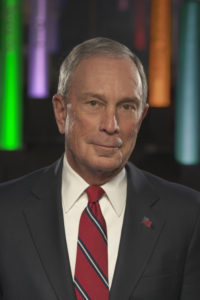
Michael Bloomberg

So, Michael Bloomberg has spent $300 million, and, by some polling, is now tied for second place in the Democratic primaries with Joe Biden, whose numbers are collapsing.

Bloomberg is worth about $63 billion.

He entered the race to defeat Sanders. He considered entering the race in 2016 until it became clear that Clinton would be the nominee.

This makes perfect sense, because Sanders tax plan will cost him billions. He can spend ten times as much as he has, and it will still be a good investment.

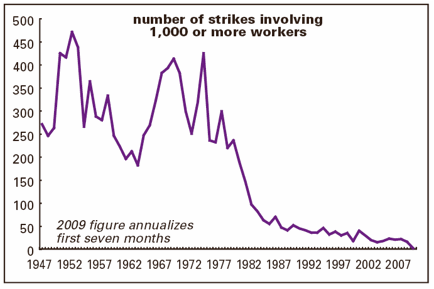
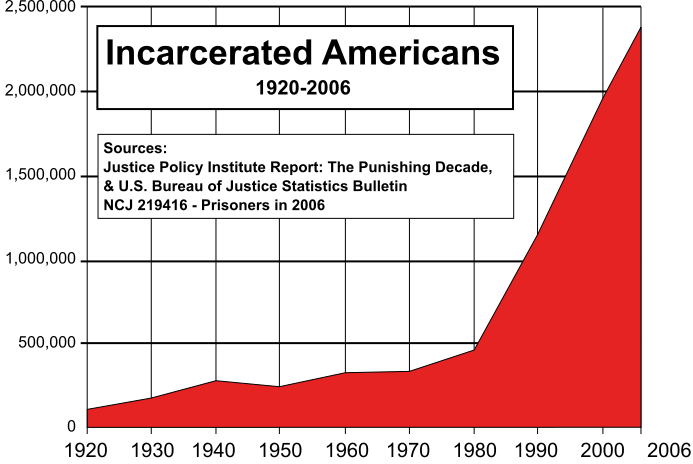
The thing about Trump was always that he was a symptom of a disease. It’s hard to say exactly when the disease started, but serious symptoms started showing up after the elections of Reagan and Thatcher. Wage increase rates collapsed, stock markets and other asset prices rose much faster than inflation, regulations were gutted, people were thrown in jail at a ferocious rate, and unions were smashed.

Strikes involving more than 1,000 workers

Strikes involving more than 1,000 workers

Inequality took off, and over time this created “multibillionaires.” They used their money to buy politicians, and, through those politicians, they bought policy. They slashed tax rates on corporations, rich people and their estates, and so on to the bone. They increased subsidies for the rich, while they cut subsidies for the poor and middle class, in relative terms.

The Federal Reserve (all of whose governors are political appointees), acted aggressively to keep wage increases at or under inflation, and targeted inflation rather than job growth. Good working class and many middle class jobs were off-shored and outsourced. Some of these processes had started before Reagan, such as offshoring and cutting top marginal tax rates (JFK foolishly did so, but then he was the son of an oligarch), but they went into overdrive after 1980.

From ’33 to ’68, the general trend was for the percentage of income controlled by the wealthy to decrease relative to the percentage controlled by everyone else. In 1968, that reversed, but 1980 is when it was locked in.

Money is, of course, power. Anyone who denies this is tediously stupid, given that almost all of us have spent most of our lives doing shit we wouldn’t do if we didn’t have to to get money. (Getting other people to do shit they don’t want to do but that you do want them to do is the very definition of power.)

So, the oligarchs, aided by the huge concentration of companies into oligopolies, have come to own or control vast amounts of wealth. They passed a law that defined money as free speech, and now that the political class has proven incapable of handling a left-wing populist, an oligarch is stepping in directly, because his class’s lackeys, like Biden and Buttigieg (and indeed most of the field), are incompetent.

Bloomberg is an oligarch. He’s racist, sexist, and arrogant. He had New York’s laws changed so he could have a third term. He is competent and ruthless. In most respects, he is far more dangerous than Trump–even though he is for some things the left likes, like birth and gun control. Trump is good at demagoguery, but he isn’t a competent executive.

Bloomberg IS a competent executive. As he joked when asked about having two billionaires in the election, “Who’s the other one?”

(He also has massive interests in China and has done their bidding in the past, a fact the hysterical Russia-Gaters might note.)

My guess is that Bloomberg can’t win except through a brokered convention. The plan may be to deny Sanders an outright majority, then combine against him. Doing so will break the Democratic party. Remember that the Clintons still have the most power over the Democratic establishment, and Hilary hates Sanders with a vindictive passion, while she is on good terms with Bloomberg. Obama, who also still has power and influence, seems more ambivalent, but he’s never liked the left. On the other hand, reports are that he’s dispassionate and recognizes that denying the vote leader the nomination will damage the party.

If Bloomberg does get the fix in, who will win in a Bloomberg/Trump match? I don’t know, but while Bloomberg is more competent as an executive, my feeling is that Trump’s unique strength as a demagogue will be the deciding factor in outmatching Bloomberg. The question then becomes whether Bloomberg’s money and organizational abilities can outweigh that.

Trump has increasingly been acting against the rule of law. He always was, starting with emoluments violations, but now that he was impeached and not convicted, he feels immune to Congress’s censure.

Trump also HAS TO WIN. If he loses, he will be destroyed by his enemies in New York, in various criminal investigations. They will take him down and destroy him. He understands this.

So, it’s oligarch vs. left-wing populist to see who gets to take on the minor oligarch, criminal, and current president Donald Trump, who knows that a loss means the end of his good life and the destruction of the minor empire he has built.

The only possible good outcome for most Americans is a Sanders win. No other path leads anywhere decent.

This is likely be the nastiest election cycle since the Democrats deliberately sabotaged McGovern.

For approximately the same reasons.

It’ll be horrific, and the outcome will control whether many people live, die, or have good or terrible lives. I suggest getting some hot dogs. If Rome is going to burn, you may as well roast wieners.


The results of the work I do, like this article, are free, but food isn’t, so if you value my work, please DONATE or SUBSCRIBE.
Groups Only a Fool Trusts

Economists: The vast majority missed the housing bubble.

Intelligence Agencies: Remember Iraq? Part of the job description is lying.

Any Army’s PR: Enough said.

Life Insurance Agents: I worked back office dealing with agents. About ten percent of them were looking after their clients first.

Politicians: Yes, obviously.

Stock Brokers: As the book said, “Where are the client’s yachts?”

Media, in general: Most of them are owned by a few conglomerates. They do what’s in the interests of those big conglomerates or their job leaves. And remember the NYT and Iraq.

Private equity or hedge funders, any senior executive in any large bank: They were all in on the fraud leading up to the financial crisis, and yes, they would do it again.

Any senior executive in any large firm: They didn’t get there by being good people. Good people don’t become Senior VPs.

Central Bankers: They either missed the housing and financial bubble or didn’t care, then they bailed out the rich and fucked over the little people. No one will ever be hired for those jobs who wouldn’t do it again, and again, and again.

Etc.

(This seems like an important piece, so back to the top for those who haven’t read it or have forgotten it. Originally published December 29, 2016.)

My friend Charles Green, who co-wrote the book, The Trusted Adviser, loved to say “I trust my dog with my life, but not my lunch.”

Who you can trust depends on what you are trusting them with, and who you are. Charles can trust his dog with his life; I can’t trust his dog with my life.

Central bankers are the dogs of the rich. The rich can trust bankers to save their lives, no one else can. Perhaps if you were to fall in front of one of them and injure yourself, some of them would call an ambulance for you. You can’t trust them not take away your house, however, or pursue policies that crush your wages and make jobs scarce.

The point here is that just because someone is good in one part of their life, doesn’t mean they’re good in another part of their life. I learned this young: My father was a bastard to his family, but was respected by most of his employees for his loyalty to them.

People are not of a piece, and you need to understand what their jobs are to understand what they can be trusted with.

A politician’s job is to get voters to elect them, then to do things that rich people like, because rich people reward them both before and after they leave office; while in office, rich people take care of politicians’ families, invite them to parties, give them loans, and so on, and after they leave office, rich people reward politicians (and heir families) with lucrative positions in their companies. Rich people pay most of a politician’s salary: They work for them.

This is IMPORTANT. So if you want to know if a politician is one of the rare few you can trust, you need to see that they don’t take the rich’s money, and they don’t vote with the other people who have taken the rich’s money. And you can only really see that once they’ve been in office for awhile.

This is why I trust Corbyn. Because he doesn’t take their money; he barely even accepts money from the government for office expenses AND he has a track record of voting against or for the right things when it was against his personal interest. He has integrity. He is a very rare politician.

When I used to back-office for life insurance agents, I could tell the ones whom I’d recommend because they would sell insurance, often, that earned them less commission, if it was better for their clients. That simple.

For economists, look who they work for and look at their prediction record. Did they come out against the housing bubble early, for example? You can trust Stiglitz because he wrote a book attacking the World Bank that named names and turned other economists against him because he was more concerned about how poor people were being hurt than about what his fellow economists thought. He did something against his own interest. Plus, he’s been right on most issues. Integrity + competence.

If you happen to have a 100 million dollars or so, then you would be justified in saying, “I trust central bankers,” because they are looking out after your interests–though you might wonder if they are competent enough to do so. Still, they’ll do anything for you, they are your dogs: You can trust them. No one else can.

As for the rest: Never trust anyone on commission without doing extensive checks to see if they’re putting their clients’ interests first. If they’ll take a hit in pay to do the right thing, they’re trustowrthy. Remember, most of them work for firms which, whatever their “official policy,” strongly discourage getting lower commissions for any reason.

Intelligence agencies. Well, if you’re stupid enough or naive enough to trust an intelligence agency, I can do nothing for you. Even people who work for intelligence agencies don’t trust intelligence agencies.

With respect to the media, people are extraordinarily stupid. For example, I don’t trust Russia Today (RT) with respect to things that Russia cares about, but they’re very good on things Russia doesn’t care about. What you’re looking for is a media outlet which doesn’t care about the issue in question, which isn’t subject to pressure on that issues, whose owner doesn’t care. The US media is useful in regards to the US, of course, but it is not trustworthy.

Understand?

There are few things which will destroy you faster in life than trusting the wrong person or people, and the metrics you have for trusting individuals in your life don’t work when you try to scale them up to measure organizations, professionals, and so on–people who are not your friends, or in your social circle, or who are not being dealt with as friends and members of your social circle.

The interests of these people do not align with yours, they do not identify with you, and your well-being does not concern them in any meaningful way. Figure out what their interests are, who they identify with, and who they serve, if you want to know what they’ll do and whether you can trust them.

And if you’re looking for the rare politician, broker, or commissioned salesman you can trust, look for the ones willing to go against their own interests–and with a track record of doing so.


The results of the work I do, like this article, are free, but food isn’t, so if you value my work, please DONATE or SUBSCRIBE.
What Makes a Good Person?

I was reminiscing today about the few actually good people I’ve known.

Two stand out, my friend Peter, who fought for Hitler; and my old teacher and coach Craig Newell.

I had a bad childhood. My parents were alcoholics, and my father was an angry drunk. Then I went to boarding school, and I was not the sort of kid who did well at boarding school, though the one I went to was well-run and preferable to being at home.

I did not come out of this believing in the goodness of humanity or that authority figures could be trusted. It’s one of the reasons I’m a good analyst in our current situation: I assume people with power are basically scum, and that when they aren’t they do the minimum and do it badly, and I’ve usually been right.

(I can also tell who the few good people are, which is why I supported Corbyn and have no time for the people who lied and smeared him.)

The only person in my life who ever proved completely worthy of trust was Craig Newell. The reason is simple: Mr. Newell (as I called him) had a code, and I NEVER saw him break it. Not ever. He never talked about his code, mind you, but I could tell he had one. He didn’t judge hardly at all, and he was never cruel. I literally never saw him be cruel even once. I never even heard of him being cruel and I did hear of his rectitude (in the best sense).

This isn’t something you can conceal in a place like a boarding school. It is not possible.

He didn’t go out of his way to be kind or good or anything, but he didn’t step away from it when the need was obvious. (As he didn’t with me, if that isn’t clear. And I was not a pleasant teenager.)

What I learned as a child is that most people don’t even meet the responsibilities of their positions (husband, wife, teacher, boss, politicians, whatever). A few do their duty, and I honor them for it, because it is rare. But to go beyond that and actually be a man of honor is unbelievably rare.

Still, Mr. Newell wasn’t as good a man as Peter, though he was more trustworthy. Peter went out of his way to be kind. Mr. Newell wasn’t cruel, and didn’t step away from need, but Peter stepped into need and helped.

Those people who see need and help, even if it is only a little, are, again, incredibly rare.

I tend to like people, and dislike humanity. But I don’t trust either.

Still, good people exist, as do honorable ones.

There is a Jewish myth:

Lamedvavnik (Yiddish: לאַמעדוואָווניק‎), is the Yiddish term for one of the 36 humble righteous ones or Tzadikim mentioned in the kabbalah or Jewish mysticism. According to this teaching, at any given time there are at least 36 holy persons in the world who are Tzadikim. These holy people are hidden; i.e., nobody knows who they are. According to some versions of the story, they themselves may not know who they are. For the sake of these 36 hidden saints, God preserves the world even if the rest of humanity has degenerated to the level of total barbarism. This is similar to the story of Sodom and Gomorrah in the Hebrew Bible, where God told Abraham that he would spare the city of Sodom if there was a quorum of at least ten righteous men.

This story largely encompasses how I feel about humanity. Most humans are weak: They aren’t good, bad, or honorable, because they don’t have the strength. It mostly isn’t their (our) fault.

But a few are good, or honorable, and, rarely, both.


Money would be rather useful, as I don’t get paid by the piece. If you want to support my writing, please DONATE or SUBSCRIBE.

Page 279 of 532

Powered by WordPress & Theme by Anders Norén