
The horizon is not so far as we can see, but as far as we can imagine

Category: Electoral Politics Page 25 of 30

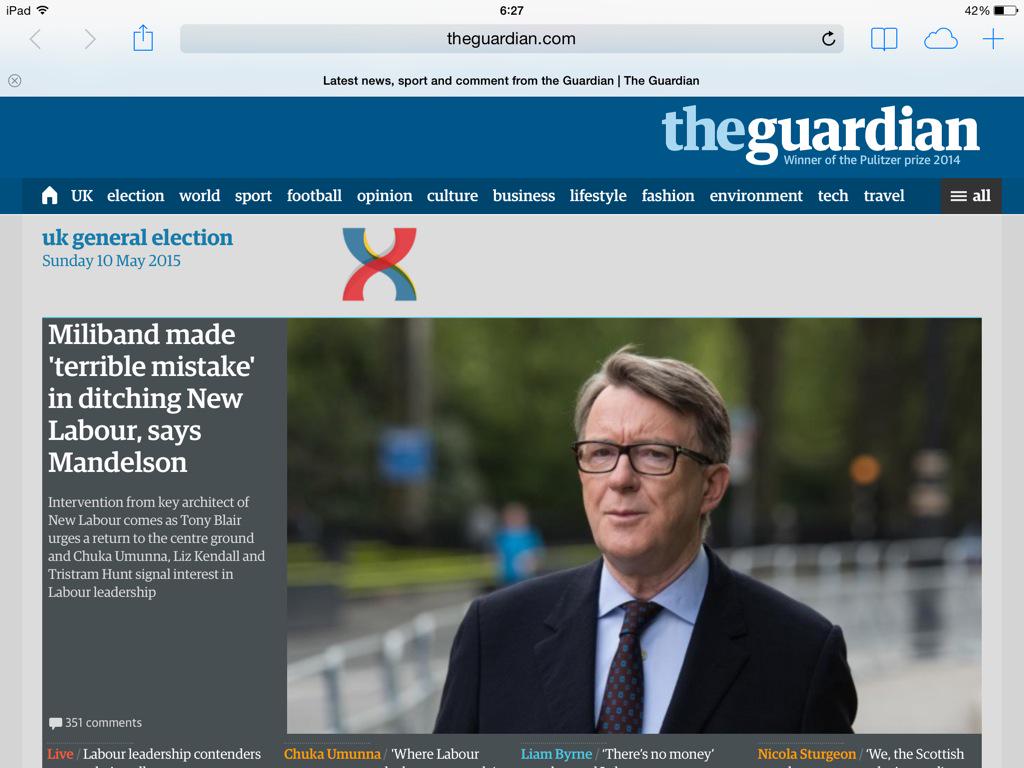
John Edwards

Picture of John Edward

Picture of John Edwards

(Back to the top because people still don’t understand this.)

His trial has been declared a mistrial.

The personal is not the political. His wife seemed like a good person, but I could care less. FDR cheated on his wife. JFK screwed hookers in the White House pool while married.

The facts about John Edwards that I care about are these:

1) He was the only major politician who made a big issue of poverty.

2) He was the only major politician to say he didn’t believe in the war on terror.

3) The reason the affair came to light is because he stopped paying her off, which he did because he was no longer in the race.

The children who thought that having a black president, despite the fact that he was, on domestic policy, worse than EVERY other democratic nominee, are why the US is so fucked right now. (And yes, he was worse on domestic policy than even Hillary Clinton. Don’t believe me, believe Paul Krugman.)

Edwards trial was a politically motivated show trial. The goal was to make sure that everyone thinks that there was no left wing candidate in the election and that Obama is the best you could ever do. Well, that and a personal hatred, as best I can tell. Obama refused to cut a deal with Edwards for support. What did Edwards ask for in exchange for support? Help for the poor.

Obama did cut a deal with Clinton, of course. He let her have State, so she could influence foreign policy, the ONE policy area where she was to his right.

(Originally published May 31, 2012)


If you enjoyed this article, and want me to write more, please DONATE or SUBSCRIBE.
A Clintonian Coronation?

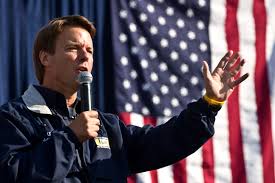
Hilary Clinton Secretary of State Portrait

Hilary Clinton Secretary of State Portrait

So, Hilary has made it official. Last time she was the front-runner and lost, but this time there are no particularly strong presumptive nominees: no Obama, nobody even as strong as Edwards was.

Clinton’s negatives are terrible and she has a lot of baggage. The right will hammer her on Bengazi, but more serious to left-wingers is Iraq and the larger picture of foreign policy when she was Secretary of State. Libya’s a complete mess, the Arab Spring failed and gave way to more repressive states, ISIS rose (albeit its spectacular breakout was after her resignation), and so on.

Back in 2008, I read the three major campaigns’ policy documents and releases carefully–it was my job. Edwards was the most left-wing candidate, the other two weren’t even close. Not a lot separated Clinton and Obama on substantive issues, but, generally speaking, she was slightly to his left on domestic bread and butter issues and slightly to his right on foreign affairs. It is instructive that her post was at State.

When Lincoln Chafee declared his candidacy for the Democratic nomination last week, he was very explicit about Iraq; Chafee was the only Republican to vote against the war. Say what one will, that took integrity and guts. Clinton likes to say she makes “hard choices,” but it’s not clear to me what those choices are. Her “hard choices” are generally of the “make your bones” variety: Do what the elites want and shove it down the throats of ordinary people.

The main exceptions would be in terms of women’s rights, in which she genuinely believes and for which she has fought.

Can Clinton beat the Republican candidate–most likely Jeb Bush? Well, her negatives are high and she’s trying to extend a Democratic presidency which has been pretty awful on the economy (many people will try to pretend otherwise, they are either stupid, in the top 5% or so who have done well, or on the payroll). On the other hand, identification with the Democratic party is significantly higher (almost 10%) than with the Republican party. That’s a significant advantage.

This far out, I don’t know. There are weaknesses in a Clinton candidacy. This is not 2008, where the election was the Democratic nominee’s to lose. The real election in 2008 was the Democratic primary, everyone knew it, and that’s why the fight was so vicious.

Personally, of the people who have put themselves forward so far I like Chafee the best. He seems to have some actual integrity and is at least saying most of the right things. He doesn’t appear to have much of a chance; like every other Democratic nominee so far he’s about waiting for Clinton to stumble.

I think coronating Clinton is most likely a mistake, though, and not just because I don’t like her politics. She needs to be tested properly in competitive primaries. The Clinton of the late 2008 campaign was a fierce campaigner, but she’s bungled a great deal before and since then.

May the best candidate for America, and the world, win.


If you enjoyed this article, and want me to write more, please DONATE or SUBSCRIBE.
Rahm’s Win in Chicago: Does It Say Something About Americans?

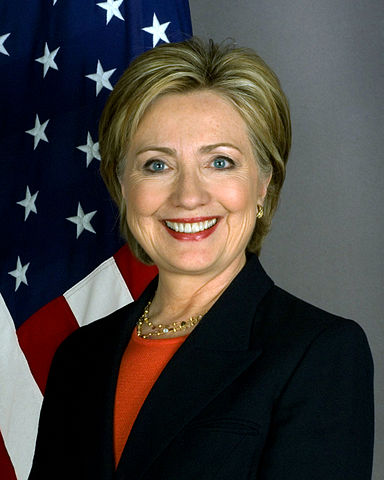
Rahm Emanuel

Rahm Emanuel

I’m sure there were a lot of reasons for this…the unions splitting and Rahm having far more money than Garcia must rank high.

But anyone who has paid any attention knows that Rahm is a right-wing asshole. At some point, about America, one must say: “Most Americans tend to prefer right-wing assholes.” When was the last time, nationally, that anyone who wasn’t a right-wing asshole was President?

Let’s cut to the chase: Obama is worse on civil liberties than Bush II was; the no-fly list started under Clinton, who also cut welfare drastically and was the first president to have “free speech zones.” He may have been charismatic, but a lot of his policies were drastically punitive to the poorest and weakest. The last President one can make a case for was Carter–but remember! The great military buildup we often credit to Reagan started under Carter.

Yes, money played a role, but money wasn’t the decisive factor in many of those elections and money only excuses so much–especially when you’re re-electing a President (as by that point you should know what he’s been doing).

Today, one can argue that America is effectively an oligarchy with a democratic gloss, Citizens United having made it official. But it wasn’t always, and a lot of elections were required for it to become one. And the democratic mechanisms for overthrow are still in place, with many regional elections being in play.

Chicago was in play. Rahm won anyway.


If you enjoyed this article, and want me to write more, please DONATE or SUBSCRIBE.
 

Union Fear, Betrayal, and Decline

Strikes involving more than 1,000 workers

Strikes involving more than 1,000 workers

The 2008 primaries were a lesson to me. Neither Clinton nor Obama were particularly pro-union, but they received many of the union endorsements. I remember in particular the firefighters, who didn’t endorse any of the big three (Clinton, Obama, Edwards), but endorsed Dodd, whom they knew had no chance of winning. I called them on it and was told by their media guy that it was a case of true belief.

The other candidate they had been considering was Edwards, who actually had a chance of winning the nomination.

The thing about Edwards is that in order to win the nomination he needed the unions; it wasn’t going to happen otherwise.

He didn’t get enough of them and he lost.

Obama won and the unions didn’t get their number one priority: card check union certification.  One can argue it wasn’t doable, but there was never any sign it was a priority for Obama.

Why should it be? He hadn’t needed the unions to win, he had just needed them not to coalesce behind another major candidate.

Edwards, having won, would have owed his victory to the unions and he would have known it.  You dance with the one who brung you, as Canadian Prime Minister Brian Mulrooney once remarked.

Obama spent his first four years largely ignoring unions. One he didn’t ignore was the teachers union. Instead, the Obama administration acted very favorably towards the idea of charter schools (the bulk of the research shows that charter schools perform slightly worse than public schools). So, before the deadline for nominations of democratic primary nominees for the 2012 election, the teachers national decided to support a primary candidate to send a warning shot across Obama’s—no, they didn’t do that. They endorsed him pre-emptively.

Unions are risk-averse. Extremely risk-averse. They have spent the last 35 years in decline (since 1980) and, as a group, they never make any serious attempt to make up lost ground. Internally, too many of them acquiesced to and negotiated for two-tier contracts, which favor older workers over newer ones, and split union solidarity.

They are unwilling to take a run on anyone who might actually help turn their situation around.

I was reminded of this by the way Rahm Emanuel has retained much union support in Chicago. Some unions were heavily behind his challenger, Jesus G. Garcia, but many have backed Rahm. As a result, Rahm is almost certainly going to win (unless the polls are way off). Rahm was terrible, especially for the teachers (who, to give them their due, are fighting him, hard), though he did throw some scraps to a few unions.

Still, again, Garcia would owe the union movement his victory if he won and there’s no reason to believe he wouldn’t act on that debt. Rahm, on the other hand is the status quo—slow (and sometimes not-so-slow) decline.

If you won’t fight when your life is on the line (and card check was and is an existential issue for unions), then you will die. Unions have chosen, again and again, not to fight, or, more accurately, enough of them have chosen to collaborate. The first, second, and last rule of unionization is solidarity. Union members must negotiate and fight together and so must unions. Their failure to do this internally or externally is why their decline continues. It will continue, virtually irreversibly, until they learn two elemental lessons:  1) act with solidarity and; 2) never collaborate with your oppressors.


If you enjoyed this article, and want me to write more, please DONATE or SUBSCRIBE.
What Toronto’s Election Means for Progressive Viability

As many have heard, John Tory, the mainstream right wing candidate, won convincingly in Toronto and Olivia Chow came in third place, even doing worse than Doug Ford (brother of the famous crack-smoking Rob Ford.)  Much hand wringing has ensued that progressive just can’t win elections in Toronto.

While it’s true that Toronto is hard for progressives to win, which is why Toronto was amalgamated with the suburbs by Mike Harris’s Conservative provincial government, this election tells us only one thing about progressives ability win in Toronto.

Pick a better candidate.

Chow was the polling leader at the start, she lost that lead.  Now I like Chow a lot, because I saw her at work when she was a city councilor, but Tory was a better candidate: he’s just a better speaker, as he spent years as a radio host, and Chow, who is excellent in small groups, is a bad speaker.  The explanation doesn’t have to go much further than this.  In small elections, when she just needs a riding, and can knock on doors, Chow is a great candidate.  In a large election, not so much.

Jerome Armstrong’s Oral History of the Dean and Clark Movements

(This is a comment elevated from my post on why Democrats and Obama don’t do what progressives want.  It is written by Jerome Armstrong, not by me. Jerome was the founder of MyDD (Kos’s Blogfather) and co-author of Crashing the Gates, among other things- Ian)

by Jerome Armstrong

In the fall of 2002, I was busy putting together about a 10-page memo for Joe Trippi on how Howard Dean could win the upcoming Presidential campaign. And it had revolution written throughout. Fundraising, organizing, communicating, the whole thing. In that document was laid out the fifty state organizing campaign, how blogs would build the movement around Dean, and how small dollar online donors could become bigger than the John Kerry’s decades-long amassed donor mailing list. Nothing short of revolutionary. If you’ve read Trippi’s book, you’ll see that he gained insight into applicable tactics from the rip roaring 90′s Raging Bull financial commenting site. I was also on those boards (for better or worse– or much worse), so we were both of similar mind when Joe got the opportunity to take over managing the campaign, on the possibilities. We also saw what McCain did after New Hampshire, with online fundraising, in 2000. It was quite fantastic. Heady days. But the point is that it was all revolutionary for the campaign, especially so being the primary for Democratic President. The electricity of the netroots movement emerged right alongside Howard Dean message that was anti-Bush, anti-war, and full-bore partisanship.

And if you experienced that ’03 campaign, you gained insight into those revolutionary tactics. If you did not, then they didn’t make up what you brought to your next campaign. And the experience didn’t need to be one of being on the winning side either. I have to credit a book that Nate Wilcox had me read for understanding this, by my looking at what happened with TV and how it changed political campaigning, by Ray Strothers called “Falling Up: How a Redneck Helped Invent Political Consulting”.

So, in 2003, we on Dean’s campaign had a big advantage on the rest of the campaigns. Dean, for the most part, knew the message to use. The campaign knew exactly what tools to use to grow. None of the other campaigns (Gephardt, Kerry, Edwards, Lieberman) could figure the internet part out (save Clark’s nascent campaign).

Howard Dean’s Strategy

As we entered the Spring of 2003, the Dean campaign staff gathered together with early bundlers for a strategic retreat in Vermont at the Trapp family lodge. Trippi had always worked on separate presidential campaigns against Paul Maslin. So, wanting to work together, he had brought him on as Dean’s pollster. They put together a campaign strategy that made sense. In short, rely on the internet-based strategy to grow the campaign up to the caucuses and primaries. Dean would lose to Gephardt in Iowa, placing second. Then, followed by Dean winning first in New Hampshire, he’d thereafter steamroll to the nomination. This plan went awry by the Fall though, when public polls came out showing Dean way ahead in Iowa too. Maslin tried to temper Dean’s expectations, but Dean decided a sweep was a must, and the whole campaign strategy was changed. Iowa all of a sudden meant everything.

Dean For America

Second, also from that March 2003 Trapp family lodge meeting. Trippi, Markos, Zephyr, Matt Gross and a few others and myself sat out on the front lawn early into the next morning, drinking and talking about what we were in the middle of transpiring. Finally, around 2 am, the staff comes to shut us up for the night, as the other guests are complaining. As we are ending and walking in, I ask Trippi what’s going to happen when it looks like Dean might win. At the point, it was still unfathomable to most, but I could tell it wasn’t a new thought to him, but instead something he’d been mulling quite a bit, and he replied: “the moment when the insurgent becomes the frontrunner is the moment when he either becomes the establishment or…” and just looks at me, like he was waiting for me to answer, but his face gives me no clue as to how to answer. My thought is that, ‘well yea, the insurgent throws down the revolution,’ but that answer didn’t phase the ‘what happens next’ look on Trippi’s face.

Fast forward about 6 months, I get onto the campaign elevator in the morning, arriving late as usual, same time as Trippi and his wife Kathy Lash. She turns to me and says, “Dean is going to be on next week’s cover of Time and Newsweek.” My first thought was to get them both signed by Dean, which I did later, but I turned to Joe and said to his nodding up, “I guess this is that moment”.

Well, what came next first is that Dean tried to become the establishment candidate. By November and December 2003, the formal endorsements. First Labor groups, then Al Gore & Bill Bradley, were rolled out. Tom Harkin in Iowa. Dean’s poll numbers grew higher. The fundraising numbers went through the roof, but a funny thing was happening with grassroots internet support. It was coming to a standstill around 600,000. I was running all of the online advertising for the campaign, so I firsthand saw the efficacy and resulting metrics for every ad we put out there. We were growing in fundraising, but the movement wasn’t getting bigger. It got so bad, that Nicco Mele had to fudge up the email signup numbers that were public on the website some days (due no doubt in part to Clark’s campaign which I’ll mention below), and we had to figure out techniques to do more than juice them going higher.

What Happens Next

Jerome Armstrong: A blogger is the first follower, not the leader

By Jerome Armstrong

I want to say something about the role of a blogger, just to try and frame the expectations and limitations inherently in place. The blogger is like that first follower in the famous Derek Sivers video, that is: “the first follower is the person that transforms the lone dancing guy into someone leading a movement.” So, when I saw Howard Dean dancing solo among the Democrats, at a Democratic Party gathering up in Seattle in June 2002, I started blogging, ‘hey there’s a guy dancing here’ I’m dancing now too, and so on, and a movement started…

This is the arena of politics, the politicians are the ones that have to be the crazy lone dancer for there to be bloggers to stand up and dance along. That’s their role. So its not a correct frame to say “FDL didn’t go down with the ship against ACA” in spring ’10, when already, the the only ones that came forward to dance, Howard Dean and Dennis Kucinich, both stopped, and became supporters. No dance, nothing to follow; the music has stopped.

As for the modern day (2001-2013) Democratic Party’s politicians. They’ll dance quite a jig during the campaign. When in power, they’ll dance on an populist issue here or there, usually when it’s not likely to have much a chance of passing. Mostly though, they just look busy while holding up the wall.

And it’s not about ‘winning’ and ‘losing’ but about the politicians moment on the stage. When a leader starts dancing, the early followers jump in, and a movement starts. If the leader stops dancing, that’s when a movement dies. If, however, even in losing, they kept on dancing, that’s a movement that will live another day.

This is something we see play out over and over on both sides of the aisles, among the populist progressives and libertarians, usually against the old guard. A dance starts, they laugh first, then get pissed, start fighting, charge in using whatever it takes, claim ownership of the floor, and shut down the dancer.

(This a comment elevated from my post on the failure of the why progressives don’t get much of what they want from politicians.  It is written by Jerome Armstrong, not by me. Jerome was the founder of MyDD (Kos’s Blogfather) and co-author of Crashing the Gates, among other things- Ian)

Why Obama And Democrats Don’t Do Much of What Liberals Want (Netroots Failure: Part 2)

Politicians do most things because someone wants them done who can hold them accountable if they don’t do it. That includes bad things, and good things. Anyone who doesn’t understand this reality doesn’t understand even the most basic part of politics.

In 2008 Clinton reached out to the Netroots, and felt the Netroots (we, not me, I had almost no contact with the campaign) mattered enough to at least listen to. Obama did not.

You dances with the ones who brought you, as Canadian Prime Minister Brian Mulroney once said, Obama won by bypassing the Netroots and lying to Progressives and Liberals: he won without us, he owed us nothing once elected.

The movement, such as it was, was bypassed and lost power. As a result, for example, we could not improve Dodd-Frank, insist on more help for homeowners (which I pushed hard for), improve the shitty stimulus bill, or get any of a number of other liberal or progressive priorities pushed.

Note that gays were originally ignored by Obama as well.  What did they do?  They got in Obama’s face personally, heckling him and they organized a very effective donor boycott.  As a result, they got much (but not all) of what they wanted from him.

Holding someone accountable means “inflicting pain”.  If they don’t do what you want, you must be able to do something to them they don’t like (heckling), or take away something they want (money).

Like FDL or not, the last serious attempt by left-wingers other than gays to hold Obama accountable was when they refused to go along with the Affordable Care Act if it didn’t include a public option.  FDL said “if this bill has no public option, we won’t support it.”  When it didn’t, they didn’t.  You may think that’s not a good red-line, but they had a red line.  Of course FDL, virtually alone, did not have the juice: they could not inflict enough pain or take away enough funding  or create enough bad publicity for Obama to care, especially when powerful interests (read: insurance companies), didn’t want a public option.  (For doing so, FDL was attacked by all the usual suspects on “left-wing” blogs and labelled firebaggers.)

Political power is constituted of getting people elected, getting people unelected and being able to reward or punish people for doing or not doing what you want. If you can’t do any of those things, you have no power.

This is realpolitik.

Page 25 of 30

Powered by WordPress & Theme by Anders Norén