The horizon is not so far as we can see, but as far as we can imagine

Category: Electoral Politics Page 24 of 30

So, Corbyn Is Now the Labour Leader in the UK

I am more than pleased. First round victory. Given how vilified he has been by most of the UK press, this is remarkable. We can expect that such attacks will continue.

Some shadow cabinet ministers are resigning. This is good; if they can’t be onside, they shouldn’t be in the shadow cabinet. (Though one suspects they are getting out before being kicked out.)

I’ll have more to say on Corbyn going forward. Also of great interest are Sanders in the US Democratic Primary and the ongoing Canadian election. While Sanders and Mulcair are both problematic on foreign affairs in ways that Corbyn isn’t, both are a big upgrade from the status quo.

We may be at the beginning of a realignment of possibilities, where the electable spectrum changes radically. The last one, in the Anglosphere, ran from 1976 to about 1984, and destroyed the old left.


If you enjoyed this article, and want me to write more, please DONATE or SUBSCRIBE.
Look, Trump’s Policies Are Nativist Populism

He supports Social Security.

He wants universal healthcare (something better than Obamacare, which is not universal healthcare).

He believes in a bilateral trade policy rather than “free trade.”

Now Trump wants to increase taxes on the rich, including getting rid of the carried interest exemption, which would hammer hedge fund managers and so on, whom Trump is correct about: They build nothing—in fact, they are a drain on the economy, straight and simple.

This is married to a nasty, anti-immigrant side, of course, and to some equally nasty social positions. However, on economics Trump is proposing some stuff that any progressive should want, and which has been anathema to the Republican party since Reagan. (In 2000, Trump was for some stuff, like eliminating capital gains taxes, a position with which everyone should agree.)

Moreover, he is winning with these proposals, showing that right wing economic populism is still powerful: It was simply not being represented by the Republican party (or the Democratic party, for that matter).

Trump, Sanders, and Corbyn are all showing what is actually possible, if you dare to propose it. Positions which have polled with majorities for decades are not death to politicians. Who knew?

Corbyn and Trump, in particular, have been vilified and ridiculed by the Press, yet both are winning their respective elections.  Ten years ago, such vilification worked. A candidate could propose those policies showing well in the polls, yet still lose the primaries.

Today, this doesn’t work, because people have had it; they know that just because a politician is favored by the press does not mean that politician will help them, and, in fact, will most likely make their lives worse. They know this because the politicians to whom the press and the establishment have granted their approval, for over 40 years, have (with only a few hiccups) have made their lives worse.

Meanwhile, if trend lines continue, Sanders will take the Democratic nomination (though, of course, trend lines may not continue).

This is a realignment moment: People are no longer willing to put up with politics (and economics) as usual. All three men, if they win, will have mandates. They have been running honestly on what the press and establishment consider “radical” policies (the population does not agree, and never has. Americans, in particular, said they were right wing and consistently polled as wanting rich people taxed, along with various other populist policies).

Expect the vilification to continue, and if Sanders continues to make ground, expect the press to turn from largely ignoring him, to attacking him.

Looks like Brits and Americans may finally, after about 30 years, have a chance to vote again for something other than Tweedledee or Tweedledum.


If you enjoyed this article, and want me to write more, please DONATE or SUBSCRIBE.

Clinton Looks Like Toast to Me

These revelations keep coming out, keep looking bad, and keep being handled worse.

I don’t think she can win the nomination. If she does, the Republican nominee had better be very, very weak.


If you enjoyed this article, and want me to write more, please DONATE or SUBSCRIBE.

Why Trump, Corbyn and Sanders Are Doing Well

Let’s state the obvious about Trump.

No, not that he’s a joke, or a sign of fascism, or any of that.

Rather that a lot of what he says makes sense. His policies aren’t as crazy as people make out, and people who support him aren’t as stupid as the media pretends.

  • He doesn’t want to cut Social Security. Jeb Bush does. Obama has talked this up.
  • He wants full universal healthcare. Yeah, he badmouths Obamacare, but he’s badmouthing it from a position of, “Give them the real thing.”
  • His idea of returning manufacturing to the US and doing bilateral trade deals is not insane, or crazy, except to neo-liberal apologists and people too stupid to realize they’ve imbibed the economic philosophy of neo-liberalism, whose results have been the stagnation and then absolute decline of ordinary American wages. This is how capitalism worked for about half of capitalism’s history. Disagree if you like, but it’s not crazy.
  • His idea of simplifying the tax code enough so that ordinary people don’t need professionals to fill out their tax forms is a good one. Jimmy Carter, by the way, wanted to do the same thing.

I’m not a fan of Trump, there are plenty of reasons why he’s problematic, but he’s actually an economic populist on many issues. People shouldn’t overlook that this comes married to some nasty nativism, but I’m tired of people who are lumping all parts of the Trump campaign together.

Populist, nativist, runs off at this mouth.

And folks, he told the truth about buying politicians.

Trump is doing well because he is telling some truths other politicians won’t, and because his actual policies sound good to right-wing populists. Populists have been divided into right and left for a long time, but it’s feelings that matter to right-wing populists. Trump comes across as a straight shooter and that’s why they’ll vote for him. (It is also why many of them will cross the lines to vote for Sanders if he’s the Democratic nominee and Trump isn’t the Republican one.)

Anyone who feels like a “run-of-the-mill” politician loses big points in the current environment, because people feel like normal politicians are why we’re here, in this shithole economy, with no end in sight and plenty of reason to believe it could get a lot worse.

Sanders, Trump, and Corbyn in England (whom I’ll write about in a bit) are all doing well because of this dynamic. People are sick of the status quo and they will take a chance with anyone who is willing to actually bloody well try something different than the usual. And because most people don’t parse just on policy positions (nor should they, since politicians lie), what they are looking for are candidates who don’t act like the normal candidates and who therefore might actually do something different.


If you enjoyed this article, and want me to write more, please DONATE or SUBSCRIBE.

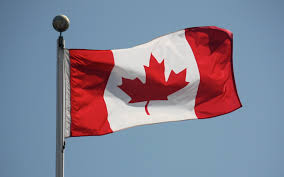
The Writ Is Dropped and the Canadian Election Is On!

Prime Minister Harper has dropped the writ. The campaign is about twice normal length, with the election on October 19th, a bet on Harper’s part that his money advantage and superiority in third party money will matter more in a longer campaign.

Harper’s been PM for ten years, though only since the last election has he had a majority government. He’s changed Canada significantly. Economically, he ended the mixed economy policy which had been Canada’s strategy for well over 100 years, letting manufacturing wither on the vine, while doubling down on resources. He invited in record numbers of guest workers, and his government underwrote residential mortgages, leading to a housing bubble which is now, in relative terms, almost twice as large as America’s was when it popped.

The result of all of this is the worst economic showing of any Prime Minister in post-WWII history. Tying the Canadian economy so heavily to oil and other resources turns out to have been a bad bet.

Harper has also instituted what might be called the “paranoid style” of governing. Ministers are on a short leash, and scientists and bureaucrats are not allowed to speak to the press without going through the government.

All of the Conservative Party’s victories have seen cheating by the Conservative Party, with multiple criminal investigations. In response to this, Harper removed Election Canada’s mandate to investigate electoral fraud, and its mandate to encourage turnout.

In civil liberties, Harper has annulled about half of the Canadian Charter of Rights and Freedoms, with the aid of Liberal leader Justin Trudeau, the son of the late Pierre Trudeau, who ran Canada in the ’70s and into the early ’80s.

Justin was leading in the polls from the moment he was selected Liberal leader until he had his party vote for bill-C51, the bill which gutted Canadians’ civil liberties. That decision saw the New Democratic Party, the only one of the big three parties to oppose the bill, swing into first place, a lead it has kept in most (but not all) polls, marginally, since then.

Traditionally, the NDP has been the third party. In the last election, under the charismatic Jack Layton, it surged to second place, but after Layton’s death from cancer and the coronation of Trudeau, it has been solidly in the third place.

This is an important election for Canada. If the NDP wins, and especially if it forms a majority government, there will be changes that matter. One shouldn’t overstate them; Mulcair, the NDP’s leader, has gone out of his way to reassure the business community. But Mulcair has also been consistent in his attachment to the environment, in his dislike of the tar sands, in his understanding of Dutch Disease, and the mixed economy. He has promised not to raise the retirement age, and on a variety of other neo-liberal agenda items, he has been in opposition. He has also promised to abolish Canada’s unelected Senate, and to move to some form of mixed-representative government (some geographic seats, some party list seats.)

Canadians, overall, are tired of Harper, mostly because of the economic news but also in part due to his paranoid style of ruling (and it is ruling). However, Harper’s support is concentrated geographically in the West and southern Ontario, and it is certainly possible he could still win.

The current dynamic is mostly about Trudeau’s liberals shooting at the NDP, the NDP shooting at the Conservatives with a few shots back at the liberals, and the Conservatives mostly concentrating fire on Mulcair.

For as long as I’ve been alive, the Liberals have always told people to vote strategically: to vote Liberal to keep Conservatives out, because Liberals had the best chance of winning. It is delightful to see the shoe on the other foot now.

We’ll see how it plays out. I think the odds slightly favor the NDP, but there’s a long campaign ahead, and I expect the Conservative party to cheat. If it comes down to only a few seats, as it probably will, that cheating could make the difference.


If you enjoyed this article, and want me to write more, please DONATE or SUBSCRIBE.


The Establishment Is Losing Control: Britain Shows Us Change Is Possible

The Guardian is widely considered a left-wing newspaper:

Guardian cover says Labor Lost Because Not Right Wing Enough

Guardian Cover Shot

When the election results first became clear, I pointed out that Thatcher’s real victory was not the policies she had put in place or the changes she had made to the UK, it was that the main opposition party had become neo-liberal as well. This meant that her project would continue, no matter who was elected.

Neo-liberalism is successful because it is the only alternative to itself; there is no other option but neo-liberalism. Of course, you can choose between flavors of neo-liberalism (“How fast should we do this project?”, “How cruel should we be to poor people?”, and “How quickly should we divest the public sector and the population of their income and wealth and give it to the rich?”), but all you’re choosing between is how quickly the neo-liberal project (which includes austerity as  its logical late form) will proceed.

Other than the process of how actual material circumstances turn into ideology, which then turns into action, nothing is as important as controlling the acceptable matrix of options.

What the Guardian is doing here is attempting to make sure that in response to its loss, Labor becomes even more right-wing, even more dedicated to neo-liberalism. One can equally and easily make the case that Labor was not left wing enough, and that’s why Scotland went SNP (which was more left-wing than Labor); and that’s why left-wing voters didn’t turn out to vote. But that’s not what The Guardian has chosen to do. The Guardian chose to put, on their front page, the assertion that Labor lost because it was not right-wing enough.

Note that most people read only headlines and that the most important headline is the one on the front page. Yes, The Guardian has published articles suggesting that labor wasn’t right-wing, but most people will never read those articles. In “journalism,” as in real estate, the three most important things are location, location, and location.

Do not think that The Guardian’s editors do not know this, or do not understand the consequences of what they are doing. This is their business, and they are good at their business. The conclusion which should be drawn, absent strong evidence otherwise, is that if they are taking an action likely to push Labor right, they know they are doing it, and they want to do it or they wouldn’t do it.  (Since, again, writing the opposite article would be easy enough.)

Now note that this system is breaking down on the peripheries. The Scots voted for the SNP, which was very left-wing by current standards. Albertans recently voted for the Canadian New Democratic Party, the most left-wing party in Canada, which the establishment never thought stood a chance of winning, and which ran on (among other things) increasing the corporate tax rate.

These are glimmers: sparks and little more. But they and the rise of other third parties, including ones I would argue are failing (like Syriza), indicate that the establishment is losing control of the democratic process; their framing is not sufficient.

Given an opportunity to vote for what appears to be a real alternative to the status quo (as opposed to a fake alternative like Labor under Millibrand), many people are starting to do so. This isn’t limited to the left-wing, mind you. UKIP, the anti-immigrant, essentially-fascist party in the UK got over 10 percent of the vote.

In Scotland’s independence referendum, the young voted for independence–it was the pensioner class that kept Scotland in the union.

The winds are shifting, and opportunities are arising. Many people in the core nations know that their lives are getting worse, and they are looking for political options to change that. Note that many of them aren’t that fussy–as in the 1930s, this doesn’t have to head towards anything good. A man on horseback who promises jobs and security and to stop bailing out bankers could easily take power in many countries.

Nor is the time quite here yet for major change, I think. Give it five to ten years, for simple demographic reasons. The new generations must rise, the old generations must get older, and in many cases, die, in order for change to be possible beyond the margins.

Nothing lasts forever: no regime, no form of government, no ideology. Neo-liberalism has gone from middle-aged to old, but still clings to power with an iron gauntlet. But concealed beneath that gauntlet is a shaky hand.

The time is soon. The young, even most of the middle-aged, will see it. Whether that time leads to a better world, or a worse one, is yet to be determined. Pick your sides.


If you enjoyed this article, and want me to write more, please DONATE or SUBSCRIBE.


Conservatives Appear to Have Won in the UK: What the Left Should Do

Or so the exit polls are showing.  A likely bare majority government.

The consequences of this are likely to be severe; I would expect most of the remains of the post-war welfare state to be swept away.

I am torn between two reactions:

  • Although this is only a bare majority government, people did vote for Conservatives enough for them to get in and it’s not like they didn’t know the consequences. They have had years of Tory austerity. As H.L. Mencken once said: “Democracy is the theory that the common people know what they want and deserve to get it, good and hard.”
  • On the other hand, Labour under Miliband ran as Tory Lite; as the lesser evil. Voters tend not to be inspired by the “not quite as bad as the other bloke, but they’ll get in eventually and do what they were going to do anyway.” And that was his platform.

I’m seeing a lot of despair from my British friends on the left. And my British friends on the sane, for that matter. Here’s what to do: Either take over the Labour Party, or, if you think that’s impossible, pile into the Greens. Or, heck, create a new party.

I will point to Alberta, where the left-most party in Canada won on a platform of, among other things, raising taxes.  They came, essentially, from nowhere.

Want to win from the left? Be left-wing. Offer a real alternative to neo-liberalism.

I note, also, that Scots may really be regretting not voting for independence. Most of the wonderful social policies Scots value more than the English will now be taken away from them.

Failure of courage when there is a real alternative will reap the expected results.

This is all very sad, but the post-war welfare state has been under assault in England since Maggie Thatcher’s election in the 1970s. The true magnitude of Thatcher’s victory was not her policies, it was that Labour became Tory Lite; she changed the acceptable policy matrix for not just the Conservatives, but for the main opposition party as well.

Until that “acceptable policy window” changes, the trend will continue right–it cannot do anything else. Each Labour interregnum will be just that, a period in which neo-liberal policies are pursued at a slower rate than during Conservative governments, but in which the trend is not reversed.

This is true in almost every country in the West of which I can think (Iceland and perhaps Finland being the lone exceptions).

Offer a real alternative, with real left wing policies. If you can’t capture an existing major party, pile into a minor party or create a new one.


If you enjoyed this article, and want me to write more, please DONATE or SUBSCRIBE.

Alberta Elects the New Democratic Party (NDP)

This is fairly extraordinary: For non-Canadians, the NDP is the most left-wing party in Canada and Alberta is the most right-wing province in Canada. It’d be like an Elizabeth Warren-inspired party winning Texas. (As a Canadian let me say that this is amazing and almost unthinkable even a few years ago.)

Following were NDP’s key promises:

  • An increase in the corporate tax rate from ten to twelve percent;
  • A $15/hr minimum wage;
  • A review of the royalties that petrocarbon producers pay (which have plummeted in recent years);
  • A ban on corporate donations for elections;
  • A phase out of coal power.

Alberta is the heart of the modern conservative revolution in Canada and was the fastest growing economy during the last fifteen years, thanks to massive increases in oil prices. Alberta also saw a rise in immigration from other parts of Canada, which I suspect had played a huge part in this surprise vote.

I am more interested in whether this means Alberta might be in play during a federal election, however. Traditionally, Alberta has gone right-wing in super majorities, federally. If it’s willing to vote NDP at the national election (which, so far, polls don’t show), the next election may be far more interesting than this one.

Canadian elections can be volatile; there have been a lot of upsets recently and the polls have gotten it wrong repeatedly. Federally, the Liberal Party seems most likely to win, but it’s leader, Justin Trudeau, has been caught flat-footed a number of times, tending to support the same policies as the Conservative Party.

I’m hoping, and now have slightly more hope, that the NDP wins instead.


If you enjoyed this article, and want me to write more, please DONATE or SUBSCRIBE.

Page 24 of 30

Powered by WordPress & Theme by Anders Norén