
The horizon is not so far as we can see, but as far as we can imagine

Category: Oil Page 4 of 8

On the Causes and Consequences of the Oil Price Crash

Image by Yuan2003

So, we had a crash of oil prices, where some futures contracts were actually negative, which means that sellers had to pay people to take oil off their hands.

Obviously, oil use has dropped during the Covid-19 crisis, and before that, prices had already decreased in an attempt by non-US producers to reduce prices low enough to crush US shale production.

Oil is a real thing: It takes up storage. Storage space is running out, and it’s not clear when demand will recover, so oil that is to be delivered now-ish is an expense–you have to pay to store it. Thus, the negative prices.

There was a bounce Wednesday, ostensibly due to Trump saying he had ordered the US Navy to blow up Iranian boats if they continued to hassle other ships. (If they do this in the Gulf, and it goes to shooting, Iran will win the initial confrontation. They have a lot of missiles.)

One could equally say this is a dead-dog bounce.

At any rate, even double digit prices are below most people’s production costs for oil, and they are above the price every major government that relies on oil needs to balance their books. This means Saudi Arabia, the four gulf oil states, Iraq, Iran, Russia, and so on. Ironically, Iran, having been under sanctions already, will be in better shape than most of the others.

It is also, obviously, low enough to make US (and Canadian) shale oil production completely uneconomical: generally that needs at least $60/barrel, and much of it needs more.

So we have countries and companies with bleeding treasuries. The US has the ability to print money, presumably it will do so to keep Shale oil around in Zombie form. Countries which cannot print money and have other countries accept it could be in trouble. This depends mostly on how long this goes on. A couple months, even three or four, uncomfortable, but no big deal.

If this crisis bubbles on for a year and a half of shutdowns, partial relaxations, then more shutdowns, we’re into some very dangerous territory. I’m not sure the House of Saud, for example, can survive that scenario (it couldn’t happen to a nicer country, etc.).

The world has been in a very long economic relationship, in which the most important commodity has been oil, and the producers sold it in dollars, so the US and the swing producers all benefited. Obama and Trump more or less broke the deal with the promotion of shale oil, and China has increasingly been insisting on buying oil in Yuan, but the relationship had stumbled on, even though it meant enabling countries that the US has been treating as enemies, like Russia.

Trump wanted to force Europeans to buy more American oil and less Russian oil: This was a major part of his economic plan, such as it was. Trump likes to find a place where he’s more powerful, and push that as hard as possible, and things like sanctions against Russia, Iran, and Venezuela were–and still are–situations in which he has unilateral power that no one else has been entirely able to get around (though China has somewhat). The EU has proven unwilling to stand up to the US in the case of sanctions.

Right now, there’s no particular reason to think this can’t continue. The US can still print infinite dollars, because foreigners will still accept them–even though the US is no longer the most important manufacturing state. So the US can bail out shale oil. Oil producers, who do not have hegemonic currencies, do not have infinite rope.

This changes only the major producers of things the US needs cease to be willing to trade in US dollars. China and the EU could (but I very much doubt will) cut the US’s throat if they ever chose to act together. Perhaps China could even do it alone. The problem, of course, is that there would be a lot of collateral damage to them. US oil is expensive, but the US can produce it. China and the EU need to import it. If they want to make such a change, they have to secure strong supply guarantee from other nations.

This is theoretically possible, but the problem is simple: Any nation that did this would then fall under (even more) US military threat. Bombs are very good at ending oil exports, and neither the US nor China is willing to go to war over this. Perhaps China could move troops and nukes into vulnerable countries, but that would trigger a new cold war, and the Chinese don’t want that–at least not yet. China is working on their own trade area, to compete with the US-led trade area (which the US is abandoning anyway, as it shits on the WTO it created), but it is not ready yet (the Belt and Road Initiative is China’s name for this trade restructuring).

The current collapse of oil prices is unexpected; while a pandemic has always been possible, knowing when it would happen was not. The pandemic has simply revealed the current production’s costs and dynamics. Saudi Arabia has been moving towards vast danger for ages because of its over-reliance on oil; this simply means the consequences may hit sooner. Oi-consuming nations have been maneuvering to reduce their dependence on imported oil in general, and unreliable oil in particular, but they were not yet ready to make any big moves. Almost everyone has been chafing under the petrodollar and under the current world payment system, which the US has abused with its constant sanctions. Despite this, no one has created a viable alternative and been willing to take the hits necessary to move off the dollar and the US/eu payment system (“EU” is in lower case deliberately).

Most oil producing nations, including the US and Canada, are generally bad actors on the international stage: with crimes ranging from moderately bad to invading oil producing nations regularly and sanctioning other ones constantly, or to being the world’s premier supporters of fundamentalist religion and terrorists.

So don’t cry too much for oil producing nations, nor even for their customers, who have enabled them greatly. But beware that the game is changing: Covid-19 has highlighted existing issues and if it continues long enough it could precipitate changes which have been desired by many, but remained unimplemented because people have been unwilling to bear the costs and risks.


The results of the work I do, like this article, are free, but food isn’t, so if you value my work, please DONATE or SUBSCRIBE.
UK Seizes Iranian Tanker, So Iran Seizes UK Tanker

That’s the news, basically.

Well, Iran also seized a Liberian-flagged tanker, not sure why (may be operating for a British company).

Also not sure why the UK seized an Iranian tanker in the first place. The UK has said it supports the Iranian nuclear deal, and the US sanctions on which it was operating are destroying that deal.

But I suppose lap-dog nations will be lap-dog nations and the UK wants a free trade deal with the US badly for Brexit, and all indications are that the US is demanding massive concessions in exchange for one.

So this may be a little something on the side from Britain.

But as far as I’m concerned, the US sanctions on Iran are completely illegitimate, and no other country should be helping enforce them. That includes Canada, especially after we arrested a Huawei executive for breaking Iran sanctions, and that also includes the UK.

I rather doubt Iran had a nuclear weapons program in the first place, though I don’t see why they shouldn’t have nukes when Israel does. But neither of those observations are the point, anyway.

Meanwhile this whole mess has just emphasized, again, that you can’t make a deal with the US and trust them to keep it. The second some new politician gets in who doesn’t like it, they won’t just break it, they’ll hurt you badly.

(Admin: Feel free to use the comments on this post as an open thread, as well.)


The results of the work I do, like this article, are free, but food isn’t, so if you value my work, please DONATE or SUBSCRIBE.

Why Would Iran Attack Tankers?

Well, if it did.

Let me tell a story, possibly apocryphal. Back in the 1970s, the Russian (USSR) ambassador supposedly had a talk with the Pakistani leader of the day. This is what he is reputed to have said.

” I do not know who will be in charge in Moscow in ten, twenty, or even 50 years. But what I do know is that whoever is there will want the same things then, that we do today. You can trust us, not because we pretend we are your friends, but because we are consistent.

Anyway, remember, that we’ll come back to it.

In the meantime, on June 13th there were reports that two tankers had been sunk in the Gulf. Claims were made they were sunk by Iran.

I shrugged. Important people want war between Iran and the United States, and in such a situation it’s hard to know what’s true and what’s not. I moved on with my day.


(I am fundraising to determine how much I’ll write this year. If you value my writing and want more of it, please consider donating.)


But yesterday I discovered an interesting fact. Before the two tankers were sunk, something else happened:

On June 5, 2019, a huge fire consumed a storage facility for oil products at the Shahid Rajaee port in the southern Hormozgan Province. Located west of Bandar Abbas, the Shahid Rajaee port is Iran’s largest container shipping port. Reportedly, a vehicle used for transporting shipping containers exploded and caught fire. Since there were oil products near the site of the explosion, the blaze spread quickly to several tanks and storage sites and caused heavy damage to the port. The spreading fire set off huge explosions which shot fireballs and heavy smoke high into the air.

On June 7, 2019, six Iranian merchant ships were set ablaze almost simultaneously in two Persian Gulf ports.

First, five ships “caught fire” in the port of Nakhl Taghi in the Asaluyeh region of the Bushehr Province. Three of these ships were completely burned and the two others suffered major damage. Several port workers and sailors were injured. As well, at least one cargo ship burst into flames and burned completely at the port of Bualhir, near Delvar. The fire was attributed to “incendiary devices” of “unknown origin.” The local authorities in the Bushehr Province called the fires a “suspicious event” and went no further.

Oh hey.

So, assuming the Iranians did attack the ships, they were retaliating.

Iran has long said that if they can’t get their oil to customers, no one will get oil to customers through the Gulf.

Yeah.

But this has bigger consequences. The real problem is simpler: The US made a deal with the Iranians, under Obama, then repudiated it when the President changed.

The US has arrogated to itself the right to impose sanctions on anyone it wants, for any reason, with no recourse by the victim. It is using this “right” in an attempt to remove Iran’s government.

The US cannot be trusted. Every few years, it changes. You can’t make a deal and be sure it will be honored for any length of time, let alone 10, 20, or 50 years.

Americans who squeal about Trump being an aberration both miss the point (your system allowed him) and are wrong: Bush attacked Iraq based on lies, and everyone knows it. Hilary Clinton promised the Russians that Qaddafi would not be removed, then removed him and gloated about him being killed after being raped by a knife.

The US can’t be trusted.

So the larger consequence is that a coalition of countries, including multiple oil producers, China and Russia are moving to sell and buy oil in a bundle of currencies which does not include the US dollar, and where no payments go through the payment system which the US can control (systems like SWIFT, to slightly oversimplify).

Dollar hegemony is one of the main supports of American hegemony. Misuse of dollar hegemony to attack other countries has brought us to this point.

I’ve been a bit of a broken record on this issue, but that’s because it’s been the obvious consequence of the US Treasury’s misuse of its powers.

Other great powers and their allies can put up with a cruel, even an evil, hegemon. What they will not put up with is a capricious one whom they cannot predict.

DONATE OR SUBSCRIBE


Much of Western America Will Be Uninhabitable in 40 Years

Large parts of the US will be riven by permanent drought in the rather forseeable future. And fracking is making it worse… much worse.

The game-changing study from Duke University found that “from 2011 to 2016, the water use per well increased up to 770 percent.” In addition, the toxic wastewater produced in the first year of production jumped up to 1440 percent…

… first generation wells used three to five millions gallons of water, current third generation wells use ten to 30 million gallons….the federal government “forecasts a million more such wells in the next 20 years.”

Moreover, many of these wells are in western areas of the US, which are already water-stressed.

Plus, fracking tends to poison groundwater and aquifers, making those sources permanently unusable, no matter how much remains.

This is the sort of insanity which is routine today: Burning seed corn to heat the house. We know what we’re doing is insanely short-sighted. We know it will come back to burn us badly later on. We do it anyway because it makes money in the short term.

And, of course, in addition to the hydrocarbons it produces, which will increase global warming, fracking produces methane, an even more potent greenhouse gas than carbon dioxide.

What we should have done, in the 80s, is pushed hard on renewable energy, but we didn’t. What we should be doing now, oh, is the same thing, but we aren’t nearly as hard as we could be.

As an aside, the hidden truth of the solar miracle, is that it happened because of German subsidies. Solar wasn’t feasible, Germany made it feasible.

If the US had done that, it would have been feasible far, far sooner. But Americans wanted Reagan and “Morning in America” and endless suburbs full of SUVs.

And that’s what the US got. And so a large part of the US is going to become uninhabitable within the next two generations.

Meanwhile, hundreds of fires burn on the west coast of the US and Canada. This is climate change changing the ecology of local areas. This change will be permanent. The new ground cover will not be what was there before the fires.

Climate change is here. It is making itself known. It started with the great storms–more frequent and more powerful than in the past. It continues now with record high temperatures, especially in the arctic, and widespread forest fires. The arctic heat puts us in danger of massive methane releases from the permafrost and the ocean floor. If these releases happen, we can bend over and kiss our asses goodbye.

More on that soon.

This isn’t a disaster, it is a slow motion catastrophe. And it is going to become much worse and much faster…


The results of the work I do, like this article, are free, but food isn’t, so if you value my work, please DONATE or SUBSCRIBE.

Gas Companies Manipulated Pipeline Capacity to Rook New England Customers 3.6 Billion

Shades of Enron:

The systematic withholding of pipeline capacity, particularly on the coldest days, has cost New England electricity consumers $3.6 billion…

On the worst days, including during the Polar Vortex of 2013-2014, up to seven percent of Algonquin’s capacity could be artificially constrained.

“When you relate that back to gas-fired generators, that’s about 28 percent of the gas that would be demanded,” Zaragoza-Watkins said.

This “capacity withholding,” researchers wrote, “increased average gas and electricity prices by 38 percent and 20 percent, respectively, over the three year period we study.”

These sorts of manipulations are always ongoing in any sphere where they can be done with a reasonable chance of success. This is similar to Enron’s price manipulation in the California market, yes, but it is typical of any industry where a few people can finangle prices. The LIBOR (London Interbank Rates) scandal was similiar: A few people could manipulate the rate and cost ordinary people billions of dollars.


(I am fundraising to determine how much I’ll write this year. If you value my writing and want more of it, please consider donating.)


There are always key points in the economy where a few people have disproportionate power. Anything that people must have, that someone else controls, is a leverage point which can be used to extract disproportionate profits.

People must have heating during the polar vortex. People must have loans and credit (and money). People must have houses (during the housing bubble and, indeed, various housing bubbles happening right now.)

If people must, and there is a resource bottleneck, that bottleneck can be squeezed. A pipeline is an obvious bottleneck, but that only some people can create money out of thin air is also a bottleneck. That some people set effective interest rates and profit from them is a bottleneck, and so on.

Careful construction of an economic system limits resource bottlenecks, and assures that those who control the remaining resources can’t profit from squeezing them, if possible, and regulates and inspects the hell out of those bottlenecks that remain profitable to squeeze.

We do not live in such an economy. Rather, our economy has mostly been constructed to encourage such squeezing. Cases where it is genuinely punished are rare (as with virtually all the financial executives getting off in the financial crisis).

This pipeline squeeze looks like it might be the rare exception. But only maybe. Remember, if the executives come out clean, and richer than they would have been otherwise, any fines or punishments will not stop it happening again.


If you enjoyed this article, and want me to write more, please DONATE or SUBSCRIBE.

The End of the Age of Oil

Has the last oil boom ended?

Electric cars will be cheaper to own than conventional cars by 2022, according to a new report.

The plummeting cost of batteries is key in leading to the tipping point, which would kickstart a mass market for electric vehicles, Bloomberg New Energy Finance (BNEF) analysts predict.

This is very good news for the world, and though the technology is certainly not carbon neutral, it is better than oil, the energy used to charge the battery can be kept relatively clean. Once upon a time, that energy was coal and other conventional energy sources, but coal is now more expensive than solar, and the price of solar is continuing to drop.

While this is good for the world, it’s going to be very, very bad for many countries. The oilarchies’ days are numbered. I will state right now that I doubt that Saudi Arabia’s monarchy will survive this.  Countries that are heavily reliant on oil, especially expensive oil, are going to be in trouble. The same is true of natural gas.

All resource booms end. Eventually resources are replaced. Once there was a huge rubber boom in Brazil: Then we learned how to make synthetic rubber.

We might get one more oil boom, but that’s it.

So: Alberta oil sands oil? Done. The Alberta-dominated Conservatives damaged terribly the Canadian manufacturing sector during the last oil boom by refusing to acknowledge that the high Canadian dollar affected manufacturing sales, but the good days won’t be coming back to Alberta.  It’s possible that Alberta has a key resource which will boom in the future of which I’m not aware (entirely possible), but if it doesn’t, Alberta’s high-flying days are done.

Go down your list of major oil exporters and look at the prices they need per barrel to make a profit. A lot of them are going to have to reduce production of the most expensive wells. This process will continue for years. Saudi oil production costs per barrel are under $10, but the price they require to keep their society running is much higher.

Cheap energy is an economically good thing. But the effects of dislocation will be immense.

Unfortunately, while this is great news for the environment, it is all too late to stop runaway climate change. Methane locked into land and ocean will be released now. It is too late, we have passed the point at which the process of global warming became self-reinforcing. It is now a vicious cycle and cannot be stopped by simply reducing carbon emissions.

Whoops!

We knew this would be the case, and we decided not to do anything about it. Let no one tell you otherwise.

A large amount of the world is going to become essentially uninhabitable due to heat. Climate change will change rainfall patterns and many areas will experience a decrease in agricultural productivity. Combined with aquifer depletion, conventional agriculture will take a huge hit.

This is a fixable problem. We can grow ten times as much food as standard agriculture in small, intensely cultivated plots, even indoors. We will have cheap energy. The remaining oil can be used for fertilizer until we have better solutions.

The next problem is water. Large parts of the world will not have enough fresh water. Water reclamation, desalinization, and other technologies around water are key here.

Geopolitically, there will be water wars. Watch nations where major rivers cross borders, and the up-river nations will want to take “more.” Canada, which has most of the world’s lakes, is in great danger from America, who will want that water in amounts and at prices for which we should not settle. Meanwhile, the US may drain the Great Lakes faster than they are replenished.

The mass migrations of this period will make the current “immigration crisis” look tame. It will be worse even than it is for the countries taking the biggest groups now (none of which are European).

Sea stocks are collapsed already, and will collapse past commercial fishing viability. Essentially, all the fish you eat will be “farmed.” Ocean acidification has killed the Great Barrier Reef, but the greater risk is that the ocean’s ability to absorb carbon may effectively end.

Combined with our continued deforestation, the lack of carbon fixing capacity, along with these various vicious cycles, could lead to a runaway climate change worse than virtually all the models I’ve seen are predicting.

If we had sense, we would be transitioning from conventional to intensive agriculture NOW (well, ok, 15 years ago minimum). We have spare workers–we do not have a spare Amazon. If we had sense, we would pay Brazilians and other mass deforestors more to stop what they’re doing than they get from continuing. We must mass-reforest, and re-wild land, and do so NOW.

This is also to avoid collapse of the biosphere, an event which is within the realm of possibility. If such a collapse occurs, humanity will go with it.

Our continuing reliance on very non-competitive markets to create what we need in time may wind up dooming our race. Markets are great and useful in this situation, but market support (such as was used for decades to create the computer industry) can jumpstart industries, cutting years to decades off the time it takes for prices and costs to drop sufficiently for mass adoption.

However, in general, the way we do Capitalism is going to have to change. Capitalism may need to be replaced with something better, but even if it continues the vast waste must end. The doctrine of planned obsolesence, for example, must go.

A world where we aren’t constantly producing crap we either never needed in the first place or wouldn’t need if we allowed engineers to design products to last will be a much nicer place to live, anyway. Yes, there’s a lot of work to be done to mitigate the coming disasters, but there is so much work going on which shouldn’t be done at all that we would most likely wind up working less and living better.

Those who survive, anyway.

The Age of Oil is coming to end. Did it last 20 years too long? Is the Age of Humanity also to end?


If you enjoyed this article, and want me to write more, please DONATE or SUBSCRIBE.

Dutch Disease

In light of the price of oil collapsing to $36/barrel ($80 is the break even point for most Oil Sands oil in Canada), I thought it was worth revisiting this article on Dutch Disease, originally published in May of 2012. I’ll have more on the Canadian economy and how oil prices are affecting everyone else soon.

It seems a lot of people don’t know what Dutch Disease is. Here’s the short:

Dutch disease is when you sell a lot of resources, which increases your currency’s value. So if you discover a lot of oil, or oil becomes a lot more valuable due to a shortage, but you can produce tons of oil from the tar sands, you can experience Dutch Disease.

The consequence of your currency being worth more is that products you manufacture cost more for anyone outside your country. So, if Americans want to buy Canadian goods, it costs them more when the US and Canadian dollar are trading at about even than when the Canadian dollar cost only 80 cents American.

If something costs more, people will buy less of it, or they will stop buying from you entirely and buy from someone else who is cheaper.

What happened to the Dutch is that their manufacturing sector collapsed. What Canada’s NDP leader Thomas Mulcair is saying is that Canada is suffering from Dutch Disease. He says we are losing manufacturing jobs due to the higher value on the Canadian dollar caused by all the oil from the oil sands we’re shipping out of the country, which raises value of the Canadian dollar.

I observed, many years ago, that the Canadian dollar had become a petro-currency. This is now inarguable.

It is also virtually inarguable that Canada is losing manufacturing jobs due to the higher dollar. It’s just arithmetic. Unless you think price has no effect on sales, you can’t argue otherwise without creating excessive contortions.

Does this mean that Canada is suffering from Dutch Disease? It depends where you put the margin. One study, funded by the federal government, found that:

“We show that between 33 and 39 per cent of the manufacturing employment loss that was due to exchange rate developments between 2002 and 2007 is related to the Dutch Disease phenomenon,” says the study.

I am unaware of studies covering the subsequent period, and I don’t know if the study was correct. Personally, I suspect it’s higher than that, but I haven’t run the numbers myself and I probably won’t (unless the Feds want to pay for my time).

But, again, the argument is simple enough. Unless you don’t believe in higher prices reducing sales, and reduced sales leading to job losses and company closures, you can’t really argue that the oil sands aren’t hurting manufacturing. It’s just that simple.

The next question is: “Should we do anything about it?”

Canada has traditionally had what is known as a “mixed economy.” When it comes to exports, we have both manufacturing and resource sectors, the latter of which oil is just one part. Resources experience boom and bust cycles. There is always another resource bust around the corner. Always. No resource’s prices stay high forever. When resources are doing well, they support our exports.When they’re doing badly, manufacturing takes up the slack.

As with any such oscillating economy, what should be done is that when one is booming, it subsidizes the other. We don’t want manufacturing destroyed during high resource price periods, because there will always be low resource prices in the future. So we tax the high resource prices and we subsidize manufacturing. When resource prices collapse, the manufacturing sector subsidizes the resource sector.

If we allow the manufacturing sector to become badly damaged, it cannot be easily rebuilt when resource prices collapse. Nations built entirely on resources are, and will always be, subject to economic collapse when the resource prices collapse, and, again, they always do–the only question is when.

Mulcair has also talked about value-add and that’s worth discussing. Shipping raw oil, raw logs, and unprocessed fish means you get the lowest prices possible and less jobs. Value-add means you refine the oil in Canada and sell it. You turn the logs into paper or 2x4s in Canada. You can smoke the salmon in Canada. This provides jobs and the end goods sell for more. It may be that processing “in-house” will increase the price slightly compared to outsourcing the processing to the US or China, but that costs less sales than it would for the equivalent manufactured item.

Why? Because resources are finite. There is only so much oil in the world at any given price point. There are only so many salmon, especially wild salmon. There are only so many trees, especially trees that are good for construction-grade timber.  Other countries will generally buy these resources anyway, because there is nowhere else to get the product. Sales may decline slightly, but profit often increases and so do the number of Canadian jobs.

When there is a bottleneck, as there is in oil production right now, especially, you can say, “No, we’re going to process it here.” If other nations don’t like it, tough. They aren’t going to stop heating their houses and driving their cars to their suburban homes. That is not happening.

So if you can extract a bit less oil, make more money overall, and have more jobs, why not do so? That’s what Mulcair means by “value-add.”

Finally, let’s move to cap and trade, which is what Mulcair wants to do with the tar sands. Cap and trade means you cap the amount of carbon emissions allowed by oil sands extraction, and you allow people to buy and sell the rights to make those emissions. You also tax those trades and emissions. You then use the money earned to subsidize manufacturing, research, and whatever else will support the future of the country when oil prices collapse, which, again, they will, because resource booms always end, it is an existential certainty.

Once upon a time, the Canadian Maritimes were a resource boom area. They sold fish, but, more importantly, they sold trees which could be made into masts, an incredibly valuable commodity. Today, with pardon to my Maritime brethren, the Maritimes are in semi-permanent depression.

This is the future that Alberta faces. They should want to be taxed, and they should want that money reinvested in other sectors, because those sectors are Alberta’s future long after the oil boom ends. And the massive environmental destruction is incurring massive costs with which future generations will have to contend, long after the boom days are gone.

Canada’s economy has worked, and we have not become Argentina (the country we would have been compared to before WWII) because of our mixed economy. It is worth protecting, and it is necessary to protect, if we want prosperity not now, but ten years, 20 years, or 50 years from now. If we care about our children, or even ourselves 20 years from now, we must deal with the effects that the massive exploitation of the oil sands is having on our economy and our environment.

Dutch disease is just arithmetic. It is real, and it can devastate the future of a country. Non-renewable resources are the epitome of found money, and what you do with found money is invest it in something productive–something that will yield a return, something which will support you once that found money runs out.

This is Canada, and this is our future we’re talking about. If we actually care about the children we claim to love, we’ll acknowledge the simple arithmetic of what a high dollar does, and we’ll act to mitigate the damage.

(Update: Antonia Zerbisias had an article in February on Dutch Disease studies which is worth reading.)


If you enjoyed this article, and want me to write more, please DONATE or SUBSCRIBE.

Putin’s Secret Intent and How It Relates to Syria

Apparently Putin is difficult to understand:

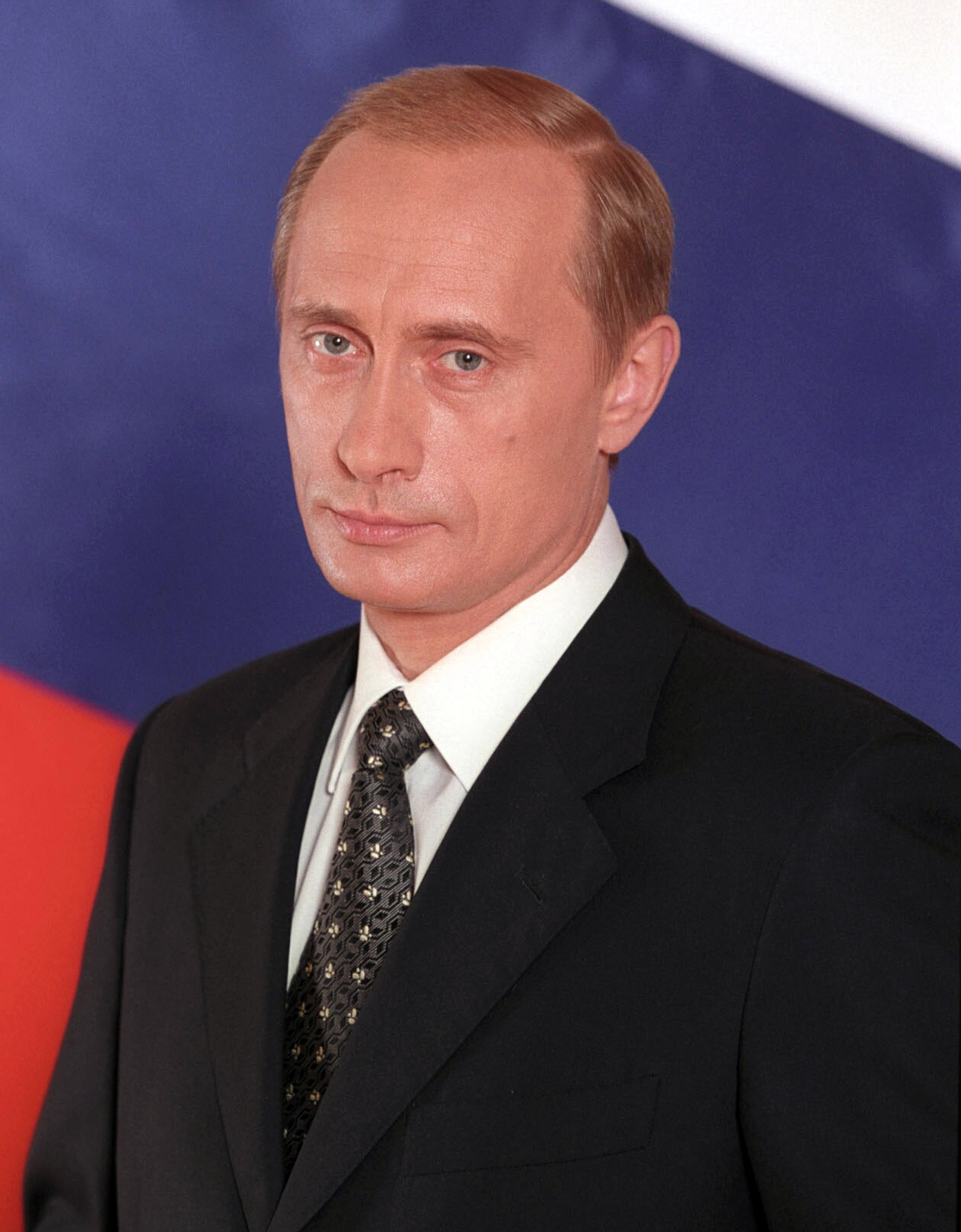
Vladimir Putin Official Portrait

Vladimir Putin

The North Atlantic Treaty Organization, created in 1949 to contain the Soviet Union, said it’s not sure what Putin is trying to achieve with either his actions in Ukraine or his weapons program.

“We cannot fully grasp Putin’s intent,” the alliance’s top military commander, U.S. Air Force General Philip Breedlove, told Congress in April, according to the Defense Department’s website. “What we can do is learn from his actions, and what we see suggests growing Russian capabilities, significant military modernization and an ambitious strategic intent.”

I first studied economics back in the early eighties. The discussion of trade was perfunctory; trade was not considered particularly important to the US economy because, with the exception of oil, the US could produce pretty much everything it needed, and–just as importantly–most of what it wanted.

Modern orthodoxy maintains that trade makes one strong. This is fundamentally incorrect. Trade is necessary at times as a bootstrap up for industry, or to get things you truly cannot make yourself, but it can make you weak. The more you trade, the more vulnerable you are.

Russia is vulnerable. Putin turned Russia around by concentrating on hydrocarbon production and selling it to foreigners.

Commodity production is always a bad deal. No matter how rich it makes you, commodity prices are always boom or bust, and are always subject to technological obsolesence.

So, Russian defense spending:

Defense and the related category of national security and law enforcement now eat up 34 percent of the budget, more than double the ratio in 2010.

Putin signed documents creating what he called the “industrial battalions” program, which will give thousands of draftees the option of working in defense enterprises instead of joining the regular military.

After years of chronic funding problems for weapons makers, Russia has started to prepay for the goods and services it buys from the more than 1,300 organizations and 2.5 million people that make up the defense industry.

This is not hard to understand.

What part of Russian industry is most technologically advanced and does the world demand the most?

Weapons.

Russia needs to diversify what it exports. Military goods are the obvious market for which to do so. Really, there are only three sources for military goods: the West, China, and Russia.

Russia appears to have begun this strategy about 2012, before the oil price crash, the Ukraine, and so forth, but their vulnerability to oil price crashes was obvious. That the US was continuing to try to destabilize Russia’s near abroad and draw it into NATO was obvious as well.

Now, Syria.

What’s the problem with buying your weapons from the US?

Unless you’re a core US ally, the US is unreliable. If your government changes in ways the US doesn’t like, or if you are an enemy of  US core partners (Israel, Saudi Arabia, etc.), they will cut you off from parts and ammunition at the drop of a hat, as well as canceling pre-paid orders.

But: The US was able to say that they had the best equipment. No one could compete.

What is happening in Syria is a demonstration that Russia can be counted on to help its allies—meaning its customers. It is a demonstration that Russia’s new weapons, and particularly its cruise missiles and airpower, are comparable to US product, and maybe, even in the case of its most advanced fighter/bomber, better.

It is a demonstration that if you buy Russian you aren’t buying crap that US-supplied forces can roll right over any more.

The Syria issue is a trade policy issue.

That is not to deny the geopolitical element to it, there certainly is one. But most analysts are not catching that this is also economic policy in action.

Shove Russia against a wall, impose sanctions, drive down the price of oil, and of course they will reach for what else they do well, and can sell.

The failure to anticipate this, the failure to understand this at the highest possible levels of NATO, when Putin had been telegraphing his strategy for years, is a terrible indictment of our “leadership”‘s competence.

Now, add to first class armaments and reliable supplies, a proper payments and banking system with China’s aid. Add China’s industrial goods and willingness to build infrastructure, and you have a second vertical capable of supplying virtually everything the West can do, and one which doesn’t care about the internal politics outside its near-abroad.

That new world isn’t quite here yet, but it’s almost.


If you enjoyed this article, and want me to write more, please DONATE or SUBSCRIBE.

Page 4 of 8

Powered by WordPress & Theme by Anders Norén