The horizon is not so far as we can see, but as far as we can imagine

Author: Sean Paul Kelley Page 2 of 12

'89-'93 BA History, Houston
'95-'07 Morgan Stanley, Associate Vice President
'99-'02 MS International Relations and Economic Development, Saint Mary's University
'07-'13 International Software Sales Manager, Singapore
'13-'16 MA, History, Thesis on Ancient Silk Road City of Merv, UTSA
Kelley lives in San Antonio, Texas.

Risk and Reward As Perceived in American Strategic Culture

~by Sean Paul Kelley

How does the way an individual perceives time affect the way they approach risk? And can the way individuals perceive time and risk be applied on a macro scale?

Let’s take a look.

Sociologist Phillip Zimbardo developed a five way typology of how individuals perceive time. People who inhabit certain zones have certain characteristics unique to their typology. Diane Maye, commenting on attitudes toward risk by the US military at The Strategy Bridge writes, “future-oriented people tend to be more successful at achieving their goals, whereas people who frequently reminisce about the past can be overly nostalgic or fearful.” Makes sense, no?

What about those who live in the present? How do they perceive time and more importantly how do they approach risk? This type inhabits what Zimbardo calls the present hedonistic mode, and as Maye elaborates, “[are] more likely to engage in risk-taking behavior.” Maye adds that “the present hedonistic person “lives in and for the moment” and demonstrates a “lack of regard for future consequences.”

I can’t think of anything that describes the outlook of most Americans with more accuracy than this. America is a nation riddled with a present-mind perspective. Our media diet is now totally skewed towards immediate gratification with absolutely zero thought for the future. No one reads long-form essays any longer, much less books. Tik-Tok, X and even the nightly national news is geared towards quippy repartee, not well-informed consideration. Balance and objectivity in reporting just takes too long, especially when you can strike a pose, Right or Left. Such a thing is much easier and much more rewarding to ones endorphin producing centers. Intellectualism is so passé.

Indeed, one of the greatest losses of the last several years was NPRs shift from a medium whose central bias was intellectual, to one that skews left is overtly political. All part and parcel of the slippery slope towards an all pervasive AI-driven society concerned only about its own immediate gratification.

This typology can just as easily be applied to our national approach to such existential matters as voting, domestic economics, and foreign risk, mainly in the context of our conduct of war, best summed up as “bomb first, analyze the loss later.”

The consideration of risk and reward became uncoupled from each other during the Reagan Administration, when the debt markets were restructured drastically by a crucial innovation: MBSs, mortgage-backed securities and junk bonds–supposedly to democratize finance–and the equity markets were deregulated and then a Bull’s ass was set aflame by Greenspan’s long era of easy money. The spread between them only grew worse under Clinton, doubly so under Baby Bush, Obama and aren’t even spoken in the same sentence under our new Maximum Leader, Trump.

Americans, however, are soon going to learn that when you sow the wind, you reap the whirlwind. The consequences of which will be grim.

Starfleet Academy’s Gay Klingon Could’ve Been Epic

~by Sean Paul Kelley

Forewarned: this is culture war stuff. So, if you trigger easily: don’t read this. Then again, you’ll be missing out on some excellent counterintuitive culture war rabble-rousing.

I guess I ought to declare right here and now before I get trounced for being an out of touch GenXer neobigot. So, say it with me, loud and clear: I’m for every human on this planet being treated with the innate dignity they possess and deserve and that they not be denied the rights their ancestors fought so hard for. Rights are not entitlements, they are earned. And much of humanity has, in the past, earned them and passed them down. They should not be denied to anyone.

Now that my virtue signaling is out of the way I can move on to some cultural war criticism.

First, why must a gay man be portrayed as simpering and overly sensitive? Why does this portrayal as queens persist in pretty much all visual media? And FFS, folks, don’t get all sensitive, I’m going somewhere awesome with this.

Why not portray a gay man very much in touch with his masculinity? Need a few historical examples of powerful, masculine gay men that changed the world?

Easy-peasy. First, Alexander the Great and his lover Hephastion. If you disagree, because Iskander has to be a man’s man, well, fuck off. It’s historically inaccurate to believe otherwise. Seriously, the Greeks buggered each other left and right and all were married. Then there is the Prussian King, Frederick the Great, who out maneuvered the armies of Maria “Always Weeping, always Annexing” Theresa of Austria at almost every turn? Both men were as gay as Freddy Mercury, and both were indomitable warriors and strategic geniuses par excellence.

So, when Starfleet Academy wrote in a gay Klingon, I confess, my interest was piqued. The Kurtzman era franchise had a chance to change in a new powerfully positive way. But, the show-runners took the easier, softer way.

For real, they just turned down the wrong alleyway.

See, fiction has rules. You create species or characters and portray them a certain ways; they have to obey their own rules of internal logic. That way the reader or viewer knows what to expect. When a character or species acts contrary to canon, the reader and the viewer are not only confused but lose interest. So, what happened with the gay Klingon?

Let’s discuss Klingons in general first, okay?

Klingons, in case you don’t know, are fierce warriors, poets, singers and deeply, deeply romantic. Klingons are the antithesis of brooding self-actualized pansies, looking for closure or healing. They love killing almost as much as they love dying. “It is a good day to die,” is their constant refrain. And bloodwine? They make the Russians look like pikers when it comes to imbibing alcohol. So, would it not make sense that a gay Klingon ought to have been written in character? To write a gay Klingon any other way than as an awesome bad-ass killing, drinking and fucking machine is to fundamentally misunderstand Klingons and their crucial role in the Star Trek canon.

Let’s take Worf, from TNG and Deep Space 9, as an example. If Worf wanted to fuck another male Klingon, Worf’s idea of foreplay would have been sparring with bat’leths, followed by bending his paramour over a barrel of blood wine, blowing his load, screaming a blood-curdling Klingon scream and then a blood-wine toast, ending with a little spooning and a love poem.

You know I am right.

A gay Klingon could have been immortal. A gay Klingon had the potential to be Star Trek’s equivalent of a honey badger: he don’t give a fuck. A gay Klingon Dahar master? Dip me in a vat of melted cellophane!

Kurtzman and crew had the chance to create an immortal, utterly amazing Klingon in the mold of Alexander the Great or Frederick of Prussia. Instead they opted to tick off the wokester checklist with an absolutely pathetic, weepy, whingy, sniveling crybaby of a Klingon

What a waste.

The Kurtzman iteration of Star Trek has been nothing but failure after failure to understand what Star Trek was. It was never, ever true to Gene Roddenberry’s vision.

The franchise needs a fifteen year rest.

I’ll be ready for a do over in my late sixties. Get it fucking right next time.

What Phase Three of the Credit Cycle Looks Like: the Ponzi Scheme Visualized

~by Sean Paul Kelley

Courtest my alma mater Morgan Stanley, we have this graphic that perfectly depicts what the AI-Ponzi scheme looks like and just how incestuous it truly is:

Is any other comment necessary?

On the Necessity of Facing Nuclear Reality, Even When a Child

~by Sean Paul Kelley

In 1983 the Bulletin of Atomic Scientists’ Doomsday Clock clocked in at 3 minutes to midnight. America was in the middle of one of the most dangerous five year periods of the Cold War. Detente was dead. Able Archer exercises occurred that November. KAL-Flight 007 was shot down by the Soviets on September 1, 1983. And a newly assertive America under Reagan got busy stationing 103 Pershing II Intermediate Range Ballistic Missiles in West Germany to counter hitherto deployed Soviet SS-20 Saber IRBMs. Dialogue between the two superpowers came to an icy halt.

In the middle of this complex realpolitik the Nuclear Freeze Movement in the US gained steam, throwing their support behind Walter Mondale and Geraldine Ferraro’s nod to run against the Gipper in 1984 and the American millitary buildup continued at a frenetic pace.

Meanwhile, back on the farm, so to speak, something earth-shattering (at least to me) was fixing to be broadcast on November 20, 1983 on ABC: The Day After. An American media attempt to depict the aftermath of a full-on thermonuclear exchange between the USSR and the USA.

Jason Robards-who I always confused with George Peppard of A-Team fame—was the central character. A small town doctor out of his depth treating increasingly desperate radiation-sick patients from all over. I recall one scene, a kind of town meeting, where one woman, wearing a white dress, bled from between her legs, obviously from a critical lack of feminine hygeine producuts. And I recall someone needed to travel to the Bay Area, which once he arrived saw that it was totally obliterated.

I was horrified. My Mom was genuinely worried about me. That film represented my political baptism by fire. Henceforward, I watched the nightly national news like a child obsessed. I followed the course of the Cold War with interest and obvious worry that one Sunday morning—I don’t know why it was always a Sunday—I’d be vaporized along with my little sister and Mom. As I grew older I matured. I viewed the nightly national news with a bit more sophistication. I began reading the national news rags. Remember Time and Newsweek? I devoured them. I recall vividly Cori Aquino’s Revolution in the Philippines and Ortega’s ouster by Violetta Chamorro in Nicararagua. But I never, ever forgot the lessons of The Day After:

Risk peaks when one feels absolutely certain and safe. This is when calamity strikes.

Risk feels at its greatest after calamity passes and one feels chastened.

~attributed to Jesse Livermore

Anyone have a clue where the minute hand of the Doomsday Clock rests today?

89 seconds to midnight. Arms control be damned. ‘Murican don’t give a shit.

The entire arms control regime brought into life by Reagan and Gorbachev, extended by Bush and Baker, followed by the sage, bipartisan Nunn-Lugar Act and Clinton’s negotiating of the START Treaty have all been cast aside. First, by George W. Bush’s hamfisted and stupid abrogation of the arms control regime’s lynchpin: the 1972 ABM Treaty. Followed by Trump letting the INF lapse. And finally, this February, once again, irresponsibly letting the START Treaty lapse.

With the War in Iran not going well, China has taken to using proxies to warn Israel of the cost of using nuclear weapons against Iran:

“the moment Israel uses a nuclear warhead against any country, it will be considered the number one enemy of humanity, it will be the demise of Israel as a state, as a regime, as a country.”

Explicit but utilizing an indirect conduit, as one would expect of the Chinese.

Not to be deterred, American policy-makers lauched their own trial balloon in favor of an Israeli first-strike.

Yes, people, we’re that close.

But here’s the absolute shit-kicker, as we say down here in South Texas: the depiction of the aftermath of global thermonuclear war in The Day After is weak compared to the UK film on the same subject, dated 1984, called Threads.

American movies require a happy ending. Always. And The Day After offers up a milquetoast version of positive.

Not so Threads. And for that fact alone, Threads, horrifying in the extreme—mind you, I watched it as an adult—is the more realistic film, and its depiction of the civilization ending effects of thermonuclear warfare will leave you chilled to the bone. Threads is a much more effective admonitory tale of the very real risks we’re shopping off as I type.

America’s Economic Future: Imminent Pain and Dislocation Not Seen Since the ’30s

~by Sean Paul Kelley

The end of this credit cycle is going to include the following macro events: a credit crisis, a housing crisis, an energy shock, with the potential for massive failed deliveries necessary to third world nations creating famine on a biblical scale, at least one Too Big To Fail failing, as Lehman Bros and AIG did in 2008, and the AI bubble bust. All of these will happen. Locked in. Fixed. No way out.

In a previous post I outlined the order in which the financial catastrophe barreling down on us like oncoming freight will occur. I’ve simply included one new variable: the energy shock.

Here’s how it’ll go down.

First, there is an expansion. Stocks rise. At some point the rise becomes divorced from realistic earnings expectations. This is when intense speculation drives equities into bubble territory. After all, Nvidia’s market cap is just shy of ($4.2trillion) the annual GDP of India ($4.4trillion) as of Monday March 23, 2026. Simultaneously, US Treasury buyers, ‘prudent’ investors, qualified investors (people with more than $5 million in net worth), pension funds, insurance and re-insurance companies and good old orphans and widows, as they always do, got a bit jealous and so reached for yield. They wanted safety with high returns. But in this world you can have safe or you can have high returns. You’re a fool to think you can get both at the same time; alas we have a superabundance of fools these days.

So just like in 2007-08, the shadow banking system, ie. the issuers of supposedly safe and high yielding assets, called subprime loans, experienced serious losses, that lead to the unwinding phase of the financial crisis. The 2008 fin crisis started on a lovely summer day in NYC, June 22 2007—I think the Yankees won that day—when two Bear Stearns subprime hedge funs went belly up. This was 2008’s canary in the coal mine.

This time around it isn’t subprime that has precipitated the unwind but the dominance of private equity/private credit shadow banks, such as Blue Owl, Blackstone, Blackrock, and others.

As previously noted, the current crisis’ canary in the coal mine was Blue Owl. Their very rude wake up call arrived in the form of $1.4 bn in redemption demands, which forced Blue Owl to sell assets to meet redemption needs. It was a catastrophe for Blue Owl, in every way a fire sale in which every Wall Street trader exacted his pound of flesh. It also led to a very ugly unravelling of contracts with Oracle. Oracle’ stock plummeted.

Many others have followed in the weeks since Blue Owl burped up a massive fur ball. The specifics can be found in this post and are beyond the scope of this discussion. They are pertinent, but listing them would make this a Tolstoyian endeavor. The upshot is this: normally, an enormous amount of credit destruction (read, debt) has to happen until we get to phase three of the credit cycle. One counterintuitive effect: a stronger dollar. We’re already seeing this versus the other major fiat currencies.

Moving on to one of the other developments I outlined in the first paragraph: a housing crisis. Home building has long been the foundation of the American economy. It’s in serious stress right now. As I mentioned before, last month saw a full -17.6% collapse in the purchase of new homes. In the Northeast it was an epic cow patty catastrophe: -44%. In my hometown, sellers outstrip buyers buy a full 114%. This in the heart of the ‘Texas miracle.’ I honestly don’t know how a collapse in homebuilding will effect this economy coupled with the headwinds it’s facing. I know it won’t be salutary and will exacerbate already dangerous liquidity and solvency issues caused by the private credit/private debt unwind. What else? “Cannot say. Saying, I would know. Do not know, so cannot say.” Five bucks to whoever gets that reference.

Will the Fed be able to contain both? FuckifIknow?

Adding to fierce headwinds, Trump’s war against Iran has had a similar effect on the global economy as Odysseus ill-timed opening of Aeolus’s wind bag: it’s blown us on a completely fucktarded vector, beyond any rational goal, that will take five years-at a minimum-to recover from if we stop now. Plenty of us predicted this but we’re just dipshits sitting in the basement wearing our jammies. If the Israeli’s continue their wanton destruction of everything, there is no telling how Iran will respond. And I’m not even pondering nukes here.

The effects the closure of the Straits of Hormuz are and will continue to have on the global economy, rather the effects faced by the Rules Based Order the West imposed on much of the globe will be make the European energy crisis look like a night out with Sidney Sweeney.

One effect: potential famine in those third world countries-on a biblical scale-unable to import desperately needed fertilizer from the Persian Gulf at reasonable prices.

Second, no helium. Helium is a gas essential to modern industrial life, everywhere.

Third, my best friend in Denmark joked, “hell, we might soon be back on bikes eating only porridge for dinner.” He also rued the demise of Nordstream and said, unequivocally that Danish renewables won’t be enough. This from the one European nation with the largest sector of renewables. Imagine the second order effects cascading out across the globe?

And what about the cost of transport? Not just everywhere, but especially here in the US? Anyone given any thought to just how super human stupid just in time delivery looks now? I’ve always warned about this. You know: chickens, roosting; shit like that.

Fuck it. I’ve got more than ten years of Wall Street experience so what the hell do I know?

Well, I know this as I know the sun rises in the East and sets in the West: the exogenous shock waves rippling towards the US economy are bad. Vewwy, vewwy bad. And there is no double-slilt experiement available to cancel out the oncoming waves.

What next?

Oh yeah: Too Big To Fail. Nope. Stress test? Are you Dave Chapelle?

Just ask Lehman Bros or AIG. This time around one of the Too Big To Fail institutions will fail. Maybe more than one. If I had my choice it would be Goldman, but if I am being realistic I’d put odds on Wells Fargo and/or Citigroup. Why? Well, Wells Fargo has a history of laundering tons of cartel cash, so no real culture of compliance/risk management. Citigroup has brazenly challenged the SEC to regulate them on multiple occasions. Those would be my two choices.

Finally, I’ll recap phase three of the credit cycle: the Ponzi unwind. As I wrote here,

“Crypto will be the first big Ponzi unwind. And it will take a lot of suckers with it. Plus, a damn lot of fools who worked for investment, commercial banks and private credit/equity shops. Crypto is bullshit, wrapped in dead fish skin that’s been perfumed by Chanel. No matter how good it smells, it’s rotten to the core. Crypto is to this financial crisis as CDOs and synthetic CDOs were to 2008.”

Moroever,

“The AI-hyperscalers will suffer as well, during the Ponzi unwind. Why? They are in essence engaging in a similar sort of vendor financing like CISCO and Juniper Networks did in the dot-com bubble. Nvidia is giving chips to AI-hyperscalers as collateral for loans. Never mind the chips will depreciate long before the earnings are solid enough for the AI-hyperscalers to payback the “loans.”

It’s accounting legerdemain in extremis.

So, to be clear: multiple endogenous-domestic-headwinds coupled with very ugly exogenous-international-shocks, real and potential, increase the odds, hourly, that we’re nearing financial armageddon.

To recount what to expect: a housing crisis, a credit crisis, an energy-shock, fertilizer shortages leading to potential famine, one or two Too Big To Fail, failing and the AI bubble bursting. All at the same time. Same time. Boom. Boom. Boom.

This ain’t gonna resemble your daddy’s financial crisis. In the words of Grunge’s greatest lyricist, Chris Cornell, “I’m feeling California, but looking Minnesota.”

Israel, Nukes and Armageddon For Real

~by Sean Paul Kelley

I planned on writing a post about how the Russians were the ultimate winners of the Iran War, what with all that petroleum and natural gas they have. Truly, the Russian’s have got God by the balls (Как бога за яйца поймал).Windfall after windfall is accreting in an economy that is supposed to be in the doldrums. The reverse is true: Trump’s witless pursuit of war against Iran is effecting the collapse of the entire global economic order, except those nations trading with, well, you guessed it: Russia. I can’t fathom right now. How does one convey the stupendous amount of boomerangishness happening? It’s like karma grew a pair of balls and teabagged the entire Western order.

That said, I failed to write the post. Instead I got profoundly distracted by Col. Larry Wilkerson’s disturbing prediction that Israel will more than likely use up to 15 nukes on Iran to settle the conflict. Watch the video yourself. It’s a mercifully brief 7:03 minutes of terror. It’s the stuff of nightmares. I ain’t kidding. I’m dumbfounded. Dismayed because he makes a plausible case for Israel’s use of nukes.

If Israel opts for nukes the entire calculus of war changes. Nukes virtually guarantee the inclusion of other great powers in the war. I’ve taken to joking lately that we’re watching Armageddon. I didn’t mean literally, but now? I’m really at a lack for words.

We’re all going to die.

Afterthought : Before we all perish in flames, some more shitty news: sales of newly built houses fell a full 17.6% nationwide. In the Northeast it was a rout: down 44%. Adding insult to injury, McDonald’s, Pepsi and Dollar Tree are all racing to the bottom by reducing prices. Not goody, vewwy baddy.

Afterthought : The spread between home-sellers and home-buyers in San Antonio, my town, has widened to an astonishing 114%. That’s absolute brutality to home-builders. So, the end of this credit cycle is going to include the following macro events: housing crash, credit crisis, energy shock and at least one Too Big To Fail will fail, just as Lehman Bros and AIG did in 2008. Oh, and the AI bubble will unravel. Wow, that’s almost a perfect storm.

The Credit Cycle: Phase Two Accelerating

~by Sean Paul Kelley

Here are today’s Phase Two developments. Many are ominous. Things not looky so goody.

The smartest guys in the room, i.e., Goldman Sachs had this to say about AI: “Massive investment in AI contributed basically zero to US economic growth last year.” What will they predict next? An oil price spike if we go to war with Iran? Oh wait. 

Dario notes that the liquidity crisis is going global: “Middle East liquidity crisis in the financial system is surfacing.”

He cites Rashid ben Saeed who elaborates: “Citi and Standard Chartered literally evacuated their offices this week. Told staff go home, work remote. HSBC closed their Qatar branches. Hedge funds are in “contingency mode.” That’s a polite way of saying they’re bricking it. Analysts are saying customers could pull out $307 BILLION if this goes on another month.” 

First Squawk writes that both JP Morgan and Goldman are offering Hedge Funds ways to short private credit. That’s just weird.

Ripplebrain conveys just how devastating the attack on QatarEnergy’s LNG production is:17% of QatarEnergy’s production is 3.4% of the world’s LNG production.” Ending ominously saying, that it’s “gone in the blink of an eye, perhaps for years.”

The irrepressible Matt Stoller highlights a video that highlights “straightforward market manipulation.He also points our attention to the #2 story at the Wall Street Journal:U.S. Regulators Propose More Lenient Capital Rules for Big Banks.” This kind of proposal is in direct contravention to the ‘stress test’ rules put in place after the 2008 Financial Crisis. It also clearly foreshadows liquidity and/or solvency issues that the commericial banks will soon face. 

In another clear phase two clusterfuck is this story from the WSJ, cited by Unicus Research. The upshot: “Stone Ridge’s LENDX fund just told investors it would honor only 11% of redemption requests.” The post on X also includes what kind of garbage is in the fund. Go take a look. It’ll engender a ton of schadenfruede. Enjoy! 

As pending crises morph into full blown disasters investment banks often prepare by enacting the following policies. First, they raise production quotas for their employees while simultaneously cutting their commission payouts. It’s a cut-throat business. Payout cuts are painful. I’ve lived it. And they always cut payouts right before or during bear markets. I endured this twice at Morgan Stanley. Guess what: Goldman has begun that process, as First Squawk reports: “Goldman plans performance-based job cuts in late April.” This we can infer two important factoids from this: Goldman is worried about cash-flow. You don’t plan to run employees off if you’re flush with cash. Two: timing, Goldman clearly sees this credit cycle accelerating rapidly with an April inflection point.

Shashank Joshi catches an excellent highlight from the Economist:Average prices of petrol and diesel have reached $3.88 and $5.09 a gallon, compared with $3.11 and $3.72 at Mr Trump’s inauguration. Republican support for the war is strong, but softening.”

More Perfect Union informs us “the cost of vegetables jumped 49% last month as inflation hit hard and companies raised prices.” Its source is BLS data. Now I know, some will dispute how the CPI is computed. I thinks it full of balderdash and male bovine excrement. So does Ian. So I post and you decide. 

Sohrab Ahmari notes, unconfirmed but entirely plausible, that “force majeur [has been declared] on Qatari LNG contracts for up to five years.” Five years? That’s going to pile Pelion atop the already messa Ossa of the energy markets globaly. 

CORRECTION: according to EarlyGray the video below does not say anything about Japan buying Russian oil. Mea culpa. I regret the error. SPK

Richard posts a video and apparently translates it. If true, it’s a bombshell: “Japan is now openly buying Russian oil with the yuan.” Why not with JPY? I would imagine that China has already set up a Yuan based transaction system for buying and selling oil to steadily chip, chip, chip away at dollar hegemony. Yeah, Japan has said it publically and officialy. That’s pretty much like pissing on the petrodollar. Our closest North East Asian Ally. That’s fuckery on an hitherto unseen level. 

Meanwhile, to Japan’s northwest, South Korea is considering resuming imports of Russian oil.

And I make the observation, in utterly obscene Russian fashion that “with these high oil prices the Russian Treasury has certainly Как бога за яйца поймал.” Translated idiomatically: Russia is in the catbird seat. Translated directly:they got God by the balls.

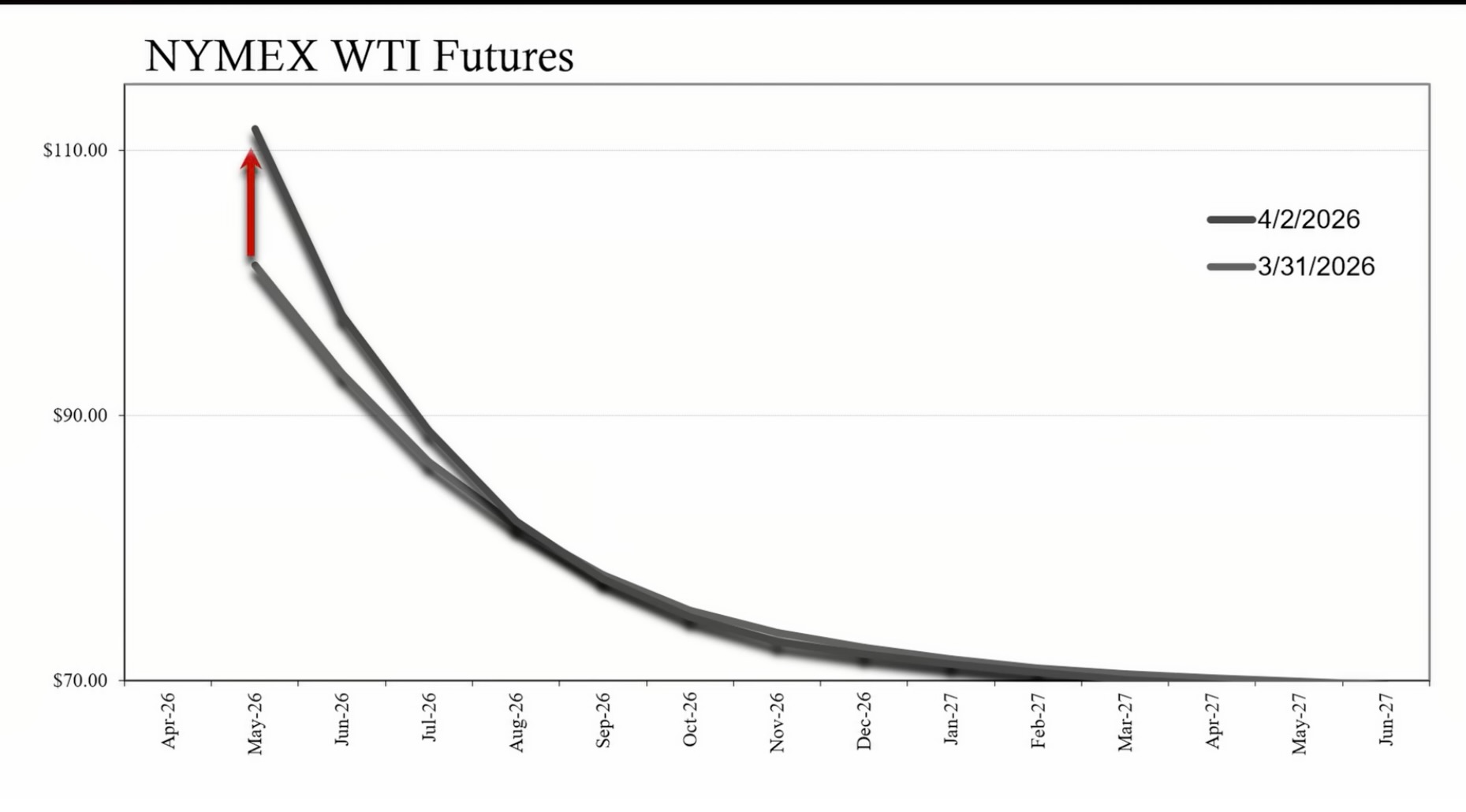
Rory Johnston notes just how high Dubai crude prices have risen: “Cash Dubai crude (balance of the month) just broke above $170 per barrel.”

Here’s what I’ve previously written on this credit cycle. I stand by it all. The only comment I’ll add at present is this: if the exogenous shocks to the US economy continue and the energy shock intensifies, all bets are off on the proximate cause of the end of dollar hegemony.


Donald Trump and the Apotheosis of Chimpanzee Politics

The most salient observation in Lawrence Freedman’s book Strategy: A History, comes early, paraphrasing Frans De Waal’s seminal study Chimpanzee Politics, Freedman writes, “De Waal concluded that rather than changing the social relationships, the fights [to become or overthrow and alpha or to wage war] tended to reflect the changes that had already taken place.”

This “Chimpanzee Framework” is a useful way of understanding the catastrophe unfolding in the Persian Gulf today and the accelerating collapse of American power globally. The “Chimpanzee framework” clarifies just how and why American foreign and economic policy actions resemble a honey drenched giant fighting off an hungry sleuth of bears more than a smart, historically informed nation. American policy and its actions are uncoordinated, moored in shared delusion and filled with several metric shit-tons of hopium. (See, more proof ‘Muricans can do Metric!)

Why would American actions be otherwise? America inhabits a fundamentally different world than it did a decade ago. The unipolar moment is gone; multipolarity is fact, not wishful thinking. BRICS grow faster every day, searching for the perfect red-pill of knocking the dollar off its hegemony throne. Meanwhile, the United States cannot affect international policy change to its liking regardless where it acts. Not in the Ukraine. Not in Iran. Worse, the inevitable defeat in Iran will cascade into Venezuelan and Cuban failure as the small shrug off the rotten shackles of a wounded giant.

America’s inept inefficacy is not limited to international policy: economic policy vis-a-vis tariffs is an abject failure as it was under Biden. The United States will find re-industrializing an impossible adjustment when the reality of a nationwide collapse of its standard of living happens. Reindustrializing starts with a vigorous textile industry, not more computer and AI chip plants.

So, just how many Americans are willing to work for peanuts in sweat-shops? How many machinists can we realistically turn out in five, ten, even fifteen years? Do Americans even know what machinists do? How many high school graduates can use a lathe, much less know what one is? Our domestic reality is as equally grim as our international one, except our international collapse will compound already enormous burdens pervading an economy of misaligned priorities and a poorly performing one at that.

In Strategy, Freedman also discusses the utility and efficacy of coalition building among chimpanzees, their alphas and those tribes they war against. In his most striking note, he describes the political complexities, violence and the necessity of building stronger, effective coalitions, be they to wage war for a nearby fig tree or to install a new alpha. His conclusion is counterintuitive and profound: chimpanzee violence doesn’t represent an overthrow or revolution. It confirms a preexisting reality.

Henry Kissinger made the same argument in his doctoral dissertation, later published as A World Restored, not regarding chimpanzees, but in the context of Metternich’s formation of the Sixth Coalition against Bonaparte. The Befreiungskriege, as it was called in Metternich’s native German, confirmed the reality on the ground that Bonaparte’s 1812 invasion of Russia was a mortal own goal for the French; the War of the Sixth Coalition merely confirmed it; and the subsequent peace codified it for almost a hundred years.

The same argument can be made regarding the United States and its quickly deteriorating Western coalition of the unwilling. Not to mention its Far East allies who are quickly tiring of American shenanigans, outright betrayal and economic, tariff-related fuckery. That this coalition, a coalition that dominated the post-Cold War world, cannot now manufacture more artillery shells than a single nation, the Russian Federation, is proof positive of a deeply misunderstood alignment of power and an pre-existing altered reality is met with blank stares and outright denial.

That this coalition is blindly following a great power lead by the nose by a tiny, recalcitrant and criminal regime running Israel has historical precedent. Think Serbia and Russia in the days before August 1914. The Serbs were deeply complicit in the assassination of the Austrian Archduke (read Sleepwalkers by Christopher Clark for proof). And Russian mobilization in support of their little Slav Brothers (or if you really need me to spell it out in today’s terms, those who we share Judeo-Christian values with) guaranteed German entry into the war.

Freedman’s “Chimpanzee framework” goes far in explaining the escalating devastation of petroleum related infrastructure and targeting of natural gas fields in the Persian Gulf. The world desperately needs to move away from fossil fuels. And many nations have made great efforts to do so. Thus, the destruction in the Persian Gulf of petroleum assets, refineries, gas wells, LNG and oil terminals, represents a symptom of a larger global reality: the world has turned an epoch making corner on fossil fuels. The day of fossil fuels is far from over, but this is the beginning of the end. There will be winners and losers, cliché I know, and yet countries that have made strong investments in renewable energy will make the inevitable and painful adjustments successfully. The losers like the USA, are those who will maintain their reliance on petroleum, come hell or high-water.

Most Americans dispute the idea that we higher primates and chimpanzees have a common ancestor or share any commonalities for that matter. They are in need of a rethink. Our politics are too similar, our warmaking just as brutal and our collective decision-making is too catastrophe prone to deny.

So, anyone got a fig? Or know where a fig tree is?

Page 2 of 12

Powered by WordPress & Theme by Anders Norén