Use to discuss topics unrelated to recent posts.
Author: Ian Welsh Page 87 of 436
Another “quick takes” in which I make brief comments on pieces I think are worthy of note, but am not going to write a full article on.
One of the policies I’ve promoted is criminal charges for environmental crimes, rather than just fines, which are simply treated as a cost of business and don’t take money from the executives responsible. Seems at least one country is doing so.
Violating China’s environmental policies can lead to real punishment. In March 2021, four major steel mills in Hebei were caught falsifying records to evade carbon emission limits; the next year, dozens of executives responsible were sentenced to prison.
It’s worth remembering just how good the media is at making people hate and fear the enemy of the day. They did it to Iraq, to Russia and to China.
50% of Americans now see China as the greatest threat, but just 6 years ago China wasn’t even on the list of countries Americans considered enemies. This shows us how effective Trump’s trade war and the media’s anti-China coverage has been at changing US public opinion 🐑 pic.twitter.com/M09GbGsmdb
— Cyrus Janssen (@thecyrusjanssen) July 29, 2023
There’s been a fair bit of bad economic news out of China recently (which I intend do a fuller post on), but one piece cuts both ways. A huge decrease in exports means that China’s customers (the West, to a significant degree) are buying less and it’s not just because of sanctions. China is now the world linchpin economy, much as the US was in 1920s–the industrial power exporting to other countries. We all know how the 20s ended.
China’s exports in July were down 14.5% year on year, far worse than expected, to $282 billion, although it is worth noting that in July 2022, China recorded its highest monthly levels of exports in history.
“Anybody who meets with the president does indeed get tested. I do, we all do”
The problem with Covid isn’t so much the deaths, though that’s bad, it’s the damage it does to people, even to people who don’t appear to have Long Covid. This picture and article summarizes some of Covid’s sequelae.
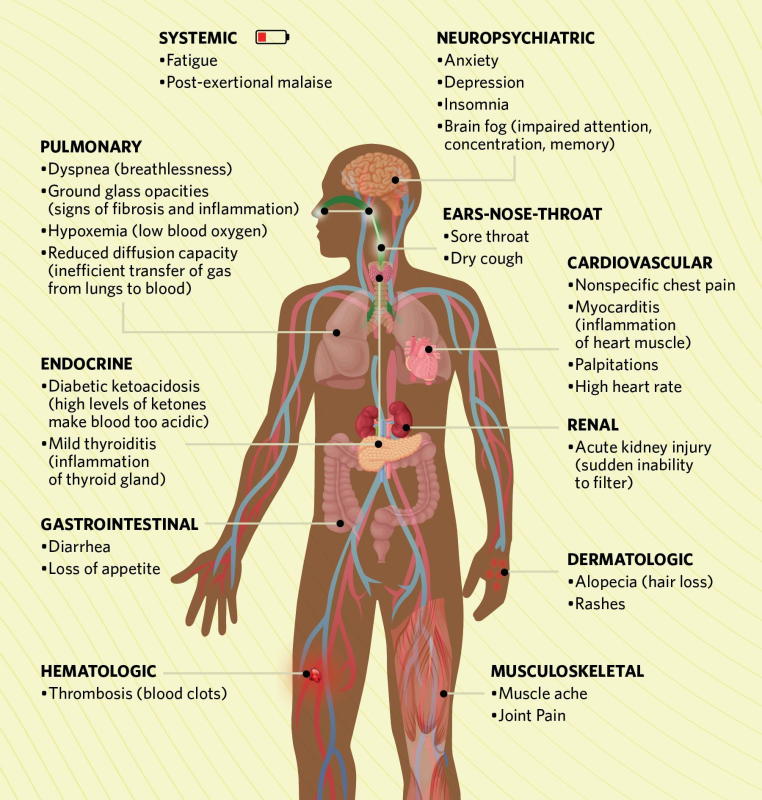
Fun stuff.
Extra fun is that some school districts have a financial incentive to keep sick kids in school.
The superintendent also noted a financial impact. If the current 90% daily attendance rate rose to 95% — which it was pre-pandemic — the result, he said, would be $300 million more in state funding, which is largely based on attendance.
Carvalho spoke on a day when he took part in two home visits in North Hollywood with students who had poor attendance last year, including an eighth-grader who missed 40 days of school. Her mother, Marissa Garcia, said both of her daughters had trouble keeping up with studies during the pandemic and also adjusting once school resumed. But the single mother said she and her daughters would redouble efforts to get the most out of school.
Back early in the pandemic, when they wanted to send children back to school, I wrote multiple articles saying this would be a disaster, because children are illness sponges. Not only are they not immune to Covid damage, they spread disease, as all parents and teachers know.
In totally predictable news, we now have proof of the obvious. “More than 70% of US household COVID spread started with a child, study suggests.”
No one knows precisely what is driving the phenomenon, but there is an inexplicable lack of urgency to find out. A concerted investigation is in order.
Deaths among young Americans documented in employee life insurance claims should alone set off alarms. Among working people 35 to 44 years old, a stunning 34% more died than expected in the last quarter of 2022, with above-average rates in other working-age groups, too.
Covid has all sorts of weird side effects. More car accidents, for example, which when you look at that Sequelae graphic, rather makes sense. A lot of damaged people are driving and driving badly.
The cost of auto insurance soared 16.9% from a year ago Car insurers lost on average 12 cents for every dollar of premium written in 2022, the worst performance in more than 20 years, according This is partially due to an increase in accidents
Enough Covid fun. Off in Britain, the UK continues its slide to 3rd world status. Start with this lovely list of Labour leader Keir Starmers continued retreat from his promises when elected leader of the party.
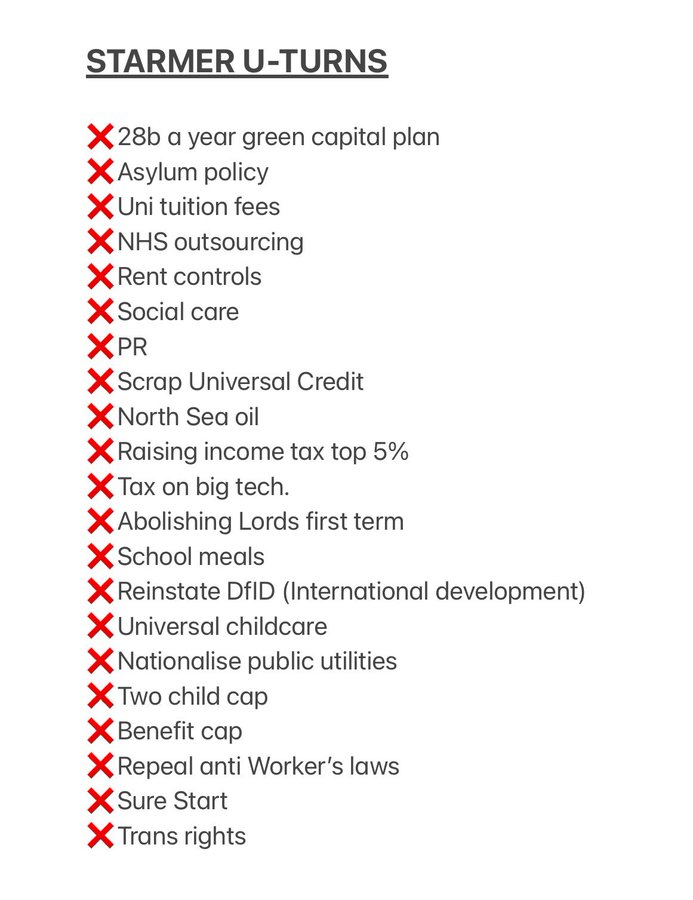
And “progressives” continue to slurp it up, ensuring Britain’s decline and the left’s irrelevance.
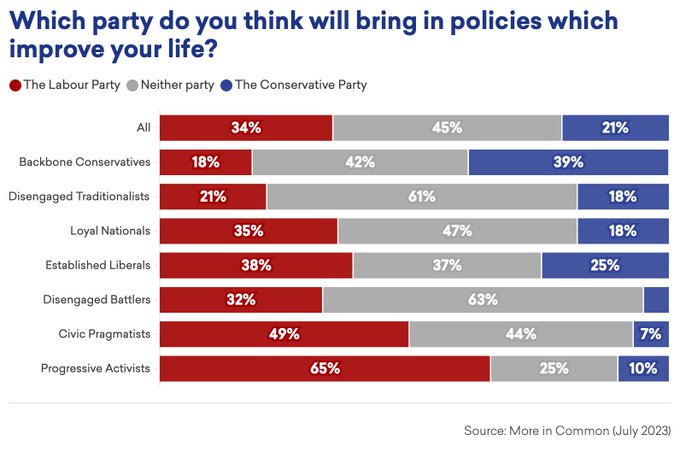 And that’s our week’s quicktakes. Mostly bad, but at least China is jailing some climate criminals. Remember, most importantly, that Covid is not over and that you don’t want to get it, and if you’ve had it, you don’t want to get it again.
This is a donor supported site, so if you value the writing, please DONATE or SUBSCRIBE.
So, you’re all probably aware of the replication and fraud crisis in the scientific community. Psychology’s been hit hardest, and the social sciences, but the physical sciences have not been immune.
Retractions have risen sharply in recent years for two main reasons: first, sleuthing, largely by volunteers who comb academic literature for anomalies, and, second, major publishers’ (belated) recognition that their business models have made them susceptible to paper mills – scientific chop shops that sell everything from authorships to entire manuscripts to researchers who need to publish lest they perish.
These researchers are required – sometimes in stark terms – to publish papers in order to earn and keep jobs or to be promoted. The governments of some countries have even offered cash bonuses for publishing in certain journals. Any surprise, then, that some scientists cheat? (my emphasis)
And these are not merely academic matters. Particularly when it comes to medical research, fakery hurts real people. Take the example of Joachim Boldt – the German anesthesiologist who, with 186 retractions, now sits atop the Retraction Watch leader board of scientists with the most pulled papers.
The key paragraph is #2: academics are judged on how many papers they have, and how many citations those papers receive. Getting hired and getting tenure are based on them. Since it’s hard to get a full time real academic job these days, let alone get tenure, there’s a LOT at stake for academics. Publish or perish.
This isn’t how such decisions were always made, however. At one point, human judgment was given a much bigger sway. Hiring committees read the research, looked at teaching, and talked to the academic. Some academics published only a few papers, but they were good papers, and others were considered to have potential.
Such a system was subject to standard human abuse: hiring people who were liked, in effect, so an independent measure of academic excellent was sought, and what was come up with citations: if your research was important, presumably other academics would refer to it.
But any metric which is used to make monetary decisions is quickly gamed. If you must have those citations, many people will cut corners to get them. After spending 10 years to earn a Ph.D. the idea of being part of the large majority who either get no job or become associate profs, badly paid and treated, isn’t palatable.
For a long time this went on and cutting corners worked: the people inside the system were those who had benefited from it, after all. Everyone knew it was occurring but the incentives to prove it were lacking. Then some outsiders started looking, people funded with outside money, and they found a ton of fraud and sloppiness.
We keep doing this: we keep seeking metrics to cut out human judgment, but it can’t be done. It’s not that metrics aren’t useful, but, again, as soon as everyone knows what the metrics are, they game them. (Note how similar this is to Google’s early metric: how many links a webpage received. Remember how good early Google was before everyone started search engine optimization and Google decided to maximize monetization.)
The solution isn’t to find new metrics, and to get back on the treadmill, it is to go back to judgment, and to review the results over time with groups of outsiders and insiders.
You can’t outsource human decisions on who gets power to algorithms. It never works and it never will, as we’re finding out with “AI”.
Just bit the bullet and take responsibility.
This is a donor supported site, so if you value the writing, please DONATE or SUBSCRIBE.
This chart is going around:
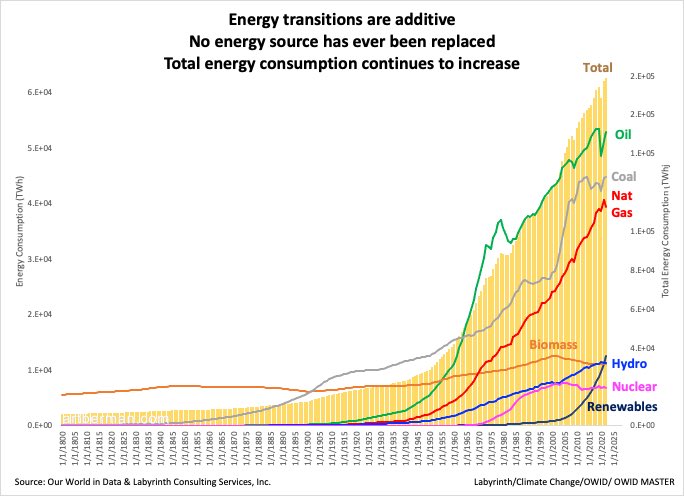
This is a useful chart, in that it shows that we aren’t reducing absolute use of energy sources which increase global warming: the gains you constantly hear about, at a global level (there are country exceptions, such as Germany) are relative, not absolute and it’s absolute that matters.
But it’s a dangerous chart in the sense that it suggests that because we’ve never done something, we can’t. In the specific case it is misleading: we’ve never had any particular reason to not keeping old forms of energy, and energy revolutions are uneven: in Europe and America and Canada, biomass is used a lot less than it was in the past, but as population expands, especially in less developed countries, well, of course biomass keeps being used, especially for cooking, and as long as global population keeps increasing, even reduced per-capita energy use could easily lead to higher numbers.
But the larger issue is the “we can’t do what we’ve never done” before idea. It’s obviously untrue technologically. Back in the 19th century many leading scientists believed powered flight was impossible, to give just one of thousands of example. But it’s also true socially: we never had universal sufferage states, for example. Older Democracies had very sharp limits on the franchise. Modern corporations are a new form of social organization though they have some similarities to older forms (primarily religious: temples and, in particular, monasteries). Double entry book-keeping had massive social effects, so did various religious innovations and so on.
“We’ve never done it so we can’t do it”, with standard excuses of “it’s just human nature” (as if human nature isn’t very plastic) is the true doomerism.
We have changed how we live, socially, culturally and technologically, over and over again and we can do it again.
If we can’t, if we are nothing but larger versions of bacteria multiplying in a petri dish, only pretending to sentient, then we are doomed and in a certain sense, deserve to be doomed.
Only if we can change and take conscious control of how we change, recognizing that most (but definitely not all) of the constraints we have put on our ability to change are cultural and created by us, can we have an expectation of a good future ahead of us.
I’m betting we can do things we’ve never done before because any other bet leads places we really don’t want to go.
This is a donor supported site, so if you value the writing, please DONATE or SUBSCRIBE.
Here’s the thing, everything you experience is your consciousness. When you see or hear another person or any object, what you’re experiencing is a representation.
Again, what you’re experiencing is yourself; your consciousness. This the heart of all of the “I am everything” spiritual forms. You have never known anything directly except yourself and you never will.
This is one reason why most spiritual systems emphasize positive emotions towards even difficult people and situations. “Love thy enemy” is about loving yourself, and it is intensely protective. When the Buddha said that a monk being sawed in half by bandits should feel love towards the bandits, that wasn’t to protect the bandits (who in Buddhist metaphysics, will get theirs eventually due to karma), it’s because if you’re feeling love, you don’t feel much in the way of fear: the two emotions are opposed.
(Relatedly, if you get rid of background fear and tension, what happens is you start feeling love all the time, though the feel is somewhat different from romantic love: it is not needy (this is not theoretical, I’ve experienced it, though I don’t live there right now.)
With something like Metta you start by sending out love to people you already love, move to neutral people and then move to people you hate. It’s the last step which is most important, though it is last for a reason: it’s hard.
What stops most people is the fear that if they don’t hate those who are dangerous or immoral, they won’t protect themselves or be considered part of the tribe. The key to dealing with this is having standards: not needing emotions to tell you when someone is acting badly. IF you don’t have those standards, then you can indeed get into trouble, and this is a problem in some spiritual communities, especially when people try to act as if they have attainments they don’t have and suppress negative emotions. You aren’t suppressing if you do loving-kindness or other emotion correctly: if you have the attainment, the emotions either don’t come up or they come up briefly.
Loving-kindness, compassion and so on are also useful because when something negative does happen, or does come up from your memory, the positive emotion is protective. Traumatic formations reduce over time, negative conditioning and fears reduce and if something new bad happens you are far less likely to wind up with a new trauma.
There are a lot of benefits to other people from being around someone who is constantly loving, but the Buddha and many other spiritual teachers didn’t suggest love just because of that: they did so because being loving is good for the person who is loving.
This is a donor supported site, so if you value the writing, please DONATE or SUBSCRIBE.
As readers will remember, I didn’t think much of the other cases against Trump, not because he isn’t likely guilty, but because none of them were the important thing he did: try a coup.
They also violated the cultural rule that elites don’t get indicted for such things. Of course, they should, but doing it only against Trump and not against other very senior politicians who have clearly committed crimes is likely to cause an escalation of intra-elite fighting, but that’s a minor thing.
The US isn’t much of a democracy, but to the extent it still is, protecting what remains is important, and there’s little question in my mind that Trump did try to overthrow an election which clearly went to Biden. (I didn’t endorse either Biden or Trump, this is not a partisan question to me.)
So I’m pleased to see this indictment.
There are, however, some consequences. If the trial is fast enough to convict him before the election, then the likely Republican nominee is DeSantis. Whatever you think of Trump, DeSantis is worse: a pure culture warrior who will use executive power to crush human rights and civil liberties, and who will use the full power of the government against anyone who opposes him.
Likewise, if Trump is convicted, Biden can expect to be charged once he leaves office over various corruption charges. Hate to say it, but I’m in the camp that says Biden is clearly corrupt and likely it will be provable.
The US is going to become a lot more politically unstable over the next few years.
This is a donor supported site, so if you value the writing, please DONATE or SUBSCRIBE.
The amount of warming is based primarily on how much CO2 there is in the atmosphere.
This is what is known as a STOCK. Think of it like the water in a sink.
The amount of climate change gases we are putting into the atmosphere is a FLOW. Think of it as the net amount of water going into the sink.
So, when you read an article talking about how much gas is being produced, if it says that amount is going down, what that means is that warming is still increasing.
If we want to reduce the amount of warming, we have to get to a negative amount of gasses going into the pool; into the stock. The flow needs to be negative, like turning off the water and pulling the plug.
Unfortunately, and that is what I’ve been concerned by, at a certain point, stored climate change gasses start being released. Methane in the permafrost and in swamps, for example. Once the permafrost areas heat up enough, methane which has been kept out of the stock and flows starts flowing into the pool.
This is a flow we have only indirect control over and it makes it much harder to get to a negative flow or even slow the increase of the stock.
So, if we ever want the old world back we’re going to have to reduce CO2 in the atmosphere or take other radical steps like orbital mirrors which reflect sunlight so there’s less incoming heat.
Removing CO2 is HARD. It’s not an easy problem and many of the ways of doing it, like ocean seeding, may cause other problems. As with a lot of problems, the easiest way to deal with it was not to let it occur in the first place.
It’s too late to do that.
This is a donor supported site, so if you value the writing, please DONATE or SUBSCRIBE.