
Amidst the chaos, propaganda, and war porn that is our attack on Iran news of the Russo-Ukrainian war has been hard to come by. One thing is certainly clear after my deep dive into recent developments along the front is that there is a strategic pause on the part of Russia and to a lesser degree that with the Ukraine.
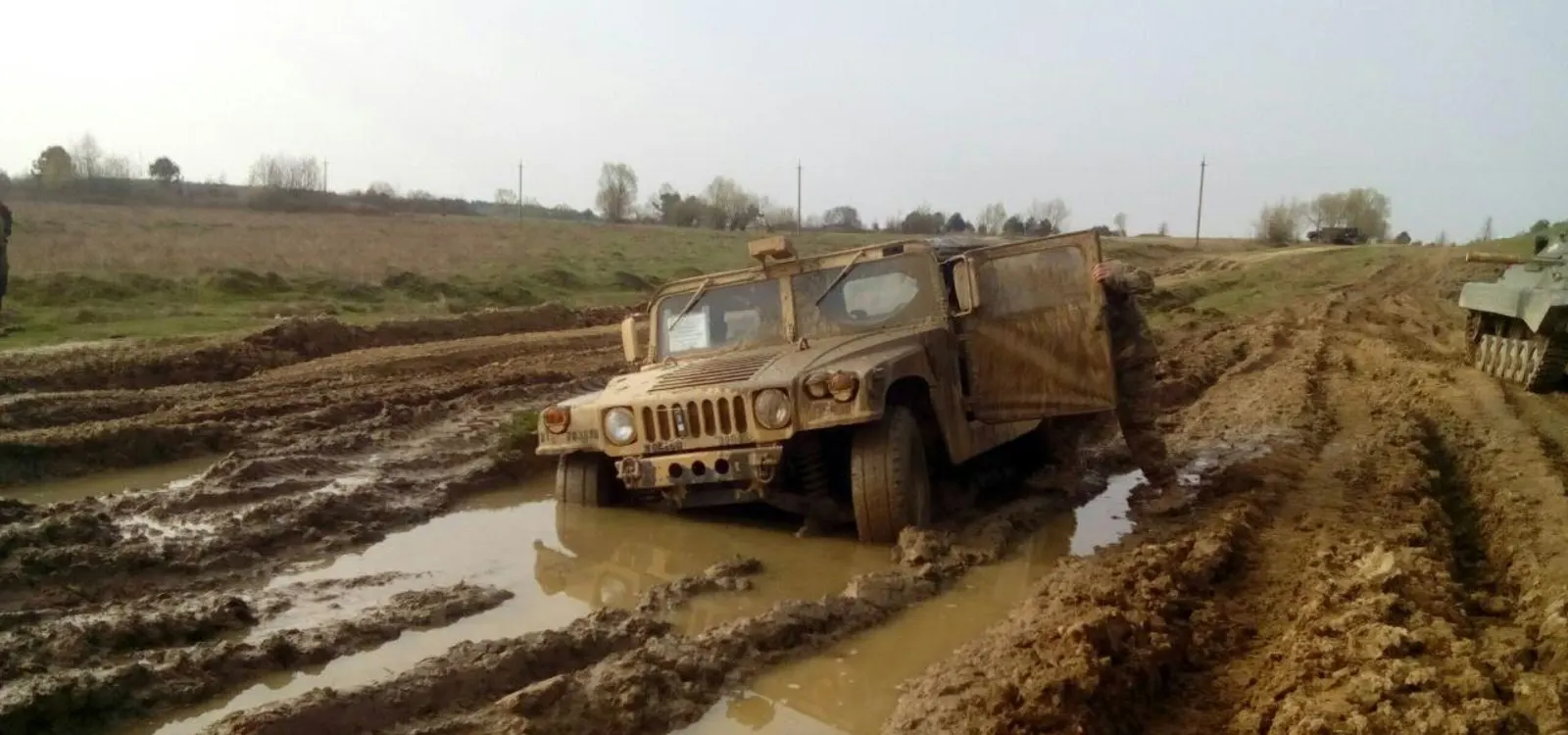 First, the lines have not moved much in the last few months. There are a few reasons for this. One is the Russians are having a tricky time consolidating some of their gains. The reasons for this are two fold: one is it it’s the mud season. It’s rainy and it’s thawing and that is not a good combination for an offensive mechanized or infantry. And two, when your opponent knows the lay of the land better than you do – they are after all fighting in the Ukraine – they take advantage of it. The Ukrainians have done just that.
There’s a bigger reason for the moderate successes that the Ukrainians are having. The Ukraine has ceased launching large offensives– mostly because they don’t have large scale units to launch large offensives with any longer, those units have been attrited by the Russians. The AFU underwent a serious reorganization on operational levels-there are now a handful of semiautonomous Corps running the war. No longer being micromanaged from Kiev makes for quicker decision making and faster counter-attacks.
Considering the Ukrainians know the lay of the land, their drone production has either apparently grown a bit, or it stayed steady because the drone wall has kept the Russians from concentrating their forces. If you can’t concentrate your forces, you can’t pursue a serious offensive. Then again it is the mud season so the Russians might just be consolidating their lines and waiting till things dry up to bring up reinforcements.
As History legends noted in his Q&A yesterday, Russian columns are identified sometimes 10 klicks from the front and the drones descend on them and wreak havoc. Moreover, the Russians had seen a great deal of success sending 6 to 8 men teams to assault Ukrainian positions, but this success has been transitory as of late as the Russians have been sending in teams of 3 to 5 men only to get obliterated by drones. The Ukrainians are making excellent use of first person, drones, and other drones as well.
This aids the Ukrainian small scale counter-attacks. This is smart from the point of view of the Ukrainians having less soldiers. And as I said before they know the lay of the land and they can use the geography to their advantage, mud thaw and all.
The Russians don’t yet have an answer to the wall of drones, but I have heard some rumors that the Russians have developed an FPV drone operated with a fiber optic cable that is automatically reeled out and reeled in like an open face fishing rod. I would certainly like to see one of those because that’s a pretty clever innovation. It would literally be like fishing. You just don’t want to get tangled up in brushes or trees on a tree line, which is where most of the individual soldiers are to be found.
The Russian army, smaller than official Russian claims, but larger by far than that of the Ukraine needs to find an answer to this. I’m extrapolating from some of Legends comments here but it seems to me the Russian answer to the drone wall, which for all intents and purposes equates to short range air superiority, is to find a way to dominate air space between the lines, No Man’s Land, which now stretches some 10 kilometers in places. But that’s a tech issue, not a man power issue, which Russia might be facing in the near future. It makes one wonder if a Russian version of the A-10 Warthog might accomplish under such circumstances? But I digress . . .
Russian official pronouncements say they are recruiting 25,00 to 30,000 soldiers a month. If they were doing that they would have an army of 700,000 men plus on the front lines in the Ukraine. With that many soldiers they could walk over the Ukrainians. But that isn’t the case.
Adjacent to Russian recruits are casualties. Russian KIAs are much less than the Ukraine claims. The most recent transfer of dead bodies between the Ukraine and Russia handled by the Red Cross was 1000 Ukrainian bodies to 41 Russians. That’s a KIA ratio of almost 25 to 1. This occurred on April 9. These numbers, if this ratio holds up, are absolutely surreal. How the Ukraine can continue to fight is a question for historians 100 years hence.
That said on January 29 of this year 1000 bodies were returned to the Ukraine and 38 were returned to Russia. Between December 19 and the 20th of 2055, 1003 bodies were returned to the Ukraine and 26 were returned to Russia. In June 2005 under the auspices of the Istanbul Deal up to 6000 bodies were returned to the Ukraine none were reported to have been returned to Russia.
I’m not accusing the Red Cross of accounting fraud, but the numbers for Russian KIAs have to be larger. If the 41 bodies transferred in January are the result of the capture of Pokrovsk then damn, that’s simply generalship on a galactic level. Alas, those numbers won’t hold up, but if they did that means we’re looking at a ratio of about 9000 Ukrainian KIA to 104 Russian KIA. My guess is it is more like the 12-1 range based on personal observations and conversations with Russians in Russia.
In reality, the Russians are doing a better job of collecting their dead and wounded (and those of their foes). Moreover, as Ian mentioned to me, “doing a better job of collecting dead implies control of the ground where the casualties happen.” That does not bode well for the Ukraine. I hate to make assumptions, but that’s my bet. And they’re using the Red Cross numbers to score propaganda points.
Regardless, I don’t expect to see much movement either way on the front lines– except for a few skirmishes here and there – until the mud season dries up and summer arrives. Then Russia will begin it’s assault on the big banana.
j
Dead bodies are found on territory that is gained, or at least, did not change hands. So the more Russia would be advancing, the more the dead would tend to be in their hands. But given a lot of the casualities are now drone action, and also a lot of the infantry action is just back-and-forth and standstill, most of the dead should actually be in the did-not-change-hands territory.
I would expect the bodies to be evacuated in medical transport, marked with a red cross. Under the Geneva convention these would be not legal to fire upon, and both Ukraine and Russia are signatories. It takes some discipline to uphold this on the battlefield, and this discipline has to be upheld by both parties, or neither will. So if Russia is able to collect the dead, there should be no Russian interference reason why Ukraine would not be able to do it. The question then becomes if Ukraine is logistically capable to evacuate the bodies, and do they bother to do that. Neither of these is indeed a good look.
ISL
Russia also could be doing much better at retrieving its wounded, who if they succumb, are in a hospital not dead on a field
spud
russia has dithered to long thinking the west would come to their senses, after all, putin is a product of the Gorbachev/yeltsin we are all going to live together in peace under the rules based order era, and now they are paying the price. i could see the first couple of years for rebuilding, training, and for new weapons to come on line.
but the last couple of years they gave the ukranians time to reorganize and rearm the best that they could.
and with lots of help and manpower(in secret, lots of slav hating moronic thinking from 500 years of trade abuse of the world, that poured in untold riches into a continent that is resource poor)from the E.U. and america all during this time.
leaving odessa the black sea port open, surely helped that help.
when winter approached in 1944, ike was asked if he was going to dig in for the winter, his response was, i am not going to let the germans dig in like last time, and it was off to the rhine.
Purple Library Guy
One thing they’re trying to do about it, which does not seem to have really worked yet, is hit Ukraine’s logistics. If the drones can’t get to the front, then they can’t use them. So their missile/drone strikes deep into Ukraine have been hitting locomotives, fuel depots, electricity (Ukraine’s rail lines are electric), certain bridges. But Ukraine is pretty big, so who knows how practical that line of attack is.
Feral Finster
Ukraine is playing for time, until Team D returns to power or the europeans can be induced to enter the war directly in hopes that the Americans can mousetrapped into bailing out their european catamites.
All this has been aided by Russian indecision. That there is a single bridge standing in Ukraine, a single locomotive or fuel farm, is a testament to Russian dithering in a war that the Russian leadership clearly does not want.
Of course, it doesn’t matter what the Russian leadership wants. They have this war now.
elkern
Thx, SPK, I’ve been wondering what’s going on in Ukraine, as my usual sources (like here) have been (understandably, and rightly) more focused on the US/Israeli war on Iran. I’ve seen a LOT more pro-Ukrainian propaganda than pro-Russian recently; blind consumers of such presumably think that Ukraine will conquer Russia soon.
Kinda surprised that we haven’t (yet) seen any new tech built to kill drones. Drones are inherently electronic, and therefore electrical; I figured that someone would have come up with some kind of directed EMP weapon by now.
Purple Library Guy
Another tactic the Russians seem to have been working on lately, which is limited but useful in some places, is to emphasize taking forests. Drones don’t work so good in forests. It’s kind of the opposite of when they started, when forests were the one place that was HARD to take; now it’s a place they can mass forces in relative safety.
@Feral Finster I have never before heard anyone say the Russian leadership does not want this war. To the contrary, in general what I’ve heard is that most of the Russian elite are more pro-war than Putin. Putin worries about what the peace will look like afterwards; a lot of them just want scorched earth.
Feral Finster
I am not aware of any drone that can transport itself to the front and assemble and load itself.
edwin
Some thoughts: Russia has a very large storage of dead Ukrainians that Ukraine refuses to repatriate – hence the even number of 1000 – this has been going on for a while now and should continue for a while whether or not the number of dead that Russia continues to collect represent such a lop-sided exchange.
I have seen some figures on the ability of the Press Gangs (busification) to maintain Ukrainian numbers on the front lines, and it appears to be sustainable. Brutal but sustainable. Press gangs hint at massive number of ongoing Ukrainian dead. Lack of training and disposability. Similarly, press gangs are not just targeting the young. I have seen some reports about attacks on the press gangs – so that represents further unravelling of Ukrainian society.
Russia is currently targeting three major urban areas. Ultimately, the goal of Russia is not to take territory, but to destroy the ability of Ukraine to wage war, and this should be our ultimate understanding, not area taken. Given the history of conflicts like Vietnam, I suspect that Ukraine will be able to continue for a long time to come as long as Europe continues it support.
Sean Paul Kelley
@elkern: my pleasure. As to anti-drone tech, well there are many EW platforms used against drones. But as necessity is the mother of all invention, there is a serious drone arms race happening. That’s why the fiber optic drone platforms are so lethal. You can’t hijack a fiber optic cable. It can’t be done. But the day is soon coming when either Russia or the Ukraine masters AI-generated drone swarming software and includes it in the kill chain. Not if, but when.
bruce wilder
The hostility to all things Russia and Russian across the eastern frontier of the European Union and NATO, extending to the states like Ukraine, Moldova and Georgia, is a problem for Russia that is not amenable to some obvious, neat solution by war.
Getting to the Frozen Conflict stage, which used to be Putin’s specialty, does not seem all that workable.
Presumably, in addition to the hostile factions present, there are some other factions in European states, open to a mutually beneficial relation with Russia. Serbia, Bulgaria, Moldova, Armenia, Romania, Georgia, Greece have historically had their Russophile elements. But, in the contest for hearts and minds, I don’t think Russia has been winning many points.
Winning more territory on the battlefield in Ukraine does not necessarily help Russia’s cause in these other places. Even less so, would a demonstration of wanton destructiveness in Ukraine aid the cause of eventual reconciliation either in Ukraine itself or these other places, which haven’t gone kinetic so recently or continuously.
bruce wilder
What I remember was a German offensive, the Battle of the Bulge, and a long costly expenditure of lives pushing the Germans back across a broad front. Patton did not cross the Rhine until March 22, 1945 — Spring! — followed by Montgomery’s long-in-preparation Operation Plunder beginning the next day.
Sean Paul Kelley
@Bruce Wilder: some corrections to your comment, “Getting to the Frozen Conflict stage, which used to be Putin’s specialty,” needs serious factual corection.
Exhibit #1: Transdnistria was settled in 1992. Putin came to power in 1999.
Exhibit #2: Abkhazia was settled in 1994. Putin came to power in 1999. He was mayor of Saint Petersburg in ’94. Or Vice Mayor.
Exhibit #2: Nagorno-Karabakh was settled in, again, 1994.
Are you seeing a pattern here?
Now, let’s examine Chechnya. Semi-frozen in 1997-8 by Boris the Drunk.
Putin came to power in 1999 and waged a no holds barred brutal war against Chechen seperatists. Russia won. Overwhelmingly. To the point that Chechens now make up some of the most loyaly fanatic troops in the Russian Federation.
Facts are pesky little buggers. Sorry mate.
With respect,
Sean Paul
bruce wilder
@ Sean Paul Kelley
Good points mostly. I could have called “frozen conflict” a former Russian specialty and been OK. Putin has had to manage quite a few “frozen conflict” issues as they arose, most notably in Georgia.
I might take exception to the characterization of victory in Chechnya as overwhelming. Putin may have learned valuable lessons there about the limits of total destruction as a method. It seems to me that giving Ramzan Kadyrov a personal satrapy was a major concession, suggesting that your “overwhelmingly” wasn’t overwhelming enough. It seemed to me to contribute to a right turn on culture and corruption issues that had political costs across the Leningrad-Moscow corridor.
The seizure of Crimea followed by the prolonged preservation of the two Donbass republics raised “frozen conflict” to high art. That would seem relevant prologue to February 2022, authored by Putin.
I see Putin as someone whose political gambits and strategies are incremental and very carefully calculated and often conspicuously legalistic. Whatever the limits of what has been achieved on the ground militarily in Ukraine, Putin has achieved a lot in terms of mobilizing the Russian military, economy and opinion as a dividend of this war.
j
The situation in Chechnya was, and is, as one of my teachers in uni put it, like this:
Many Chechens believe they should have their own state.
Many Chechens believe they should have the Russian state.
But most Chechens believe they should have no state at all.
A rather common sentiment with mountain peoples everywhere.
Groups one and three found themselves at odds first with Yeltsin, and then Putin. What Yeltsin could not accomplish, Putin did with years of bloody and indiscriminate violence. Those who survived were either pacified by the sheer horror of it all, or were loyal from the start and only got wind into their wings.
And those that were loyal and survived is the contingent that is probably the best troops Putin has. Soldiers who have spent by now decades in war and have come out alive will be unrivaled by pretty much anything the world has to offer. Also, they will never again be able nor willing to do anything but make more war. And Putin is happy to employ them.
Politically it’s complicated though, as BW pointed out. Kadyrov Jr. has played a good chess with Putin, constantly testing the limits and carving himself out quite the position. Putin does not have good options to deal with him, needing someone to keep Chechnya, and the mercs, in check. And seeking a replacement would pretty much mean a third Chechen war, which as one can imagine, Putin is not especially giddy about.
The Devils Dictionary: Alliance, n. In international politics, the union of two thieves who have their hands so deeply inserted in each other’s pocket that they cannot separately plunder a third.
Mark Level
I hadn’t been able to comment on this thread earlier due to an overheating battery and thus computer issues, problems with an incompetent idiot and my taxes being correctly filed on time, etc. . . Just lots of bad luck in the last week.
Great post by Sean PK, thorough. Another misfortune last week was I got stuck in a social encounter with a Slava Ukraina nutcase, he was extremely loud, aggressive and ignorant. He asserted that Putin was in some kind of House Arrest and perhaps about to be overthrown or executed. I tried deflecting and agreeing with one thing he got possibly correct, saying I knew Vlad had been very quiet publicly for over 2 months and this “could” indicate internal dissent or problems. That wasn’t good enough for him, he kept hammering away:
“The Ukranians are hugely successful with drones now, they’re killing lots of Russians and destroying oil assets.” Latter point true and I conceded, they are killing some Russian civilians, it’s terrorism, but I referenced the 1,000 dead Ukros exchanged for the 41 Russian corpses, said that’s not a good look. He knew I was correct, but deflected another way. Thanks to edwin for the clarification above, correct.
He was a ratty, bitter little man, an obvious “asshole” to reference SPK’s diagnostic take, 75 years old or so and looks it. So I went to the big picture, which enraged him, when I referenced history. So you know that Russia has basically never lost a war, right, they kicked the Mongols out earlier than anyone else and they defeated the 3rd Reich and Napoleon, right?” Then in good faith I corrected myself, said oh that’s right, they “lost” for awhile in the Russo-Japanese War, later came back and won. He began turning a bright red with rage, “I listen to the best podcasts, history doesn’t matter, I know what’s really happening and the Ukrainians are kicking the Russians asses EVERY DAY on the battlefield!!”
I said look, I taught history professionally for over 2 decades and have done a lot of reading on my own time . . . Now he went BALLISTIC!! Goddamn stupid book learning don’t matter, I know more than you or anyone else!! I was like, okay I’m done with you and I will never discuss politics with you at any time, ever.
Like Nietzsche said Convictions create Convicts. Morons gotta get More BS on . . .
So The Duran had been quite quiet on Putin recently, but it so happened this morning that they did an update on Vlad, said he has only been behind the scenes vis-a-vis the War, he is doing other duties on the economy, etc. In fact, 2 days ago Alex Christoforou opened his share with Putin and others saying to each other the war was going well and all objectives would be met.
The latest from Stanis Krapavnik– Risputitsa Mud Season in full bloom, ending soon, but thus little or no direct fighting. Duran today says big Spring Summer Offensive coming from Russia soon, West to Dnieper and push on Odessa as well.
I will make one critical comment that must be made– Putin did issue a warning against the drone factories outside Ukraine about 10 days back, so far no action!! No wonder he looks cowardly and like a bullshitter. Put up or shut up. Gilbert Doctorow has long been a savage Putin critic, claims he’s do-nothing and cowardly, the Hardliners need to sideline him. He’s looking correct recently, I have to admit.
Oh and thanks to SPK for correcting BW so I didn’t have to.
Oakchair
There are different ways to explain Russia’s passive actions. Why are they only fielding 25% of their army? Why aren’t they constantly blowing up Ukraine’s logistics, industry and energy? The most common explanations are some form of they are compromised, or still obsessed with joining the West.
Another explanation is they do not want the Ukraine war to end yet because the war is achieving their geopolitical, and sociocultural goals.
1) The war is building solidarity among the Russian people. Few things bring a community together faster and more strongly than a defensive war.
2) If we honestly look at current Western culture –which has spread world wide– it’s unsustainable and will collapse. For Russia the Ukraine war is facilitating a shift towards a warrior culture.
3) Resource wise the Ukraine war is still costing NATO more than it is costing Russia. NATO has sent Ukraine around 400-500 billion dollars in aid while Russia’s entire increased military spending has been half that. NATO’s military supplies have dwindled while Russia now has more motorized vehicles, shells, missiles, drones and soldiers.
Russia’s enemy is sending it’s resources into a black hole and is too complacent to do anything about the graft and corruption in their military. They’ve increased spending by more than the total Russia military budget yet their supplies have decreased. Don’t interfere when your enemy is making a mistake.
Mark Level
Thanks both to Oakchair, and to j earlier. Some of us recognize the truth.
Others live in a world of fantasy, the Russians will collapse!! Etc. But these morons contribute to the Western collapse, sure as shooting. And Trump is the greatest accelerator of all for Western decline, maybe USA still having the advantage of Oceans on either side with no Peer Competitor in this hemisphere, but he will still tank the Economy, its daily getting worse, most of the drones are in denial, but apart from the billionaire class who can escape abroad, everybody is fvcked sooner or later. US is a hollowed-out, dysfunctional stumbling Giant.