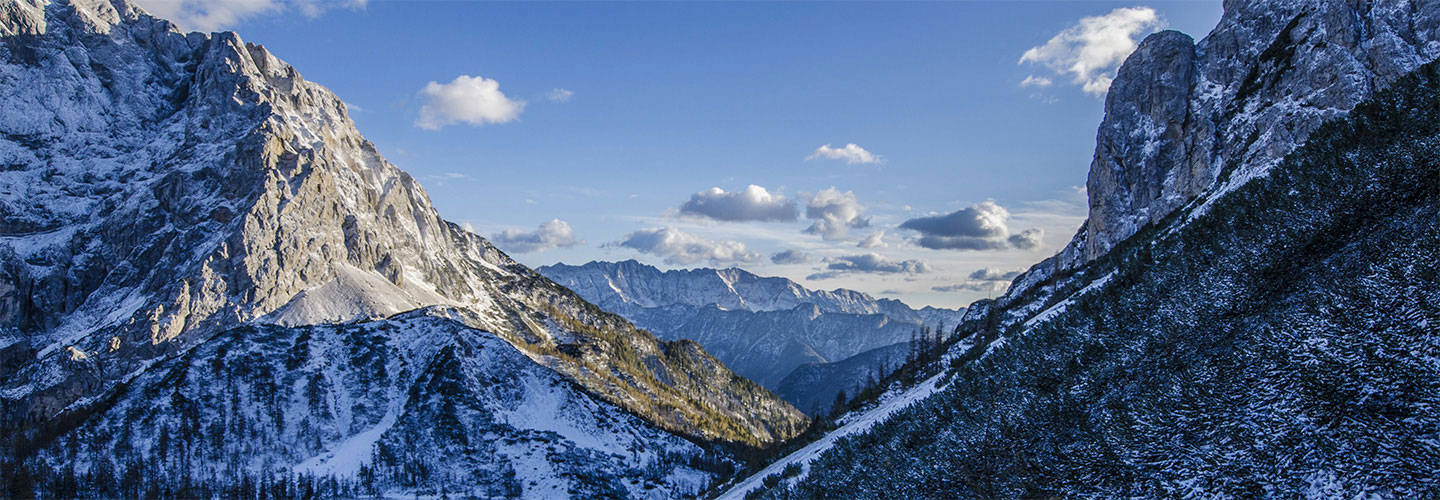
A while back EU foreign-policy chief Josep Borrell said “Europe is a garden.” He was fairly widely attacked, but I agree. Some parts are much less of a garden, but Europe is a garden.
However, Europe’s status as a garden is based on factors which are no longer true:
1) Vast military superiority.
2) Vast productive superiority
3) Vast technological superiority at producing and fighting.
This needs some unpacking. Prosperity is just how much goods and services you have. If a society has relatively low inequality, and enough goods and services, almost everyone may share in the prosperity, if not only some part of the society may be prosperous, and those will obviously be the people who have the most power within the society, though that doesn’t mean the richest people are the most powerful—the powerful people may just be prosperous enough. Nancy Pelosi is worth about $120 million. You and I will never see such money, absent hyperinflation, but she isn’t Jeff Bezos rich. Still, she and almost all members of Congress are inside the charmed circle.
To be prosperous, then, you have to create rather a lot of goods and services. If you don’t bother with radical inequality, you may need less of certain kinds and more of other kinds: comparing the 60s to the 2010s is instructive. Not a lot of private jets or mega-yachts and rent and houses were cheap, but there were a lot less luxury condos.
Now roughly speaking, there are three inputs to producing goods and services: labor, capital (meant here as machines and buildings and so on) resources. Any economics 101 textbook will tell you so, and it’s one of the few things in an economics 101 textbook that isn’t wrong.
Europe’s not a large place compared to the rest of the world. For most of its history, certainly after the collapse of the Roman Empire (and really a couple centuries before) it was a primitive and very nasty backwater. But starting in the late 1400s or so the Europeans became very good at warfare and seafaring. Having spent a millenium fighting each like cocks in a pit, they had an advantage over pretty much everyone else (and where they didn’t yet, like China, they walked small.) Along with spreading disease to the New World, killing upwards of 90% of the population) they were able to grab a lot more resources than they had before.
Understand that at this point Europe does not have a productive advantage: China and even India are much more productive. Before the European invasion, India has more industry than England.
But they have a military advantage, multiplied by plague and are able to grab much of two additional contents, the Americas, and then get (thru coercion and commerce, African slaves were mostly sold by their compatriots) slaves and peasants made out of the Americas people to labor for them, while colonizing with Europeans at the same time.
Then, in the 19th century, when England was the first country to properly industrialize, they exploded, conquering or subjugating essentially everyone. Even places which weren’t formally conquered, like Thailand or much of China (the century of humiliation) knew their place.
The world’s resources belong to Europe. There was that upstart semi-European colony the US and the peripheral semi-European Russians, but basically Europe, Russia and the US controlled the majority of the world’s resources, even where they didn’t rule. The world sent them raw goods, they sent back manufactured goods and “provided” services like government.
Then the Europeans fought two internal wars, and were divided up by the corner powers: the USSR and America. And yes, that is what happened. European countries in the West and East were (and still are) satrapies. Nominally independent, but not really, and operations like Gladio, which ensured governments wound up in charge that were friendly to the US, or the Red Army crushing Eastern European independence movements make that clear.
The USSR collapse, the Eastern European countries mostly joined the EU, and the EU grew in power, but Europe still remained a satrapy, pointed almost entirely now towards America. From this point of view, the Ukraine war is nothing but a conflict over whether Ukraine will be a Russia or American satrapy, as its desperate desire to join NAT and the EU indicate.
Europe had a window, especially in the 2000s where it could have become truly independent, but it chose not to and during the Ukraine war it has so far, with some grumbles, subjugated itself further to America. No longer willing to buy energy from Russia it has become vastly dependent on the US. Problem is that that Americans charge Europeans four times as much as the Russians did for natural gas. As a consequences, a great deal of industry is planning to move out of Europe, because they aren’t viable. Much of it is going to America, helping America re-industrialize by sucking away industry from its satrapies.
Likewise, as Europe had not built a large army and was dependent on American military manufacturing or military tech and manufacturing licensed from the US, to support Ukraine it needed America assistance. (US whining aside, not having to maintain a large military is one of the primary advantages of being a satrapy, and smart overlords don’t really want their satrapies to be too strong militarily.)
Going back to prosperity, you are prosperous when you have more stuff. Europe’s problem is that it’s gone from controlling the majority of the world’s resources, to having a lot less resources than it needs. It imports more than half of its energy requirements, for example, and it doesn’t have the minerals and rare resources it needs. For a long time, because of a remaining technological need, it was still more productive than most of the rest of the World and that meant nations had to send it their resources and get them back in completed form, and as satrapies of the overlord, they still received preferential access thru the methods of coercion used by the American empire.
And so, because for so long Europe had access to most of the world’s resources at preferential rates (directly, or in the American era because they were the favoured satrapies) and had among the highest tech and thus were highly productive, they were able to create their “garden.” And an amazing and beautiful garden it was, and to some extent remains.
But, now that they are just satrapies, without colonial empires and with limited ability coerce other nations if the US doesn’t help them (France, really, is the only one to still maintain a decent unilateral ability to kick around a few minor African nations), their access to resources is based on the strength and generosity of their satrap.
This worked pretty well for a long time, but then there was the rise of China. China became the world’s foremost manufacturing power, caught up in almost all technologies (chips and aviation are being fought over so fiercely because they are almost the last bastions where China has not caught up), and nations had options: they didn’t have to sell thier raw resources to the US, Europe and to countries hosting outsourced and offshored Western industry. They could go to China. And China offered and offers cheaper loans, cheaper good and builds ports, railroads, hospital, power generators and even entire cities and does it for far less than the West.
The American empire has involved a lot of military coercion, but the primary coercion was economic. Up until the nineties it was usually of the “you can only get it from us” variety, and since the 90s it has been “we’ll lock you out if you don’t cooperate”, but all of it was based on “you have no choice. Only we can really make the things you need, plus you can’t defend yourself against us, and we have so much money we can buy a faction of your elite to coup your government if you don’t cooperate.”
Europe rode piggyback on that, and after some lessons after WWII understood that if they didn’t want to be couped, they would make sure their governments were acceptable the US. Only France ever dared significantly buck the system and even they eventually came back into the fold, albeit muttering curses under their breath.
Now, let’s talk about Europe and Russia. Russia was providing energy cheaper than Europe can get it anywhere else. A lot of it, and had Nord Stream 2 come on line, they would have been able to double it, which would have made Europe’s energy bill even cheaper and most importantly, Germany’s, since Germany is the productive and industrial powerhouse of Europe.
This is why German politicians especially, before the war, resisted US efforts to shut down Nord Stream 1 and 2 and its why the pipelines were sabotaged (probably by the US, though the formal investigations will never say that.)
Even if Europe wanted to remain an American satrapy, and all indications are that current EU elites do want to, they wanted to reduce the cost of important resources and assure access to them because Russia, again, was willing to sell them for a lot less than anyone else and way less than the US was.
This made industry viable. It is no longer a world where people have to buy from the US/Europe/Japan/Taiwan/hangers on because they (we) are the only game in town. They can buy from China, and China is cheaper. To compete, Europe had to keep its costs in control and in some areas offer better quality or some of the few goods that China can’t create (often to China, as it happens.)
Without trade, Europe, which no longer has coercive ability, cannot get what it needs. The Euro is not the dollar. People take it because they expect they can do business with the EU at some point. It’s relatively liquid, but it is only secondarily backed up by the US military.
The European garden was based on having access to more resources and to being more productive than all or most of the rest of the world with those resources. This was based on having a tech and military lead, allowing for coercion. After WWII it was based on “we are the favored satraps of the US empire and still have a tech and productive lead so we have access to the resources.”
Bu that is going away. The tech lead is almost gone. The productive lead is gone in most industries and the access to resources is declining, because China can now make better offers in most cases. Now add in refusing to buy cheap Russian energy and minerals and replacing them with more expensive substitutes, when substitutes can be found at all, and consider the European future.
Europe doesn’t have enough resources, and doesn’t have a productive or technological advantage significant enough to maintain its “garden” in the face of the rise of China. The trade alliance between Europe/Germany and Russia was an attempt to keep European industry viable by keeping costs down.
At this point, Europe is in a race where they must either be cheaper (by being more productive) or have an absolute advantage (you can’t get this from anyone else, or at least not from China), in order to maintain their industrial base. Without cheap Russian energy and minerals, this is going to be a lot harder.
So then, you may ask, what about moving to renewables.
Well, they will work to some extent but they still require resources, just not as much fuel. Europe recently sanctioned imports from Xinjiang in China for human rights reasons. Turns out most of the silica required for solar panels comes from there. Then, of course, there is the refusal to use nuclear power, which is required to make renewables work by providing baseline power. In the middle of a crisis where German industry is fleeing to the US because of high energy prices, Germany will not turn back on its nuclear reactors for even a few years to transition over.
But bottom line, even with renewables, resources are still needed as inputs for industry in order to produce goods and if you don’t have a lot of military or economic coercive power (like the US had and still has, though it is declining precipitously) that means you wind up losing your prosperity and becoming like all those countries in African, Asia and Latin America who can never seen to get to developed status.
You “un-develop.” My money is on Britain (soon England) to be the world’s first undeveloped nations.
But the smart money is that over the next few decades, that will be true of much of the EU. Perhaps a few countries in Europe will manage to hang on, but not most.
Happens to everyone eventually. All eras come to an end. The job of modern EU politicians was to keep it going and to make it possible for the next generation to keep it going.
Looks to me like they’re failing.
DONATE OR SUBSCRIBE