
Japan has, since the mid 90s, had very low interest rates. The Japanese carry trade was to borrow in Japan and invest in America. You didn’t even need to take any real risk. Borrow Japanese, buy safe bonds in the US that paid more. Or you could use the money for riskier bets.
This has been going on for more than half my life and I’m not young. It was one of those money spigots that insiders and wealthy people have access too, but most of the rest of us simply watch: free money for some.
Now it’s coming to an end. The Japanese Yen is under immense pressure and so far interventions have not done squat. So the Japanese are raising interest rates.
But more than that they’re selling large chunks of their US treasuries in interventions, and Japan is the largest holder of US government debt outside of America. (China is second.)
This happens at the same time as the US bond market is breaking. Treasury literally can’t sell all of its bonds. Rates are high, about at 2007 levels, and they’re selling short term bonds and using that to buy their own long term bonds.
Add to this issues with oil and distillates, especially diesel, the fact that the US military is basically out of a lot of weapons and has lost a war.
Then there’s the real-estate market:
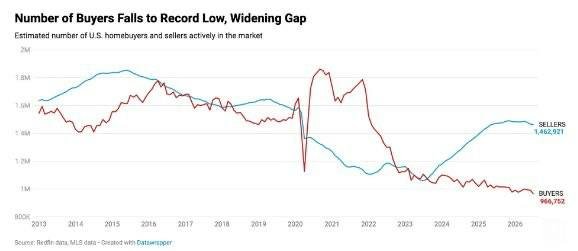
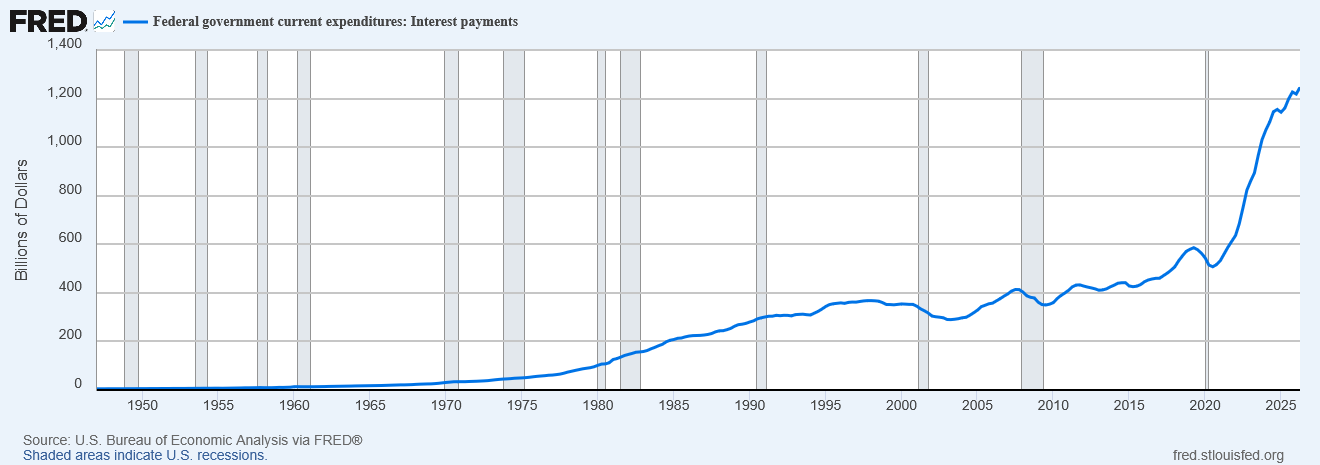
America and Americans are under a lot of stress. Because interest rates are high and Biden and Trump love to spend but not tax there are also soaring interest payments on the US debt.
Now the big advantage the US has over most countries is that its debt is denominated in its own currency. The federal government cannot go bankrupt unless elites lose their will to print money, which so far they haven’t. They’ve printed literal trillions since 2008, though it’s concealed by pretending that Federal Reserve operations which create money out of mid air to keep rich people rich aren’t money printing.
The result was massive inflation in the top end, and a drying up of businesses aiming at the middle class and poor. You see this most clearly in Las Vegas, which used to have cheap rooms and food but now doesn’t, because why cater to people who have no money?
(In China prices are low, even at luxury hotels, because there is a mass market like the one the US had in the 50s and 60s.)
After all this add in the AI bubble and fertilizer and diesel shortages hitting farmers.
The entire system is cracking apart.
The smartest money isn’t the money that has been plunging into the AI bubble, it’s the people who have kept their powder dry, because as everything goes to hell, there will be significant buying opportunities. Warren Buffet, for example, built up a huge amount of cash, though his successor has spent some.
In a serious economic crisis, and one is coming, you can buy up companies and assets (and all those homes, which you then rent at profit maximizing rates which leave millions homeless) for cents on the dollar.
As for you, dear reader, well, probably you won’t be able to take advantage of this, any more than you could in the bounce after 2007.
The Federal Reserve and other central banks will have to decide whether or not to do bail outs, and whether or not to bail out the rich or ordinary people. They’ll choose the rich. But there is a problem with the whole “America’s debt is in dollars so it doesn’t matter theory.”
America’s a net importer. It has less and less to sell to the world that the world needs. There has been a slow but consistent move away from the US dollar as a reserve currency, a movement away from settling trade in US dollars and China’s now forcing companies to choose between America and China. If you enforce US sanctions, they’ll fine you and if you don’t pay, you’ll lose access to their market.
Ultimately the US dollar’s value comes from US strength: economically and militarily. Like the British Pound (which was once worth five times or more than the US dollar) it can be expected to lose value because there is simply less need for it. Everything you really need you can get somewhere else, unless like Europe, you’ve sanctioned other suppliers so much you’re destroying your own economy.
Anyway, all of these things all happening at the same time is all sorts of bad news. I’d expect some sort of financial crisis within a year and it will be a doozy. Wherever it starts it will hit everything in the US and Europe and the Anglosphere and much of the rest of the world. Central banks will have to spent trillions in another bail out.
But this will be the last major US bailout, because after this there will be nothing. The US will not have the tech lead in almost anything, is not creating the world’s future techs other than AI (which China is winning, anyway) and will have lost much of its military intimidation factor.
Welcome to the end of the American Empire. You’ll see it in food shortages, high prices and an elite determined to become an elite similar to India’s or much of South America’s: ruling over essentially poor nations, but filthy rich amongst the rubble.
What I write here is for the benefit of everyone, but alas, I live in capitalism and I, and the site, take money to keep running. If you value the writing here and can, please subscribe or donate.
spud
the feds can just buy the treasuries. but in the initial treasury offers, they go first to the big banks, who have more buyers than offers. its the secondary market that has trouble.
FDR ordered the treasury to issue bonds, have the fed buy them then the treasury ordered the bonds retired.
government has the money, no debt tied to it.
the real debt problem is the balance of payments, that is the trade deficit, and all of those military bases around the world to enforce free trade.
and this is where the debt problem comes from, it was widely known about in 1993, but the profits of the private sector parasites were all important and catered to.
the real debt problem is the private sector, and i to feel the capitalist parasites will get bailed out.
but to now avail, we make nothing, and the chinese will simply flood the west with just about everything we used to make, but they will make it better, and far far cheaper. plus clinton gave them all of our technology, on a silver platter. now china has created far superior technology, out of what the american tax payer helped to fund. you simply can’t make this stuff up.
so the profits of the rich parasites will evaporate, along with any paper assets they own like patents, copyrights, and stocks.
the west will go into a massive depression where the guns will come out, and the shooting will start, and its all tied to just one mans policies from 1993-2001.
———–
Bill Clinton’s administration implemented free trade policies, including NAFTA, which some critics argue contributed to economic imbalances and increased debt. However, supporters claim these policies fostered economic growth during his presidency.
Wikipedia Dissent
Free Trade Policies Under Bill Clinton
Overview of Free Trade Initiatives
During Bill Clinton’s presidency, significant free trade policies were implemented, most notably the North American Free Trade Agreement (NAFTA). These policies aimed to reduce trade barriers between the United States, Canada, and Mexico, promoting economic growth and job creation.
Concerns About Economic Imbalances
Critics of Clinton’s free trade policies raised concerns that they could lead to economic imbalances and increased national debt. They argued that deregulation and the push for free trade might have contributed to long-term financial instability. Some experts warned that these policies could create a “bubble economy,” which ultimately could lead to adverse economic consequences.
Support for Free Trade
Despite the criticisms, supporters of Clinton’s economic policies argue that these initiatives were instrumental in fostering economic growth during his administration. They point to the record job creation and overall economic expansion as evidence of the success of these policies.
Summary of Perspectives
Perspective Key Points
Critics – Warned of economic imbalances and increased debt due to free trade.
Supporters – Claimed free trade fostered economic growth and job creation.
In summary, while there were warnings about the potential negative impacts of free trade policies during Clinton’s presidency, supporters believe these initiatives contributed positively to the economy at that time.
Wikipedia Dissent
NAFTA, enacted during Bill Clinton’s presidency, led to a net loss of approximately 700,000 jobs in the U.S. while significantly increasing trade between the U.S. and Mexico, resulting in a trade deficit with Mexico that grew over time. Although it aimed to boost economic growth and job creation, many American workers faced increased competition and job displacement.
epi.org University of California
Free trade policies in the 1990s contributed to a significant increase in the U.S. trade deficit, which was influenced by a decline in national saving and rising investment demands. This period saw the U.S. accumulate large trade deficits, reflecting broader economic imbalances rather than direct causation from trade policies alone.
iatp.org wita.org
The U.S. trade deficit for the 12 months through January 2026 was $837.82 billion, with a total trade deficit of $54.5 billion in January 2026 alone.
U.S. Senate bea.gov
U.S. Trade Deficit Overview for 2026
Monthly Trade Deficit Data
The trade deficit for the United States has shown fluctuations throughout 2026. Here are the key figures:
Month Trade Deficit (in billion USD)
January 54.5
February 57.3
March 60.3
April 55.9
May 77.6
June 73.3
Year-to-Date Trade Deficit
As of June 2026, the total trade deficit for the year has been significant. The cumulative trade deficit for the 12 months leading up to January 2026 was $837.82 billion. The monthly deficits indicate a trend of increasing trade gaps, particularly in May, which saw a notable rise.
The trade deficit narrowed from May to June 2026, decreasing from $77.6 billion to $73.3 billion.
The overall trend for 2026 shows a substantial trade deficit, reflecting ongoing economic dynamics and trade relationships.
This data provides a snapshot of the U.S. trade deficit situation as of mid-2026, highlighting the challenges in balancing imports and exports.
bea.gov U.S. Senate
——–
the war will explode the balance of payments problem even further.
spud
so far, the main banks have not said no to treasuries, and this goes back many many decades. to banks, its almost free money.
its the secondary market that is having trouble, which points to a private sector debt problem.
if the treasuries do not sell on the secondary market, the treasury can order the fed to buy them, and retire them.
but that does not fix the private sector debt problems that arouse because of bill clintons disastrous policies.
————–
Banks are often eager to purchase U.S. Treasuries because they are considered safe and liquid assets, essential for managing liquidity risk. This high demand is due to the Treasuries’ role in financing the U.S. government and their importance in the financial system.
Brookings bpi.com
Importance of U.S. Treasuries to Banks
Safe and Liquid Assets
Banks are often eager to purchase U.S. Treasuries because they are considered safe and liquid assets. This high demand stems from several key factors:
Financing the U.S. Government: Treasuries play a crucial role in funding government operations.
Liquidity Management: They are essential for banks to manage liquidity risk effectively.
Demand Dynamics
While it is not accurate to say that banks “never turn them down,” the demand for Treasuries is consistently high due to their perceived safety. Banks prioritize these securities for several reasons:
Risk Management: Treasuries are viewed as low-risk investments, making them attractive during economic uncertainty.
Regulatory Requirements: Holding Treasuries helps banks meet regulatory capital requirements and liquidity ratios.
In summary, U.S. Treasuries are a cornerstone of the banking system, providing safety and liquidity that banks rely on for effective financial management. Their importance in the financial system ensures that banks are generally inclined to accept them when offered.
Brookings bpi.com
Dan Kelly
‘America’s a net importer. It has less and less to sell to the world that the world needs. There has been a slow but consistent move away from the US dollar as a reserve currency, a movement away from settling trade in US dollars and China’s now forcing companies to choose between America and China. If you enforce US sanctions, they’ll fine you and if you don’t pay, you’ll lose access to their market’
China’s strict capital controls serve to strengthen the dollar as reserve currency which must exist (a reserve currency) so long as international equity markets exist.
China’s biggest payment handlers Wepay and Alipay are dominated by western institutional investors like Blackrock, Vanguard etc.
Prosus [Naspers] is Tencent’s largest shareholder.
Even without absolute voting control which China maintains they are nevertheless dependent on the trillions of dollars of western investment.
If those investors collectively pulled their money out, China’s top tech giants would collapse in value, its domestic venture capital ecosystem would dry up, and its economic growth would stall.
Voting power means nothing if you run out of capital.
China is dependent on the US consumer market.
Ian Welsh
No. The percentage of trade to the US has been dropping year on year and the investment is nice but no longer needed since the main reason it was useful was to get the tech when America was more advanced and when China wasn’t the main exporter to most of the world. You’re living ten years ago.
China would like to do business with the US, it is their strong preference.
But they have spent a decade making sure that they’re in a position to retaliate, hard, against any sanctions. If the US pushes this, they will lose. They are the weaker partner. Too many people are still living in the past, thinking US hegemony will be forever. It won’t, in fact it’s ending in front of our eyes, but some people can’t see it.
Dan Lynch
Ian said Treasury literally can’t sell all of its bonds.
False. Understand that there are 2 bond markets, the PRIMARY market, where Uncle Sam sells to primary buyers (big banks) and the SECONDARY market, where private parties sell to other private parties (and Uncle Sam also dabbles in the secondary market to deliberately manipulate prices).
By law, primary buyers must buy every newly issued bond that Uncle Sam sells, at whatever price Uncle Sam dictates. And the primary buyers are glad to do so because the alternative is to hold non-interest paying dollar bills. It’s basically a welfare program for banks, and banks lobbied to pass the law requiring Uncle Sam to sell bonds.
Then the primary buyer (banks) may turn around and sell its T-bills on the SECONDARY market, where the price is (on paper) determined by the market, EXCEPT for the fact that Uncle Sam dabbles in the secondary market, buying and selling enough bonds on the secondary market to effectively control the price. For most of our life the Federal Reserve owned about 5% of T-bills, but after the 2008 crash the Fed bought more T-bills to keep interest rates near zero, so Fed holdings increased, then increased some more during covid, hitting a peak of 25% of all T-bills in 2021. It has since fallen to 14%. I think there is a law passed by Congress that limits how many T-bills the Fed can buy, and off the top of my head I don’t know what that limit is, other than to say that in the past the Fed has bought up to 25% of T-bills.
To summarize, the practice of selling T-bills on the primary market and then letting the Fed dabble in the secondary market is 1) to subsidize banks and 2) to control interest rates. Interest rates are whatever the Fed wants them to be, by setting the price in the primary market and additionally by dabbling in the secondary market. If the Fed wants interest rates to be zero, then interest rates will be zero. If the Fed wants interest rates to be 20%, then interest rates will be 20%. So no, the Fed is not losing control of the bond market.
Because there is a legal limit how how many T-bills the Fed can buy on the secondary market, IN THEORY the Fed could lose control of interest rates if say Japan and China and Saudi Arabia sold more T-bills than the Fed could legally buy, but in practice that has never happened. When someone controls 20% – 25% of a market, whether it be the T-bill market or the market for oil or gold or beans or whatever, that is usually enough to control the price.
If Congress repealed the law requiring the Treasury to sell bonds and instead simply “printed money” to pay for deficit spending, that would be DEFLATIONARY (compared to the current situation) because the flow of interest payments to the private sector would dry up. Banks would be sad because they would no longer get interest on their legally mandated reserves, and hence banks lobbied for the law requiring the Treasury to sell bonds.
All that said, it is true that the U.S. is vulnerable because it outsourced its manufacturing and no longer produces much real stuff. The bigger issue is that our elites have chosen a financialized economy rather than a real economy, and that sucks for most of us, and it probably is not going to end well. Add climate change and stir.
Dan Kelly
I believe US hegemony is over and effectively has been for some time. My point is simply that given the way things are structured it isn’t going to be a falling off the cliff moment (I don’t think). It will continue to be a managed decline for the reasons stated.
This doesn’t mean it’s going to be a grand time for much of the US or world population.
https://youtu.be/t0A6k5Fl00Q?t=32
The thing that is so strange to me Ian is that everyone reporting on the potential misery to come does it with a smile on their face. All of the talking heads – including this Jeff Stein who does a great job – they are reporting on things that may cause mass misery beyond what we already experience. And may well be the ‘falling off the cliff’ moment that I desperately attempt to illustrate can’t structurally happen (China itself wouldn’t want it to).
But no one seems particularly worried. It’s fascinating.
—
https://www.youtube.com/watch?v=-HddWbURj_Y&t=188s
[This is a positive example of programmable currency! There are, err, a few downsides conveniently left unmentioned]
spud
Dan Kelly:
that barn door closed decades ago. Marx and lenin predicted it. it just took china a while to strip the capitalists bare with their eager blessings, and reduce them to vassals, whilst setting up defenses that we can no longer pierce.
china no longer needs us, its the opposite today. almost everything the modern world depends on, was financed by the american tax payer and our government, LCD screens, solar panels, integrated circuits, the internet, the guts of the cell phone, etc.
only to see bill clinton give it all away for free, dooming america into grinding poverty, and reliance on others for almost everything.
basically he turned a first world nation, into a third world banana republic.
————–
U.S. technology transfers to China often occur through various means, including trade agreements and investments, but these practices raise concerns about intellectual property theft and forced technology transfer. The U.S. has been increasingly cautious and is reconsidering its technology relations with China to protect its innovations.
econofact.org csis.org
Overview of U.S. Technology Transfers to China
U.S. technology transfers to China occur through several channels, primarily involving trade agreements and investments. However, these practices have raised significant concerns regarding intellectual property theft and forced technology transfer.
Channels of Technology Transfer
Trade Agreements: U.S. companies often enter into agreements that allow for the exchange of technology as part of trade deals.
Foreign Direct Investment: American firms investing in China may share technology with local partners, sometimes under pressure to do so.
Concerns Regarding Technology Transfer
Concern Description
Intellectual Property Theft There are fears that U.S. innovations may be misappropriated by Chinese firms.
Forced Technology Transfer Companies may be compelled to share technology as a condition for market access.
U.S. Response
The U.S. government is increasingly cautious about technology relations with China. This shift aims to protect American innovations and ensure that technology transfers do not compromise national security or economic interests. Measures include:
Reevaluating Trade Policies: The U.S. is reconsidering its approach to trade agreements with China to address these concerns.
Implementing Export Controls: Restrictions on certain technologies are being enforced to prevent unauthorized access by Chinese entities.
The ongoing dialogue about technology transfer reflects broader geopolitical tensions and the need for a balanced approach to international trade and innovation.
econofact.org uscc.gov
The risks of U.S. technology transfers to China under free trade agreements include the potential for forced technology transfer and the misappropriation of intellectual property, which can undermine innovation and competitiveness. Additionally, these transfers may support China’s military and strategic capabilities, raising national security concerns.
econofact.org uscc.gov
Feral Finster
The problem with moving away from the US dollar is that there isn’t really a good alternative.
Feral Finster
Provided for comment and not necessarily for truth:
https://cf40research.substack.com/p/chinas-consumption-is-not-nearly
cc
A YouTube video on the Yen Carry Trade
It’s Not Oil You Should Be Watching. It’s Japan
https://www.youtube.com/watch?v=agQu5Ei7Kbk
For years, the Yen Carry Trade was the grease in the wheels of the entire global financial machine. It kept everything running smoothly. It allowed those Wall Street hedge funds to borrow billions and pump it all into big businesses across America, and beyond.
Meanwhile, yesterday, US total public debt just reached $40 Trillion:
“Doom Loop” Engaged: US Debt Hits $40 Trillion As Treasury Enters The Endgame
https://www.zerohedge.com/markets/doom-loop-engaged-us-debt-hits-40-trillion-america-enters-endgame
Yet the US/West continues to print/borrow for war and destruction.
Per https://iran-cost-ticker.com/, by June 16, the US had already spent over $113 Billion on its full-scale war of aggression against Iran, with ongoing costs of $1 billion/day. That estimate was from about 64 days ago.
Carney here in Canada just exported hundreds of millions of dollars more out of Canada to continue to fuel the Empire’s war on eastern Ukraine and Russia, using Canadian’s tax dollars and expendable Ukrainian lives as cannon fodder. That’s all deficit spending, so it’s more debt that he piled onto the backs of of Canadian taxpayers, while interest rates are rising.
KT Chong
In another news, the once richest man in China — actually, in Asia:
https://www.youtube.com/watch?v=jdipo6kW_cU
RE: China Evergrande Founder Hui Ka Yan Sentenced to Life in Prison for Financial Crimes
KT Chong
Hui Ka Yan has two sons:
Xu Zhijian, the elder son, was the VP of Evergrande.
Xu Tenghe, the younger son, was the head of Evergrande Wealth Management.
Both got sentenced to prison for 18 years.
The Xu clan used their spouses and direct relatives to move, hide, and legitimize funds. China got (almost) the entire extended family — including the in-laws and the two daughters-in-law. All of them got asset-stripped and prison time.
BRUTAL.
Notes: “Hui” and “Xi” are the same character in Chinese. Hui is the Cantonese pronunciation. Xu is the Mandarin pronunciation.
KT Chong
The only one who got away is Hui Ka Yan’s “ex”-wife, Ding Yumei.
• She amassed a global property portfolio worth $285 to $350 million, including multiple premium properties in Vancouver and a £210 million mansion in Knightsbridge, London, (purchased by her “ex”-husband through an offshore entity and then transferred to her offshore entity.)
• In September 2022 — less than a year after Chinese regulators ordered her husband to use his personal wealth to pay off Evergrande’s debts — she quietly bought 33 luxury apartments in London’s high-end Thames City development for £49.8 million ($67 million).
• She used a “technical divorce” to hide her wealth and assets. In August 2023, Evergrande’s stock exchange filings suddenly stopped listing her as Hui’s “spouse,” and instead as a “third-party independent.” The Chinese authority quickly recognized this as a calculated move to legally sever her connection to Hui and hide billions of dollars in siphoned wealth.
• She used her foreign status — she held a Canadian passport — to flee and fly out of Hong Kong before the police could detain her. (Both her sons also had Canadian passports, but they were unable get out of China in time before Chinese authority closed in on them.)
• After fleeing China / Hong Kong, she used offshore shell companies registered in the British Virgin Islands to go on a massive luxury real estate shopping spree in Canada and the UK.
• She is currently in London and on China’s wanted list.
– – –
P.S. What kind of mom would let her two sons — her only two sons and flesh-and-blood — rot in prison while she ran and went on a shopping spree?
– – –
But karma has finally caught up. While she hid in a country that has no extradition treaty with China and avoided a Chinese prison cell, the global legal system has largely caught up with her in the past 12 months:
• Worldwide Asset Freeze: Courts in Hong Kong hit her with a global asset freeze as part of a $6 billion clawback lawsuit launched by Evergrande’s liquidators. The UK has honored those judgement, and UK courts have also made similar judgements against her.
• The UK has frozen her bank accounts containing millions. Last year a UK court has stripped her of her lavish lifestyle and placed her on a strictly enforced monthly living allowance of £20,000 ($26,000) to cover only baseline legal fees and basic expenses. Every single penny she spends must now be reported to the court.
– – –
Corrections: The two daughters-in-law were able to flee China in time, and are now living in London with Ding with two grandchildren. All three women are currently wanted by China.
Still, BRUTAL. You would never ever see any richest man or real estate tycoon and their family get this kind of treatment in America.
In America, he would have become the President.
Ian Welsh
Interest rates for bonds are not where treasury or the fed wants them. The actual secondary market is all bonds that have ever been sold, and that is much larger than the primary market with secondary auction.
Further Treasury bonds are sold in auction and banks say what interest rate they are willing to bid on.
Oh, and Japan is dumping massive amounts of bonds and it looks like they’re about to dump more.
spud
japan is in the same free trade mess, as is all the west. in fact, when we discuss the west, it also should include Japan, South Korea, Australia, and New Zealand, you can even toss Singapore in there. which i am sure most readers here know.
japans trade deficit is exploding. it has allowed even minor things like food packaging to be off shored. grocery prices are rising, not because they are imported, but because of the packaging.
so they are trying the old trick, devaluation. but in today’s world which started in 1993, everyone is trying the same tricks. all are failing.
goosing exports instead of internal reform, will only stave off the inevitable. in today’s world which has been destroyed by free trade/free market economics, there really is little chance to goose what’s not there anymore, demand.
————
Japan’s trade deficit has widened sharply to JPY 634.5 billion in July 2026, marking the third consecutive month of deficit as imports grew faster than exports. This trend reflects ongoing challenges, including a weak yen making imports more expensive and rising global energy costs.
Trading Economics haver.com
Overview of Japan’s Trade Deficit
Japan’s trade deficit has significantly widened, reaching JPY 634.5 billion in July 2026. This marks the third consecutive month of deficit, indicating ongoing economic challenges.
Key Factors Contributing to the Trade Deficit
Import Growth
Imports surged by 27.8% year-on-year, reaching a record JPY 12,146.3 billion in July 2026.
The increase in imports is primarily driven by:
Rising global energy costs.
A weak yen, which makes imported goods more expensive.
Exports have not kept pace with imports, contributing to the widening deficit.
The growth in exports has been inconsistent, reflecting broader economic uncertainties.
Japan’s trade balance has fluctuated over the years, with the current deficit being the largest since January 2026.
The country has faced persistent trade deficits since 2022, largely due to high import costs outpacing export growth.
Future Projections
Analysts expect the trade deficit to trend around -250.00 JPY billion by the end of the current quarter.
Long-term projections suggest a potential deficit of -400.00 JPY billion in 2027 and 600.00 JPY billion in 2028.
This ongoing trend highlights the structural challenges within Japan’s economy, particularly in managing import costs and enhancing export competitiveness.
Trading Economics evrimagaci.org
Japan’s trade deficit in 2026 is primarily driven by imports growing faster than exports, with imports surging 27.8% year-over-year to a record JPY 12,146.3 billion in July 2026 due to higher costs for energy and commodities, while exports have not kept pace.
Trading Economics qazinform.com
———-
the towering intellectual mental midgets running japan, have actually made deflation the law. same with any Vat tax country. a vat tax is a backdoor tariff. the only problem is, even if you do not consume foreign made products, you still have to pay the tax. so the importer gets off Scot free. you can’t make this stuff up.
you gotta wonder how long countries like this will be able to sustain this type of tax, when their citizens are heading into grinding poverty.
——————-
Japan’s consumption tax has been associated with deflationary effects, particularly after increases in the tax rate, which have historically led to reduced household consumption. This relationship suggests that higher consumption taxes can dampen economic activity and contribute to deflationary pressures.
Federal Reserve Bank of Richmond nomuraconnects.com
Japan’s consumption tax has been a significant factor in its economic landscape, particularly in relation to household consumption and inflation.
The consumption tax rate has changed several times, with notable increases in 1997 and 2014.
Each increase has been linked to declines in household consumption, suggesting a deflationary impact.
Deflationary Effects of Consumption Tax Increases
Reduced Household Consumption: Increases in the consumption tax have historically led to a decrease in consumer spending. This is evident from the tax hikes in 1997 and 2014, which coincided with drops in consumption levels.
Economic Activity: Higher consumption taxes can dampen overall economic activity. When consumers anticipate higher taxes, they may reduce spending in the short term, leading to lower demand and potential deflationary pressures.
Deflationary Pressures: The relationship between consumption tax increases and deflation suggests that such tax policies can contribute to a cycle of reduced spending and economic stagnation.
Long-term Economic Health: Continuous reliance on consumption taxes without addressing underlying economic growth may exacerbate fiscal challenges, as seen in Japan’s high public debt levels.
Japan’s consumption tax has been associated with deflationary effects, particularly following increases in the tax rate. This relationship highlights the importance of considering the broader economic implications of tax policy on consumer behavior and overall economic health.
Federal Reserve Bank of Richmond
Japan’s standard of living has been affected by stagnant wages and high housing costs, leading to hidden poverty despite the country’s developed status. Many Japanese people work long hours for insufficient material rewards, contributing to a perception of declining living standards.
Wikipedia noahpinion.blog
Japan is recognized as a high-income developed country, yet its standard of living has been impacted by several economic challenges. Despite its modern cities and extensive public services, many citizens experience hidden poverty due to stagnant wages and high housing costs.
Stagnant Wages: Real wages in Japan have been declining for decades, leading to a situation where many workers feel they are not adequately compensated for their efforts.
High Housing Costs: Housing prices, especially in urban areas, remain high relative to income. This situation is exacerbated by the asset price bubble of the 1980s, which inflated land prices.
Long Working Hours: Many Japanese people work long hours, often in monotonous jobs, without corresponding increases in pay. This culture of overwork contributes to a lower quality of life for many.
Income Inequality: While Japan is often perceived as an equal society, income inequality exists, with many individuals, particularly women and younger workers, facing challenges in securing well-paying jobs.
Quality of Life Indicators
Indicator Japan Comparison
Life Expectancy 84.9 years Higher than U.S. (79.5 years)
Per Capita GDP (PPP) 64% of the U.S. Lower than France (87%) and South Korea (92%)
Employment Rate (Aged 15-64) 74% Higher than U.S. (66%)
Japan’s standard of living reflects a complex interplay of economic factors, work culture, and demographic challenges. While the country maintains a high level of urban development and safety, many citizens struggle with the realities of stagnant wages and high living costs, leading to a perception of declining living standards.
Wikipedia noahpinion.blog
Stagnant wages in Japan have remained almost flat since 1990, contrasting sharply with other developed countries like the United States, where real wages are about 1.5 times higher than they were in 1990. This stagnation is particularly notable among G7 countries, as only Japan and Italy have experienced such prolonged wage stagnation.
nippon.com
Japan’s recent rightward political shift is significantly influenced by economic concerns, particularly rising living costs and poverty, which have led voters to seek stability and strong leadership. This shift is exemplified by the popularity of Prime Minister Sanae Takaichi, who has capitalized on these issues to gain support.
East Asia Forum rosalux.de
Dan Kelly
‘When someone controls 20% – 25% of a market, whether it be the T-bill market or the market for oil’
They control the oil price via CME group which is essentially the price-setter for around eighty percent of global crude and upwards of eighty percent of world agriculture.
CME group is controlled by Blackrock, Vanguard, State Street, JPMorgan et al.
CME is WTI is US domestic market.
They also control the Brent via ICE which detremines the price via ‘price discovery’ (!) for upwards of 70 percent of the entire international market.
They control even more of the global agriculture market.
The physical agriculture is dominated globally by the the ‘ABCD quadropoly’ – Archer-Daniels-Midland (ADM), Bunge, Cargill, and Louis Dreyfus – who control over eighty percent of the global grain and oilseed trade – the supply, the logisitics, the ports, the processing etc
And the financial guys at CME place their bets for them.
They operate together.
Dan Kelly
The problem is the Fed.
It takes money control away from the people and gives it to a pre-selected chosen few.
The stated purpose of the Fed is in fact to remove those pesky congresscritters from the all-important financial realm so of course it’s great, right?
This is how it works.
The seven members of the Board of Governors within the FOMC hold permanent, un-expiring voting seats on the FOMC.
They are all nominated by the U.S. President and confirmed by the Senate to staggered 14-year terms which is allegedly, again, to prevent political meddling but this is in fact how a handful of people control the money system.
The Fed Chair and these people are all selected and given to the president to be appointed and while there may be some surface theater around who gets selected, and perhaps the first dude or two may be rejected…the lady who is ultimately selected is theirs too.
These people are the public face carrying out the wishes of the bankers.
The NY Fed is the most powerful Fed branch and is the only branch to have a Permanent FOMC Voting Seat while the NY Fed president has a Permanent Un-Expiring Vote and serves as the FOMC’s Permanent Vice Chairman.
The New York Fed’s Open Market Trading Desk is the only entity authorized to execute trades when the Federal Reserve decides to raise or lower interest rates, create money, or do some ‘quantitative easing’.
They are the ones actually physically buying and selling trillions of dollars in U.S. government bonds – moving markets.
That’s it.
Ian Welsh
The CME monopoly is breaking because people (China) have noticed that real prices don’t track the market prices. ie. if you wanted to buy silver for a long time the physical price was higher than the “market” price.
IOW it’s not actually doing price discovery any more.
The real markets will move to Shanghai and the CME will become a backwater.
This is a 99% prediction. It will happen unless the CME cleans up its act, which I very much doubt it will.
Market manipulation only works up to a point, because there is a real economy and actual real ounces of silver or barrels of diesel exist and their actual price winds up being determined in the real market, not the futures market.
spud
Dan Kelly:
yep, get rid of the fed, its fascism.
Ian:
yep, everything the western world has done to control everything, is about to implode. the wealth they thought they had, will in many cases, evaporate, in some cases, just melts away.
i am old, but i hope it get to see it.
———
Marx argued that under capitalism, wealth held as money or financial assets can evaporate when crises disrupt accumulation, as financial products’ liquidity depends on sustained surplus value extraction.
pomoculture.org Marxists Internet Archive
Marx’s View on Wealth and Financial Crises
The Nature of Wealth in Capitalism
Marx believed that wealth in a capitalist system is often represented as money or financial assets. This wealth is not static; it is subject to the dynamics of the market and the economy.
Marx argued that during financial crises, the wealth held in the form of money can rapidly diminish. This occurs because:
Liquidity Dependence: The liquidity of financial products relies on the continuous extraction of surplus value. If this extraction is disrupted, the value of these assets can decline sharply.
Crisis Disruption: Economic crises can lead to a sudden halt in accumulation processes, causing financial assets to lose their value.
In summary, Marx’s analysis highlights the precarious nature of wealth in capitalism, emphasizing that it can evaporate during times of economic instability due to its dependence on ongoing surplus value extraction.
pomoculture.org atlassociety.org
Dan Kelly
‘Market manipulation only works up to a point, because there is a real economy and actual real ounces of silver or barrels of diesel exist and their actual price winds up being determined in the real market, not the futures market.’
The only ‘pure’ market is barter. Any time you create a market whereby a number stands for something tangible you have introduced an abstraction that is ripe for manipulation and that will ultimately lead to a ‘futures’ scenario of some sort for growth.
Historically the markets have always had futures.
And China’s strict currency-controlled domestic market operates some of the most hyper-active liquid domestic derivative markets in the world.
China has not problem whatsoever with futures markets.
Michael Hudson recently described the situation thusly:
‘This is the quandary facing the world. Unlike a problem, a quandary has no solution — within the given boundaries of what is “thinkable.”’
https://www.nakedcapitalism.com/2026/08/michael-hudson-u-s-war-against-russia-has-blocked-black-sea-grain-transport-as-well-as-the-persian-gulf-oil-trade.html#comment-4457123
Paul
I assume there’s a limit/check on the US’s ability to simply print money to buy its own debt even as the rest of the world is dumping Treasuries and refusing to buy more. But what is/are the mechanism(s) exactly, that make this unsustainable / infeasible?
spud
Paul:
the government does not even need to issue treasuries, they issue them to inject more income into the economy.
the feds can buy treasuries all day long, send the money to the treasury, and let the feds balance sheet explode. the fed can sit back and let them mature, then they are no longer on their balance sheet.
or, the government can just print money to pay debts and service government in dollars, the currency of the country.
wanna fix social security? why just issue bonds that pay higher then the 4% they do now. say 6-8% interest.
like bonds that social security buys now, only social security gets to buy those bonds.
the system is just so easy to understand, once you remove the blinders that the rich have built decades into trying to fool you.
the only limit to money printing, is that if you print way more than the economy can handle, you may well get high inflation.
hyper inflation is done on purpose to inflate debts away. that is another matter altogether.
japan is simply trying to devalue their currency, in the vain hope that they can export their way out of the free trade trap. its not going to work this time.