
Today’s headline news chronicles our triumphant, record-breaking petroleum exports: 6.4 million barrels a day. The highest weekly figure ever recorded. On the surface, it appears America may just make up in exports what the closure of the Straits of Hormuz prevents.
On the surface.
The reality of our domestic petroleum situation is more dire. The same week America exported record amounts of crude it quietly drew down its strategic reserve to the tune of 7.1 million barrels a day same week ending April 24. This represents the largest drawdown since 2022.
Let’s do some simmple arithmetic: drawdown strategic reserves by 7.1 mln and export 6.4 mln. Subtract and you get a net loss of 700,000 barrels a week. That’s the burn rate of crude oil. Not slack. Vanishing.
Adding insult to injury, Morgan Stanley reports that gasoline inventories are at their lowest level since well, ever. Yes, ever. By August gasoline reserves will freefall to 198 million barrels.
In reality, America is facing an unsustainable crude oil burn rate coupled with a completely unsustainable draw down in gasoline reserves. These drawdowns are occurring in the face of perilously high petroleum prices, including gasoline.
But domestic petroleum production, and refining capacity will make up the difference!
What part of unsustainable did you not understand?
For example, the oil refinery on Corpus Christi Bay here in South Texas is effectively off-line because it has no water source. Lake Corpus Christi is dry. No water, no refinery, no gasoline.
To make matters worse, domestic crude production is trending flat to down, even as WTI spot prices are in the $102 range.
Permian Basin rig counts, a leading indicator of what future crude production will look like, are down 15.33% YoY. Oklahoma rig counts are down from 55 last April to 43 today. That’s a -21% decline YoY. New Mexico dropped 3 rigs and Wyoming dumped 1. What about Eagle Ford shale oil you ask? At $102 a barrel shale has to be profitable. True, but there hasn’t been a drilling permit issued in the Eagle Ford basin in three years. None have been filed with the state since the crisis with Iran began. There’s a reason for this. WTI spot prices are $102 a barrel, as I previously noted. Those are spot prices for oil deliverable right this minute. If you go 12 months out on the contract curve to May 2027, the price of WTI Falls to $73 a barrel. At that price shale oil isn’t in the sweet spot.
Moreover, what the prices in May 2027 are telling policy makers, factory owners, grocery store managers, freight shippers and the like in bright red flashing lights are that a deflationary spiral is a very real possibility.
Here’s where the rubber hits the road: the petroleum and gasoline burn rate will force the Fed’s hand and compel a rate increase to prevent a massive inflationary spike.
But what is the Fed to do six months to a year from now when the looming credit crisis, and housing collapse reach critical mass and unravel, popping the AI bubble the blowoff?
We’re literally exporting our seed corn.
You can’t reap what you don’t sow.
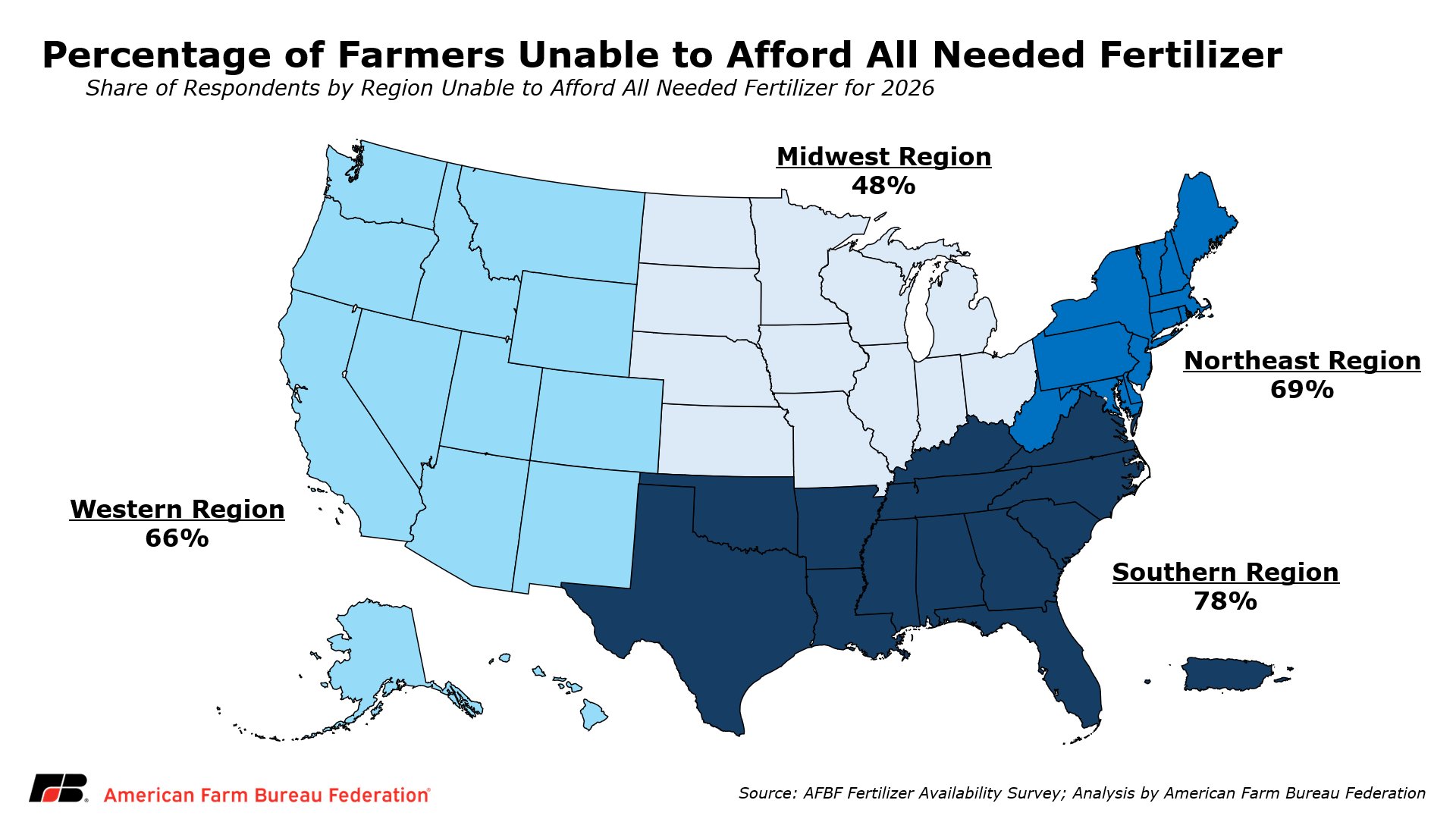
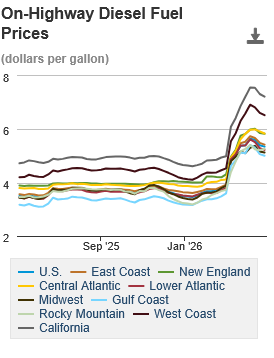 Most farmers use tractors. Most tractors use diesel, and those prices are rising too. They will continue to rise because the oil which is being restricted is the best oil for creating distillates like diesel, bunker fuel (ships) and jet fuel.