Ian Welsh

The horizon is not so far as we can see, but as far as we can imagine

Week-end Wrap – Political Economy – November 17, 2019

by Tony Wikrent
Economics Action Group, North Carolina Democratic Party Progressive Caucus

Strategic Political Economy

Senate Democrats Join GOP to Back ‘Automatic Austerity’ Bill That Would Gut Social Programs, Hamstring Bold Policies [Common Dreams., via Naked Capitalism 11-15-19]

I include this here because the next link directly addresses the persistence of economic austerity as a policy idea, despite it having failed repeatedly, and causing misery for untold millions of people.

A handful of Senate Democrats joined forces with Republicans last week to advance sweeping budget legislation that would establish an “automatic deficit-reduction process” that could trigger trillions of dollars in cuts to Medicare, Medicaid, food stamps, and other social programs—and potentially hobble the agenda of the next president.

The Bipartisan Congressional Budget Reform Act (S.2765), authored by Sens. Sheldon Whitehouse (D-R.I.) and Mike Enzi (R-Wyo.), passed out of the Senate Budget Committee on November 6. The legislation is co-sponsored by five members of the Senate Democratic caucus: Whitehouse, Mark Warner (Va.), Tim Kaine (Va.), Chris Coons (Del.), and Angus King (I-Maine).

Lambert Strether added: “I really can’t think of a worse characterization for austerity proponents than “deficit scold,” though for some reason liberal Democrats like it. “Deficit scolds” are slaves to the ideas of long-dead economists and have caused a lot of suffering and death. They’re vicious sociopaths, not scolds.”Against Economics

David Graeber [New York Review of Books]
This is one of the best indictments of mainstream economic thinking I have seen in years, and I urge a full and attentive reading of it. In the excerpt below, note the role of John Locke, after whom the big Art Pope- and Koch-funded conservative propaganda outfit in North Carolina, the Locke Foundation, is named.

In England, the pattern was set in 1696, just after the creation of the Bank of England, with an argument over wartime inflation between Treasury Secretary William Lowndes, Sir Isaac Newton (then warden of the mint), and the philosopher John Locke. Newton had agreed with the Treasury that silver coins had to be officially devalued to prevent a deflationary collapse; Locke took an extreme monetarist position, arguing that the government should be limited to guaranteeing the value of property (including coins) and that tinkering would confuse investors and defraud creditors. Locke won. The result was deflationary collapse. A sharp tightening of the money supply created an abrupt economic contraction that threw hundreds of thousands out of work and created mass penury, riots, and hunger. The government quickly moved to moderate the policy (first by allowing banks to monetize government war debts in the form of bank notes, and eventually by moving off the silver standard entirely), but in its official rhetoric, Locke’s small-government, pro-creditor, hard-money ideology became the grounds of all further political debate.

According to Skidelsky, the pattern was to repeat itself again and again, in 1797, the 1840s, the 1890s, and, ultimately, the late 1970s and early 1980s, with Thatcher and Reagan’s (in each case brief) adoption of monetarism. Always we see the same sequence of events:

  1. The government adopts hard-money policies as a matter of principle.
  2. Disaster ensues.
  3. The government quietly abandons hard-money policies.
  4. The economy recovers.
  5. Hard-money philosophy nonetheless becomes, or is reinforced as, simple universal common sense.

How was it possible to justify such a remarkable string of failures? Here a lot of the blame, according to Skidelsky, can be laid at the feet of the Scottish philosopher David Hume.

Conference at Harvard Law School, December 2018 [Youtube, January 31, 2019]

The way we approach money shapes the moral implications that attach to its design and use.  If money is a commodity or private trade credit that emanates from decentralized exchange, it might claim democratic legitimacy from its very genealogy. But if money is a matter engineered out of public debt and issued into circulation selectively, it has a very different relationship to democracy, one that raises the moral stakes for its creation and deployment within a community.

The Carnage of Establishment Neoliberal Economics

[Wolf Street, , via Naked Capitalism 11-14-19]

More than 100 National Security and Foreign Policy Experts Call on Congress to Tackle Anonymous Shell Companies (letter) (PDF)
Open Thread

Use the comments to discuss topic unrelated to recent posts.

It’s Not OK to Think Everything Is OK or Getting Better and Better

Globe on FireI’ve discussed the “better-than-ever world” argument before. I find it questionable, for a number of reasons and if that interests you, read the linked article and the articles to which it links.

What I’ve been paying attention to lately is WHO likes and buys into this argument.

They fall into two groups: the first are techies, the second are neoliberals.

We’ll start with neoliberals first. Neoliberals want to claim that everything’s going great so they don’t have to make serious changes. If even the poorest are getting better off rapidly (50K a week, I saw as a recent claim, for improvements in “dire poverty”), then all that is required to the current system are tweaks: It’s working.

More importantly for the neoliberals, if the world is better than ever, the people who have the most don’t have to give anything up–not money, or power, or the way they do things. What they’re doing is basically working, their being rich and powerful isn’t hurting the poor; in fact, it’s lifting the poor up!

So statistics have to show that poor people are getting better off, and if a few show that the poor in parts of the first world aren’t (like certain groups in the US having decreased life expectancy), well that cost has been far outstripped by all the people lifted out of poverty elsewhere and why care more about Americans than people objectively worse off in other countries?

The world order is basically fine. No need to do more than “bend the curve,” as Obama famously said.

Techies have some of the same reasons, especially those who are doing well, like the ones who run Silicon Valley, or who are very well paid. The world is fine, no need to change what’s working.

But there’s something deeper to it for the techies. While neoliberals want to defend neoliberal capitalism–which is why they get offended when one points out that China used mercantalist capitalism to lift people out of poverty. Almost all poverty gains, no matter how you slice the numbers, have been made in China and China DID NOT do what economic orthodoxy says you’re supposed to do.

Techies don’t care about that. Instead they want to defend their legacy and current actions. Forget capitalism, communism, fascism, and all that guff: Really, virtually all the gains of the last 250 years come down to using hydrocarbons to power various engines.

Technological progress is the actual driver of what’s happened. Modern techies identify with the engineers and scientists of the past, especially now that programmers like to call themselves engineers.

Likewise, the computer/internet/telecom revolution which has been driving new industries (I wouldn’t quite say “growth”) since the mid 70s or so is their child, their project. They either worked on it or are still working on it. The world must be doing well because they created it or are creating it, or are maintaining the technology it runs on, the technology that is really responsible for supposed welfare gains.

They believe they are good people, who do good work, and therefore the results of their work must be good.

We all want to believe that the order for which we are responsible, the work we do, and the economics that works to our benefit, is justified, because we want to believe we are good people.

Neoliberals, elites, and techies feel they have created this world. Therefore, this world must be a good one.

Techies also want to think that technology can solve everything, because it’s what they’re good at. And hey, it does demonstrably work. It’s just not clear that it can do everything, or do everything soon enough, since we all will, well, die.

Anyway, the larger point of this is simple: We argue over these things because they are about legitimacy and people’s self-esteems and self-images.

Of course those (like myself) who oppose the current neoliberal order want these figures to be BS. We want to be able to argue that change is urgent, and needed, and that the existing order has failed.

It’s good to understand that, no matter what side you’re on. What do you WANT to believe. Then see if you’re still justified.

Of course, I think I am. This doesn’t mean there’s been no progress, there has. I just think the numbers are wildly over-inflated outside of China, and the progress is unsustainable due to climate change and the impending environmental collapse. I can live like a king if I have a ten million dollar credit card limit, but if I can’t pay it back, eventually that ends.

Also I grew up in the development community. My father worked for the UN’s Food and Agriculture Organization (FAO) in Bangladesh, and had worked before in various other developing countries. I spent time in India, and so on. I listened to development workers talk about what worked and (mostly) what didn’t. There are more cynical (or rather, realistic) groups in the world, but not many.

So there’s always been an off-smell to these numbers to me. I know what works for development (mercantalist policies with the cooperation of the current hegemonic powers, and virtually nothing else, unless you’re a city state) and what doesn’t (anything orthodox development economists tell you to do).

I know who’s been allowed to actually bootstrap up and industrialize (American allies and China–because they bribed American leaders), and who hasn’t (almost everyone else).

And I know something else: If you’re forced off your land into a slum, you make more money, but you’re worse off. The economic and Western obsession with $$$$ as a measure of quality of life is unwise. Even calories (though better) are not great, because for example, when NAFTAs tortilla manufacturers were bought out after NAFTA, their nutritional content plummeted.

So it all smells off, to me.

But even if it didn’t, even if it was all true–that the world was “never better,” radical change is needed because climate change and ecological collapse are on their way, with the leading edge already causing problems. We can’t even keep industrializing the way we have been. If every developing country was allowed to industrialize properly, and we gave them what they needed to do it, we’d just bury ourselves deeper.

The fundamental WAY we have run our economies, both in terms of any type of capitalism (and communism back when, but they’ve been gone for 30 years now, so grow up) and in terms of technology is fucked. Fucked. It cannot continue or we risk civilization collapse. Worse case scenarios are great die-offs which take us down too. Good case scenarios are one or two billion deaths.

No matter what, we are past the point where we aren’t going to be able to change the environment in a way that prevents the climate from being fundamentally warmer and different from the environment and climate which has existed for the entirety of human civilization.

That’s not an economic or technological system which is more or less OK, or producing more or less good results even IF the triumphalists were right about everything.

It requires change, and radical change, if we are to avoid, not disaster (we’ve already had those), but multiple catastrophes of civilization-shaking levels.

It’s not OK to think everything is OK.


The results of the work I do, like this article, are free, but food isn’t, so if you value my work, please DONATE or SUBSCRIBE.


Bolivia’s Evo Morales Forced Out of Presidency

Evo Morales

Well, strictly speaking he resigned, but not only has the military come out against him, his followers’ houses were being firebombed and the guards at the presidential palace left.

“Resign or die” is the fairly-clear message. This is how you force a politician out.

Did he cheat on the election, as he’s been accused of? I don’t know, but I do know that, absent the military turning on him, he’d still be in office.

What we’ll see now is if the violence continues: If there is a right wing “militia” sweep which sees the murder of his supporters, along with rape and torture.

If so, then yeah, it was a right-wing coup.

Morales was virtually the last South American left-wing leader. They’ve almost all been swept from power over the last few years. This is because commodity prices crashed. Their prosperity was based on high commodity prices.

Nonetheless, Morales dropped poverty rates by half, and unemployment by a third. He was unquestionably good for most Bolivians.

However, because these leaders never secured the state’s coercive apparatus, they were relatively easy to get rid of (with the exception of Venezuela and to a lesser extent Peru). For example, the situation in Brazil, wherein Lula was forbidden to run (because they knew he’d win) due to corruption charges, after which the prosecutor who charged him joined the new government.

Left-wing governments need to control key parts of the state apparatus: the military, police, and courts. They also need a press which is at least neutral. If they don’t control these thing, when they lose power it often results in horrible consequences: firebombings, imprisonment, death squads, rape, and torture.

This isn’t a game. The people on the other side are rich, ruthless, and scared, and they will do anything to keep power. They don’t play by the “rules.”


The results of the work I do, like this article, are free, but food isn’t, so if you value my work, please DONATE or SUBSCRIBE.

Week-end Wrap – Political Economy – November 10, 2019

Week-end Wrap – Political Economy – November 10, 2019

by Tony Wikrent
Economics Action Group, North Carolina Democratic Party Progressive Caucus

Strategic Political Economy

Yanis Varoufakis – Capitalism, Democracy and Europe
[Brave New Europe, via Naked Capitalism 11-7-19]

The first two decades after World War II were the Golden Era of capitalism for a very simple reason: Franklin Roosevelt’s New Deal was projected onto the rest of the West under the Bretton Woods system. It was a remarkable, though imperfect, system, a kind of enlightenment without socialism. Structures to restrain financial capital were put into place. Banks could not do as they pleased; that’s why bankers hated the Bretton Woods system. Recall that Roosevelt banned bankers from attending the Bretton Woods conference and subjected them to reserve controls and rules against shifting money across international borders.

The result of the Bretton Woods system was a remarkable reduction in inequality concurrent with steady growth, low unemployment, and next to zero inflation.

Note that this  “Golden Era of capitalism” is never discussed in the same way by conservatives and libertarians, because of their ideological hostility to Roosevelt and the New Deal. 

The Carnage of Establishment Neoliberal Economics

The World Has Gone Mad and the System Is Broken

Ray Dalio [LinkedIn, via Naked Capitalism 11-6-19]

Money is free for those who are creditworthy because the investors who are giving it to them are willing to get back less than they give. More specifically investors lending to those who are creditworthy will accept very low or negative interest rates and won’t require having their principal paid back for the foreseeable future. They are doing this because they have an enormous amount of money to invest that has been, and continues to be, pushed on them by central banks that are buying financial assets in their futile attempts to push economic activity and inflation up. The reason that this money that is being pushed on investors isn’t pushing growth and inflation much higher is that the investors who are getting it want to invest it rather than spend it. This dynamic is creating a “pushing on a string” dynamic….

At the same time as money is essentially free for those who have money and creditworthiness, it is essentially unavailable to those who don’t have money and creditworthiness, which contributes to the rising wealth, opportunity, and political gaps. Also contributing to these gaps are the technological advances that investors and the entrepreneurs that I previously mentioned are excited by in the ways I described, and that also replace workers with machines. Because the “trickle-down” process of having money at the top trickle down to workers and others by improving their earnings and creditworthiness is not working, the system of making capitalism work well for most people is broken.

This set of circumstances is unsustainable and certainly can no longer be pushed as it has been pushed since 2008. That is why I believe that the world is approaching a big paradigm shift.

Given the pent-up demand to create and build what the world needs to exit the era of fossil fuels, this situation is insane.

Open Thread

Use this thread to discuss topics unrelated to recent posts.

There Are No Good Billionaires (Bill Gates Edition)

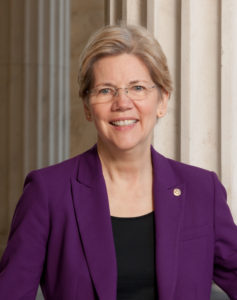
So, Elizabeth Warren has a two percent wealth tax plan with three percent on people with more than a billion dollars. She’s suggested raising the over a billion percentage to six percent… And Bill Gates says….

I’m all for super-progressive tax systems,” he said. “I’ve paid over $10 billion in taxes. I’ve paid more than anyone in taxes. If I had to pay $20 billion, it’s fine.

“But when you say I should pay $100 billion, then I’m starting to do a little math about what I have left over,” he added. “You really want the incentive system to be there without threatening that.”

Mr. Gates is the second-richest person in the world, according to Forbes magazine, with a net worth of $106.2bn.

Well, of course, she didn’t say that, she said six percent. A little over six billion in the first year. Bill’s 64, and of course, the actual nominal amount will decrease each year unless he can grow his money faster than six percent, in which case, what’s the problem?

Elizabeth Warren

He’ll never, ever be anything less than a multi-billionaire, in other words. His bullshit about 100 billion is just that, fear-mongering bullshit.

And if he’s paid ten billion on 106 billion, well his tax rate was about ten percent. Most middle class families would love to have that low a tax rate. (Yes, I know it’s on income, not wealth, but the point is he obviously paid very low income taxes. Which, actually, is what the data shows–the middle and working classes pay a higher percentage than the rich.)

Bill, of course, is the “good” billionaire.” But he’s the guy who gave straight-up fascist Modi a reward. He’s the guy who spent millions to change the educational system in the US, then admitted that the model he successfully pushed doesn’t actually work. He’s the guy who used brutal, monopolistic practices to build Microsoft.

And he doesn’t want to pay a six percent wealth tax that will be used to provide universal healthcare.

Billionaires are bad, and, as an even more radical and willing-to-take-on-billionaires candidate, Bernie Sanders, said, they shouldn’t even exist.

As for Billy, he thinks he deserves to be one of the richest people in the world because he created the Wintel monopoly and crushed rivals with practices which were, under black-letter law, illegal.

But one can understand why he might prefer a Republican president. After all, it was George Bush, Jr. who withdrew the anti-trust suit which would have broken up Microsoft and left Bill worth a lot less than a 106 billion dollars.

Trump, of course, massively dropped tax rates on the rich.

Money comes first, ethics come second. Bill’s always understood that.

Republicans have been pretty good to Bill. Performative wokeism and his good image aren’t worth a six percent wealth tax. As for people without healthcare, welll, better they die than he pay taxes which would leave him a multi-billionaire for the rest of his life.


The results of the work I do, like this article, are free, but food isn’t, so if you value my work, please DONATE or SUBSCRIBE.

Alberta’s Alienation from Canada

So, for those of you who don’t know, Alberta is sort of Canada’s Texas: It has a lot of oil and a lot of farms.

Alberta is also the heart of the Canada’s Conservative Party. Virtually all of their seats go to the Conservatives every federal election.

Many Albertans feel isolated and disrespected by Ottawa (our capital) and the East. Back in the 70s, Pierre Trudeau (our current Prime Minister’s father) made them sell oil to Canadians for less than market price and even nationalized a little bit of the market.

Since they also have a lot of money, they make what are called “transfer payments” to the other provinces.

So, they feel like they put in more than they get back.

There’s a lot of truth to this, of course. This isn’t the same “Red State” BS like in the US, where they get more from the Feds than they put in and whine about it.

That said, Alberta has been sitting on black gold and fucked it up.

Fucked it up.

They decided that low taxes were more important than investment. They hardly taxed the oil companies pumping the oil, even the foreign ones, and even during boom times when there was no question those companies would pay.

So, they didn’t get as much money as they should.

They also misspent what money they had, and didn’t think about creating a post-oil future economy.

In Canada, we do have poor provinces. The poorest are the Maritime provinces–the ones up against the Atlantic.

Here’s a funny story: Those provinces used to be rich, a long time ago.

See, England needed lots of masts. You need good trees for masts, and the English cut down all their own, and other Europeans had either done the same or wouldn’t chop down enough of them.

Good masts were incredibly valuable. In addition, the Maritimes had the richest fisheries in the world. There are eyewitness accounts from the early days that you could literally dip a bucket into the Ocean and come up with fish.

So the Maritimes were prosperous.

Then the world moved to Steam engines.

Then the Maritimes, quite deliberately and before the advent of climate change, fished the Grand Banks cods to collapse.

Now, they are poor as hell, and always getting those transfer payments.

So, this is Alberta’s future.

The funny thing is that Alberta is also a big agricultural province, but, of course, since oil makes more money, they’ve gone ahead and polluted like hell, destroying vast swathes of land.

To summarize: Alberta did not invest enough in industries to take over when oil (a non-renewable resource) became less valuable. They did do what they could to fuck up their sustainable resource industry: farming.

Most of this is not the rest of Canada’s fault. Yeah, they would have had more money if Ottawa had given them a complete free hand, but they had plenty of money and wasted it on low taxes and tax cuts and didn’t bother to be good environmental stewards.

These decisions were made in Alberta, by Albertans, not in Ottawa.

Resource economies are always, at best, cyclical. They are always in danger of being destroyed by substitution (as is happening with hydrocarbons). A smart jurisdiction uses their resource-based wealth to buy a future not reliant on those resources.

There are lessons here for a lot of countries and regions. Canada as a whole has fucked up its economic balance over the last 20 years (a different article). Russia is way too reliant on resources. Various US states are going to take it on the chin when hydrocarbon prices collapse, and they too have been short-sighted, greedy, and stupid: They’ve been doing things like polluting their groundwater with fracking.

In the future, water is going to be far more valuable than oil. So is good agricultural land.

These places have gone out of their way to destroy both.

The problem with Ottawa isn’t so much that they interfered in Alberta, but that they interfered in Alberta in the wrong ways.

As for Albertan voters who always vote Conservative: You’re fools. Because they know you will always vote for them, they do nothing for you. When the Conservatives were in power for almost a decade, they sucked up to Ontario and Quebec, because they knew they needed their votes.

You? You got nothing, exactly because they know they don’t need to give you anything.

There are those in the US who might think on this lesson as well.


The results of the work I do, like this article, are free, but food isn’t, so if you value my work, please DONATE or SUBSCRIBE.

Page 289 of 532

Powered by WordPress & Theme by Anders Norén