
Ian Welsh

The horizon is not so far as we can see, but as far as we can imagine

Week-end Wrap – Political Economy – November 3, 2019

Week-end Wrap – Political Economy – November 3, 2019
by Tony Wikrent
Economics Action Group, North Carolina Democratic Party Progressive Caucus

Strategic Political Economy

Neoliberalism Tells Us We’re Selfish Souls – How Can We Promote Other Identities?

[Open Democracy, via Naked Capitalism 11-1-19]

“Economics is the method: the object is to change the soul.” Understanding why Thatcher said this is central to understanding the neoliberal project, and how we might move beyond it. Carys Hughes and Jim Cranshaw’s opening article poses a crucial challenge to the left in this respect. It is too easy to tell ourselves a story about the long reign of neoliberalism that is peopled solely with all-powerful elites imposing their will on the oppressed masses. It is much harder to confront seriously the ways in which neoliberalism has manufactured popular consent for its policies.

The left needs to acknowledge that aspects of the neoliberal agenda have been overwhelmingly popular: it has successfully tapped into people’s instincts about the kind of life they want to lead, and wrapped these instincts up in a compelling narrative about how we should see ourselves and other people. We need a coherent strategy for replacing this narrative with one that actively reconstructs our collective self-image – turning us into empowered citizens participating in communities of mutual care, rather than selfish property-owning individuals competing in markets….

In thinking about how we do this, it’s instructive to look at the ways in which neoliberal attempts to reshape our identities have succeeded – and the ways they have failed. While Right to Buy might have been successful in identifying people as home-owners and stigmatising social housing, this has not bled through into wider support for private ownership. Although public ownership did become taboo among the political classes for a generation – far outside the political ‘common sense’ – polls consistently showed that this was not matched by a fall in public support for the idea. On some level – perhaps because of the poor performance of privatised entities – people continued to identify as citizens with a right to public services, rather than as consumers of privatised services. The continued overwhelming attachment to a public NHS is the epitome of this tendency. This is partly what made it possible for Corbyn’s Labour to rehabilitate the concept of public ownership, as the 2017 Labour manifesto’s proposals for public ownership of railways and water – dismissed as ludicrous by the political establishment – proved overwhelmingly popular.

USA and many other countries claim to be republics. Neoliberalism is a direct attack on the basic principles of republicanism. From the chapter “Republicanism,” from Gordon Wood’s 1969 Bancroft Prize winning book, Creation of the American Republic, 1776-1787:

Open Thread

Use the comments of this post to discuss topics unrelated to recent posts.

Is California a Third World State?

So, there are fires again in California and it turns out the largest fire was caused by a downed PG&E power wire–despite the fact that PG&E cut power from vast swathes of the state to try and make sure that didn’t happen.

What’s hilarious about this is that PG&E has, ummm, a record:

As early as 1990, years before worsening drought and higher temperatures began pushing wildfire season into apocalyptic overdrive, PG&E was facing criminal charges for failing to trim the trees growing alongside its power lines as required by state law. In 1997, the utility was convicted of no fewer than 739 counts of criminal negligence for a fire that burned 500 acres and leveled 12 homes in the High Sierra town of Rough and Ready. State regulators later charged PG&E with more than 500,000instances, between 1994 and 1998, of failing to trim trees near their electric lines. (my emphasis)

This is mind-boggling. The sheer fucking incompetence, venality, and stupidity of both the government and PG&E. Half a million times they were fined, so obviously the fines weren’t working; PG& simply viewed them as part of the cost of doing business. This was going on in the 90s and the government DID NOTHING.

You have two acceptable choices in this case: You either nationalize the utility, or you change the law from requiring the imposition of fines to require criminal sentences for executives and board members (and probably anyone earning more than X dollars, so they don’t try and silo people from criminal penalties).

As with bankers, where the fines for widespread fraud (including stealing people’s houses by falsely signing documents), were far less than the gain, PG&E had no reason to stop.

This was especially exacerbated by an ideological choice: The decision that the only responsibility corporations had was to their shareholders, and not to anyone else. (This choice also wound up enriching executives far more than shareholders.)

Corporations are bundles of vastly valuable rights, the most important of which is that shareholders and executives are largely insulated from both bankruptcy and the law. In every case, it should be necessary for a corporation to make clear what the public gets in return for granting these rights.

But in the case of PG&E, only a moron would think that the proper solution is anything other than nationalization. Utilities are, in fact, natural monopolies.

But more to the point, they are critical infrastructure. How can California, the home of Silicon Valley, be so fucking incompetent as to have power outs because they aren’t doing basic maintenance? This is third world shit. This is Nigeria. This is pathetic.

In any actually functional society, this shit would get sorted out ASAP and heads would roll, metaphorically or literally.

Instead, we have California governor Gavin Newsom whining about how he’d like Warren Buffet to buy PG&E. Pathetic doesn’t cut it. He’s the governor of a state with an economy larger than most countries. Take it over and sort it out.

Frankly, this is the sort of incompetence that ought to have him thrown out of office, if he isn’t lynched–along with PG&E’s executives. But Americans have become the sort of people who just take abuse by their “betters” lying down, so I’m sure everyone involved will stay rich and important and live in a house with backup generators.

Pathetic.

(Note that this is categorized under “class warfare.” And yes, I know some rich people are getting hit too. Maybe they should realize they aren’t /that/ rich.)


The results of the work I do, like this article, are free, but food isn’t, so if you value my work, please DONATE or SUBSCRIBE.

Britain Goes to the Polls December 12th

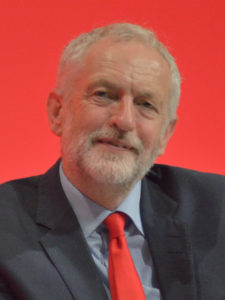
Jeremy Corbyn

The bottom line here is that the Conservatives have been running about ten points ahead of Labour for some time. However, not only have polls proved to be less and less accurate, but in the last election, Labour did better than almost any of the polls suggested they would.

Tory leader Johnson’s main problem is himself, because he’s prone to impetuous acts which he doesn’t think through. His other problem is the Brexit party, which may siphon off votes.

If the Conservatives win, Brexit happens under Johnson’s deal, and there will be renewed austerity, increased drug prices, continued privatization of the NHS, and so on. Johnson will try to reforge Britain as a tax-free haven and free-trade zone. That’ll make the rich, richer, but it won’t be Singapore on the Thames, because the Singapore’s government puts massive work into making sure its citizens are okay (and they own almost all the land, which they lease it to citizens, etc.).

Labour’s issue is that their Brexit stand splits the difference. They’ll negotiate their own deal, put it to a referendum, and live with the results. That pleases neither the hard Leavers nor the hard Remainers, and the electorate has become rather polarized by the issue. It is the most principled way to deal with the issue, but passions are too inflamed right now for that to matter.

So, Labour’s votes are being eaten into by the Lib-Dems on Brexit. Labour still hasn’t regained their Scottish seats from the SNP, and it seems unlikely that they will do so for this upcoming vote.

All that said, Corbyn campaigns well, and the Labour manifesto, sans Brexit, is popular.

As readers know, I think the British would be insane not to vote for Corbyn. He’s really the last chance to save the National Health Service, to reverse austerity, and to prepare for climate change. Lib-Dems may be anti-Brexit, but they are hard, neoliberal austerians who voted for practically every significant austerity measure. They aren’t much less evil than the Conservatives.

Corbyn in England and Sanders in the US are the last chance–not to stop climate change (because that window has passed), but to mitigate it. It is also true that if Corbyn doesn’t do better than expected, he’s probably out as leader (which isn’t necessarily a disaster, there’s a good chance he’ll be replaced by another actual left-wing leader).

It’s now in the hands of the British. They will get the government they deserve It’s up to them to decide which government that is.


The results of the work I do, like this article, are free, but food isn’t, so if you value my work, please DONATE or SUBSCRIBE.

Most Wealthy People Aren’t Going to Be Able to Avoid Climate Change

The great neoliberal compromise was, “We’ll make some of you rich, fuck the rest, and the bill will come due after you’re dead.” Tax rates were scrapped and policies deliberately inflated the prices of both real estate and stocks. If you already were well off, i.e., owned a house and some stocks, you did really well.

If you were old enough, well, you died before the bill came due for the lower end of this, in 2008. Those who weren’t liquid, were over-extended, or were living in unimportant cities or suburbs, got smashed. Those who hung on, and lived in or near cities like San Francisco, survived as home prices went back up and as stock prices were deliberately driven to even greater levels.

And now we have more wildfires in California. We have massive power outages, even in some very upscale areas. In the Pacific Northwest, we have fires that rage for so long that cities are filled with smoke for weeks on end.

We have more and more powerful hurricanes, and they’re hitting Category 6, which was said to be impossible.

We have the vast melting of glaciers and ice and the drying up of groundwater.

We have utilities like California’s PG&E which did their job: They gave out tons of money to make people rich and didn’t update their infrastructure, which is causing a lot of those California fires.

And, yeah, the really rich have off-grid power. But they don’t have immunity from fire, and almost none of them can survive when the water runs out.

Then there’s, oh, New Zealand, where the rich have bought houses and condos. But if things really go to hell and they go to New Zealand, what power will they really have in that level of civilization collapse? Their money won’t mean shit, and the New Zealanders, who are coming to hate them already, are unlikely to be kind.

The level of climate change and ecological collapse we’re going to hit is such that I think most of the wealthy, and probably a heck of a lot of the truly rich, are not going to avoid it.

There isn’t going to be an escape for most of them.

A silver lining.


The results of the work I do, like this article, are free, but food isn’t, so if you value my work, please DONATE or SUBSCRIBE.

Dangers and Possibilities in the Chile Protests

Tribune Magazine has an excellent interview with an activist in Chile, Isidora Cepeda Beccar, about the progress and prospects of the protests in Chile. It’s worth your while to read.

In my original post on the Chile protests, I noted that burning down the metros was stupid. It seems that the protestors agreed, and actually set up guards to make sure that no more of them were damaged.

This leads to a second issue:

Social movements like this can ignite very quickly. But the risk is always that they cannot burn for a long time. People have to go back to work, and after a while, they want things to return to normal. I do think it’s a risk that this movement has such little institutional form. In my view, unless its demands are taken forward by the Left it could result in no real change in the long term.

The problem here is that elites can generally out-wait protestors. They have more resources after all, and the revenue they are losing in a general strike is something they can absorb in a way that poor people can’t absorb losing wages.

Protests which do not really hurt or scare elites thus tend to fail. They either need to genuinely fear for themselves, or be in so much pain they will capitulate to make the problem go away. You saw this in a mild form in the US when the gays went after Obama for opposing gay marriage (yes, he did, this is a memory hole issue). They got personally in his face, they crashed fundraisers held by his wife and screamed. They made his family’s life hell.

It worked.

As I noted about rioting, or even inconvenient peaceful protesting, you need to do it where the elite live, so they can’t avoid it. You need to take away their feeling of safety, of invulnerability–violate their sense that they can wait it out.

If you don’t have a strategy to make the lives of elites miserable, or make them scared, why shouldn’t they just wait you out?

Beccar notes that the institutional left, including the Communist party, has been largely useless in the protests. They didn’t lead them, they don’t know how to respond. The politicians are all used to working in a neoliberal state, making trimming adjustments to basic neoliberal policy. The only institutional left-wing force helping out are the unions, which called a general strike.

What’s interesting is that this includes the miners. Leaving aside that mining is crucial to Chile’s economy, this matters because miners have access to heavy machinery and explosives. Miners, along with construction workers and truckers, are basically capable of going anywhere they want. They are a credible threat, if they want to be.

Students are good, and in Chile it started with the students. But it only ends well for the left if the hard-hat, working class gets involved and gets serious.

This doesn’t have to mean widespread violence. Simply breaking the gates on a few key elites’ estates may well get the message through.

One of the problems with the protests is, in fact, the lack of leadership. They were spontaneous and unexpected, and the demands are incoherent. I think that Beccar is very smart when she suggests that the demand should be for a new constitutional order.

It’s clear that this movement is not just addressing this or that issue. It is raising questions which go right to the roots. So I think we need to demand a new constitution. Our constitution today is the heritage of neoliberalism in Chile, dating back to Pinochet and the Chicago Boys. To change things fundamentally we need to cut those roots. We need to create new rules of the game.

We need a completely new constitution, created by a constituent assembly, with all kinds of social representatives involved. That would give real power to the people and encourage a much-needed new culture of participation, involvement, and social commitment to the political space. The president, the parliament, the political parties today are not representing the people’s voice. They haven’t done it for decades, why should they start now?

Trimming within a constitutional order set up by Chicago Economists and Pinochet won’t work. It was set up for that not to work.

Make fundamental change.

This applies, in many ways, to other countries, by the way. It may seem, for example, in the US that the Constitution is the same as it was in the early 70s, but it isn’t. Vast swathes of it have been reinterpreted by courts, especially the Supreme Court, in ways that are essentially conservative and neoliberal. Citizens United, which says money=speech would have been unimaginable in the 60s. So, frankly, was Bush v. Gore, the vast effective reduction in Miranda rights, the mandatory minimum sentencing, RICO laws (which violate freedom of association in fundamental ways), and the acceptance of current practices of civil forfeiture (where the cops now take more stuff from Americans than burglars do).

I grew up in the 70s, and the US today is far different from it was then: It is fundamentally less free, and that was a deliberate choice that shudders through law and the constitution.

I wish the people of Chile the best. Allende was a bright possibility, stolen from them by a very evil man with American backing. (Remember that Pinochet had dogs trained to rape women, and do not defend him to me.)

This is a chance for a reset and a new future. Pinochet made sure there was a lot more money in Chile, and made sure it wouldn’t get to most of the population.

Time to change that.


need for constitutional reset

Week-end Wrap – Political Economy – October 27, 2019

by Tony Wikrent
North Carolina Democratic Party Progressive Caucus

Strategic Political Economy

U.S. Military Could Collapse Within 20 Years Due to Climate Change, Report Commissioned By Pentagon Says[Vice, via The Big Picture 10-25-19]

“For the first time, workers are paying a higher tax rate than investors and owners” 

[Washington Post, via Naked Capitalism 10-24-19]

“Most Americans have to work to earn a living. But the rich are different: They get most of their income not from labor but from what they own — companies, stocks, real estate and the like. These income-generating assets are what economists call capital. And because capital is heavily concentrated among the rich, the U.S. government taxed earnings derived from capital at a higher rate than earnings made through labor for the entirety of the 20th century. But that’s no longer the case, according to economists Emmanuel Saez and Gabriel Zucman of the University of California at Berkeley. In their new book, “The Triumph of Injustice,” they present data showing that in 2018, labor income was taxed at a higher rate than capital income for the first time in modern U.S. history.”

This could be the formal marker for when USA ceased being a republic and became a plutocracy, but I would argue for the Citizens United decision by the Supreme Court instead. 

The CBO Just Handed Us Two Trillion Dollars

[J.W. Mason, via Naked Capitalism 10-25-19]

In their most recent 10-year budget and economic forecast, the CBO made a big change, reducing their long-run forecast of the interest rate on government bonds by almost a full percentage point, from 3.7 to 2.9. (See Table 2.6 here.)

Most directly, the new, lower interest rate reduces expected debt payments over the next decade by $2.2 trillion.

I have no doubt that Trump and the Republicans will use this to push the line that the Trump tax cuts worked to grow the economy and pay for themselves. 

The Carnage of Establishment Neoliberal Economics

Open Thread

As usual, use this thread to discuss matters unrelated to recent posts.

This is the map of the California power outs this weekend:


The “how to prepare” thread.  (Made up of a long series of tweets from @Jzellis ). Too late for this weekend, but don’t think it can’t happen where you are.


Page 290 of 532

Powered by WordPress & Theme by Anders Norén