The horizon is not so far as we can see, but as far as we can imagine

Category: Economics Page 45 of 97

A Quick Note on Venezuela

The common cry in right-wing circles to anyone who suggests anything resembling socialism is: “It failed in Venezuela.”

What failed in Venezuela was being a petro-economy, not diversifying the economy. Chavez spread money around, but was never able to get off oil.

When you combine that with US hostility, which included sanctions and robust support for opposition groups, along with the world system’s basic set up at this time (which is meant to make it impossible for countries to be able to meet their own needs), you have Venezuela’s downfall.

None of this is hard to predict. Back in 2004 or so, on the late BOP news, I wrote an article criticizing how Chavez was running the economy, very specifically on these exact points.

Socialism works when it is done correctly, just as capitalism does. Back in the 30s, if you were a capitalist, every time you tried to argue in it’s favor, I’m sure someone would say, “What about the Great Depression?”

It is also, again, hard to run a socialist economy in this world economy, because the world’s super power and most of the great powers will be hostile. If socialism is seen to work, after all, it could threaten the wealth and power of those who run capitalist countries.

I favor a mixed economy, with some role for the free market. But Venezuela’s problems prove nothing except that resource economies are vulnerable and that the world system and its super powers are hostile to socialists.

(See also: 7 Rules For Running A Left Wing Government.)


The results of the work I do, like this article, are free, but food isn’t, so if you value my work, please DONATE or SUBSCRIBE.

A World Without Poor People (Sort of)

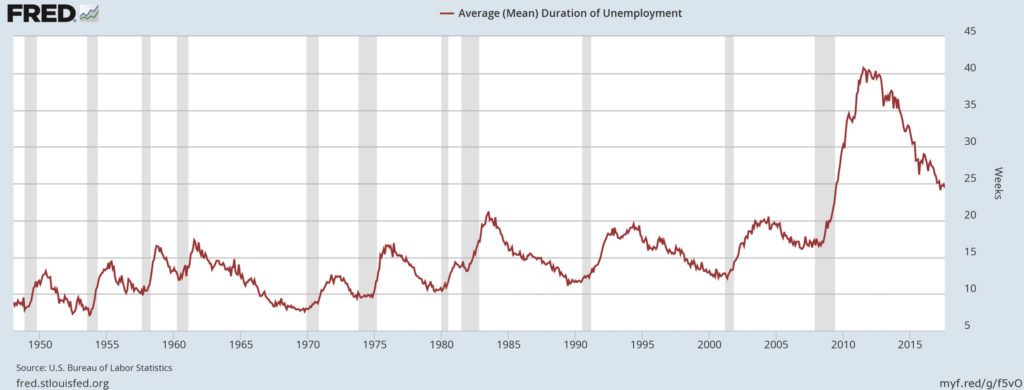
Because the last time it was done, it was not forbidden, because good jobs cluster in only a few regions now, and because of vast influxes of foreign money, we have charts like this:

So, almost a 100 percent increase in five and a half years. (People living in Vancouver wish housing prices had only risen this much.)

Meanwhile, the Fed is muttering to itself about how there is almost no inflation, because they don’t measure housing price increases as inflation and consider the most important inflation that which does not include energy and food.

In other words, if the price of having a home, staying warm or cool in your home, driving your car, or feeding yourself is going up, well, that’s just not very important.

A lot of people got very rich in real estate speculation, mortgages, and downstream securities last time, and the vast majority of the rich ones got to keep the money they made. Even those who lost it, were mostly made whole by government. (Ordinary home owners were, uhhh, not made whole.)

Given it worked last time, and given that there was no real penalty for doing it, and that the Fed and other central banks proved they were willing to bail out the rich to the tune of trillions of dollars, why not run the play again? The profits are privatized; the losses at the end will be socialized. Heck, with a bit of luck the Fed will print money pre-emptively to make sure that there is never a crisis for rich people ever again, just ever-increasing asset prices.

(This applies to the stock market as well.)

There is, mind you, a real economy buried under all the money being funneled to rich people somewhere, and at some point that economy may just collapse. After all, all the people who own these fancy condos and houses expect a servant class to take care of them.

But perhaps that labor can all be turned over to robots, as Silicon Valley wants, and the poor can just be expelled from places like SoCal, DC, New York, Vancouver, and Toronto entirely, to slowly drug themselves to death, or perhaps just starve, in the vast interior wastelands of the continent where “real” people don’t want to live.

This is, fairly explicitly, what Silicon Valley techbros want; they want to eliminate the need for surplus people.

I wonder, though, how many of them will find that they too, are surplus, when AI becomes able to code and write ads.

It will, at least, be amusing.


The results of the work I do, like this article, are free, but food isn’t, so if you value my work, please DONATE or SUBSCRIBE.
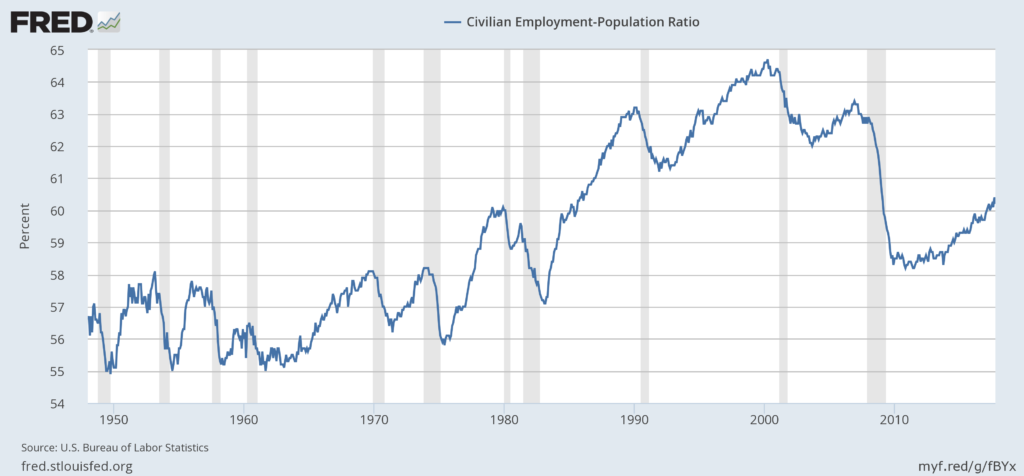
The Fall of the USSR

The best book on both successes and failures of the Soviet Union is Mancur Olson’s Power and Prosperity. If you haven’t read it, you should. The second best is Randall Collins’ Essay in Macrosociology.

The great problem with most critiques of the USSR is that they do not explain its successes. In the 20s and 30s, it did far better in most respects than the West. In the 40s and 50s–and even into the early 60s, it was still doing very well. They put the first satellite in orbit, produced tanks that were as good as the West’s, and produced the most successful assault rifle in history. As late as the early eighties, there were points at which Russia’s best tanks were better than the West’s.

The USSR was one of the few nations larger than a city state which had industrialized through a process other than the use of mercantilist policies. During the Great Depression, the USSR vastly outperformed the West.

So, why did it fail? There are two perspectives. I believe both have a lot of truth to them. Let’s start with Olson’s: The failure of the USSR was a feedback problem. At the beginning of the USSR, local cliques and power groups had not formed. The central planners knew exactly how much was being produced, as well as exactly how much could be produced, and were thus able to coerce people into producing what they knew was possible to make.

As time went on, this became increasingly impossible. Put simply, the locals controlled the information flow to the center, and lied about what they could produce and what they did produce. Workers worked less than they could have, local bosses appropriated production to themselves, and the secret police couldn’t keep up, or became corrupted themselves. Absent accurate information, the central planners lost control. Everyone slacked off, corruption soared, production dropped, and the products produced were crap, especially the consumer goods. (The USSR remained able to produce some of the best military equipment right to the end.) Food production tumbled.

The second perspective is the geopolitical one. The USSR had less population than the Western alliance. It was faced with enemies on every side, while the US was isolated by sea from any possible assault and Europe only had to worry about attack from one direction. It had a smaller economy than its enemies. To keep up with its enemies militarily, it had to spend a larger percentage of its economic production than the West did. With a central position and a smaller economy, why would you think it wouldn’t crumble under the strain? I will note that Collins made this argument BEFORE it crumbled. By every normal “Great Power” metric, the USSR was weaker than its enemies. Fiscal strain is normal in such a situation, and it is to be expected that the economically weaker power will eventually lose. From a pure power perspective, and ignoring nuclear weapons, the USSR should have launched an all-out attack on Europe no later than the 70s.

This is basic guns-and-butter economics, understood by Adam Smith. The more you spend on your military and your security apparatus, the more your civilian economy suffers, especially as the most brilliant scientists and engineers are hived off from civilian production. The longer this goes on, the more you suffer. If you’re facing economies that are much larger than yours, you’re screwed. And the US economy was the largest in the world starting in the late 19th century, let alone a recovered European one.

As the USSR failed under these twin problems, exacerbated by the bleeding ulcer of the Afghan war, they also suffered ideological decay: They stopped believing in their own form of government, and became less and less willing to kill for it. When push came to shove, rather than use the Red Army to maintain control (something it was still capable of doing), they didn’t believe in the USSR and the Warsaw Pact enough to do so.

Now let us turn to capitalism. The advantage of capitalism v. central planning, is that information is sent through prices, supply and demand. This information feedback, however, is still gameable by power blocs. The exact strategies are different than in a command economy, but the end result is the same. The West and the US are currently undergoing this exact problem. The entire financial crisis was about inaccurate feedback and broken feedback loops–it was about the financial and housing industries deliberately damaging the feedback system. Then, when it finally went off a cliff, they destroyed the capitalistic feedback system (which, when properly operating, forces companies into bankruptcy) by obtaining bailouts due to owning western governments.

There are myriad other problems with feedback in the developed world right now, from massive subsidies of corn and oil, to oligopolistic practices rife through telecom and insurance, to the runaway printing of money by banks, to the concealment of losses by mark to fantasy on bank books, to the complete inability and unwillingness to price in the effects of pollution and climate change.

The great problem with humans is that we lack time perspective. In a hundred years, when historians and whoever deals with economic issues look back (hopefully not economists as we understand them), they aren’t going to be that impressed that Western Capitalism outlasted Soviet Communism by forty or fifty years. Instead, they are going to look back and say that both were doomed, in large part, by their inability to manage the exact same problem. In both cases, the feedback systems which controlled economic production were so perverted by various internal power blocs that the societies were unable to reproduce the material circumstances necessary for their continuance.

(This piece was originally published February 2014. I think it still says some important things, and many new readers will not have seen it, so back to the top. Ian.)


The results of the work I do, like this article, are free, but food isn’t, so if you value my work, please DONATE or SUBSCRIBE.
The Cause of the Opiate Epidemic

Let us introduce you to Rat Park. You’ve heard the story about how addictive drugs are. Put a rat in a cage with a lever for water and a lever for water with drugs (heroin/cocaine) and without drugs, and the rat will soon be hitting the lever for drugs as fast as it can.

Drugs are sooooo addictive.

Right.

Well, here’s Rat Park.

Professor Alexander built Rat Park. It is a lush cage where the rats would have colored balls and the best rat food and tunnels to scamper down and plenty of friends: Everything a rat about town could want. What, Alexander wanted to know, will happen then?

In Rat Park, all the rats obviously tried both water bottles, because they didn’t know what was in them. But what happened next was startling.

The rats with good lives didn’t like the drugged water. They mostly shunned it, consuming less than a quarter of the drugs the isolated rats used. None of them died. While all the rats who were alone and unhappy became heavy users, none of the rats who had a happy environment did.

Sigh.

Somehow the story of Rat Park doesn’t get told often. I’ve read a lot on pain policy and addiction, and I hadn’t heard of it until recently.

Why is that, I wonder?

What has changed in the US to cause the “sudden” opiate epidemic, do you think?

Well, we all know the answer. The US isn’t “Human Park” any more, it’s a dystopian nightmare, full of poverty, despair, and people isolated from friends and family. The social welfare stats for large parts of the country are in free fall.

When life is shit, people turn to chemical joy–or chemical anaesthesia, at least.

What the US is doing is cracking down on opiate use, as if it’s a criminal problem. OR they are pretending it’s a medical problem.

It’s neither. It’s a social and economic problem, and its to do with a society which offers shitty lives for people.

In the 1800s, Emile Durkheim, the pioneering sociologist, did a study on suicide. He did it specifically because suicide seemed like the most individual of decisions.

And he found that it wasn’t; the likelihood and number of suicides tracked social engagement almost exactly. Roman Catholics committed suicide the least and had the strongest social ties. After the Catholics were the Protestants, then then non-religious, and those categories tracked how much social contact people had.

Most of who we are is other people and our relations to them. Most of the rest is our environment. Decisions that seem like they are made by individuals are really only partially so; they are informed by the environment in which we live. They are influenced by people, economic opportunities, and beauty, or the availability of love, friendship, security, and hope.

The opiate epidemic won’t be “fixed” through criminilization or medicalization: Even if opiate overdoses go down, people will turn to other forms of self-destructive behavior. This is because the problem isn’t opiate availability, it is that their lives are objectively shit.

Want to fix the opiate epidemic? Start with a 90 percent marginal tax rate on the richest people in America and spend the money on making everyone else’s lives better. Oh, and do simple stuff like universal health care, which, well, costs less and produces better results and doesn’t lead to despair, because people know that if they get sick they’ll get the care they need and it won’t cost them everything.


The results of the work I do, like this article, are free, but food isn’t, so if you value my work, please DONATE or SUBSCRIBE.

You Will Never Be Free of Identity Politics

(MANDOS POST, people who don’t want to read things they disagree with please stop here)

I don’t normally watch horror movies, but I made an exception and recently watched the horror film Get Out. It’s a horror-satire movie that constructs its underlying trope from the concept of racist microaggressions, and it’s one of the best films I’ve seen all year, if not the best, period. It’s a Stepford Wives style of horror, in which a young black man discovers that his well-meaning-seeming white inlaws-to-be believe in human improvement by the literal supplantation of black identities with white ones and the submergence of the black identity into a spiritual void called the “Sunken Place” — a literal sort of black/white solidarity where, of course, the white opinion matters more.

The privileged white horror-family in question is conceived of as stereotypical rich politically-correct liberal Obama voters, but the main character himself is a relatively successful young photographer who had access to that kind of company through his work, starting from less privileged roots and with black friends still living the working-class life, and his working-class black best friend — who correctly names and identifies the microaggressions and where they were leading — is his only lifeline in the entire story. The illustration clearly intended by the director (well-known black comedian Jordan Peele) is that even when a black person in America manages to succeed on white terms, that in itself is not just, not sustainable, not sufficient.

That was a movie, but the point is illustrated periodically in real life — and occasionally in famous, very public rows.  Some of you may remember that a few years ago, there was a row over Oprah Winfrey’s attempted purchase of a very expensive handbag, worth twice or more than what some of her viewers make in a year, from a shop in Switzerland, wherein Oprah believed that she had been discriminated against by the saleswoman for being a black buyer in a fancy store. Many could easily view this as a rich woman publicly bullying an innocent, ordinary-income shop attendant for a social faux pas, possibly based on ignorance of the American media landscape. A class analysis. But for people of colour, the incident is instead evidence that, even if one is doing well economically, one is still one of them, that the incident was no accident even if the saleswoman had no conscious intention of discriminating.

That sense that even under relatively positive overall circumstances, how one is treated in life is nevertheless conditioned on the sufferance of the majority/dominant community unless one erases one’s entire particularity (and even then) is not a trivial feeling. It is a continuous burden, a headwind in life, and one that cannot be erased by exhortations to class solidarty and and one-sided demands to put the material advantages of class solidarity as prior to the domain of conflict called “identity politics.” Class solidarity does not erase those conflicts, does not remedy them, does not alone create a long-term, sustainable basis for rectification of discrimination. Minority groups remain vulnerable even when the dream of a more just economy is realized.

The only way to proceed is to recognize that, while the working-class American black has a cause in common with the working-class American white, she or he also has a cause in common with a rich woman like Oprah Winfrey, one that can be neither ignored, denied, or erased. And the only way that class solidarity can take full precedence over that is when whites agree to disarm their own identity politics without demanding that blacks and other minority politics disarm theirs.

A Middle Class Which Aligns with the Rich Cuts Its Own Throat

This was explained to me by Stirling Newberry years ago.

The middle class, can, broadly speaking, align with the rich or with the poor.

If it aligns with the rich, the policies it favors benefit the rich exponentially more than they do the middle class. Tax cuts went primarily to the rich, by magnitudes, for example. Real estate prices rising faster than wages made some middle class families rich, but benefited the rich magnitudes more than the middle class.

Money translates almost directly to power in capitalist societies and even more directly in capitalist democracies without adequate corruption controls (which is almost all of them). The rich become powerful faster than the middle class and ultimately the policies they favor do not include keeping the middle class healthy: The rich want low wages, “flexible” labour laws, bankruptcy laws that favor their interests but not that of the middle class, plenty of financialized rent streams, and so on.

The first generation to make the devil’s bargain with the rich can benefit, maybe even some of the second, mind you. A lot of “Reagan Democrats” won–they sold their houses, and they retired to some place sunny with cheap brown labor to wipe their bums in their senesence. But their kids are saddled with huge debt, make less money than their parents at every stage of their lives, and can’t afford to buy houses or even pay rent anywhere decent.

If the middle class sides with the poor, on the other hand, almost everything they do also helps the middle class. Poor people with money spend that money, and wage increases are much more useful to the middle class than capital gains because they are durable. And policies which reduce the size of the working class and poor, make the middle class bigger and stronger. The working class, absent a huge swell in their numbers, are no threat to the middle class.

Ironically, the working class and poor are a threat to the middle class precisely when the middle class aligns themselves with the rich, because that swells the number of the poor and makes them desperate. It also knocks a lot of middle and upper class down (the upper class is not the rich, they are its direct servants, plus a few others), and those people are angry and know how the system works.

The middle class not only justifies its existence ethically by helping the poor, doing so safeguards its own existence.

The right thing to do, ethically, is almost always the right thing to do in policy terms. Those who believe otherwise almost always pay a frightful price for their attempt to be clever in service to their greed and selfishness.


The results of the work I do, like this article, are free, but food isn’t, so if you value my work, please DONATE or SUBSCRIBE.

A Modest Proposal to Fix the World

Image by TW Collins

Fire every non-commission employee making more than seven times the median national income (all income included).

Put a 100 percent tax on all income over seven times the median, no exceptions for any type of income.

Put a 100 percent tax on on all inheritances over 50 times the median (that’s enough of a head-start on life for winning the lucky sperm contest).

Promote those who were earning less.

Secret: The people running the economy are not the best, and if they are brightest, we need stupider people. I base this on their results.

Going forward, the top income level will increase, as a percentage, equal to the average income of the bottom five percent and the median income.

This will sort out a lot of problems quickly.

First, it gets rid of the people running the economy today, who are obviously either hopeless fuck-ups or completely uninterested in results for anyone but themselves and a few cronies.

Second, it concentrates the minds of those at the top on the problems of those at the middle and bottom. They want that seven-times-the-median to be higher, so suddenly, they care about the poor and the middle class. A lot.

Third, it rather quickly deals with people with too much money now (yes, there is such a thing); if their seven-times the-median income doesn’t support their lifestyle, they will have to dip into their capital to pay for it. Because all capital gains will be treated as income, well, that should be fun.

Yes, there are all sorts of ways people can try to get around this. Plug them as fast as you find them and write the initial laws in very generous ways, like money-laundering laws. (Were you obviously trying to get around money laundering laws? If so, you’re probably going to jail. That’s how they’re written.)

Why seven times? Why not. It’s enough that no one can say they shouldn’t still feel very rich, and if they don’t, then something is deeply wrong with the median.

The general rule of policy is that policy which is good for the rich and the middle class is bad for the middle class because the rich get so much more from it. For instance, the housing bubble looked good for the middle class (and a few people won), but, really, it was so much better for the rich in that it gave them so much power along with other financial shenanigans, that they were able to gut the middle class.

Policy which is good for the middle class and the poor, or even just the poor, is good for the middle class. Poor people spend their money, and poor people who get better off become middle class people. A middle class which identifies with the poor and not the rich, will be secure, because they will support the wellspring of their own success.

There’s a bunch of moral and ethical arguments that should go into a piece like this, but it comes down to this: Every social welfare statistic worth mentioning tracks inequality, not absolute wealth, once you’re beyond the point of “enough so I’m not starving.” (See “The Spirit Level” for the nailed-down, stupidly overdetailed proving of the obvious.)

The rich are rich because society makes it possible, through aggressive enforcement of totally artificial property laws and massive infrastructure which benefits them far more than anyone else. The idea of ideas being property is completely artificial, contracts of adhesion that are standard in software are social bullshit, corporations are bundles of hugely valuable rights to avoid responsibility for losses, and all of that is before we even get to 20 trillion dollars (in the US alone) to bail out bankers who had genuinely lost everything, and that includes Goldman Sachs, because winning bets with counterparties who are bankrupt is worth ten cents on the dollar, and at that rate, Goldman is bankrupt too.

The people in charge have done a terrible job. It is a moral imperative to take that job from them and give it to people who will do it better than they do. (If they do it well, then the world and the economy won’t be so fucked.)

The people not in charge who are familiar with their jobs/businesses deserve a try.

There are bunch of things to add to this, but they all basically come down to two simple rules:

  1. Keep the rich poor.
  2. Never let money or power buy anything that matters.

A better education than normal, a jump in the healthcare queue line, avoiding airport security, flying on a private jet, avoiding traffic in a helicopter, not staying in the same hotels as anyone else. Nothing that matters. They can have nicer consumer goods, as long as they don’t matter, and that is all.

When the people running something are complete fuck-ups, you take away their power. That means their position, and as money is power, their obscene wealth. You replace them with someone else. It is that simple.

Eat the rich, or the rich will eat you.

And they have been dining well.


The results of the work I do, like this article, are free, but food isn’t, so if you value my work, please DONATE or SUBSCRIBE.

Rentiers vs. Capitalists, Yahoo CEO Edition

We tend to think of rentiers as being property owners, but a rentier is anyone who uses control of position to extract monopoly profits. CEOs appoint boards, boards determine CEO compensation, and corporations can pay obscene amounts of money, even when they aren’t making a profit. Heck, even if they’re being taken over.

Corporate America prides itself on rewarding success and punishing failure. Yahoo CEO Marissa Mayer does not fit comfortably into that narrative. During her five-year tenure at the once-proud tech firm, user levels stagnated, ad revenue dropped, acquisitions cratered, layoffs accelerated, product quality floundered, and hackers stole the personal information of more than one billion users.

But when Yahoo’s sale to Verizon becomes official in June, with the restructured company renamed Oath, Mayer will walk away with $186 million, according to a regulatory filing released this week. That includes shares of Yahoo stock Mayer owned, stock options, and a $23 million “golden parachute” of cash, restricted stock units, and medical benefits. Mayer did relinquish $14 million while taking responsibility for the Yahoo Mail data breach, but she’ll get 13 times that amount just to no longer remain part of the company.

I should point out that the first part–“priding itself on rewarding success and punishing failure”–is pure bullshit when it comes to executives and CEOs, pure mythology. Ordinary workers may (sort of) live in that world, though they get little reward for success, but high ranking executives are compensated irregardless of how their companies are doing. The worst performing CEOs get higher compensation.

If you want to be well paid as a CEO, perform like shit. Science backs it up!

This is not capitalism. This is rentierism. The value of all the loans taken by pbulic corporations in the 2000 run up to the 2008 crash was equal to the stock buybacks made by public corporations.

Why? Because most executive compensation is through stock options!

It’s good to be the Queen/Duke. Ahhhhh…what a life.

And this, folks, is why you don’t have nice things: Because these people run your society and make most of the important decisions. To say that they are parasites is to be generous; many parasites shade towards symbiosis, these people make the economy and their companies perform worse than it would if they did not exist. Restrict compensation to up to seven times the median, fire everyone who earns more, and promote those below them and I guarantee that in ten years the economy would be much better.

You can have lots of really rich people or a good economy; you can have lots of rich people or a democracy.

Those are the choices.


The results of the work I do, like this article, are free, but food isn’t, so if you value my work, please DONATE or SUBSCRIBE.

Page 45 of 97

Powered by WordPress & Theme by Anders Norén