The horizon is not so far as we can see, but as far as we can imagine

Author: Ian Welsh Page 81 of 436

Enough! (Palestine)

OK. Let’s lay this out.

Israel is genociding Palestinians in Gaza. It has killed more civilians in three weeks than Ukraine and Russia have all war. Over 60% of casualties are children and women. They are deliberately flattening as many residential buildings as possible. They have bombed multiple hospitals, every single university and just hit the remaining water facility, while Palestinians have almost no water to drink.

Their end-goal is to force whoever survives into Egypt.

The US, may their empire collapse now, is sheep-dogging the Israeli genocide.

Let me translate this.

America. “If Iran or Hezbollah try to stop the Israeli genocide of Palestinians, we will fuck up Iran and Lebanon to make sure Israel can keep mass-murdering civilians.”

Fuck you. Fuck you. Fuck you.

Not 5% of people in political power aren’t, functionally, psychopathic mass murderers, any chance they can get.

I will not forget anyone who was for this. Anyone. At best every single person who had any power and supported this, including Justin Trudeau, Biden, etc… need to go to jail for the rest of their lives. All their wealth should be taken and given to their victims.

This has always been true, by the way. Our societies have been run by absolute scum, basically forever. Our system does not work. It promotes to the top of both private and public power the worst people in the world, people who make Jeffrey Dahmer look like a boy-scout. If their victim counts were as low as Dahmer’s, we’d live in a comparative paradise.

We need to figure out a better way to run our societies and don’t even start with “but democracy”. Our form of democracy is a complete failure, and those still alive in even 25 years will be entirely clear about that.

I don’t imagine Trump being any better (remember how he supported Israel), but I’ll never endorse Genocide Joe or any Democrat or Republican who voted to help Israel.

Enough.


Donors and subscribers make it possible for me to write, so if you value my writing, please DONATE or SUBSCRIBE

Open Thread

Use to discuss topics unrelated to recent posts.

Ukraine Has Lost

It’s all over but the shooting, as the saying goes.

Avdiivka is being encircled in record time. The US is transferring its attention to Israel and Palestine. The Russians now have the largest armaments industry in the world for the stuff that matters, and North Korea and Iran are supplying them massively (though Iran may be about to be distracted.)

Back in March 2022 Ukraine could have negotiated peace terms. My guess is that the next negotiations will be surrender terms.

It was always clear, and I have said so consistently from the start, that Russia was going to win. Ukraine cannot win a war of attrition with Russia, especially when Russia has air superiority and far more artillery and artillery shells.

The West has been unable to ramp up weapon production, mainly due to the arms industry being a very small oligopoly who are interested in earning more per unit and maintaining bottlenecks.

Last year I read in an article that Medvedev, I recall, explained to Russian arms company execs, in excruciating detail, exactly what the Soviets did to plant managers who didn’t meet quotas in WWII. Since Putin has a record of dealing harshly with capitalists who cross him, this was taken seriously. The West isn’t really taking the war seriously, except maybe Poland and the Baltic republics, and Poland has essentially no arms industry of its own.

U.S. News now ranks Russia as the most powerful military in the world. I suspect they’re overstating the case, but Russia is certainly number two or three. My suspicion is that, as in the Cold War where USSR military strength was constantly overstated, this has to do with wanting more money for the military budget.

The sooner Ukraine negotiates, the better deal they’re going to get. Fortunately for them, Russia would be insane to take non-Russian majority areas anyway. The real risk is the coastline, while it isn’t all majority Russia, the urge to make Ukraine into a landlocked country will be immense. And certainly Russia wants Odessa.

In a larger sense the loss of Russia to Chinese alliance is the loss of any chance of defeating China. The biggest geopolitical blunder of the early 21st century, and the end of the oil and gas deals with Russia is the end of German/European energy intensive industry, which is a LOT of it.

Oh well.


Donors and subscribers make it possible for me to write, so if you value my writing, please DONATE or SUBSCRIBE


Climate Change and Environmental Collapse (State of the World 2023 #2)

(This is second in the series promised during the 2022 fundraiser. For #1 (imperial collapse) read here.)

I’m going to keep this one brief.

This year has seen the constant shattering of temperature records. Temperatures in the high thirties, in winter, have been common.

The majority of the Mediterranean is going to be uninhabitable without air conditioning for months every year. This includes North Africa and the European areas. The same will be true of most areas of the tropics. Time scale is ten to fifteen years.

Because climate change includes weather instability, it will become impossible to get property insurance in increasing areas, starting with the coasts and areas prone to wildfires.

Wildfires will continue until the ecology of areas has changed to one suitable to their new temperature and rainfall pattern.

In the short to mid term, there will be a lot of river floods, then rivers based on snow pack or coming from glaciers will reduce in size or dry up. Most of the world’s aquifers are drained, and many are poisoned. This means vast areas will become unsuitable for agriculture, which will lead to genuine food shortages. We haven’t had those in a long time, our current shortages are because we can’t be bothered to distribute food, of which we have great excess. But by 2030 we’ll see some real famines, and by 2040 almost everyone’s going to be eating less, even if they aren’t going hungry.

The oceans will become increasingly lifeless, and most fisheries will collapse. Even sea farming will be difficult, as oxygen content drops and acidification increases. If you’re middle aged, you’ll see the start of the Sea of Jellyfish. The real danger is if CO2 fixing and O2 emitting plankton collapse, in which case we’ll see some real problems.

On land, the great rainforests will mostly die. This includes the Amazon and Congo. They will be replaced by wastelands, and will be almost impossible to regrow under the new circumstances. This will, again, lead to vast increases in CO2. The effect on Brazil will be catastrophic.

The first ocean inundations will come sooner than almost anyone thinks and low lying countries and areas which have not built sea walls and pumps will go underwater. Bangladesh is a good weather vane here, but the northern Chinese breadbasket is at risk in the second wave.

If this was only about CO2 and global warming the realist optimist types would be right that it’d suck mightily, but whatever. The danger is that we’ve also go ecological collapse going on. I can’t estimate the odds correctly, but collapse of food chains, and in particular collapses of microbes, insects, plankton and so on could lead to drastic issues. The old line is that if the bees go extinct, so do we, but there’s a lot more risk than that, and that’s the “apocalyptic” scenario.

In your personal life, you should be preparing. Find a way to get your own water, even if it’s condensation. Food is important but understand that growing it outside is going to be tricky because of climate instability. Food you can count on will have some form of environmental control.

Expect everything to come in faster than the consensus ICC estimates. They’ve almost all been wrong to the upside, so consider them the “best case scenario” and don’t plan for that.

Climate change and ecological collapse are going to play into geopolitics in a big way. Normally, as I wrote yesterday, the ascendance of China would be all over except the shooting, but China’s going to get hit hard. They’re not stupid, and they know this. They just penned an absolutely massive deal for food from Russia, for example. But they need to do a lot more, and they and everyone else are going to have to change lifestyles. An economy of millions of cars, with sprawling cities makes no damn sense if the future that is coming.

Refugee waves are going to be absolutely massive, with hundreds of millions of people on the move. Multiple countries will collapse into warlordism and anarchy. There will be real revolutions, with elite murdered en-masse, because when people start starving and going without water, they will freak.

There just isn’t going to be enough to go around, it’s that simple.

If you want to survive, beyond the obvious, make friends and join or create strong community groups. You want a lot of people to like you and want you to live. Find a way to be useful, if possible, too. Plumbers and handymen and makers will be taken care of.

This is still some ways off, but understand clearly, civilization collapse has started, we are past the peak and past the point where we can stop it with any actions which it is even slightly conceivable we are capable of taking politically.


Donors and subscribers make it possible for me to write, so if you value my writing, please DONATE or SUBSCRIBE

Notes On The Structure Of American Imperial Collapse (State of the World 2023, #1)

The American empire is now in essentially unstoppable decline. Certainly there are things that could be done to stop it, but they will not be done, much as the British had to avoid WWI and not take profits by sending industry to the US.

(This is the first article on the state of the world, as promised in last year’s fundraiser.)

Everyone knows about comparative advantage, but what doesn’t get talked about is absolute advantage. In absolute advantage you have something people need that they can only get from you.

This can be weapons. It can be jets. It can be advanced computers. It can be the capital equipment (like lithography machines used to create semiconductors) used to make other things. Sometimes it can be a resource, like oil.

The USSR was competitive with the America and its satrapies when it could still offer most of what other nations wanted. They could shop at the West store or the USSR store and get jets and weapons and dams and electrical networks and so on. By the 70s this had started to come apart, and in the 80s their failure at microcomputers was starting to really hurt, plus their domestic economy was in serious trouble.

So from somewhere in the late 70s to early 80s, and certainly after the collapse of the USSR, if you wanted jets, good weapons, computers, internet and so on, you had to go to the US and its allies: or rather, its satraps. There were American jets, or there were European (Airbus) jets, and so on.

Starting in the 80s, but really taking off in the 90s, China began to really industrialize in the standard way: start at the bottom of the chain and sell to the West. They moved up the chain very fast.

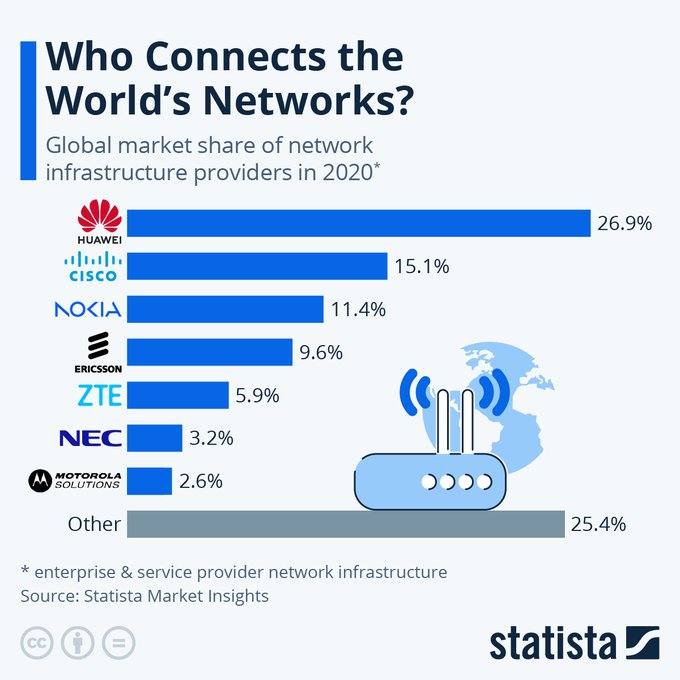
For example:

Huawei and ZTE are both Chinese.

The numbers above are worse than they look, because Huawei 5G is banned in much of the West. So really, Huawei is dominant in much of the developing world (the South.)

China now has a domestic jet industry. It isn’t quite up to snuff, but within ten years it will be. The latest Huawei phone, post sanctions, was made with domestic chips and outperforms Apple and Samsung on some important metrics.

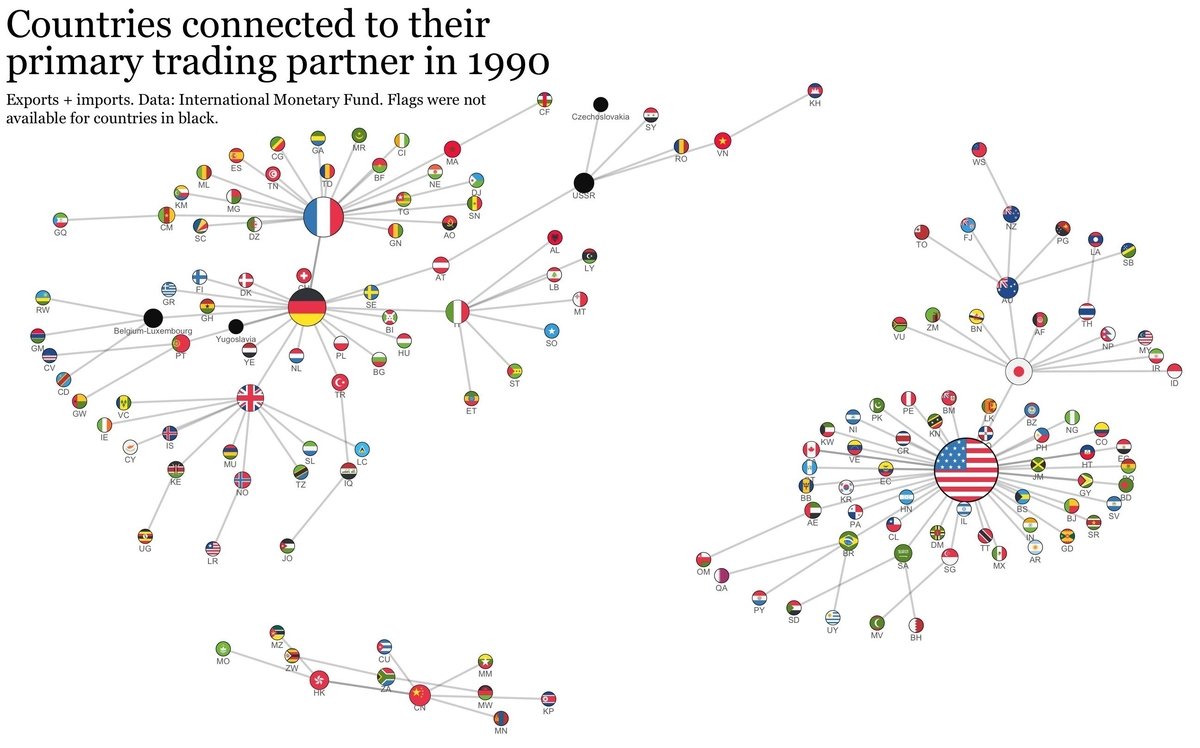
So, let’s move to the important charts. The world in 1990, right after the collapse of the USSR.

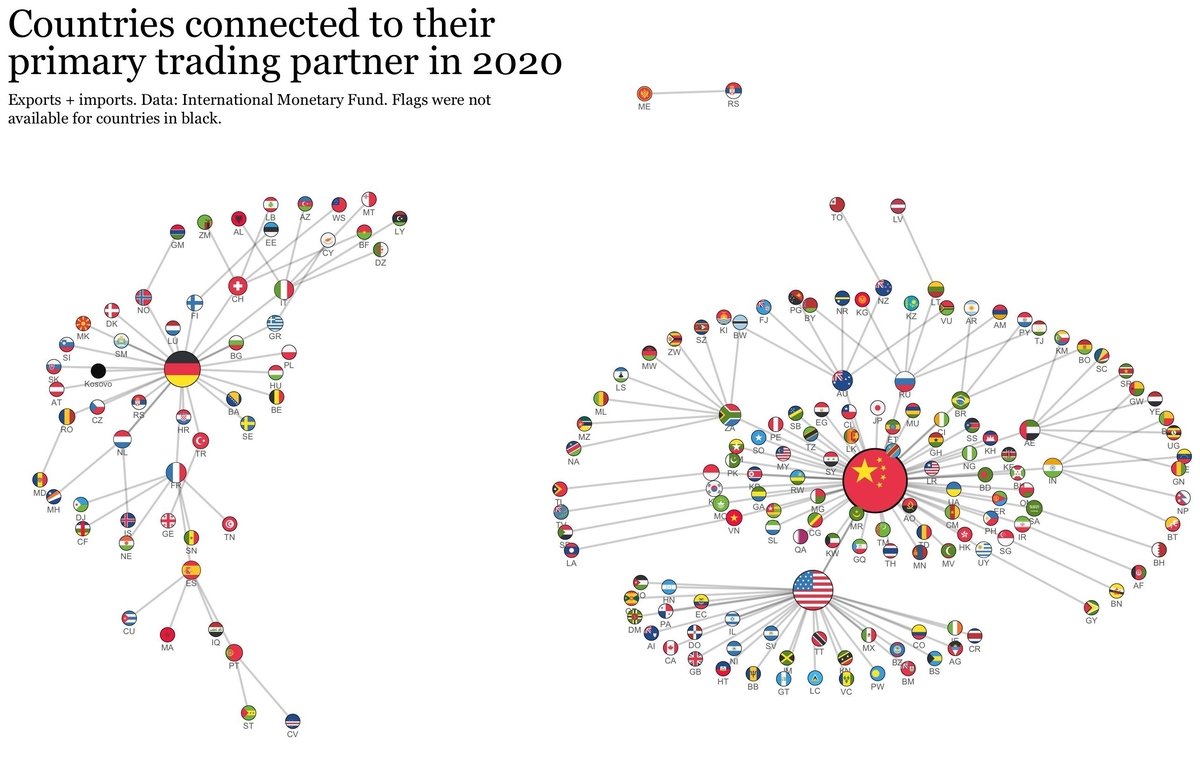
The world in 2020:

China is more dominant than the US was in its prime. (Well maybe not in 1946.)

Now this sort of thing is a leading indicator. Countries who were dominant are able to control more of the world’s resources than they deserve for some time after they lose their dominance.

Be clear, the US has LOST its dominance already. It’s all over except for the shooting. It doesn’t look or feel like that because of generations of accumulation and because the dollar is used for most world trade.

But those are lagging indicators. Britain’s pound was the main instrument of trade for decades after the US had overtaken it industrially.

This time it’s going to happen faster, because the US has abused its central position in financial networks in ways other countries, like Russia and China won’t tolerate.

Now, understand clearly, Western prosperity is based on commanding more of the world’s resources because everyone had to get what they needed from the US and its satrap (well, and the whole imperialism and military thing, but that’s another article.)

Since China now offers almost everything the West does, at better terms, they will come to command those resources. It’s that simple, though that doesn’t mean the road will be smooth. This will be an Age of War and Revolution, and civilization collapse, especially as this isn’t a normal changeover because of climate change and ecological collapse.

Within the West we are already seeing the US cannibalizing its satrapies. Germany had to have cheap oil and natural gas to run its industry and European patents are lagging, badly. Europe’s garden will go, and go relatively quickly. The Chinese will dominate the EV market, eat Airbus and Boeing alive and bypass European control of the machines which make semiconductors.

The main industry the West seems to still have a dominant lead in is biotech, but the Chinese will get there.

Japan and South Korea will do better because both are keeping up in scientific innovation, but my bet is that South Korea will peel off into the Chinese sphere at some point, economically they already have. I’m less sure about Japan, but they’d be wise to do so.

As for Europe, well, for twenty years I’ve been warning them they had to regain their independence and forge their own path. Most of Eastern Europe should never have been allowed into the EU or NATO. The EU should have built its own army and left NATO. And yeah, they should have done everything necessary to keep good ties with Russia, which would have been easy, because until fairly recently Russia wanted to be a European nation.

They did none of this, their rate of scientific advancement is abysmal outside of a few areas and they’re toast.


Donors and subscribers make it possible for me to write, so if you value my writing, please DONATE or SUBSCRIBE

Why Economists Are Wrong About How Good The Economy Is, And Regular People Are Right

Practically every day I read an economist like Paul Krugman or Brad DeLong talking about how the economy is the best ever, but ordinary people just don’t get it, and must be idiots influenced by propaganda.

Someone’s an idiot on this subject, but it’s not ordinary people.

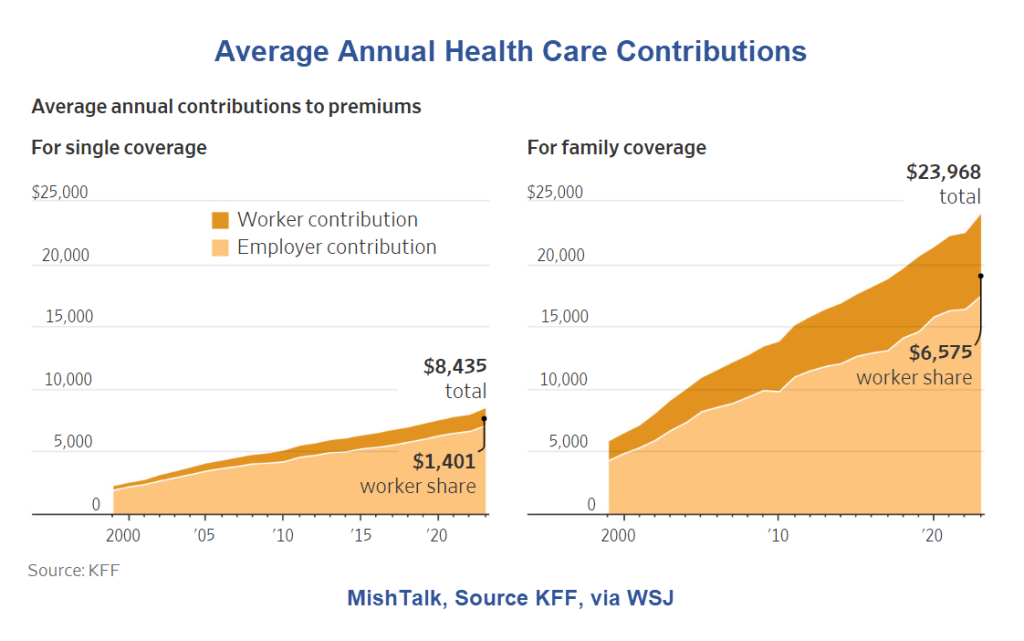
Mish Shedlock had a good article on medical inflation. Here’s two charts from his article. First, costs:

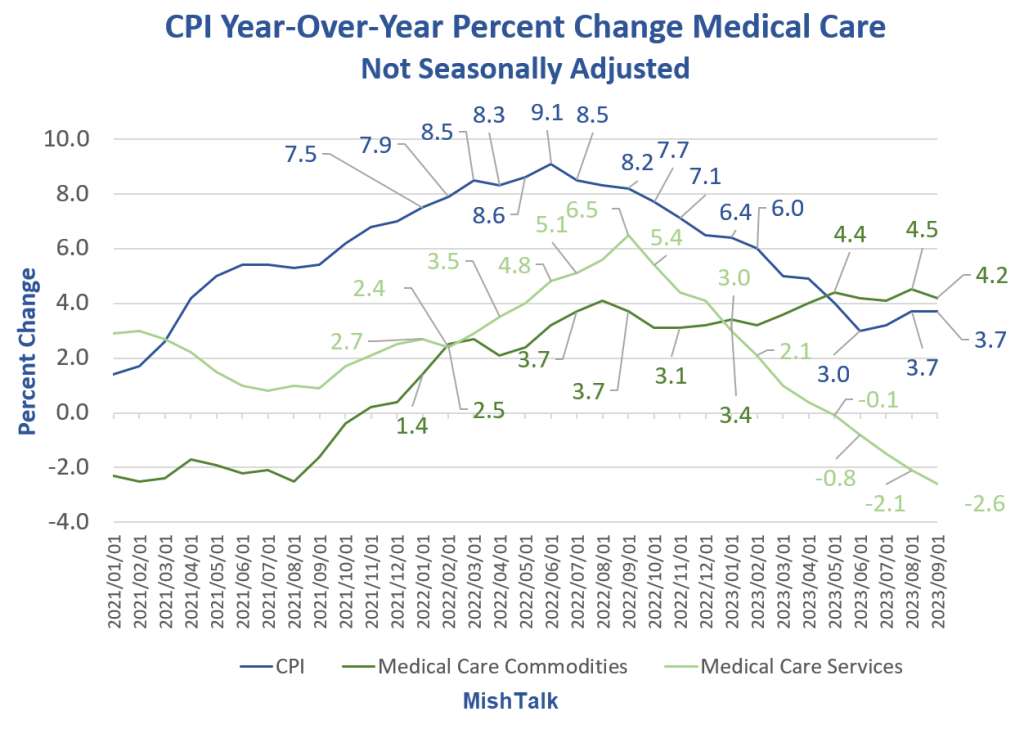
Second, CPI for medical:

You might be noticing a—slight disconnect. The cost of medical care services (which is what you care about as a patient) are dropping, according to the Bureau Of Labor Services (BLS).

Mish has the extended explanation, and you should read his whole post.

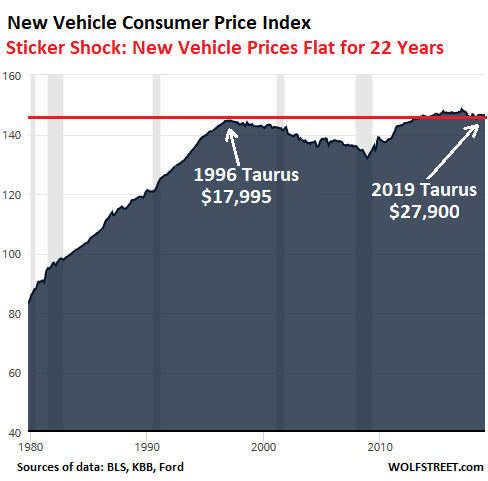
Now, back in 2020 I wrote an article on how inflation statistics are bullshit. One example was automobile costs. Here’s the chart from that.

Yeah. right.

The inflation statistics, at the this point, are complete bullshit. Absolutely worthless in entire categories.

When it comes to how good people feel two things matter: how many people have a job, and how much money they’re making. When economists look at wages, they look at “inflation adjusted wages.”

How much your money buys. So, since the inflation numbers are garbage, the inflation adjusted wages are garbage.

A long time ago Stirling Newberry gave me a rule of thumb, which is that people are fooled in generalities but not in specifics. Which is to say, people know what hurts or feels good in their own lives, though may be completely clueless about the generalities. But when you take a survey asking people how the economy is doing, what you’re really asking is “how does it feel for you and people you know.” The answer is “shitty.”

I’ve personally seen, in Toronto, Canada, foodprices increase at least two-thirds. If I buy the shopping basket I bought for $30 in 2020, it now costs me about $50. A lot of things have doubled in price. Rent is way up for most people.

And when I talk to other people, no matter where in the US or Canada they’re from, I hear the same thing. So I’ve never believed the BS talk about the “best economy ever.”

Back in the 90s, there was a rather good book titled, “Economists are bad for your health.” Economists are clueless. North of 99% of them missed the 2000’s housing and financial bubble, for example. The advice they give on how to run economies is almost always not just bad, but terrible, at least for 96% or so of the population.

The most important requirement to understanding the world is accurate perception. Truth, if you will. If you don’t know the truth, you’re going to draw the wrong conclusions. Economists believe BLS stats, so they’re full of it. Add to that the fact that Economics as a discipline is mostly wrong about almost everything macro, and economists are out to lunch in a very dangerous way.

(Note that I predicted the financial crisis, publicly, in advance and spent years before that writing about the bubbles. All the necessary information was available, if you didn’t think nonsense like markets being self-regulating and housing prices always going up. A correspondent once did a search to find out how many people predicted the crash in advance. He found 39. Where were all the economists, who are supposed to understand the, well, economy?)

Anyway, ordinary people are right. Their wages haven’t increased enough to make up for the increases in key prices. You can skip on a lot of things, but not food and shelter, and skipping on medical services is bad too. As for autos, well, most people need them or they can’t get to work or go shopping.

We have late imperial disconnect: the elites live in a world where everything is great, while ordinary people live in the real world, and it sucks.


Donors and subscribers make it possible for me to write, so if you value my writing, please DONATE or SUBSCRIBE

Open Thread

Use to discuss topics unrelated to recent posts.

China Is Transitioning Economically, And So Far Successfully

China from Deng (82) on, had two main plays.

The first play was a standard mercantalist export driven developing state. Low costs were used to create low cost goods primarily for overseas consumption. Foreign currency was plowed back into capital machinery acquisition. Foreign partners were given good deals and the decision makers become rich, but to play one had to give up intellectual property.

This is the standard industrialization sequences, followed by almost everyone, including Britain, Germany, the United States, Japan and South Korea.

It generally requires an already industrialized sponsor (Britain was an obvious exception to this, but the Dutch provided a similar service pre-industrialization.) For China that sponsor, from Deng on, was the United States: the US took the goods, sold the capital machinery, made profits and was generally pretty happy about the deal (just as Britain was while it sold its patrimony to the US for temporary profits.)

The second play was the housing driven internal capitalization market to make people at home feel good and fund local governments. Local governments (who control about 70% of the Chinese budget, far higher than any other major nation) oversaw massive development deals. Housing values rose, the governments made lots of money as they kept rising for decades. Similar to how for a long time now betting on rising real-estate prices in the US or Canada or the UK was a sure thing.

This synergized with moving peasants off the land and into factory and service jobs, which allowed for large commercial farms, seen as far more effective than small farms, let alone collectivized farms. (No one has been able to make collectivized farms work so far.)

This is standard, again, to industrialize you need a labor pool, and peasants tied to the land and ancestral villages aren’t free labor.
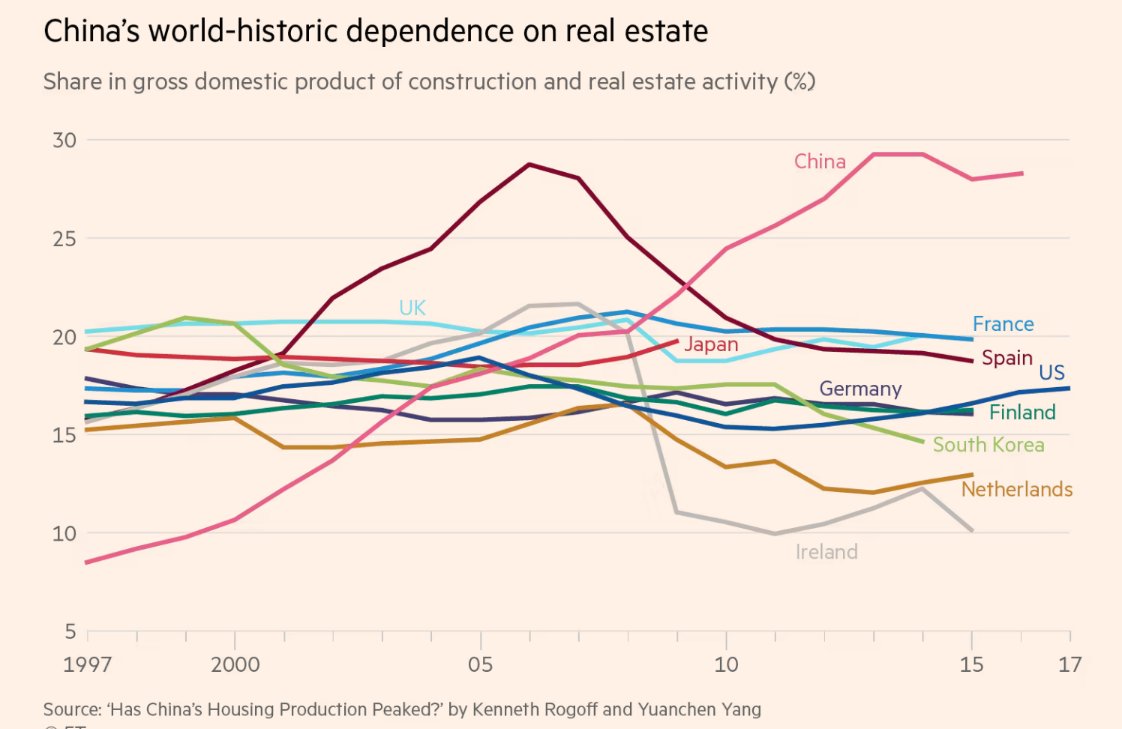
One problem with this play is that it is a “virtuous” or self-reinforcing cycle and it can get completely out of control (see above.) The second is that it makes local governments very dependent: they don’t want it to end, even though it leads to massive inequality and mal-distribution of resources.

But that chart shouldn’t be seen as entirely a bad thing: note that US housing prices are ludicrously high by restriction of supply. The Chinese ARE and did supply a lot of new housing. The problem is it now isn’t getting to people who need it.
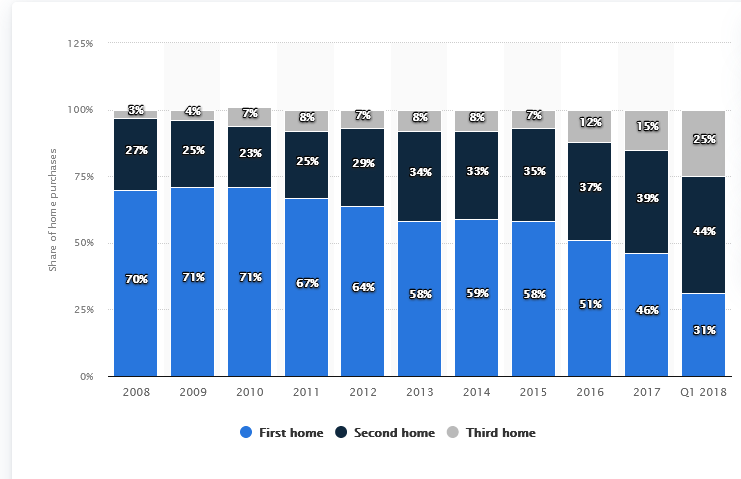
The above chart is pathological, and notice that it only goes to 2018. Anecdotally, young people in China, like in the US or Canada or the UK just can’t afford to buy a home unless their parents pay.

The second play, by the way, is often used independently. Turkey, for example, got about a decade and a half of prosperity out of it, but without the underlying “real” economy to support it, all it lead to in the end was inflation and economic weakness, because gains are always very unevenly distributed.

The problem with these two plays is that they are time bounded and lead to the middle income trap. They don’t develop a consumer economy, and income stagnates: far above undeveloped, but much lower than high income nations like the US, Japan and so on.

Likewise, these plays lead to extreme levels of inequality, as they did in the US during the gilded Age.

So, China had/has problems: high inequality; a gilded Age; housing which isn’t getting to those who need it. The social contract of “if you work and get a degree and so on, you’ll do well, is on the edge of breaking.”

But they’re working on it. Some parts they’ve already somewhat solved.

Solutions

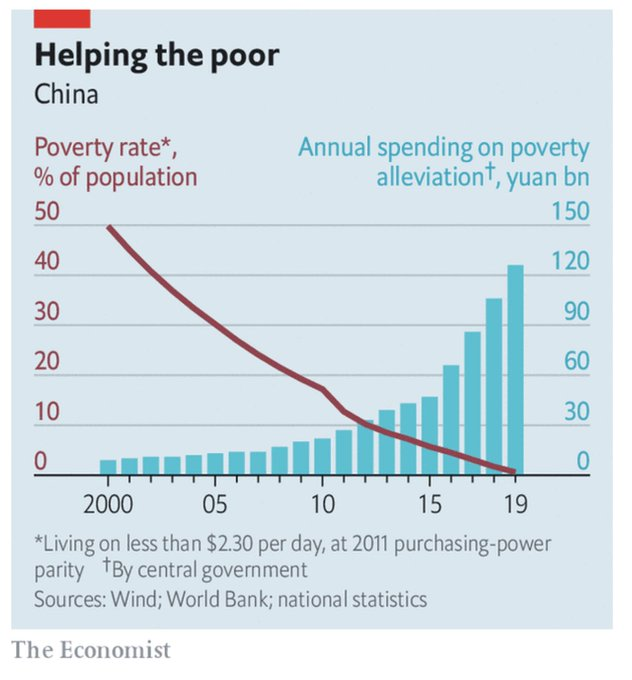
The first is poverty. The extreme poverty metric is garbage, but the chart still indicates that there’s a hell of a lot less poverty than there was even twenty years ago.

The second is what is called “moving up the value chain.” Countries which industrialize tend to recapitulate history, starting with textiles (the first industrialized goods.) But if you want to become a high income nation, you need to produce the highest value-add goods. China now does, and has even deliberately been moving out low value industry to other countries.
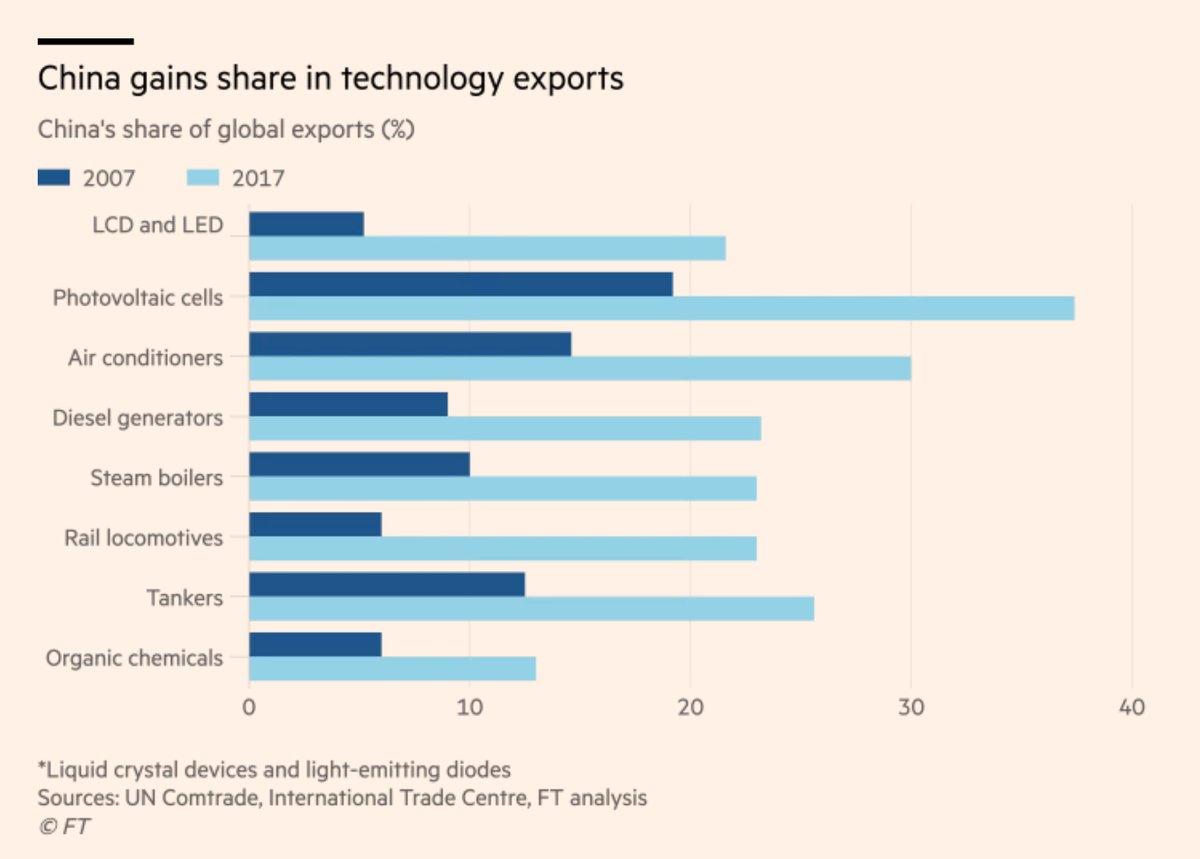
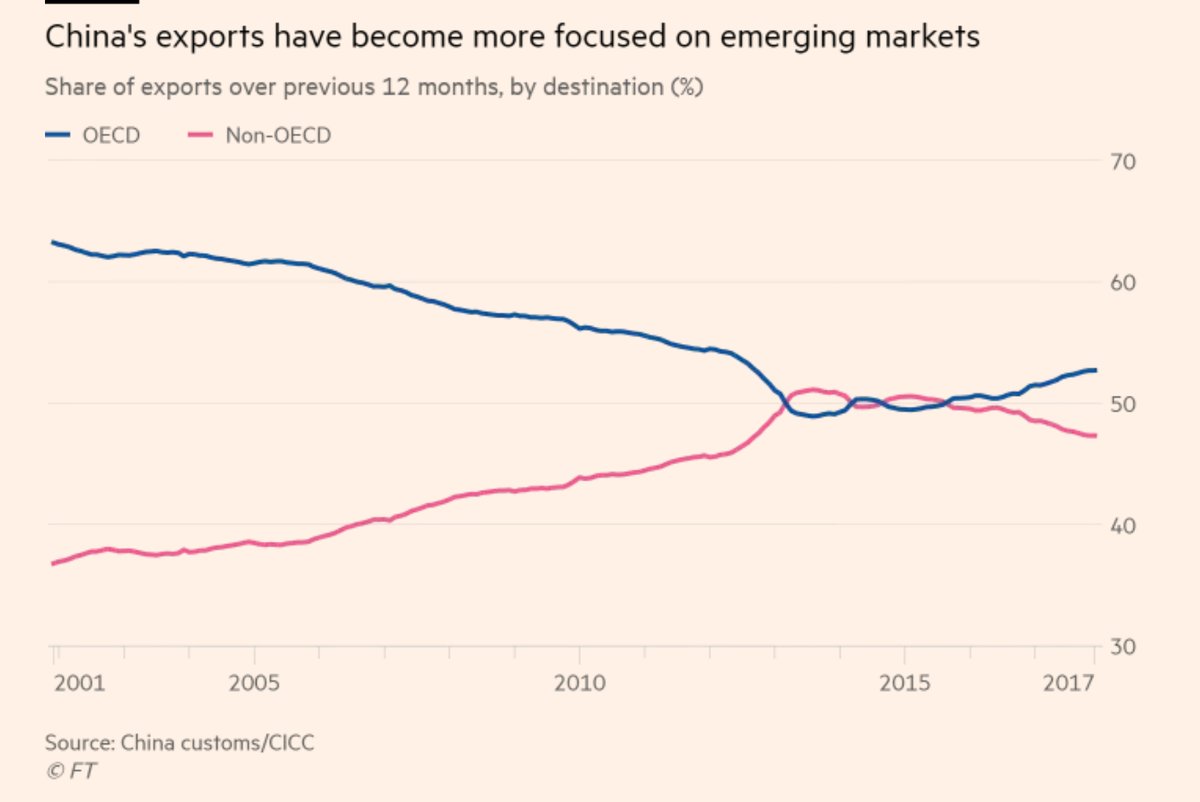
For a long time, if you wanted to buy advanced goods you had to go to the West, Japan, South Korea and Taiwan. That was it, and all of those are firm members of the “rules based order” or, really, of the US. Now you don’t, and China is absolutely eating the West’s lunch. France’s exports to its ex-African colonies, to name just one, have absolutely collapsed. China offers better deals with less political and military interference, and now that those nations don’t “need” France, they’re kicking France out.

But if the rest of the world doesn’t need to buy from the West, in the medium to long term, they aren’t going to sell to us, because we have so little they want. This where we move into Western collapse mode and is a large part of why, ex-climate change and environmental collapse, China would have already one, except perhaps for some shooting along the way. (Much like America’s ascendence was already baked in by 1900.)
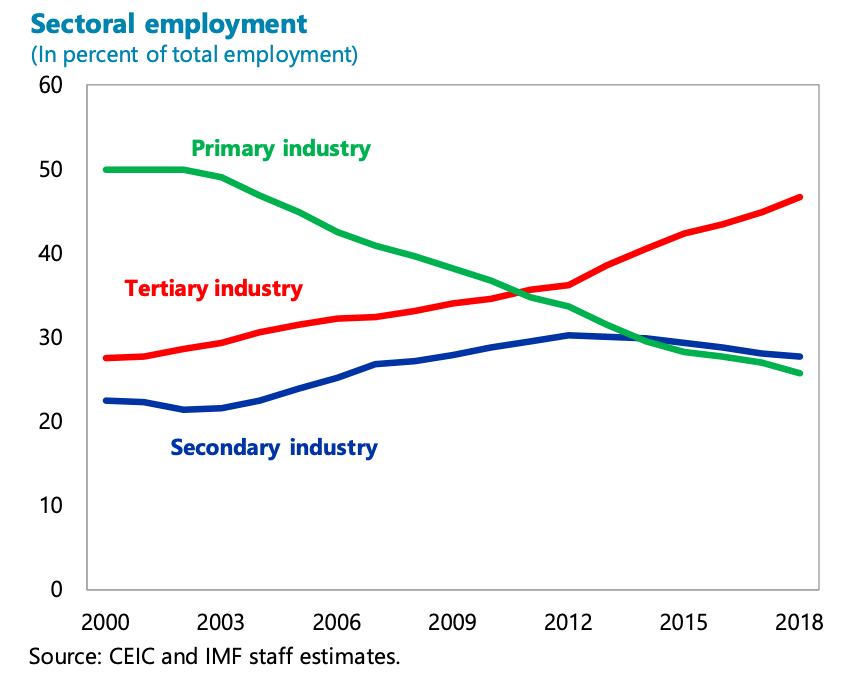
Moving to a high income, goes in two phases: first you increase manufacturing, then you increase services. (Manufacturing is secondary industry, services are tertiary, and primary is resource extraction in the chart below.) Again, you can see China is making this transition, and blazingly fast, too.
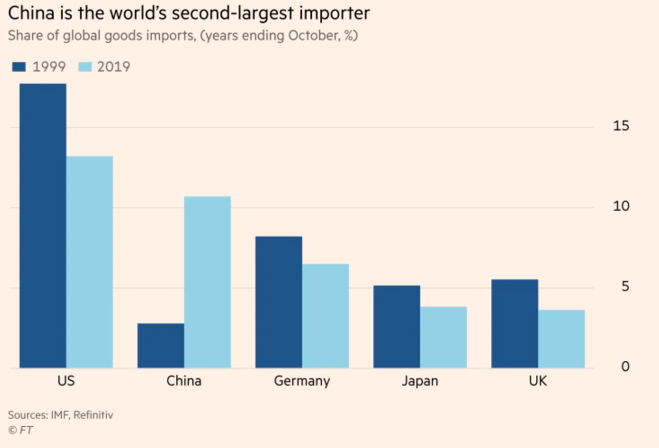
Key to being a high income nation is a consumer economy. While you want to create as much of the goods and services as you can domestically, there is always a transition from “living with what you have” and “spending almost all your foreign money on capital goods” to “we can now import stuff.” China is well on its way.
But China’s main issue now is the real-estate market. Prices are too high; it’s an investment and speculation vehicle; the people who need housing aren’t able to afford it, and since China has enough housing now, further investment is a mis-allocation of resources.

Which leads us to—
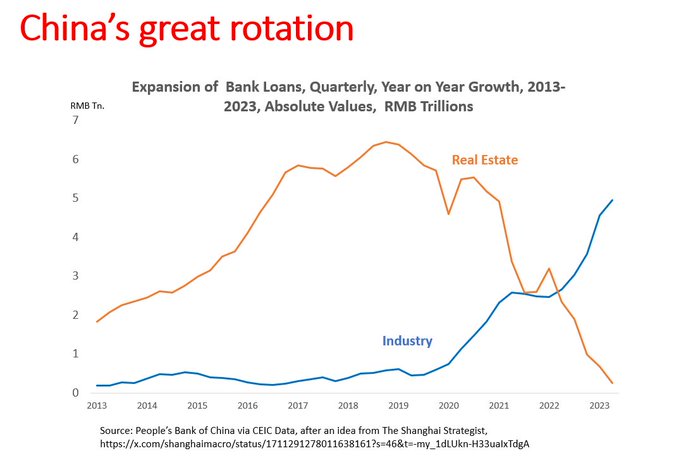
Boom. China is crashing the real-estate market. In the western press this is viewed as bad, an economic crisis, but it is necessary. Housing needs to become a commodity good, so that everyone can afford it and so that resources go to more needed areas.

And while making it to high income includes a lot of consumption, China has challenges which can only be met thru manufacturing, engineer and science. It needs to leap past the final western barriers in industries like semiconductors, biotech and aircraft. It has to transition to a clean electrified economy and prepare for climate change. (Really, to avoid a collapse, they have to build a massive sea wall along the northern coast, otherwise the northern breadbasket will wind up under water.)

From where I sit, China is doing most of its major economic policy correctly. Transitions are painful, and it is possible they’ll botch their transition, but these changes are necessary. Indeed, if the West is serious about re-industrializing, we need to do the same thing, with certain differences. We need to build more housing and collapse pricing, where they need to build less housing and collapse prices.

There’s more to write on China, in particular about climate change, demographics, Covid, Chinese dependencies and so on, and we’ll return. But for now, this is the big picture.

About two-thirds of these charts are from Albert Pinto’s twitter account. Worth following.

https://twitter.com/70sBachchan


Donors and subscribers make it possible for me to write, so if you value my writing, please DONATE or SUBSCRIBE

Page 81 of 436

Powered by WordPress & Theme by Anders Norén