The horizon is not so far as we can see, but as far as we can imagine

Author: Ian Welsh Page 5 of 436

Is Virtue An Advantage Or Disadvantage For Societies?

There’s an idea going around that virtues are anti-competitive. That being loyal, honorable, honest, generous, kind, etc… puts you at a disadvantage.

It’s one of those half true statements. It’s true if your society is shit, but in a decent society it can be disadvantage, and if a society has predominantly virtueless people in charge, or as the majority of the population, then the society as a whole is at a disadvantage against virtuous societies.

In a society where everyone is out for themselves or a small group, and where any behaviour is acceptable as long as it “wins”, like the US (notice that even child rape is acceptable to US elites, if it wasn’t, they’d punish it) having morals will hold you back, no question. If you won’t make decisions which impoverish mass numbers of people, or kill them, if it’s in your self interest or the interest of your small group (bank, political party, corporation, family, whatever) then you’re at a disadvantage.

The problem is that such societies self-cannibalize. Instead of growing the pie they fight over who gets how much of a slice, and what they do makes the pie smaller than it otherwise would be. (Ignore every dipshit who tells you how rich the US is. It’s less rich in real terms than it was 60 years ago compared to its competitors and in many cases even to itself. A CT scan in China costs about $50, and you get it the same day.)

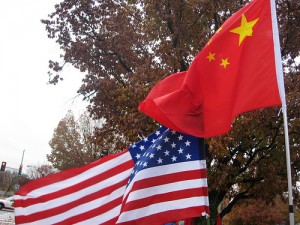
Whatever one thinks of China, the fact is that its elites concentrate on making the population more prosperous and the country stronger in real terms. They aren’t offshoring their steel production. They can build ships. They lift people out of poverty, they don’t shove people into it. There aren’t massive homeless encampments everywhere. They arrest senior party members and billionaires for corruption and even execute them for crimes.

They are better people than Americans. Doubtless that will outrage many, but if you think otherwise you’re engaged in special pleading. How many countries have they invaded and destroyed? How many people have they killed or impoverished, including their own people? They’re expanding education and healthcare, working hard to make housing cheaper, etc, etc…

This is an old observation. Societies which work for more people out-compete those that don’t. Lee Kuan Yee, the founder of Singapore was massively impressed with the Britain of the 30s and 40s because he saw, for example, that newspapers were simply left in a pile, people would take one and leave money and no one cheated. They dynamism of 50s thru 90s America (all a result of post-war government spending, by the way, the internet is a government creation all the way up and down) massively impressed him as well.

Good is stronger than evil. It always has been, because cooperative societies defeat societies which are competitive in the wrong ways. It’s alright to have some competition, but when it becomes existential and unbounded by ethics, it damages the host society. America can’t even ramp up weapons production any more because the firms in the business want to charge 10x what weapons cost. Russia and China, no problem increasing production if they choose.

None of this is to say that being evil doesn’t have advantages. Of course it does. But evil, as Tolkien observed, consumes itself over time: it is a war of all against all, with any alliances temporary and untrustworthy.

This is true even when dealing with “evil” societies. It isn’t the evil which makes them effective, it’s the parts they have that are good. Mongol loyalty and discipline and bravery, for example. Genghis Khan never had a single senior general or administrator turn on him. Not one. At the very least a nation needs to be good to more of its own members than than its opponents, but even this has problems, because what you do to external enemies eventually seems reasonable to do internally.

Good isn’t weak. Instead it’s hard. It’s easy to be evil, to betray, to hurt and to take advantage. But if you run your group or your society that way you will weaken it and in time that weakness will lead to destruction.

This site is only viable due to reader donations. If you value it and can, please subscribe or donate.
The Weirdness Of Getting Old

So, I’m now fifty-eight years old. My body feels it, though that’s more residual damage from various health problems than age, but my soul doesn’t: I feel like I’m still who I was when I was five years old, staring at multicolored fish in tide pools, making sand castles and telling myself stories about the freighters I saw steaming past my grandmother’s beach home.

When it comes to my life work, to understand the forces of history and civilization, it’s mostly given me a sense of the pace of change, and a feeling for momentum in human affairs. A human life, even a long one, isn’t very long. Human history operates on generations, with three and seven seeming to be the numbers which matter most.

A normal sub-ideological cycle (New  Deal and post-war liberalism, neoliberalism) is about 3 generations. Sometimes they can go longer, but making a bet of about fifty to sixty years for a run will usually work. The changes FDR made stayed substantially in place till 1980 with Reagan. Neoliberalism is dying as we speak. There’s always an overlap period, where the old order is dismantled, but substantial spars remain in place. It takes till the late 90s to repeal the major market reforms of New Deal liberalism, for example.

I was born in 1968. I was twelve when Reagan was elected. I lived the very end of the post-war order, and my entire teenage and adult life has been under neoliberalism. I watched as social services were cut, as every building went from “just walk in” to having security guards. I saw Universities go from being open to the public to closed. I remember the old “middle class” economy and I lived thru the transition to one where the top 10% does over 50% of all spending.

I predicted the ways that the neoliberal order would end, and was right about almost all of it: the rise of China, the end of dollar hegemony, elite capture, the effects of surveillance and electronic money, but in terms of a human life it has all felt like very a long time.

It isn’t, really, in historical terms. Fifty years isn’t very long, unless you’re living thru it.

Young adults today have the same relationship to the 80s and 90s that I do to to the 50s and 60s. They don’t remember them, but they grew up with adults who lived thru them. Heck, I knew adults who remembered the Great Depression, the 20s, World War I and II. My span—what I either experienced myself or what I heard about from people who were there goes from about 1910 to the current year. My teachers included Old Edwardians, Lost Generation types, Hippies and square jawed GI and Silent Generation types.

My parents had me late, so I was really raised mostly not by Boomers, but by the Silent Generation. My father was in training as a pilot when the war ended. Had it gone on another six months he’d have been deployed.

They were very foreign people, not at all like those who are adults today. There was an acceptance of personal violence that has faded, but also a sense of honor which no longer exists. The male adults who were most important in my life were all men whose word you could trust. They might be assholes, many of them were, but if they said they’d do something, they did it. They rarely lied, and they believed in duty and honor.

That’s all gone now in the West. I hardly meet anyone who has principles I trust them to stick to under duress. There isn’t even a pretense any more. Hypocrisy as the tribute vice pays to virtue is gone in America. Trump and the people around him don’t even pretend to be honest, good or honorable. They’re all cruel bastards looking out for number one and willing to hurt or kill anyone, and they don’t even pretend otherwise.

One can see that as preferable to the hypocrisies of Clinton, Bush and Obama, and in some ways it is, but it’s also an indication of how far we’ve fallen, that our lords and masters (and they are our masters, and we are their slaves) don’t even pretend to have any virtues. The only virtue left is being rich or powerful, if you’re neither, you’re nobody and if you’re nobody, in the eternal words of George Bush Jr, “who cares what you think?”

They have, of course, in becoming virtueless scum, destroyed their host nations. Both Europe and America are going down, and hard and it is precisely because of the loss of virtue in the ruling class and the inability and unwillingness of the ruled to do anything about it.

It’s not that you have to be “good”, precisely. It’s that if your culture is lead by people who are cowards, faithless and concerned only with personal wealth and power, well, they can’t run a society effectively. They will always run it into the ground. The punishment for neoliberalism is China’s rise and the end of hundreds of years of European superiority.

And I (and most of my readers) have had to watch this. The destruction of our societies and the aggrandizement of the worst among us. I assume these days that if someone is very successful, either in politics or private enterprise, that they are untrustworthy and effectively a psychopath, and the vast majority of the time, I’m right.

It’s felt very long. I knew it could not last. I knew how it would end. I fought to change it, and failed (no surprise).

This is nothing new, of course. Confucius felt this way, and died convinced he was a failure. “Stop doing all these evil things,” he screamed, and no one listened. The Chinese are good at this. They recognize there are times when public affairs are so evil that good men and women can do nothing but withdraw and try and live good lives, because any success in public affairs can only come at the cost of one’s character. To succeed, to become a billionaire, in America today, is to scream to the heavens “I am evil. I make money hurting people. I care only about myself and perhaps a few friends or family.”

But the torch passes on. China has its problems, but the Chinese leadership has, in fact, mostly made their people far better off. When they say they’ll do something, it isn’t a lie, they track what they do and publish the results against their promises. If they say they’ll build a thousand parks, be sure a thousand parks will be built.

And so it is this I have seen over the span of my life: the civilizational torch passed from the West to the East, from Europe (America is European, sorry) to China. I’ve seen the West lose its virtues, get rid of the civil liberties which were our greatest glory, and in losing its virtues lose its place.

Now we come to the rise of the Chinese century. I wonder how much I’ll see, and how weird it will be to no longer be a member of the important, ruling civilization, but only a barbarian, watching my civilization collapse and the glory and the future move elsewhere.

May the Chinese do more good than evil with their time in the Sun, and may they remember too, that the sun always sets.

And I’ll keep watching, because while most of this has sucked, the one virtue of interesting times is that they are interesting, and age’s great advantage is perspective.

This site is only viable due to reader donations. If you value it and can, please subscribe or donate.
Open Thread

Use to discuss topics unrelated to recent posts.

Genocide & Brown Shirts Are Being Normalized

So we have an ongoing genocide in Gaza. The death toll, as estimated by scientists, is probably north of half a million. (The official toll is laughable and obviously wrong, growth slowing over time.)

Trump was able to use oil piracy and a kidnapping to bend Venezuela to his will.

Now he’s cut off oil to Cuba, and because of how modern economies work, that means famine.

Deliberately causing a famine is genocidal.

This genocide creep. America could have done this to Cuba any time after the fall of the USSR. Sanctions were nasty and caused a lot of suffering and even deaths, but they didn’t rise to the level of “let’s just starve them to death. They’ll give in.”

Mind you, they tried to do this to Yemen, engineering a low-grade famine. Deaths were in the low to mid hundreds of thousands. Genocide. It was intentional, everyone knew that’s what was the intention.

In Israel a lot were killed by arms, but the cutting off of medical supplies, fuel and food I’m sure will have killed even more people.

Multiple times the US and/or its allies has engineered a famine. In Yemen with Saudi Arabian help. Israel with Israelis taking the lead, but the US supporting it all along the way, as when it cut funding to the primary aid agency, UNWRA.

Now Cuba.

This is the way it works. Whenever something evil is done by the powerful to the weak, they look to see if there were consequences. If not, they expand, moving inwards. Yemen is a place no one cares about in the West: there wasn’t a lot of coverage. Palestine got tons of coverage and even law cases, but in the end no one powerful suffered, and the genocide was and is pushed thru. Opponents lost their jobs, went to prison and were deported or lost their banking access (Albanese, for example.)

Since those responsible for the genocide got away with it twice, they’re now doing it a third time.

Everything the powerful do to someone else is something they are willing to do to you if they think it’s in their interest, or just fun.

In the US we have the ICE crackdowns. I wrote for years that if Trump went wild, ICE would be his brown shirts, and here we are. Substantially we have masked men in unmarked cars without badges or in most cases judicial warrants, terrorizing Americans. Not as bad as what Israelis do to Palestinians or America and NATO did in Afghanistan and Iraq, but the same sort of thing. Just call everyone an immigrant or a terrorist and do what you want to them. Refuse to obey the law, ignore judges (what can they do) and on your way.

Start internally with “immigrants” but sweep up lots of citizens and treat them abusively, without reference to their rights.

Set those precedents. And if you get away with it: if no one important winds up punished, then you can expand it. Go after the citizens next. Kick out native Americans. Keep people locked up for months on end without any real judge even knowing about it. Ignore health care problems, let them suffer and die.

Every time the elites of any country get away with abusing regular people, whether foreign or domestic, the line moves on what is acceptable.

We fight for other people to be treated well not just because we aren’t monsters, but because we know that it could be us. Every time we fail to make sure other people are treated fairly and well, we make ourselves less secure. What was done to them can now be done to us. It is for this reasons that even people accused of the worst crimes, like pedophilia and rape have rights, because an accusation isn’t proof and the government and police often get things wrong or lie.

The precedents are now firm that anyone who isn’t in the elite has limited rights: no free speech, no right to see an attorney, no right to security against search and seizure, and so on.

Genocide and ignoring the rule of law, even ignoring judicial rulings, are now the norm.

And the goal isn’t genocide of foreigners. The goal is to get to the point where they can lock up or kill anyone they want domestically.

That’s what American elites want. If an election is going to be lost, fix it. If a person is against a genocide, lock them up or deport them or de-bank them. Anyone who is inconvenient because they oppose what the elite group in power find the rule of law is increasingly no shield. It’s been broken too often, elites know they can mass murder, rape and traffic children and teens with few or no consequences.

What has been done to outsiders will increasingly be done to us, core Western citizens. By failing to protect others, we set the precedents that we were no longer protected.

Never think “it’s OK to do monstrous things to outsiders” because everyone who isn’t an elite eventually becomes an outsider.

This site is only viable due to reader donations. If you value it and can, please subscribe or donate.

Pre-Internet Journalism Was Optimized For Information Transfer Efficiency, Post-Internet For Inefficiency

We’ve all seen the titles of articles “Big Company decides to do something BAD” or “This famous actor’ adorable dog saved his life!”.

Click bait. The information you want is “what the big company is what big company did what, or who the actor is.

Back when we had newspapers the titles would have been “X AI is making degrading nudes of people without their consent”. It would name the actor.

The rules of pre-internet Journalism were as follows: the most important information goes into the headline. The first paragraph summarizes the article and each paragraph after includes information in order of importance, with the least important information in the second last paragraph. The last paragraph sums up the article again.”

The rule of thumb I was taught is that half the readers only read the title and that you should expect to lose half the remaining readers per paragraph. I don’t think it was always that bad, and it varied by type of article, more people will read an entire book or movie review, for example, but the thrust of it was correct.

Newspapers knew that people wouldn’t read the whole article so tried to get the most important information to them first, the second next and so on.

Modern internet journalism optimized for clicks and for time on site. The title leaves out the important information to get a click. The article is often written so that the most important information is near or at the end, so you have to read all the way thru, with paragraphs before that being teases, meant to keep you reading.

One reason people are more likely to be ignorant today is simply this change from “get them the information they need as fast as possible” to “get them to click and stay on site as long as possible.” Bonus points if you can get them to click on more links inside your site. While strictly speaking internet news isn’t optimized for inefficiency, it might as well be: that’s the effect.

Overall I think that the internet has been bad for humanity. I don’t make this judgment call lightly, I make my living here, after all, and there’s a lot I love about the internet, especially the ease of looking up information.

Inefficient information transfer is just one part of why the internet has been bad for humans, I’m going to return to this issue over and over during the next few weeks.

This site is only viable due to reader donations. If you value it and can, please subscribe or donate.

Open Thread

Use to discuss topics unrelated to recent posts.

The China Super Boosters Are Super Tiresome

I stand second to few in my admiration for how well China has done. But the super boosters are super tiresome. If China had been a small nation, the best they would have done is parallel Japan: do very well, then the US breaks your legs. Reminds me of Americans in 1950 or 95.

They remind me of many Americans in 1950 or 1995. “We are at the top because we are the best. Our governance is superior, our culture is superior. It’s just because we’re better than you all, and we always will be.”

I doubt the CPC’s leadership is this stupid or arrogant (yet). They remember China getting its face pushed in for over a hundred years.

China is at the start of a good run. Leaving aside climate change and ecological collapse it’ll last 100 to 150 years, EXACTLY the same as the American run. China’s current rise is just a hegemonic replacement cycle story. Not even as impressive as Britain creating the industrial revolution. This is just taking the lead, China has done NOTHING revolutionary yet. This is a dirt standard hegemonic replacement cycle. Happens every 150 years or so.

(The American run began in the 1880s, when they overtook Britain in industrial production.)

The reason China succeeded when other nations didn’t comes down to three things: competence, the prior hegemon’s help and size. All three were required The Japanese were super competent after WWII, absolutely amazing. When they started to challenge the US, they were forced into the humiliating Plaza Accords. If China was the size and population of Japan, the same thing would have happened to them, no matter how “superior” their culture or leadership is. India failed despite its size because the government and leadership were (and are) terrible.

This also makes Chinese booster sneering at smaller nations the US has beaten down tiresome. It’s not the same situation. “Oh, they’re incompetent.” No, idiot, Cuba is an Island nation with 9.75 million people and no resources to speak of which has been under sanctions for every year of its existence since it through the Americans out. That they even still exist is amazing. Venezuela had 28 million and is close, Iran (though it is larger and further away and thus had a far better hand to play) has likewise been under sanctions since day one, and the Iraq/Iran war was sponsored by America.

China has done great. No regular reader of mine can think I don’t admire the hell out of China’s leadership and people (and I like Chinese culture and Chinese people and have all my life, I was practically raised by Chinese for my first five years.)

But stop with the glazing and remember that hubris is always punished.

This site is only viable due to reader donations. If you value it and can, please subscribe or donate.


How Dependent Is Canada On The US?

This “issue” has flaired up again as Trump attacks Canada again.

The short answer is that in the short term Canada is moderately dependent on the US and the long term it is hardly dependent on America at all.

Right now we (Canada) have a lot of trade with the US. We buy mostly finished goods, and pay fees to American tech and copyright holders. The US buys oil (which it cannot easily substitute away from in the short term). The US buys cars from us (#2, but deceptive, since they’re made by US companies in Canada), a small amount of machinery like nuclear power equipment, and a grab bag of other industrial goods. We also sell Potash (about 80% of what the US needs) and aluminum to the US, for which there is no easy substitute: these things are in global shortage, and the best alternative for potash is Russia and despite various bullshit about American/Russian alliances, Russia doesn’t trust the US at all and would not be a reliable trade partner. Without potash American farmers are screwed, since it’s used for fertilizer. America can’t significantly improve domestic potash production, there isn’t enough in America.

There’s substantially nothing we buy from the US that we can’t get from China for less or Europe for a bit more. And what the US sells Canada is high value add goods, not resources. We’re a valuable customer.

And, at the brass tacks level, if all trade stopped tomorrow, Canada could feed itself and would have plenty of energy. Our houses would stay hot in the winter and cool in the summer, our trucks would have gasoline and diesel, our trains would run and our planes would fly.

Canadian dependence on America is about 80 to 90% a legacy issue. We currently do a lot of trade with America, but we don’t have to. We can sell manufactured goods to Europe, and resources to China and buy from China and Europe and various other nations. Nothing we get from the US is a “must have with no feasible replacement.”

So the game is very much along the lines of the old joke about saying nice things to a barking dog while you find a rock. Not that we will ever fight the US unless they invade, but we just need time to disentangle our economies and move to reliable trade partners.

America could hurt us a lot if they cut of trade, but it wouldn’t be a mortal blow and we would recover. We’d prefer to do it slow, but if we have to do it on an emergency basis it can be done.

Canada doesn’t need the US. It just needs some time to change trade partners, and that’s what Carney is doing, because as he has said, it no longer makes sense to do business with the US.

We’ll talk a bit more about trade with the US from a global perspective soon, but basically the US has a legacy trade position: no one needs to buy from it any more unless they’re stupid (Europe refusing to buy Russian gas). Selling to it is still necessary for many nations, but that will become less true over time.

America’s prosperity and power are both legacies, they have no solid foundation to stand on any more. Ironically Canada is in a better position in the middle to long term than America simply because it only has 40 million people and is a continent sized country with a continent’s worth or resources. The only significant danger is an American invasion.

This site is only viable due to reader donations. If you value it and can, please subscribe or donate.

Page 5 of 436

Powered by WordPress & Theme by Anders Norén