
The horizon is not so far as we can see, but as far as we can imagine

Author: Ian Welsh Page 6 of 451

America Almost Out Of Long Range Strike Munitions

Why did Trump call off his big attacks? Why did the US stop attacking suddenly?

he U.S. Army has used up much of its stockpile of highly accurate long-range missiles during its five-month war with Iran, according to three people familiar with the data, raising concerns about the military’s ​readiness for future conflicts.
The missiles are principally the Army’s surface-to-surface weapons, known as Army Tactical Missile Systems (ATACMS) and Precision Strike Missiles (PrSM). The U.S. has used “virtually all” of these weapons, according to two of the sources.

There are also claims that the US is running out of long range air to ground munitions as well.

Combined these two things mean that if America wants to keep bombing Iran, they have to actually fly over Iran and put themselves in much more danger from Iranian anti-air, and by all accounts the Iranians still have plenty left.

This problem comes from the same place virtually all US problems come from: rather than optimizing for results (production) everyone optimizes for profits. Selling fewer missiles for much more money is a better business deal, yes?

And that the US cannot significantly increase the production is due to de-industrializing: sending most of America’s key industries to China, because hey, it doesn’t matter where things are made.

China is now the US in WWII. They could, in a war, easily retool to produce literally millions of drones. They can produce a hundred warships per warship the US produces. Etc.

These are systematic issues. De-financialization is politically impossible. Without de-financialization re-industrializing is not possible, as it would require companies to make far lower profits. Chinese companies are MUCH bigger than American ones, and make less profit (not revenue, but profit) and have far lower valuations.
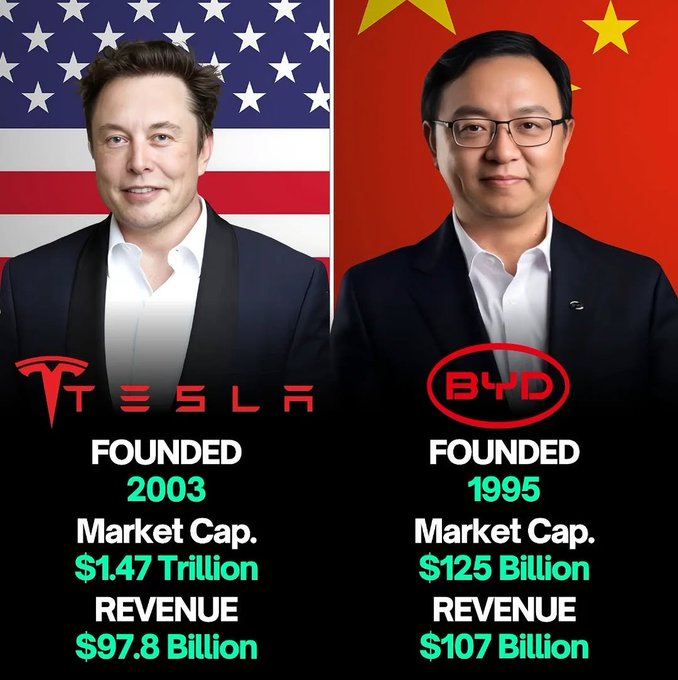
In 2025 BYD sold 2.26 million cars. Tesla sold 1.64 million. And China has many auto companies.

The mindset for scaling and the mindset for profit-maxing are very different. American elites are all looking for moats: they all want to be able to charge more for a product than it is worth because no one is competing with them on price. (This is why Chinese EVs aren’t allowed in America: they compete on price and the American car industry would cease to exist on contact.)

America lost the Iran war over fifty years as it changed from an industrial power to a financial power. Power comes from what a country can actually do. What it can buy from other countries is a minor consideration unless it has the ability to force them to sell, and that ability comes from what the country can do. Against Venezuela and Cuba, the US is still strong enough. Against a middle power which prepared for war and knows how to use geography, not so much.

In general terms, everything that is happening was predicted decades ago by objective people looking at the trends. Power comes from capability, America was systematically getting rid of that capability to optimize for the number of rich people it could generate.

Military decline, industrial decline, technological decline: all of this comes from making profits the end-goal, rather than the mean by which worthwhile goals were achieved.

“We need to make a profit do X” is very different from “we do X to make a profit.”

What I write here is for the benefit of everyone, but alas, I live in capitalism and I, and the site, take money to keep running. If you value the writing here and can, please subscribe or donate.

Facts On the Ground In Ukraine

Escalating against a more powerful foe is usually a bad idea.

Ukrainians are finding this out now. There’s no denying that Ukraine’s strikes on Russia oil infrastructure, especially refineries have been effective, or that its strikes against Russian shipping had an effect but that campaign led to Russia changing its strategy as well.

It has basically turned Ukraine into a landlocked country with massive strikes against Ukrainian ports. This is as the harvest needs to be sold.

A systematic attack on gas and diesel distribution in the country, by taking out gas stations, has made logistics within the country extremely difficult. It’s not just that Ukraine is landlocked, it’s that once you get into the country by land, it’s hard to move at all.

This has always been the problem Ukraine faces: Russia is just more powerful. Putin was very restrained for most of the war, not taking out dual use infrastructure, letting power stay on, etc, etc… This is the sort of stuff that the US usually takes out first, as it did in both Iraq wars. Russia didn’t.

But while Putin has been remarkably humane for a wartime leader, there is an implicit quid-pro-quo here: we leave certain things alone and you return the favor. Ukraine, knowing it was slowly losing by accepting that status quo has broken it multiple times and each time Putin’s release of constraints on the Russian military has meant that Ukraine was hurt worse than Russia.

It’s instructive to notice that in the Iranian war the US has actually been fairly restrained compared to its normal operations, for the simple reason that while Iran can’t hit the US homeland, it can hit US allies infrastructure. So Trump’s latest promise to turn off all the lights in Tehran came to nought, as have the past threats, because Iran can turn off the lights and water in the Middle East, and more importantly, smash oil production and refining in ways that would take a decade to repair, even as US petroleum reserves keep dropping.

John Arnold put together a good timeline:

March 23: Postponed announced attacks on Iran’s power grid, citing “very good and productive” negotiations March 26: Extended deadline by another 10 days; negotiations were “going very well.”

April 7: Two week ceasefire to give time to conclude a proposed 10-point plan April 21: Extended ceasefire indefinitely after mediators requested more time May 18: Held off a major strike because “serious negotiations” were underway

June 11: Canceled strikes hours after threatening to hit Iran “very hard,” claiming a negotiating breakthrough

June 17: Signed an interim ceasefire agreement ending hostilities and beginning a 60-day period to negotiate a final agreement

July 27: Paused bombing campaign to give diplomacy another chance

August 1: Canceled planned attack after claiming that Iran had agreed on parameters of a deal

Iran says there’s not only no deal, but they aren’t even talking.

So deterrence has, to some extent, worked in the Middle East, but it hasn’t worked in Ukraine.

Zelensky is now offering Russia an “air campaign” cease fire: they’ll stop hitting Russia’s oil infrastructure and ports in exchange for the same.

Too late is my guess. “Now that this strategy is hurting us more than you, let’s stop” isn’t likely to be all that convincing to Russia.

Ukrainians are resisting conscription massively, the Russian army’s advance is slow, but it continues to advance, and Ukraine’s almost out of interceptors, since they’re going to the Middle East and Israel. A promise to let Ukraine make its own patriot missiles is unlikely to work: if they build them in Ukraine, they can be hit. This isn’t like drone manufacture, you can’t farm it out to thousands of dispersed households: it’s need a real factory, and the Russians will find that factory and hit it. Oh, and Ukraine’s post-war population is likely to be ten million less than the pre-war population, with women massively outnumbering men.

Ukraine needs a comprehensive peace deal. Much like America in the Middle East, this is a war it cannot win and which hurts it more than it hurts Russia. When you can’t win a war, you make concessions and go to peace. Denial of reality is not a war plan, it’s a way of marching to doom. At some point the Ukrainian army will collapse, and the conditions that Russia imposes in an unconditional surrender scenario are a lot worse than those they’ll get, even now, in a negotiated peace.

The same is true in the Middle East. Yes, Iran can’t conquer America, but what happens when diesel and gasoline and fertilizer and plastic and medicine shortages all hit the US mainland? The deal America gets in that situation is worse than the deal it gets if it makes peace now.

When you’ve lost a war, you’ve lost the war. Making your opponent prove it across the board will never lead to a better outcome.


What I write here is for the benefit of everyone, but alas, I live in capitalism and I, and the site, take money to keep running. If you value the writing here and can, please subscribe or donate.

Open Thread

Use to discuss topics unrelated to recent posts.

SpaceX’s Rug Pull Is Making Me Laugh

So, SpaceX’s stock is down to $108. It started at $150. It spiked as high as $225. (Hope you didn’t buy it then.)
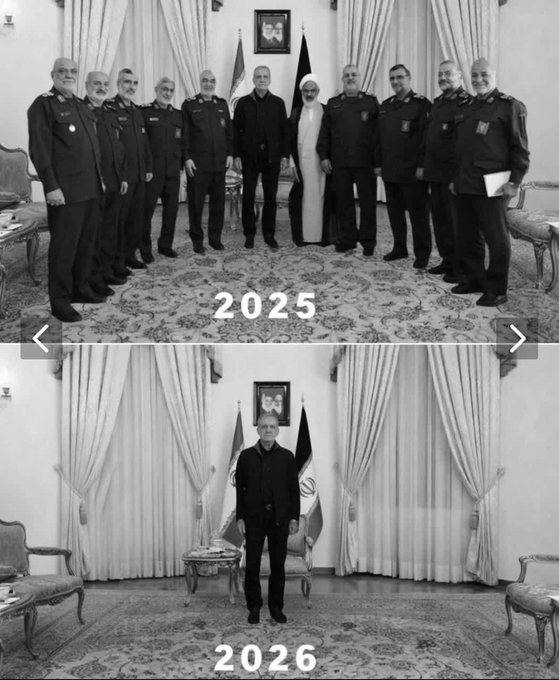
Ouch.

This was completely predictable, because SpaceX doesn’t have a product worth its MASSIVE valuation. Everything was done to spike SpaceX’s initial offering, including letting it into multiple indices, which means that pension funds and so on were forced, in effect, to buy it.

Meaning your pension fund just took a huge loss.

The key to SpaceX’s valuation, such as it is, is reusable rockets.

But…

The news comes just days after Chinese state-run media showed a Long March 10B rocket booster being caught by an offshore recovery platform, indicating the country was making major strides in catching up with SpaceX’s reusable rocket tech. Over the weekend, an experimental Japanese reusable rocket safely took off and landed, suggesting the nation may be right behind China as well.

Beyond some steepening international space launch competition, experts believe SpaceX’s transformation into an “AI play” may be closely related to its Wall Street woes, as the BBC reports.

“Everyone saw SpaceX as an AI story,” CFRA investment research analyst Keith Snyder told the broadcaster.

“With Elon Musk, any company he touches gets people excited,” he added. “But this was also the first time people felt like they were able to invest in something that was being marketed as an AI play.”

I predicted years ago that Musk didn’t have a moat on reusable rockets. The problem is simple: once the Chinese get a tech, they an always scale much better than competitors, because they have a robust, low priced industrial sector due to actually having competitive markets and useful industrial policy.

As for X being an “AI stock”, well, generally Grok is and has remained by behind most other major AIs in performance benchmarks. There’s no particular reason to believe it’s going to win the AI race, and it’s expensive and closed source, so how it’ll make a profit is unclear to me.

Musk is the world’s greatest conman. Oh, he’s done some important stuff, but it’s been years now since he actually pulled off anything major and real: electrical cars, batteries, reusable rockets are all well in the past. Tesla is only kept alive by the refusal of the US and EU to let much cheaper Chinese EVs into their markets. Spaceship keeps failing. Musk is personally toxic with the sort of people who buy EVs in Europe and the US: liberals and left wingers who believe in climate change.

Anyway, I hope you didn’t buy SpaceX unless you were taking advantage of the rug pull to do a short term trade.

This is just another example of “make the rich, richer” and American delusional belief in their own superiority. Musk is the world’s first trillionaire, but he isn’t going to stay that way.


What I write here is for the benefit of everyone, but alas, I live in capitalism and I, and the site, take money to keep running. If you value the writing here and can, please subscribe or donate.

Just Let the Peons Die, The Rich Must Get Richer, French Edition

Sometimes even I can be sickened by the banality of evil:

“Heavy users of healthcare”, aka: the sickest people.

Always it is the weakest who are targeted. Once we taxed the rich to help the poor, now we kill the poor so the rich can afford another vacation property or mega-yacht, or, really, keep up with the Musks.

When the revolution comes, people like Macron need to be charged with mass homicide, and either be executed or sent to prison if (when) they are found guilty.

The West’s rich are in a red-Queen’s race with each other. If you fall behind, you get bought out and even if you still have lots of money, you’re no longer a player in the game. To keep their place in this game they must immiserate everyone else. The other option, to stop playing the game and put in controls over buying out other members of the elite never serious occurs to them.

It’s similar to how carbon taxes are always regressive, rather than massively hitting private jets and private mega-yachts and people with multiple homes. Nope, hit farmers and ordinary people. Certainly don’t really tax oil majors.

The West has only one inviolable rule during this sub-ideological period: the rich must always get richer. Everything else is sacrificed to that goal.


What I write here is for the benefit of everyone, but alas, I live in capitalism and I, and the site, take money to keep running. If you value the writing here and can, please subscribe or donate.

Capacity v.s. Desire: What I Got Right & Wrong At The Start of the Gaza Genocide

Regular readers will remember that I thought the resistance could defeat Israel over the genocide in Gaza. Iran, Syria, Iraqi militias, Hezbollah and Ansar-Allah.

I was right.

They could. But the decision was made not to.

I base this on the fact that Iran is defeating the US and Israel.

If they can do it now, they could have done it then, when they still had Syria and Hezbollah hadn’t been mauled.

They didn’t because they didn’t want to. They still don’t: what has changed with the leadership is a willingness to defend Iran and Hezbollah in southern Lebanon. The MOU failed, ultimately, because Israel would not stop attacking in Lebanon.

When the US and Israel took out the previous leadership, they changed the desire: what Iran wanted to do. Iran is no longer willing to play nice, and it is willing to stay at war to help Hezbollah. It wasn’t willing to go to war to help Hezbollah or stop the Gaza genocide before, and it won’t stay at war to stop the genocide now. It will, however, try and stop the ongoing ethnic cleansing in Southern Lebanon, which is more than the Lebanese government will do, so there’s that.

There are three parts to understanding in situations like this

  1. What can be done.
  2. What elites will do.
  3. What the consequences of action or inaction are. The real world has the final say.

The consequence of Iran not intervening was the death of substantially all of their senior leadership, and the same happened to Hezbollah. Oh, and at least half a million deaths in Palestine (if you believe the official numbers you’re so stupid I’m surprised you can breathe.) And, of course, the loss of Syria.

(Slightly inaccurate, one other person survived)

There was a complete insistence on never seizing the initiative or even responding significantly to Israeli or American attacks, so they just sat their and let Mossad and the CIA line up their ducks and knock them down.

This is always the hardest part of analytic prediction of events. There really is a lot of freedom at the top: they have a great deal of choice about what to do and what not to do. (Trump has shown that, contra arguments I heard for decades, that in fact, the President can “just do things”.)

Constitutionally cautious, Iran’s leadership was unwilling to ever fire first, or if fired on, to even fire back in a genuinely painful fashion. They certainly weren’t willing to shoot a missile to save an ally.

And so, emboldened by their apparent weakness, the Israelis and America eventually went to war with them: after stripping them of their Syrian ally, shattering Hamas and badly damaging Hezbollah: after weakening their allies, whom Iran refused, repeatedly, to defend.

But, and this is the important point: Iran always had more missiles and drone and production ability to run the US and Israel out of interceptors. It always had the ability to win a war, its leaders just didn’t have the desire.

I got the capability right, and the intention wrong. A lot of people got it the other way around: they assumed America and Israel were stronger than Iran in a local fight, and that Iran was holding back because they were weak. Since they thought Iran was weak, starting a war made sense.

It’s good that Iran’s new leadership has decided there’s an ally they won’t let die rather than do nothing, even if it comes after half a million dead Palestinians and the capture of Syria by actual terrorists. And it’s also true that Iran has done more than anyone nation except Ansar-Allah (oddly, the only actually ethical nation in the entire world: the only one actually willing to go to war to stop a clear genocide). So I don’t want to be too harsh.

But the bottom line is that if Iran, under its old leadership, had fought sooner they’d have had a lot more allies, and been in a stronger position militarily. Perhaps being 100% the clear victim and reasonable party is worth the losses, there are those who argue it is so.

But that’s a lot of dead, maimed, tortured and raped people to get to “we’re the reasonable victim.”


What I write here is for the benefit of everyone, but alas, I live in capitalism and I, and the site, take money to keep running. If you value the writing here and can, please subscribe or donate.

Burning Down The Great Library Yet Again

Sigh:

AI companies are bulk-buying rare books, scanning them through high-speed machines that cut the spines off, and shredding the originals. A service called ISBNdb facilitates orders of up to a million books and keeps buyers anonymous. Pre-2022 books are premium because they’re free of AI-generated text. A federal judge ruled the practice is fair use because eliminating the original means only one copy exists at a time. Anthropic hired the former head of Google Books partnerships to obtain “all the books in the world.”

My Take This got to me. A bookseller told 404 Media that rare books with almost no surviving copies are being fed into this pipeline. Books that survived wars, fires, and centuries of handling are being shredded so an AI can learn to write a better marketing email. ISBNdb’s website literally says “‘AI company destroys two million books’ is not a headline that generates sympathy,” and they still built an entire business around making it happen quietly. They offer NDAs as a feature. They coach clients to call it “digital preservation.”

I’ve covered AI companies scraping the internet, torrenting libraries, and stealing music. This is worse because it’s irreversible. You can re-upload a website. You can reprint a bestseller. You can’t replace the last three copies of an 18th-century botanical text once someone shreds them for training data. And the judge said it’s legal. So it’s going to accelerate. “We shred rare books and offer NDAs so nobody finds out” is a legitimate business model in 2026. What a timeline.

These people are barbarians. Philistines. As bad as destroying the library of Alexandria or Mongols burning libraries in Baghdad.

This knowledge is irreplaceable and it’s not worthless (if it was, they wouldn’t be scanning it.) If it were up to me this would be a capital crime. Not exaggerating for effect. Everyone involved would go for the long jump.

(To give credit where credit is due, apparently Musk does not shred books for his AI. He’s scum in many ways, but one should praise the correct actions of bad men.)

We all have a limited time here, to destroy that which could live much longer than us and speak of the past to the future is a monstrous crime.

Truly most of the people who run AI are scum.


What I write here is for the benefit of everyone, but alas, I live in capitalism and I, and the site, take money to keep running. If you value the writing here and can, please subscribe or donate.

We Live In Epochal Times

History has cycles. When dealing with ideas about how to organize societies there are ideological and sub-ideological cycles. Various nations have been capitalist since the 16th century, but what the means kept changing, usually every 50 to 80 years. Britain started very protectionist. It had periods where imperialism and capitalism were very intertwined. It had laisszez faire periods. All of these were forms of capitalism, but they were quite different from each other. The Roman Empire is an empire from Augustus to the end, but the Rome of Augustus is very different from future Romes, with their serfs (something Augustinian Rome didn’t have), their German legionaires, and so on.

In our times there are people alive who remember two and a half transitions:

  • The transition from laissez-faire (in America) to New Deal.
  • The transition of New Deal to Neoliberalism.
  • The transition of neoliberalism to whatever the new system will be called. (This is not the old system, Trump’s crazed tariffs, export controls to major buyers, the severe cutting of research, etc… all show that.)

In China they remember:

  • The change from warlordism and Republicanism to Maoism.
  • The change from Maoism to Dengism.
  • The recent change from Dengism to Xiism.

Globally we remember multiple transitions as well

  • The transition from the multi-great power world centered on America/Europe to the Cold War world dominated by the USSR and US. (Note this transition involved two world wars.)
  • The transition from the cold war world to the unipolar superpower world with the US the world hegemonic power.
  • The current transition from the American hegeomonic world to whatever will replace it.

In energy technology we have one and a half transitions:

  • The transition from the coal world to the petrochem world;
  • The current transition from the petrochem world to the electrical world based on other power sources.

Note that the technological cycle is a LOT slower. (And yes, I’ve left out the digital/telecom, but you could easily make the same sort of schema.

There is also the environmental question, and that’s part of various cycles. We aren’t different from other cultures in this regard: one thesis for the fall of Mesopotamia from the world’s leading region for six to eight thousand years is environmental. They aren’t the only ones.

We have multiple changes income all once:

  • Sub ideological changes in how capitalism and democracy run in Europe and the US.
  • A more or less complete change in China from Dengism to Xi-ism.
  • A change to the world political system, with the rise of China and the weakness of America.
  • Environmental collapse
  • Climate Change

All of these at the same times. Not only is “nothing ever happens” bullshit (as it always was) but we live in a period of radical change, and it’s only going to become more obvious over time.

But there are people alive, albeit not many, who remember the pre-WWII world.

Change is constant. It seems slow to humans, but those who live a long life have seen a great, great deal of change. And we didn’t even discuss the way daily life has changed due to the change from the analog world to the digital one. (A change I personally think was probably more bad than good, though I certainly love large parts of it.) And, of course, there’s the revolution in war making technology, strategy and tactics, as big as the change to trench warfare, then the change to blitzkrieg and air war.

Everything changes. And if you have a perspective longer than a couple decades, everything changes pretty fast, actually. Certainly the world I grew up in, that I remember from the 70s and early 80s no longer exists.

In human affairs nothing is constant save change.

What I write here is for the benefit of everyone, but alas, I live in capitalism and I, and the site, take money to keep running. If you value the writing here and can, please subscribe or donate.

Page 6 of 451

Powered by WordPress & Theme by Anders Norén