
The horizon is not so far as we can see, but as far as we can imagine

Author: Ian Welsh Page 155 of 437

The Ugly Reality of America’s Powerful

It’s been a while since January 6th, and on economic domestic affairs, Biden’s turned out somewhat better than I expected, but nothing’s really changed in terms of his legitimacy:

78 percent of Republicans think Biden stole the US election.

That is a broken country, folks. Fourty-five percent think the January 6th occupation was justified, which seems oddly low; I’d certainly think it was justified — if I also believed the election was stolen. In fact, I’d think it was mild, and that far more than that was justified. In a democracy, stolen elections can’t be tolerated, which is why Gore was wrong to stand down in the face of Bush’s theft in 2000.

What the US has, is a broken media system: There are two sets of facts circulating, and often more, on many issues, and people live in completely different worlds. Most Democrats don’t have any Republican friends, and vice-versa.

The weird bit is that false narratives are driven by facts with ur-truth. “Q” is wrong about the specifics, but not wrong that many American elites are pedophiles. Part of the Q myth is that rich people use a drug made from the pituitary gland of tortured children: That’s not true, but some elites do use the blood of young people (in their twenties) to help rejuvenate themselves.

Ironically, there was a great deal of election fixing, mostly by Republicans. It’s like the old joke from the Iraq war era: “We know they have WMD, we have the receipts!” Biden won despite vast Republican efforts to suppress the vote, but Democrats also suppressed the third-party vote, keeping Green candidates off the ballot wherever they could in a sickening anti-democratic display, and did a great deal during the primary that was anti-democratic against Sanders. It’s not that Democrats don’t believe in suppressing votes; they don’t believe in suppressing their votes, and in general elections, the more people vote, the more Democrats win, unless they’re pesky third-party voters.

The UR-Stories told, then, are true. US elites are evil, anti-democratic, and many are at least pedophile-adjacent (see all the pictures of famous politicians and other rich people with Jeffrey Epstein, including Clinton and Bill Gates.)

Even leaving aside the blood bit, the rich do live off the health of young people: The younger the generation, the poorer they are compared to previous generations. The US economy destroys the health of poor people for the benefit of rich people. Ordinary people, by the time they’re sixty tend to look old; rich people tend to still look young, and keep charging around well into their seventies due to avoiding hard physical labor, eating very expensive food (which is, overall, better for them) and using far superior health care, which they can afford, and the poor and middle class can’t.

The US is an oligarchy where the rich and powerful live longer and are healthier and richer because they oppress everyone else. That’s a fact. The mechanisms of how they do so are boring: Obama immunizing all the bankers and helping them steal people’s homes. Trump’s gigantic tax cut for the rich. The IRS hardly auditing rich people. Laws that make it easy to hide money offshore. Private islands where unspeakable lusts are indulged, and entirely legal use of young people’s blood to feel younger.

Most of this is done out in the open. If you were in the right circles, “everyone knew” about Epstein, but he was protected by the intelligence agencies, presumably because pictures of important people with underage girls are very, very valuable. The laws are passed in the Senate; the Treasury and the Department of Justice bail out and immunize the rich and everyone who belongs to the club is taken care of unless they steal from the club (Madoff) or egregiously embarrass the club by constantly talking up their evil like Martin Shkreli, the so-called “Pharma Bro.” Plenty of other pharma execs have jacked up prices and killed people, including for epi-pens and insulin, but those execs didn’t scream about it to the rooftops.

So conspiracy theories like “Q” are garbage, but they work because the ur-truth is that US and Western elites are, in fact, evil and engaged in hurting and killing ordinary people. It’s just that most of how they do it, Epstein aside, is boring and at scale.

So the US is broken. Republicans think the election was stolen. Back in 2000, an election was actually stolen, and voter suppression and election fixing is routine. Rich people do kill and hurt you for money, and a lot of rich people do seem to like under-aged girls, but certainly don’t need to go to some pizza joint to indulge.

There’s no need for “Q” or most other conspiracy theories (though surely, there are conspiracies). Most of the evil is done in the cold light of day.


(All the content here is free but food and rent aren’t, so subscriptions and donations do help.)
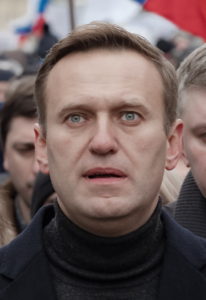
The Point People Miss About Navalny’s Imprisonment

Alexei Navalny

Alexei Navalny

So, the “opposition” leader Alexei Navalny is in prison, and is apparently very sick and perhaps near death.

Navalny is not popular in Russia, he is popular in the West. For years he’s been a gadfly for Putin, and little more.

But what got Navalny in prison, and may get him dead, is simple enough: His revelations about Putin’s family, including an alleged illegitimate daughter.

That stepped over a big bright red line. Putin was chosen as Yeltsin’s successor in large part because Yeltsin believed Putin would protect his family after Yeltsin’s death, which he did.

Putin is 68. He recently put in place a law immunizing past Presidents from any crimes they may have committed. He’s not going to be in charge forever.

The trick of being a dictator is leaving peacefully, surviving retirement, and keeping your family safe. For years, Putin has gone to great lengths to keep his family out of the spotlight, and Navalny attacked Putin’s family.

Navalny had an eye for the thing Putin cared most about — for his weakness. He was right.

But if you come for the King’s family, you’d best not fail to take out the King.

(As for Navalny, he’s not a good actor, and if anything, more violently anti-Muslim than Putin. There is no “good” side in this fight.)


(All the content here is free but food and rent aren’t, so subscriptions and donations do help.)

Why Do We Do That?

So today I stopped by the Liquor Control Board of Ontario (LCBO) and picked up a small bottle of sake.

The teller seemed unhappy, so we chatted for a bit. I told him I’d worked at the LCBO for a couple months about 25 years ago (for the Christmas season), and he opened up a bit.

“Yes, it was a better job then. It was also a better job eight years ago, or three years ago. It just gets a bit worse every year, it seems. Don’t get me wrong, it’s still better than most jobs: we have a pension, and not a lot of jobs offer one any more, but…”

The long and short of it is that every year management tries to take away a little bit of what makes working for the LCBO a pretty good job. It’s still pretty good, but if this doesn’t reverse, one day it won’t be.

This has been going on for decades; a couple generations at least, arguably three to four generations. In the US, working class male wages peaked in real terms in 1968, the year I was born, and I have white hair.

We just keep making life worse for a huge chunk of our population; this is true in Canada, in the US, and in most of Europe.

Our rich are the richest rich in his -— ah, forget it. You’ve heard me say it many times.

And I can tell you the “reasons,” but at the heart of it, I don’t fucking get it. How rich do these assholes need to be? How many private jets and vacation homes and $50k/day hotel room stays do they need? Do they really think their pleasure is worth so much more than billions of people’s suffering? Because much of what they do hits the developing world hard.

Why are they such scum? So evil?

Why do we run a society that is just making things worse for so many people (don’t waste my time with the “extreme poverty numbers,” they’re bullshit)? Why do we have more homes than homeless; waste a third of our food and have hungry people? Why are we on track to kill about half of all known life forms on Earth?

Why are we so stupid, evil, and selfish as a species? Why is our leadership made of so many people who could only, truly, improve the world by taking a long jump of a short pier?

I mean, Bill Gates fought hard to keep vaccines under patent. He’s never been a good actor, of course, but, here, he is protecting his interests by hurting people in the middle of a global pandemic, despite having more money than he could possibly need if he lived a million lifespans.

We have a pair of huge problems as humans:

  1. We’re badly led.
  2. Enough of us support terrible leadership for it to just keep happening.

Either we fix those problems, or Earth is going to continue to be Hell for much of the human race and worse than hell for non-human life.

But, emotionally, I still just don’t get these people. The Clintons’, Bushses, Obamas’, Bidens’, Bezos’, Waltons and so on. They just hurt people, hurt people, and hurt people, over and over again. There’s something deeply wrong with them, and with us as a species that these types of people wind up leading us over and over and over again.


If you enjoyed this article, and want me to write more, please DONATE or SUBSCRIBE.

Capitalism and Good Post-capitalism

Let us revisit the definition of capitalism.

Capitalism, everywhere, is defined by the removal of capital from most ordinary people and the concentration of capital in the hands of a few.

Capital, in this definition, is not money. It is the tools required to feed, house, and cloth oneself.

Medieval serfs, in most areas, had access to capital. They had the right to land to grow food, to take firewood, and so on. They built their own houses, spun their own clothes.

Depending on the time and place, they were healthy and relatively long-lived.

As I have pointed out before, early industrial workers, as a class, were worse off than the serfs and peasants they replaced. They worked longer, ate worse, died younger.

Capitalism is accompanied by enclosure virtually everywhere. The old rights are taken away and the peasants are forced off the land.

“Forced” is the operative word: In both England and China, the land to which they had rights — for centuries — was taken from them. If they won’t go peacefully, armed force is used to remove them. There are many, many stories of peasants in China resisting the government trying to take their land so they can hand it over to other owners.

Many people get “better” ownership out of the process of moving to capitalism. They get a better bundle of rights in terms of “property.” But most people lose their rights to productive capital.

You see this in virtually every developing country. Peasants are forced off the land, whether by law, crashing crop prices caused by unfettered “free” trade (which isn’t “free,” even slightly; Europe and the US massively subsidize agriculture), or by force. They flee to the cities, forming vast rings of slums. They are worse off than when they were peasants, in most cases, but there are no other options.

In most cases, this is done so that their country can concentrate on a few cash crops, plantation style, with a few owners making all the money.

Enclosure.

A citizen in a capitalist economy is distinguished by having no independent ability to feed, clothe, or house themselves. They must sell their labor on “the market” or live miserably and likely even die. (People who live on the street long-term don’t, as a rule, live long term.)

The term “wage-slave” is old, used in the 19th century to talk about what was happening then.

A person who must sell their labor to another, then do their master’s bidding, is not free. Their entire working day is spent doing what someone else tells them to do. Only a very few people, under any capitalist system, have anything close to freedom. The majority of people are slaves in their daily life, free only to sell their labor.

Because most people are undistinguishable, they take the rates offered by the market, and those rates are determined primarily by how tight the labor market is, a factor that has nothing, absolutely nothing, to do with any one individual worker.

Most workers in the world have miserable lives. Those reading this may have “good jobs.” In China, they make batteries by hand because it is cheaper than using machines. Other Chinese are now hand-pollinating crops.

That’s freedom for you.

People whose lives are lived doing what other people tell them are not only not free, but because their daily life is about obeying orders, they are not used to freedom and are conditioned to expect orders.

Being a wage-slave, taking orders is ordinary to them. It’s what they expect. They don’t know what freedom is because they have never experienced it (coming from a school system which is designed to turn people into obedient drones).

Real freedom is being your own master. It’s been a long time since that described most of the world’s population.

But capitalism, meaning wage slavery, contrary to the propaganda, has not been an unambiguous move towards freedom.

In the 19th century in North America, for example, if land was unused, you could simply go work it and after a few years it was yours.

You can’t do that now.

Capitalism is about taking the ability of the many to provide for themselves and putting it into the hands of a few. The argument is that this transfer allows for the creation of more goods and services than would be possible otherwise.

But we don’t need more — let alone the vast amount of surplus we are creating. We waste a third of the food we produce. We deliberately build “planned obsolesence” into the manufacture of goods. We are vastly overproducing past our needs, and because we distribute goods through corrupt market mechanisms, many people still don’t have enough to get by, let alone enough for a good life. We could easily provide for them if what we produced were more evenly distributed and not made to break down so we can make more.

Imagine a world with no planned obsolesence, in which everyone has a small garden (indoors gardens are easy to do now, and one pilot study found 10X yields from a basement garden with LED lights), everyone has basic maker tools, and every community has a few facilities capable of creating large appliances.

We can print buildings on 3D printers now (they could have been made well, prefab, long ago).

Freedom is the ability to make your own choices, daily, about what you do with your time and your abilities, without losing everything. It is the ability to support yourself.

Feudalism was no joy. But capitalism removed even more economic freedom than feudalism did. You don’t have to believe me, believe the people who lived at the time, who violently resisted the changes. They weren’t idiots, they weren’t fools; they knew their lives were being changed for the worse. That it worked out for some of their descendents means little: A century of technological improvement accounts for much of that.

Post-capitalism, if it is any good, will restore the ability to grow and make what they need to the people. Not like feudalism, but a craft-based, hunter-gatherer society. Work 20 hours a week to meet the essentials, spend the rest of the time as you wish and choose how and when to work those 20 hours.

More on this later.

Originally from April 17, 2016. Back to the top.


If you enjoyed this article, and want me to write more, please DONATE or SUBSCRIBE.

Open Thread

Use comments to discuss topics unrelated to recent posts.

What Can Taiwan Do to Protect Itself from China?

Article by Mark Pontin


Lyle Goldstein, research professor and founding director of the China Maritime Studies Institute at the U.S. Naval War College, in a YouTube video, claims, in the words of commenter someofparts ‘One clear fact that emerges is that China will be taking Taiwan back. It’s a question of when not if … if they have to use force,’ Professor Goldstein says, ‘Taiwan will be able to hold out about two weeks.’

One big factor Professor Goldstein is leaving out regarding Taiwan — for reasons to do with long-standing U.S. policy — is that no country that ever had a serious program to build nuclear fission weapons — A-bombs — ever failed to do so. South Africa developed them, for instance, though in 1989 de Klerk ensured they were dismantled before the handover to Mandela.

In fact, A-bombs such as were dropped on Hiroshima and Nagasaki are far simpler and easier to construct than most people realize. It’s a technology developed by people who listened to Benny Goodman on vacuum tube radios, after all. (For all that the scientists at Los Alamos represented, sadly, probably the greatest number of the most intelligent people gathered together for one project in history.)

H-bombs — fusion bombs aka staged thermonuclear weapons — which emerged with Ivy Mike in 1952 are a very different, more complex deal. In 2021, they’re what a nation-state seeking deterrence wants because — while Ivy Mike was the size of a very large locomotive engine, 20 feet high and weighing 140,000-plus lbs., with an additional 24,000 lbs. for its refrigeration equipment — they can be physically miniaturized to be put atop missiles and designed so the resulting explosion can be almost any size, shape, or radiation yield. Ted Thomas, the U.S.’s most talented bomb designer, even built a thermonuclear device so small he lit a cigarette with it.

To return to Taiwan: Simple fission-style A-bombs do require bomber aircraft (which can be knocked down by missiles in 2021) to deliver them — although trucks or boats will do in a pinch. But Taiwan could still build such weapons as stationary “mini-doomsday” devices, so that if China invades, the whole island goes up and large radioactive clouds sweep over the mainland. That would definitely be a deterrent.

The hardest part of building simple fission devices is accumulating enough enriched uranium and/or plutonium. Taiwan has six reactors so it has the nuclear material to enrich, to start with.

Enrichment is usually dependent on massive chains of centrifuges — which is why Iran currently is vulnerable to sabotage — but there’s a new high-tech alternative called laser isotope separation, or LIS, which can be carried out in a plant the size of a small warehouse or your local high-end auto dealer’s garage. Taiwan is, in one sense, the most technologically sophisticated country in the world, in that it has more microprocessor chip fabs than any other. Indeed, that’s another reason why mainland China shouldn’t invade in the next decade, until it’s built up its own fab plants: Global technological civilization would stagger to a halt without the chips Taiwan supplies the rest of the world, including China.

In any case, if Taiwan wants to enrich radioactive material via LIS, it can probably manage “nuclear breakout” both covertly and quickly.

So the fact that Taiwan could relatively easily gain nuclear deterrence is one factor Professor Goldstein isn’t bringing up.

And that’s because Japan and a number of other nations could achieve nuclear breakout very quickly, too. During the Cold War, the US deliberately extended its “nuclear umbrella” to allies to discourage them from having their own nuclear deterrent program. That way, proliferation was discouraged and US hegemony was preserved, in that the US nuclear umbrella also provided cover for US conventional forces to go in and flatten whomever Washington deemed should be flattened. (As in Iraq.)

Professor Goldstein isn’t talking about all this because he’s invested in maintaining US hegemony. Also, he’s at the US Naval War College and a potential scenario where China invades Taiwan with conventional forces is good promotion for the idea of naval force projection, and the Navy always wants more ships. I bet he doesn’t bring up the uselessness of aircraft carrier groups in such a scenario, however. If so, he’s being disingenuous on two counts.

Ian – this is by Mark Pontin, not me. I lifted it from comments with his permission. We’ll be talking a bit more about Taiwan (and the Ukraine) in the future. Thanks to Mark for agreeing.

If Biden Actually Withdraws Troops from Afghanistan by 9/11, He’ll Have Done Something Good

Sort of self-explanatory. We’ll see if he actually does. Trump had planned to withdraw by May 1st, after all, and spent most of his presidency talking about withdrawing without actually doing so.

But Biden saying there are no conditions for the withdrawal is a promising sign.

This does mean the Taliban will almost certainly wind up ruling the country again; the Kabul government is not going to stand without US and NATO support.

That’s unfortunate, but the Taliban is the natural ruling party of Afghanistan. That’s just how it is. Probably the US shouldn’t have supported Islamic hardliners even before the Russian invasion (under Carter), but that’s a long-ago decision.

Biden’s going to be under immense pressure from the military and much of the media to not withdraw. He needs to hold firm. It would be best to do this as quickly as possible.

And yeah, this means there will be a “fall of Saigon” moment some time after the US leaves.

So be it.

Good on Biden if he sticks to his (non-gun) on this.


All the content here is free but food and rent aren’t, so subscriptions and donations do help, a lot

The Psychopathology of Human Leadership

All American Presidents in my lifetime have acted like psychopaths. Not one of them did not do things that killed people they had no true need to kill. (The only ones I think come close are Ford & Carter.) Noam Chomsky, back in 1990, looked at which post-war Presidents hadn’t done something that would have gotten them hanged at Nuremburg.

The weird thing is that most of these actions hurt the US more than they helped. Blowback is a bitch, and the US keeps interfering where they have no business, and it rarely works out well in the long run.

If the US mostly minded its own business, Americans would be better off. More countries would be democratic (America supports anti-democratic coups regularly), and more countries would have secular or enlightened religious views.

There was also no need for the US to immisserate its own working class so some rich people could make more money by helping China. China would have still industrialized, it would have taken a bit longer and we wouldn’t be cruising for Cold War 2.0.

A US that minded its own domestic affairs better (ie., hadn’t crushed the middle and working class) and managed every other nation’s affairs less, would be a better US in a better world.

Of course, what this really suggests is that the main problem in the US is the ruling class and the Americans who are foolish enough to support it.

The US ruling class kills and impoverishes people to make money, and since 1980 at least (really, about a decade earlier) that has included American people.

The US needs to be better — for its own sake and for the sake of others.

I’ll tell you a secret: In the not-very-long run (a generation), making other people richer and healthier is better for you than taking their stuff, hurting them, or killing them.

That’s a TRUTH.

For much of history, the standard mode was to kill people and take their land and stuff where possible and, where not, to conquer them and take their stuff.

But people with a boot on their neck don’t contribute as much as free people.

It’s time for us all to grow up.

Now this doesn’t just apply to the US, of course. I live in a colonial country based on genocide — just one that isn’t powerful.

Nor is this a “white” only thing, as the slightest perusal of history (including recent history) will show.

Europeans got a big advantage and used it. When the Mongols did, they did.

China is built on the Han exploiting an advantage for over 2k years. The Japanese industrialized first in their area of the world and went on a rampage. Etc…

This is a human problem.

That said, Americans and Europeans are descended from the most recent group to get a huge military advantage over a long period (about 500 years) and use it for mass conquest, and that has had effects on our culture, including on how we pick leaders.

Warlike leaders seem “good,” because for a long time it seemed like conquest and raiding was the easiest way to get rich, and people who were bad at fighting had real bad things happen to them.

But our current problems cannot be solved by war, raiding, and armed theft.

There are some who think otherwise; they want to reduce the world’s population to about a billion people.

Not only is that monstrous, the sort of war that would do would cause so much environmental and climate damage that it would cancel out, and then some.

If we want out of this we need to find a primary mode of being that isn’t “hurt or threaten other people so they do what you want.”

If we try to solve our problems with violence, and the threat of violence, this time, or with the deliberate immiseration of billions of people, the world at the other end (assuming humans survive at all) will be apocalyptically bad — even for the ruling class.

A good society is one in which everyone is prosperous. Healthy, happy people with enough stuff create good societies and good economies. Immiserating entire classes or countries may make a few people rich, but it is a negative sum game. We need to stop playing negative sum games, both with ourselves, and with the rest of life on Earth. Everyone: Plant, animal, human, and other life forms need to win on aggregate.

If they don’t, we are either going to drive ourselves and lot of other species to extinction, or create a world that is is much, much worse for everyone, though, alas, some of the second possibility is already locked in.

As humans we must change how we pick our leaders and how and why we make collective decisions. Nothing we have tried so far has worked, so we must be open to radical change.


All the content here is free but food and rent aren’t, sosubscriptions and donations do help, a lot

Page 155 of 437

Powered by WordPress & Theme by Anders Norén