Decided a little more needed to be added to the post, but email went out just before I added it, so I’m putting it here.
Addendum:
Decided a little more needed to be added to the post, but email went out just before I added it, so I’m putting it here.
Addendum:
Let’s lay it out.
First: the next while belongs to Ukraine. They have the initiative and new Russian troops will take time to arrive.
Second: Russia is almost certainly mobilizing more than 300K troops, the bill allowed for one million. The more they mobilize the more training time will be required; not just because there are more troops but because they are reaching deeper into reserves to people who have been out for longer.
Third: When enough of those troops reach the front, Russia will stop their territorial losses and go back on the offensive. The more Russia mobilizes, the stronger the offensive. If they go up to a million, they will have about 2:1 when added to current troops in Ukraine.
Four: Russia is not fighting just Ukraine. If it was, it would win. It is fighting Ukraine + NATO, and it’s clear that means that NATO officers are doing the majority of the planning and we now know that there are some NATO troops on the ground, we will find out there were more, and that a lot of volunteers were “volunteers.”
Five: Western propaganda has included a lot of declarations that the end-goal is regime change, recapturing Crimea and even breaking up Russia. It has been declared, over and over again, that there will be no negotiated peace with Putin. This means the Russians regard this war as existential.
Six: what Putin said was “all methods” not tac-nukes, that includes things like level bombing, taking out Ukrainian infrastructure (remember, power, water and sewage are on in most of Ukraine and Putin could turn them off tomorrow.) Tac-nukes are part of all-methods, but unlikely to be the first thing reached for. They will be used if necessary to defend Russian territory, which to Moscow includes the Oblasts that recently were declared part of Russia.
Seven: OPEC cutting oil production is, in fact, helpful to Russia. Understand clearly that outside the West and our client states like Japan, Korea and Taiwan, most of the world is not cheering for NATO to win, because for good reason they hate and fear Europe and the US far more than they do Russia.
Eight: The only country which has sufficient leverage over the Russians to force and end to the war is China. However China does not want Russia to lose the war, for their to be regime change, and so on. Russia is their satrapy, their junior ally and absolutely necessary to their security. A regime friendly to them must stay in power. With Russia China can survive a western naval blockade, without it China cannot. It is that simple.
Nine: there is nothing that Russia absolutely must have that it cannot get from China and India. They cannot be choked out economically without those two nations cooperation (though really, it’s about China) and China in particular will not cooperate, though it may make mealy mouthed statements as if it is.
Ten: Europe is suffering more from sanctions than Russia is: significantly more.
Eleven: However bad this war has been, it can be a lot worse. It hasn’t even reached Iraq war levels of destruction of infrastructure, for example, as pointed out in six.
Twelve: the Nord Stream pipelines were sabotaged so Europe in general and Germany in particular would have less reason to press for peace, especially as the winter makes clear how much they need Russian natural gas. It was done to keep the war going, and to help de-industrialize Germany and Europe so that America can maintain its hegemony.
Thirteen: because the Russians now see this war as existential, they will mobilize as much as they need to. If that is millions of men, it’s millions of men. Though there is clearly some resistance to mobilization, it is unlikely to be enough to stop it, and the more the West threatens to break up Russsia and so on, the less resistance there will be. Russia has traditionally been willing to bear huge losses in what it considers existential wars.
Fourteen: The war will go on until one side or another is actually defeated. That may be economic defeat, political defeat or military defeat, though they tend to go together.
Fifteen: peace can only be made in two ways: crushing your enemies entirely, or negotiating. You can’t make peace with your friends, only with your enemies.
Bonus Point: Kennedy negotiated because Russia then, and now, has enough nukes to end the world. Also the crisis was caused because the US put nukes in Turkey.
A lot of mistakes come from assuming rationality means “thinks the same way I do” rather than “reasons from premises I might not share.”
Less than 1/1000 economists predicted the financial collapse, because they reasoned from assumptions like “the market is self-correcting” or “housing prices never go down.” (Sometimes both at the same time, which is rarely rational.)
Back in 2008 I wrote an article saying the next war w/Russia would be over Sevastopol/Crimea. I was told by Eurocrats that was impossible, because it would be irrational: the energy trade was too big to risk, Putin needed it. Rational. Putin didn’t see it that way, either then or now: Crimea and Sevastopol were Russian regions, strategically and emotionally important. When Ukraine seemed serious about cancelling the Sevastopol naval base lease, he acted.
Right now I hear a lot of people saying things like “never give into nuclear blackmail because then Russia will keep using it” or “Putin is rational, he would never use nuclear weapons.”
Now I don’t think he will, but I don’t think it’s impossible, even if one considers Putin rational. All he has to have is a scenario where he believes that he will get more than he will lose.
So, imagine that at some point Russia wants to end the war with Ukraine but doesn’t or can’t conquer enough to force a peace. Or imagine that there is a fake peace (no peace treaty) and Ukraine keeps dropping artillery shells into territory Russia says is theirs now.
Putin might, rationally, decide that the way to force a peace is to indicate that if war continues, he’ll go nuclear and if people don’t believe him, drop a tac-nuke or two to prove he’s not bluffing. (Remember, blackmailers who kidnap people often DO kill the victim. They aren’t bluffing.)
He thinks that the West is not really willing to risk a nuclear war and that if he is willing to risk one they will back down, especially if what he wants isn’t really that big. That’s a rational belief. It might be wrong, but it’s not irrational.
Or perhaps Putin gets into a scenario where he’s losing the war badly, and believes that if he does either he loses power and maybe his life; or that the Western maximalists will succeed in breaking up Russia. If the only way to stop that is to drop a nuke or two, why not? The US dropped nukes on Japan for less reason, although it’s true that no one else had nukes back then.
But what does the West do? If they tit-for-tat, and drop a tac-nuke or two, that means general war: Ukraine doesn’t have nukes, remember, so a NATO country has to attack and that will lead to nuclear war pretty fast if Putin thinks he can’t win a general war. (This is also true of a conventional war against Russia by NATO. Once he’s used tac-nukes, what makes you think he’ll stop when faced by a much more powerful enemy?)
The idea that Putin won’t use nukes is based on the idea that the risk of armageddon is always greater than whatever he expects to achieve. But what if he figures he can only die once or that Russia will cease to exist if he doesn’t use them, or that using them is the only way to stop a long drawn out fake peace? Also, remember that to some people dying by nukes and dying any other way is still just dying.
Now I have to say that think Russia is very unlikely to use nukes , even tac-nukes, but I also feel uneasy ruling it entirely because it is quite easy to come up with scenarios where Russian leadership decides the gain is worth the risks. This is even true if Russia feels backed into a corner, or if they are in an Afghanistan or Spanish Ulcer situation (Napoleon constantly losing troops in Spain). An ongoing bleeding which can’t otherwise be stopped might be worth risking nuclear war. If you’re going to lose anyway without it, why not risk it?
This, by the way, is why fighting a nuclear superpower over what they consider a core interest (notice “they”, not what you think, but what they think) is so risky and why the USSR and the US danced around each other like ponderous elephants. “If we really fight, we both lose.”
If Russia wants to win in Ukraine more than we (and given our support for Ukraine, it is “we”) do, they may well use nukes. Pretending it’s impossible is stupid and very very dangerous.
I have mostly avoided the vaccine debate, but let’s take a brief pass.
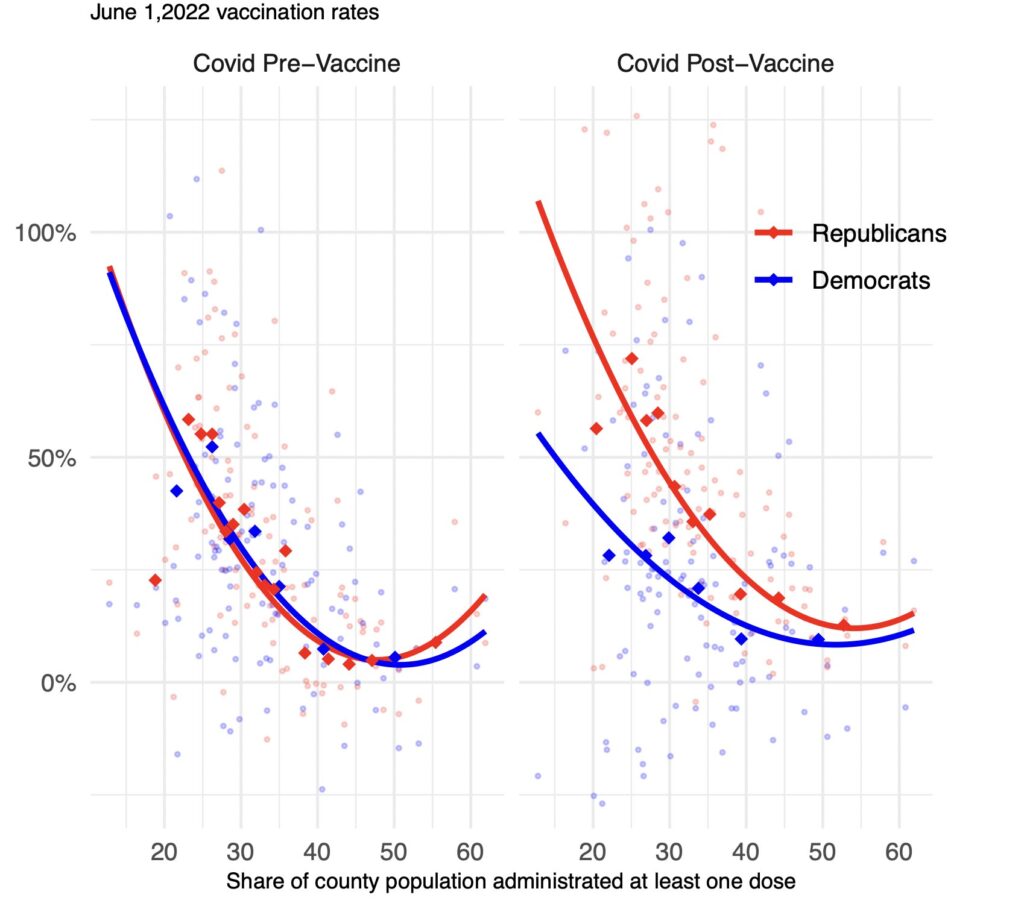
This isn’t because vaccines don’t work.
This doesn’t mean I’m entirely happy with MRNA vaccines, I’m not and I think there’s some validity to them having negative side-effects. I’m even more unhappy with the uneven way they were applied, which allowed for Covid to gain repeated mutations which made vaccines less effective. I personally would have taken Sputnik-V if it were allowed in my country.
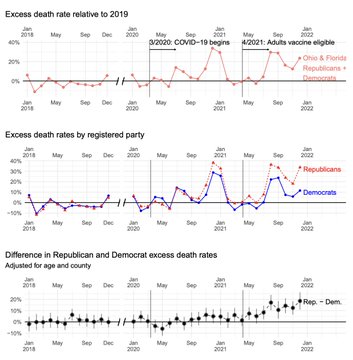
But the vaccines are protective against death and serious illness is indicated by the population studies I’m aware of. This is also true of masks.
Alberta Health data & analysis (from Feb 7) shows that schools w/ mask mandates had 3x less outbreaks & adults in those communities had 3x less hospitalizations.
Indirectly it shows that school infections *do drive* community spread.#BringBackMasks— Malgorzata (Gosia) Gasperowicz (@GosiaGasperoPhD) September 28, 2022
Now, I do not favor and never did favor a policy primarily based on vaccines. I have always believed that public health measures like properly done shutdowns (much briefer than we had if you do them early), track and trace, quarantine, paid sick leave, travel bans for anything but absolutely necessary travel (with mandatory quarantine) and so on were the way to go. I wanted all loans frozen for the duration of shutdowns, or paid for by central banks (if they can create trillions for rich people, they could easily have done so for ordinary people.)
We fumbled Covid, probably because it was making the rich rich very very fast, and that lost trust in measures that were somewhat effective, but were sold as silver bullets. They weren’t, absent both public health efforts and a worldwide effort and/or travel banks. This has now morphed into culture war bullshit, where what you think depends not on your actual study of the issues, but on what your politics are.
That’s very sad, and very stupid.
(I’m aware others have made the same US defeats Germany point before this. Just becoming super obvious.)
Basically industries which have high energy costs are being crushed. In particular this means chemical and automotive, both big in Germany, but extends far further.
(Indeed, the chemical industry was essentially invented by Germany in the 19th century, and American industry exists because the patents were broken in WWI and not reinstated after the war.)
This has a lot of knock-on effects, not only in price increases (which are big), but shortages. For example:
The coronavirus pandemic showed how easily modern production processes can get out of sync. Supply chains interlock like the insides of a clock, and if one cog fails, the entire machinery can grind to a halt.
An example is a small company from Lutherstadt Wittenberg, Germany, which has made it onto the prime-time news broadcasts in recent days because its products are needed almost everywhere. “Our production has been halted completely,” says Torsten Klett, the co-managing director of SKW Stickstoffwerke Piesteritz. “And we will only be able to restart if the gas price drops significantly or if politicians provide us with massive support.” The chemical company is one of Germany’s largest producers of fertilizers and AdBlue. Natural gas has also become too expensive for SKW. If political help doesn’t arrive soon, the company could be forced to send its 860 employees into a work furlough program in October.
Few modern diesel engines can be operated without AdBlue – not those of the fire department, not those used in public transportation and, above all, not the 800,000 or so trucks that transport goods of all kinds across Germany’s roads every day. Should companies no longer receive the products they need for their own production, the result wold be devastating, and almost all sectors would be affected.
The national association representing the logistics industry has begun warning of potential bottlenecks, even though AdBlue is also manufactured by BASF and the Norwegian firm Yara. But BASF began cutting back on ammonia production last year due to increased gas prices. The world’s largest chemical company can still compensate for the shortfall by buying on the world market, though the costs continue to rise.
So, logistics crisis intensifies because of lack AdBlue.
Meanwhile increased energy prices are hammering every single business and homeowner just for electricity, heating and cooling, so much so that it’s causing many retailers to become non-viable. Employment is actually tight (whisper after me “Covid deaths and Long Covid”), so there’s pressure on wages, but prices are increasing faster than wages so consumers don’t want to spend.
Industries that Germany has been powerful in for over a century are being hammered.
Now a lot of Europeans hate Germany, and with good reason. The Euro has been less than Germany would have had given its own currency with their level of exports, but higher than it should be for most other European countries, meaning that German industry was subsidized and other nations like Italy and Finland were penalized.
Germany aggressively policed other European countries, making it near impossible for them to protect their industry thru other means like subsidies, generally under the rubric of “fiscal discipline” and when countries were in crisis engaged in a fair bit of looting.
Meanwhile Eastern Europe was never properly integrated into Europe, remaining primarily a source of cheap labour and not properly moving up value chains.
To Eastern Europeans Germany is a traitor who made deals with the evil Russians to keep their energy prices low and didn’t really share the ensuing prosperity. (Germans would mostly disagree, noting the subsidies. But countries want their own prosperity, not welfare.) To Western Europeans Germany has repeatedly abused its economic and political power to keep its industry strong, even as others lost theirs.
So Germany has a lot of power in the EU, but few true friends, and there’s a lot of resentment.
Still, whatever the causes, Germany is the industrial powerhouse of Europe and Europeans who are laughing at Germany’s loss of industry during this energy crisis are being foolish, because what’s happening is that Europe as a whole is becoming weaker.
But the beautiful icing on the cake (if you’re an American oligarch) is:
A big winner from the energy crisis in Europe: the U.S. economy.
Battered by skyrocketing gas prices, companies in Europe that make steel, fertilizer and other feedstocks of economic activity are shifting operations to the U.S., attracted by more stable energy prices and muscular government support.
As wild swings in energy prices and persistent supply-chain troubles threaten Europe with what some economists warn could be a new era of deindustrialization, Washington has unveiled a raft of incentives for manufacturing and green energy. The upshot is a playing field increasingly tilted in the U.S.’s favor, executives say, particularly for companies placing bets on projects to make chemicals, batteries and other energy-intensive products.
“It’s a no-brainer to go and do that in the United States,” said Ahmed El-Hoshy, chief executive of Amsterdam-based chemical firm OCI NV, which this month announced an expansion of an ammonia plant in Texas.
…
Some economists have warned that natural-gas producers from Canada to the U.S. and Qatar may struggle to fully replace Russia as a supplier for Europe in the medium term. If so, the continent could face high prices, at least for gas, well into 2024, threatening to make the scarring on Europe’s manufacturing sector permanent.
It’s not other Europeans who are going to win out of this, everyone’s being hurt to some degree and any gains are relative, not absolute. “Well this hurts the Germans so much more than us” is only a relative win. But it weakens Europe overall: the production mostly isn’t moving to other European countries This is the wrong way to deal with a real problem, in other words, and the right way was political and a rejection of neo-liberalism. But since neo-liberalism is religion to Eurocrats, that wasn’t possible. Dealing with Germany couldn’t be done rationally and sensibly, so instead it has been done stupidly and harmfully, so that no one benefits except the US.
As I have said since the start, anti-Russia sanctions primarily hurt Europe and help America. They make Europe weaker and re-enforce the European political position as American satrapies. Since they do very little harm to Russia, the rational course would have been to continue to buy Russian oil while only putting on targeted sanctions (no military or dual use sales), and spend the next 2-4 years gracefully moving to alternatives in a way that would not deeply damage Germany and Europe’s industrial base and wouldn’t cause a general economic crisis in Europe.
Longer term, my forecast is that Europe as a whole will move to second world status. Their decisions around Ukraine have made that a certainty, since they make it a virtual certainty they will also wind up going along with the US in the cold-war against China. Europe has less and less tech and industry that the world must have: there are other consumers available and they no longer have a military worth worrying about.
Europe’s massive living standard was based technological, industrial and military superiority which is going away. The rise of China ends that: there are now 4+ major industrial/technological powers and Europe isn’t needed. As China climbs the tech chain, there will soon be nothing significant they, or anybody else, must get from Europe (jets may be the last holdout, but even that will not last.)
Mishandling of Ukraine, the war and sanctions is Europe’s decision to go ugly into its twilight.
Let’s point out the obvious. Russia had no reason to attack its own pipelines. If it doesn’t want gas to go thru them it just turns off the tap. Sabotage to the pipelines weakens Russia’s position, since it will be months before they can offer to turn fuel back on, if they ever can (I’m seeing reports the damage is truly epic), which they would have wanted to offer during the winter in order to pressure Germany in specific and Europe in general. Anyone who says or believes that Russia did this is a moron, a propagandist or has had their mind so twisted by Russia-hatred they can no longer think straight.
Who did attack? Who knows. One possibility is the US.
https://twitter.com/radeksikorski/status/1574800653724966915
Radek Sikorski is a Polish MEP, and married to Anne Applebaum.
On the other hand, Naked Capitalism published a piece suggesting Poland did it. They recently opened their own pipeline, and are rabidly anti-Russia. Germany needs Russian gas and oil to run its industrial economy, but Poland wants Germany to not push for a peace deal with Russia.
I don’t know who did this, but what I do know is that it almost certainly wasn’t Russia. If you thought it was, check yourself, you’ve gone off the rails into propaganda-land and your emotions are ruling your reason.
Oh, and this is an attack on Germany and other countries who get gas from Russia, even more than on Russia and a reminder of how fragile international logistics links are. In the event of a real war, expect far more than this to go down.
Few things make more more tired or contemptuous of someone than, when a masking mandate is removed, someone saying “well, you still have the choice to wear a mask, we’re not effecting you” or some variation.
Masking is not primarily about protecting yourself. Only a respirator and a well-fitted N95 offer good protection from Covid if other people aren’t masking.
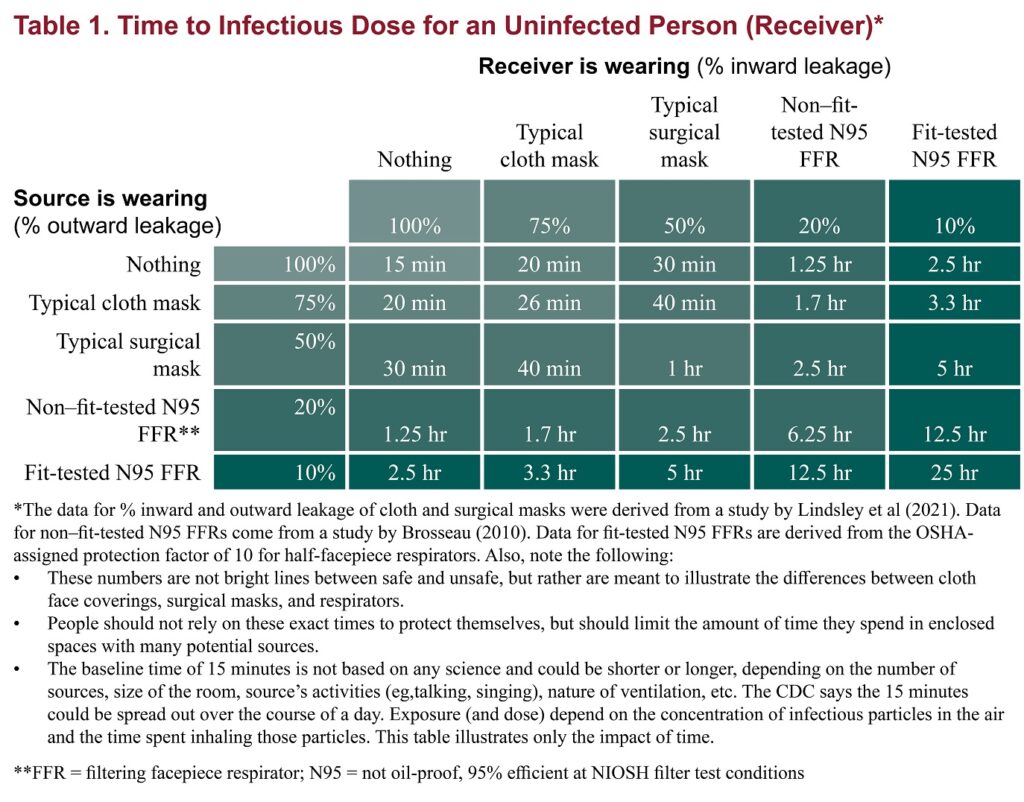
Now that chart may be making you feel safe if you go quickly in and out of businesses, but realize that there are multiple people in those buildings and that in an enclosed space the virus builds up, so even if there’s only one person who is infectious, if they’ve been there for a while, you can walk in and get a huge dose. And if you have multiple exposures in different places, the viral load can build.
Oh, and if you think anything short of a respirator is likely to protect you on a long flight where people don’t have to mask…
Masking is not primarily about protecting yourself, though it helps, it’s about protecting other people, especially since Covid can be asymptomatic and since Covid tests, especially the rapid antigen tests, often give false negatives.
It’s not, thus, just about you. It’s about the people around you.
And hysterics aside and rare conditions, no, masking may be uncomfortable but it doesn’t hurt adults or children. What hurts them is getting Covid, especially repeated exposure leading to organ damage, including brain damage, and to serious long-Covid.
Now I know that most countries have given up and just declared Covid over. Happening where I live, even as emergency departments have to be closed because of not enough nurses and doctors. It’s “over”.
But this marker is still worth placing. Masking is far more effective when it is a communal action. Some things, to work properly, we must do together.
The end result of not doing these things (which go far beyond masking) is going to be a double digit percentage of the population disabled and I doubt, combined with climate change, that our societies can handle that.
Welcome to the future. Deliberately un-handled plague, ecological collapse and climate change, combined with a cyberpunk dystopia without the cool parts of cyberpunk.
Powered by WordPress & Theme by Anders Norén
My argument, from the beginning, has always been simple: Russia can mobilize more men than Ukraine and has reason to do so. Unless they are weaker internally/China than I think or NATO intervenes more than I think, they will eventually have a conventional military victory.
Of course, I could be wrong, but nothing which has happened yet has changed my view. What has happened is that NATO was willing to mobilize more resources than I expected, and that has made a Russian victory require more mobilization (and I always felt doing this with only 200k men was stupid.) However, absent sending in large numbers of NATO troops, the fundamental assertion remains.
As for the internals, the Russia economy, as far as I can tell, is doing better than much of Europe. The fundamentals are simple: Russia a food and fuel surplus and can get almost everything else they need from China and other sources and China needs Russia to not lose. This is not the late USSR, constantly running food deficits.
This leaves internal political instability, and my judgment is that if Putin loses power he is replaced by hard right wingers who will mobilize more, not less. There is no meaningful centrist or left wing opposition in Russia.
If you believe I’m wrong on any of these points and you’re right my argument may be wrong, but this is the argument.
DONATE OR SUBSCRIBE