Ian Welsh

The horizon is not so far as we can see, but as far as we can imagine

The Future Of Hezbollah and Israel’s Conflict

Nasrallah is dead, assassinated by the Israelis. There have been significant bombings in Beiruit, and escalation between Hezbollah and Israel are clear.

First, let’s state the obvious. Israel’s intelligence has seriously comprised Hezbollah, much more than they ever did to Hamas. I suspect this is a result of not taking Hamas particularly seriously and the differing nature of Lebanon and Gaza. Gaza, by all accounts, was a fairly tight knit community, united in their opposition to Israel. Lebanon is not, it’s a sectarian state with a great deal of internal divisions.

There was a lot of anger in Iran and Hezbollah that Hamas did not forewarn them of October 7th, but it’s clear they were right not to. If they had, Israel would very likely have found out, and this is especially true if Hezbollah had been told.

As for the assassination, it’s much less important than people make out: decapitation strategies don’t significantly degrade strong ideological organizations like Hezbollah. The real question is how much knowledge Israel has of the actual military infrastructure. Nasrallah was a well loved leader, but he was a very cautious man and much less interested in fighting Israel than many make out. The new leadership, and given Israel’s success at assassination, it is almost all new, will be far more willing to fight.

Intelligence, airpower and its alliances with American and other Western nations are Israel’s strengths, and they are not small matters.


(I’m running my annual fundraiser. If you value my writing and want more of it, please consider donating. Your donations really do keep this place running.)


That said, those who are panicking, often hysterically, are premature. Hezbollah defeated Israel militarily in 2006, and before that when it won a guerilla war against Israel’s occupation and forced them out. They are much stronger now than they were then. They have more missiles, more men, who are well seasoned fighters, and they have dug in to a far greater degree than Hamas ever could.

Israeli intelligence and the airforce are impressive, but the actual ground forces Israel have are weak: not in equipment, but in morale and competence. To accomplish Israel’s goal of pushing Hezbollah out of southern Lebanon they will have to go in on the ground, and when they do I very much doubt their ability to win.

Unlike Hamas, Hezbollah’s supply lines cannot be cut: the posturing about Beiruit’s airport is ludicrous, the supplies come in by land and there is no possibility of interdicting most of them.

If Hezbollah does need reinforcements, they will have them, from Iraq’s militias and from Iranian “volunteers.” Manpower will not be an issue, though Hezbollah is unlikely to ask for many men at first, since they are not trained to operate in the Hezbollah manner.

Nasrallah was a cautious man, and Hezbollah has been holding back. Their missile force can output far more and better missiles than they have been using in the past, and the end of the old leadership almost certainly means the gloves will come off.

Further, Hezbollah has done great damage to Israel already. The reason Israel is turning to Lebanon is that Hezbollah has displaced hundreds of thousand of settlers, causing an internal refugee problem, and combined with Yemen’s naval blockade, has massively damaged the Israeli economy. And this is with them holding back, because they did not want a general war.

But the only way to truly defeat Israel is to defeat their military, and the best way to do that is for them to attack into Lebanon. Hezbollah, hopefully, will ramp up its attacks to force Israel to do just that, if it isn’t intending to already (which they almost certainly are), and if it is already intending to, to make it happen sooner.

The war, then, is still in its early stages. Do not fall to doom and gloom (if you support the resistance), nor optimism (if you’re pro-genocide). Wait, and see. The real battles, which will determine the outcome of the war, have not yet happened.

Open Thread

Use to discuss topics unrelated to recent posts.

Culture Creation

In my article on the rise and fall of credential systems and the Medieval University System, I mentioned that universities create culture. Standardized culture, as a rule. There was a fair bit of confusion around what culture creation is, so let’s talk about that.

To start, note that what you’re reading right now is culture creation: ideas about how the world works, or should work. I’m amplifying, as it happens, an academic, Randall Collins, though a lot of my work isn’t primarily based on academic literature, this is.  But if I’m writing about Israel, say, and the Gaza genocide, that’s culture production: that’s me amplifying and on rare occasions expanding on all those in the past who have said “genocide is bad” or “Zionism is based on ethnic cleansing, terrorism and apartheid.”

When I write about the ideology, or about surveillance is bad or climate change, it’s all culture production. It’s intended to explain how the world is or ought to be.

Schools and the especially the first parts of higher education, like BAs and Bachelors of science or engineering produce pretty standardized culture: there aren’t that many different standard textbooks for each field and virtually all academic disciplines have a consensus worldview of how things are and how they should be, and that’s what they teach. At higher levels, some disciplines let some doubt in, but at lower levels what you’re getting is pretty much the same as everyone else.


(I’m running my annual fundraiser. If you value my writing and want more of it, please consider donating. Your donations really do keep this place running.)


Over time that consensus changes, of course, but it is a matter of “over time” and major paradigm breaks aren’t all that common.

It may seem weird to include science and engineering, but they also have consensus ways of thinking and organizing the world and those ways, too, change over time.

The Medieval Universities produced lawyers, doctors, theologians and administators. People who had a common view of the world. Of course there were some disputes, but they were much more similar to each other than to, say, the humanists who later replaced them.

The great ideologues produce new cultural projects: new understandings. Confucius produced administrators: he knew that’s what he was doing, that was his intention. He wanted to change China, and the way he chose was to try and make the best ministers. He built on top of a view of society as family. The Legalists, his main opposition, did much the same but with the idea of a ruthless state and complete obedience to the ruler, and the Mohists, though more revolutionary in mind, also trained administrators, but wanted far more equality

Islam is famed for its legalism, and what is law but “how things should be?”

The Philosophes were, likewise, engaged in a project of creating an understanding of “what should be.”

So was Jesus, so was Marx and so was Adam Smith.

But those are the high points, for every great ideologue there are millions of small ones. And yeah, a lot of podcasts fall under the rubric of culture creation, including some of the biggest ones. Joe Rogan qualifies, for sure. Talk radio usually qualifies, and Rush Limbaugh was one of the most important ideologues of the past forty years.

Technology (which is part of culture); natural constraints like geography, climate and biology; and ideology in the sense, again of “what we believe is and should be” are the most important parts of what creates human reality. Culture creation matters and it’s dirt common. Without all the little creators taking up their work, the big ones wouldn’t be big.

2024 Annual Fundraiser

As blogs go this one has been around for a long time. It started a political/economic/financial blog back in 2009, but over the years I’ve written less and less about finance and politics and turned to topics I consider more important. As the amount of “red meat” has gone down, the readership hasn’t, and I’m grateful.

When I hear from readers, they usually give one of two reasons for liking the blog:

  1. It makes them feel less alone. Less like the crazy one. The Mississippi sized torrent of BS pouring thru most media will have you believing right is wrong, black is white, Covid is non airborne, Israel is humane and Russia is losing. The centrists are reasonable, the right is misguided, but the left is the true evil. Finding a place where the information stream isn’t full of shit and there are others who who seek the truth is a relief.
  2. They learn from it. Quite a few people have written to express their gratitude in having their world views and their expectations of what’s going to happen in the future change to something more realistic, and hopefully more humane.

As for myself, I try to write articles that interest me and which are at least one of interesting to readers, important for understanding the world, or useful to my readership.

Every year (except once when I forgot because I was in the hospital), I do an annual fundraiser. The money raised supports me so I can keep writing. You can subscribe or donate. If you value my writing and want to see more of it, I hope you will.

This year we’ve got four goals. Each unlocks a writing project. Subscriptions count as three times their nominal value.

At $4,000 I’ll do three book reviews. Barring serious illness, one in November, December and January. The first will  be “India is Broken”, because no, Virginia, India is not going to be the next China. The second will be “The Invention of Capitalism,” about primitive accumulation: or how people were forced into factories, had their land stolen and so on. The third will be “Wealth and Democracy” by Kevin Phillips, one of the most important books I ever read.

At $7,000 I’ll do three more book reviews based on what I’m interested in at the time, again one a month. If you have nominees you’d like to see reviewed, feel free to suggest in comments.

At $10,000 I’ll write an article on the fundamental process which keeps society together, how it fails and renews and under what conditions it fails to renew.

At $13,000 I’ll write an article on the weaknesses of North American style police, and how a determined and ruthless opponent could take advantage of those weaknesses to rip them a new one.

Every dollar you give helps me. If you like my writing and you can afford to give (please don’t if you’re short yourself) I’d appreciate if you did.

SUBSCRIBE OR DONATE TO OUR 2023 FUNDRAISER

Consequences of the Israeli Pager Explosions Attack

Last weeks pagers exploded all over Lebanon. They were pagers bought by Hezbolah, but most of them were not used by military personnel or even by Hezbollah members, though many were.

The attacks were set up to be particularly nasty. Small ball bearings were embedded in the pagers. First the pager would buzz. The person would grab it, bring it up to their face so they could look at the screen, where they would see an error message.

Then the pager would explode. The most common injuries were maiming (the hand), terrible facial wounds, and eye-injuries. I don’t know what percentage caused permanent vision loss but I saw one interview with a surgeon who said he’d removed more eyes in the last day than he had in a career of over twenty years.

Civilians, women and children were hurt.

This attack had been set up a long time ago. Israel had, apparently, received reports that someone was suspicious and that it was a “use it or lose it” situation. They chose to use it. Presumably they had been saving it to use during the next ground war, but that was no longer an option.

There are obvious and in-obvious consequences to this. Hezbollah will retaliate, of course. They say that the current increased attacks, which are hitting as far South as Haifa and appear designed to blow a corridor to Tel Aviv so that becomes a viable target are not that retaliation, but are instead a reaction to Israeli attacks on Beirut. That’s a pretty serious escalation, especially if repeatedly hitting Tel Aviv is part of the plan. An even more serious escalation because of the pager attacks risks all-out war, though that’s not say it isn’t justified.

(To state the obvious, if the pager attacks weren’t terrorism, nothing is.)

But beyond the possibility of a serious war, there are downstream effects. The pagers were branded as made by Taiwan’s Gold Apollo, but were actually manufactured by Hungary’s BAC. Either BAC modified the pagers, or Israel intercepted them during shipment and made the necessary changes.

Hezbollah has reported ordered new pagers (they’re part of how they avoid electronic surveillance) with instructions that all manufacturing takes place in China. If I were them I’d have those pagers guarded from the second they leave the factory to the point of delivery in Lebanon.

But this is a real Pandora’s Box situation. There’s no reason this couldn’t be done to anyone’s devices and almost everyone carries a phone these days. Most of them can’t be fully opened and inspected. You have no way of knowing whether or not there’s a bomb. (Correction–hacking alone is not enough. My apologies.)

It is noticeable that the US and most European countries refused to condemn the attacks. If they won’t even say that this sort of thing is off the table, who will trust that they wouldn’t do this themselves?

There are a lot of countries, and a lot of people (dissidents and so on) which have good reason to know that the West is willing to engage in assassination, violence and coups against them. This isn’t remotely in question: the West and especially the US, France and Britain, have a record. And other Western countries usually cooperate or at least do what they’re told.

So consequence one is going to be a lot of people and organizations a lot less willing to buy Western equipment. Maybe Gold Apollo wasn’t involved. Maybe Hungary’s BAC wasn’t involved. I’m inclined to believe them, actually, especially Gold Apollo, because this is the sort of thing which destroys companies.

But maybe they were, and how can a company really stand up to and refuse strong governmental pressure? It can’t, not if the government is really serious and it’s a domestic firm. Even foreign governments can have a lot of clout if you do business in their country.

Another likely effect is the rise of transparent electronics, similar to technology used in prisons or the transparent phones of the early 2000s (which was just for aesthetic effect.)

In a lot of secure areas I would expect that people won’t be allowed to bring in their own phones. This is already the case in some very secure areas, but I expect it to spread. It may also change policies about phones and other small electric devices on planes.

This is another case of Israel and the West screwing themselves. It’s going to hurt economically and it’s going to lead to copycat attacks by others, including on the West.

And, of course, it was a monstrous action. Very on-brand for Israel and very normal for the US to fail to condemn it.

Even more than before I just don’t want to hear American officials condemning terrorism. Ever. If the word still means anything, they don’t what it is.


My writing happens because readers donate or subscribe. If you value that writing, and you can afford to, please support it.

Week-end Wrap – Political Economy – September 22 2024

by Tony Wikrent


Strategic Political Economy

What is the deep state? (YouTube video)

(Jeffrey Sachs, John Mearsheimer, YouTube, via Thomas Neuburger, God’s Spies, 09-20-2024]

This video segment is taken from a symposium at which Sach and Mearsheimer offered their views on U.S. foreign policy. The whole thing is worth a listen, but I’ve cued this to start at the point where the question, “What is the deep state?” is asked and answered.

Note: The answer relates to foreign policy only, not the broader question of “Does the Establishment State try to influence domestic politics?”

“Sachs: My experience … is that there’s a deeply entrained foreign policy. It has been in place in my interpretation for many decades. But arguably a variant of it has been in place since 1992. I got to watch some of it early on because I was an adviser to Gorbachev and I was an adviser to Yeltsin, and so I saw early makings of this though I didn’t fully understand it except in retrospect.

“But that policy has been mostly in place pretty consistently for 30 years, and it didn’t really matter whether it was Bush Senior, whether it was Clinton, whether it was Bush Jr., whether it was Obama, whether it was Trump.

“After all, who did Trump hire? He hired John Bolton. Well, duh, pretty deep state. That was the end of … they told, you know, he [Bolton] explained this is the way it is. And by the way, Bolton explained also in his memoirs, when Trump didn’t agree we figured out ways to trick him basically.”

….

“MEARSHEIMER: When we talk about the ‘Deep State,’ we’re really talking about the Administrative State. It is very important to understand that starting in the late 19th and early 20th century, given developments in the American economy, it was imperative that we develop — and this is true of all Western countries — a very powerful central state that could ‘run the country.’ And over time, that state has grown in power.

“Since World War Two, the United States has been involved in every nook and cranny of the world, fighting wars here, there, and everywhere. And to do that, you need a very powerful administrative state that can help manage that foreign policy. But in the process, what happens is you get all of these high-level, middle-level, and low-level bureaucrats who become established in positions in the Pentagon, the State Department, and the intelligence community — you name it. And they end up having a vested interest in pursuing a particular foreign policy.

“That particular foreign policy that they like to pursue is the one the Democrats and the Republicans are pushing. That’s why we talk about tweedle-dee and tweedle-dum with regard to the two parties. You could throw in the deep state as being on the same page as those other two institutions….”

[TW: This is an important glimpse into the thinking of USA ruling elites. But just as important as what was said, is what was not said. There was no discussion of cooperation between nations on solving global problems, in line with what I have identified as a core principle of civic republicanism: one major role of government is to encourage people to do good by increasing humanity’s power over nature. There was no mention whatsoever of climate change, which absolutely will require global cooperation, probably on an unprecedented level. How about an international effort to help Mexico build a second Panama Canal? Or a crossing of the straits of Gibraltar, now considered an insurmountable engineering challenge. Wouldn’t it be much better to focus energies and resources on such projects?

[Increasing humanity’s power over nature: that’s what sewer systems and water distribution systems did — projects which are probably the single largest factor in tripling average human life expectancy in the past three centuries. Sewer systems and water distribution systems are primary examples of increasing humanity’s power over nature. Not just power over flows of water, but power over the spread of bacteria and viruses.

[The “realism” discussed by Sachs and Mearsheimer emphasizes competition — just like neoliberal “free market” economics. The real way to avoid nuclear war is to emphasize the cooperation of the human family in solving the problems we call face. The old paradigms of thought must be banished and replaced. For example, the idea that economics is about how “society allocates scarce resources” (taught in all “classical economics” texts and courses in the West), must be replaced by the understanding of civic republican political economy that the foremost economic task of any society is to overcome scarcity and provide abundance by increasing the power of humanity to understand and prudently control natural resources, then to distribute that abundance equitably to all of humanity. One major international cooperative project that cries out for attention and support is to build sewer systems and water distribution systems throughout the entire world, most especially areas in Africa and South American which do not now have them. There should not be any people anywhere on the globe who are forced to spend large parts of their day filling the basic need of securing enough clean water to drink, bathe, and cook.

[Eight years ago, China proposed an international $50 trillion project to build an electric power grid to bring solar and wind generated electricity from the polar and equatorial regions of the world, to the more populated regions that use the electricity. It is a great strategic mistake to ignore such proposals. ]


Global power shift

China leads world in 57 of 64 critical technologies; up from 3 just 20 years ago 

[Hacker News, via Naked Capitalism 09-21-2024]


ASPI’s two-decade Critical Technology Tracker 

[ASPI, via Naked Capitalism 09-21-2024]

Open Thread

Use to discuss topics unrelated to recent posts. No vax/anti-vax.

The Rise & Fall Of Higher Education & The Medieval Universities Crisis

This is based mainly on “Crises and Decline in Credential Systems”, found in Sociology Since Midcentury, Randall Collins, 1981.

We’re currently in the late-middle stage of a higher education crisis in the West. This isn’t a worldwide crisis: the Chinese system is still in its expansion phase, but it’s very real here. Recently I was talking to a friend in Norway, who noted that most young people want a trades education and to avoid university.

I’ve noticed when discussing this that most people are resistant to the idea that this isn’t the first time it’s happened. We have this weird idea that before the modern era, there weren’t large post-secondary education sectors: that degrees and credentials from schooling are something new. This isn’t even slightly true: heck, if we had the data I’m sure we could find something similar in Ancient Egypt, and for sure the massive university systems of Buddhist India went thru more than one cycle. This before we even get to China, a civilization which was based on a credential system for something like two millennia.

But neither is it new in the West.

Schools produced standard culture (and standardized people, as far as that goes.) Culture allows the creation of longstanding institutions: not just the universities themselves, but bureaucracies of various forms, including corporate bureaucracies. It’s not an accident that companies demand degrees, especially for managers.

This culture creation is used in political competition. Think the medieval church vs. various kings, or the kings v.s their feudal lords, or Confucian scholar officials v.s hereditary nobility. In the modern world consider what happened when university trained, mostly Ivy league, degree holders took over the media, or the effect of MBAs taking over from engineers in companies. Boeing is a good example of the consequences, but so is the entire shipping of industry out of the US, and the enablement of China.

Education is one of the sinews of political conflict.

Universities (or credential systems in general) go thru four phases. All four don’t always happen, sometimes the cycle is stopped before it reaches its end.

Expansion. Lots of new students pour in. More institutions are created. Formal requirements for professions are credentialized thru the institutions. In the Medieval era this was civil law, canon law, medicine and theology. In the modern era it includes much more, but of particular note are engineers. During this period having a degree means an almost complete certainty of getting a job. Think of the 50s: a BA was all you needed to vault into management.

Cultural Production Outstrips Positions. An end to the easy early period. You have to compete for positions, there aren’t enough. Credential inflation starts: what once required a B.A. now requires an M.A. The amount of time for higher degrees gets longer and so on. (Back in the early 90s a friend taking a PhD in psychology told me that a PhD alone was no longer enough. Ten years earlier, it had been.) The price of getting an education increases, and in this and the third stage, it tends to skew more and more to the wealthy.

This, I note, has obviously happened in our society. Back in the sixties, education was practically free, now it requires a loan students may not pay off for decades, or ever.

All the positions are filled. (We are here.) There isn’t just a lot of competition, the degrees are increasingly worthless unless you also have clout from something other than education because the positions are filled. The number of people who live off the productive system but don’t contribute to it goes up.
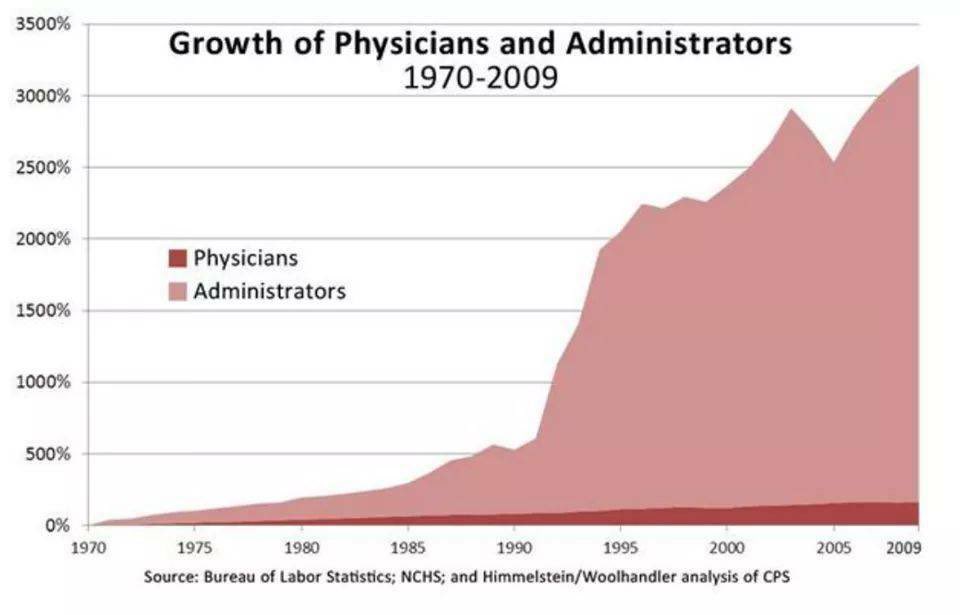
This goes in phases: right now BAs get you nothing but a chance to apply and be rejected, and BA enlistment is falling, but STEM still offers a decent chance. (This won’t remain true in the West for much longer.) During this period alternate culture production really gets fired up: intellectuals who can’t get positions produce books, pamphlets, blogs, podcasts and so on. They attack academia and seek forms of legitimacy other than credentials.

Finally, collapse. The state stops enforcing monopolies, university enrollment drops and many institutions fail entirely. Other forms of cultural production become dominant.

The Medieval University Cycle

The rise really gets going in the 1100s, though some institutions are created earlier. By the 1200s they are accredited by the Church of the Holy Roman Emperor. This makes the credentials valid throughout Christendom, which no other higher credentials are. At this time both the papacy and various kings and principalities are expanding their administration, and there are tons of positions. As with the Confucian scholars in the early days, these administrators are used to expand central authority: feudalism begins its decline. In addition the monopoly of law, medicine and theology works against feudal nobles.

Every major pope from 1159 to 1303 held a degree in law from a university. One of the signs of the end of the reign of the medieval scholastics is when other ways of training come to the fore. In England in the 1400s, for example, lawyers no longer learn and OxBridge, but in London in what amounts to an apprenticeship system. By the 1500s OxBridge no longer teaches physicians, this moves to the Royal College of physicians and soon after the monopoly of clergy on medicine is ended.

The height of the system is significant: two thousand to four thousand students were enrolled at Oxford and Cambridge, for example. This is 4x as many, proportionally, as were enrolled in Elizabethan England and as a proportion of the population the medieval height wasn’t surpassed until after 1900. At this height at least five percent of the male population attended university and it could have been as high as 10%.

The medieval system, note, goes into decline fifty years before the black death: so it wasn’t caused by declining population.

As the medieval system goes into decline, the humanists rise. They work outside of universities often as publishers or authors and rely on noble patronage. They mock the old academics as rigid, fusty and out of date.

But the decline isn’t good for ordinary people: as mentioned in our own case, education becomes less and less available unless you have money and stops being a major way for people to rise. This was very much true in the medieval university decline: at the beginning many poor individuals could attend, but as time went on this became much less true.

Signposts of Decline

  • smaller institutions folding. (The closure of many of the small liberal arts colleges in our time, for example.)
  • a fall in the number of students.
  • decline in number of institutions.
  • loss of monopolies over credentials.
  • widespread attacks on what is taught and how it is taught. (We see a great deal of this now, and it has progressed to politicians passing laws.)
  • Increase in the cost of education, with poorer students being cut out.
  • Cheap degrees which are mere formalities: degree mils and so on.

Note that phases three and four also can feed into political instability. In recent years Peter Turchin has popularized this, and many think he created the idea but it’s long been discussed as important in revolutions such as the French and Russian ones. People who are highly educated but didn’t get the positions they wanted are vastly destabilizing: they feel betrayed and they have the tools to fight ideologically and often the understanding of how to administer movements and other organizations.

Raise someone’s expectations, train them, then let them rot in poverty and you’ve made yourself a potential enemy.

These cycles are dead common. Collins identifies a number, just in the West:

  • The Medieval cycle – starts in the 1100s, peaks in the 1200s, over in most places by the 1400s.
  • English cycle from 1500-1860
  • Spain from 1500-1850
  • France 1500-1850
  • Germany 1500-1850
  • US 1700-1880

The various national ones, though they start at about the same time, other than in America, are separate and have different patterns of rise and decline. Not all of them go all the way: the American universities never go thru phase four, for example.

Education Systems Rise and Fall like all else in human society. What is happening now in our system is very similar to what has happened before and if we want to understand what will happen to our system, the best way to know is to see what happened before. It will never be a one-to-one match: the details will differ, but the pattern will hold.

The obvious thing to do for those who want to slow the fall and end it before collapse is to figure out what sort of training they can produce which isn’t in oversupply. For individuals the question is where the new form of cultural production is and how to legitimize it and reap the benefits of that legitimization. One might wonder if the rise of podcasting intellectuals who use their celebrity to sell their books is a fad, or a sign of something greater, for example. I may return to that in the future.

In the meantime: it’s all happened before.


My writing happens because readers donate or subscribe. If you value that writing, and you can afford to, please support it.


Page 86 of 517

Powered by WordPress & Theme by Anders Norén