It’s the policy, stupid. Bernie isn’t perfect, especially on foreign affairs, but he’s better than anyone else I see in the field in terms of what he wants to do. Moreover, he’s credible, since he’s been for most of the same things all his life.
A lot of voters are very good at saying they support certain policies, then finding an excuse to vote for a politician who doesn’t actually want those policies. This is particularly endemic in Democratic primary voters, who never saw a left-winger they didn’t want to spit on while claiming to agree with.
Yes, he’s 79, but in good in shape for 79. All that really means is that he needs a VP candidate who shares his politics and is younger, rather than a “balance VP.”
As for the fact that he’s a white male, I’ve seen too many women and people of color turn into centrist or even right wing disasters. I understand the symbolism of a woman President, but Obama was a disaster, and I remember how much I got told how important it was that he was black.
Yeah, no. I’ll stick with “good policy” as my determinant, not genitals or quantity of melanin in the skin.
Bernie it is.
The results of the work I do, like this article, are free, but food isn’t, so if you value my work, please DONATE or SUBSCRIBE.
Virtually everyone wants to feel good. Perhaps they want to be contented, happy, blissful, or something else, but I’ve never met anyone who wanted to feel awful.
The problem is that most people don’t know how to be happy. If they are happy, they don’t really understand what they have, and how others could get it. What works for one, rarely works for most other people.
So, how to be happy?
There are a lot of books about happiness. Most of them have a simple formula, varying in details:
Do/Get/Be X to get Happiness.
That is, you should get friends, or self-esteem, or money, or make a list of things you’re grateful about every day, or create a story about your life, or…
The great spiritual traditions generally say something else.
Our nature is happiness (well, actually bliss) and getting objects or doing things expecting those actions or objects to make you happy won’t work.
My experience is that this is true.
The research is also pretty clear: You do/get something you think will make you happy–perhaps a raise or a great lover or a lottery win–and a few months to two years later you’re back to your previous level of happiness.
Getting “things” doesn’t really work, though there are some minor exceptions (and this isn’t a book, so I’ll skip those for now).
Now, it is true that if you’re in a ton of pain all the time, you’re going to have a problem being happy. It can be done, but probably not if you didn’t do the pre-work before getting sick.
On the other hand, most chronic illness doesn’t necessarily disqualify you from being happy. I say this from experience.
So then, all the introductions and caveats aside, how should one become happy?
Get rid of the shit that stands in the way of being happy.
I remember very clearly the period after I first actually understood this. Suddenly I noticed that there was all this wonderful food around: Chinese, Indian, good roast beef, cheese!, curried goat, fruits, garlic toast, and on and on.
Everything I wanted to cook, fantastic food was available. If it was food I didn’t know how to cook, I could buy it cooked. And plenty of good food was cheap.
Marvelous!
And music! Music. Music. It was everywhere, cheap, and free, and marvelous. The music of hundreds of years of civilization, performed by the best musicians in the world, available to me at the touch of a few buttons.
And the women (and a few men, but mostly women, hey, I have my preferences), were beautiful. There was art. There were fantastic buildings. At night I slept inside, in a warm house in winter, a cool one in summer. I had food, art, entertainment, and beauty available to me everywhere.
I became open to happiness.
So many people walk through life, as I had, unable to appreciate its wonders. I’m the first, as long-time readers know, to note that a lot of life is absolute crap, and yeah, in many ways this is a hell-world, and while this is not the worst timeline (that’d be nuclear war), it’s certainly a bad and remarkably stupid one.
But the world is still full of beauty, the warmth of love is still real, and even simple food is still marvelous.
The first stage of happiness is simply being available to it. Most people aren’t. They are so caught up in their worries, fears, and desires that they can’t see what they already have.
All you need to have this basic level of happiness, which is way more than most people older than ten or so seem to have, is stop letting your fears, worries, and desires get in the way.
This is why early meditation practitioners who’ve made a bit of progress are always dribbling on tiresomely about being present. But it’s not really being present that’s important, it’s not dwelling.
We all have problems. We all have fears. We all have desires.
Fine. Have them. But don’t let them have you. If all you can see is them, you are missing most of what the world offers you ever single day.
So, let them go. Don’t dwell.
Don’t worry about anything you can’t control.
Don’t dwell on anything bad that isn’t happening now. Do what you’re willing to do about it, then put it down. This includes both bad things that happened in the past, and bad things you think will happen in the future. (And which often won’t.)
Don’t spend time castigating yourself because you think you suck. Perhaps you weigh too much, have too little money, aren’t loving enough, competent enough, or any other failure.
Fuck it. Drop it. Do whatever you’re going to do about it, and stop worrying about it.
The formula for simple happiness is just to not be too busy mentally to notice all the happiness available to you right now.
I’m not saying this is easy. When you get down to it, it’s about doing nothing. But before you get to doing nothing, you often have to do a lot of things. Maybe that’s some sort of therapy or maybe it’s meditation or other spiritual practices (genuine belief in a benevolent God does work well). Or maybe you’re one of the very lucky, very few who can just drop everything once you realize it makes sense.
But the core isn’t doing. It’s not doing. Just get out of the way. The human body knows how to be happy, and all it really takes is not being scared, not wanting something to point where you dwell on it, and not worrying, including not worrying about how think you suck.
This is a large part of what is meant by “just drop it all.”
None of this means you’ll be happy all the time. It does mean you’ll be happy a lot and that you won’t tend to dwell on unhappiness. Sufficient to whenever it happens is the crap of life. It shouldn’t destroy your happiness before or afterwards.
So… be happy. I’d like to see more of that. Misery serves no one. It doesn’t serve us when we’re miserable and it doesn’t harm our enemies. Might as well be happy.
(This is the first stage of happiness. More on the happiness in Part II.)
The results of the work I do, like this article, are free, but food isn’t, so if you value my work, please DONATE or SUBSCRIBE.
Chuka Umunna, Luciana Berger, Chris Leslie, Angela Smith, Mike Gapes, Gavin Shuker and Ann Coffey.
They claim it’s due to anti-semitism and Corbyn’s approach to Brexit. (The anti-semitism charges are, to my mind, essentially bogus. There is no more anti-semitism in Labour today than under Blair—-unless, of course, one thinks that criticizing Israel is anti-semitic.)
What’s interesting to me is simply that there are only seven and they aren’t starting a new party, but sitting as independents.
That means, frankly, that they’re almost certainly done: They’ll sit until the next election, when they will be replaced.
A LOT more than seven MPs supported the coup against Corbyn a year after he was first elected. A good two-thirds of Labour MPs did.
That this group could only find seven willing to leave the party means MP opposition to Corbyn, while it still exists, is no longer particularly serious. There was a point where people thought 30 MPs might leave. (Though I wouldn’t be surprised if they have a couple more leave, held back to extend news cycles.)
This makes headlines, but I think it’s more of a good thing than a bad one. These people were constantly attacking Corbyn, having them out of the party is good, and their replacements will almost certainly be loyal.
Whether Corbyn can win the next election remains to be seen. As for Brexit: He doesn’t have enough MPs to force anything. However, Europe has consistently said that it likes Labour’s ideas and would be willing to re-negotiate with it. Whether they’ll do so after Brexit, I don’t know, but there’s a better chance of Corbyn fixing things than May.
A good day’s work.
The results of the work I do, like this article, are free, but food isn’t, so if you value my work, please DONATE or SUBSCRIBE.
“Well, Doctor, what have we got–a Republic or a Monarchy?”
“A Republic, if you can keep it.” (Benjamin Franklin)
So, apparently Trump has said he will declare a national emergency to build his wall.
I’m going to make one point about this: If you have an abusable law or power, it will eventually be abused.
Wikipedia notes that:
Congress has delegated at least 136 distinct statutory emergency powers to the President upon the declaration of an emergency. Only 13 require a declaration from Congress; the remainder are invoked by an executive declaration with no Congressional input.
Maybe Congress shouldn’t have delegated those powers to the President. Let alone without oversight.
If you set up a law that allows someone to act as a dictator, someone will.
The Founders expected that Congress would be jealous of its powers, and not delegate them in this fashion.
The Founders were wrong. There is a part of humanity that wants a LEADER, so they can have no responsibility, and politicians love the ability to pass off their responsibilities to someone else so they can not be blamed.
Then one day someone picks up those powers (and perhaps the responsibilities).
The US is accelerating its slide towards despotism. That slide did not start with Trump, or even with Bush, Jr. (though the AUMF and Patriot Act, bills which were passed in a spasm of national cowardice and fear, certainly were milestones).
The Founders may have been wrong about Congress trying to guard its powers, but they did know that all Republics end—and that they usually end with a man on horseback.
That man is not Trump. He doesn’t have what it takes. He is incompetent and petty.
However, this act, should it occur, makes that day come far closer.
The results of the work I do, like this article, are free, but food isn’t, so if you value my work, please DONATE or SUBSCRIBE.
One of the most stable political situations in the West is the use of charges of anti-semitism to attack those who criticize Israel.
Alexandria Occasio-Cortez, who championed Palestine in her primary run, was quickly broken by the pro-Israeli lobby, before she was even elected. The UK Labour party under Jeremy Corbyn has been under constant attack for “anti-semitism” because Corbyn is sympathetic to Palestinians. And recently, Representative Ilhan Omar suggested that donation from AIPAC are why Congress supports Israel.
(I don’t think that’s mostly correct. They fear AIPAC for far more than monetary reasons.)
Anyway, Ilhan was forced to apologize.
I tend to avoid the Israel-Palestine issue because it’s so dangerous. It’s the only issue I’ve ever been told to shut my mouth about or else (a donor strike, in that case).
But let’s state this simply: Israel is a religious-ethnic apartheid settler state, where the land and homes of much of the people who lived there were seized by force.
The problem is that criticism if Israel, a particularly evil state, is deliberately conflated with criticism of Jews, because Israel is an explicitly Jewish state.
So, here’s the formula:
Jews: Wonderful.
Israelis: Citizens of an apartheid, colonial state running the world’s largest open air prison. Any Israeli who opposes their government’s Palestinian policies is good in that regard.
Any Israeli who supports the government is evil. It’s not hard.
Let us extend this:
Germans: Wonderful.
Germans who supported the Nazis. Evil.
Germans who opposed the Nazis. Good.
Or:
Americans: Wonderful
Americans who supported the Iraq War: Evil.
Americans who opposed the Iraq War: Good.
(We could instead say, oh, Whites, or African Americans, or women, then move to Americans.)
People have responsibility exactly equal to their power. Nonetheless, if you support evil, you are culpable.
Most ethical situations are, in fact, black and white. We like to pretend they aren’t. Let’s take another situation:
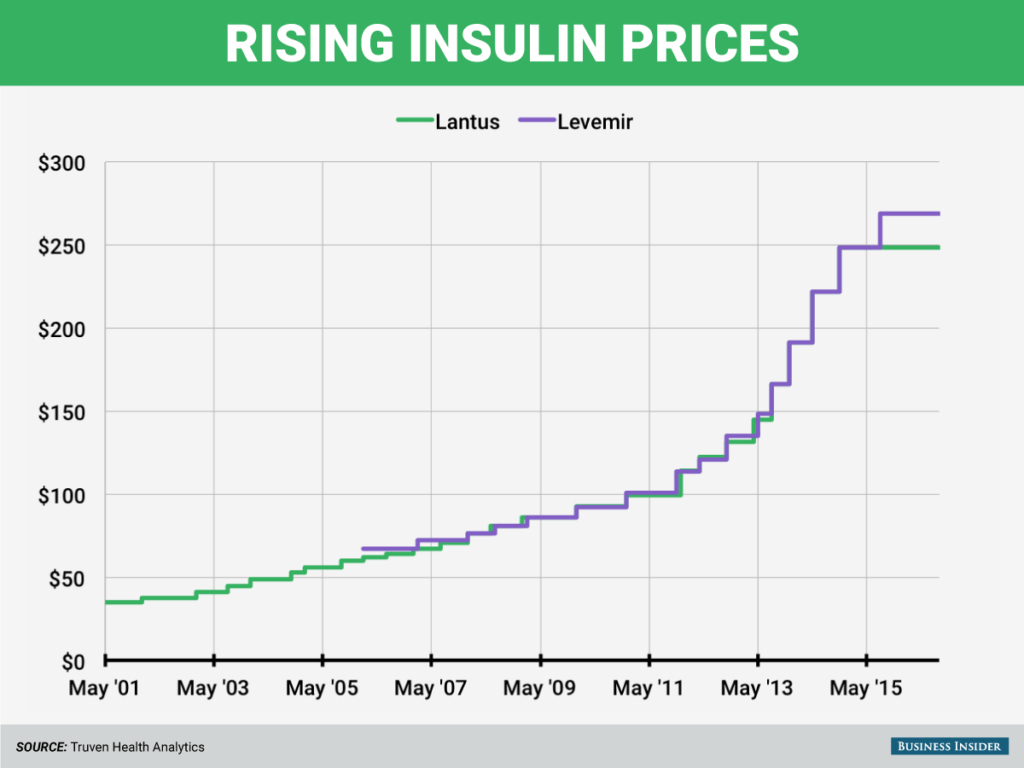
Raising the price of Insulin 1000 percent in a few years: Evil.
People who do it? Mass murderers.
Correct punishment? Same as for any other murderers.
None of this is to say redemption is impossible. One of my friends supported the Iraq War. He quickly realized his mistake, reversed his position and has consistently opposed shitty American wars since then.
George Bush wouldn’t get off so easy: He had a lot of power, therefore his responsibility is much greater and as he’s no longer in power, he can no longer “make it up”.
The rule for redemption is as follows:
First stop doing evil. Apologize. Make it up. Those insulin execs: Drop the prices back down. Disgorge all the profits you made, with a priority to the families of those you killed. That’s all it takes.
But if you keep doing it or supporting it you are responsible or complicit.
This isn’t hard. Don’t do evil. Don’t support evil. If you do or support evil, then you are stained by that evil.
As for Israelis: It is not their fault they are Israelis. However, if they support their government’s policies against Palestinians, well, they’re evil.
The same is true of Jews, as it is of individuals belonging to identity-group you wish to name.
With respect to Israel, well, all it has to do is offer all Palestinians full citizenship and give them reparations equal to what was stolen. This will probably mean the end of Israel as an religious-ethnic state, but, umm, are religious ethnic states a good thing?
We all know what is required when we do wrong. Stop doing harm, apologize, and recompense the victim(s) as best one is able. (Yeah, this applies to black descendents of slavery in the US, though not so much as it does to the remaining Native Americans in the US, Canada, and elsewhere.)
While often what we should do as individuals isn’t true of states, for redemption and forgiveness, it is. Stop doing evil. Say sorry. Make it up as best one can.
But first stop doing evil.
The results of the work I do, like this article, are free, but food isn’t, so if you value my work, please DONATE or SUBSCRIBE.
Which means that access to good health care will remain age- and money-gated. If you’re too young and too poor, you don’t get health care, or you get worse health care.
Here’s the simple rule for a good healthcare system: The health care someone gets is based only on what they need and not on ANY other consideration.
This means everyone is treated the same. If society decides that some treatments are too expensive, then the criteria used for whether you get them is never “Can you pay?” it is criteria like “Who will this help most, medically?”
Of course, it is impossible to deal with America’s healthcare mess without also dealing with oligopoly device and medicine providers.
That means you must either regulate them (“You will make a 5 percent profit, no more and no less”) or you must break them up, or you must nationalize them.
… you know that the market has failed. And this is for a drug that is not patented.
A few people are getting very rich, by killing people. Those people should have their companies expropriated for nothing, and then, if any charge can be found, criminal proceedings should ensue. At the least, they should be made pariahs, and anyone who deals with them in any way should be ostracized.
But, moving back to policy, if you just give everyone health care, stop rationing based on money and age, and break the oligopolies (while fixing various other perverse incentives like doctors owning testing companies), not only will the cost of healthcare plummet (Canada’s per capita costs dropped by a third in ten years just by changing to universal care), its quality will increase.
But I still want to see most pharmacare executives in prison.
The results of the work I do, like this article, are free, but food isn’t, so if you value my work, please DONATE or SUBSCRIBE.
…authoritarian leaders around the world have refined a playbook for acquiring and consolidating power. The strategy goes something like this: appeal to nationalism, stoke fear and divide people into an “us” and a “them,” use that polarization to win an election (even if it’s just an internal party vote, as in China), and systematically undermine democratic rules and other procedural safeguards.
According to Foreign Policy’s “Top 100 Global Thinkers” piece, it describes the strongman — its #1 most influential thinker.
FP lists:
Vladimir Putin’s Russia, Rodrigo Duterte’s Philippines, Xi Jinping’s China, Recep Tayyip Erdogan’s Turkey, Viktor Orban’s Hungary, and even Donald Trump’s America”…
And that’s fine as far as it goes.
But who is dividing America, say, into “us and them?”
Is it just Trump. Or is it a Democratic leader calling a huge chunk of the population “the deplorables?” Whether you agreed or disagreed with Clinton, is this not an internal enemy?
What about the Democratic and “Resistance” strategy of demonizing Russia and Putin? Is this different in kind from China demonizing Japan and the West? (Perhaps it is, in that those countries really did despoil China, while Russia has never despoiled America.)
Is it so different from what is happening in Britain, with Brexit, or in much of Europe, especially Eastern Europe with regard to refugees?
I think Foreign Policy magazine is correct, understand. I just think that being members of America’s elite, they have trouble seeing and naming this tendency when it is being done by leaders or movements they identify with. Trump is outside the foreign policy establishment (he actually talks about withdrawing troops from Syria and Afghanistan!) He is easy to criticize. But Trump has not been tangoing in the US alone and US politicians have a long history of using internal and external enemies, just like strongmen, to win internal elections.
Likewise, that US democratic elections have been systematically undermined (thru gerrymandering, voter suppression and vast lakes of money) is undeniable, as is the fact that the rule of law means little in the United States after Obama’s Department of Justice immunized virtually every senior financial executive in the country.
There is a general global trend to authoritarianism. In the US it did not start with Trump, and it is already in the acute stage. It entered the acute stage not in 2016, but on September 14th 2001, with the Authorization to Use Military Force (AUMF), when the US Senate decided to give away its war-making authority to the Presidency. (And with the Patriot Act, when the US decided to formally become a soft police state.)
It is seen in austerity, where government functions have been systematically weakened so that tax cuts and privatization can be given to the rich.
It is abetted by the destruction and hobbling of the media. It is true that Turkey’s Erdogan is terrible when it comes to jailing the media; that China’s media is censored, and so on.
But the US media is being eviscerated by market forces. Journalists are laid off in waves. What oversight they offered (generally pitiful, as the run up to the Iraq war showed, with virtually all media onside and critics deliberately silenced, fired and demoted) is withering on the vine.
The trend away from meaningful democracy, whatever forms are maintained, is not limited to a few bad apples and one rogue President, Trump. It is, instead, something with deep roots in the hegemonic power of the age, America.
It will continue so long as the general population are considered sheep. As long as the needs of the many are subordinate to the needs of the few, and as long as large groups of the many are impoverished, they will remain demagogue bait and willing to support authoritarians.
Fear, as FDR understood, is at the heart of all authoritarianism.
People are scared. They have good reason to be scared, because their leaders despise them and want to hurt them. And whenever they find someone they think is strong and on their side, they will flock to that person. They will usually be wrong to do so, but abused people usually make bad decisions.
The results of the work I do, like this article, are free, but food isn’t, so if you value my work, please DONATE or SUBSCRIBE.
The trend that the graph depicts is based on a poverty line of $1.90 (£1.44) per day, which is the equivalent of what $1.90 could buy in the US in 2011. It’s obscenely low by any standard, and we now have piles of evidence that people living just above this line have terrible levels of malnutrition and mortality. Earning $2 per day doesn’t mean that you’re somehow suddenly free of extreme poverty. Not by a long shot.
Scholars have been calling for a more reasonable poverty line for many years. Most agree that people need a minimum of about $7.40 per day to achieve basic nutrition and normal human life expectancy…
…So what happens if we measure global poverty at the low end of this more realistic spectrum – $7.40 per day, to be extra conservative? Well, we see that the number of people living under this line has increased dramatically since measurements began in 1981, reaching some 4.2 billion people today.
We also know, for example, that Indians have been eating less calories than 30 years ago (and having traveled in India in the 80s, I can tell you they weren’t overfed.)
As Hickel also points out about the earlier parts of the graph, and as I have pointed out previously, most of the “people are making more money” comes from “people were forced off their subsistence farms so that they had to use money to buy what they got from their own labor before.”
So, for example, when NAFTA went into place, millions of Mexican susbsistence farmers were forced off their land. This lead, directly, to the massive increases in immigration to the US that occurred in the 90s and early 2000s, by the way.
People miss the essential point: it’s not how much money you have. It’s whether or not you have enough food, shelter, clothes and so on. It’s whether you have what you need and some of what you want.
Only a moron (or someone as disconnected from the realities of life like Bill Gates) could think that being able to buy as much as $1.90 a day, in the United States of 2011, would qualify as enough money. I have been poor. I have been very poor, by first world standards. I can tell you that even back in the late 80s, $1.90 wasn’t enough (I could have barely eaten on that, I could not have saved up and paid rent.) Today it is completely inadequate, and the diet it would barely allow is basically starch and sugar.
(Which, again, anyone who actually has tried to shop cheaply would know. That won’t include Bill Gates.)
These people who say with certainty how poverty is massively decreasing make me sick. They are either ignorant, very stupid and disconnected from reality, or they are very evil.
Essentially all of the poverty reduction of the past 30 years comes from one source, and one source only. China. Which industrialized by classic protectionist policies which the IMF, World Bank and poverty ghouls do their best to make impossible.
And as for China, what is also clear from their experience, and in the data, is that the Chinese who moved to the cities to get those great new jobs are less happy than the people who stayed in the villages. Further, great amounts of force have had to be used to move peasants off the land, because they know the new factory jobs suck even worse than being a peasant. (As they did in Britain during the Industrial revolution.)
What made some parts of the world better wasn’t capitalism, per se. It was steam power and oil power. Those parts of the world then used that power, along with gunpowder and whatnot, to conquer most of the world and take what they wanted.
Today we do it different ways, but the bottom line is simple enough: measured by any semi-reasonable standard (would you want to try to live on $7.40 a day, including paying your rent?), poverty is not getting better. It is getting worse.
If you say poverty is decreasing, what you are saying is “it is ok to keep doing what we’re doing.”
If you’re wrong, you’re a monster, because you’re saying “we don’t really need to do more.”
And you’re wrong.
The results of the work I do, like this article, are free, but food isn’t, so if you value my work, please DONATE or SUBSCRIBE.

 Our nature is happiness (well, actually bliss) and getting objects or doing things expecting those actions or objects to make you happy won’t work.
 They claim it’s due to anti-semitism and Corbyn’s approach to Brexit. (The anti-semitism charges are, to my mind, essentially bogus. There is no more anti-semitism in Labour today than under Blair—-unless, of course, one thinks that criticizing Israel is anti-semitic.)
 Maybe Congress shouldn’t have delegated those powers to the President. Let alone without oversight.
 One of the most stable political situations in the West is the use of charges of anti-semitism to attack those who criticize Israel.