Ian Welsh

The horizon is not so far as we can see, but as far as we can imagine

America: A Christian Nation

Scott Warren is charged with helping immigrants who were crossing the Mexican border.

Oh my God.

“He gave them food, he gave them water, he gave them a place to stay…He did a bad thing.” — Anna Wright, in her closing argument that should be convicted.

I wonder if the prosecutor thinks she is a Christian?

35 For I was hungry and you gave me something to eat, I was thirsty and you gave me something to drink, I was a stranger and you invited me in, 36 I needed clothes and you clothed me, I was sick and you looked after me, I was in prison and you came to visit me.’

37 “Then the righteous will answer him, ‘Lord, when did we see you hungry and feed you, or thirsty and give you something to drink? 38 When did we see you a stranger and invite you in, or needing clothes and clothe you? 39 When did we see you sick or in prison and go to visit you?’

40 “The King will reply, ‘Truly I tell you, whatever you did for one of the least of these brothers and sisters of mine, you did for me.’

I would also note that Sodom and Gomorrah were destroyed, essentially, for treating visitors badly.


It is fundraising time. I hope to be able to keep writing at a fair pace (an article almost every day.) To justify doing so, I need to see that people care enough to give. If you do, Please Donate.


Feel free to use this thread as an open thread, in addition to discussing the above Christian Nation act.

China Already Has Almost 430 Million People With First World Incomes

If you wonder why America has become so hostile to China, it comes down to this.

Back in the 80s, Japan looked like a threat. If fizzled, in large part due to some mismanagement, but the truth is it was never really a threat, because it didn’t have the population to be one, and while highly technologically advanced, it wasn’t a generation ahead of the US, or likely to make that leap.

China already has a first world population that is larger than America’s. Oh, they earn a little less, but they still qualify as “rich” by global standards.

Technologically it is not as advanced, but it’s catching up. The furor over Huawei 5G is because Huawei has the lead in that technology, and so many countries are going with their technology. China produces far more engineers and scientists than America, and they are growing in competence.


(I am fundraising to determine how much I’ll write this year. If you value my writing and want more of it, please consider donating.)


The most important region in the world for electronics manufacturing is Shenzhen. Oh Silicon Valley still matters for design and software, but for actually building things, Shenzen is where it’s at. And they’re catching up in design and software.

Back in the late 19th century, when America became the largest economy, Brits consoled themselves that they were still creating most of the new inventions (and the Germans were inventing a lot of the rest).

It didn’t last. The inventiveness moved to where the factories were.

So China is a real, credible, threat. For most of the last 2,000 years it’s been the world’s most advanced region, with the largest economy. (Before that it tended to be India, and before that it was usually the Tigris-Euphrates region.)

The last two-hundred years, in which China wasn’t the world’s greatest, most advanced economy, are an aberration. Europeans industrialized, and industrialization was an order of magnitude more powerful than agricultural civilizations.

That period is over. China is industrialized, has information tech, and so on.

There are two great threats to the rise of Chinese hegemony. The first is a population time bomb, even worse than the Japanese. All of that “one child policy” is about to come back and bite hard. The Chinese, however, know that, and it is why they are trying to make gains now, in the South China Sea and with the Belt and Road Initiative. They recognize they have a window, and that they must use it.

The second is climate change and ecological collapse. China will be hit hard. The south is subject to both heat and rainfall problems; the Chinese have vastly overused their aquifers, and climate change in general is going to hit their food production hard.

The first threat is serious, the second one may be existential. But the other great powers are facing these threats, in various forms as well.

For now, America is freaking out over China because China is actually a threat to American hegemony. It’s that simple.

What is also true is that, historically, this leads to war more often than not.

The Curse of Knowledge and Predicting Electoral Results

I’m good at predicting some thing. Economic events, longer term political and social trends, and so on.

When I was younger, I was also good at predicting elections.

Then I started getting election results wrong.

It took me a while to figure out why.

I knew too much.

When I was young, I didn’t follow politics much, I just read the newspaper and maybe saw the occasional newscast.

So I knew what ordinary voters knew.

Later I studied economics and politics and so on. I started knowing the actual consequences of elections, and I knew what governments had actually done, not just what was reported enough to sink into someone who wasn’t paying much attention, like most of the population.

In other words, I was no longer a proxy for the population.

Nor does analysis which tries to model “what does the ordinary person know” really help.


(I am fundraising to determine how much I’ll write this year. If you value my writing and want more of it, please consider donating.)


The reason is simple enough: we don’t make most decisions, including voting decisions, rationally. We make them based on our feelings. The strongest feeling determines our vote.

Since my feelings, as someone who followed politics closely, were no longer in sync with those of the majority of the population, I could no longer use my feelings to judge. Even if I were to try and feel like someone different from me (not impossible) I still knew too much. My empathic sense of what they would want was based on more knowledge than they had.

And boom, lousy electoral predictions.

Talking with other close observers of politics and economics and so on I’ve noticed that this curse of knowledge is not mine alone. Most political experts predict elections badly.

So I’d keep thinking “wow, if you elect this dude it’ll be disastrous,” because I knew the consequences of what they were actually likely to do, and primary and general election voters would keep picking awful people.

The problem, of course, is that the consequences of actual government policies don’t go away. But the other problem is figuring out how to avoid the curse of knowledge: one needs it to make important predictions other than electorally, but if you don’t understand the electorate, that cripples any chance of good candidates being elected.

So far, I don’t know how to avoid this and if anybody else on the more left wing side does, I’m not seeing it.

A problem.


Homelessness and Poverty Are Policy Choices

The issue is simple enough. There are more empty homes than homeless. For example, in New York:


AirBnB, deliberate withholding, seasonal users, and I suspect, a lot of flippers and foreign buyers who rarely use the property.

All of these could be dealt with by political means: much higher taxes on empty homes, disallowing foreign owners who do not live in properties, cracking down on AirBnB by making hosts abide by hotel regulations, and taxes, among other things.


(I am fundraising to determine how much I’ll write this year. If you value my writing and want more of it, please consider donating.)


As with food, where we produce far more than we need, but people go hungry, homelessness in the first world, with the exception of a few individuals, is a policy choice. We have the homes, and can easily build more, but we let people go homeless or hungry (or without medicine) because we don’t care enough.

It’s one thing to ration actually scarce resources, but when there is surfeit, and people going hungry and homeless, society has lost its way.

Open Thread

Use this thread to discuss topics not relevant to current posts.

Fundraising Update

We have raised approximately $4,940. This includes ongoing subscriptions (multiplied by three).

As $5,000 is the goal for writing ten non-fiction book reviews on books I consider important to understand the world, we’ll certainly reach that.

The next goal is $8,000 for an additional six reviews.

If we make $11,000, I’ll write a booklet about how readers can improve their thinking about the state and future of the world. Most people are very bad system thinkers, especially when prejudices are engaged, so I’ll try to distill and teach what I’ve learned over the past, well, almost 30 years, and which allowed me to predict that the next President after Obama would be a right-wing authoritarian populist, or the month and year of the financial collapse, as well as various other events, past and to come.

DONATE OR SUBSCRIBE

I fund-raise not just to determine these goals, however, but to determine, in general, how much time I should put into writing for my blog. Simply put, the more people give, the more I can justify writing. If people won’t give, it tells me I should spend my time doing other things. (If I were wealthier, I could ignore such survival concerns. I’m not, so I can’t.)

Finally, if you are in financial straits yourself, with difficulty paying for rent, food, or healthcare, please don’t give. Take care of yourself, with my best wishes and hope that your future is better than your present.

DONATE OR SUBSCRIBE

Oh, also, if you prefer to donate with Crypto, options are at the bottom of the donation page.

Why Elites Are Creating Surveillance States

It’s commonplace now to note that China is a surveillance state.

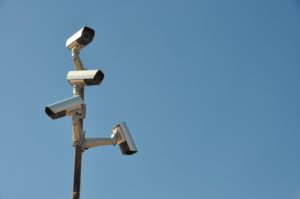
But most other countries–including the UK and the US–are on their way. Cameras proliferate everywhere, virtually everyone carries a phone which is tracked constantly (and 5G networks will be so precise they can tell which room of a building you are in), and audio surveillance is increasingly being added. (That much of this surveillance is private, rather than government, changes little.)

AI + various recognition algos (face, gait, etc…) and cheap long term storage means that, increasingly, it is possible to know where people were, when, and store that information for years. Cameras and phones and other devices which listen in, plus access to all chat, phone, email, and other messaging means we know what they were doing and saying.

1984 was nothing on this. Big Brother couldn’t store information (no video tape even) and someone had to actually be watching the camera and listening in when you did something The Powers That Be didn’t like. If no one was watching, you got away with it.

The endgame, as I’ve been pointing out for years, is a society in which where you are and what you’re doing, and have done is, always known, or at least knowable. And that information is known forever, so the moment someone with power wants to take you out, they can go back through your life in minute detail. If laws or norms change so that what was okay ten or 30 years ago isn’t okay now, well, they can get you on that.

Surveillance societies are sterile societies. Everyone does what they’re supposed to do all the time, and because we become what we do, it affects our personalities. It particularly affects our creativity, and is a large part of why Communist surveillance societies were less creative than the West, particularly as their police states ramped up.

Surveillance societies also just suck to live in: paranoia, fear, little freedom.

So why create them? I mean in one sense the answer is obvious: Surveillance is control, and powerful people always want small people under their thumb, and small people can be sold on arguments like, “This stops crime!” and “Oh, think of the children!”


(I am fundraising to determine how much I’ll write this year. If you value my writing and want more of it, please consider donating.)


But there are three specific reasons for this upsurge in the surveillance state beyond, “We can, so why not?”

The first is that elites have become very aware that modern military technology is mostly not in their favour. Iraqis fought the US to a standstill. The US military had to pay militias to let it leave. You don’t do that if you won. The Taliban is straight up winning in Afghanistan. The biggest and arguably the most expensive military in the world has lost to opponents who don’t have one percent of its budget. Israel lost to Hezbollah the last time it invaded Lebanon, and even lost the e-lint war.

The issue is that a big military like America’s can’t be defeated on the battlefield by rabble, but technologies of area denial (most notably IEDs) mean that large parts of any sizeable country can be made into no go zones. The state can’t rule them and neither can the militias really (because air power can be used to devastate them).

Meanwhile technologies like drones, and, I suspect, in the longer run, weaponized robots, are actually technologies that will be more useful to the weak than the strong. Bombers that cost a billion bucks and can only be made by huge firms or government organizations, and then require teams of specialists to run and maintain? Those are weapons of the strong.

But drones and weaponized robots and IEDs are or will be technologies that any competent mechanic/engineer will be able to make.

What is even scarier is that, as Bush and Obama made clear, drones are weapons of assassination. Like daggers and pistols in earlier eras, they make it possible to kill important people and are really hard to stop.

That will remain true as they disperse out to non-state actors, which is already happening.

They are also excellent weapons of sabotage. A few drones shut down Heathrow Airport, Britain’s most important airport, for days, without having to do anything beyond buzz about.

So, the technological soup to which we are coming makes assassination, sabotage, and area denial easy (as does cyber warfare). A single ransomware attack can shut down an entire bureaucracy, private or public.

The only way our elites can see to stop this is to know what everyone is doing all the time. Oh, there is one other way, but they are ideologically opposed to it.

The Rise of Inequality

The other way to stop people from sabotage, assassination, and insurgency is to make life good. People who are happy, expect the future to be better than the past, and have great social ties (love/friendship) don’t commit violence except when it is socially acceptable violence.

But this requires actually letting ordinary people have stuff: money and good futures. It means not treating them badly at work. It means sharing power (because there is no shared wealth without shared power over time). It also means, in an increasingly small world, actually giving developing country inhabitants decent lives–equality within and between societies.

If you are the richest rich in the history of the world, you sure don’t want to do that. Moreover, you are aware that you have so much, and that other people want it, and you are scared. Especially because you know serious disruptions to the social order will occur as climate change and ecological collapse worsen.

So, to keep your position, and save your lives when things go bad, you need a surveillance state. People have good reason to hate you, the smarter among you realize that, and know that only real, credible fear will stop them.

Remember, the surveillance state, combined with the technologies we’ve discussed, already means the state can easily kill and capture you. If they know where you are, who all your friends are, and everything you’ve done or do, it’s just a matter of visiting some violence on you, and they have plenty of violent capability. Finding you is the important part. The rest is easy.

A Grand Experiment in Cost

Traditional surveillance societies were expensive. The East German Stasi reputedly had one-third of its population spying on the other two-thirds. That’s ludicrous. It guts productivity, making the state poor. Combined with the creativity effects of surveillance societies, you will eventually lose to healthy, non-surveillance societies.

But what if you only had to pay a few percentage points of people to spy on the others, and, if necessary, kill or capture, the rest of the population. What if most of the work was done by AI, algos, and robots? Even better, this gets rid of the need to keep a large number of internal police and spies loyal, so you need a much smaller class of people to keep your surveillance state running.

But wait! It gets better! (Worse.) What if these new technologies mean that you don’t actually need peons? What if you can do the manufacturing, delivery, and service jobs all with combinations of AI and robots. Who needs workers? Just give the peons a guaranteed annual income large enough for them to buy your shitty goods and services, stick them in sub-par housing, and run the society mostly without them!

Oh sure, the same technology could be used to create a utopia (luxury-automated communism) but why do that? That would mean you wouldn’t be the richest, most powerful elite the world has ever known.

As members of the powerful elite, the problem of peons and minions revolting has always been the thorn in your bowl of cherries.

Finally, finally, technology offers a solution. A possibility of a permanent state where you never can, or will, lose your power.

Give it a little longer and make sure that you get access to the new gene-editing technologies (and the peons don’t), and you can even give yourself another permanent advantage by making yourself and your children actually, biologically superior to the hoi polloi.

The possibilities! The possibilities! If you can just hang on and get all of this into place, this could be the greatest age of aristocracy and autocracy the world has ever seen, and one that has no reason to ever end.

Ahhhhh.

It’s always good to be rich and powerful, but potentially this is the best era ever to be rich and powerful, with the best yet to come!


Week-end Wrap, June 2, 2019

by Tony Wikrent

Strategic Political Economy

[Valdai Discussion Club, via Naked Capitalism 5-26-19]

When analyzing the place that Russia and China occupy in each other’s bilateral trade, there is an imbalance arising from the difference in the size of the two economies. But it is hard to think of a way China could use it to blackmail or pressure Russia. Fuel and energy resources dominate Russia’s exports to China as well as Russian exports in general – fossil fuels accounted for 73 percent of its 2018 supplies. Russia is one of the main suppliers of oil to China, competing for first place with Saudi Arabia.
This does not speak well of the structure of the modern Russian economy. But, from a political standpoint, all prior experience tells us that trade in energy products creates a strong interdependence between supplier and buyer. Unlike other types of goods, any pressure on energy exporters is always associated with immediate and significant losses for the importing country, so it is only used as a last resort in rare cases.

Tech cold war: how Trump’s assault on Huawei is forcing the world to contemplate a digital iron curtain

[South China Morning Post, via Naked Capitalism 5-26-19]
I distinctly remember 20 and more years ago repeatedly arguing with conservatives in AOL message boards that utilizing cheap Chinese labor for manufacturing was going to cause long-term strategic shifts and problems that would greatly afflict USA interests. Their responses were unequivocal and never varied: an ideological recitation of the benefits of free trade, most especially how trade with USA would sneakily introduce changes into China and force adoption of “democracy.” The only variation from this line was the occasional addition of complaining that American workers were paid too much, and expected too much. 
 
[FifthDomain, via Naked Capitalism 5-26-19]
Mark Sumner, June 1, 2019 [DailyKos]

China’s Plan To Influence Global Commodity Pricing

[SafeHaven, via Naked Capitalism 6-1-19]

The Electric Vehicle Revolution Will Come from China — not the US
by Lambert Strether [Naked Capitalism 5-26-19]

[Asia Times, via Naked Capitalism 5-27-19]

(I am fundraising to determine how much I’ll write this year. If you value my writing and want more of it, please consider donating.)


The Failure of Establishment Neoliberal Economics

Page 305 of 532

Powered by WordPress & Theme by Anders Norén