
Ian Welsh

The horizon is not so far as we can see, but as far as we can imagine

The Thing About Racism and Prejudice…

…is the unbelievable stupidity of it.

I can understand prejudice based on culture. I can understand prejudice based on religion. I can even understand prejudice based on subculture (if you can’t, remember “Nazi” can be considered a subculture, and so can “Republican,” and I see plenty of straight up prejudice against Republicans).

I mean, in most cases it’s a bad idea to pre-judge people based on your stereotype of a group, because they may not share the characteristics you dislike and you may be wrong about your stereotype.

But skin colour? Why not hair colour or eye colour? (Well, I guess we’ve done those too, especially with regards to redheads.)

Now if skin colour is a proxy for culture, we’re still in the badlands but not 100 percent stupid, but these fools keep mistaking Sikhs for Muslims (not even close, children), and so on.

But, overall the problem isn’t judging people–we’re plenty good at that. It isn’t assigning them to various identity groups–we’re ace at that. It’s not people joining identity groups, they make us join when we’re kids, and we just keep on doing it.

The problem is that these various identities obscure the common humanity beneath them. They divide us from ourselves and make us alien to our neighbours and fellow humans, when we have far more in common than separates us.

Made alien, we treat each other abominably, and think it’s okay because, “They’re not one of us.”

And here we are, with three existential threats (nukes/climate change/environmental collapse) and we’re spending all our time screaming at each other, running around in fear of each other, when if we don’t act properly, we may drive ourselves to extinction, or at least kill a few billion of us.

Skin colour? We care about skin colour? We’re arguing over who likes to have sex with whom? Over people who’d rather be a different gender from their biological one?

Who cares? None of this is important.

Apocalypse, that might be worth a bit more attention. And in a genuine extinction scenario, we’re all equal–even the rich. (In a simply “very bad” scenario, the rich are betting they’ll be fine. If you want to hate someone, hate the people who made themselves rich by making you poor and killing the poor. Hate people for what they do and have done, not shit that they didn’t choose (like skin colour) or stuff that doesn’t effect you (like their gender or sexual preferences).)


The results of the work I do, like this article, are free, but food isn’t, so if you value my work, please DONATE or SUBSCRIBE.
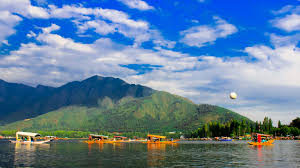

The Palestinian Option for Kashmir?

Back in 1980, I visited Kashmir with my parents. This was before the troubles, and it remains perhaps the most beautiful place I’ve ever been.

Last week, India’s PM, Modi, abrogated clauses in the Indian constitution relating to Kashmir, which does not allow non-Kashmiris to buy property. As Margolis says:

Modi is clearly copying Israel’s Netanyahu by encouraging non-Muslims to buy up land and squeeze the local Muslim population. Welcome to the Mideast Conflict East. China is also doing similar ethnic inundation in its far western, largely Muslim, Xinjiang (Sinkiang) region.

Dai Lake, Kashmir

By their friends, you shall know them. I’ve never liked Modi, his demonitization was incredibly damaging to the Indian economy and hurt the poorest Indians. That he spends all his time buddying up to Israel’s Netanyahu tells you all you need to know about whether he’s more good than bad. (If it doesn’t, you need to self-reflect a bit.)

But Indians did vote for Modi in droves. It’s another episode of people, who are scared and have shitty lives, voting for the tough guy, thinking he’ll be tough for them, rather than for his core supporters. In Modi’s case, hard-right Hindus.

It’s worth remembering that the UN called for a referendum in Kashmir and that India never held it, because they know that, given a choice, Kashmiris would rather be part of Pakistan.

So, ethnic cleansing time! This is the world we live in, more and more, a place where the weak do as they must and the powerful do as they will (ever has it been thus, but sometimes it is less thus). For now, India’s the powerful one. Soon enough, it won’t be–because this BS is a distraction from actual existential threats to India, mainly around water. I can’t think of any major nation which is going to get hit harder than India.

Meanwhile, of course, both the Pakistani and Indian militaries are on hair-trigger alert, and both have nuclear weapons. Because India has a much larger army, if war does break out, Pakistan either goes to nukes or loses.

Brilliant.


A Few Words About Argentina

Okay, so Argentina elected a neoliberal president. He went to deep austerity, removed capital controls, and sought an IMF bailout.

Now it looks like a socialist may win and markets are freaking out, because he may default on some of the debt and re-institute capital controls.

Argentina’s problems have a long history, but it’s worth remembering this: Before WWII, it was a first world country, with a standard of living about equal to Canada’s.

Argentina partially defaulted in 2001. We should remember that that default was caused by following the conservative policy of pegging the Peso to the dollar, which any moron should have known would eventually backfire.

It is also worth remembering that, when Argentina defaulted in 2001, it wasn’t actually allowed to. American courts wouldn’t let Argentina pay the creditors who allowed their debt to be reduced unless they also paid those debtors who didn’t take the deal.

We live in a stupid, perverse world where people don’t understand that there has to be a balance between debtors and creditors. Creditors are making a bet, and if they lend to the wrong entity, and that entity eventually can’t pay back the debt, they should have to eat their losses. Don’t lend to people who can’t pay you back. Everyone knew that Argentina was going to have debt problems, every time, but they took the chance because they wanted high returns.

But the central financial system, the NY and London courts, and the IMF act as debt collectors for people who want the upside of high payments from distressed borrowers without the downside of possibly losing the money.

Worse, they act as enforcers for bad actors, who won’t cut deals, and expect to litigate.

Debtors may lose some money, but leg-breaking countries for rich debtors kills and impoverishes poor people.

Now, none of this is to say Argentina hasn’t made mistakes. Flipping back and forth between neoliberals and socialists is stupid. Pick one, and suck it up. Electing Macri was stupid, but then being outraged when he does what a neoliberal technocrat would do (i.e., austerity and sucking up to the IMF) is equally stupid.

Pick a governing philosophy and elect governments that adhere to that philosophy until the leading parties all follow it (like when Labour became neoliberal under Blair, cementing Thatcher’s victory).

Right now, Argentina is getting the worst of both worlds.


The results of the work I do, like this article, are free, but food isn’t, so if you value my work, please DONATE or SUBSCRIBE.

Why and When Good Wins

We live in a degraded Age. This isn’t to pretend that what came before was good in all ways, but all too often we deny the power of good. We think evil is smart, so good loses. Or we deny that good and evil even exist, claiming they are spiritual or metaphysical constructs with no impact in the world.

Raping someone is evil. It is always evil.

Torture is evil. It is always evil.

Feeding a hungry person is good.

Protecting the weak is good.

Healing the sick is good.

Kindness is good, and cruelty is evil.

This is not to say violence is never justified, or even killing.

Good must fight evil.

Those who refused to fight in World War I were right. Those who refused to fight the Nazis were wrong.

But here’s the important part: Good is Powerful.

When you refuse to do certain things like rape and torture, people want to be part of your group.

When you are known to be kind and take care of others, people want to be part of your group.

“Rational” evil people, who will rape or torture sometimes, and who will only help another person if it’s in their self-interest, are not trustworthy. When you need them–actually need them–they will not be there for you, AND if it’s in their interest to do terrible things to you, they will.

Good people, actual good people (and not those who pretend), can be trusted.

Anyone truly rational would rather be with good people.

But goodness can’t be based just on rationality. Rational people sell out. Rational people don’t help when they think helping isn’t in their interest. Rational people will be cruel to get what they want if they think they can get away with it.

Good, like any virtue worth having, must be something people do even when it is not in their self interest.

This is why people think good is stupid. Individuals are better off “free riding”; being evil and getting good people to help them. Groups, however, including the individuals in them, are better off if the group and the people are good.

Which is why good people have to also have an irrational hatred of evil. A complete intolerance for it. A “you get one chance and if you don’t reform you’re out” policy. (And out means either ostracism or death.)

Because rational people have to know that if they aren’t good, irrational people will fuck them up.

It is when good people refuse to enforce the norms of goodness, when they let people like those who run most of our societies today free-ride on the basic goodness and peacefulness of other people, that societies and groups turn terrible.

Good wins, but only if good believes in and enforces itself.

Evil, faced with actual good, tends to lose, because the good group is better to be a part of.

There are, of course, caveats and edge cases and “in group vs. out group,” but this is fundamentally true, and why, as long as they actually believed in their own ideology, hegemonic philosophies like Democracy and Human Rights and in older days Confucianism (despite its flaws) and even Christianity (before it became a state religion and turned evil) tended to win.

Evil has advantages, no question. But so does good, and when properly implemented, good’s advantages are greater.

Good loses when people want other people to be good so that they can be evil.


The results of the work I do, like this article, are free, but food isn’t, so if you value my work, please DONATE or SUBSCRIBE.

Week-end Wrap – Political Economy – August 12, 2019

by Tony Wikrent

Strategic Political Economy

Trump, Tax Cuts and Terrorism
Why has the Republican Party become a systematic enabler of terrorism?
Paul Krugman [New York Times, via DailyKos 8-6-19]

But racism isn’t what drives the Republican establishment…their exploitation of racism has led them inexorably to where they are today: de facto enablers of a wave of white supremacist terrorism.

The central story of U.S. politics since the 1970s is the takeover of the Republican Party by economic radicals, determined to slash taxes for the wealthy while undermining the social safety net.

With the arguable exception of George H.W. Bush, every Republican president since 1980 has pushed through tax cuts that disproportionately benefited the 1 percent while trying to defund and/or privatize key social programs like Social Security, Medicare, Medicaid and the Affordable Care Act.

This agenda is, however, unpopular. Most voters believe that the rich should pay more, not less, in taxes, and want spending on social programs to rise, not fall.

So how do Republicans win elections? By appealing to racial animus. This is such an obvious fact of American political life that you have to be willfully blind not to see it….
In effect, then, the Republican Party decided that a few massacres were an acceptable price to pay in return for tax cuts. I wish that were hyperbole, but the continuing refusal of G.O.P. figures to criticize Trump even after El Paso shows that it’s the literal truth.

If You Only Read One Thing Today, Read Paul Krugman: “Trump, Tax Cuts and Terrorism”
xaxnar [DailyKos 8-6-19]

One wonders why John Hickenlooper is still warning of the dangers of extreme leftist socialism. One wonders why Joe Biden still thinks the GOP will come to its senses if Trump is gone. One wonders when Nancy Pelosi and the rest of the Democratic leadership will realize we have a bigger problem than just Trump.

If you are prepared to read more than one thing, read Kevin Drum, who spelled this out a year ago at Mother Jones.
Today, the Republican Party exists for one and only one purpose: to pass tax cuts for the rich and regulatory rollbacks for corporations. They accomplish this using one and only method: unapologetically racist and bigoted appeals to win the votes of the heartland riff-raff they otherwise treat as mere money machines for their endless mail-order cons.

The Myth of Welfare Dependency
Rema Hanna, August 9, 2019 [Project Syndicate, via Mike Norman Economics]

Jeffrey Epstein Commits Suicide

Or should I say “suicide?”

Or perhaps he really did it and was encouraged.

I mean, I don’t know. But I do know that Epstein was, essentially, pimping teenaged girls to rich and powerful people, which is why he got away with it for so long, and why the first time they went after him, he got only a slap on the wrist.

Lots of important people are breathing easier today.

Feel free to use as as open thread as well.


The results of the work I do, like this article, are free, but food isn’t, so if you value my work, please DONATE or SUBSCRIBE.

Why We Need to End Banks and Shadow Banks

Banks and various other financial companies have one important privilege: They can create money. When a bank lends you money, they don’t take it from another account and apply it to yours, they just put a number into a ledger, and voila, the money exists, created as debt.

Now, there are those who argue that creating all money as debt is stupid, but let’s move on from that and emphasize the important point:

Banks and other financial companies create money out of thin air.

Now, there are various caveats, and the amount they can create isn’t unlimited (though for practical purposes it’s close), but this is the bottom line.

They then get paid back by the people they loaned money to on money they created out of thin air.

It takes a special sort of genius to run a business which can actually create money, yet still lose money.

This chart gives an idea of how much genius:

I mean, you create the money out of nothing, and then you charge 17 percent returns (which underestimates the real rate of return, because of all the charges), and you still manage to cause a financial crisis because your liabilities wind up higher than your assets?

Wonderment aside, let’s circle back to the ability to create money.

Let’s say you’re Joe, guy who wants to start a business or buy a house. You go to a bank, and the bank decides whether you can do that.

Banks have the ability to create money in exchange for doing something: They decide who should get to do things. They give permission.

If a bank lends you 5o million, that’s the right to command 5o million dollars worth of other people’s labor: To hire them, or to buy the goods created by them. You get to choose what those people do.

Resources, especially people, aren’t infinite. Banks choose who gets to use them. The deal, spelled out is, “Give us the right to create money, and we’ll choose the people who do the most good with society’s resources to control those resources.”

And the banks have failed–over and over again they’ve failed. They don’t even actually make their returns (see 2007/8), let alone actually make good choices about how we should use our resources–with labour or other limited resources. I trust I don’t need to spell all of this out: Look at ecological collapse, climate change, and so on.

So banks, in their current form, shouldn’t have this incredible privilege, because they’ve repeatedly used it badly. This isn’t the first time, or even the second, or the tenth. Among others was the collapse of 1929 and the Great Depression, which effectively caused WWII. We thought we’d fixed the banking sector after that, and we were wrong, because rich people bought out government and undid all the fixes put in by FDR and the New Dealers.

So banks can’t be fixed, they do near apocalyptic damage, plus they suck at their actual job.

We need to find another way to give people permission to use scarce resources, including other people’s labor.


The results of the work I do, like this article, are free, but food isn’t, so if you value my work, please DONATE or SUBSCRIBE.


The Unfolding of Climate Change Catastrophe

Globe on FireI want to keep this a very simple post.

There are three likely initial problems which will make the current situation turn into its first catastrophe.

I’m putting aside violent weather events like hurricanes.

The three are water, food, and other supply chain disruptions.

Water should be obvious. Aquifers are drying up, rainfall patterns will change, snowfall patterns will change, and glaciers are dying. This means that all our water sources are in play – groundwater, lakes, rivers, and streams. Many of these will just dry up. The annual cycle of rebuilding snowpacks and glaciers accounts for much of the world’s water.

The American Southwest will run out of water. Period. Most of India is borked, and so are vast parts of China, and so on. You need to do the research for wherever you live. Start by figuring out where your water comes from now and whether it is vulnerable.

Supply chains are a problem. It is barely an exaggeration to say that we have created the the most easily disrupted supply chain in world history. Things tend to be made or grown in a few specific areas, then shipped all over the world.

A severe climate shock which really wrecks food production will cause a huge rise in food prices, which will lead to various famines. That will lead to hoarding, looting, and violence.

But it needs to be emphasized that supply chains are a more general problem. Are you on a drug or medicine from which withdrawal will be ugly–or even deadly? This includes a lot of legal psychiatric drugs, including SSRIs and so on. Withdrawals are really ugly. Most people don’t have an extra supply. If the supply chain is disrupted, and at some point it almost certainly will be, you could be in a world of hurt.

Our capitalists, who are already killing people by raising prices on drugs like insulin, will, of course, capitalize on this and kill many more.

So these are the three most likely initial catastrophic scenarios. There are others like heatwaves and category 6 hurricanes and cyclones, but those tend to be localized. When water is scarce you have only days to live. When food is scarce a few weeks (you can go a week or two if you are healthy without any real problem, it’s just unpleasant.) And when medicines or other supplies you need go away, well, that may put you down or incapacitate you.

Look at your vulnerabilities in these areas, and if you can do something to mitigate them, please do.


The results of the work I do, like this article, are free, but food isn’t, so if you value my work, please DONATE or SUBSCRIBE.

Page 298 of 532

Powered by WordPress & Theme by Anders Norén