
Ian Welsh

The horizon is not so far as we can see, but as far as we can imagine

Week-end Wrap – Political Economy – August 25, 2019

Week-end Wrap – Political Economy – August 25, 2019
by Tony Wikrent
Economics Action Group, North Carolina Democratic Party Progressive Caucus

Strategic Political Economy

Give No Heed to the Walking Dead
[The Scholar’s Stage, via Naked Capitalism 8-18-19]

The People’s Republic of China is wealthier than any rival America has faced. Its leaders are convinced of the malignance of the United States. Their ambitions are global, their ideology hostile, and their military forces optimized to “fight and win wars” with America and the democratic nations that surround it. The challenge is daunting—and it exists because of us. The Sino-American relationship of 2019 is the acrid fruit of “engagement.”

Engagement is dead. Yet like dead growth lumped to living branch, the men and women who crafted the disaster linger with us. In twitter whispers and podcast chatterings their murmurs grow. Engagement did not fail, we hear. It never was about remaking China in the first place. We never thought the Chinese would come to share our systems, values, or priorities. Engagement was about something else entirely….

Here is Bill Clinton, explaining to the American voters why the People’s Republic deserves a seat at the W.T.O.:
By joining the W.T.O., China is not simply agreeing to import more of our products. It is agreeing to import one of democracy’s most cherished values, economic freedom. The more China liberalizes its economy, the more fully it will liberate the potential of its people — their initiative, their imagination, their remarkable spirit of enterprise. And when individuals have the power, not just to dream, but to realize their dreams, they will demand a greater say….

The broader problem with the Haas formula (“shape what China does”) is that China’s political behavior cannot be divorced from the economic and political structures that produce it. As China’s newest white paper eagerly reminds us, demanding the PRC reform its SOEs is demanding that it transform the fundamentals of its government, of which those SOEs are a critical part. Asking them to dismantle mercantilist policies and halt IP theft is asking them to abandon the economic model (what Xi would call “the path of socialism with Chinese characteristics”) that their social system (in the Marxist tinged theory of the CPC, China’s social “superstructure”) is built upon. Dialing down the ambitions and capabilities of the PLA would have meant dismantling a keystone of Party ideology, identity, and organization.

The Population Bust: Demographic Decline and the End of Capitalism as We Know It
Foreign Affairs, via Naked Capitalism 8-18-19] Not paywalled.

Open Thread

Use this thread to discuss topics not relevant to recent posts.

I’ve Never Known How to Say This

I’ve been writing online for 17 years or so, if you don’t include forums, in which case it’s 25 or so.
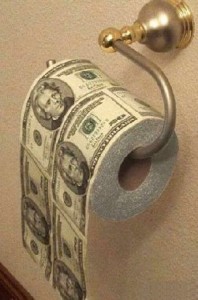
And I’ve never known how to say this.

We’re really fucked up. Really. We’re cruel to each other in ways that just aren’t needed. We have more houses than homeless, enough food to feed the hungry. More than enough.

It’s crazy. Just crazy.

We have enough resources to fix our environmental and climate problems. Building and neighbourhoods can be made into net positives. We can, as humans, make ourselves a positive for life as whole.

We can fix this shit.

There are always going to be problems. There is pain beyond imagining that is possible in human existence (visit a burn clinic if you don’t believe me. Or just believe me, ’cause I’ve fucking been there.)

But basically, we can make this into a near paradise any time we get serious about it, just by adhering to the rule of always creating more good than evil, and not tolerating those who tolerate evil.

There’s plenty of complexity to it, aye. But at its heart, it easy. Don’t let people do evil, do more good than evil.

Some of us are so totally broken we don’t–we can’t–get this, but it’s this simple.

Create more good than evil, and this place, despite being, shall we say, metaphysically shitty (we eat each other, and that’s true even if you’re a vegan), would be heavenly.

I just don’t know how to get this across to people. I just don’t.

Don’t burn down forests. Don’t be cruel. Do good. Don’t do bad. You know what such things are.

You do.

And I, and others, shouldn’t have to be screaming “Don’t do fucking evil!” as the world moves towards apocalypse.


The results of the work I do, like this article, are free, but food isn’t, so if you value my work, please DONATE or SUBSCRIBE.

About the Amazon Burning: It’s Worse than You Think

The Amazon goes, we go. This map doesn’t make it seem like it’s in danger, though it’s bad, but…


The Intercept has an excellent article on what the Amazon does, and what its loss would mean, but the simple facts are two:

  • Loss of another fifth of the Amazon, many scientists believe, would trigger a “dieback” causing the rest to die quickly.
  • Loss of the Amazon would release as much carbon into the atmosphere as all human activity since 1880.

What this means is a doomsday scenario. There are scenarios where not only humans, but all higher life dies, and this stands a good chance of being one of them: an uncontrollable increase of ten degrees Celsius or more.

We don’t survive that.

There are claims, which I find credible, that most of these fires were set deliberately by ranchers.

The Amazon is being deforested to create ranches, to sell beef to the rest of the world.

The obvious solution is for the rest of the world to simply pay Brazil more than the meat is worth to stop deforesting and to reforest. Any such treaty must have teeth– independent verification by auditors, NASA, and so on. And if the treaty is broken, not only does the money stop, but severe punishment is levied on Brazil. I hate that, but I don’t see a way around it. This sort of thing must stop. At the very extreme end, if we’re going to go to war over anything, this would be it, but despite what I wrote earlier, that wouldn’t be necessary: serious threats from the US and China would make Bolsonaro crumble. They could destroy Brazil’s economy tomorrow.

The general problem is larger, very difficult, and everyone’s problem. There have been such huge fires in the Pacific Northwest the last couple years that people had to stay indoors for weeks. Those fires weren’t deliberately set (though some were caused by human carelessness), but the problem is bigger: The southern part of those rainforests are no longer viable as rainforests. They’re going to go.

In general, we need to be re-greening.

We also need to do it smart, as too much replanting happens under conditions that amount to plantations: Monocultures which don’t have the full benefit of proper forests. (A good book to read for background is The Hidden Lives of Trees.

To further emphasize the issue, more long term…

Some parts of this problem are genuinely difficult but others aren’t. We can certainly re-green, and even re-green relatively quickly. Some things, like the temperate rain forest of the Pacific Northwest may not be saveable, but re-greening is.

The second thing we need to do is to help the oceans. We need alternatives to fished seafood, and we need them now, and we need to get after bad actors hard (like, but not exclusively, Japan). The key issue here is phytoplankton, which are responsible for perhaps 50 percent of the world’s oxygen, and which are in sharp decline.

This is a truly difficult problem and I won’t pretend it isn’t. But we must do what we can and treat it as the emergency it is.

As I wrote yesterday, we have a ton of problems, we have a ton of money which can’t find anything to do, and somehow we aren’t putting that money to use doing what needs to be done.

This is a question of political will, and so far, we don’t have any. Bolsonaro wants to do the exact wrong thing and reduce the Amazon faster. Obama bragged about increasing fracking massively. We aren’t, as a species or world society, taking these problems seriously, and they are potentially existential problems. Even if they aren’t existential (and I’d rather not risk it, thanks), they will certainly kill billions.

Perhaps we should do something.

Now.


The results of the work I do, like this article, are free, but food isn’t, so if you value my work, please DONATE or SUBSCRIBE.

What Negative Interest Rates Mean and What We Should Do

Alright, so Germany has now introduced a zero interest bond. That means, given inflation, people will get back less effective money than they started with.

At this point, outside the US, the average interest rate is negative.

As Stoller pointed out, that means that people with money can’t figure out anything productive to do with it which will make a profit.

That means that capitalists and banks, including central banks, have failed. It is their function, in a capitalist society, to allocate resources. Money represents resources: people, stuff, and land.

Now if we lived in a utopia, with no real problems, this would make sense, but we don’t. There are tons of real problems which need solving, lots of money floating around, and other capacity indicators show there are people and resources which are not being used, or which could be redeployed.

So capitalism is failing to do what it’s supposed to do, and so are capitalists.

The correct action in a situation like this is to get that money working. The government could borrow it massively, and do what needs to be done. It could (and I would suggest this is the better option) tax it away, and then spend it.

If capitalists absolutely insist on private enterprise doing the work, then they should massively raise taxes on any income or capital gains not used productively, and not count less productive things like loans–they should stipulate that the money must be invested into business activity. They should make stock option grants, stock buy-backs, and all similar activities intended to allow cash-outs impossible. They should get rid of private equity; just make it illegal. Almost all of its activity destroys viable business to create a pay day for a few people.

Heck, you should do away with all those things anyway.

People are very confused about profit. Profit is mostly socially constructed. It is not an independent variable. Taxes, laws, and regulations determine what is profitable and what isn’t. Billions of subsidies, tax breaks, and favorable land deals make extraction industries profitable, for example. Banks get to print money. Media companies like Disney rely on characters and ideas which, in the past, they would long have lost control over. Companies are allowed to pollute for free, to use vast amounts of water for nominal prices, and so on.

Meanwhile, a vast array of regulations and nickel and dime costs makes it impossible for small business to compete. Try starting a bank. Yeah, good luck with that.

This, too, is by design. Before Reagan, regulations were set up to make small businesses easier to start and keep running.

The point is that if investors can’t find anything in which to invest, government has failed to tweak profits correctly. You shouldn’t get rich in land speculation unless you’re building stuff that should be built. You should get rich in alternative energy, but mostly you don’t. You should get rich in making homes that are healthy and energy neutral, but instead we keep building unhealthy and environmentally-degrading housing.

You should make money rebuilding infrastructure, or building high speed trains, or reducing carbon, or reforesting, or making fish and phytoplankton stocks recover.

Yet, you don’t, so these things which need to be done in order to, like, avoid a few billion deaths, don’t get done.

That’s government failure.

Capitalism does not work without effective government control, if it is the dominant economic mode in a society.

So. We have lots of stuff that needs to be done. We have lots of resources and money which aren’t doing those things and, indeed, resources and money which apparently can’t find anything to do

Only a moron can’t look at those facts and know what to do.

Oh, and the 2008/9 bailouts made this situation far, far worse than it should have been. This endless printing of money is only to keep the useless rich afloat when they serve no useful, productive function. They are actually counterproductive, as they are actively stopping productive activity from happening.

Tax them. Stop propping them up and let incompetents die. Destroy, utterly, those members of the ruling class who are actively destructive, like Private Equity. Alter the rules so that productive activity is profitable, and while you’re doing all that, just have governments do the most important stuff themselves, with negative real interest rate loans.

None of this isn’t obvious to anyone who pays any attention.

Yet we don’t do it, because governments have been captured by failed rich people.

Normal. But not acceptable when the cost of inaction could be billions of dead people.


The results of the work I do, like this article, are free, but food isn’t, so if you value my work, please DONATE or SUBSCRIBE.


Our Leaders Kill for Their Own Benefit

Big Brother Award

Most people are terribly confused when it comes to understanding our leaders, whether corporate or political.

They think that the sort of ethical or moral constraints which hold them back, hold back leaders.

But being a leader in our society is about “extracting value” from ordinary people.

Raising the price of insulin to $300, for example. Or launching a war against a country which is no threat to you. Or throwing people in jail for 20 years for minor drug offenses.

Our leaders don’t think the same way we do. Their function isn’t to make our lives better, their function is to make their lives better–along with the lives of those people who can help them or the few people they care about. Biden, for example, goes on and on about how much he loves his family. Boo hoo. Then he supports policies like the bankruptcy bill or three strikes laws which destroy other families.

Obama and Geithner quite deliberately created a relief program for homeowners which relieved almost no one and instead made sure that they went bankrupt, so the banks would get their homes. The policy was intended, and this has been admitted, to help the banks, not ordinary people. (See David Dayen’s Chain of Title if you need the tedious proof.)

To elites, we are tools at best, useless eaters at worse. They are trained to look at us and figure out how much value they can extract: as consumers, workers, voters, and soldiers.

Then they extract the value, and if some of us wind up dead, homeless, sick, or crippled, well, they don’t lose one second of sleep over it.

Because to them, we aren’t people.

The great problem of being a member of an elite is keeping the Praetorian guard happy; this doesn’t just mean the core soldiers and cops, but the key retainers who execute policy at the highest level.

The next great problem is the mob: The tools and useless eaters sometimes get uppity, and revolt and you need to be sure you can put them down–hence the Praetorian guard.

But they’re working on this problem. Modern surveillance makes it so much easier to keep us down. Modern education trains us to be obedient (if you don’t think that’s what school, which is “Sit down, shut up, speak only when spoken to, and give me the answer I want, the way I want it,” does, you are either stupid or haven’t thought about it. Or it’s really, really worked on you.)

Meanwhile, we’re not so far out from the military bots. Get bots that can make bots and they won’t need us.

And that’s good, for them, because, man, having so many of us around is causing them huge problems. Once they don’t need us any more, once they have bots who will do what they want, don’t talk back, and don’t mind being scrapped or mistreated, well, the easiest way to deal with climate change is to get rid of six billion people or so, isn’t it?

I mean, they won’t need us. We’ll be a problem. They’ll have a solution: Climate change will kill some, the bots will deal with the rest, and they have the perfect servant class.

Dystopian fiction? Lunacy?

Well, maybe. But tell me, given that they are accelerating climate change, even though they’ve known about it since the 70s (we have the papers, we know they knew), and given their proven willingness to do anything nasty to us they want if they think it’s in their interest and they can get away with it, what would they be doing differently if this wasn’t true?

More reasonably, of course, some of them are planning this and the rest are just willing to go along when push comes to shove.

Remember, $300 insulin. You do that, you know people will die. You’re OK with it.

And your fellow elites haven’t stopped you. (And yes, yes, they could.)

Killing us for money or other benefits is one of the things our leaders do.

And that isn’t going to change until they’re more scared of us than we are of them.


The results of the work I do, like this article, are free, but food isn’t, so if you value my work, please DONATE or SUBSCRIBE.

Week-end Wrap – Political Economy – August 18, 2019

Week-end Wrap – Political Economy – August 18, 2019
by Tony Wikrent
Economics Action Group, North Carolina Democratic Party Progressive Caucus

[TomDispatch, via Naked Capitalism 8-16-19]

How the Supreme Court Is Rebranding Corruption — Ciara Torres-Spelliscy

Ciara Torres-Spelliscy [via Mike Norman Economics 8-8-19]
Summary of “Deregulating Corruption,” (pdf) Harvard Law & Policy Review, Vol. 13, No. 2, 2019

From its very first term, the Roberts Supreme Court has been rebranding the meaning of the word “corruption” both in campaign finance cases as well as in white-collar crime cases. And in Kelly v. United States (better known as the Bridgegate case), the Supreme Court may do even greater damage to the concept of corruption.

What has the Roberts Supreme Court done to corruption? I discuss this in my recent Harvard Law & Policy Review article, “Deregulating Corruption,” and in my soon to be released book, Political Brands. First, they have narrowed the meaning of the word in a series of election law cases that address the constitutionality of various campaign finance laws. In cases like Citizens United v. FEC, which allowed corporations the First Amendment right to spend an unlimited amount of money on political ads, and McCutcheon v. FEC, which allows the rich to support as many congressional candidates as they want with contributions, the Roberts Supreme Court has ruled 5-4 that “corruption” only means quid pro quo exchanges.

This approach to corruption sets the Roberts Supreme Court apart from other Supreme Courts. For over a century, previous Supreme Courts upheld campaign finance laws and other regulations which try to keep graft and political intimidation at bay precisely because as the Supreme Court recognized in Ex parte Yarbrough in 1884, “[i]n a republican government like ours, where political power is reposed in representatives of the entire body of the people, chosen at short intervals by popular elections, the temptations to control these elections by violence and by corruption is a constant source of danger…. no lover of his country can shut his eyes to the fear of future danger from both sources…”

Even the Rehnquist Supreme Court—no bastion of liberals— was more thoughtful about political corruption than the Roberts Court is. For example, in 2003, the Rehnquist Supreme Court ruled in FEC v. Beaumont that there is a “public interest in ‘restrict[ing] the influence of political war chests funneled through the corporate form.’ …; ‘[S]ubstantial aggregations of wealth amassed by the special advantages which go with the corporate form of organization should not be converted into political ‘war chests’ which could be used to incur political debts from legislators.’”

In a twin 2003 decision, McConnell v. FEC, the Rehnquist Court asserted that the “crabbed view of corruption”—which would limit the term to actual quid pro quo corruption—“ignores precedent, common sense, and the realities of political fundraising.” The Roberts Court has rapidly put that capacious concept of political corruption in exile and knocked down nearly every campaign finance law it has been asked to review. (The Supreme Court left in place a ban on foreigners spending in US election and a ban on judges personally asking donors for money, but these are the exceptions that prove the rule.)

But wait, there’s more. The Roberts Supreme Court has also rebranded corruption by changing what counts as white-collar crimes. In Skilling v. US (a case brought by disgraced ex-CEO of Enron Jeff Skilling challenging his 24-year prison sentence for defrauding the company’s shareholders), the Supreme Court agreed with Skilling that he should not have been charged with honest services fraud because his crimes did not involve a bribe or a kickback. This Supreme Court decision led to Skilling getting 10 years shaved off of his original sentence. He was released from jail in 2018 and left his halfway house in 2019. He is now a free man.

Also in the criminal context, the Roberts Supreme Court invalidated the conviction of ex-Governor of Virginia Bob McDonnell. McDonnell, who had money troubles while he was Governor of Virginia, accepted money and gifts from a businessman named Jonnie Williams who wanted to sell his tobacco pills (I’m not making any of this up) to Virginia employees. The Governor set up a few meetings for Williams and once touted a bottle of the tobacco pills in a meeting.

In McDonnell v. US, the Supreme Court decided that none of what Governor McDonnell did was “an official act,” and thus he could not be guilty of a quid pro quo exchange with Williams. No one disputed that Williams had given the governor lots of money. What the Supreme Court didn’t buy was that the Governor did enough in return for the largess to constitute a crime.

Open Thread

Use this post’s comments to discuss topics unrelated to recent posts.

Page 297 of 532

Powered by WordPress & Theme by Anders Norén