Ian Welsh

The horizon is not so far as we can see, but as far as we can imagine

Week-end Wrap – Political Economy – December 29, 2019

Week-end Wrap – Political Economy – December 29, 2019
by Tony Wikrent
Economics Action Group, North Carolina Democratic Party Progressive Caucus

99 GOOD News Stories You Probably DIDN’T Hear About In 2019
[via The Big Picture 12-23-19]

A giant among us has passed

William Greider – in memoriam – (1936 – 2019)

Tony Wikrent, December 28, 2019 [Real Economics]

William Greider, Journalist Who Focused on Economy, Dies at 83

[New York Times, via Naked Capitalism 12-27-19]
‘A Stark Loss for American Journalism’: Reporter and Author William Greider Dies at Age 83
[The Nation 12-27-19]

Strategic Political Economy

The Loss of Fair Play
Yves Smith, December 27, 2019 [Naked Capitalism 12-16-19]

This site regularly discusses the rise of neoliberalism and its consequences, such as rising inequality and lower labor bargaining rights. But it’s also important to understand that these changes were not organic but were the result of a well-financed campaign to change the values of judges and society at large to be more business-friendly. But the sacrifice of fair dealing as a bedrock business and social principle has had large costs.
We’ve pointed out how lower trust has increased contracting costs: things that use to be done on a handshake or a simple letter agreement are now elaborately papered up. The fact that job candidates will now engage in ghosting, simply stopping to communicate with a recruiter rather than giving a ritually minimalistic sign off, is a testament to how impersonal hiring is now perceived to be, as well as often-abused workers engaging in some power tit for tat when they can.

But on a higher level, the idea of fair play was about self-regulation of conduct. Most people want to see themselves as morally upright, even if some have to go through awfully complicated rationalizations to believe that. But when most individuals lived in fairly stable social and business communities, they had reason to be concerned that bad conduct might catch up with them….

Another aspect of the decline in the importance of fair dealing is the notion of the obligations of power, that individuals in a position of authority have a duty to those in their sway.

The abandonment of lofty-sounding principles like being fair has other costs. We’ve written about the concept of obliquity, how in complex systems, it’s not possible to chart a simple path though them because it’s impossible to understand it well enough to begin to do so. John Kay, who has made a study of the issue and eventually wrote a book about it, pointed out as an illustration that studies of similarly-sized companies in the same industry showed that ones that adopted nobler objectives did better in financial terms than ones that focused on maximizing shareholder value.

Imagining a World Without Capitalism
Yanis Varoufakis, December 27, 2019 [Project Syndicate, via Naked Capitalism 12-26-19]

Climate and environmental crises

Open Thread

As usual, feel free to use the comments to discuss topics unrelated to recent posts.

Christianity as a Religious Ideology

Religions are ideologies. They are little different from something like capitalism, or Marxism, or the divine right of kings, or humanism.

That is to say ideologies are sets of statements about how the world and people are, and how they should be.

Christianity takes humans as fallen. We are innately bad, and we must be reformed by good education, including punishment. “Spare the rod, spoil the child.” This is different from classic Confucianism, which assumed that humans were essentially neutral slates, or the Confucianism of Mencius, which believed that humans were innately good, similar to Rousseau. The Chinese Legalists, on the other hand, assumed humans were bad, and the Imperial justice system tended to run on their ideas, not those of Mencius.

If you believe humans are bad, you must change them; fix them. Such ideologies tend to be punitive. If you think humans are good, on the other hand, you have to mostly avoid screwing them up, and such ideologies try to avoid punishment and negative reinforcement.

Christianity’s caused a lot of suffering down through the ages, a statement I hope isn’t controversial. A lot of that comes down to Christianity’s metaphysical beliefs for most of that time.

  1. The only way to go to Heaven is through acceptance of Christ;
  2. If you don’t go to Heaven, you will wind up in Hell. Hell is eternal torment.

The combination of these two beliefs means that, logically, anything is acceptable if it leads to someone becoming a Christian. Charlemagne once force-converted ten thousand pagans, then executed them. They died as Christians, with no chance to sin, doubtless they went to heaven. Spanish conquistadors would burn heretics, because they believed that would send them to heaven. Conquering a country to convert its people was not only moral, it was the only moral thing to do. To do otherwise would be to condemn everyone born there to hell, which is to say to torture which never ends.

Christianity is a form of hegemonic ideology. “Everyone should follow this ideology.” Democracy is another hegemonic ideology, “Everyone should be able to vote for their leaders.” Oh, there are exceptions, but they are minor. A country that is not a democracy, to a believer in democracy, isn’t ruled legitimately. Plenty of wars have been justified by hegemonic democratic principles, and plenty of non-democratic governments have been overthrown when democratic powers defeated them (Germany and the Austro-Hungarian Empire in World War I, for example.)

But remember that, after the Napoleonic wars, aristocracy was re-instituted in France. The hegemonic philosophy of the day can differ.

Islam is also a hegemonic religious ideology: everyone is supposed to eventually become a Muslim. That’s the goal, although it’s sort of okay for the other monotheists to stick around.

Hegemonic philosophies which get traction change the world. They evangelize. They conquer. When they go bad, they go really bad.

Religious hegemonic ideologies have the extra oomph of “God said.” If “God said,” well then, you can’t override that, because obviously “God is right.” The best you can do is to say “Well, perhaps we misunderstood part of this.”

Non-hegemonic ideologies find hegemonic ideologies horrifying. Hegemonic ideologies breed fanatics, people who aren’t willing to say “it’s okay for other people to live differently.”

Don’t think this is always a bad thing: Our ideology may radically oppose slavery, for example, or starvation, or torture or rape, and say “No one should every do these things!”

Is that bad?

Well, is it worth fighting wars over? That’s really the question. Is it worse using violence to stop this? How much violence? At what point are the evils of the violence you’re using worse than whatever it is you oppose, or whatever good you intend to impose?

Christianity’s monster state ruled by crusades and inquisitions and insisting that women bear the children of their rapists–that sort of thing. This isn’t in question, because we have a lot of Christian history.

This doesn’t make Christianity uniquely monstrous, or more evil than many other ideologies, but it is baked into the set of beliefs required to be Christian (forced conversion, death to pagans and heathens) or is easy to pervert a hegemonic ideology towards (abortion is murder, murder is always bad, unless you’re murder a non-Christian to force conversion of their society).

Other ideologies have other monster modes. We’re beginning to see Hinduism’s right now. We’ve been seeing how Islam goes wrong for many decades now. Communism regularly gets vilified for its crimes and I trust people know the crimes of capitalism, though they tend to be understated–because it is our ruling ideology.

But religious ideologies are always particularly dangerous, for the simple reason that one cannot admit God was wrong, because God can’t be wrong. (The Hindu Gods, oddly, can be wrong. Pagans are usually pretty clear that gods aren’t always right.)

Beware the consequences of monotheism with infallible Gods, and beware the consequences of hegemonic ideologies.


Money would be rather useful, as I don’t get paid by the piece. If you want to support my writing, please DONATE or SUBSCRIBE.


Merry Christmas

I hope everyone has a good day. Feel free to comment below, and try to keep it kind.

The Coming Ethnic Cleansing and Genocide in India

India is currently experiencing protests and riots over a pair of laws.

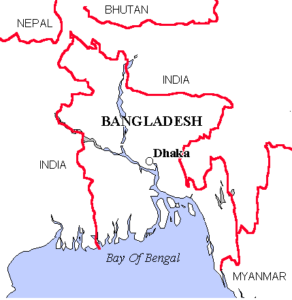
The state of Assam, in Northeast India, has a national register of citizens. It was recently updated, and 1.9 million residents weren’t on it. Most of those are Bengali Muslims, many likely from Muslim majority in Bangladesh. India is building camps in Assam for those 1.9 million residents, and will attempt to send the Muslim ones to other countries.

The government has announced it will extend the register through India: Everyone will have to prove their citizenship.

The second law is is the Citizenship (Amendment) Act of 2019. It allows a path to citizenship for refugees of,

 Hindu, Sikh, Buddhist, Jain, Parsi, and Christian religious minorities fleeing persecution from Pakistan, Bangladesh and Afghanistan

Now, if you’re familiar with India at all, you know that the bureaucracy is not the best at record keeping. When the registry is extended through the country a lot of people won’t be able to prove citizenship. But those who aren’t Muslim will be able to regain citizenship under this amendment.

Those who are Muslim will presumably be put in camps and sent to other countries. In many cases, countries they’ve never lived in–as with many recent cases in the US in which people who were born in the US, but who INS claims don’t have –or aren’t qualified for–American citizenship.

This is ethnic cleansing based on religion.

The people I know who support this say that the Muslims are violent and keep opposing Hindu majoritarian rule–things like rebuilding temples torn down by Muslims and banning the killing of cows. The Muslims, to them, are the remains of an invading army, still trying to impose their values and religion on a country where the majority of citizens don’t accept those values or that religion. Since they won’t stop their opposition, they must be gotten rid of.

In particular, there is much animus towards recent Bangladesh immigrants, who are, apparently, aggressively Muslim (this is a result of Saudi money, as an aside; I lived in Bangladesh in the 80s and it was relatively tolerant.)

But I want to focus on the longer game: Where does this leads?

Bangladesh as a country is Muslim and exists on the Ganges flood plain. Leaving aside island nations, it is one the lowest countries in the world, and will be one of the very first to flood. It is surrounded by two countries: India and Myanmar (which has been ethnic cleansing its Muslims.)

When Bangladesh starts going underwater, and it will, over 160 million people, mostly Mulim, are going to try to flee to India and Myanmar.

What are the Indians going to do? Build a huge wall with machine guns and machine gun them down? If they want no new Muslims, how is this going to play out? Ships won’t be sufficient to handle the volume of refugees, they have to leave by land.

Either they wind up in camps, almost 200 million of them by then, or they get killed. Or both. Most of them are going to run to India.

This is the sort of scenario that the end of secularism and the rise of majoritarian rule throughout the world makes more and more likely.

Before sneering too hard at the Indians, however, remember the response of the Europeans to a much smaller influx of mostly Muslim refugees: a lot of European countries closed their border entirely, and virtually none of the remainder have been welcoming.

This is the future. Climate change is going to cause a lot of refugees. In the hundreds of millions. Countries are not going to accept most of them. And it’s going to get violent and leave the number of people in camps as, in aggregate, one of the largest populations in the world.

Fun future we’re creating.


Money would be rather useful, as I don’t get paid by the piece. If you want to support my writing, please DONATE or SUBSCRIBE.

Week-end Wrap – Political Economy – December 22, 2019

Week-end Wrap – Political Economy – December 22, 2019

by Tony Wikrent
Economics Action Group, North Carolina Democratic Party Progressive Caucus

Strategic Political Economy

Canada’s infrastructure was once cheap and effective to build. Now, it’s a titanic transfer from taxpayers to the world’s biggest businesses and investors

[boing boing, via Naked Capitalism 12-16-19]

However, a vital fact that Saxe and virtually everyone else either don’t know or won’t mention is that from 1938 to 1974 Canada and other western countries did in fact get very good infrastructure for very cheap. As documented by journalist Murray Dobbin, during those four decades the Bank of Canada loaned massive amounts of money, virtually interest-free, to all levels of government. This same central-bank function was exercised in the U.S. and the other G7 countries.

That’s how we got massive projects like the war effort, the Trans-Canada Highway and the St. Lawrence Seaway — as well as pools, schools, government buildings, roads, subways, etc. – all without significantly increasing government deficits or debts.

Then in 1974 under then-Prime Minister Pierre Trudeau the central bank’s issuance of very-low-interest bonds to fund federal and provincial governments slowed to a trickle.

That’s because private lenders in Canada and abroad took over that function. The result was a significant slow-down in the building and maintenance of infrastructure. (A Charter of Rights and Freedoms challenge to reverse this went all the way to the Supreme Court; however, in mid-2017 the Supremes declined to hear the case.)
And governments had to pay much higher interest for the money they needed. Canada’s national debt leapt from just over $20 billion in 1971 to more than three-quarters of a trillion today. This is accompanied by very high provincial debts, such as Ontario’s $325 billion (the largest sub-national-level debt in the world). Servicing the debt consumes the biggest single chunk of both provincial and federal budgets.

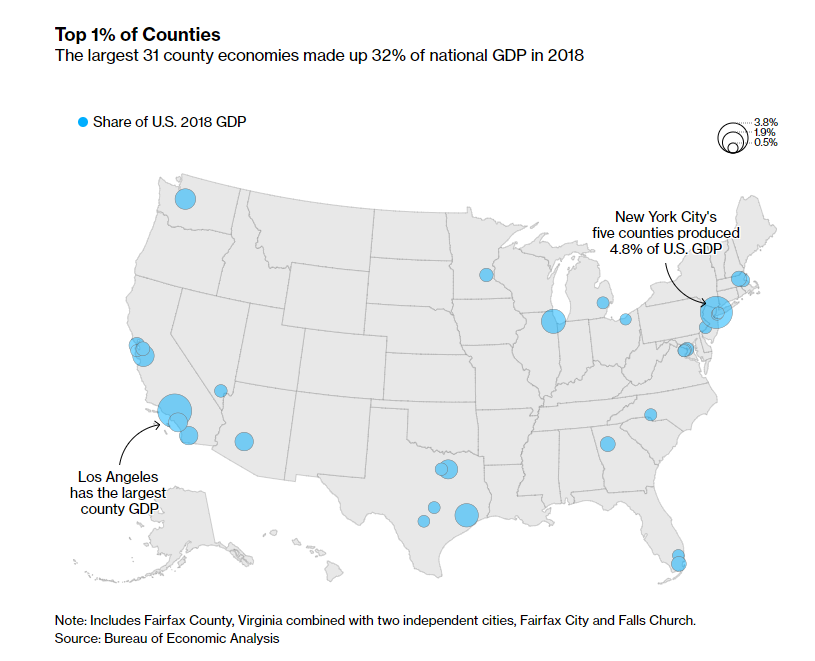
Why GDP is increasingly problematic as a metric:

[Twitter, via Naked Capitalism 12-16-19]

U.S. economic activity is becoming increasingly concentrated in large cities and by the coasts—and less so in rural counties
bloom.bg/2POPJXx

Image

6:29 AM · Dec 16, 2019

The Carnage of Establishment Neoliberal Economics

Open Thread

Use the comments to this post to discuss topics unrelated to recent posts.

Social Facts Create Reality

When I write longer works, like the booklet “The Construction of Reality,” I put aside pieces that are good, but don’t work in the context of the book.

I’ve now re-written the entire first chapter twice. The first time was way too dry, but looking at it now, I see that it’s still interesting and makes some important points, so I’m going to post it here.


Reality is constructed.

It is constructed first by our bodies–our senses and universal emotions like fear and lust, anger and love. Being human orders the world for us before we take our first breath.

This is true of all animals, who, like humans, also change the environment to suit themselves. But humans have created a reality far, far from that of our forebears who ran in bands on the Savannah.

We have created a human world.  Most of us live in cities, artificial environments created by us. We walk on streets laid out by humans, work, sleep, and cook in buildings, drive in cars or take buses, trains, and planes. We talk on cell phones and surf the internet. Even those who live in the country live on land which has been altered by agriculture and pasturing of animals humans domesticated. A farmer grows wheat which was bred over millennia (or genetically altered, more recently). The farmer raises animals humans have been raising for thousands of years. We eat the meat of cows, pigs, and chicken and we dine on rice, wheat, or vegetables we have tended for millennia and which we have bred to suit us.

As individuals, we did not create almost any part of this physical world. We did not invent the techniques for caring for domesticated animals, growing vegetables, or making smart phones.

We live in a physical world created by humans, many of whom are dead. Human life is human in a way that animal life is not animal. Animals have an effect on the environment, but it is minor compared to what humans have done to the world.

And this is just the physical side of the world. Just as important is the world of ideas, of social facts.

Look at the words you are reading right now. You didn’t invent writing, typing, any of these words, or language itself. You spend your life thinking most of your thoughts in a language or languages created by humans, for humans–and mostly by dead humans.

You almost certainly receive your daily food in exchange for something called money which is probably either plastic woven to look like paper or electronic bits. Money has no intrinsic value; a million dollars in the middle of Antarctica would do nothing for you, most money isn’t even paper any more–you couldn’t burn it for heat. Yet most of us spend most of our waking day working for someone who gives us “money” and exchanges it for most everything else we want.

In times of war and famine, money may lose most of its value. Food, cigarettes, or sex may be worth more. Money’s value is a social fact.

When someone is killed by another human being, whether it was murder or not is a social fact. In war, if a soldier kills someone it is probably not murder. If the state is executing someone it is not murder. When police kill someone it is usually not considered murder. Social facts.

The quality and amount of health care provided to individuals is a social fact; it depends on where they live.  In some countries, it depends on how much money they have. In other countries, it depends on how much power they have.

The amount of melanin in someone’s skin is a physical fact. That having a “black” name in America leads to half the interview requests than those received for an identical resume with a “white” name is a social fact.

Cannabis is almost certainly less physically harmful than tobacco or alcohol, but selling or possessing cannabis is far more likely to get you thrown in jail. In the US, during alcohol prohibition, this was not true. Alcohol is alcohol, its legal status is a social fact.

Social facts rule most of your life. They are layered on top of physical facts and tell you how to understand those facts, and how to act towards them. There are few more consequential decisions than, “When should I kill someone?” or, “When should someone receive health care and how good should it be? or “Should I hire someone and for how much?”

Not all ideas are social facts. You may believe something “ought” to be true, but often other people do not agree. You think your girlfriend shouldn’t cheat, she doesn’t agree, the state doesn’t care. But if you act on that idea, and so do other people, it’s a social fact. They may call her a cheater, ostracize her, and so on. If no one acts on it, it is not a social fact.

A gang or mafia may believe that their members shouldn’t inform to the authorities, and they may enforce this as best they can, but obviously the state does not. It is still a social fact if they can make it one, however.

You may also believe in ideas which are contrary to the ideas currently enforced by the state or other people. Perhaps you do not believe in intellectual property. Perhaps you think confessions obtained by torture shouldn’t be used in criminal proceedings. Perhaps you believe that women should or shouldn’t be able to have abortions.

These ideas may fall short of being social facts if no one acts on them. They are just ideas; musings on how the world “ought” to be.

This social world is layered on top of the physical world created by our bodies and how they perceive and interact with objects around us. No amount of social facts will alter the solidity of a rock, or our need to breathe.

Each of us lives inside these two worlds, worlds which were largely given to us.

Imposed on us.

At most, we’ve made a few choices from the worlds and realities available to us, but most of our fundamental choices have been made for us.

The reality, I, a Canadian urban male, live in is different from that of a female Mexican subsistence farmer, let alone that of a plains Indian 700 years ago, a prole in the Roman Republic, or an Egyptian priest under the Pharoahs.

This is before we get to the differences that seem important to us today: say, the difference between a conservative Republican Christian and his counterpart progressive Democratic atheist. A thousand years from now, those may seem like rather similar people, today they seem quite different.

Our bodies make us alive, but they make us different as well: To be tall or short is to experience the world differently. To have a strong constitution or a sickly one is to experience the world differently, as well.

And to be a woman or a man, likewise; so much so that men and women in some societies (Saudi Arabia today, Victorian England, or Manchu China) can be said to have such different experiences in life that they might as well live in different worlds; different realities.

Reality is inside-out, first, because we have bodies and senses which organize our experience of the world, and do so before the first drop of parental interference, training, or culture.

But it is outside-in in most of the ways which make us different from each other and from other humans who have lived in the past.

Each of us is formed by time, place and position. Even if we were both male, with similar bodies, in Republican Rome, were I born to a Plebeian family and you to a Patrician family, our worlds would part, and even if both of us were born to Patrician families the particulars of our parents, tutors and other incidentals would leave us different. Position within a place and time, added to different bodies, makes up most of the individuality which divides us from our peers.

In this book we will swoop from the heights of macro-history; of the effects of great ideas, of technologies like gunpowder and farming, or organization and vast tribal identities, to the depths of our inner experience; our thoughts, our feelings, our urges and beliefs.

Reality is an experience. Each of us lives in a reality, feels it, and thinks about it. As we live, we change the reality we live in, or it changes around us, and again, our experience of the world changes.

To write a book on the construction of reality while neglecting how we can change reality would be barren.  Though careful examination reveals that most of human reality is imposed on us from outside, by time, place, and position, none of which we choose, we do not have to accept this passively.

While even in the great struggle to change our shared world, our shared reality, all of us can change the reality we live in, by taking some control of our own circumstances–or, denied that, by changing how our bodies and brains interpret the world.

So we will cover the vast currents of history and prehistory, of identity, organization, technology and ideology. We will speak of human empathy, human violence, and human limits, because it is human limits which have the greatest effect on the world we create and our acceptance of the world that we are given.

But in so doing, we will not neglect the personal.

Page 285 of 532

Powered by WordPress & Theme by Anders Norén