Ian Welsh

The horizon is not so far as we can see, but as far as we can imagine

New Hope for a New Year

This post is by Tony Wikrent.

I do not remember the New Deal, even though it’s probably what has had the greatest impact on my political memory. I’m 63 now, so I wasn’t even alive during the First Great Depression and the presidency of Franklin Roosevelt. For me, memory of the New Deal was transmitted by those who had lived it and embodied it: My foremost, formative experience of government was John Kennedy beckoning the nation to put men on the moon.

In Chicago, the Democratic Party took pride in getting things done. The construction of O’hare Field was completed while I was a toddler, as well as the Kennedy expressway connecting ORD to the Loop downtown. Construction of a new home for the University of Illinois at Chicago began in 1963; the 244 acre campus opened two years later. Today, UIC is the largest university in the Chicago area, with more than 33,000 students enrolled in 16 colleges. As a kid, I got to watch construction crews working to extend the CTA subway line down the middle of the Kennedy to O’Hare.

John Kennedy said, “The American, by nature, is optimistic. He is experimental, an inventor and a builder, who builds best when called upon to build greatly.”

Unlike conservatives and libertarians, I have always had faith that government can be an active force for good.

But over two thirds of my fellow citizens are younger than I. They have not had the same experiences. They have not, I fear, the same long-term optimism, which I think may have been the greatest achievement of the New Deal. In the world I grew up in:

  • Interest rates were strictly regulated
  • The average holding period in the stock market was eight years.
  • There was no retail means for investing in foreign economies.
  • The only futures contracts in existence were based on physical commodities.
  • Foreign exchange trading was only for individuals actually traveling overseas, paying the US military and for base leases, and companies importing and exporting.
  • the Cayman Islands were basically unknown: there were no tens of billions of dollars of dirty money scrambling around the globe for a place to hide.

In other words, well over 200 million of the 327 million Americans alive today have no idea what a well regulated financial and monetary system looks like.

Week-end Wrap – Political Economy – January 5, 2020

Week-end Wrap – Political Economy – January 5, 2020
by Tony Wikrent
Economics Action Group, North Carolina Democratic Party Progressive Caucus

Strategic Political Economy

Why US Leadership Stinks and Drone Assassination Doesn’t Matter (Leadership in Organizations People Believe In)
[Ian Welsh, 4 January 2020]

Leadership isn’t as big a deal as people make it out to be–IF you have a vibrant organization in which people believe. New people step up, and they’re competent enough. Genius leadership is very rare, and a good organization doesn’t need it, though it’s welcome when it exists. As long as the organization knows what it’s supposed to do (kick Americans out of Afghanistan), and everyone’s motivated to do that, leadership doesn’t need to be especially great, but it will be generally competent, because the people in the organization will make it so.

American leaders are obsessed with leadership because they lead organizations in whose goals no one believes. Or rather, they lead organizations for whom everyone knows the leadership doesn’t believe in its ostensible goals. Schools are led by people who hate teachers and want to privatize schools to make profit. The US is led by men who don’t believe in the Constitution or the Bill of Rights. Police are led by men who think their jobs are to protect the few and beat down the many, not to protect and serve.

Corporations make fancy mission statements and talk about valuing employees and customers, but they just want to make a buck and will fuck anyone, employee or customer, below the C-suite. They don’t have a “mission” (making money is not a mission, it’s a hunger if it’s all you want to do); they are parasites and they know it.
Making organizations work if they’re filled with people who don’t believe in the organization, or who believe that the “leadership” is only out for themselves and has no mission beyond helping themselves, not even enriching the employees or shareholders, is actually hard. People don’t get inspired by making the C-suite rich. Bureaucrats, knowing they are despised and distrusted by their political counterparts, and knowing that they aren’t allowed to do their ostensible jobs, as with the EPA generally not being allowed to protect the environment, the DOJ not being allowed to prosecute powerful monied crooks, and the FDA being the slave of drug companies and the whims of politically-connected appointees, are hard to move, hard to motivate, making it hard to get to anyone to do anything but the minimum.

So American leaders, and indeed the leaders of most developed nations, think they’re something special…. American leaders, in specific, and Westerners, in general, think that organizations will fall apart if the very small number of people who can actually lead, stop leading. But that’s because they think that leading the Taliban, say, is like leading an American company or the American government. They think it requires a soulless prevaricator who takes advantage of and abuses virtually everyone and is still able to get people to, reluctantly, do their jobs.

Functioning organizations aren’t like that. They suck leadership upwards. Virtually everyone is being groomed for leadership and is ready for leadership. They believe in the cause, they know what to do, they’re involved.

Science Under Attack: How Trump Is Sidelining Researchers and Their Work
[New York Times 12-28-19]

Political appointees have shut down government studies, reduced the influence of scientists over regulatory decisions and in some cases pressured researchers not to speak publicly. The administration has particularly challenged scientific findings related to the environment and public health opposed by industries such as oil drilling and coal mining. It has also impeded research around human-caused climate change, which President Trump has dismissed despite a global scientific consensus.
But the erosion of science reaches well beyond the environment and climate: In San Francisco, a study of the effects of chemicals on pregnant women has stalled after federal funding abruptly ended. In Washington, D.C., a scientific committee that provided expertise in defending against invasive insects has been disbanded. In Kansas City, Mo., the hasty relocation of two agricultural agencies that fund crop science and study the economics of farming has led to an exodus of employees and delayed hundreds of millions of dollars in research.

“The disregard for expertise in the federal government is worse than it’s ever been,” said Michael Gerrard, director of the Sabin Center for Climate Change Law at Columbia University, which has tracked more than 200 reports of Trump administration efforts to restrict or misuse science since 2017. “It’s pervasive.”

The Carnage of Establishment Neoliberal Economics

Why US Leadership Stinks and Drone Assassination Doesn’t Matter (Leadership in Organizations People Believe In)

The assassination strategy the US pursues is interesting, not in what it says about the US’s foes, but what it says about the American leaders. Al-Qaeda’s “No. 2 Man” has been “killed” so often that it’s a running joke, and Taliban leadership is regularly killed by assassination. Bush did this, Obama really, really did this. Probably a lot of these stories are BS, but it’s also probably safe to assume that a lot of leadership has been killed.

The Taliban is still kicking the coalition’s ass.

Leadership isn’t as big a deal as people make it out to be–IF you have a vibrant organization in which people believe. New people step up, and they’re competent enough. Genius leadership is very rare, and a good organization doesn’t need it, though it’s welcome when it exists. As long as the organization knows what it’s supposed to do (kick Americans out of Afghanistan), and everyone’s motivated to do that, leadership doesn’t need to be especially great, but it will be generally competent, because the people in the organization will make it so.

American leaders are obsessed with leadership because they lead organizations in whose goals no one believes. Or rather, they lead organizations for whom everyone knows the leadership doesn’t believe in its ostensible goals. Schools are led by people who hate teachers and want to privatize schools to make profit. The US is led by men who don’t believe in the Constitution or the Bill of Rights. Police are led by men who think their jobs are to protect the few and beat down the many, not to protect and serve. Corporations make fancy mission statements and talk about valuing employees and customers, but they just want to make a buck and will fuck anyone, employee or customer, below the C-suite. They don’t have a “mission” (making money is not a mission, it’s a hunger if it’s all you want to do); they are parasites and they know it.

Making organizations work if they’re filled with people who don’t believe in the organization, or who believe that the “leadership” is only out for themselves and has no mission beyond helping themselves, not even enriching the employees or shareholders, is actually hard. People don’t get inspired by making the C-suite rich. Bureaucrats, knowing they are despised and distrusted by their political counterparts, and knowing that they aren’t allowed to do their ostensible jobs, as with the EPA generally not being allowed to protect the environment, the DOJ not being allowed to prosecute powerful monied crooks, and the FDA being the slave of drug companies and the whims of politically-connected appointees, are hard to move, hard to motivate, making it hard to get to anyone to do anything but the minimum.

So American leaders, and indeed the leaders of most developed nations, think they’re something special. in fact, getting people to do anything is difficult, and convincing people to do the wrong thing, when they joined to actually teach, protect the environment, make citizens healthier, or actually prosecute crooks, even more so. Being a leader in the West, even though it comes with virtually complete immunity for committing crimes against humanity, violating civil rights, or stealing billions from ordinary citizens, is, in many respects, a drag. A very, very well-paying drag, but a drag. Very few people have the necessary flexible morals and ability to motivate employees through the coercion required.

So American leaders, in specific, and Westerners, in general, think that organizations will fall apart if the very small number of people who can actually lead, stop leading. But that’s because they think that leading the Taliban, say, is like leading an American company or the American government. They think it requires a soulless prevaricator who takes advantage of and abuses virtually everyone and is still able to get people to, reluctantly, do their jobs.

Functioning organizations aren’t like that. They suck leadership upwards. Virtually everyone is being groomed for leadership and is ready for leadership. They believe in the cause, they know what to do, they’re involved. And they aren’t scared of dying, if they really believe. Oh sure, they’d rather not, but it won’t stop them from stepping up.

So Obama kills and kills and kills, and somehow the Taliban is still kicking his ass. Al-Qaeda, in whatever country you care to name, has its killed every few weeks, and somehow there’s always another one. Because these people believe. There’s always another believer, if it’s a functioning organization, so on it goes.

The declaration of the Haqqani network as terrorists made me laugh. You read about them, and this is what you discover–the founder was a minister in the Taliban government. So, let’s get this straight. His country, in which he was a minister, was invaded, and ten years later he’s still fighting–and he refuses to negotiate with the US, because hey, he figures he’s winning.

Imagine if the US was invaded, occupied, and a puppet government was set up. A cabinet minister escaped, went underground, and set up a resistance network. What would you call him? A terrorist? Sure, if you’re the occupying power. If you’re a citizen? Well, maybe not, eh? Sure he fights nasty, but the nation which kills so many civilians with drones can’t really cast the first stone, can it?

And one day, they’ll probably kill him.

And it won’t make any damn difference.

Originally published Sept 11, 2012. Back to the top August 13,2018.

Back to the top again, January 4th, 2020 because of Qasem’s assassination.


The results of the work I do, like this article, are free, but food isn’t, so if you value my work, please DONATE or SUBSCRIBE.

Open Thread

Feel free to use the comments on this post to discuss topics unrelated to recent posts.

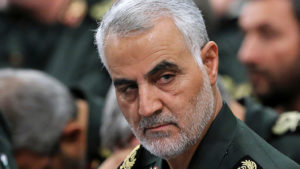
Is Trump Trying to Start a War with Iran?

Qasem Soleimani

And maybe with Iraq, too.

Trump has had the second most powerful man in Iraq, the leader of the Qods force, Qasem Soleimani, killed. This is like someone assassinating the Joint Chief of Staff combined with the Leader of the House.

Qasem Soleimani was also very close to Ali Khamenei, Iran’s Supreme Leader–a personal friend.

On top of this, US forces in Iraq have arrested the leaders of two of Iraq’s most important militias.

These are, well, acts of war. Iranian sources are saying that there will be retaliation, no question.

Iran has far more power and influence than the US in Iraq, if a real war starts, it is very likely that it will be the US against Iran, Iraq,, and possibly Syria.

Iran and Syria are, effectively, allies of Russia.

Iran, like everyone else who fears the US and has enough resources, has spent the last 20 years preparing specifically for war with the US. They have built a fearsome missile force, designed to hit US ships and bases, and to be too large to shoot down and stop. They have stated that, in war, they will shut down the Gulf, meaning that oil prices around the world will soar, likely causing a financial crisis and severe recession–possibly a depression.

Putin is determined, moreover, to not allow the US to destroy any more Russian allies. One of his huge regrets was allowing Libya to be destroyed. He will want to keep Iran from being defeated.

The funny thing about this is that killing and arresting leaders will make far less difference than the US imagines: In organizations where everyone believes in the mission (like militias and Qods), those leaders will just be replaced. The person who replaces them will be competent, and will want revenge. The US always overestimates the importance of leaders, because a US leader’s job is to get people to do things they don’t really believe are worth doing.

This is an amazing clusterfuck. The Iranians are in a bind: If they do not launch some sort of savage reprisal, then the message is clear, the US can kill any Iranian they want–if they can kill the second most powerful man in Iran, who’s off the table?

Iraqi militias and the government face a similar quandry: If they do nothing, it is clear their independence is a complete sham, and they are still ruled by America.

On the other hand, if they escalate at a symmetrical level, they will have to do so much damage that the US will rally around Trump and scream for Trump to strike them again–and even harder. Various American Rambo-patriots are already flexing their muscles and making threats.

It isn’t hard to see how that could quickly lead to war, but the other option for both Iran and Iraq is essentially to lick the boots that just kicked them.

Fun stuff.

If Trump doesn’t walk this back, hard, there may well be the most serious war in decades. At the far end, though I think it’s unlikely, it certainly isn’t impossible for this to escalate into a war involving both Russia and the US, on opposite sides.

This is a profoundly dangerous moment. Don’t underestimate just how badly this could turn out.

(And remember that Obama normalized this idea, seeded by, Bush Jr., that the US had the right to kill foreigners anytime, anywhere, subject only to the President’s discretion. Not only an evil idea, but a profoundly dangerous one. The US’s entire drone assassination program needs to be shut down, now and permanently.)


Money would be rather useful, as I don’t get paid by the piece. If you want to support my writing, please DONATE or SUBSCRIBE.

As We Sow: Australian Wildfire Edition

So, as you’re probably aware, Australia is experiencing vast wildfires. About 20 times larger than the California ones, ten times larger than the Amazonian ones, and twice as large as the Siberian wildfires.

The Prime Minister of Australia is essentially refusing to admit this has anything to do with climate change: “This sort of stuff just happens and is supposedly a result of just not doing enough burn-offs.” (Spoiler: No.)

Social media is full of stories and pictures of people fleeing to the nearest body of water, sky lit red behind them.

Whoosh.

Here’s the thing: Australia’s government has basically not only done nothing about climate change, but poured on the fuel. A controlling number of Australia’s voters were good with this.

This is the logical result of the actions and inaction of the Australian government.

I doubt that the PM truly cares. It’s not just an ideological thing, the coal and various minerals he wants to remove from Australia and sell to foreigners will still be accessible, and if Australians are forced to leave land, well that just makes it easier to extract minerals.

So this isn’t just what Australia’s government was okay with, it may well be what Australia’s ruling class thinks will make their lives easier.

They don’t make their money primarily off Australian peons, they make their money off foreigners buying stuff.

Ah, the politics of resource extraction states. (Politics I am very familiar with, living in Canada, which has chosen to become more and more a resource extraction state over the course of my life.)

Anyway, there’s no sign so far that people are taking any of this seriously, in the sense of actually doing something to make future events more likely. Australian’s white, sure, but it’s far from the center of power. Even if Australia’s wildfires are huge, the fact that California could have big burns and not matter is more important, because California is a power center, and, even then, elites still didn’t really care.

They clearly figure the money they’re getting for destroying the ecosphere will protect them from the consequences.

Interesting bet. I hope they lose it.


Money would be rather useful, as I don’t get paid by the piece. If you want to support my writing, please DONATE or SUBSCRIBE.

Happy New Year!

I hope all my readers have had a good year in 2019, and I hope 2020 treats you well. 2019 was a hard year for me personally, but the last few months show significant improvement, and I’m optimistic, on a personal level, about next year.

Carpe Diem


William Greider – In memoriam – (1936 – 2019)

NOTE: This post is by Tony Wikrent.

William H. Greider
(August 6, 1936 – December 25, 2019)

Just a few days after Paul Volcker and Felix Rohatyn finally relieved this planet of their mortal existence, William H. Greider passed on Christmas. There are, I suppose, some good things to be said about Volcker and Rohatyn, but I don’t know what they might be.

However, I do know a lot of good things to write about William Greider. Just a partial list of the books he wrote is enough to realize that a giant who walked among us may be no more, but the shadow he cast will linger for a long while.

Secrets of the Temple, How the Federal Reserve Runs the Country
(Simon and Schuster, New York, NY, 1987)

Who Will Tell the People?: The Betrayal of American Democracy
(Simon & Schuster, New York, NY, 1992)

One World, Ready or Not: The Manic Logic of Global Capitalism
(Simon & Schuster, New York, NY, 1997)

Fortress America: The American Military and the Consequences of Peace
(PublicAffairs, 1998)

The Soul of Capitalism: Opening Paths to a Moral Economy
(Simon & Schuster, New York, NY, 2003)

Come Home, America: The Rise and Fall (And Redeeming Promise) Of Our Country.
(Rodale Books, 2009)

Greider was born in Cincinnati at a time when dominance of that city’s economy had shifted from meat packing and the Ohio River steamboat trade to industrial manufacturing. Most notably, the city had emerged as a center of machine tool making: R. K. Le Blond Machine Tool Co.; Lodge and Shipley Machine Tool Co.; G. A. Gray Co.; Cincinnati Shaper Co.; American Tool Works Co.; Cincinnati Planer Co.; Cincinnati Bickford Tool Co. and the company that was then the largest machine tool maker in America: Cincinnati Milling Machine Company, later named Cincinnati Milacron. And like other centers of machine tool production historically — the Connecticut River valley (called Precision Valley in the first half of the twentieth century), Philadelphia, and Chicago, the ethos of Veblen’s producer class ran strong and deep. I have no doubt that this producer class ethos helped shape Greider’s life in profound ways, fitting him for the unique and powerful role of a leading critic of de-industrialization and financialization. His study at Princeton University thankfully did not inflict him with trained incapacity.

His professional writing career began at The Washington Post. as a national correspondent, then assistant managing editor for national news for 15 years. In 1981, Greider wrote an essay for The Atlantic titled “The Education of David Stockman,” which was probably his writing with the most immediate impact. It caused a national uproar, and led to President Reagan dismissing Stockman as the Director of the Office of Management and Budget. In one of several passages that illuminated the venality and hypocrisy of the Reagan administration, Stockman told Greider, “None of us really understands what’s going on with all these numbers.” The article was soon expanded and published as a book by the same name.

Page 284 of 532

Powered by WordPress & Theme by Anders Norén