The horizon is not so far as we can see, but as far as we can imagine

Category: Military Page 13 of 16

Is Russia About to Send a Thousand Troops to Syria?

Perhaps:

Russia is building a military base in Syrian president Bashar al-Assad’s heartland, according to American intelligence officials, in the clearest indication yet of deepening Russian support for the embattled regime of Bashar al-Assad.

The anonymous officials say Russia has set up an air traffic control tower and transported prefabricated housing units for up to 1,000 personnel to an airfield serving the Syrian port city of Latakia.

Why would they do that?

Syria is already home to Russia’s only base outside the former Soviet Union – a naval station in Tartus.

The humorous part is that Russia is claiming that they want to expand their role to “fight terrorism” and “ISIL.” Everyone claims whatever they’re doing in Syria is to fight ISIL and terrorism, of course, including the Turks, who are bombing the Kurdish forces who are the only people to consistently win against ISIL.

Of course what Russia is really doing is supporting its interests, which don’t include allowing a loyal client state to be overthrown by Islamic forces which are hostile to Russia and supported by Saudi Arabia and Turkey.

Or to lose a warm water port it cannot easily replace.

Or to be shown to let down a loyal ally.

Everyone else seems to think they have the right to bomb Syria in the guise of “bombing ISIL,” why not the Russians?

As for the morality of it, well, I see no “good” actors in Syria. However, it is a simple fact that Syria was a better place to live before the civil war and those who have encouraged that civil war either: a) shouldn’t have, or; b) should have applied the necessary force to end it quickly. (At which point, Syria would have probably become a failed state, like Libya.)

As anyone was unwilling to do either, and then rebuild properly (which, again, no one is willing to do), perhaps Assad, as nasty as he is, should have been left alone?

Just a thought.


If you enjoyed this article, and want me to write more, please DONATE or SUBSCRIBE.

Hizbollah’s Leader Says They Are Battling All Across Syria

Nasrallah:

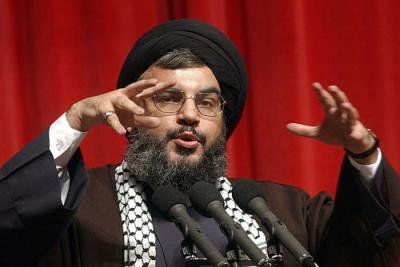
The leader of Lebanon’s Hezbollah has said his fighters would expand their presence in Syria, saying the group was engaged in an existential battle against the Islamic State of Iraq and the Levant (ISIL).

Hassan Nasrallah acknowledged for the first time that his Shia group was fighting across all of Syria in support of President Bashar al-Assad’s government.

Picture of Hassan Nasrallah

Picture of Hassan Nasrallah

Years ago, I noted that Hizbollah needed to keep supply lines open to Iran, and thus had reason to support the Syrian government. That was a near-existential reason in itself.

And he called specifically on his fiercest critics in Lebanon to back his intervention across the border, warning that their support for Assad’s opponents would not save them from ISIL.

I think this is accurate. There is a weird idea that if ISIL conquers Syria it won’t move into Lebanon. Of course it will. ISIS is the Caliphate. As a matter of belief and ideology, their legitimacy is tied to expansion, and Lebanon is definitely part of the lands they consider as rightfully belonging to the Caliphate.

To not fight them will not save Lebanon if ISIL wins, and Lebanon is a heck of a lot easier of a target than Iran or Turkey. Thus, former prime minister, and leader of Lebanon’s anti-Hezbolla bloc, Saad Hariri’s criticism of Nasrallah’s speech and his movement’s intervention in Syria is nonsense:

“We in the Future Movement declare publicly that the Lebanese state and its institutions are legitimate and our choice and guarantee,” Hariri said in a statement. “Defending the land and the sovereignty and dignity (of Lebanon) is not Hezbollah’s responsibility.”

Well, I suppose the last part might be true. But it is laughable to suppose that the Lebanese army can guarantee Lebanon’s safety from an ISIL invasion. Lebanese who are old enough will remember how well the Lebanese army performed against the Israeli invasion. I am unaware of any particular reason to suppose they would do better enough this time to matter. (It is also true that Hezbollah is currently mostly fighting the Nusra front.)

These wars are also sharpening fighters throughout the Muslim world. They are becoming tougher and smarter. Hezbollah has already defeated the Israeli army twice, ISIL is fighting very well, and the same can be said of many other forces in the Muslim world. I will be frank: I believe that Western force’s edge now comes down mostly to military equipment, which means air power–open-field battle systems (i.e., shoot them before they are even in range of you) and surveillance systems.

I believe the Israeli military, especially, given its corruption due to being an occupying force whose primary job is to beat up, torture, and kill the effectively defenseless, is not even close to as good as quite a number of Muslim (non-state and ISIL) forces.

One really shouldn’t create the perfect Darwinian learning system for those one considers one’s enemies.


If you enjoyed this article, and want me to write more, please DONATE or SUBSCRIBE.

As Palmyra Falls to ISIS, What Are the Syrian Government’s Prospects?

Palmyran AmphitheatreSo, yet another city falls, and the city has some very nice ancient architecture, which we will no doubt soon see sledgehammered.  Some Palmyrans apparently thought the international “community” might protect them since they’re a great cultural site. I’d laugh if it wasn’t so sad.

ISIS has fought well and fought smart, and came into a regional war which had been going on for years.  (One can argue, in Iraq, since the first Gulf War.) They have a huge ideological advantage in claiming to be the Caliphate reborn, and they have made ground. I keep hearing speculation that Syria’s government is on its last legs, but I have no feel for whether this is true or not. In large part, they appear to have been giving back gains.

One advantage the Syrians have is that they have to fight in their core areas; if they lose, there will be no mercy from ISIL. Everyone knows what they do to prisoners. A second advantage is that Hezbollah can’t afford for Assad to fall. If he does, their supply routes to Iran are cut off.

Back in 2008, I was in Las Vegas, and I sat at a table with a wealthy Syrian merchant and his beautiful wife. We talked about what we did, and he thanked me for what I did at the time, because he understood that I got paid shit in order to work against events like the Iraq war. I thought that was awfully gracious, given how little success those of us who oppose such stupidity as Iraq or arming the dissidents in Syria have had.

It’s not that I have any mandate for Assad; he’s a truly horrible man who appears to personally delight in torture. But war and anarchy have huge costs, and the early opposition were always very dubious people–perhaps not quite as bad as ISIL, but certainly no great improvement over Assad and without the saving grace of competence, meaning that they couldn’t necessarily expect to win the war quickly.

And Assad proved to be a lot more determined than most observers expected, the Syrian army, under Iranian and Hezbollah tutelage improved, and so on.

I’m not against all war, or against all violence. Sometimes they are the least worst option. But Syria never passed that test.

I wonder what happened to the gracious Syrian merchant I met. Are he and his wife and children alive? Being wealthy, did he get out? It’s not that he was more deserving of life than any other Syrian just because he happened to play blackjack with me.

But he was kind and gracious, and I remember him. And I wonder how many kind and gracious Syrians and Iraqis have died, men and women I would have liked, in the Middle East.

With no Iraq invasion, there is no ISIS. Saddam was a bastard, but again, the status quo was better than what the invasion caused.

The barrier for “just war” is high, and it is both pre- and post-facto: Fuck it up, and it doesn’t matter how wonderful your intentions were. Idiots used to go on about the Pottery Barn rule: “If you break, it you own it.” They didn’t mean “You then have to fix it.” Japan and Germany were rebuilt, but the preparations for Iraq made it clear that such rebuilding would never happen there, and the aftermath of Libya has been a clusterfuck.

Perhaps George Washington, whom I believe (with those who lived at the time) was the greatest of America’s Founders, was right. Not just for America, but for all nations, when he advised avoiding all foreign entanglements, and to be a friend to all nations.

Perhaps not always right, but perhaps you really do need to pass the “Nazi” test, and Saddam, Assad, and Qaddafi were never Hitlers, despite the rhetoric used to justify each war or intervention or “aid.”

Leave people alone. If they want to overthrow their rulers, great, but that’s their business and not yours. Short of actual genocide (which we never intervene against anyway–see Rwanda or Cambodia), war is almost always worse than the status quo, and outside intervention rarely seems to make the situation better. (See the Ukraine for this also–and yes, Maidan was an intervention by outside forces.)


If you enjoyed this article, and want me to write more, please DONATE or SUBSCRIBE.

Is Violence Ever Justified? Does Violence Ever Solve Anything?

Painting: Washington Crossing the Delaware

Painting: Washington Crossing the Delaware

I notice a fair number of sweet, well-meaning people saying “violence is never justified.”

This is a position I have a lot of respect for, though it’s not my position. The hard-core pacifist, who always opposes violence, is a person of great bravery.

But to say NEVER is a strong statement. In the US, if you are saying “violence is never justified” with respect to the Baltimore riots, for example, you must also oppose all the wars and killing the US is involved in.

In practical terms, that must mean that you believe that every politician who voted for war is more unethical than any rioter. You must believe that George W. Bush and Barack Obama are far fouler individuals than any rioter.

Ethical outrage must be proportionate to the violence and the violence in Baltimore is nothing compared to the scale of the Iraq War, or Afghanistan, or drone murders. Nor is it anything compared to the scale of police violence against Americans, especially African-Americans.

NEVER is a big word.

What most people really mean is that they condemn non-state sanctioned violence, except sometimes, like, say, in the American Revolution, or the Maidan protests.

In fact, they approve of some violence and not of other violence. Most such people, were you to dig down hard enough, are hypocrites, but some aren’t, even if one disagrees with them. If you were to allow the USSR the right to crush revolutions along with the US, and condemn the American revolution, you wouldn’t be a hypocrite, just not a very nice person.

Trying to argue about popular will and/or democracy is a slippery road, mind. For example, the numbers on the American revolution with which I’m familiar don’t show the majority of the population being for leaving British rule. Maidan overthrew a democratically elected government in the Ukraine and the French revolution was made by the Paris mob, while most people living in rural areas of France (the vast majority of the population) would have preferred to keep the Ancien Regime.

Relatedly, violence often does solve problems. The Native Americans cleansed from North America were “problems” to the settlers, and violence dealt with that problem just fine. Fascist Germany was a problem to most non-German countries, Jews, Gypsies, Socialists, Gays, and many others and violence solved that problem. Carthage was a problem to Republican Rome and violence solved that problem.

And riots, rather better organized than the Baltimore ones, granted, solved the Parisian problem with the old Regime, while the Terror, terrible as it was, did make sure that there was to be no going back–even if France was to alternate between Republics and Empires for some time.

Violence often solves problems and it often does so rather permanently.

Here is what history actually teaches us about violence: People who are better at violence than those they fight get the spoils and often keep them for a long time. You do know that the Angles and Saxons invaded Britain, yes? Then the Normans? Those people did very well out of killing the locals and wiped them almost entirely from the most fertile parts of what is today England.

Europeans conquered most of the world and Europeans today (and their descendants) are powerful and relatively rich compared to almost everyone they conquered. Many economic historians believe that imperialism and colonialism were required for the industrial revolution to really take off; and definitely for capitalism to find sufficient markets. Violence worked very nicely for Europe and especially for England and the United States.

Of course, history marches on, and eventually everyone will get their turn at the curb, their face stomped on. But history can take a long time, and multiple generations can enjoy the fruits of violence–theirs or their ancestors. Violence only doesn’t solve anything in the sense that nothing solves anything—extend history enough in any direction and all peoples eventually have a really bad day (or really bad hundreds of years or millennia). Heck, eventually, all species will go extinct.

I don’t know if violence is ever justified. But I do know that violence often does “solve” problems and I do know that peoples who insist on being entirely non-violent or bad at violence eventually discover that everything they have they hold at the sufferance of those who are good at violence.


If you enjoyed this article, and want me to write more, please DONATE or SUBSCRIBE.

The Rise of the Islamic State


Islamic State Flag

Islamic State Flag

Der Spiegel had an excellent article on how ISIS rose to power, based on files recovered from the ex-Baathist spy master who planned most of its structure and early strategy.

It boils down to two main themes. First, ISIS set up charity offices in the territory it would later try to seize. The men assigned to those offices were tasked with finding out who the most important people in the area were and marrying into the most important families, if possible.

When ISIS went active, they had complete files on the power structures of every area. They knew who had power, who was likely to oppose them, and, to put it crudely, where they lived. Their enemies knew next to nothing about them, but they they were able to bribe, blackmail or kill anyone who was in a position to be useful or pose a threat.

Second, and especially interesting, the initial ISIS force was comprised almost entirely of people not native to Syria. On the face, this seems like a bad idea, but lack of local ties, combined with ferocious operational security, meant that ISIS could move its troops from place to place and the locals couldn’t easily track those movements.

ISIS soldiers who were local would have talked, their movements would have been easy to track. Foreigners with few to no local ties, not so much.

As a result, ISIS was able to make a small army effectively much larger than it seemed. They would march almost all their troops to the next theater, and because their enemies didn’t know it, they couldn’t take advantage.

The result of this was that ISIS’s local enemies, the local elites, were often unable to effectively oppose them (since they got dead or blackmailed if they did). Additionally, ISIS possessed operational flexibility their armed opposition didn’t have.

The entire article is worth reading if you’re interested in how ISIS rose and worth thinking on how it could be applied elsewhere, or stopped. It’s also an excellent reminder that the best of the forces rising in the Islamic world are staffed and run by people who are brilliant and not to be underestimated. (They ought to be the best; a very harsh Darwinian selection has been run on them.  Slip up, wind up dead.)


If you enjoyed this article, and want me to write more, please DONATE or SUBSCRIBE.

Libyan Refugees and European Intervention

Perhaps, as Europe destabilized Libya through invasion and then failed to re-stabilize it afterwards, the Europeans should stop caviling about Libyan refugees and start rescuing them and helping them settle in Europe?  (America and Canada might wish to follow suit.)

It could just be that intervening militarily in other countries should be the last resort, done very rarely. I know most European governments don’t care about the people they kill with their interventions, but the blowback in terms of terrorism, refugees, and economic effects might be worth considering?


If you enjoyed this article, and want me to write more, please DONATE or SUBSCRIBE.

The burning of the Jordanian pilot

I’m with Robb on this.  It’s barbaric and no one should be burned alive.  I also strongly believe in good POW treatment (though, obviously, ISIS is not a party to the Geneva conventions.)

But pilots are more hated than virtually anyone.  They kill and maim (and often burn people to death) and they do it with what seems like complete impunity.  The Afghans used to throw Soviet pilots to the women, and, well, you don’t really want to think about what happened to them.

Pilots aren’t given sidearms to kill the enemy with if they are shot down.  They’re given sidearms to kill themselves.

The Kipling rule applies: always save the last bullet, for yourself.


If you enjoyed this article, and want me to write more, please DONATE or SUBSCRIBE.

The Technology of Violence and its effect on prosperity and freedom

Picture of a Greek Phalanx

A Greek Phalanx


Prosperity is two things:

1) How much you can produce with your technology and social organization;

2) Who gets how much.


The second is determined by a number of factors, but the simplest is the structure of violence.  Those who aren’t good at fighting, don’t get as much of the surplus created by society as those who are.  Who is good at violence is determined to a remarkable extent by the interaction between the technology of violence, geography and the everyday life of different classes of society.

It has long been noted that in polities where warfare requires a large, organized chunk of the population, more widespread affluence and democracy are more common.

So we have Athenian Greece, where free males fought either as infantry or in the fleets, and where the franchise extended to those who fought.  We have Republican Rome, whose legions were originally raised from the citizenry, and which became an Empire when the armies were no longer raised primarily from those close to the city of Rome and when soldiers became more loyal to their generals than to the state.  We have the Swiss Cantons, where men fought as close order pikemen and were free, while most of the rest of Europe was ruled by mounted nobles and most ordinary people were serfs.  And we have the age of conscript armies in the 19th and 20th centuries, also coincident with a vast increase in democracy and prosperity.

Note that in many of these cases democratic rights extended almost exactly to the fighting class.  Women in Switzerland received the vote later than in most of the European subcontinent.  Athenian women were infamous for the lack of rights, and the same is true of Republican Rome at its height: the society which defined patriarchy.  In Rome there was a separate, higher class, the Eques (Equestrians) based on having enough money to afford to fight on horseback.

All of these places were well known for their prosperity in the heyday of their use of citizen armies.  Men too poor to take care of themselves properly (by which we mean eat a nutritious diet) make poor soldiers, and just as poor rowers in a galley navy.  There were always rich, and Republican Rome can be understood as partially oligarchical and partially an aristocratic oligarchy depending on what time period you’re looking at, but still, Romans were free, had access to relatively reliable law, and were prosperous.

When they stopped being prosperous as a group, when inequality soared, the Republic went through a series of convulsions (recognized as class wars even at the time), and eventually ended in rule by an Emperor.

The relationship between fighting as infantry, even close order infantry, and prosperity and democracy is not a sure thing.  Many of the Greek Polis were not democracies and had frightful inequality, Sparta most famously.  Rome fought using close order infantry well into the period of the Emperors, and so on.

Nonetheless, if the method of warfare involves men who must cooperate together and trust each other implicitly, they are much more likely to be free, prosperous, or both.  Saxon and Norse England, before the arrival of the Normans is a place where ordinary people have far more rights than the Normans (a Norse offshoot) allow (in part because of Norman forts, meaning that local revolts can rarely succeed, and in which a small number of men can hold off a vastly largely number.  It is largely because of forts that Wales, for example, is permanently subdued.)  The wealth is also much more evenly spread in pre-Norman England.  English history books often start with the Norman conquest, it should be understood that, overall, that conquest was a disaster for the inhabitants of England.

The price of armaments is one of the key factors in prosperity and democracy. If a group of individuals is effective and can win using cheap armaments over those using expensive armaments, again, expect more widespread prosperity and greater rights for the poor.  The cutoff point for effective armaments if the cutoff point for widespread prosperity in most cases.  If a rifle with a bayonet is all someone needs to be effective, expect the franchise to spread.  If it does not spread, expect the first nation to spread it, to be wildly successful on the battlefield: the French revolution is the paradigmatic case.

Of course reactionary regimes can conscript too, but Germans in the late 19th century are more prosperous, even the poor, than those before widespread conscription.

If, on the other hand, effective warfare requires significant wealth, as with Medieval knights, who require a multitude of serfs to support even one fighter, well, expect that those who aren’t good at fighting won’t be prosperous.  People today don’t realize how many peasant revolts there were.  What is instructive about them is the slaughter involved: the slaughter of serfs and peasants. Often huge rebellions would be put down with only a handful of casualties.  Knights were very good at killing peasants armed with makeshift weapons.

If you can kill them and they can’t do anything about it, how much of what they produce is really theirs?

How armaments are made also matters. Even cheap weapons, if they must be made in centralized factories and cannot be made by individuals and small groups, will not be as useful to widespread prosperity as otherwise.  The Jeffersonian style yeoman farmer society takes a serious blow in the war of 1812, when it becomes clear that the British centralized manufacture of weapons is more effective than making weapons locally.

The technology of violence interacts with the terrain. Note that in three of these cases we are talking about societies which were born in hilly terrain.  Greece, Rome and Switzerland are not flat land.  Cavalry is far less effective.  Cities have mobs that are effective, even communes, in the Middle Ages, because of how they are laid out.  Not only is cavalry useless inside a city, but the narrow streets mean that men can only fight one or two abroad, so even organized infantry has very little advantage in a city.  The great broad boulevards of Paris, the wide streets of other cities were created first not for the convenience of the citizens, but so that they could easily be killed in large numbers if they revolted.  Medieval cities were free in part because they were very hard to conquer: fortifications, enough money to equip soldiers and streets in which a knight could easily be hauled from his horse and have a knife shoved into the eye-holes of his helmet.  And, of course, cities paid a great deal of money for the privilege of being free, often directly either to the king or the equivalent of a Duke; thus putting them under the protection of the most powerful noble in the realm.

Terrain where cavalry can operate freely; where infantry can be bypassed, tends to either be ruled by states or, historically, by nomads, depending on whether it is good for growing crops or for pasture.

Nomads and barbarians, but especially horse nomads, should also be discussed.  Much of history can be viewed as a cycle of Agrarian civilizations expanding, being conquered by barbarians or nomads, expanding till they have no surplus due to administrative overload, then being conquered by barbarians or nomads again.

From a population point of view, this is absurd.  The Manchu, when the conquered China, probably had 1 to 2% of the population of China.  The Mongols were a miniscule fraction of the population of the territories they conquered.  But Barbarians have something going for them; every fighting age male who isn’t a thrall or slave is a warrior, and often a very good one.  It has long been noted that healthy rural or wilderness people make the best soldiers: Roman recruiters wanted the sons of free farmers.  Canadian and Australian soldiers in WWI were far better than English soldiers because they grew up on the farm, well fed as a rule, and shooting a gun.

Unfree or other impoverished rural types are generally not much use in a fight.  If they didn’t have proper nutrition as children, they’re worthless.  But free rural males are tough, and in a culture where they use weapons, already skilled, generally to a level no “basic training” for conscripts can possibly reach.  All basic training teaches such people is how to fight as a disciplined group: the weapon skills are already there.

The Mongols hunted in large, indeed army sized groups, driving the prey before them.  They were expert horsemen, master archers using one of the best bows in the world, and they were used to working in organized groups.  The Mongols, it is said, hunted like it was war, and made war like it was a hunt.

The specific technology they used was also perfect in an important sense: horse archers choose their battles against slower armies, and can withdraw effectively taking few losses. If the Mongols didn’t want to fight, they didn’t.  They only fought, during their heyday, when they had the advantage and as a result they racked up victory after victory.

The everyday structure of Mongol life thus provided most of what they needed to be extraordinarily effective soldiers: it took only uniting them and making some strategic and tactical doctrine changes to turn them into a force that conquered the largest land empire in history, and allowed them to conquer nations which were far, far more populous than they.  Note, again, however, the interaction of terrain and technology: the Mongols’ initial conquests were generally in relatively flat lands.  (Though not exclusively. Genghis Khan was the last person to really crush the Afghans, after all.)

So we have our trifecta: the Mongols had excellent technology (bows, horses and stirrup); the terrain was suited to their style of warfare; and their way of life made them tough and taught them almost all the skills necessary to be effective soldiers.

BOOM.  World Conquest.

Another major factor might be called “not worth conquering”, or (related, but not identical) “area denial”.

This is an important consideration in today’s world.  The Coalition attack on Afghanistan was all very fine and good, and they easily conquered the cities, but they couldn’t control the countryside.  Guerrilla warfare, to be sure, has been used for millennia (the Romans fought a nasty guerrilla war in Spain.)  But modern technology, specifically explosives in the form of mines and their easily made irregular counterpart the IED, make it easy to do area denial.  NATO troops in Afghanistan and Iraq had their mobility and their ability to control the country severely curtailed: they couldn’t drive their vehicles down most roads without risk.

The Taliban and the Iraqi freedom fighters thus could not defeat the US army in open field battle, as a rule, but they could bleed them and deny them the fruits of conquest.   Much of Afghanistan could not be effectively taxed by the puppet government in Kabul; the same was true in Iraq.  In the end, in Iraq, the US military had to pay militias in order to be allowed to withdraw.

This, then, is the question of how effective irregular warfare is.  How much loss can under-equipped troops inflict?  An American infantryman is expensive; an American tank is more expensive. An American helicopter pilot is precious.  An insurgent with an grenade launcher is not.  Your expensive troops may inflict higher casualties on the enemy, but they are more expensive and harder to replace.

If the Chinese had been able to reliably inflict one loss on the Mongols per five Chinese losses, they would have won, at least in the early part of the war.

For much of history many areas were simply not worth conquering: the natives were dangerous and had no wealth that anyone else wanted.  The fall of the British Empire can be viewed in part as “why are you conquering huge chunks of the world that offer nothing worth the cost of subduing and then administering them?”

The more the locals can resist; the more they can have a good life without creating portable wealth; and the more they are lucky not to be sitting on gold, silver, or oil, the more likely they are to be left to their own affairs.  If the wealth of a nation is its people, profiting from its conquest is tricky: if its wealth is a resource that a few people can extract, profiting from conquest is easy.

Being conquered, some exceptions aside, is rarely good for those conquered. India before the Mughals and the British was one of the most prosperous areas in the world.  Afterwards it was known for its poverty.  India had more manufacturing ability than the British before the British started conquering it, for example.  And British India had frequent famines, while independent India does not.

For those involved, this can be a lose/lose proposition: Iraq has been devastated. Afghanistan has been devastated.  Some Americans definitely got rich (mostly by stealing from the American government through vast corruption); but both societies lost.  Nonetheless, those who will not resist, gain only and exactly what those who win will allow them to have.  Republican Romans were not taxed.  Their conquests were.

The effectiveness of personal violence also matters.  The concealed dagger, the concealed revolver, make assassination possible, even easy.  They restrict the mobility of those who oppress. It is not accidental that Nixon, who is President when American inequality is still low and world inequality is declining, goes to see protestors at night with only one aide, and no bodyguards, while Clinton, Bush or Obama would never consider such a thing and Washington DC is disfigured by huge concrete barriers; constant weapon checks and so on.

The more ruling requires the rulers to actually be amongst the ruled, the more the effectiveness of personal weapons matter. Obama can rule behind a cordon of guards; rulers who need to be in contact with the people cannot.

Finally we come to the balance of terror.  Weapons that devastate are weapons of terror.  Aerial bombardment is about terror, drones with hellfire missiles are about terror.  “We can kill you, and we can destroy your infrastructure, and there is nothing you can do to stop us.”

Terror begets terror.  Those who are terrorized (and bombing is a terror weapon, let no one tell you otherwise) begets attempts to retaliate.

Terror is remarkably ineffective against non-elite societies until it scales.  If you can destroy entire populations, your terror will work.  If everyone fears your kidnap and torture squads; it may work.  But it doesn’t win actual wars: even World War II strategic bombing was found to be largely ineffective at stopping German production, what it was good at was killing large numbers of civilians.

What terror is good at is dealing with out of touch enemy elites.  If you can swoop in, kill the elites, and they cannot stop you, they are more likely to give you what you want without ever having to fight.  This is also what conventional military supremacy is good for.  Imagine the following scenario: George Bush invades Iraq, publishes a proscription list, and elevates a competent Colonel to be the new leader of Iraq and leaves within 6 months.

That would send a message to elites with ineffective conventional armies all through the world: “we can kill you, personally.”

It does not work against highly motivated ideological organizations.  Killing the man in the Taliban more times than I can remember has not stopped the Taliban.  Vast waves of assassination throughout large parts of the Muslim world have not stopped the rise of al-Qaeda affiliates or similar organizations.  Terror works against people who have something left to lose, or who value their life more than anything else.  Against those who are willing to die for their beliefs and who lead an organization or society which agrees with them, it matters little: they will be replaced and their replacement is just as likely to be more competent than less.

But if your elites fear for their lives and do not have strong beliefs they are willing to die for your society will be run, in effect, by the foreign nation which they fear, and while your elites will probably do well enough from bribes, ordinary people will not.

From the point of view of those with an advantage in terror, then, it is best used either as wholesale slaughter, or as very occasional examples. Once people have nothing to lose; or once you have radicalized them, it is almost completely ineffective, and can even be counterproductive, with each new atrocity simply making the masses more determined to resist.

If terror is your weapon, use it sparingly, or make sure your enemies’ ability to resist in destroyed utterly.

Wars of terror are devastating to prosperity.  Waves of torture; mass bombing campaigns; serial assassination, destroy either the infrastructure of society or the cohesion and trust required for prosperity. If one side feels it can destroy the other with impunity, you wind up with Gaza.

Those who want prosperity must be able to retaliate effectively. If you can be fined millions for “stealing” a few dozen songs; if you can be jailed for, in effect, going bankrupt (the case in America today); if the police can easily defeat the masses; then those who control government and thus control the police can and will take as much of the surplus of society as they want.  Those who doubt this proposition are invited to note that the top 10% of society (really the top 3% or so) in America are now taking more than the entire gains of the recovery while America has created a paramilitary police; and an unprecedented in American history surveillance network and has put in prison the largest % of its population in history.  These three facts are not unrelated.

Concluding Remarks

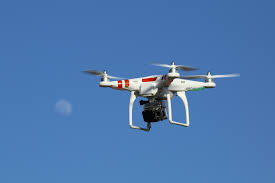
There are many in the world today who want to change technology to make the world a better place.  If they are concerned with prosperity for the masses let me suggest to them this: cheap weapons that make groups of men and women effective fighters; which require them to trust together and work in groups; are in the long run likely to lead to prosperity.  Nor can this empowerment be in area denial alone. IEDs are great at ensuring the writ of the government cannot extend to an area: but they destroy prosperity.  Technologies like drones (and effective ground combat robots are about 10 years out), will do the opposite.

By itself technologies that empower organized groups are insufficient.  But they are virtually a requirement for widespread prosperity. Without them those who have the advantage in violence will use it to take what they can, and those who cannot resist will live in the conditions their superiors allow.

(Update: reference to droit du seigneur removed.)


If you enjoyed this article, and want me to write more, please DONATE or SUBSCRIBE.

Page 13 of 16

Powered by WordPress & Theme by Anders Norén