The horizon is not so far as we can see, but as far as we can imagine

Category: Economics Page 47 of 97

Trump Is the Next Stage of the Disease

One of the more common mistakes regarding Trump is to see him as something that came out of the blue; unheralded and strange.

Trump is a kleptocrat. The US is a kleptocracy. It “formally” became a kleptocracy when the Supreme Court ruled in Citizen’s United that money was speech. (It is ironic that Trump won with less money, but it doesn’t change this fact.)

America was pragmatically a kleptocracy in 2009, when Obama entered office and continued his predecessor’s policy of bailing out bankers, taking houses away from little people and not prosecuting bankers for clear crimes.

Punish the people without money; let the people with money walk.

Trump is a walkimg emoluments violation: He should be impeached month two of his term for his refusal to sell his company.

But he won’t be (though he may eventually be impeached if Republicans decide they’d rather have Pence as President, and that they don’t think Trump’s followers will personally visit their houses to discuss the issue).

Kleptocracies are run for the benefit of the rich. It is that simple. A monarchical kleptocracy like Putin runs, and like Trump seems interested in running, makes sure the peasants get something, which means it may feel slightly better than what came before it. (Putin is very, very popular and was so even before the recent wars for the simple reason that Yeltsin was far, far worse.)

But they are still kleptocracies. Trump’s first order of business is tax cuts, mostly for the rich. There is a report that his team has asked for information on funding of environmental groups, and Trump plans on shutting down NASA’s climate change group.

These things get in the way of making money; and because environmentalism was pushed during a period in which the economy was, for too many people, a negative sum game, it is also unpopular with his base.

But these things are extensions of the already-existing Republican party orthodoxy. Tax cuts and fuck-environmentalism is where Trump stands in solid agreement with the kleptocracy that already ran the country. These things are not what make Trump interesting, or unique, they are what make him simply another stage of the disease.

Understand that what we had in 2016 was a crisis point. There were three options. Clinton was for the status quo kleptocracy. More or less the same, with a bit more help for those hurting the most, like students.

Trump was for monarchical kleptocracy, minus globalism: add tariffs and one-to-one trade deals to the mix, change up the foreign policy, make sure some more people get jobs, while gutting worker rights in general.

Sanders was an opportunity to actually change some of the key domestic policies away from kleptocracy: While not ideal, he was clearly a change from the status quo in a kinder direction, and he came fairly close to winning the Democratic primary, despite an active conspiracy by the DNC to stop him (no, no, it meets the actual definition of conspiracy).

Of those three options, Americans chose Trump: a new stage of the kleptocratic disease. Double down on transfers to the rich, but let’s give more scraps to the poor and fuck over some foreigners to get those scraps while burning up the world even faster. (Obama was not good on the environment; he was bad, but Trump will be much, much worse.)

I am not panicking, or running around screaming. I regarded something like Trump as nearly inevitable, with a small, but real, chance to avoid him by embracing the populist left (in this case, championed by Sanders).

In fact, Trump is not as bad as what I expected. His victory, a squeaker, may wind up precluding Trump 2.0, that is, the guy who would run next time, having learned from Trump what was possible, but far more disciplined, focused, and ideological than Trump.

Trump has the support of some powerful ideologues (most notably Bannon), and he has a world view, inchoate as it is, but he’s a very flawed man. Despite being very good at getting what he wants, it is undeniable that he lacks discipline, focus, and a broad base of understanding. Nor does he self-identify as being ideologically driven. Bannon may want to be the Lenin of the right, Trump does not.

More to the point, because the actions of US elites (and the world’s), along with the repeated votes of US voters, kept pushing America down this path, for decades, I regard running around screaming as pathetic. It’s like running full speed at an oncoming train for five minutes, with plenty of opportunities to veer off, then complaining when you get hit.

Many Americans, and the vast majority of their elites, affirmatively chose, repeatedly, to take actions and institute policies which were most likely to lead to Trump. Those who opposed those policies lost, and a huge chunk of the population sat on the sidelines doing nothing.

There were many, many opportunities to turn away from this path; the largest was to NOT bail out bankers in 2009.

In 2009, I wrote the US off. I knew that Obama had affirmatively made the choice to save oligarchy from itself (quite different from FDR saving capitalism, but not oligarchy). I knew then that something like Trump was the most likely outcome, but I expected worse than Trump, so far, seems to be.

So running around screaming is ridiculous. This was a choice, made affirmatively, repeatedly. If Trump had lost to Clinton, Trump 2.0 would have tried in 2020 and almost certainly won. The US is a kleptocracy, and eventually the disease would move to the next stage, if not reversed.

What I seek to do now, with regards to Trump, is two things. The first is simply to understand him and his movement. We’re going to be living in his America; it’s his world, for some time, so we’d best figure it out.

The second is to poke people who didn’t and still don’t get it, because until enough people do, we will keep losing to kleptocrats (whose number includes both Clintons) and people like Trump.

These two things are meant to support realistic assessment of Trump, the US, and the world so that effective action can be taken.

I have a friend who, as a result of Trump, is leaving the US with his two children. He has carefully looked at Trump, made his assessment of the US’s future and chosen a course of action. That is effective.

Make your assessment, take your action. Stop the hysterics. I strongly recommend that many people, who are most worked up, take two weeks off the internet, except for unavoidable work related tasks. Calm down, think, and decide what you need to do for yourself and your dependents. Heck, depending on who you are, you might even be one of the winners from Trump (they will exist).

Then decide what you’re going to do. Understand the consequences of your actions. Make your assessment. If you really think Trump = Hitler you should be getting the fuck out or preparing to fight, and I do mean fight. If you don’t, what do you think he is?

Get real.

In the meantime, I will continue to keep an eye on Trump and his team and try to provide analysis without hysterics or panic. Fear may be appropriate (it is for some people, for sure), panic is not.

But it will be vastly harder to fix this if people keep pretending it wasn’t affirmatively chosen, and not just by people who voted for Trump this time, but by everyone who supported the previous status quo, starting around 1980. Kleptocracy is neoliberalism’s child, its logical end-result, and Trump is just a new stage in kleptocracy, and yes, many people worked hard for this including most people who voted against Trump.

Understanding how and why you got here is necessary to get out of here–not in one piece (it’s too late for that), but without losing any body parts you’ll really miss (always choose to lose a leg–the prosthetics are great).

Trump: Just another stage in the disease of kleptocracy, made inevitable by neoliberalism and affirmatively chosen by modern “liberal” hero, Barack Obama.

Own it.


The results of the work I do, like this article, are free, but food isn’t, so if you value my work, please DONATE or SUBSCRIBE.
Clio, the Muse of History

Heaven on Earth: The Kindness Maxim

In the past, I have noted that kindness is generally the best policy and always the best policy default. If you don’t have an ironclad reason not to be kind, be kind.

Let’s run through this.

People who are treated badly, become bad. The abused grow up to abuse. The sick make others sick and cannot contribute to society. Happy people are better to be around. Prosperous people can afford your products and services.

Happy, healthy, loving, and prosperous people are the people we want in our societies.

We evolved in bands. Forty to fifty people running around the Savannah. We would have been friendly to some other bands (those with whom we shared ancestors) and we were hostile to most other humans, who were our competitors. The level of hostility varied with carrying capacity; if resources were short because of too many humans, quite hostile, otherwise not very.

We did not evolve to take into consideration the needs of large groups of people. In order to do so, we evolved cultural methods: fictive kinship, culture, story, myth, and religion. These things created fictional identities which went beyond people we knew of or saw every day.

Theses are all hacks for a fundamental evolutionary problem: We’ve evolved to be pretty good to those we see all the time, and not to care much about people we don’t.

This was fine when were just a particularly clever animal. Even when we got to the point of making wholesale changes to the environment (usually through agriculture), the worst we could do is ruin a local ecosystem–we couldn’t mess up the world.

But, today, for good or ill, we live in that “interconnected world” and the “global society” everyone talks about. What happens to someone in Nigeria, Brazil, or China matters to me. Their happiness, their health, their prosperity affects mine.

And how they affect the environment affects me, too. How I, a first-worlder with a huge carbon footprint, affect the environment, affects them.

Their well-being affects mine. It is in my interest for them to be better off.

This isn’t what you’ve been told. Economics treats the world as a zero-sum game, a matter of managing scarcity.

The world has scarcities: resources, dumps for pollution like carbon, etc. But civilization isn’t, usually, a zero sum game. Instead, it’s usually negative sum or positive sum, or both. For some time for Westerners, and a few other developed nations, it has been positive sum, and there have been many other periods of positive-sum games.

My win is everyone else’s win.

Creating a good society requires both managing actual scarcities and understanding that actual scarcities are scarce, and that most things people want to do are positive sum. It requires turning most of what we do into positive-sum games. A good society is one in which “your win is my win” is made true far more often than not.

“We win together” is a prescriptive statement which must be made into a descriptive statement. (It is also a descriptive statement in general, because if my win isn’t your win more often than not, we don’t live in a good world.)

So humans must see beyond their identities, their tribes, and their nations, to treat all humans as people whom we want to be healthy, happy, prosperous, and loving. For their sakes and for our sakes.

But there is an additional step required to create a good society, a good world, a good civilization.

We must care for non-human life.

The mass-death of trees and plankton affects you, it affects me. The mass death of fish affects you, it affects me. The destruction of marshlands causes floods and reduces water quality; it affects you, and it affects me. Ecosystem collapse—well, you get it.

The problem here is that I’ve given you the rational argument.

Rationality is marginal. It’s not that humans can’t be rational, it’s that rationality is the lesser part of why we do things or how we make decisions. We make decisions based on emotions, and those emotions are based on our ideologies and identities.

Rationality, or “reason,” allows us to weasel out of doing the right thing too often. It is a tool for our emotions; emotions which right now scream: “My interests, my ideology, my identity, my people matter MOST!”

For a good world to exist, we must feel that other humans should be treated kindly simply because it is the right thing to do. We should be revolted by anyone going hungry, anyone being tortured, anyone being raped. The moment we think “They had it coming,” we’re on the wrong track. (Punishment is not the point, removing the ability of bad actors to continue to act badly is.)

And this principle needs to be extended to non-human life. We need to feel bad when animals are dying in large numbers and going extinct–bad enough to do something about it. We need to instinctively, by default, move to protect them. We should be as revolted by images of dolphins being slaughtered as we are by humans being slaughtered. If we kill for meat (and I eat meat), we should insist it be done humanely.

This must be based on values, principles, and identity, of feeling that humans and animals and even plants are all alive–and because they are alive, they must be treated with respect.

There are sound, pragmatic reasons for doing so; there are also sound moral reasons for doing so (read the Hidden Life of Trees). Anyone who doesn’t think most animals don’t feel pain, or don’t suffer, is on a profoundly unethical, immoral track.

This is the right thing to do, morally and pragmatically, and if we don’t figure out how to do it, we’re little better than bacteria that grow until they destroy their own environment and experience a great die-off.

Be kind. It creates the world you want to live in, and it may well save your life and the lives of those you claim to care about. By granting life the love you reserve only for a few, you give those few (and yourself, as it happens) their best chance at long life and prosperity–and grant it to your descendants as well.


The results of the work I do, like this article, are free, but food isn’t, so if you value my work, please DONATE or SUBSCRIBE.
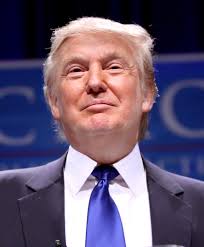
The Course of Empire by Thomas Cole

The Lies at the Heart of Our Dying Order

One should understand why people have lost trust in experts, the media, and politicians.

It is not difficult, it is the same reason people lost faith in Soviet Communism: Promises were made that turned out to be lies, those promises were not kept.

Soviet Communism was supposed to lead to a cornucopia and a withering away of the state. Instead it lead to a police state and a huge drought of consumer goods, and often enough, even food. Communism failed to meet its core promises.

The world order we live in was born in 1979 or 1980, with Thatcher and Reagan. It made a few core promises:

  • If the rich have more money, they will create more jobs.
  • Lower taxes will lead to more prosperity.
  • Increases in housing and stock market prices will increase prosperity for everyone.
  • Trade deals and globalization will make everyone better off.

The above core promises all turned out to be lies. It’s that simple. For the last 40-odd years, most of the population experienced either stagnation or decline.

Understand clearly: By 1979, people had lost faith in the post-WWII order. They were willing to try something new.
That “new” order has now betrayed too many people, and it is falling. It will continue to fail. We are in the twilight of neoliberalism (a longer article on that topic is forthcoming).

This is the reason why people are going for “fake news.” This is why people are willing to listen to demagogues. This is why people don’t trust the press–and why should they? The press has lied to them repeatedly, it is the original fake news. This is why people don’t listen when hundreds of economists say Brexit is bad–why should they? Most economists missed the housing bubble.

Neoliberalism has discredited everyone who bought in to it. Who didn’t buy into it? Well, the hard left and what people are now calling the “alt-right.”

So people are turning in those directions, though more to the right. Because people are ideologically and identity driven, and most are not intellectuals, what they look for are signifiers that someone is not like the people who screwed them, who lied to them for 40 years.

Trump does not talk like those people. Farrage does not talk like those people. On the left, Corbyn does not talk like those people and, to a large extent, neither did Sanders.

And so, people are turning to people who don’t parse like the “typical” elite. Many of those people are also selling them a bill of goods (Trump, to a large extent), or are nasty pieces of work (Trump, Alt-Right). To a lot of people, however, that doesn’t matter: They can’t take the pain any more. They are assured a long decline and they will take a flyer on anyone who might shake things up.

Lying is bad policy. It may get you what you want in the short run, or even the medium run, but it destroys the very basis of your power and legitimacy. Lying is what neoliberal politicians, journalists (yes, yes they are neoliberal), and their experts have done to themselves and they destroyed both their own power and legitimacy and that of the order they supported. No one with sense trusts them: If you trust these people, you have no sense, it is definitional. I always laugh when some idiot says, “But 90 percent of economists think X is bad.”
FAIL. They also missed the housing bubble. They lied or were “mistaken” about trade deals. Their opinion means nothing.

All this screaming about fake news is something I will take seriously when the New York Times, who helped sell the Iraq war based on “fake news,” is listed as fake.
The current order has very little credibility left, and they are losing more and more. Look at all the poll failures: Somehow, the polls almost always get it wrong against insurgents, not for them.
No, neoliberalism is dying, and its defenders are discredited, and both things deserve to be the case. That does not mean its death-throes will be pleasant (they won’t be) or that what replaces it will be better, just that it has run its course.

Those who supported it took their rewards: The top tier got filthy, stinking rich, their courtiers received good jobs and money, even as both disappeared for their victims. They will have to be satisfied with that, because posterity will be absolutely scathing to them, as it is to the generation leading up to World War I.
Lie repeatedly, fail to keep your promises, and things like Trump and Brexit will be the result. It is that simple.


The results of the work I do, like this article, are free, but food isn’t, so if you value my work, please DONATE or SUBSCRIBE.
Federal Reserve Seal

Trump’s Coming Confrontation with Yellen and the Federal Reserve

Okay, so the Federal Reserve, coincidentally, now that Trump has been elected, has decided that the economy is at full employment and they’ve raised rates.

The funny thing is, it’s true. Sort of. The unemployment rate (u-1) is low enough to be considered “full employment.” What that means is that the labor market is tight enough that, for the first time in Obama’s reign, workers actually got raises in 2015.

According to the economic policy regime which has run the Federal Reserve, and the US, since Greenspan, that can’t be allowed. The moment employment starts causing “wage push inflation” (wage increases faster than the general rate of inflation) it must be stopped.

Of course, out of Obama’s era, there has been only one good year so far (though 2016 will probably come in as decent), and the only reason the unemployment rate has improved is because millions of Americans gave up on finding a job. As a percentage of the population, there are about as many jobs as there were at the bottom of the last recession.

There was quite a bit of growth, but it didn’t make it into wages. The only way it will do so is if the labor market stays tight for years, because there are years (decades, really) to make up for almost all the gains going to the top few percent.

So, Yellen probably “should” have raised rates six months or so ago. She didn’t, probably because she’s Obama’s appointee–the same way that Bernanke didn’t when he “should” have because he was Bush’s appointee, and wanted a Republican to replace Bush.

Under Barack Obama, the deficit (how much the US pays on its debt) dropped, but the debt increased by $7.917 trillion (not including the first year, which he didn’t control). The deficit dropped because the Federal Reserve kept interests rates extremely low for years and years and bought up a pile of debt as well.

But the debt is higher than it has been, in relative terms, since the WWII debt splurge. And if Yellen raises rates, debt service charges will start to increase (not immediately, much of it is in longer term instruments).

More to the point, higher interest rates are meant to make sure that wages increases stop, the unemployment rate increases, and that (in effect) the economy never actually recovers from the financial crisis.

So Trump has a problem. He needs cheap money if he’s to have a good economy, and Yellen is ending the cheap money era–just as he’s been elected.

It’s not completely a coincidence, but it’s not entirely not a coincidence, and if I were Trump or his team, I’d be livid, and it looks like they are.

Worse, Trump has a big stimulus plan. It’s a bad plan, but it’ll still create some jobs, and Yellen has said:

“I would say at this point that fiscal policy is not obviously needed to provide stimulus to help us get back to full employment,” Yellen said.

That’s Fed speak for “spend the money if you want, but we’ll neutralize every dollar you spend.” Which, by the way, has been orthodox Fed policy since Greenspan and arguably Volcker–almost 40 years.

So, Trump (and Bannon) if they want a good economy and their stimulus to work, have a problem: Yellen and the Federal Reserve Board. And Yellen has stated she won’t step down till her term ends, in 2024.

They can do two things. The first is to wait, not for Yellen, but for the terms of other Federal Reserve members, to expire. Two slots of the six (seven with Yellen) are currently empty, he can fill those. That gives him two. One, Powell, is a Republican and may be amenable; and Fischer’s term expires June 2018. So by late 2018, Trump might have a Fed willing to cooperate with him–or at least not sandbag him.

BUT that’s quite a while, and assumes that Powell is amenable. It gives Trump only two years to make the economy work how he needs it to work, and means his first two years will be sandbagged by the Fed. Trump’s followers are not going to care what the reason is, they expect results.

The other option is hardball. Governors can be removed for cause. Trump can say they have performed badly (it’s not a hard case, and people who voted Trump and many others will agree) and remove them. This can then go to the Supreme Court, which, if Trump is smart, will then be firmly in Republican hands.

I will be frank: I would absolutely do this. I would have done it as Obama to Bernanke (if Obama had actually wanted a good economy, or to have banks go under) and I would do it as Trump. For four decades, the Federal Reserve has sandbagged wages and made sure the rich got richer. This is not even in question, and the financial crisis was only the largest proof of it, not nearly the only one.

I think this is coming. The Federal Reserve bows (and Yellen has been very clear she won’t) or the resisting Governors get booted.

There will be screams from Democrats and “liberals” and I will ignore most of them. As with ending the Trans-Pacific Partnership, this is the right thing to do, and it’s something that should have been done decades ago. Appointed technocrats sandbagging Congress’s fiscal policy and deliberately crushing wages was always evil.

Get out your popcorn, folks.

Oh, and these sort of stakes are why there is such a huge effort, abetted by the CIA (and opposed by the FBI) to make sure that Trump doesn’t take office.

Like it or hate it, he’s going to have to destroy much of how DC has done business for the last 40 years, and many people in power really, really don’t want this.

Don’t defend the Federal Reserve if you claim to care about workers, the middle class, or anyone under the top 10 percent or so. They have acted unutterably evil for decades, and if it takes another evil person to destroy their power, I’m fine with it. Frankly, the Federal Reserve should be placed under direct control of Congress with four year terms at most, and every central bank in the world should lose its “independence.” They have misused that independence to do little more than make the rich richer for decades and they are profoundly anti-democratic.

It’s a pity so much that has to be done will likely be done by someone like Trump, and that he’ll do much of it the wrong way to support terrible policies like tax cuts, but that’s what happens when the Left allows the Right to be the populist party, and chooses to be the party of bailouts and technocrats.


The results of the work I do, like this article, are free, but food isn’t, so if you value my work, please DONATE or SUBSCRIBE.

Saudi Arabian Debt Will Not Be Among Safest in World

Saudi Arabia is issuing 5, 10 and 30 year bonds.

The debt will be among the most secure in the world given the country’s strong balance sheet, net foreign assets, and ~$13 trillion worth of proven oil reserves.

On Wednesday, Saudi Arabia is set to issue its first wave of sovereign debt to foreign investors. The measure, first announced last November, is being offered in response to a historically severe compression and enduring slump in oil prices that has squeezed the nation’s fiscal budget. Accessing the debt markets can help mitigate short-term fiscal pressure and provide financing during a necessary bridge period to a more diversified economy.

Well, the five and ten years are safe enough.

Saudi Arabia’s problems are both inevitable, and caused by the new generation of leadership’s stupidity. Remember, Saudi Arabia, seeking to destroy the US fracking industry, is the one who broke the back of oil prices in the first place.

That said, the prices had nowhere to go but down anyway. The world is in a wave of austerity and options which avoid the use of oil are coming online. Somewhere in the early 2020s, electrical cars will be as cheap as gasoline cars.

Game over.

As for the bonds, Saudi Arabia isn’t going to “bridge to a more diversified economy.” Not going to happen. They simply import too much, and do not have enough domestic producers capable of replacing imports and creating new work. Nor are those conditions easy for them to create when their currency value is almost entirely based on vast volumes of resources, which means it isn’t providing the necessary feedback (low, low) to make production in the country viable.

Saudi Arabians have a joke: “My grandfather rode a camel, I drive a Mercedes. My grandson will ride a camel.”

Correct, in essence.

On the bright side, once they’re broke, the money flooding out to promote their particular take on Islam will subside to a dribble.

I expect economic collapse and civil war in Saudi Arabia. Within 20 years.


If you enjoyed this article, and want me to write more, please DONATE or SUBSCRIBE.


The Golden Laws of Prosperity

Image by [rom]

Image by [rom]

Implement policy which is as good for as many people as possible.

Keep the rich poor.

Punish negative externalities, encourage positive externalities.

Tax economic rents punishingly.

Do not allow pipeline companies (app stores, telecom companies, railways, etc…) to extract monopoly profits.

Enforce the doctrine of first sale (if you buy it, it’s yours) and do not allow items to be turned into services.

Do not allow elites to opt out of the experience of ordinary citizens.

Allow no unregulated monopolies or oligopolies (and by regulated, I mean 5 percent + inflation profit, no more, no less and strict limits on executive compensation).

Keep so-called “intellectual property” to an absolute minimum.

Make it worth doing social work and do not allow the private sector to pillage the social sector (for example, parenting).

Never use widespread targeted incentives.

Do not allow the rich to grow rich any faster than the bottom or middle of society.

Do not allow fraudulent profits to drive out real profits.

Allow easy bankruptcy.

Do not allow usury.

Do not allow resource extraction profits to drive out profits in other sectors of the economy.

Keep the real rate of return low, except on genuinely risky entrepreneurial activities.

Do not reward people for winning lotteries (economic competitions someone was going to win, like Facebook winning the social site competition).

Do not allow the financial sector to be the tail that wags the dog.

Allow no financial instruments which are more complicated than the underlying asset or project.

Do not allow anyone to take future profits in the present.

Make sure that people cannot cash out of the system without taking a huge loss.

Ensure that no one can give themselves a payday by destroying real value (i.e., much private equity).

Do not allow the old to make deathbets.

Enforce accountability on decision-makers, especially corporate decision-makers.

Do not allow private money to buy elections (taxpayers should pay for their own elections and not expect donations to do so).

Do not allow lawmakers or public executives to ever make more money (adjusted for minimum wage increase, median wage increase, and CPI) than they did while in office.

Give lawmakers generous pensions that kick in after only a few years of service, so that they are not worried about their next job.

Pay lawmakers generously, but link pay to minimum wage, CPI, and median wages.

Recognize health externalities caused by urban and exurban planning, pollution, and additives.

Reduce barriers to entry in new industries, including outlawing non-compete agreements and restrictive patents.

Reward creatives not primarily by patent or copyright, but by levy and distribution. Corporations are not creatives.

Do not allow trade to be used to externalize negatives like pollution.

Restrict capital flows significantly.

Treat credit as a utility and regulate all credit grantors as utilities.

Credit rates should be based on the utility of the end use of credit.

All universal or near-universal insurance should be run by the government, as the government is always the insurer of last resort.

Do not have large standing armies.

Do not obsess over inflation targets. Moderate inflation, to as much as 10 percent, is not harmful and is less harmful than very low inflation.

Do not use monetary policy for fiscal policy or vice-versa.

Do not lock up a large part of your population.

Do not make reintegration of criminals who have served their time effectively impossible.

Make sure your population eats healthily. There is no such thing as cheap food. Cheap food is paid for by death, disease, and health care costs.

Do not allow educational advantage to be bought by high housing prices or by money in general.

Do not impoverish your cities by allowing politicians to use city money to buy rural and suburban votes.

Do not allow city folks’ mores to run the country, nor country mores to run the cities.

Do not allow unproductive suburbs which do not allow light businesses or have covenants.

Do not borrow significant amounts of money in anything but your own currency.

Do not allow people to make large amounts of unearned money (i.e., as when housing inflation is much faster than general inflation).

Do not allow the costs of your society to outrun real gains spread over the population (i.e., housing prices to rise faster than wages).

Make sure that the consumer economy has an alternative.

Understand what the government does well and what the public sector does well.

Use competition between the private and public sectors.

Do not allow your elites to enter into direct competition with foreigners running resource economies.

Do not allow your economy to be owned or run by foreigners.

Do great things, not because of the return, but because they are great.

Seek the health and happiness of your citizenry, not maximum income.

(First published Sept 7, 2011. This is old, but the only relatively comprehensive list I’ve written, so back to the top. My thought has evolved on a few issues, but it’s still a very good list. – Ian)


If you enjoyed this article, and want me to write more, please DONATE or SUBSCRIBE.

Vancouver to Tax Those with Empty Properties

I grew up in Vancouver more than any other city, but left in 1986. It’s one of the most beautiful large cities in the world, and was a lovely place to live. Recently, due in large part to the influx of foreign money and buyers, it’s become unaffordable, both for buying and renting. The provincial government just slapped a tax on foreign buyers, and now the mayor is going to add another tax.

Vancouver plans to tax its vacant homes by the end of the year, the city’s mayor said on Wednesday, announcing the second government move in as many months to address foreign investments that officials say have helped drive up home prices.

This combination of action is absolutely the right thing to do, especially a tax on vacant homes (I assume it will include apartments and condos.) This action should be copied by cities around the world who are experiencing similar foreign buyer driven booms: like Australia’s large cities, London, and Canada’s Toronto.

This is what I have been pushing for for some time. The issue is that the fee must be punitive, and I fear that Vancouver won’t set it high enough.

As I wrote in 2015 in reference to a similar New York city proposal.

People who can afford luxury apartments can afford that fee. Make it simple: Put in a residency requirement. Someone must live in the apartment six months to a year. If they don’t, the tax rate is 50 percent of the ostensible value of the apartment. If that doesn’t work (and it might not, given how rich they are), well, then just make it illegal to own apartments that aren’t used and have the government seize the apartment and use it for social housing, or sell it. And if the next owner doesn’t use it, seize it again.

The simplest way to stop stuff is to just forbid it. Foreigners don’t have any “right” to buy property in other countries. It’s a privilege. If they’re making life miserable for the permanent residents of a city, there’s no particular reason not to just stop them buying more residences. There will always be ways around such bans, of course, but it will still make such purchases far fewer.

It’s not reasonable for a city’s rent and/or cost of purchasing a house to rise much faster than its economy. It’s not fair to shove out residents and people with jobs so that foreigners can have vacation homes or homes to which they can escape with their corrupt wealth if things go bad in their home country.

If they want such a house, well, there are plenty of small municipalities who would be happy to sell to them, but turning one of the countriy’s main, economically viable cities into a place its actual residents can’t afford isn’t smart or fair. The same is true of Toronto, London, or Melbourne.

China throws off so much money and wealth that smaller nations (and Canada, Australia, or Britain are all smaller where it matters in population) can be swamped just by their overflow.

Don’t let that happen.


If you enjoyed this article, and want me to write more, please DONATE or SUBSCRIBE.


That Great Census News

That metropolitan-area household incomes in 2015 are up five percent is, indeed, good news, but as Stoller points out, men’s income is up 1.5 percent and women’s is up 2.7 percent, so what it means is that more people per household are working.

Household income is still 1.7 percent below the 2007 level.

Income being up indicates that the Fed can now crush wages, however. Let’s see how long this runs, or how long they let it run.

Overall, however, the job market is still trash.

Employment / Population Ratio

Employment / Population Ratio


If you enjoyed this article, and want me to write more, please DONATE or SUBSCRIBE.

Page 47 of 97

Powered by WordPress & Theme by Anders Norén