
The horizon is not so far as we can see, but as far as we can imagine

Author: Ian Welsh Page 95 of 437

Violent Determinants Of Social Hierarchy

There are four primary determinants of social hierarchy. They are productive ability, social ties, ideology and violent ability. All are affected by geography.

None of these operate in isolation. Productive ability directly affects violent ability.  Ideology determines what people will and won’t do but over time tends to move towards what a Marxist would call material determinants, though that time can be a LONG time: it took about two thousand years for the early kings to rise after the introduction of agriculture, so the power of ideology, though not the only factor slowing adoption, shouldn’t be understated. Two thousand years shows a lot of resistance.

To the extent hunter-gatherers tended towards egalitarianism, and there are certainly exceptions, generally based on high surplus, it was based on the fact that one guy with simple wood and stone weapons isn’t much better at violence than any other guy, especially in a society where all men who aren’t shamans are hunters. Oh, the best might be able to take two men at once, maybe even three in exceptional cases, but if a group of other males attacks he’s done. Likewise, though ambushes can change the formula, conflicts between men and groups of men are extremely risky unless one side outnumbers the other.

This changes a lot with early bronze weapons and armor, and it changes even more with organized bodies of men trained to fight together. Professional warrior or soldier classes whip peasants. So when agriculture makes every man not a hunter, but allows for division of labor, the “every man is about as good as another” changes, especially in organized groups.

He who is able to transfer the loyalties of a group of warrior or soldiers to himself can rule. Alternately men good at violence can transfer their loyalty to each other, creating a ruling warrior caste.

Let’s take the case of ancient Greece. The Homeric age emphasizes individual combat, but nobles can train much more for it and have better gear. They rule, but the society is still remarkably flat overall. In the classical period, the primary military arms are the phalanx and the galley. The Phalanx is simple and doesn’t require a lot of training, but it does require fit men with gear acting in groups with high solidarity. If everyone doesn’t push together, in unity, they lose.

Athens citizenship was almost exactly “men who fought in the Phalanx” and “men who rowed the galleys.” The galleys were for poorer men, and the state provided the galleys, but galley rowers had to be highly trained and work in precise unity. Slave rowers could not compete with free men, and highly trained crews of citizens could and did, as with the Athenian navy against the Persians, dominate.

So, while those who rowed were usually of the lowest class of Athenian citizens, they were citizens.

What was also important is that for the phalanx, men provided their own weapons and armor and the state, which was the citizens, provided the ships.

Rome started off similar: legions were full of citizens who served for relatively short periods, and who provided their own arms and armor. As with most of the Greek cities, they returned to their farms or other lives after the wars. They were not professionals: they did not make their living as soldiers, but they were able to beat professionals. Sparta may have been the best for a long period, but they didn’t win every battle, their dominance on land was real, but not determinative. Rome in the early and middle Republican period defeated armies made up of professionals regularly.

The fall of the Republic comes when the army is professionalized: this is now how people make their living, they are provided their weapons and armor, and they are loyal primarily to their generals, because their chance of real wealth is from looting and that depends on the general, including whether and how much he lets them loot.

Crassus, near the end of the Republic, simply raises his own legions without the help of the state.

Rome comes to depend on professionals, not citizens, and those professionals are not loyal to the citizenry, and as such the Roman Republic comes to an end when one of the great generals, Augustus,  defeats all his opponents. The Republic never returns, because the conditions for Republican rule are gone.

As we can see, then, if amateurs can’t defeat professionals and if armies are not raised from the citizenry by the citizenry, Republican or Democratic rule cannot continue.

The great Democracy of the last six centuries or so was Switzerland. Similar to the Greek city states, they relied on pikemen, raised from the general population by the general population and able to defeat professional militaries, including knights who had trained since childhood. Even when operating as mercenaries (as city state citizens sometimes did) they retained their loyalty to Switzerland.

But the heart of it is that they could defeat troops raised in non-free states.

But notice in all these cases: men had the franchise, because they were the ones who could and did fight. Women in Athens were treated particularly badly, indeed they were treated worse than most slaves who didn’t work in mines. Switzerland was one of the last western nations to enfranchise their women.

Let’s talk about that enfranchisement. The main feature of 20th century warfare from the WWI thru Korea was that it was mass conscription warfare. The armies were huge. This meant that women, during war, had to take over jobs done by men who were fighting.

Women thus, while mostly not fighting (WWII Russian women are a rare exception), were absolutely integral to military success. They made much of the weapons and kept society running.

When did women get the vote in the US? 1919.

The US draft ended after Vietnam, and the army was professionalized. Not coincidentally, egalitarian distribution of goods has since then spent over 40 years collapsing. This was due, in part, to the constraints on war in a nuclear armed world. Before nuclear weapons, great powers could win wars against each other and the benefits of doing so were huge as were the costs of losing. (Austria stopped existing, Germany lost a huge amount of its land and became a US Satrapy, as did Japan.)

Going all out, enlisting as many men as possible and increasing war production thru the roof all made sense.

But in Vietnam, the US never went all out, because North Vietnam was a Russian ally. They wanted to win without really winning: without conquering North Vietnam.

You don’t need a mass conscript army for a war where you’re not seriously trying to win and where, indeed, seriously trying to win may provoke a nuclear war. (This also applies to the Ukraine war to some extent.)

It is notable that democracy rises with cheap gunpowder weapons. Mass egalitarian societies, in economic terms, result from WWII, and the policies supporting them come to an end about the time that mass drafts are done away with and armies are “professionalized”, aka, become internal mercenaries.

Worse for the future may be the rise of robotic armies. If you don’t need men for soldiers, if you don’t need mass numbers of women to step in and make the robots, well, perhaps the time of egalitarian societies is done.

Or, perhaps not. Because as important as who fights is who makes the weapons. The great disaster of the war of 1812 is that decentalized American armaments production could not compete with centralized armaments factories. It was the end of the yeoman farmer ideal: the idea that decentralized armies raised from the yeomanry could defeat professional militaries.

But if drones and robots which are effective combatants and effective assassins or area denial weapons can be created by ordinary people easily, and the powers that be are unable to deny people the means of doing so, then robotics may prove to be positive in spreading power among the population.

This is one of the hopes of the future, and you should understand clearly that those who want to restrict your access to the determinants of power do not have your best interests at heart.

We’ll talk about that at a later date: it gets to the heart of much of the culture war around guns, a contentious topic and with good reason, given just how many children are being served up on its altar.

But that is for later, for now: who is good at violence matters and it determines who gets the good life and who doesn’t; who rules and who serves.


My ability to write these articles depends on donors and subscribers so if you value this writing, please DONATE or SUBSCRIBE.

The Disastrous Rise of STEM

STEM includes the natural sciences, math, engineering, and technology-related fields. It’s all the rage, and at the same time universities are shutting down or reducing humanities and social science faculties and offerings.

In one sense this is a simple result of market forces: university is ludicrously expensive, especially in the US (but tuition has risen massively in many other countries) and the “degree premium” has declined. Once just having a bachelor’s degree was enough to get you a good job, now it’s enough to let you apply, competing against a ludicrous number of other candidates, for a wage that often won’t allow you to afford a house or children.

But STEM jobs are in demand, although this may be changing. The current downturn has seen a large numbers of coders laid off and Chat-AIs threaten a lot of programming jobs, though I suspect less than it seems, so far.

I bow to none in my admiration for science, but our society suffers from a simple problem: we’re doing mostly the wrong things with our technology. For all the increases in renewable energy, the climate change and ecological collapse charts  show no change in trajectory. We’re in ecological overshoot, and we’re accelerating it.

This is not a technological problem. We’ve known what to do for a long time, and we haven’t used the technology we have to fix it.

To put it more simply, more technologists just pours fuel on the fire.

A fairly strong case can be made that our problems have been made worse by technology, but more to the point, the solution to our problems is not technological. Our problems require social and ethical change: they are problems related to the social sciences and humanities. We have to do the right things, not the wrong ones.

I’m not sure that the social sciences and humanities have a solution, but they are at least oriented in the right direction, with the exception of Economics and perhaps political science.

Now there are larger problems with academia. For the current topic, let’s just say that they’ve become disconnected from society, and mostly aren’t working on solutions, because of an overemphasis on sterile “research”, publishing findings for other specialists which don’t get to the general population or influence elites for the better.

But a start to solving those problems is to not worship funneling more programmers to figure out how to serve ads better and create superior echo chambers and walled gardens.

A lack of programmers isn’t holding us back. A lack of good ideas becoming influential is.


My ability to write these articles depends on donors and subscribers so if you value this writing, please DONATE or SUBSCRIBE.

Open Thread

Use to discuss topics unrelated to recent posts.

Why The Rich Love To Crush Wages, Cut Pensions And So On To Fight Inflation

The majority of price increases, of inflation, right now, are driven by price increases that are higher than increases in costs. Numbers I see tend to range from the mid sixties to the seventies.

They aren’t, then, driven primarily by wage increases.

The obvious way to solve this is to put in a surplus profit tax based on 2019 profit levels and forbid other ways of withdrawing excess profits like stock buy backs and option grants. Only after doing this would you consider trying to crush wages or cut pensions or other benefits.

That is, if your primary aim was to reduce inflation.

But it is undeniable that crushing wages will will reduce inflation somewhat, even if it is far from the best way to do so and it has a great advantage.

It makes the rich even richer by reducing their wage costs!

On the other hand, an excess profits tax would make the rich not get richer nearly as fast.

You can see why governments controlled by the rich (yes they are, let us not be tedious) would prefer to crush wages as opposed to limit profits.

For the elite to support the sort of policies which would not crush wages and which would appear to reduce their profits, they would have to be like a good chunk (but not all) of the post-war elites. Having seen what happened when demand collapsed in the Great Depression, they knew they needed wages to rise and were thus willing to share and to pursue some policies which they didn’t like.

After all, while the fastest way to deal with inflation is an excess profits tax, the structural way is breaking up control of industries and re-regulating anything that even sniffs like an oligopoly or monopoly, plus slamming on huge estate taxes, wealth taxes and 90% top marginal tax rates, while putting a Glass-Steagall analogue back in place and re-nationalizing key parts of the economy.

Now, as it happens, the post-war economy was the best we’ve known since we were keeping records. High growth, reducing inequality but still plenty of profits. The rich had to live with only getting 20X or so as much as the middle class, though, and that’s just unacceptable to them.

Now never let it be said that the rich don’t learn: they do have a dim understanding of “demand collapse bad” and they have a solution, which they’ve been trying since 2008.

“What if we just print tons of money!?” Trillions and trillions of dollars were produced and are currently being produced out of thin air, with no increase in the underlying economy, and given to rich people to bail them out and even when they don’t need bailing out.

Who needs to actually grow customers and have customers having increased real incomes when you can just give yourself money?

This is why things will only improve when current elites lose power wholesale.


The results of the work I do, like this article, are free, but food isn’t, so if you value my work, please DONATE or SUBSCRIBE.

How Elites Liquidate National Advantage (Fall Of The American Empire)

This is a story as old, and probably older, than civilization and isn’t unique to elites.

It is the question of group interest versus individual interest; or national interest versus internal group interest.

National advantages have to be sustained. If you have a technological lead, you don’t give that lead to another nation which is a competitor. If you have a production lead, you don’t help a competitor improve its production anywhere near close to yours. You may give them something from the prior tech generation, maybe, but never the current one.

This is unfortunate, a better world could be created with more sharing, but that would require a world in which nations and elites don’t compete with each other in devastating ways.

In our world, however, when nations get an advantage, they use it to hurt other nations: in the case of extreme advantages to conquer them, in the case of more relative advantages, to take hurt them economically. A recent example is how Germany used the Euro and the EU to damage the manufacturing industry of other EU nations: the Euro was priced too high for them to compete, but was lower than the German Mark would have been and the result was devastation to countries like Italy, especially when added to the inability to control currency issue and interest rates that the Euro essentially imposes.

This is a case where a regional elite in a federation put themselves before the rest of the federation, leaving the federation as a whole weakened.

Most people have forgotten just how much industry, technology and people Britain shipped to the US. This made the US overtake Britain as the prime industrial power decades, maybe even generations before it otherwise would have. That allowed the US to impose its peace terms in World War I, and after World War II to subjugate Western Europe, including Britain, and force Britain to divest of its Empire on unfavorable terms which crushed its economic viability.

It’s important to note that there are periods where this doesn’t happen. Britain’s rise, economically, started when it decided to stop allowing the export of raw wool to the Netherlands in order to force the creation of its own woolens industry. Once Britain gained a technological lead it had laws forbidding people with important skills and knowledge from going to other countries to share that knowledge and it carefully protected its industries thru various mercantale policies.

These sorts of policies work and exist when elites in a country have the feeling that the rise and fall together. But by the late 19th century British elites were in cut-throat competition with each other. If you didn’t keep up, you got bought out or couldn’t sustain your estates.

With large numbers of elites threatened with dropping out of the real elite (people with power and money, not just enough wealth to not worry about money) elites were willing to betray and policies were changed to allow the export of technology, skilled workers and knowledge. Since the US was a continental state with a larger population, such transfers, though they made many individual investors and capitalists in Britain richer, not only weakened Britain’s position, but inevitably lead to America becoming more powerful than the US. (Remember that the UK essentially won the war of 1812.)

Now note that some transfer to weaker allies can work out. The US was damaged by Japan’s rise after WWII (as anyone who was at least a teen in the 80s remembers) but because Japan had a smaller population and less of a resource base, Japan could not overtake the US, despite fears at the time. The same is true of South Korea and Taiwan, neither of which could have industrialized the way they did without US aid.

Making them rich industrial nations made them stronger allies and while it did weaken the US relatively, it improved America’s geo-strategic position in some ways.

Understand that America had very protectionist policies for a very long time, and they worked. Industry was built behind significant tariffs, intellectual property was stolen wholesale (the Brits of the 19th century were as upset about it as Americans are now at China) and trade was carefully managed.

Generally speaking, American elites, especially after the civil war, were united in feeling that America’s increased power was their increased power and wealth.

This remained true thru the first two and a half to three and a half decades after WWII, but it changed with the ascent of Reagan. In the old system, regional elites were protected and monopolies were heavily regulated. This started chanting in the 70s, with the rise of huge conglomerates, but was formalized in 80s under Reagan, which is when consolidation really took off. As various industries entered competition to buy out their rivals, those who were bought out left the true elite: they might have a lot of money, but they no longer had the power created by control.

This process lead to desperate need for profits: anyone who fell behind, even just by getting richer slower, was in a position to be bought out and thus thrust out of the elite.

And so American elites sought higher profits, even if it meant moving industry and technology overseas to the only country (India was not really a contender) which was larger, in effect, than the US: China.

This was precisely the mistake made by Britain and had the same consequences: the loss of the manufacturing lead, which will be followed by loss of the technological lead, the delay probably being two to three decades.

American elite competition became too fierce, internally. Threatened by loss of elite status, American leaders sold their country’s lead in order to maintain and indeed, increase their internal power within the US. America became relatively weaker, but those elites who retained elite status: who won the internal competition, became more powerful within a weaker America.

There were plenty of knock-on effects from this: soaring inequality, for example and popular dissent. The rise of Trump and so on is a direct result because part of elite competition was to find ways to take from the middle and lower class. It wasn’t just about going overseas. But high inequality societies, all else held constant, are weaker than more egalitarian ones, so this too was a weakness and the political instability and weakening of citizenship and consumers also hurt the US.

In a real way this is just the large scale of something which happens to groups: if the group doesn’t work for most of the group, if people don’t feel that making the group better off makes them better off, then people betray group interests since group and individual interests have become dis-aligned.

Great leaders have always understood this dynamic, and it is at the heart of “we must all hang together or we will all hang separately.” Like many such statements (another is “a rising tide lifts all boats”) it is not descriptive: it is prescriptive. One must make it so that betraying doesn’t make more sense than looking after group interests. If a group doesn’t, the group will become weaker and in worst case scenarios, group members may lose everything.

Indeed, as I’ve noted before, I expect Britain to break up and become England, Scotland and Ireland. There is a very good change England will become, essentially, a third world nation again.

But this process takes a long time. The initial betrayers lived 170 years or so ago. They died long before the cost came home, many even before the cost of post-WWI humiliation. This is another version of the death bet: “this will hurt terribly, but I’ll be dead before it does.”

I don’t think America’s decline will take as long Britain’s has, but it’s also cushioned by the fact that America is a continental power. Russia is far from what it was, but still a great power, and the same will remain true for the US for a long time, absent break-up, because of its sheer size and momentum.

Still, elites betrayed and the price will be America supremacy, long before it had to happen. Perhaps that loss is a good thing: the US was not a particularly kind Hegemon, especially after the fall of the USSR, and perhaps a two-polar or multipolar world will be better, though it’ll be hard to disentangle and be sure of that simply because of the crushing costs ecological collapse, climate change and human population overshoot.

Nonetheless, elites which did not engage in cut-throat internal competition would have hung onto power longer. They are losing their power precisely because they betrayed internally, and that led to external betrayal.

(See also: The Red Queens Race, Neoliberalism & Why Healthcare is Being Privatized.)


The results of the work I do, like this article, are free, but food isn’t, so if you value my work, please DONATE or SUBSCRIBE.


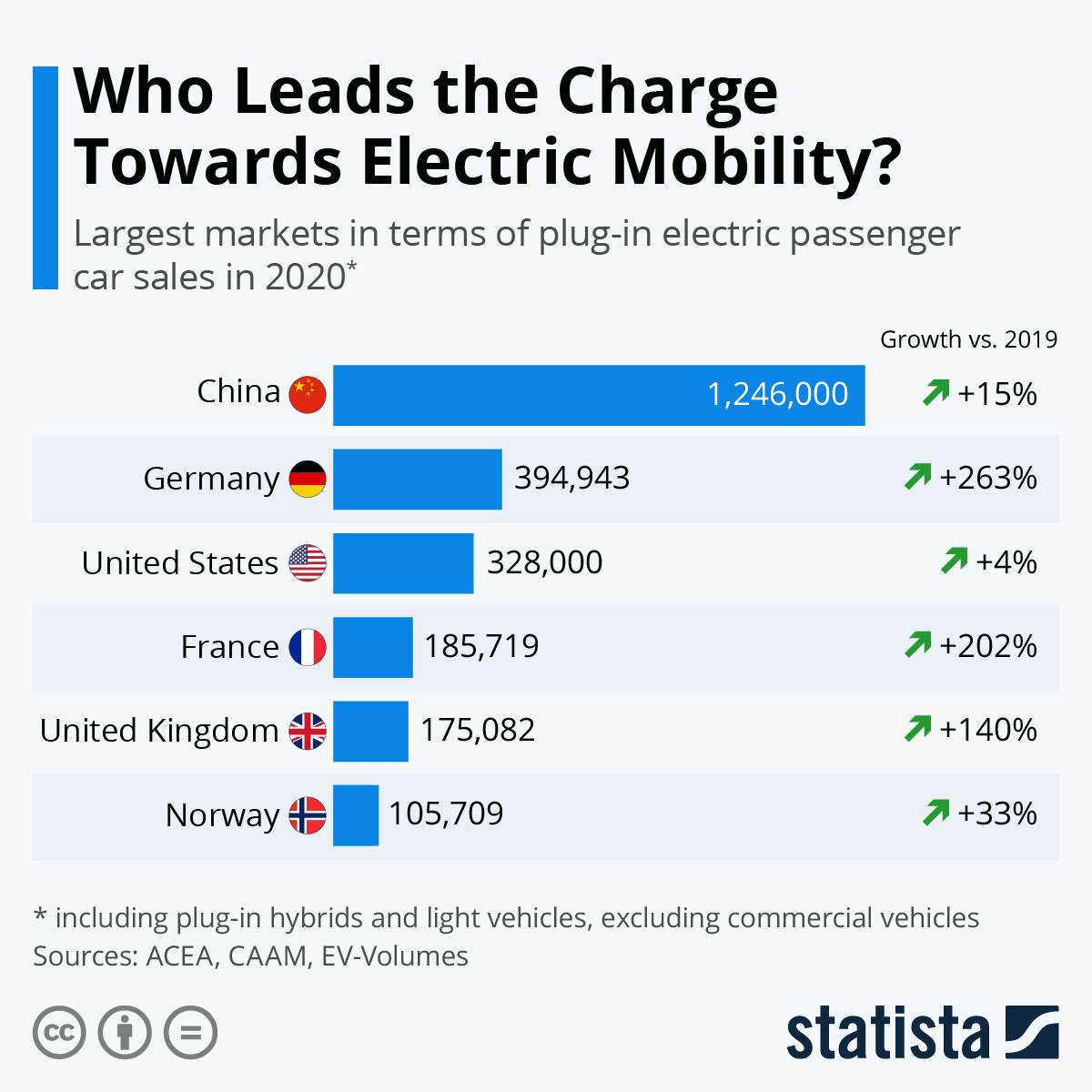
China Is Winning The Electric Vehicle Race. Why And What Does It Show?

Not precisely a surprise, or it shouldn’t be.

China, already the world’s biggest market for EV, is set to knock Japan from top spot for global car export volume this year after overtaking Germany in 2022

Price on the low end is pretty good, too, though it may only be available in China:

This is the new BYD Seagull and with a price tag starting at just 78,000 yuan ($11,300), it is one of the most compelling new electric vehicles from China launched in quite some time.

Of course, it helps that China is the largest market, though some European countries are hard-charging in terms of buying electric vehicles.

For a long time the US had a huge advantage: it had the consumers. It was rich, it was high population, there were no high population countries with larger markets than the USA. Now China is only a middle income country, but it is a 1.4 billion population middle income country.

Further, China uses industrial policy. It does not have a floating currency, but one that it manages. It provides huge subsidies to important industrial markets and it supplies a domestic market which is huge.

It should be understood, clearly, that with almost no exceptions, every country industrialized under protectionist policies. The only exceptions I am aware of are city states, Finland, and the USSR. Every country which moved to laissez-faire policies then saw a decline in their industrial power. In almost all cases they also had a sponsor: for Japan and the US, for example, the initial sponsor was Britain. That sponsor helped them with the initial technology transfer and provided an external market.

The country which did that for China was the United States.

However, as was the case with Britain aiding the US, this was a clear geopolitical mistake (though in the Chinese case a humanitarian plus). China’s population size and geographical extent meant that they eventually created a large internal market capable of providing a substantial market and, since they were and are the lower cost producer (a large part of why America moved production there in the first place), they have been able to easily take over export markets from the US and its allies: their products are about as good, or good enough, and a lot cheaper. So the West went from being the primary exporter of goods to South America, Africa and most of the rest of Asia to second place.

At this point China has a large internal market and more of the world market than the US does.

This is not to say that the American and European markets aren’t important, they are. But they are no longer determinative: they are no longer the only game in town.

Add to this that China is surging technologically, and the Western lead is evaporating. The speed of that evaporation is accelerating. China now has a domestic passenger jet industry, for example. The jets aren’t as good as Airbus or older Boeing planes (Boeing appears unable to make good new planes) but it’s good enough, and the next generation will be better. Chip manufacturing and design continues to improve and all the serious technological bottlenecks will be broken, I’d guess in ten to fifteen years. Most solar panels are made in China and it is also the world’s largest market for solar.

As I have pointed out before, the tech lead moves to where the manufacturing floor is. There is lag time, in the case of Britain and the US it was about 20 years, but it happens.

There are jokers in the pack, of course: climate change, demographic issues, ecological collapse, the possibility of war and blockade and so on, but the smart money is on China.

China was the world’s largest and most important economy for most of the last 2,000 years and the most technologically advanced (before that it was India.) It will return to that position if climate change or war does not stop it.

All absolute advantages are time-bounded. You can extend them with careful policy, but at some point other people learn how to do what you can do. If a smaller nation wants to dominate it needs an absolute advantage in production or the military. Sometimes that is in production, sometimes it is cultural/technological (think the Mongols or the Macedonian Greeks).

The West’s time is done. This is going to be particularly hard on the Europeans if they keep bungling their decline (they should be disentangling from the US and forming a third pole). The US, if it does not disintegrate into civil war, faces an ugly period as well. The dollar hegemony is collapsing, to the extent that even the Financial Times is writing about it, their tech leads is disintegrating and they are set to be the leader of the lesser bloc in a cold war. That didn’t work out well for the USSR and it isn’t going to work out well for the US.

Now, everyone has problems and I wouldn’t be surprised if in 50 years China breaks up under the hammer blows of climate change and ecological collapse. But then, I wouldn’t be surprises if the US does. For now, the normal dynamics of historical change and the rise and fall of hegemonic powers are in play and the smart money is on China.


Open Thread

Use to discuss topics unrelated to recent posts.

The Government of Canada Long Covid Report Suggests 15% Will Get Long Covid

And that, as of October 2022, 1.4 million adults had long Covid or had had it. There’s about 31 million adults in Canada, so we’re well below that 15%, which was actually described as ten to twenty percent.

My own take on Long Covid is that since it is more likely each time people are infected, that the maximum percentage will increase over time and that since many people have damage without it being symptomatic, far more people are damaged and will be damaged than the headline numbers.

The contribution this will make to our civilizational cratering is hard to overstate. Meanwhile we’ve just plugged our ears and are screaming “Covid is over, Covid is over, I can’t hear you!”

Again, each time you get Covid it has a chance to do more permanent damage to you, damage which is often asymptomatic. If you live in a society where the plan is “just keep getting Covid over and over again” for a lot of people, perhaps most, eventually you’re likely to take a hit and not recover fully.

Meanwhile our lords and masters are squealing about how there aren’t enough workers. Well yeah, you refused to deal with the plague because not dealing with it was making you filthy rich. Not dealing with the plague leaves a lot of dead and disabled people. That’s not good for the work force.

Imagine that. “Why can’t these sick and dead people work?”

Hmmmm. Lazy buggers.

(A little sick, though not with Long Covid, so posting may be anemic for a bit.)


The results of the work I do, like this article, are free, but food isn’t, so if you value my work, please DONATE or SUBSCRIBE.


Page 95 of 437

Powered by WordPress & Theme by Anders Norén