For those of us who want the purpose of government and society to be creating the best life for the most people there are two fundamental questions.
First: how to produce what is good for people and produces a good life.
Second: how to distribute what is good for people and produces a good life.
Among people of genuine good will there’s a lot of disagreement about how to do this.
The argument of capitalists is follows: if you produce something someone wants and is able to buy you’ve increased utility. If they didn’t want to buy it, they wouldn’t, so it must be good for them. Trying to figure out what is good for people is stupid: individuals know better than government or firms, so whatever they actually buy (or do) must be what they want, and what they want must be good for them.
Whoever sells the most at the most profit must be producing most utility, so if you have a lot of money this means you’re doing a lot of good and not only do you deserve your money, you should have it because money is the ability to command resources and you’ve proved that when you command resources you increase utility. Making money is the same as producing utility, in other words.
Now the smarter capitalists (non libertarians) admit that there are edge cases: people may want heroin, but we still make it illegal. They don’t think there are a lot of edge cases.
The counter-arguments are pretty simple: when we look at time periods where oligarchs are in control like the gilded era or the neoliberal era, they all end in disaster for the society. In the case of the gilded age, a direct road to the Great Depression (without which WWII probably doesn’t happen). In the case of neoliberalism, a multi-decade increase in inequality, and in the heartland, most social statistics turning negative. (Things like, oh, lifespan and child mortality.) Massive homelessness, hunger, all that stuff. (I’m old enough to remember when there were no food banks.)
Such people argue that “utility” is meaningless: it’s a circular definition, whatever people do is what they want to do and must be good. We all know that we often do things that aren’t good for us (mmm, a nice can of coke) and all of us who aren’t near the top of society have “freely” worked at jobs we hated because not doing so would lead to homelessness. Coercion is all thru the system, and it can’t operate without it. If it could, they wouldn’t need so many police.
Note that the idea that greed and wealth are good flies in the face of pretty much all traditional ethical teaching. Doesn’t matter if it’s Christian, Buddhist, Hindu, Moslem or even most pagan faiths: they all condemn having much more than you need when others are poor or hungry.
But, say the capitalists, we tried that for a long time and what worked to create widespread prosperity was capitalism!
Was it?
Or was it industrialization, which we did in capitalist ways and can we imagine that industrialization could have been done in other ways?
Or perhaps the capitalists are right (Marx thought so) and industrialization required capitalism, but once we’re industrialized, we should find a better way, because we know that capitalism is unstable and tends to devolve into fascism, plus tends to create oligarchies over time which then cause massive economic problems.
Or, perhaps the argument is for certain types of capitalism: the New Deal variety worked pretty well, after all. Except that it devolved in neoliberalism and gave away an industrial base which it took the West centuries to build. (Not that China shouldn’t industrialize, but that doing so by wiping out Western industry seems pretty bad for Westerners.)
Then there’s the ecological argument: if capitalism can’t control its environmental destruction, and if that environmental destruction is so serious that it endangers hundreds of millions to billions of lives and is causing a mass extinction event, perhaps whether or not it creates, for a few centuries, prosperity for some people, is not all that relevant. I can keep myself warm by burning my possessions one by one, then burning down my house, but no one thinks that’s smart.
I think a fair reading of capitalism is that it failed to handle to industrialization’s negative side effects and that it regularly devolves into degraded political forms which do great harm.
The “well, it’s the best thing we’ve come up” with argument is foolish: if the best thing we’ve come up with will kill billions of people and keeps causing wars and impoverishing people even though there’s a surplus, we obviously need to come up with something better.
We’ve changed our governing forms and our economic forms many times in the past. We’ve tried new things. The idea that this is (or was) the “end of history” and capitalism and neoliberal democracy are the best we can do is argument for running ourselves off a cliff and after the rise of the CPC, the idea that oligarchy/neoliberalism or “liberal” democracy are the best systems even in their own terms is obviously bullshit. China’s crushing them.
That’s not a brief for China, precisely, it has its own issues and continues an over-consumption economy based on planned obsolescence. But it does demolish the idea that how we do things in the West is obviously superior and can never be replaced by anything better.
But this still comes back to the original two questions: how do we produce what is good and how do we distribute what we create?
Add to them “how do we live in prosperous societies with high welfare without destroying the environment or drawing down irreplaceable resources?”
And those are the questions we haven’t got a good answer to yet and which we urgently need answers to because right now we aren’t just walking off a cliff, we’re feeding ourselves into a chipper foot first.
China, as much as I admire them, and as much as they are doing more than anyone else for the environment (it isn’t even close) is just running an old playbook: the same one America ran, the same one Japan ran, the same one South Korea ran.
And while it’s good that they’re increasing electrification and finally getting carbon under control, it’s not enough by itself because there’s still far too much needless consumption in order to keep the profit feedback mechanism which runs markets (and the Chinese have very competitive markets, just ones that operate under general direction guidance).
I’m not giving answers to these questions today. If you have some, feel free to put them in comments. I have a few ideas, of course, but I think it’s more important for most people to start asking the right questions, and to agree that they are the right questions, than to leap to answers, because if we don’t agree on problems and goals, we won’t agree on solutions.
So start thinking.
What I write here is for the benefit of everyone, but alas, I live in capitalism and I, and the site, take money to keep running. If you value the writing here and can, please subscribe or donate.

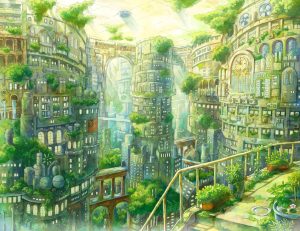 For a long time after the Industrial Revolution, many thinkers believed that automation would lead to us living lives of leisure. Twenty hour work weeks, or even less, and many people wouldn’t need to work at all, but would still live good lives.
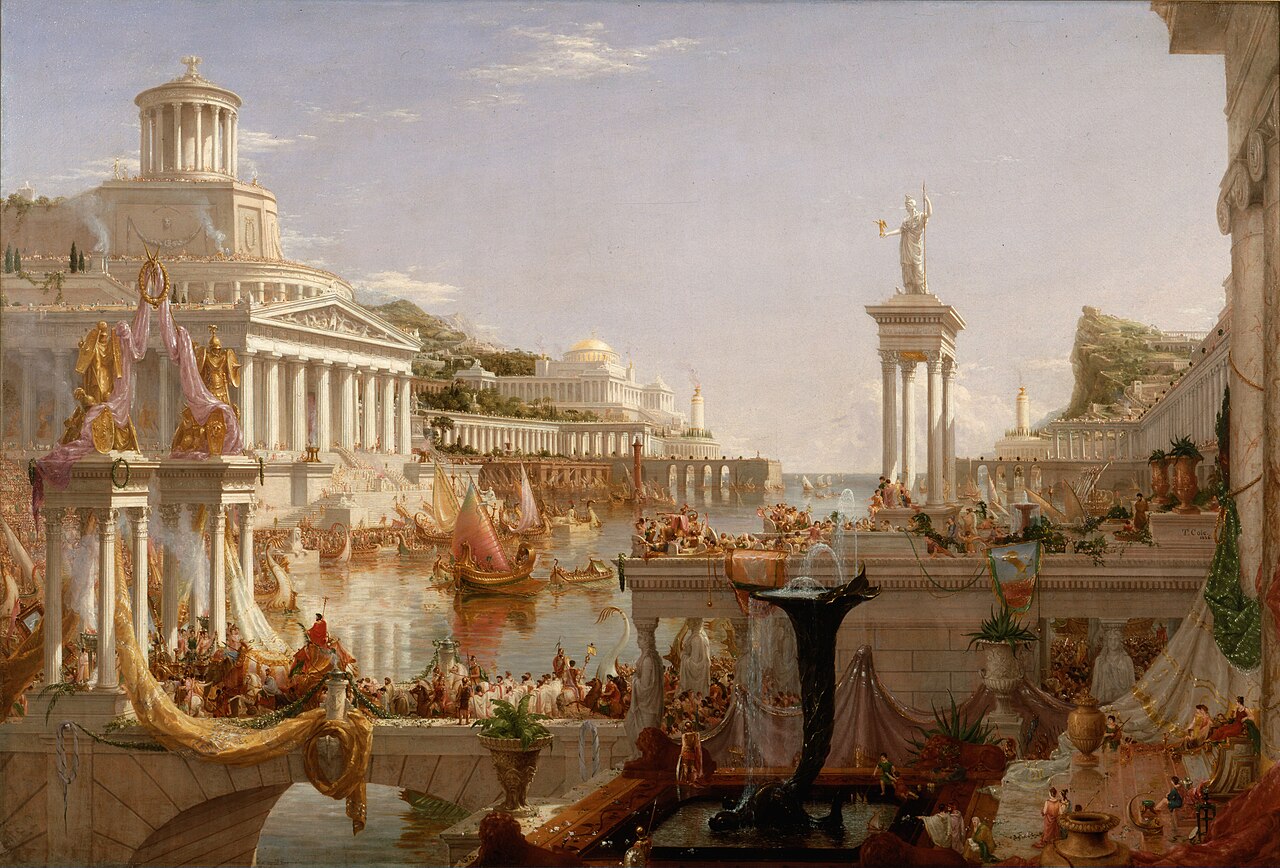 I think it’s clear that democracy and capitalism don’t work together. Capitalists always wind up buying the government, and the only solution is a Great Depression-sized catastrophe to help reset capitalist wealth. But then, over time, they will capture the government again.