The horizon is not so far as we can see, but as far as we can imagine

Category: India

Friday Morning Highlights and Lowlifes

~by Sean Paul Kelley

Couple of random notes this Friday morning, mostly economics related, some silver news and my personal reaction to portions of the discusssion in Ian’s “Is Virtue An Advantage Or Disadvantage For Societies?” post.

First, econonomics. It looks more and more like we are heading into a 2008-style credit crisis/crunch.

Don’t believe me? Well, the FED flooded the US banking system with $18.5 billion to ease liquidity concerns during the week of Feb. 17 because cockroaches be busting out of just about every private equity/credit shop present. And we all know, if you just don’t turn on the lights, you don’t see roaches.

These kind of economic events don’t do what you think they are going to do. Many people assume any economic crisis in the US will lead to a rapid dollar hegemony collapse. But as I explain, the dollar will actually get stronger:

“[W]hen the credit crunch gets a full head of steam it won’t lead to reserve status collapse of the dollar. It will, counter-intuitively, but inexorably pump the dollar higher and stronger as NYC becomes a 2008-like Black Hole for cash allocated dollars world wide desperate to fill potential insolvency holes in banks and shadow-banks/private equity credit boutiques . . . . “

That’s what happened in 2008. As I conclude, “Dollar reserve collpase will be a result of national insolvency, not a global credit-crisis/crunch.”

Basically what End Game Macro is saying in this post is the following: the economy grew little to naught post-COVID to present. It basically did what equity markets sometimes do: trade sideways for years, decades even. For example, after the 2008 Financial Crisis the S&P 500 traded sideways for four years until it broke out in late 2012, early 2013. That’w what the US economy has done since 2020: move sideways, although Biden-inspired over-immigration skewed the growth numbers, as End Game Macro notes:

From 2021 to 2024 the U.S. saw over 11 million arrivals, more than 3 million in 2023, and net migration around 2.4 million per year in 2021 to 2023. That can lift GDP and payrolls while masking weaker per capita momentum. As the surge cools, the masking fades.”

I’m not being anti-immigrant here, I’m just stating the facts. As Trump dug his heels in and unleashed his ICE goons, the econ surge faded, and fast. End Game Macro also notes, a lá 2008 that system-wide credit stress is popping up whack-a-mole like in almost every category:

“As of February 2026 serious delinquency is flashing late cycle strain. Auto loans 5.2 percent, credit cards 12.7 percent, student loans 9.6 percent 90+ days past due with estimates as high as 16.3 percent turning delinquent late 2025, and FHA delinquency 11.52 percent. Job quality also reflects strain.”

And I’m not even going to touch on the downward revisions to US employment except to say we’ve not gained a single job, but actually lost millions. The BLS hints at the size of the disaster in jobs “recovery.”

Last econ note: big move in India just confirms my thesis/argument/assertion that the combined wealth of the West is undergoing a multi-decade transfer back to the East:

For decades, the price of silver in India—the “diamond hands” of the silver world—was dictated by a small group in London and USA. Indian ETFs used the London Bullion Market Association (LBMA) prices, which often had nothing to do with the actual physical demand on the ground in India.

The Move:

On February 26, 2026, SEBI officially announced that starting April 1, 2026, Indian mutual funds and ETFs will no longer rely solely on London’s “AM fixing” prices. Instead, valuation will be based on polled spot prices from recognized domestic exchanges like the MCX.”

That’s one serious high hard one to the Comex and LBMA! This is a big fucking deal.

Next up: war in the Ukraine.

I’ve repeatedly argued that the Ukraine has lost all any and all possibility of regaining strategic initiative, and this reinforces it, way wickedly:

As I have noted ad nauseam for months now: the #Ukraine has lost any chance to sieze the initiative on the battlefield. All the #AFU can do is ineffectively counter-attack like a punch-drunk boxer. Trading lives for time will not work out for #Zelensky in the end and the end is coming sooner than he thinks.

On that note, the Red Cross confirms the Ukrainian to Russian KIA ratio. And it is bloody awful: 34/1. People often tell me that my belief in realism in foreign affairs is deeply immoral. Fuck that shit. International liberal hegemony is 100% at fault for all the deaths in the Ukraine. All. Of. Them. The denizens of Davos are uttely complicit.

In another grim note: Russia is in the initial stages of attacking The Big Banana. For the first time artillery shells are falling down with impunity on the city of Kramatorsk, like rain does on an average Portland Wednesday.

In regards to the conversation on Virtue and especially regarding the 800,000,000 number of Chinese lifted out of poverty. Well, Ian is correct. I did the numbers here back in September.

As regards Chinese leaders being better or worse than those in the West, especially the US: Ian, again is correct. The best way to view the argument is by winnowing it down to two prepositions. The Western view of liberty has its origins in peasant upward mobility in the aftermath of the Black Death and the clash of classes. Ergo: in the West we have the freedom “of” speech, assembly, bear arms, etc. . The Chinese view of liberty derives its origins from a long exigetical tradition of the origins and limits of dignity. In essences, the Chinese see liberty as freedom “from” poverty, warlordism, chaos, illness, crime, rapine, etc. . .  Both views are valid. Both views are limited. But at present the Chinese view of liberty is more effective in increasing the common good than that of the West.

On the posssible, now looking more probable, war with Iran, the US has ordered the evacuation of its embassy in Israel. I don’t know what could make it more obvious, you?

More as it happens.

And more happens. This comment by Ray Dalio reminds me when I was a young broker I read Robert Rubin’s memoirs, In an Uncertain World, and took to heart many of his investment rules, going so far as to write many down on old fashioned white catalog cards–this was before the internet, btw! and memorize what I wrote down. Don’t judge me. I was young and dumb.

Love Rubin or hate him, like James Carville said, when I get resurrected I want to come back as thet bond market. Rubin knew how to invest and make consistent returns. So did Barton Biggs, long time chief investment strategist at my alma mater, Morgan Stanley. Those two men shaped my view of economics, markets and political economy more than anyone or anything else. And yes, I read Jesse Livermore’s memoirs. They did little for me precisely because at his heart Livemore was un-disciplined. And discipline is key to making money.

If you take your own advice you’ll do well. If you’re like me and stayed retarded longer than markets remained illogical, well, you’re fucked. If I’d taken my own advice I’d have a small fortune like a handful of former clients do to this day.

One of my key rules: if you want to get rich, speculate in the stock market, but if you want to be truly wealthy, invest in bonds. In other words, the real wealth, massive cash-flow comes from debt service. That’s just an ugly reality humanity has yet to escape.

Another rule to live by: if an investment goes more than 15% against you, cash out. You can recover from a 15% loss, but a 25% or 30% or even 50%? Not a chance in hell. Ever.

Last rule: if you double your money in an investment, sell half of your gain and let the rest ride. I guarantee you’ll never lose a dime on that investment if you follow that rule.

One last comment on Rubin: he was a ‘careful contrarian’ and being a contrarian has served me very, very well. It’s a painful and lonely place to occupy at times so be prepared to man up. In the end recognize when you feel the least amount of risk is the precise moment of the most risk, the instant before you lose your ass.

Maybe more, maybe not. Time dictates all.

So the muse is a fickle-bitch. This analysis of the transcripts of the Trump-Xi phone calls is brutally and hysterically accurate:

This time it’s particularly funny because the Chinese transcript (fmprc.gov.cn/eng/xw/zyxw/20) has Xi telling Trump: “It is always right to do a good thing, however small, and always wrong to do a bad thing, however small.” This proverb might not sound like much but it’s actually extremely meaningful when you understand the reference.

The reference comes from the Romance of the Three Kingdoms, China’s Illiad and Odyssey plus the Aeneid and a smattering of Dante’s Inferno for good measure. It’s indicative of how urbane and historically literate the Chinese are. And a clear notice that China is what historians, anthropologists and others of such ilk refer to as a “high context” culture: 

China is a High Context culture, a communicated message has different layers of meaning, While America as majority of the West is Low Context. The other culture/language that is High Context is Arabic. To understand the spoken words one need to be deeply rooted in its culture, its history and religious tradition.

Spoken like a true scholar and humble student.

I want the last word. Heh! But seriously, silver trading at the Comex closes the day sharply higher, firmly walking through a wall of resistance at $92, ending the day at $93.06, up 7%. A very bullish closing price for silver. Silver bugs should sleep happy tonight.


Short Take: Modern Infrastucture Miracles

~by Sean Paul Kelley

The Chinese rail network now carries 23 million passengers a day. Multiply that by 365 and it carries 8.365 billion passengers a year. And does not account for the increase in passengers during major holidays.

Now consider these two facts. First, India’s rail network carries 23 million passengers a day also. But it took the Brits and Indians 172 years to build out the network. China did it in under 30 years.

Second: California voted in 2008 to build a high speed rail network between Los Angeles and San Francisco with a completion date of 2022. Operations are projected to start in 2030 now.

Ponder that for a moment and then puke.

The future does not happen in America anymore.

Nota bene: Jan’s comment reminded me of something I saw in China. It was the summer of 2003. After the first big SARs outbreak. I was in far west China trying to get to India. At the time there was zero high speed rail. Understand? Zero. To get to Tibet and then Nepal and finally India I had to travel across Qinghai, starting in Goldmud where I ended up in Lhasa, Tibet.

If you’ll allow an old backpacking traveller a brag, I’d be grateful. At the time, every backpacker I ever met considered the Golmud to Lhasa bus trip the sine qua non of the complete backpacker/traveller. You could not consider yourself a true traveller if you had never made this journey. 40 hours above 10,000 ft. (3,050 meters), often times as high as 14,000 feet (4,267 meters) on a sleeper bus, in which every passenger has altitude sickness of one degree or another. Puke in the aisles. No clean up. Restroom breaks rare, maybe five the entire journey. It is a badge of honor I wear with pride to this day.

Late at night about 24 hours into the journey we drove in to a traffic jam of epic proportions. A crazed, disorganized, enormous traffic jam on a dirt road somewhere between Golmud and Lhasa high up on the Himalayan Plateau. It took an hour to get through. But what I saw mezmerized me like nothing else and I will never forget it. The Chinese, busy at Buddha knows what hour, building a High Speed Rail Link between Golmud and Lhasa, much constructed on damn near permafrost conditions. Look it up if you disbeleive me.

They did it. It’s a first class wonder, the new rail link, complete with oxygen bars, etc. . .

But me, I’m glad I did it the hard way. It has more meaning.

Lamentatio finalis: Our mad rush to adopt technology in every aspect of our lives has robbed us of many beautiful and rare experiences, many of which are gone forever. I’ll leave you with one example. In 2008 I took the ferry from Penang, Malaysia across the Straits of Malacca. It was a leisurely six hour ride from Penang to Medan, Sumatra. While making the crossing I saw just how strategic a waterway it was: the sheer mass of container ships was mind boggling.

When I returned to Malaysia in 2011 specifically to share with my father the experience of the ferry ride acrosss the Straits, the ferry had been shuttered by low cost airlines flying from Penang to Medan. To me that is a loss equivalent to someone torching a Rembrandt in a Dutch museum. Irrevocable. Gone forever.

Four Randon Econonic, Political, Geopolitical and Scientific Musings

First economic: The US dollar is down 5% over the last six months against a basket of currencies. And over the past year, it’s lost 9.6%. The biggest winner against a dollar has been the euro which has gone up 13% however, which truly is a win for Europe because it makes their natural gas imports from the US less expensive. But their natural gas imports are still a poison chalice. Expect the dollar to continue its slide, perhaps precipitously at some point in the New Year.

There were large moves out of US equities in the spring confirming the adage “sell in May and go away.” What September will look like is anyone’s guess, especially as Israel is more than likely to start the second phase of its war against Iran? Or October—that worst of months for Wall Street? What happens if Iran closes the Straits of Hormuz and oil goes above 100 dollars a barrel? That would be great for oil producers, but it would be terrible for markets across the globe, even China, possibly leading to a worldwide recession, especially with Chinese growth being somewhere between 4% and 5% at present.

Regardless of what happens in September or October—both always being bad month’s economically for the US economy, America’s bond market and the value of the dollar will continue its downward trajectory because America’s lenders are now demanding gold for loans instead of treasuries. This smells to me like the beginning of the end of dollar hegemony.

It makes me wonder what kind of “store of value” the BRICS will adopt to support their currency? Will it be a basket of their currencies? Will it be backed by gold and petroleum? That would be truly hard-core, because it would mean we were in for a long era of tight money. Our entire lives, actually, the entire history has been based on easy money. And as you know money creation is only possible when using a fiat currency.

There are many ways to imagine what they’ll do. Maybe blockchain? Who really knows? But there are other commodities that do have a store value, silver among them, maybe even rare earths and others they could use. It certainly is an interesting time to live.

Second domestic political: Niall Ferguson in his interview by Charlie Rose posted a week ago on the Internet was asked about Trump‘s challenges of outright ignoring the constitution with the following question: are we the Roman Republic, is this or are we witnessing the collapse of the constitutional order like the Roman republic. Rose asks if Trump is Augustus. He clearly is not. I would say that Trump is more like Marius and the Kennedys were more like the brothers Gracchi. In fact, I made this argument on a graduate school paper that I got a very good grade on, but in which my professor seriously disagreed with my analogies. Regardless I would say that we are at the beginning of the end of our constitutional order, and that we are looking down the barrel of Caesarism. It’s on the way. Maybe two years, maybe four years but it’s coming. Will it be a general? Will it be a politician? Those are questions we simply can’t answer. But as Ian Welsh has consistently predicted America is heading for a collapse, be it constitutional or economic or both it’s gonna happen and there isn’t anything anyone of us can do about it. Besides, Ferguson, while whip-smart, is kind of a tool.

Third is about some weaknessess the SCO currently must contend with if they are to become the anti-NATO military block. Here they are in no particular order of importance: One, the nations that make up the SCO are too diverse and often times their interests do not align with everyone in the SCO. For example, China and India have serious border issues. Pakistan and India have serious issues in Kashmir. Those are just two examples of several potential conflicts between members of a block, supposedly to oppose NATO. The issues between Pakistan and India make the intra-NATO issues between Greece and Turkey look like a family arguement on Thanksgiving.

Second, as the former director general of Russian international affairs Council said in a recent interview, “ the mandate of the SCO is too general.” The SCO can focus on security, development, or terrorism. Not all three.

Third, China is by far the most powerful member of the SCO and that creates a dangerous asymmetry in the organization. Much like the United States dominated NATO for so long and skewed it’s purpose after the Cold War for its own unfathomable means.

Fourth: This essay on the relative merits of “Superradiance,”.  Is well worth the three minutes it will take to read, plus it is comprehensible to the layman. The essay describes Superradiance as “a collective quantum optical effect in which a group of emitters, such as atoms or molecules, emit light in a highly coherent and amplified manner.  In the context of mammalian neural systems, superradiance occurs when a group of neurons collectively emit photons, resulting in a stronger and more coherent signal compared to individual neuron emissions. This coordinated emission of photons across vast networks of microtubules within neurons could potentially achieve the long-range coherence necessary for the emergence of consciousness.”

The essay stands as a correction of sorts to Sir Roger Penrose’s “Orchestrated objective reduction (Orch OR)” theory of human consciousness, which Wikipedia describes thusly: Orch Or “is a controversial theory postulating that consciousness originates at the quantum level inside neurons (rather than being a product of neural connections).” In short, says Penrose, “Consciousness does not collapse the wave function; instead it is the collapse of the wave function that produces consciousness.”

One thing we do know is that consciouness is decidely not computational and most likely occurs in the quantum realm.

As you can tell, I dig this kind of stuff.

If you’ve read this far, and you’ve read some of my articles and most if not all of Ian’s, then you might wish to Subscribe or donate. Ian has written over 3,500 posts, and the site, and Ian, need the money to keep the shop running. So please, consider it.

A Brief Taxonomy Of Corruption

I was discussing Indian corruption with Sean-Paul the other day, and we had to really break down what we meant by corruption. That lead to a simple classification system, so I’m sharing it with it.

Everyday vs. Elite Corruption

Do you bribe the policeman or the minor bureaucrat to get a permit. Do you grease everyone with even a tiny bit of to get what you want, and it is it expected? Is it essentially required, in the sense that if you don’t consequences are nasty: arrest or or dential, Or at best, whatever you needed done taking forever and being shoddily done.

This is everyday corruption. India is rife with it. America, mostly, doesn’t have it. Russia used to have it, but I’m told by Sean-Paul, that at least in Moscow, it’s now gone.

Elite corruption is when the elites are self-greasing. Whenever anything is done, it is done in a way where somebody rich can take a cut. Contracting to build new infrastructure is where the contracts are inflated is the standard, but there are tons of variations. Most Western nations have this. The US or the UK is probably the worst among major countries. But it exists in Russia and (though much less than before) in China.

Honest vs. Dishonest Corruption

In honest corruption you get what you pay for. In everyday corruption your visa gets stamped, your parking ticket disappears, you get the permit you needed, or city workers show up and connect your new place to power, water and sewage. At the elite level, if if a bridge, or hospital or park or space program was promised, it is delivered on time and on budget. It’s just that the budget includes 10% grease. Some other games may be played. If you know where new facilities will be built you could, say, buy up property that will soon increase in price, then sell once it does.

But bottom line, what is delivered at the end is delivered on time or with minor delays and it works. It’s not shoddy. China during most of the Deng period had a lot of honest elite corruption. Everyone was taking a cut. But they bloody well had to deliver and if they didn’t, they lost their place at the elite table and might even end up in prison or executed. American in the late 19th and early 290th century mostly had honest corruption. Tammany Hall was corrupt, but they also kept their promises. The great railroads and bridges and parks got built, and were generally built well and on time.

Dishonest Corruption Is when you whoever is corrupt doesn’t have to deliver. You pay off the cop and he throws you in jail anyway. You bribe the bureaucrat and he still drags his feet getting you approval, if you get it at all. The first payment is never the last payment, the idea is to drain you of as much as possible.

At the elite level dishonest corruption is that the street or building was promised and funded but somehow either never gets finished or takes twice as long and three times as much and then, once done, it usually turns out to be shoddily built. A new program for veterans/homeless/cancer/whatever is promised, but somehow it’s slow and ineffective and doesn’t do much, but a few people make a lot of money off of it. Promises mean nothing, nothing is delivered on time and what little is delivered is of crap quality. Meanwhile insider trading is everywhere, taxes always go down on the rich and up on the poor and middle class and programs which used to work are slowly degraded into uselessness so that someone can make more money.

This is the US or the UK and Canada and indeed all neoliberal countries. It’s actually more or less the definition of neoliberalism. Effectiveness is nothing and efficiency is really only about how efficient something is at funneling money to the rich. It is also India, which is why India is, despite some progress, still screwed. It’s run by criminals from top to bottom. Ironically, in my experience (which is out of date, I’m happy to be corrected) low level Indian corruption is “honest’ in that you get what you pay for. High level Indian corruption is dishonest as hell. No big project ever works properly, comes in on time and is effective. (This is why I’m still negative on India.)

There’s also a middle corruption, slice for everyone. This is where everyone involved in the project gets some. So the workers get some, the managers get some, and the contractors gets some. Everyone is being greased. This doesn’t mean just having a job, it means being paid better and treated better than at a non corrupt job.

The honest and dishonest versions are as normal. Honest “slice for everyone” corruption still delivers what was promised at reasonable quality. Dishonest “slice fore everyone” doesn’t deliver or delivers absolute crap.

Obviously no corruption is best, but equally obviously honest corruption is better. If you have to have any corruption, then honest elite corruption or honest slice for everyone corruption is best. Low level corruption is always bad, since it means “if you don’t have money, you’re never treated fairly and you can’t break out of the bottom” but if you must have it honest is better than dishonest.

Growing up a lot in what was then called the third world, then observing politics for years all of this has been well known by me, but I never really broke it down properly, it was pretty much “implicit knowledge” as much that we learn young is.

For your reading displeasure.

***

If you’ve read this far, and you read a lot of this site’s articles, you might wish to Subscribe or donate. The site has over over 3,500 posts, and the site, and Ian, take money to run.

India Is Cooked

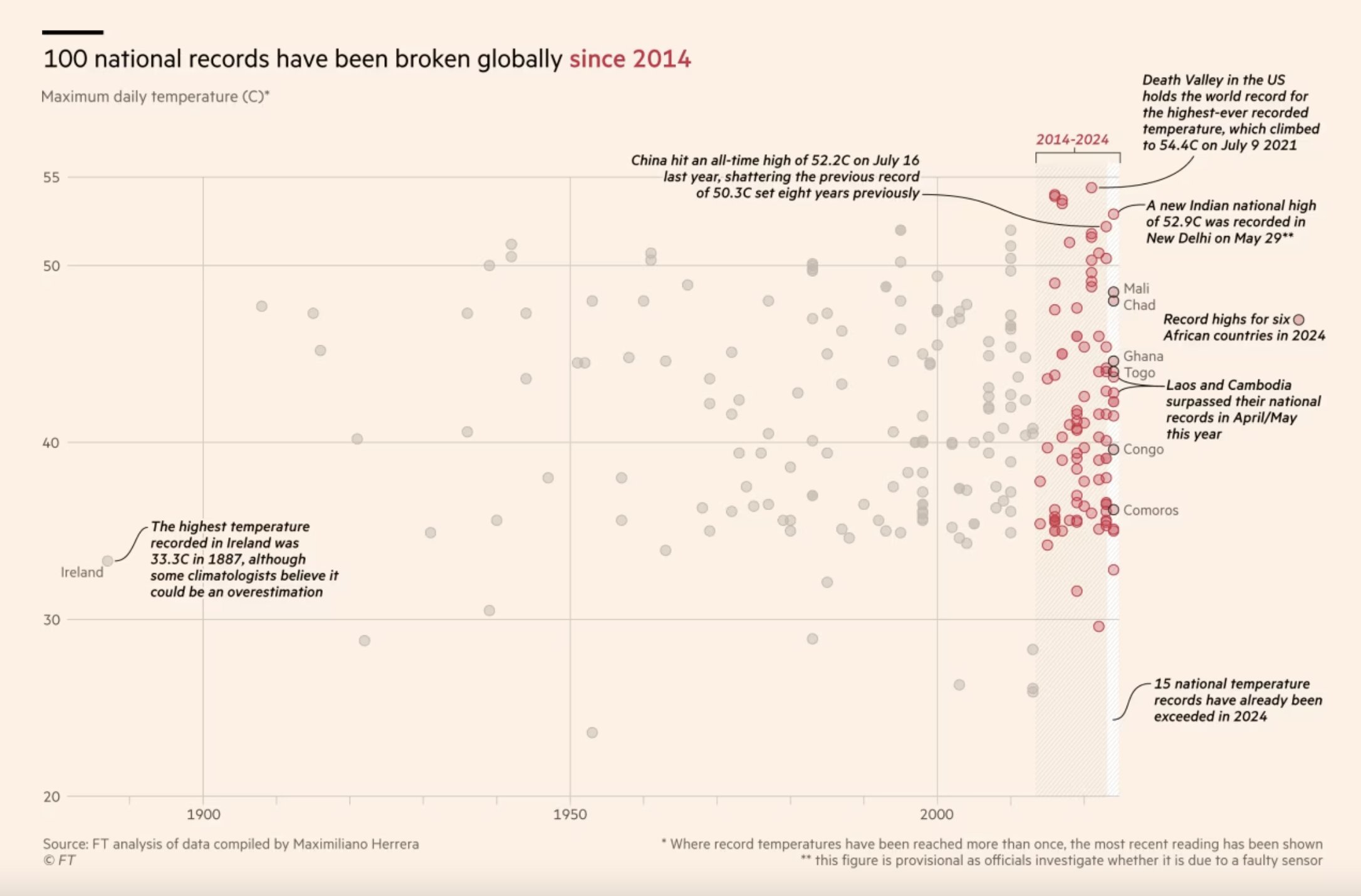
On May 29 New Delhi was 52.9 degrees Celsius (127.2 F), only 1.5 degrees less than the world record from Death Valley.

Records are being set all over the world:

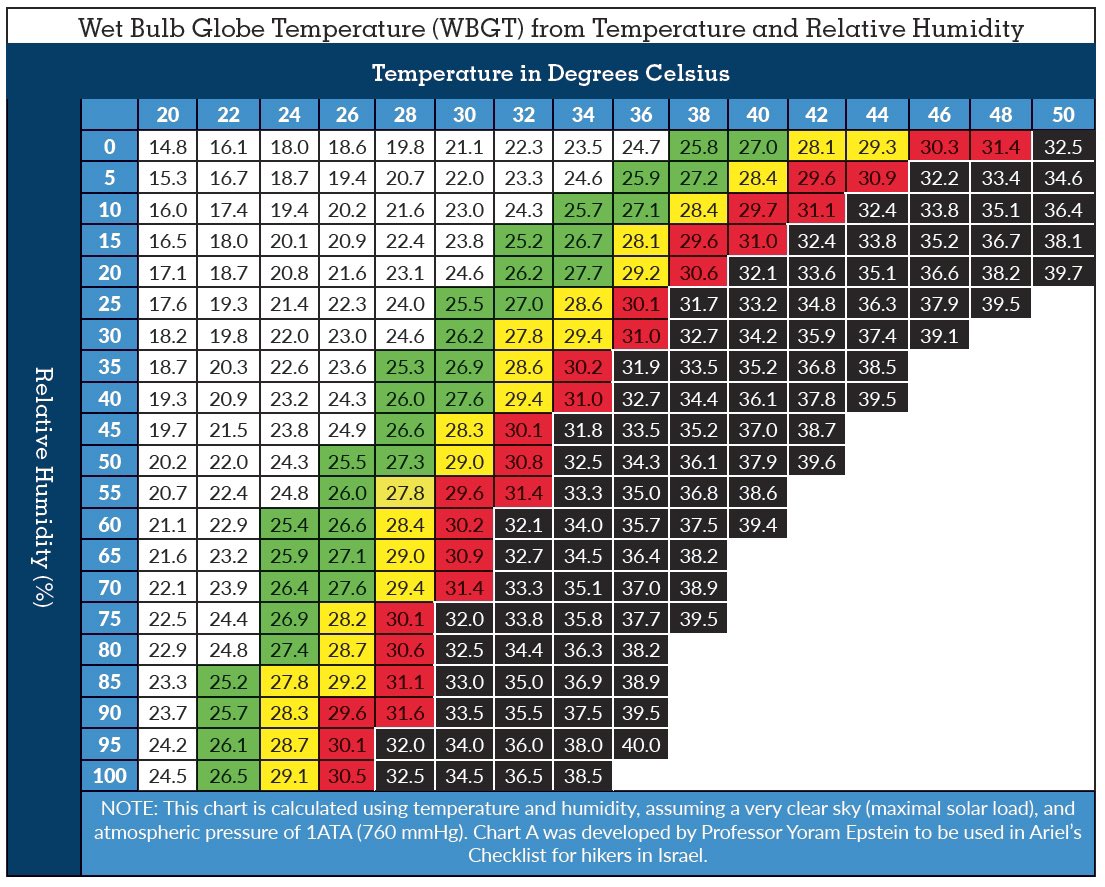
And this is in May, which is, in a way, a good thing, since humidity is relatively low and the wet-bulb temperature wouldn’t have been as high as it would be, in say, August. At a humidity of 66%, people would have been dropping like flies.

I have noted, for many years now, that I do not expect India to survive and that I expect, along the way, large famines and death tolls of at least two to three hundred million.

Temperature is only part of it, but it’s not going to be a small deal. Most of India’s groundwater is contaminated, and while some states are fine, many are over-using groundwater to the extant that farmer suicides because wells drying up are a regular event. As the Himalayas get hotter and glaciers dry up, rivers will first swell then either die or have far less water in them. (The Monsoons, at least, will be stronger in most areas of India.)

The combination of less water, more heat, extreme weather events and unreliable planting seasons means that at some point India’s harvest is going to fail in a big way. If this was a “India only” problem, well, the rest of the world could get India thru, but it isn’t, India’s just one of the most vulnerable countries.

In most famines, there’s enough food, it just isn’t distributed to people who need it, but we are going to have famines where there just, genuinely, isn’t enough food, period and India is very vulnerable to this.

(This is, as an aside, one of the main reasons for the China/Russia alliance. China has great difficulty feeding itself, and Russia has massive food surpluses. China wants and needs to be first in line when food becomes scarce.)

Now there are potential solutions to a lot of this, but India, though ostensibly rich in GDP terms, isn’t rich on the ground and has terrible state capacity. China will be able to implement effective public policy for quite some time. India won’t.

Finally, and I want to return to this, the fact that population replacement rates are falling around the world is GOOD, not bad. We have too many people and are in classic population overshoot. Increasing population is the idiot’s way of increasing GDP. (Canada and Britain, take note.)

So one good piece of news for India is that population is now at replacement and in many states has fallen below replacement. But, it’s a little too late, I fear.

You get what you support. If you like my writing, please SUBSCRIBE OR DONATE


Why Canada Is Having A Diplomatic Crisis With India

A Sikh activist was killed in Canada. The Canadian government claims he was killed by India. Canada’s Prime Minister, Justin Trudeau has made this accusation himself, and the dispute saw an exchange of diplomatic expulsions.

This is the sort of thing that governments tend to wink on, unless they don’t like the other side, so why is Canada making such a big fuss?

Simple enough, Canada has a huge number of Sikh immigrants. They started coming in the 70s, and they’re politically powerful. They’ve done well in Canada (and are well thought of, over all.)

Canada has no significant trade ties to India. Imports and exports as of 2020, were about 20 billion Canadian. That’s peanuts.

So we have no interests that matter with India, and we have a large minority which feels oppressed in India (because they are, especially under Modi.) Sikhs have a long-simmering desire for their own state, as well, and a tradition of violence, so it’s not surprising the Indian government worries about them. Back in 1985 an Air India jet was blown up in the air by Sikh terrorists.

So, fundamentally, what Canada thinks of India doesn’t matter much to India and what India thinks of Canada doesn’t matter much to Canada, but both nations have powerful domestic political reasons to be willing to row.

One man’s terrorist is another man’s freedom-fighter.

This is the same reason that Canada has been so pro-Ukraine. Canada has a huge Ukrainian community, and Russia competes with us: we sell the same things, and we have competing claims in the Arctic.

Again, it’s a domestic issue and what Russia thinks of Canada really doesn’t matter much, nor vice-versa.

(Our dispute with China is far more stupid.)

The Americans are very keen to use India as a counter-weight against China, as is the West in general, which is why Canada hasn’t received much support, but that doesn’t really matter: India isn’t going to make its decision on cooperation with the US based on how much it likes Canada and unlike Turkey pressuring Sweden and Finland on Turkish “terrorists” or they won’t let them into NATO, there’s nothing Canada really needs from India.

All of which is to say, for both India’s Modi and Canada’s Trudeau a fight over Sikhs is a winner domestically, with no serious international consequences, so why not?

Edit: India has stopped visas for Canadians. Canada has two million citizens of Indian descent and sends over 750K tourists to India a year. This is an attempt to put domestic pressure on the Canadian government.

It’s also worth noting that India has a record of killing overseas Sikh activists, though usually in south-east Asian countries. So the allegation isn’t that far fetched.


Folks, it’s your donations and subscriptions which make it possible for me to keep writing (since I need to eat and pay rent and the cost of both have skyrocketed) so please (if you aren’t struggling) DONATE or SUBSCRIBE.

Civilization Ending Long Covid Levels?

So, via everyone’s favorite homnicidal Dalek, a study which finds that 51 percent to 80 percent of people who get Covid (pdf) get Long Covid. Often it’s asymptomatic, but asymptomatic cases still do damage to the body, just like you can have high blood pressure for a long time without knowing it or feeling anything. As the Dalek notes, this is potentially civilization ending now that we’ve decided to let everyone get Covid eventually.

The extra sauce on this idiot doomburger, is that each time you get Covid, you can get Long Covid and there is NO lasting natural or vaccine immunity to Covid. None. And each time you get Covid, any Long Covid you have can make it harder to resist Covid and can make your Long Covid worse.

The old figures for Long Covid ranged from 20 to 30 percent. Even those numbers, given repeated infections and compounding damage, were disastrous. These new numbers are catastrophic. Eventually, if we don’t control Covid (and remember, there have been multiple new variants since BA2) we may literally have billions of disabled people unable to work and needing care.

Probably you’ll know one of them, or be one of them. Probably someone you care about will have Long Covid. Then your government, which after all couldn’t be bothered to control Covid, will decide it costs too much to support them, will cut health care and disability care, and they’ll die. Probably miserably.

Welcome to the future.

Either replace your leaders, at any cost, or you and people you care about (I know most people don’t give a damn about strangers) will get sick, suffer immensely, wind up homeless in many cases, then die miserably.

Also India is having a heat wave in April/May which has spiked over 60 celcius (140f) in some locations, and where 40-50- celcius (104-122F) is routine. We’ll never know how many people it kills (India’s very bad at counting and doesn’t much want to), and on top of that, it’s causing crop failures. Given that we’re already in for a year with less food and higher prices than usual (thanks to the Ukraine war, Western sanctions related to the war, and various problems in China (and certainly other extreme weather events)), a lot of people are going to die from famine in the next year and a half, and there will then be massive political instability, probably including some revolutions and war.

We’ll talk more about this soon.

Your leaders are culling you. Deliberately. They know what they’re doing and they’re okay with it. Are you okay with it? You may not be able to do anything yet, but the first step is to understand, in your gut, that they are a threat to you; enemies of yours.

DONATE OR SUBSCRIBE

India Is Not The Next China

One of the main reasons I took some time to read the smarter members of our international elite was to learn what their assumptions are. The smart ones disagree on the consensus in some places, but what is most interesting to me is where they don’t.

India is one of those places: almost all assume that since China modernized, India’s modernization is inevitable and it will be the next great power.

I don’t see it. India still doesn’t have the necessary government capacity to run the country. Despite the attempt to clean up corruption with demonitization, the civil service is still immensely corrupt, but it is also incompetent. Whatever one thinks of the CCP, they had state capacity; they could make things happen and discipline local elites. The central government in Delhi still mostly lacks the ability to carry out complicated actions in the regions; heck, often enough they can’t even manage the capital region well.

Next, the Indians haven’t taken the right lessons from China. They see that China was involved in global value chains, but they haven’t understood how China used dual currencies and currency restrictions, along with currency purchases to control subsidize exports. They don’t understand, that is, that China’s rise was Mercantalist and not Neo-liberal. Certainly China liberalized certain sectors, but they didn’t neo-liberalize monetary policy and they kept government firms in charge of large amounts of the economy, including much of the banking sector, which they used to direct loans where they wanted. Despite criticisms and problems, this worked.

Chinese liberalization was always within the context of a centrally controlled monetary and fiscal policy, ntended to create the necessary conditions for international competitiveness and to direct capital towards sector the government prioritized. Regional governments were allowed vast latitude to purse centrally chosen goals, but the center did determine the goals and keep an eye on what regional officials were doing.

Third, even if India modernizes faster than I expect, they aren’t beating climate change. India is one of the major countries which will be hit hardest. Crude effects like pure heat increases, potential problems with rainfall, increased extreme weather events, and loss of water from the Himalayas can all be expected to harm India. Since the Indians have also vastly overused their groundwater, they will be hit by serious water issues very early compared to much of the rest of the world.

Then there is Bangladesh, one of the lowest lying countries in the world: it will be one of the first nations to collapse under climate change, and it will send literally tens of millions of mostly Muslim refugees into India.

India isn’t making it. They still only have a small middle class, they regularly have food problems, their government is corrupt and incompetent and they don’t understand how modernization actually happens so they aren’t pursuing the right policies. Ironically they really should sit down with the Chinese and cut a deal through the Belt and Road initiative to be the nation which primarily receives industry China is offshoring but is suitable for India’s stage of development, but tense Chinese/Indian relationships are preventing making an arrangement which would benefit them.

(The Chinese cut deals with America, who they have many historical grievances with, and overlooked America’s primary support for Taiwan, when they needed what America offered. They weren’t over-proud, they did what they had to to get strong first.)

Unless climate change effects happen far slower than I expect (and so far my predictions have been far closer to what’s happening than consensus forecasts, but still slightly optimistic) and the Indian government gets a clue about how the world actually works and manages to actually fix their civil service, there’s no way India makes it before global value chains start collapsing under climate change and having to be re-engineered. At that point India will have so many problems that industrialization will be off the board, and only an extraordinary government and leadership would be able to take advantage of changed circumstances to build up India. Much more likely is government collapse and loss of effective control of huge swathes of the subcontinent as mass famines killing at least 10s of millions of people (and quite possible hundreds of millions) and mass migrations occur.

I wish my analysis indicated otherwise. I’ve spent time in India, I have family who stayed after independence, and I like the Indian people.

But I’m just not seeing it.


(My writing helps pay my rent and buys me food. So please consider subscribing or donating if you like my writing.)

Powered by WordPress & Theme by Anders Norén