Ian Welsh

The horizon is not so far as we can see, but as far as we can imagine

Disney Explains that the Reason Poor Working People Are Poor Is Executives

One of the most extraordinary threads I’ve read recently is Abigail Disney doing the math on how the Disney corporation could raise the income of its bottom tier workers.

The poor are poor because the rich are rich.

Disney was interviewed a while back, and these two questions and answers are germane to this conversation.

In what ways did your dad change, other than having a jet?Actually, having a jet is a really big deal. If I were queen of the world, I would pass a law against private jets, because they enable you to get around a certain reality. You don’t have to go through an airport terminal, you don’t have to interact, you don’t have to be patient, you don’t have to be uncomfortable. These are the things that remind us we’re human…

How did the jet change your dad? It wasn’t just the plane, but it’s not a small thing when you don’t have to be patient or be around other people. It creates this notion that you’re a little bit better than they are. And for the past 40 years, everything in American culture has been reinforcing that belief. We say, ‘Job creators, entrepreneurs, these are the people who make America great.’ So there are people walking around with substantial wealth who think that they have it because they’re better. It’s fundamental to remember that you’re just a member of the human race, like everybody else, and there’s nothing about your money that makes you better than anyone else. If you don’t know that and you have money, it’s the road to hell, no matter how much stuff you have around you…

See, here’s the thing, as I’ve pointed out in the past. Airport security is awful for one simple reason: No one who matters goes through it. They fly on private jets. On the rare occasion those people go first class, well, first class security is far less unpleasant than what the peons go through.

Any problem that does not affect elites, they do not act on, unless they can make money on it. (In which case, their solution is likely to make things worse.)

This is exacerbated by the fact that elites effectively live in bubbles: They don’t have ordinary people as friends. They don’t identify with the middle class or the poor, and if you don’t identify with someone, their pain doesn’t bother you. (This is why, in wartime, the enemy is demonized. It is also why slave owners mostly believed that blacks were were inferior, and subhuman.)

Iger is a bad, even evil man, for the same reason most high-level American executives are. He could easily make his employees lives better and give up nothing that matters (see Disney on what executives would sacrifice) but they don’t do it, because they don’t care about the pain of their “lessers.”

This is a matter of the structure of modern capitalist society, but it is also an affirmative choice by the executive class. In the 50s and 60s these sorts of executive excesses were both illegal and frowned on ethically. It was felt that earning so much more than regular people was actually immoral.

Later generations of executives didn’t see it that way. They felt that “greed was good,” that they “earned it” and that anyone who didn’t earn that much was a loser who was getting what they deserved. If they deserved more, the market would give it to them!

So they worked very hard to change corporate culture, buy government and change laws. For example, stock buy-backs, which are very good for executives with stock-option bonuses, used to be illegal. Then there’s the reduction in top marginal tax rates, the refusal to enforce antitrust laws and on and on.

It took a lot of work, by a couple generations of US executives and other rich people, to get here.

And now they’re rich, and  a lot of Americans are poor. And the reason other Americans are poor is that the rich are so rich. (Yeah, this isn’t the full argument, but the argument is easy enough: Buy the government and have it represent your class interests and everything else follows easily.)

And Bob Iger is evil, though I’m sure he thinks he’s a good person. But a lot of people are poor so he can be rich, and he and his executives could make their employees’ lives a lot better and give up nothing that matters to their own lives. When the situation is “I can help and I won’t even notice it” and you choose not to, well…


The results of the work I do, like this article, are free, but food isn’t, so if you value my work, please DONATE or SUBSCRIBE.


Why Buttigieg Beats Harris and Beto to Be the DNC’s Champion

A lot of the candidates are running to the left in one way or the other, but the party itself is uneasy about that. Party insiders, (which 538 mislabels “activists”), dislike Harris most. Many people thought it would be Beto; charismatic, but policy- and conviction-empty.

But the best centrist candidate is like Obama: Comes from a minority, is charismatic, is not in any way actually left-wing, and is empty enough for people to project their hopes onto. Beto makes three of four; Harris has the problem that she has a terrible record as a prosecutor–i.e. she’s not empty enough for people to project their hopes onto.

Only Buttigiegg checks all four boxes: minority (gay), charismatic, not left-wing and empty enough for people to see what they want in him.

To defeat actual left-wingers the best play is to find someone with a non-white male identity, who wants to win badly and has no radical bones or record at all.

Hail, Buttigiegg, saviour, and soon-to-be favoured son of the DNC.


The results of the work I do, like this article, are free, but food isn’t, so if you value my work, please DONATE or SUBSCRIBE.

Trump Will Leave and Will Not Launch a Coup

I keep seeing this talking point that “Trump will not leave voluntarily.”
How exactly would he stay?

Trump has not taken the steps necessary for a military coup: The man hasn’t even been filling all the vacancies properly. The military will not support him if he tries to stay after losing an election.

Trump doesn’t have the right personality or skill set for this. I’m not one of those who denies Trump all competency: The man stayed rich, slept with beautiful women, and won the US presidency. He’s good at getting what he wants.

But the man who will end US Democracy is not yet in the White House, and it isn’t Trump. He is not organized enough, he does not keep loyal lieutenants and he cannot delegate properly.

Trump will leave when his time is up. If for some reason he tries to stay, he will not have the support to do so.

The US is in the danger zone for a Caesar, no question. It may well happen. It just won’t be Trump.

Wait for the competent, genuinely charismatic authoritarian or demagogue.

Running around spewing nonsense about Trump makes people in “the boy who cried wolf mode,” and when or if the actual threat happens, they will not be taken seriously. Thanks to their spewing, no one may be.

Integrity.


The results of the work I do, like this article, are free, but food isn’t, so if you value my work, please DONATE or SUBSCRIBE.

Week-end Wrap – Political Economy – April 20, 2019

This post is by Tony Wikrent

I have been looking at the work of Cornell University law professor Robert Hockett, who is serving as an economics adviser to Representative Alexandria Occasio-Cortez. I have been delighted to find that Hockett has been working the same angle I have: applying the classical republicanism that informed the creation of USA, to today’s issues of political economy. Hockett’s contribution is the development of the concept of what he calls “the producers’ republic“:

….the United States actually has a distinguished tradition of what I am calling “productive republican” finance. It is a tradition pursuant to which productive assets were deliberately spread broadly among diligent citizens ready to better the lives of themselves, their families, and ultimately their communities through thoughtful, hard work.

Historically, the tradition is rooted in two complementary sources: first, an implicitly opportunity-egalitarian, “productive yeoman” colonial culture and subsequent national self-image, stemming in large measure from the Civic Republican and Classical Liberal ideological origins of the American republic; and second, an attendant suspicion of large aggregations of financial capital, stemming ultimately not only from the inconsistency of such aggregations with equal opportunity and productive yeomanry themselves, but also from many of the Founders’ and their forebears’ personal experiences, as agronomists, with exploitative absentee London banking concerns across the
Atlantic.

This past January, Hockett was a participant in a small conference Money as a Democratic Medium, sponsored by Harvard University’s Program on the Study of Capitalism, Institute for Global Law and Policy:

Money, governance, and public welfare are intimately connected in the modern world. More particularly, the way political communities make money and allocate credit is an essential element of governance. It critically shapes economic processes – channeling liquidity, fueling productivity, and influencing distribution. At the same time, those decisions about money and credit define key political structures, locating in particular hands the authority to mobilize resources, determining access to funds, and delegating power and privileges to private actors and organizations.

Recognizing money and credit as public projects exposes issues of democratic purpose and possibility. In a novel focus, this conference makes those issues central. Scholars, policy makers, and students have often assumed that money and credit emerge from private exchange and entrepreneurial activity. Recent work, by contrast, emphasizes that modern currencies depend on collective orchestration. That approach resets the frame.

One of the participants was Jeffrey Sklansky, professor of history at the University of Illinois at Chicago and author of Sovereign of the Market: The Money Question in Early America (University of Chicago Press, 2017). Sklansky gave a brief but excellent overview of the career of Charles Macune, the head of the Southern Farmers’ Alliance from 1886 to December 1889 and editor of its periodical, the National Economist, until 1892. Macune developed the Sub-Treasury idea to break the stranglehold the big banks and grain trading firms had on finance and credit for agriculture. There is precious little information available on Macune, and Sklansky has earned my deep respect for what he is doing.

Hockett’s presentation is also in this video, as is that of Joseph R. Blasi of the Rutgers School of Management and Labor Relations, “The Citizen’s Share: Reducing Inequality in the 21st Century”

This is only one of about a dozen YouTube videos of the Money as a Democratic Medium conference.

In Having a Stake: Evidence and Implications for Broad-based Employee Stock Ownership and Profit Sharing, Blasi writes about the federally mandated profit sharing the administration of George Washington imposed on the cod fishery to rebuild it, after the British had nearly destroyed it because it trained so many of the officers and sailors in the American navy.

….Jefferson, Washington, and the Congress chose to help the industry get back on its feet by what was essentially a tax cut (in lieu of tariffs paid for supplies coming from outside the U.S.) to the owners and workers of the cod fishery on the condition that the ship owners share the tax credits with all the workers…. they rejected outright subsidies to the wealthy owners who controlled the boats and warehouses on the basis that any government tax credits had to include workers. The law was explicit in its sharing criterion: owners had to share five-eighths of the credit with the crew, and additionally have a signed agreement with the captain and crew for broad-based profit sharing on the entire catch throughout the voyage. The tax credits were administered by the Treasury Department headed by Alexander Hamilton through the port Customs’ Houses. The arrangement helped rejuvenate the industry. Congress continued it for many decades. See The Citizen’s Share: Reducing Inequality in the 21st Century, Joseph R. Blasi, Richard B. Freeman, and Douglas L. Kruse. (New Haven: Yale University Press, 2013), 1-8. See also the Report on the American Fisheries by Secretary of State Jefferson.

[Public Banling Institute 4-20-19]

Thomas Marois, Senior Lecturer in Development Studies at the University of London and recent guest on It’s Our Money with Ellen Brown, argues that until people regain control of money and credit, we will not be able to stop economic and ecological crises.
“There’s really no option. We can’t simply relegate the question of money and finance and credit … We can’t do anything until we have control of money. And to leave that to the private sector is a strategic mistake because then they control that agenda. They control credit. They control access to credit.”

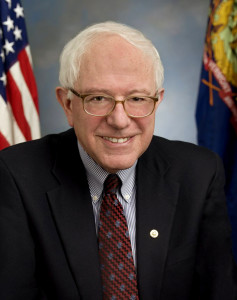
If Non Sanders Democratic Nominees Can’t Convince Voters To Vote For Them Isn’t That Bad?


Sanders-021507-18335- 0004

 In 2008 15% of Clinton primary voters for McCain. They united under the term PUMAs (Party Unity, My Ass.)

Because people seem to have no memory, the nastiness of the 2008 primary has been forgotten. At one point Clinton was pilloried for supposedly suggesting that Obama should be assassinated, for example. (No, she didn’t say anything close to that.)

Anyway, in 2016, 12% of Sanders primary voters voted for Trump, which is, well, less than the 15% of PUMAs voting for McCain.

Now there’s a poll showing that 26% of voters considering Bernie might not vote Democrat if Bernie isn’t the nominee.

This is apparently a bad thing, according to the screeching.

Except, of course, it isn’t.

What it indicates is that Sanders is able to motivate people who wouldn’t necessarily vote Democrat otherwise. In the 2016 primaries the pattern was that, in fact, Sanders tended to win Independents, and Clinton won Democrats.

And all polling showed that Sanders, had he been the nominee, would outperform Clinton against Trump.

Makes sense, doesn’t it, if he’s able to convince non Democrats to vote for him?

On an ethical level, no one owes the Democrats or Republicans or any candidate their vote automatically.

Represent their interests, convince them you do so.

EARN their vote. If non-Bernie candidates can’t do that, perhaps they shouldn’t be the nominee?


The results of the work I do, like this article, are free, but food isn’t, so if you value my work, please DONATE or SUBSCRIBE.

The Most Fundamental Test of Intellectual And Ethical Integrity

… is whether or not someone will argue against their interest.

If you are rich, do you ever argue for high taxes, perhaps? If you are a home owner, do you argue for policies which even the field with renting? If you have a job doing something harmful, do you argue that job shouldn’t exist or be changed to something less harmful.

People who always argue their interest are have no integrity and should not be listened to in public debates.

Of course interest has to be understood properly. One may be in a social group where arguing against apparent interest isn’t actually that. In certain left-wing circles arguing against women’s rights isn’t really against interest, because you’d be a pariah. And there is a reason why women married to right wing men, vote right wing: it’s not actually against their interest.

(These examples don’t mean I approve, they’re just examples.)

A lot of apparent insanity comes from people arguing what their social group believes, even if it’s against hard interest. It’s not in young right wing men’s interest to support climate change denial, but it’s part of what their ideology and group believes, so they do. Incels have some beliefs that make it less likely they’ll get laid or find love with a woman, but, again, changing those beliefs (or at least arguing from them) would leave them ostracized from their group.

A person with integrity has principles, and applies those principles. If one believes all people should be treated with dignity, for example, one might support another group’s rights even if that’s against one’s own interest and even if member’s of one’s own group would be angered by the stand.

Integrity.


The results of the work I do, like this article, are free, but food isn’t, so if you value my work, please DONATE or SUBSCRIBE.


So You Want to Be the Next Silicon Valley? One Thing You Must Not Do.

Recently I’ve been re-reading Peter Hall’s magisterial “Cities in Civilization.” It’s a huge doorstopper of a book, the majority of which is histories of cities’ Golden Ages. Artistic, technological, civic, and so on.

One of the histories is of Silicon Valley.

And if there is anything which is clear from that history it is that Silicon Valley could not exist if California allowed non-competes. Silicon Valley’s history is of people working for one firm, leaving and starting up a new company which directly competed with that firm. Fairchild Semiconductor was famous, or infamous for this, and among its children is the company Intel.

Non-competes are, well, non-competitive. The idea that someone should be locked out from doing what they know best just because it might hurt a previous employer is radically non-capitalistic.

Oh, there’s other stuff, of course. Like a lot of technological golden age cities, SV is a child of government and university. At the key stage of computer development, government was buying about half of all computers, and in effect paying the entire R&D budget of Silicon Valley. Likewise, without Stanford, there is no Silicon Valley.

But the engine that kept Silicon Valley going was that anyone could leave their current employer and start up a firm competing with them.

If your laws allow non-competes, you will not be the next Silicon Valley. Doesn’t mean you can’t be the next, say, Berlin (the core of the electrical revolution), or the next Detroit (er, back when that meant something good), but you won’t have what Silicon Valley did.

I do wonder, myself, if Silicon Valley can survive after having off-shored most of its production. Historically, that doesn’t tend to go very well. At first it doesn’t matter, as when Britain off-shored production to the US, and still produced the majority of new inventions. But eventually there is a drop off. Having the factory where the designers are seems to matter.

Perhaps that’s changed, but real change of fundamentals like that is rare.

We’ll see.


The results of the work I do, like this article, are free, but food isn’t, so if you value my work, please DONATE or SUBSCRIBE.

The Forbidden Truth About Analog Technology

… is that a lot of it was, well, better, than digital technology.

I was remembering, the other day, library card catalogues.

Here’s a truth many will refuse to believe: They were faster to use, easier to use, and provided better results than modern computerized library terminals. You looked up the code for what you wanted, flipped that section of the cards, and not only did you usually find the book you wanted, you found a bunch of other books which were related, whether or not their title sounded like it.

Then you went to that section of the library shelves and found all sorts of books on the subject in which you were interested, along with related subjects.

Then, there were employment centers. They put the cards on walls. You walked in, looked at them, copied down the contact info for any in which you were interested. The process took minutes, especially on any follow up visits, as you’d recognize any old jobs.

When they were replaced by computers, I found the process took at least ten times as long.

Back in the late 90s, I worked on a huge auditing project. Some of the files were computerized, some were still entirely on paper. I can state for a fact that the paper files were faster to audit — about half the time, because I was doing both at the same time.

Having worked on both paper file systems and computer systems, I can say that, in general, paper file systems were faster. Further, each new iteration of computer technology has slowed things down. The old mainframe systems were faster than PCs, and as PC software went through generations, it became less and less efficient. Often this was because managers wanted control: They wanted workers to click buttons and confirm things were done, and enter extraneous information, and use pull down menus, and blah, blah…all things that slowed work down.

Other times, it was because the servers were no longer on site, they were some distance away. I remember when one employer moved the servers to IBM: It may have saved $$ on server costs, but each button click took half a second or so. I actually measured the loss of worker productivity (because management refused to believe it existed). It was about 30 percent and the better the worker, the more it was. The best workers were losing about half their productivity; the system could not keep up with their flying fingers.

Then there are things like answering machines and emails. These are ways for people to interrupt workers and demand they do something — often something “right now.” These interruptions slow workers down, interrupting work flow. Often, if the worker was left alone, whatever problem the caller or emailer wanted dealt with would have been taken care of, but constant interruptions destroy productivity.

That isn’t to say that PCs, the internet, and cell and smart phones never increase productivity. Sometimes they do, usually by allowing remote work, as long as that remote work is not closely supervised. Remote workers are usually more productive if doing skilled work.

The horror show side is where real-time telemetry is used to micromanage workers doing repetitive tasks. Amazon warehouses and call centers are both hell-zones due to this. This certainly improves efficiency, but it turns workers into drones and loses all benefits of worker initiative and innovation. If a manager doesn’t think of it, it doesn’t happen, and even low-ranked managers in these regimes are really just supervisors dancing to an algorithm.

All of this speaks to a dirty secret: With a few exceptions, the allaged productivity gains from the internet and late telecom revolution just haven’t shown up. This revolution is a control revolution. It allows finely-tuned control by bosses and the powers that be. It allows them to have access to fine-grained information that, in the past, required a Stasi-like state, without having to send someone to the basement for the file, and with algos doing the first-wave of sorting and analysis.

Information is what this is good for — information and data.

But information doesn’t want to be free. Information wants to flow uphill to bosses, governments, and spies. Information allows levels of control which are, in effect, totalitarian.

Technologies are not neutral. They are better for some things than for others. And this tech revolution is a revolution whose main effect has been to allow closer control of humans. It is inherently authoritarian.

That’s not all it is — there have certainly been good effects — but it is not a utopian technology which makes everyone better off.

The reverse appears to be true, at least so far. Even in fields like social media (which are surveillance technologies masquerading as public forums), the studies are in, and they are clear: The more you use social media the worse it is for you.

Humans aren’t meant to be surveilled by anyone except their family, friends, and neighbours. Anything beyond that is inhuman and has negative effects on our well-being.

So, we have a technology which mostly hasn’t improved productivity, which is inherently authoritarian and which, the more it is used for certain major tasks, leads to reduced well-being.

Tech revolutions aren’t always good. So far, it looks like this one, on balance, is bad. (And I say this as someone who has personally benefited from this revolution.)


The results of the work I do, like this article, are free, but food isn’t, so if you value my work, please DONATE or SUBSCRIBE.


Page 310 of 532

Powered by WordPress & Theme by Anders Norén