Ian Welsh

The horizon is not so far as we can see, but as far as we can imagine

The Politics You’ve Got

MANDOS POST

Take a look at Joe Biden: He appears to have, for now at least, considerable staying power in the Democratic primary opinion polls (although, of course, this may change as the actual primaries come through). If your model of political psychology can predict a strong core of popular support for Trump without also predicting a strong core of party grassroots support for Biden, you should really rethink it from the ground up. For a core of US voters, the presence of Trump in the White House is an unprecedented emergency and an enormous well of anxiety and real, day-to-day stress.

You can call it Trump Derangement Syndrome or whatever, but the feeling is there, and implicit in this feeling is that Trump is an anomaly, a hiatus in the proper march of American institutions, that should by rights have gone to Clinton, and if not, to one of Trump’s Republican primary competitors. And the advantage of Biden, from this perspective, is precisely that Biden presents an opportunity to force the recalcitrant portions of the Democratic party and, yes, the American left (insofar as it plays electoral politics), to once again choose explicitly whether it will acknowledge and ratify that feeling, or whether it will die on a hill of particular material policies to the neglect of vital institutional decorum.

But for many left-wingers, it seems that even to admit that this is the dynamic is too much to bear. It requires admitting that the Neera Tandens of the world do not merely represent a type of think tank class traitors in cahoots with the rich, but they are actually the genuine grassroots representatives of a large portion of American society, large enough to make a big difference as to who will win the primary and the presidency.

A similar dynamic is taking place in British politics. In its Corbynite incarnation, Labour sits now on the horns of dilemma, or worse: It is perceived as too “Brexity” by enough Remain voters to make a difference, and too “Remainy” for enough Leave voters to make a difference. (As of this writing, the votes for the EU parliament elections haven’t been counted yet, but it is likely that this dynamic will remain stable until any sort of general UK election.) No matter what it does, it is very likely now that the prospect of a truly left-wing prime minister of Britain is galloping off to the distance, when it once felt so close. Let us leave aside the issue of whether Brexit itself is or can be good policy with a good outcome for most people in the abstract; it’s rather fascinating how the Brexit issue is precisely designed to press on the most divisive and ambivalent internal left-wing wounds.

I get the impression from looking at Labour’s representatives online that there exists a core of them who really, desperately wish to change the channel, to austerity and the environment–but especially austerity–but however many “deaths of despair” there may be, that is not the issue. Brexit is. And future policy outcomes, even if not directly related to EU membership, have nevertheless (and for a long time) driven through the underlying cultural cleavage represented by Brexit. Only by choosing a side at the outset, rather than engage in constructive ambiguity (Brexit, but not too much, please), could Labour have avoided the current electoral dilemma and had a shot at dealing with austerity.

A Customs Union is not the issue. How soft or hard the “deal” is–is not the issue. Nationalization is not the issue. How the Eurozone treated Greece is not the issue. Not even Ireland is the issue. Rather, immigration, free movement, and Britain’s self-perception are the issues. That remains true even if austerity and economic breakdown may be one cause of the Brexit phenomenon. The issue is a deep cultural, social cleavage of worldviews.

But who knows? Perhaps information may come to light that disqualifies Joe Biden. Perhaps on a hard Brexit, Remain voters will quickly forget what they protested against, and rejoin the Labour austerity–reversal cause in a Britain hemmed in by closed borders. Perhaps they will do so even before Brexit, giving in to the referendum in the hopes of fighting for…rejoining the EU? Restoring free movement? These seem both risky assumptions at the moment. (Admittedly the former is less risky than the latter!)

So now, what my readers may tell me is that they want to deal with austerity and they want to fight the environmental crisis and save lives and so on. And I agree! But the road to those goals runs through co-operation with parts of society that may have a different listing of priorities. They are always going to exist in some form or another; true, full social unity of purpose will never exist. We’re going to have to find a modus vivendi with those for whom Trump represents a fundamentally-threatening aesthetic emergency (as well as a material one but that seems to be secondary here). And with those for whom Brexit is not a hurdle to be gotten over in pursuit of a more urgent domestic agenda, but rather both a pressing question of material well-being and an even more pressing question of cultural priorities. The alternative is to throw up one’s hands as say, “My way, or the highway to the apocalypse,” that the world is too emotionally decadent to be saved. That, too, is a choice. But not necessarily a good one.

You go with the politics you’ve got, not the politics you want. Some of you might complain that that is simply acquiescence. No, it isn’t–it’s about recognizing first where you are, before you figure out how you’re going to get where you want to be. And folks, you’ve taken too long to figure that out.

The Imperial Presidency and Eterna-War

Constitutionally, only Congress can declare war. Congress has given up that power, and continues to affirm that they have given up their war powers.

The Senate Foreign Relations Committee on Wednesday rejected a Democratic proposal to require congressional approval before the US can take military action against Iran.

Machiavelli has a dictum, “Good laws cannot save bad people; and good people can make bad laws work.”

The US constitution, despite American worship, is a flawed document. But it’s not its flaws that matter, because where it has virtues, such as putting war-powers in the hands of Congress and not the Presidency, Congress has refused to embrace it.

Likewise, as Pelosi twists in the wind, and is taunted by Barr when he refuses Congress’s subpoenas, there is a Congressional remedy: The Sergeant-at-Arms can arrest Barr. It would be constitutionally valid to do so. (And Congress runs DC, and DC has plenty of jails, so yes, there is somewhere to put him.)

The issue is that Congress members and leadership don’t want to use their power. They want an Imperial President. They want war, without the responsibility for it.

The Founders assumed that Congress members would want power and would protect their powers–they didn’t anticipate this debilitating weakness, this cowardice, on the part of Congress.

Bad people can’t even make good laws work.


The results of the work I do, like this article, are free, but food isn’t, so if you value my work, please DONATE or SUBSCRIBE.

Everyone’s Noticed the Oncoming US/China Cold War

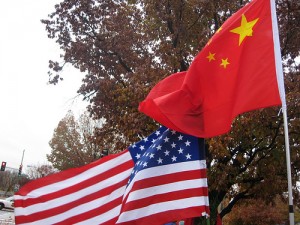
Chinese and American flags flying together

Horowitz calls it a tech cold war, but it is unlikely to stay that way.

Cutting Huawei off from all non-open source Google services, including the Play Store, and not allowing it to buy US components is a huge blow to Huawei.

Huawei is ahead in 5G, and American allies have been reluctant to ban it, but the US can do great damage to China’s tech industry, because in many other ways it is still far behind America’s. (Horwitz is good on this.)

China has ways of retaliating. The most potent is to embargo rare earths. China did this once before and the WTO declared it illegal, but that won’t necessarily stop the Chinese from doing it again. The WTO, which is also under attack by the Trump administration, may not have the teeth necessary to stop the Chinese, especially as the US is scarcely innocent in the tariff escalation.

I’ve been on the Huawei situation for months, because I believed it was the first step in a dangerous escalation between the current hegemonic power and the challenging power.

The best book on the subject is Thucydides Trap, by Graham Allison. Allison also wrote a foreign affairs article on Thucydides Trap. The summary is that in the past 500 years there have been 16 similar challenges. Twelve of them led to war.

America was a particularly aggressive rising power: seizing huge amounts of Mexico, grabbing the Alaskan panhandle under threat of war with Great Britain (who couldn’t afford to move their forces away from the Germans, and so let Teddy Roosevelt, an aggressive asshole in foreign affairs, take it.)

And of course, America terrorized South and Central America, as it still does, while claiming foreign naval forces had no right to be in the Americas (an echo to China’s expansion in the South China Sea most Americans refuse to acknowledge.)

Now that America is the hegemonic power they want to stay the hegemonic power.

The current international order was mostly created when China was weak, recovering from arguably the worst position it had been in for 2,500 years.

The Chinese do not accept the current international order; created by America, with European help, after WWII as legitimate, because it was created almost entirely without their input when they were weak. Indeed, a clear-eyed realpolitik view is that America enforced the order because they were massively strong, then further enforced it after the collapse of the USSR.

Put aside all the bullshit, the Pax Americana, like all Pax’s comes out American force: the barrel of a lot of guns, and the boom of a lot of nukes.

So China is moving to retake what it regards as its rightful place in the world: The greatest nation in the world. America is doing what all hegemonic powers do when an upstart rises: Resisting.

This is not a temporary thing and it is not just a result of Trump. There are real differences, and the pivot to China as the big enemy began under Obama, not Trump. Ironically, the Trans Pacific Partnership (which Trump refused to ratify) was an effort to contain China.

Trump’s addition is a preference for unilateralism. Under mulitalternalism the Americans had found it harder and harder to get their way, as the failure of the Doha round of WTO negotiations showed.

One-on-one America is always greater than anyone else. It always has the advantage. Trump is not wrong about that. So he is using that might to “re-negotiate” with other nations, including China.

Meanwhile the Chinese have been forming their Belt and Road system, which is an alliance and trade organization substitute, meant to form deals 1:1 with other countries, and to create trade links, especially a land-route across Asian to Europe,  which will allow China to bypass America’s stranglehold on naval power, and especially on the Straits of Malacca.

And so on.

Let’s cut to the chase. There will be many tactical and strategic moves, but China is about as economically powerful now as the US. They are currently, overall, a middle income country, but many cities are high income.

Because China has three times the population of the US, if they can move their population to high income, they will have an economy about three times the size of the US.

They will win.

The US should think about that carefully, because if they oppose the Chinese at every point, when China becomes the hegemonic power, the US may find themselves treated badly. The Chinese won’t feel badly about it, at all, given how they feel about how China was treated when it was weak by Europeans and Americans.

The Chinese, meanwhile, should remember that their rise to hegemonic power isn’t certain, and that if it requires great power war in a world with nuclear weapons, that may go very badly for everyone involved.

Neither side, as an aside, are good guys. The Chinese are, domestically, creating a rather nasty authoritarian surveillance state. America domestically is a shit show for many, and it has been far more likely to go to war with other countries than the Chinese have.

In fact, while Chinese actions in the South China Sea are nasty, they are mild by rising hegemonic power standards, and certainly, so far, less nasty than how the US acted when it was the rising power.

A new cold war, with the world dividing into two blocs, would be shitty. A hot war would be worse.

But I’m not at all sure “cooler heads” will prevail. The simple fact is that Americans think they are the indispensable nation, and good people, and therefore have the right to rule the world. Meanwhile the Chinese nurse their own powerful sense of superiority, added to a massive feeling of grievance and ill-use. Nor can the Chinese Communist Party allow economic growth to falter without danger to their own power and legitimacy. If it does, be sure they will focus the anger at foreign enemies.

I’m not sure there’s much point being worked up by all this, mind you. Rising and falling hegemonic powers act like this, that’s just how it is. Most of us don’t have enough power to affect these events. Just be aware of them, and if you have some power, perhaps put your finger on the scale that at least avoids hot war.


The results of the work I do, like this article, are free, but food isn’t, so if you value my work, please DONATE or SUBSCRIBE.


“It Doesn’t Have to Be This Way: The Collected Essays of Ian Welsh”

The book is about how we made choices, as a species, which have led us into a very bad situation; what we can do as individuals to cope with the mess coming down the line, and how to create a society that wouldn’t make such huge mistakes.

In my 2017 fundraiser (there was no 2018 fundraiser), I promised a collection of 16 essays with commentary on each article, and two new essays.

It wasn’t possible to get the full scope of the argument with sixteen articles. I wound up with 31 essays, two long new essays and two shorter introductory and concluding pieces.

The first new essay is on how to create a good, stable government and the second on how to evaluate one’s personal risk during the catastrophes to come. These two essays are not available anywhere but in this collection.

There are two versions.

The PDF version of “It Doesn’t Have to Be This Way” is the definitive version.

An EPUB version of “It Doesn’t Have to Be This Way: The Collected Essays of Ian Welsh” is also available. The formatting is not as clean, so I offer it as an alternative. You will also need an EPUB reader, in a web browser it looks awful.

In the future, there will be a cleaner EPUB version and a Kindle version as well. I’ll let you know when those are available.

Both versions of “It Doesn’t Have to Be This Way” can also be downloaded on the book page. Both are free for now (and will always be free to those who gave during the 2017 fundraiser, or had a subscription then).

In the meantime, I hope you enjoy “It Doesn’t Have to Be This Way.” Even if you’re a long time reader, putting articles in an order that makes sense and reading them as a group with commentary should make the ideas much clearer. Blogs, as wonderful as they can be, tend to atomize ideas and leave out context.

So, please read, enjoy, and let me and others know what you think.


The results of the work I do, like this article, are free, but food isn’t, so if you value my work, please DONATE or SUBSCRIBE.

Week-end Wrap – Political Economy – May 18, 2019

Week-end Wrap – Political Economy – May 18, 2019

This post is by Tony Wikrent

Strategic Political Economy

The Pivot Point

[Craig Murray, via Naked Capitalism 5-17-19]

The massive economic shock following the banking collapse of 2007–8 is the direct cause of the crisis of confidence which is affecting almost all the institutions of western representative democracy. The banking collapse was not a natural event, like a tsunami. It was a direct result of man-made systems and artifices which permitted wealth to be generated and hoarded primarily through multiple financial transactions rather than by the actual production and sale of concrete goods, and which then disproportionately funnelled wealth to those engaged in the mechanics of the transactions.

It was a rotten system, bound to collapse. But unfortunately, it was a system in which the political elite were so financially bound that the consequences of collapse threatened their place in the social order. So collapse was prevented, by the use of the systems of government to effect the largest ever single event transfer of wealth from the poor to the rich in the course of human history. Politicians bailed out the bankers by using the bankers’ own systems, and even permitted the bankers to charge the public for administering their own bailout, and charge massive interest on the money they were giving to themselves. This method meant that the ordinary people did not immediately feel all the pain, but they certainly felt it over the following decade of austerity as the massive burden of public debt that had been loaded on the populace and simply handed to the bankers, crippled the public finances.

The mechanisms of state and corporate propaganda kicked in to ensure that the ordinary people were told that rather than having been robbed, they had been saved.

How Turkey Defied the U.S. and Became a Killer Drone Power
[Intercept, via Naked Capitalism 5-16-19]

Turkey now rivals the U.S. and the U.K. as the world’s most prolific user of killer drones, according to a review by The Intercept of reported lethal drone strikes worldwide. (Other countries that have reportedly killed people with drone-launched weapons include Israel, Iraq, and Iran.) The technology has been used by Turkey against ISIS in Syria and along Turkey’s border with Iraq and Iran, where ever-present Turkish drones have turned the tide in a decades-old counter-insurgency against the Kurdistan Workers’ Party, or PKK.

While the U.S. was the foremost operator of armed, unmanned aerial vehicles (UAVs) in the world for more than a decade, launching the first drone attack in 2001, today more than a dozen countries possess this technology. The U.K., Israel, Pakistan, Saudi Arabia, the UAE, Egypt, Nigeria, and Turkey have all used armed UAVs to kill targets since 2015. Efforts by Washington to control proliferation through restrictions on drone exports have failed to slow down a global race to acquire the technology. Meanwhile, the U.S. has set a precedent of impunity by carrying out hundreds of strikes that have killed civilians over the last decade.

Turkey’s Anka drone showcased during a ceremony at Turkish Aerospace Space Industries Inc., near Ankara on July 16, 2010.

The U.S. Has Been Eclipsed in Every Sphere But War

Glen Ford [Black Agenda Report 5-16-19]

The U.S. 5G eclipse by China is permanent, rooted in the systemic mayhem of the imperial economic (dis)order. Although the U.S. virtually invented the Internet as a byproduct of military technology, the early U.S. global hi-tech lead was squandered in the chaotic and criminally wasteful corporate capitalist game of all-or-nothing. As recounted by the South China Morning Post (“How US went from telecoms leader to 5G also-ran without challenger to China’s Huawei”) the U.S. refused to set national standards for mobile carriers, allowing tech companies to choose between wireless networks like TDMA, CDMA and GSM. Since 1987 — the year Huawei was founded — Europe has mandated that all its wireless systems use the GSM standard. But the Americans allowed U.S. corporations to wager billions of dollars and hundreds of thousands of competing jobs on rival mobile systems. The deregulation of U.S. telecommunications in 1996 further fueled the high-tech capitalist pandemonium. “The US was like the Wild West,” said Thomas J. Lauria, a former AT&T employee, telecoms analyst and author of the book The Fall of Telecom. “Europe managed itself more contiguously than the US, they did not have a lot of disparate networks and picked the [GSM] standard that everyone had to agree to.”

The Sanders-AOC Bill to Cap Interest Rates At 15% Is Too High

Sanders-021507-18335- 0004

All right, let’s get this out of the way: It’s better than the status quo.

But most credit card interest rates are about 20 percent or so, so this is about a five percent decrease.

Twenty percent is already insane. Given that banks have access to money, right now, at a little over 2.5 percent or so and have had it at less than one percent for most of the last ten years, it’s crazy low and would still leave them with a profit of 12.5 percent or so (minus administrative expenses).

That’s way more profit than anyone should earn for just lending money. Heck, it’s way more profit than almost anyone should earn for anything. Healthy economies have profit rates at no more than 5 percent or so, with profits for lending money less than those for actually doing things, a lot less.

So the interest rate cap for credit cards should be linked to the cost of the bank’s borrowing. Feeling generous to banks? Put it at four percent more than the Fed Funds rate. Remember that credit cards also charge merchant fees, which is how they make money off people who always pay their bills in free.

And any legislative act must count fees as part of the interest. Fees + interest charges are the actual interest rate of a card.

Lending money is the best business in the world to be in. Banks and other lenders, as the MMT people like to point out, don’t actually borrow money then lend it out, they create it out of thin air.

Any fool who can’t make a profit with the ability to create money out of thin air and lend it at four percent more than Fed Funds, shouldn’t be in the business–especially when they’re getting a fee for every purchase on the card.

When it’s easier to make money by lending than by doing, as well (which it is now, and has been for about 40 years) you don’t get as much actual new work, companies and innovation, because it’s safer and easier to just lend.

So being generous to banks and shadow banks is a recipe for economic stagnation. It also tends to push money towards the rich, because they are, after all, the people who can lend money (and borrow it cheap).

So, good first step on the part of AOC and Sanders, and it may be all they think it is possible to pass (much like the $15 minimum wage is inadequate and should have automatic yearly increases, but is still a good start), but it’s not enough. Not even close to enough.


The results of the work I do, like this article, are free, but food isn’t, so if you value my work, please DONATE or SUBSCRIBE.


Open Thread

If there are any topics you’d like to discuss that aren’t relevant to recent articles, please do so here.

Deaths of Despair Soar in the UK

But hey, who can imagine why so many Britons were so angry at the status quo that they decided to chance Brexit?

Yes, yes, the EU is mostly not to blame for the misery of Britons. (The EU is still evil, as shown by their treatment of Greece, but that’s neither here nor there.)

Mostly it’s the Conservatives (though Labour, before Corbyn, often voted for Conservative austerity bills).

But when people are hurting, they turn against the current order. People in this much agony are rational like animals caught in traps. If they have to chew off their leg to escape, so be it.

The British have only one real chance, right now, to end the pain. Ending austerity is far more important than Brexit, far more to blame for Britain’s woes, and the only person who will end it is Corbyn.

If you’re British, and you vote against Labour/Corbyn in any riding where Labour can win, no matter what happens around Brexit, you are voting for increased misery (and for policies like taking away wheelchairs from cripples).

What people just don’t seem able to understand is that “more of the same” doesn’t offer any hope for people for whom “more of the same” is so unbearable, they may wind up deciding that killing themselves is better than being alive.

If your life sucks, and you have no hope for the future, you need change, and you’ll take a chance on almost any change.

Sigh.

But British elites demonize Corbyn (lying about him at least three-quarters of the time). Eventually, this is going to turn actually nasty, and, well, guillotine.jpg if they aren’t lucky.


The results of the work I do, like this article, are free, but food isn’t, so if you value my work, please DONATE or SUBSCRIBE.

Page 307 of 532

Powered by WordPress & Theme by Anders Norén