

Ian Welsh

The horizon is not so far as we can see, but as far as we can imagine

How Important Is the Drone Attack on the Saudi Oil Field?

As you’d expect from the title, both more and less than it seems.

The impact on oil prices is not that big a deal, despite the screaming. If they were to, say, wind up at $75/barrel for a few months, well the last time we had prices that high was…less than a year ago. It’s possible this will push us into a long-delayed recession, but if it does, that recession was going to happen anyway.

If Trump acts like an idiot and attacks Iran, of course, this will turn out to be a big deal. Otherwise, it isn’t a big deal, in and of itself.

Nor should anyone be crying for the Saudis. Assume it is true the attack was launched by Yemeni Houthis with some Iranian support. Remember that Saudi Arabia has been bombing and deliberately starving Yemen for years. They’re at war, and if the Houthis have a bit of support from Iran, what of it? Saudi Arabia itself has supported many organizations which have attacked other nations, possibly including Al-Qaeda and 9/11.

If you bomb the shit out of a country, and they manage to get in one hit against you? Boo-hoo.

Nor should the US care, as Saudi Arabia is a terrible ally who has done more harm to American interests than any other “ally” in the world, with the only possible exception of Israel.

This isn’t a US problem–and it shouldn’t be their war, and they should stop helping Saudi Arabia hit Yemen. But I guess the Sauds have always been good to the House of Trump, so perhaps there will be a war, on behalf of Trump hotels.

That aside, as I have written a number of times, drones are, and were always going to be, a weapon of the weak, and it is becoming harder and harder to defend against them. The US military was incredibly stupid to develop them, because ultimately they remove part of the monopoly of force from powerful countries. A world in which air strikes require jets that only a few countries can build, and which are expensive, large, and easy-to-find is a world which is much more favorable to great powers.

Instead, we have the cost of a somewhat-effective air force and assassination force dropping through the floor. Soon, these things will be routinely used by very small governments and non-state actors to kill their enemies; specific, named enemies, just as the US has been doing for a couple decades now.

This is going to get ugly.

It’s not all bad, taken from a longer point of view. Ages where elites can easily be killed tend to concentrate elite minds. In some places, that will lead to even worse police states, but the other way to solve the issue is to make people’s lives pretty good. People with pretty good lives tend to have better things to do than engage in political violence.


The results of the work I do, like this article, are free, but food isn’t, so if you value my work, please DONATE or SUBSCRIBE.

 

Week-end Wrap – Political Economy – September 15, 2019

by Tony Wikrent
Economics Action Group, North Carolina Democratic Party Progressive Caucus

Strategic Political Economy

The Oligarch Threat
Tamsin Shaw, August 27, 2019 [New York Review of Books]

The bigger picture… was the way in which the Cambridge Analytica story opened a window onto a new constellation of international billionaires, corrupt politicians, and war profiteers who were apparently amassing enormous power. That story isn’t only about technology, data, and psychographic profiling; it’s also, at root, a story about the consequences of entrenched economic inequality, the privatization of essential public assets and government functions, including even national security, and the challenge to conventional foreign policy posed by the bargains being struck between international kleptocrats….

In both Britain and America, there exists a class of billionaires who seek to become oligarchs and a corresponding class of government officials who want to become billionaires. Since 2008, when the financial markets’ development of complex and ill-regulated derivatives led to a credit crisis and crash that erased huge sums from the fortunes of the global ultra-rich—with Western tycoons like Rupert Murdoch and Sheldon Adelson, and Russian oligarchs like Oleg Deripaska among the biggest losers—the world’s billionaires have been moving away from a commitment to free markets. Learning from the banking bailouts and the socialization of moral hazard, they have instead embraced an ambition to build lasting monopolies that enjoy both official and unofficial forms of state support.
….
The United States has its own versions of the oligarchs, albeit ones who made their money legally rather than through the criminal enterprises for which many Russians have been indicted by American prosecutors or sanctioned by the federal government. As I’ve previously written, the oligarchs of Silicon Valley managed to establish their extraordinary monopolies—viewed by the state as a form of soft power as well as an essential national security asset in a world of cyber-conflict—only because that entire sector received huge injections of venture-capital funding from the military and intelligence agencies. In this case, too, the astronomical profits are largely untaxed and held off-shore….

This international billionaire class is also establishing and using private intelligence and influence agencies like Cambridge Analytica to help them manipulate national and international politics. It’s well known that the Koch brothers have their own such agency (called i360), but other billionaires have firms whose names we don’t even know. That’s not to say there’s a grand conspiracy of global elites or coordinated centralization of power for mutual advantage. But what these messy conflicting interests do have in common is that they are all working against liberal-democratic institutions. The free-market dream of being liberated from government authority, once an article of faith for the billionaire class, has turned into the oligarchs’ dream of coopting, or even usurping, government authority in pursuit of profit.

….one of the most ambitious of America’s would-be oligarchs, Erik Prince. He is a private military contractor, formerly of Blackwater; his present company, the Frontier Services Group, has backing from the Chinese government and a Hong Kong billionaire named Johnson Ko, the company’s executive director. Prince’s meetings on behalf of the Trump team were arranged by a former Blackwater colleague who is now an adviser to Crown Prince Mohammed bin Zayed al-Nahyan of the United Arab Emirates, George Nader. Nader, who is currently in federal custody in Virginia as an accused child sex trafficker, claims that Prince was sent as an emissary for Trump’s chief strategist, Steve Bannon, to the notorious Seychelles meeting with Dmitriev and Bin Zayed.

  …. Mueller’s main finding, a “sweeping and systematic” campaign of interference by Russia in the 2016 election, has simply reinforced the idea that the United States and Russia are combatants in a fairly traditional form of political warfare. Mueller’s report and testimony had no impact in exposing the multilateral business deals—here involving American, Russian, Saudi, Israeli, Qatari, and Emirati actors—that bypass national interests, official foreign policy, international regulations, electoral laws, and even ordinary market pressures.

[Daily Maverick, via Naked Capitalism 9-12-19]

The UK security services targeted The Guardian after the newspaper started publishing the contents of secret US government documents leaked by National Security Agency contractor Edward Snowden in June 2013.

Snowden’s bombshell revelations continued for months and were the largest-ever leak of classified material covering the NSA and its UK equivalent, the Government Communications Headquarters. They revealed programmes of mass surveillance operated by both agencies.

According to minutes of meetings of the UK’s Defence and Security Media Advisory Committee, the revelations caused alarm in the British security services and Ministry of Defence.

Spontaneous Resistance

Open Thread

As usual, feel free to use the comments to discuss topics unrelated to recent posts.

Brief Notes on the Democratic Primaries

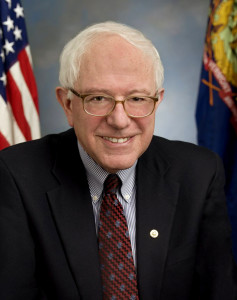
Bernie Sanders

The polling is all over the place, but generally Biden is in first place, with Sanders or Warren in second. In early primary states, it’s generally Biden, but only slightly ahead of Sanders.

The clear truth about Biden is that he’s senile and gaffe-prone. Even if you like his politics (which, obviously, I don’t), this is the case. He’ll be a bad candidate in the general–I think Trump will eat him alive. Yes, Trump is senile also, but Trump is channeling some genuine anger and hatred, whereas Biden is channeling his elite entitlement, along with “Can’t we go back to Obama?” My suspicion is that the first wins.

As for Sanders and Warren, whichever one isn’t doing well in the early primary rounds had better drop out fast and endorse the other, otherwise it’ll be Biden.

All that said, who the hell knows? Things change and perhaps one of Biden’s senior moments will get through to people and they’ll realize that he’s no longer all there.

I prefer Sanders over Warren. Warren wants to save capitalism, she’s been very clear on that. Markets aren’t working well, and she wants to fix them. That’s her raison d’etre, that’s why she was a Republican most of her life, and why she switched her party to Democrat: Republicans were fucking up markets. She’s clearly said, for example, that she wouldn’t nationalize utilities, which is actually an extreme position among market disciples; many would say these are natural monopolies and should be owned by government.

This isn’t to say Sanders is anti-markets. He isn’t going to replace them or any such thing, he’s just a social democrat. He’ll modify them, make them more democratic, put more under public control, and so on.

He also seems the most credible on strongly tackling climate change. One might say that makes him a “must vote.”

As I’ve said before, I trust Sanders more. He’s been very consistent over the years, he’s not going to take oligarchs’ money even after the primary (Warren’s position), and he doesn’t think things were substantially “okay,” even in the 80s. (They weren’t, or we wouldn’t be here.) None of this is to say he’s perfect; he’s bad on some people’s key issues and not great on foreign affairs.

He’s still, in my opinion, better for ordinary people than anyone else, including Warren.


The results of the work I do, like this article, are free, but food isn’t, so if you value my work, please DONATE or SUBSCRIBE.

Remembering 9/11

I was working that day, in an office. Everything ground to a halt, and management gave up and opened an auditorium with a large screen playing the events as they happened.

After it was all clear, I turned to a co-worker and said “Jesus, I hope they don’t attack the wrong people.” He thought the idea was absurd.

Well, we all know how it turned out.

Most of the attackers were Saudi citizens, and it still smells to me like a Saudi operation. Certainly, if any country was going to be attacked, it should have been Saudi Arabia, the source of the poison which has corrupted Islam throughout the world.

As for the US, its soul was always rotten, but after everything Bush Jr. did–his re-election in 2004 was sickening– Americans knew, and enough of them were OK with it.

The US did change after 9/11, however; the Patriot Act was vile, evil, authoritarian, and almost no one voted against it. The war in Iraq was a simple war crime, and every senior person involved in it is guilty of the same crime that most of the Nazis were hung for at Nuremburg. I’d include everyone who voted for the enabling act, myself.

If the 2000 election theft hadn’t happened, 9/11 likely wouldn’t have happened, and even if it had, the aftermath wouldn’t have been as bad. Plus, Gore would have worked on climate change.

It’s all a clusterfuck, and it started with Bush v. Gore and 9/11.

Oh, and Bin Laden won. He got the US to do things that weakened it badly. That’s what he wanted.


The results of the work I do, like this article, are free, but food isn’t, so if you value my work, please DONATE or SUBSCRIBE.


Capitalism Requires Loss of Money and Power

Capitalism existed before widespread limited liability–for instance, the textiles revolution (a.k.a., modern industrial capitalism started before it, even). We’ve been running on forms of capitalism in parts of the world for hundreds of years. There was, in fact, violent opposition to limited liability from some capitalists when it was introduced. They thought it unfair.
 
In this case, of course, one should have very robust bankruptcies — in the sense that people are not destroyed. You keep a house, a car, basic resources. You are not made destitute. (This also means a robust social safety network.)
 
What is desired is simply that failure does not destroy people, so they can try again. It should, however, remove their power — money in excess of what is needed to support themselves. They used that money/power incorrectly, and what capitalism actually requires for correct functioning is that people who fuck up lose the ability to command other people’s labour and resources.
 
To be explicit, all the bankers and all the broker dealers and so on should have lost all their money in 2007/8/9. They fucked up. They put massive resources into the wrong things. This is not “socialist,” this is pure capitalist reasoning. Without people actually losing the resources they have fucked up, it is NOT capitalism.
What is MOST important is that those who made the decisions lose their power and money. If you invested money in something, OR you made the decisions, you must lose a proportional right to make such decisions at such a scale.
 
I find it odd that I continually have to explain Capitalism 101, when I don’t much like capitalism.
 
But the real fix goes beyond limited liability. Most of those bankers should have also wound up in jail and lost all the money they earned during the financial bubble. They had committed mass fraud (no, don’t even, it was my job to cover this stuff, and I have no time to waste on BS) and were liable under the laws as they existed then. A political decision was made to NOT indict them, but rather, to immunize them, which was done by levying fines against them. This decision was made by Obama and his senior officials, and the equivalent in the UK, etc.
 
Dividing this question bewteen government vs. corporations is about 70 percent a category error. They are in bed together; the corporations own the politicians (yes, yes, they do, this is not hyperbole). Right now, any serious fights are between elite factions.
 
Democracy does not operate when you allow these levels of inequality. Capitalism does not run at this level (again, capitalism ended for a large part of the economy when the bailouts happened).
 
Capitalism and Democracy 101. Capitalists must be held accountable, and control of government by other forces, as FDR pointed out, is not democracy. Right now, what we have are the appearances of capitalism and democracy and very little of their substance.
 
That most people defending capitalism or democracy can’t recognize this indicates a particularly bought or propagandized set of intellectuals.

The results of the work I do, like this article, are free, but food isn’t, so if you value my work, please DONATE or SUBSCRIBE.

Britain’s Ongoing Brexit Drama

The situation is as follows: Parliament has passed a law requiring Prime Minister Johnson’s government to seek a three-month extension for Brexit. Johnson no longer commands a majority in Parliament, but MPs have refused to offer an election before November (October 31st is the date of Brexit without an extension.)

Johnson wants an election. He’s riding about 12 points ahead of Labor, though the numbers aren’t enough to guarantee him a majority. He has said he’d rather be dead in a ditch than avoid Brexit and appears to be trying to avoid doing what the law says, with lawyers on both sides preparing for a court case.

There are two principles here.

One: People did ask for Brexit in a referendum. In a democracy, the people’s will should be followed.

Two: Parliament is supreme in a Westminster democracy. Not the Crown, and not the People; but Parliament.

But Parliament has no legitimacy if it doesn’t follow the will of the people.

This is a huge constitutional crisis. The Prime Minister does not have the right to ignore the will of Parliament and saying “But the people!” is not legitimate. What Johnson must do is follow the law, and fight an election after expelling all rebels from the party. If he wins the election with a majority of seats, it is clear he has a mandate and he will be within his rights to Brexit without a deal.

He should not try to hold on to his position as Prime Minister and ignore a law whose intent is clear. If he cannot obey, the honorable thing to do is resign.

Any other route he takes does great damage to either democratic legitimacy or the supremacy of parliament.

If another party wins and can command a majority of Parliament, then they can either negotiate another deal, or do a second referendum (or both), in order to maintain democratic legitimacy. If that second referendum passes Brexit again, however, it should be respected. No democracy can go against the majority of the population repeatedly and remain a democracy. No parliamentary system can tolerate ignoring Parliament’s clear will.


The results of the work I do, like this article, are free, but food isn’t, so if you value my work, please DONATE or SUBSCRIBE.


Week-end Wrap – Political Economy – September 8, 2019

by Tony Wikrent

Economics as Cultural Warfare

A number of articles, stories, and commentaries have begun appearing the past month which indicate a growing understanding the murderous effects of conservative a.k.a. neoliberal economic ideology. Last week, I especially liked the direct, confrontational title of “Why Libertarianism Will Kill Us All”  by Nathan J. Robinson, in Current Affairs. In May, even Bloomberg was forced to acknowledge “Former Boeing Engineers Say Relentless Cost-Cutting Sacrificed Safety” in the 737 Max.

This week the number of articles along these lines merited a new topic subtitle, which I also used to link to an article I posted in March 2019 about the economic ideas of Adam Smith. As the title of a March 2019 article co-authored by Suresh Naidu — author of the post below about Robert Bork –states plainly: Ideas Have Consequences: The Impact of Law and Economics on American Justice. 
 
While I welcome this emerging new clarity about the bloody costs of conservative a.k.a. neoliberal economic ideology, I am troubled that the ideology of republicanism continues to be overlooked as the obvious answer. As I wrote in March 2019 (Liberals and the Left Fail to Notice – and Celebrate – the Intellectual Death of Conservatism), “The actual conception of civic virtue in a republic is by its very nature fundamentally contrary to the basic tenets of capitalism…republicanism will never be in harmony with market capitalism.” Almost all the proposals for reforming the USA economy –including by Senators Elizabeth Warren and Bernie Sanders — amount to the imposition of state regulation without fundamentally addressing the economic beliefs and ideology of elites. This is why I place such importance on the work of Ian Welsh, and why the Business Roundtable’s recent critique of the theory of shareholder value is an important indicator of elites’ thinking. Will elites actually change their thinking? Or are they merely beginning to formulate a response to the growing resistance to the economic ideology they have promoted for the past three quarters of a century to roll back the New Deal? Is it even possible for a leopard to change its spots? 
 

How Economic Decisions Are Made
Ian Welsh, September 5, 2019 [IanWelsh.com]

….money is a social construction, and price signals are not given by God and nature: they are choices. Political choices. That isn’t to deny some physical reality behind them, but that reality has obviously been elided, when in America, the life spans of some demographic groups are dropping while super-yachts and luxury condos are hot to trot.

All systems have to do only one thing: whatever is required to keep the system in power.
That’s all they have to do. Whether or not human welfare is advanced or not; whether or not we care about animals or nature is irrelevant to the raw calculus of power and staying in power, until it effect staying in power.

If the hoi polloi can be kept from revolting or demanding (remember demands are based on “or else,” they are not requests) well then, the powerful will not do anything that does not increase their power or money. They will only care about human welfare outside of their own group if they feel they must, or if, as happens occasionally, they see their group as being something other than the elite group.

Right now elites don’t care about other humans enough to reshape the money and political systems (the same thing, ultimately) to prioritize human welfare, avoid a great-die-off, or stop climate change. This is clear. It is not arguable, it is a fact, based simply on their actions.

THE SCALE OF WHAT WE’RE UP AGAINST: A giant amount of money will be spent trying to convince you to disbelieve obvious truths…
[Current Affairs, via Naked Capitalism 9-6-19]

The Koch version of free-market capitalism, which is the one pushed at the American Enterprise Institute, the Cato Institute, the Heritage Foundation, the Foundation for Economic Education, FreedomWorks, the Hoover Institution, and the Heartland Institute, is a simple creed, one that goes as follows:

I believe that freedom is good and that people should be left to pursue their own ends as they see fit. The market knows best, and government regulation is a misguided attempt to second-guess people’s decisions about their own interest. People and corporations should pursue their self-interest under conditions of freedom, because in a marketplace of voluntary transactions, everyone’s interests will end up being served.

….It’s only when you think for a bit, and work out the implications, that you realize something that sounds perfectly innocuous actually has horrifying implications. What about child labor laws? Oh, well, that’s just the state stepping in to prevent a beneficial transaction between the child and the employer. We’re “taking away opportunity from children,” as libertarian economist Jeffrey Tucker put it in a Foundation for Economics Education article called “Let The Kids Work.” Oh, what about price gouging? Well, you’ll read in the Wall Street Journal that price gouging is Actually Good, because it’s a Mutually Beneficial Transaction between someone in desperate need of a thing and someone willing to part with it.

One of my favorite books for understanding the real nature of free-market capitalism is Walter Block’s Defending the Undefendable. Block, a right-wing libertarian, goes through various different categories of unpopular people, and shows how they are actually heroes performing a public service. Slumlords? They provide houses! Blackmailers? They’re merely offering the service of not disclosing information—would you rather they just released the damaging information? Drug dealers? It’s a product—you don’t have to buy it! Ebenezer Scrooge? He was investing his money and building the economy! Block concludes that these people “do not violate anyone’s rights, so they do not violate basic morality.”

For Block, “respecting property rights” and “basic morality” are identical, meaning that I can be as nasty to you as I want so long as I don’t steal your furniture, and still be an upstanding person. Employers can mistreat employees—by sexually harassing them, belittling them, working them to exhaustion, and they haven’t done anything wrong, because it’s a Free Market Transaction that the employee could theoretically walk away from….

Page 295 of 532

Powered by WordPress & Theme by Anders Norén