
Use comments to discuss topics unrelated to recent posts.
I’ve written about a variety of meditation types over the years. Here’s one of the best.
Imagine that you are hugging a puppy. (Kitten if you prefer.) Imagine your arms holding it against your chest, it’s warmth, it licking your face, and its tail wagging.
Now, just keep imagining holding the puppy, and intend to notice when you are doing something else: when you start thinking or feeling something other than puppy holding.
When you do, pat yourself on the back, pet the puppy, and go back to holding the puppy.
Do this every day, for as long as you want to, or whenever you’re feeling bad and want to feel good.
I assure you, this is a perfectly legitimate meditation that trains three very important meditation abilities.
Plus, puppies!
(The more people subscribe or donate the more I write.)
On Wall Street, they have sayings. One of them is that they “eat what they kill.”
They mean this in a good way — that they earn their money by making the right bets or by landing the big clients. That money is theirs: They went and got it.
Of course, one could see it in another way: All the businesses, Private Equity, for example, has destroyed, buy buying them, paying themselves, loading the businesses up with the debt, and then letting them go under.
They earned that money by killing. ToysRUs for example, which was making a profit until they loaded it up with debt to pay for their takeover and the bonuses they gave themselves.
Or, say, causing the 2008 financial crisis, which had a bill that has to be at least 100 trillion and involved millions of people losing their jobs, homes, livelihoods, and in many cases, lives.
Finance, that is to say, demonstrably does more damage to everyone else than it does good, but it pays very very well, especially now that they own every government, so central banks are willing to print trillions of dollars to socialize their losses, while letting them keep the money they stole.
They don’t even actually win bets: If, in 2008, they had taken their losses, they would have all gone out of business.
It’s just a scam; a matter of brute force. They can print money and borrow money at rates ordinary people will never see and government makes sure they never take real losses and that markets go up no matter what is happening to the economy.
Then, there are the studies that show that the more money someone has, the worse their behaviour — the more sociopathic and less generous. Poorer people give more to charity as a percentage of income or wealth than rich people, which makes sense, as most rich people are rich because they care about money more than anything else.
The simple fact is that people like nurses, teachers, janitors, garbage pick up, farm workers, and factory floor workers are who create most value. On the intellectual and creative side, the designers, engineers, scientists, and other creators are the ones who create value, not the suits. In fact, suits often reduce value: It isn’t engineers and designers who wanted planned obsolesence (19th century engineers fought it bitterly) or to remove the right to repair.
Most financiers don’t even finance creation any more; they finance destruction. Most managers are, at best, a wash, any random person would do about as well and maybe better (management literature shows this clearly, it isn’t in dispute). As for CEOs, higher compensation correlates to worse performance, and during the 40s through the 70s, before the massive rise in CEO compensation, had far more growth than our era. CEOs eat what they kill, is all. They control who gets paid what, so they pay themselves the most. It has nothing to do with merit, except if merit means “you deserve whatever you get.”
“You deserve whatever you get.”
That’s really what we mean by merit, today, isn’t it?
Not, “you contributed to society,” or even, often enough, “you contributed to your organization,” but “whatever you have the power to seize, at whatever cost to anyone else, is what you deserve.”
It’s not even about “whatever you can get legally.” Wall Street’s entire 2000s run was based on extensive fraud, they then, with the help of Obama, stole millions of houses using fradulently signed statements. Wall Street currently makes huge amounts of money by front-running investors, simply paying to get faster access and information.
So much for deserve, as we use it.
My personal take is that there are awards that should definitely be merit based. Medals, titles, and so on. A lot of positions should only go to those who have shown they “deserve” them, though our ideas of what that means are really warped when the entire media weeps about how Hillary Clinton was “the most qualified candidate in history,” when she had displayed both terrible judgment (Iraq, Libya, pushing Trump) and incompetence (losing two campaigns as front runner, bungling Hilary-care.)
But I am heterodox. I don’t like incentives. I don’t think people should get more for doing more, because I think incentives usually warp behaviour in horrible ways.
Instead, in a surplus society, we should just ensure everyone has good quality of what they need: housing, healthcare, food. Take the fear and greed away, and send them to work without the whip of hunger. In such a world, oddly, by not doing what we do now, you’d see some of what orthodox economics says should happen, happen. For example, picking up garbage would be highly paid, because it’s not fun (though it is useful).
Let money buy anything that doesn’t matter: A fancy vacation, a TV so high-definition it looks like reality, a set of five-million thread count sheets so smooth you barely feel them, or an animatronic bear that loves you, really.
Deserve, in a surplus society, is really about FEAR. People who spend their entire lives operating from fear do not create good societies.
No one needs or deserves to be a billionaire (and if anyone ever did, it’s someone like Jonas Salk, not Bill Gates or Jeff Bezos.) Having such people costs far more than money, as Bill Gates has proven by restricting vaccines.
Forget deserve. Give everyone a good life, and see what world people who aren’t scared create.
We’ve tried everything else. Maybe it’s time to try and run a society not based on fear.
(The more people subscribe or donate the more I write.)
From Dr. Robert Tabash, in Bethlehem:
The poorest deserve the best.
I stared, stunned at this for a while, because it’s absolutely 180 degrees from how we do things. To do this would be a complete repudiation of our entire society, and every society of which I am aware.
I stumbled across it in the replies to this tweet, on the same general theme.
One of the oddest but most widely held beliefs among people here on Twitter is that poor people should live in ugly places, and the poorer the uglier. When I make the claim that we should build more beautiful for our poorest, I seem to be making a heretical statement. pic.twitter.com/bDdNpXk9UR
— Wrath Of Gnon (@wrathofgnon) April 30, 2021
It’s hard to say much about this, because it’s almost impossible to imagine a world in which we do this.
Of course, this comes from Christians, and it’s why I have contempt for most modern Christians, especially evangelicals.
Christ was a radical. Unbelievably radical. “As you have done to these, the least of mine…” and telling the rich to sell all their possessions and give them to the poor. Real Christianity, the path of Jesus, not all the crap accreted about Christianity, is perhaps the most radical, and hardest, in the world.
This is why most “Christians” don’t follow Jesus’s clear instructions: Doing so is hard. That’s fine, I don’t either. But I also don’t call myself a Christian.
But put the Christianity aside, if you can, and marvel just in the idea of a world completely topsy turvy to the one in which we live, where those who are poorest; those who are weakest, get the best, because they are the ones who need it most, and we care for each other.
(Writers eat and pay rent, so subscriptions and donations help.)
Strategic Political Economy
“The Free Market is Dead: What Will Replace It?”
[Chris Hughes, Time, via Naked Capitalism Water Cooler 4-27-21]
Significant because it’s Time, of all places.
But corporate America’s newfound support for more public investment is not a temporary phenomenon. We are witnessing the most profound realignment in American political economy in nearly forty years. President Ronald Reagan summed up the conventional wisdom that reigned from the mid-1970s onward in the United States: “Government is not the solution to our problem, government is the problem.” Economists, policymakers, and everyday Americans alike generally accepted that markets, unfettered and free, are the best way to create economic growth…. That ideology began to crack after the Great Recession, and in the wake of the coronavirus pandemic, it has collapsed. The rise of ethno-nationalism on the right and democratic socialism on the left testify to the growing disillusionment with the conventional wisdom of how government and economics are supposed to work. It’s not just the fringes questioning free market orthodoxy in a time of disease. Cross-partisan supermajorities of Americans want some of the biggest companies of America to be broken up, significantly higher minimum wages, a wealth tax on billionaires, and believe significantly more public investment is required to create economic growth. We have had regulations, public investment, and macroeconomic management to varying degrees throughout American history. What makes this moment different is that Americans across parties, class, and educational background are using a new framework to think about how we create prosperity.”
“What’s behind the growth slump? Takeaways from census data”
[Associated Press, via The Big Picture 4-28-2021]
“The U.S. population grew to 331 million, a 7.4% growth rate from the last time the Census Bureau counted every person in the country, in 2010. Those may sound like big numbers, but it’s actually the second slowest rate of population growth the census has ever recorded, just behind the 7.3% growth in the 1930s. That decade’s slowed growth was rooted in the Great Depression. Our past decade’s sluggish rate had similar beginnings in the long shadow of the Great Recession. The drawn-out recovery saw many young adults struggling to enter the job market, delaying marriage and starting a family. That dealt a blow to the nation’s birthrate. Then the pandemic hit last year and made matters worse. But while U.S. population growth recovered after the Great Depression, demographers are not optimistic it will pick up anytime soon. Most forecast even slower population growth in the decades to come. Americans are getting older — the median age in the U.S. is 38, up one year from 37 in 2010. Immigration had been dropping even before the pandemic effectively shut it down. And many Republicans have largely turned against the idea of immigration, legal or illegal, a new political barrier to the country adding more population quickly. ‘Unlike the Great Depression, it’s part of a process where we’re likely to keep having slow growth,’ said William Frey, a demographer at the Brookings Institution in Washington, D.C. That has potentially grim consequences for the nation’s future.”
“…we’re likely to keep having slow growth…” Why? Just because population growth slows down? What most people do not realize is that a transition to an economy free of fossil fuel dependencies — if done in time to meet the challenges of climate change — will require some of the fastest economic growth in recorded human history. What do you think it’s going to look like as we replace the 1.5 billion motor vehicles in the world with electric vehicles? Do you want to do that over 30 or 10 years, or over the next ten? Or sooner? In fact, the faster the growth, the faster will we be changing the economy to meet the challenge of climate change. Frey is obviously stuck in a old paradigm of economic thinking. A huge challenge is going to be to managing world-wide economic growth rates of ten to fifteen percent for about 15 or 20 years, then transitioning to near zero-growth rates after the world’s economy and transportation systems have been rebuilt on a carbon free basis.
How Humanity Gave Itself an Extra Life
[New York Times, via The Big Picture 5-1-2021]
Use the comments to discuss topic unrelated to recent posts.
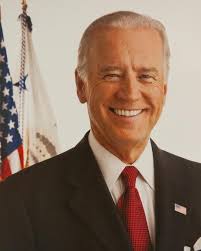 Biden’s turning out better than I expected on domestic economic issues, though that isn’t a high bar. This speech (full transcript) is very interesting, though the question of how much he can get through Congress remains. My telegraphic thoughts on reading it.
The IMF predicting six percent growth isn’t that impressive, just because after Covid there was always going to be a boom.
Getting rid of all lead pipes is really good and has needed to be done for decades.
Getting high-speed internet to every home is good. Hope there’s some price controls in there, because the ISPs definitely rip people off (I’ve seen profit numbers as high as 97 percent.) They also need to be sure it actually gets built; money has been given to providers to build before, and they haven’t bothered.
Upgrading the power grid is absolutely necessary. We’ll see what the details are. It needs to be done in a way that forces proper maintainance. PG&E has let literally thousands of fires happen because they’d rather pay dividends than fix their infrastructure.
The green plan is pretty good. Insufficient, but better than anyone else has done. Half a million charge stations, more energy efficient buildings, planting over crops and some industrial policy to create green machinery in the US. Someone has finally got it through their thick skull that most of the jobs required in upgrading buildings and so on can’t be offshored and outsourced, something I and others have been arguing for decades. Happy about this.
Some stuff about $15/minimum. Doubt Manchin will let it through, but if I were Biden, I’d use it as a cudgel for 2022 to get a majority he can use. Really, even $15 is stupid. It should be about $22 and indexed, ideally to the increase in CEO compensation.
A lot more money for research. Excellent.
Universal pre-school. I think it’s a terrible idea, but I know most experts disagree. Have to take the kids from the parents and soon as possible and train them to be obedient workers.
Two years of free community college; give workers slightly better, but non-elite jobs.
Some ACA fixes, none of which will make it good or people not hate it, because insurance companies controlling what you can get and whether it gets paid for is always going to suck.
Allowing Medicare to negotiate drug prices. See if Congress lets it through, but a good thing.
Top bracket for those earning 400K or more up to 39.6 percent. No way Machin lets this through, but a good market for a start. It should be 90 percent, of course.
The fixes to capital gains are great, and something America (and most other countries) have needed for ages. Taxing capital gains less than income was always ridiculous and unfair.
Lots of red meat rhetoric against CEOs and execs. Nice.
China cold war still on: China must play by American rules, and the US military will stay in the East. (More on this in future pieces, this is important.)
Red meat on Russia. Self congratulation on Afghanistan (earned, but continuing drone bombing it is bad.)
Gun control talk: wants the loopholes closed and background checks on everyone (I doubt this can get past Congress. If it does, the Supremes will veto it.)
Immigration: don’t blame me, I sent a bill and Congress won’t pass it. Also we should help nations where we’re getting a lot of refugees from so they don’t need to flee to us.
Call back to FDR. They clearly want to make Biden the next FDR. He ain’t that, but domestically he’s the start of the end of neoliberalism, perhaps, and if so, that’s enough and more than I expected. None of this stuff is exactly radical, or sufficient BUT it is a reversal of trend, and that matters.
(Writers need dental care, so subscriptions and donations help.)
When I was a teenager I read The Club of Rome’s “Limits To Growth.” The Club ran consumption, pollution and population numbers thru some simple models to see what would happen. The model misses climate change, so we’re worse off than they expect (much worse off) and some other factors, but the stuff it models has been coming in approximately as expected.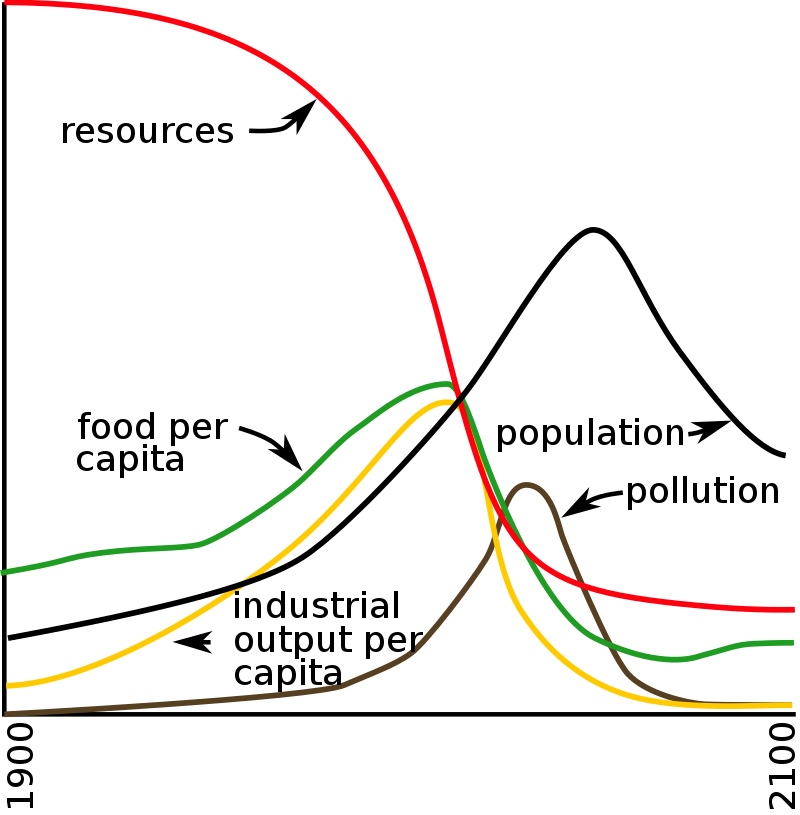
The standard model of progress, often assailed by thinkers like John Michael Greer, assumes that there aren’t significant limits to growth that we can’t substitute out of. Run out of oil? Switch to solar? Run out lithium, figure out another way to make batteries? Run out of water, mass-desalinization? Run out of soil, make soil or grow plankton in water. Run out of fish? Fish farms.
Etc…
But the people who created the model, who championed it, aren’t as optimistic and stupid as their opponents often indicate: the standard future model of people who believe in progress requires space exploitation precisely because we can’t assume we can always find a substitute on Earth for what we lack.
If you want, in other words, to keep GROWTH you must exploit space. Send out the space miners! Harvest solar above the atmosphere. Explore, exploit, grow!
You don’t necessarily have to colonize space in any meaningful way to do this, though the earlier imagineers thought we would: this can be done by robots and telepresence mostly, with a very few actual humans in space.
Note that this side-cuts most of the standard complaints about space colonization: other planets nearby all suck, and are worse for life than Earth (even shitty places on Earth like Antarctica) and space itself is full of deadly radiation and other problems we don’t know how to fully mitigate.
Doesn’t matter if you’re just sending out robots to get stuff (lithium, say) and bring it back.
BUT none of this matters in a larger sense because the real problem isn’t running out of lithium or copper or helium or any other simple substance like that.
It’s destroying the biosphere, climate and ecosphere
Earth’s true wealth is an intricate web of life, from creatures simpler than bacteria all the way up to blue whales, including plants and fungi and insects and a wild variety of creatures we don’t understand or haven’t even discovered.
That, along with Earth’s climate, is what you can only get on Earth, at least within the solar system. That’s what we’re destroying.
So… space exploitation? Why not. It may help deal with some bottlenecks. But it still won’t let us continue GROWTH and the standard progress model, because the real limit to growth is simply that if we go past the Earth’s carrying capacity — which I will say, despite some disagreeing with me — we unequivocally have, we then start destroying that carrying capacity and all the things we must have that only Earth supplies.
Earth is the Jewel, the most important place in the universe for humans, right now. We cannot do without it and what is important about it is not copper or lithium, it is precisely climate and LIFE (ecosystems). Our destruction of those two things is what makes the standard model of progress impossible.
We’ve got a limited resource, created by processes of evolution which take millions of years to work. We are so ignorant we cannot even create a self-sustaining biosphere; we cannot fix what we are breaking.
Anyone and any system destroying the Earth’s climate and ecosphere is thus, then, doing the greatest wrong possible for the future of humanity, and of much life on Earth. Our mass genocide of other species is a slow form of strangling ourselves.
Space can help, but it won’t get us around the real issues. Only true respect for the genuine non-renewable resources we MUST have and which exist only on Earth can create a positive future for humanity and for all the species we have held hostage and not yet murdered, who are unfortunate enough to be trapped on Earth with us.
(Writers need dental care, so subscriptions and donations help.)