The horizon is not so far as we can see, but as far as we can imagine

Category: Electoral Politics Page 15 of 30

The CIA Lies and So Does Putin

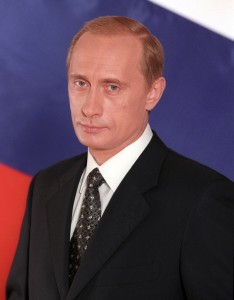
Vladimir Putin Official Portrait

Vladimir Putin

So, Trump said he believed Putin when Putin said he did not meddle in the US election. He was criticized for it, because the American intelligence community says otherwise. He backed down.

Newsflash: The CIA has the track record of a pathological liar. Putin lies as well.

Maybe the best thing to do is disbelieve both, and make up your own mind based on the evidence (which, by the way, is far weaker than the news articles, which assert but do not prove, would suggest.)

The CIA and the rest of the US intelligence establishment are not due benefit of the doubt.


The results of the work I do, like this article, are free, but food isn’t, so if you value my work, please DONATE or SUBSCRIBE.

Obama’s Responsibility for Clinton’s Purchase of the DNC

So, it is now beyond question that the DNC was quite literally working for Clinton during the primaries. The party was 24 million dollars in debt, thanks to Obama, and Clinton paid off those debts in exchange for control of the DNC.

Brazile discovered that an explicit written agreement had been made between the Clinton campaign and the DNC, which:

“…specified that in exchange for raising money and investing in the DNC, Hillary would control the party’s finances, strategy, and all the money raised. Her campaign had the right of refusal of who would be the party communications director, and it would make final decisions on all the other staff. The DNC also was required to consult with the campaign about all other staffing, budgeting, data, analytics, and mailings.”

But the part that many people aren’t highlighting is that Obama is responsible for this. He was a terrible party leader. He could easily have raised 24 million and chose not to do so. Under his watch the party lost 1,000 state level seats and is in danger of losing control of so many states that Republicans could pass constitutional amendments.

Obama just didn’t care. He wanted to be President and left a wasteland behind him.


The results of the work I do, like this article, are free, but food isn’t, so if you value my work, please DONATE or SUBSCRIBE.

A Note on Kulturkampf and the German Elections

(USUAL DISCLAIMER: By Mandos)

I haven’t written much about tomorrow’s German elections because from an immediate geopolitical standpoint, they don’t necessarily mean that much. Merkel will remain in power most likely, although the coalition math may not work out so easily or comfortably, with the worst case scenario being a return to elections. The constellation of parties that form the coalition are likely to be ones even more hostile to Greece and to reform in favour of southern European economies. This is partly because Merkel’s party itself has done its utmost to project the idea into the German consciousness that the problem with southern economies is not liquidity but rather corruption and inflexible employment laws (keep in mind that German employment law is itself much, much less flexible than that of any developed English-speaking country, as far as I know).

One remarkable feature of this election is the very likely entry of the Alternative für Deutschland (AfD; “Alternative for Germany”) party into the German parliament. This will be the first time in a long time that an openly national-exclusionary party will be represented in the Bundestag, and it is very likely a result of the same forces that kept Merkel in power. Remember that most non-German commentators were thinking of Merkel’s refugee stopgap (it was never a genuine, willing opening regardless of propaganda — but rather a way to deal with an emergency that European treaties had not foreseen) as political suicide, because most non-German commentators don’t read German and have less familiarity with German political culture than they do the far more legible (to anglophones) French political culture, for example.

In reality, Merkel’s choices in the refugee crisis cemented her popularity with a large portion of the German electorate while deeply alienating another portion, roughly corresponding to the old West/East divide that a lot of Germans like to pretend has been magically overcome. Overall, Merkel is seen as having made a difficult decision to deal with the immediate situation caused largely by the collapse of Syria, and then to make a series of complex, morally complicated decisions to stem the flow with minimal direct use of German or EU-based force, such as the Turkey deal and the more recent Libya deal. Especially in the time of Donald Trump, Merkel revealed qualities that a lot of the German electorate values — being capable of making “Solomonic” decisions that preserve key German interests, most importantly the external trade surplus and internal banking stability, while even managing to help a few people and keeping German hands at least cosmetically clean.

As for the alienated portion of the population (link in German), some of whom are now willing to vote for a party that more than hints that it wants to take back German regret for the Holocaust (via carefully chosen code words of course), they presently confirm what we know about present-day right-wing populism, and are therefore more “legible” to analysis along the lines of other countries than the rest of the German political spectrum. For one thing, they are largely not in relative terms poor or unemployed, although they may feel more precarious than before. The German SPD, another social-democratic European party in crisis, attempted to run a traditional campaign based on redistribution and better social services and does not appear to have made much headway against the AfD, because AfD voters are not concerned about this. Rather, they are focused on the belief that they would be even better off if there weren’t any refugees, and they largely belong to the part of the population that expects to have control over the racial and cultural composition of their neighbourhood and has a deep-seated emotional preference for homogeneity, which they justify post hoc.

Assuming poll results are true, one challenge for the stability German society with regards to forces like the AfD will be to find a way to politically cordon off this persistent segment of voters from most forms of political influence, a challenge assisted by Germany’s proportional representation system, as well as to deal with the real challenges of immigrant economic integration posted by recent and on-going geopolitical events. That, of course, in addition to the upcoming difficulty in squaring the circle of a trade surplus inside the Eurozone without fiscal transfers, which is a whole other story and will rear its ugly head doubtless in the next and future Bundestag mandates.

The Hung UK Parliament

The final results are 318 for the Conservatives, 262 for Labour, 35 for the SNP (Scottish), 12 for the Liberal Democrats, 10 for DUP (Democratic Unionist) and 13 “Other.”

There are 650 seats total, meaning 326 are needed for a majority.

DUP is who the Conservatives will govern with, and they are the Protestant Unionists in Northern Ireland. Not very nice people and associated with violence carried out on behalf of staying in the UK.

Labour will not be forming the government, odds are, but this is a victory for Labour in that the Conservatives’ majority is reduced to a minority.

72 percent of 18-24 year olds voted, which is unprecedented to my knowledge.

The takeaway is simple: Left-wing neoliberalism is dying (and with luck is dead), in England. A straight up message of nationalizing railroads and energy, of free tuition, of building homes, did far better than the neoliberals have done in years.

This was a two party election–third parties shed followers.

Corbyn outperformed massively, which is the risk of demonizing one’s enemies. Having screamed about how terrible he was, Blairites are reduced to saying, “Anyone else would have done better, May was awful.” After they’ve lost two elections to Corbyn and been wrong about him three times, this sounds weak.

Center-right parties are dying or reinventing themselves. There is no appetite for mealy-mouthed neoliberalism. Go all right, or go what passes these days for hard-left. The demographics are 100 percent on the left’s side: The younger people are, the more left-wing they are, and now, they’re even voting when offered politics which appeal to them.

I mean, given the university loans crisis, it seems like basic, no-brainer politics to offer them debt-forgiveness and free tuition.

In more immediate terms, the question is whether May will survive. Boris Johnson is likely sharpening his knife collection as we speak: She didn’t have to call this election and she lost her majority in it, after a terrible personal performance in which she appeared scared to be in the same room as Corbyn.

The second issue is when the next election will be. Is a coalition with the DUP in the works? Is it a strong coalition? It wouldn’t take much for the Conservatives to lose a vote of no-confidence and be back at the polling booths, though other parties will be reluctant to knock them out–and with good reason, fearing that Britons will punish them for having to go back to the polls so immediately.

A new election may be necessary, soon, and accepted as such, if the Conservatives find themselves unable to effectively negotiate Brexit.

I shall be interested to see if Labour MPs, who still hate Corbyn, launch another attack. There have been gestures of peace, but many will never give Corbyn credit for anything, and genuinely do disagree with his politics. I assume, however, that they will at least wait a while, while continuing to snipe and leak in hopes of weakening him.

We shall see.

Overall, I’m very happy with this result. I expect(ed) the realignment to take till 2020/24 for demographic reasons, but this is an early earthquake sign of better politics to come.


The results of the work I do, like this article, are free, but food isn’t, so if you value my work, please DONATE or SUBSCRIBE.

The Labour Surge in Britain (Election Day Thread)

Update 2: Betting markets now think Corbyn will be PM. I cannot, in my entire life, recall an election I have been so happy to watch.

Update: Exit polls point to a hung parliament, Tories with the most seats, which means they’ll be given the first chance to form a government. But we’ll see.

Leaving this up on election day. Anecdotally, more young people are voting than usual. We’ll see. Corbyn’s probably the best candidate I’ve seen in my adult life and I’m hoping he wins. Use this is a thread related to the election.

So, Brits vote on Thursday for a new government. When the election was called, the Conservatives under May were up over Labour by more than 20 percent in most polls. Today, the spread has tightened, with Labour behind in most polls–but not all.

As was the case in the US with Sanders v. Clinton, the divide is generational. Those aged under 44 are for Corbyn and aged over 44 are for May. The younger they get, the more they’re for Corbyn. The problem, as everyone has pointed out, is turnout: Youngs tend to vote less.

Even the best polling doesn’t show a straight up Labour victory, it shows the Tories failing to get a majority. Polls in Britain have tended to be wrong away from Conservatives, but, given how unreliable polls have been over the past few years, I certainly have no idea how this will go. I certainly didn’t expect the election to be this close when it was called, though I’m very glad to be wrong.

Unless Labour wins, expect that Labour MPs will launch another coup attempt against Corbyn, even if his results are good.

I want to emphasize that they are doing so for ideological reasons. The excuse that Corbyn was hopeless doesn’t cut it any longer, but they will still try to take him down. This is because they genuinely don’t believe in his politics: They want to be slightly less cruel Conservatives, not 60s style social democrats updated to treat women and non-whites well.

Those are their genuine beliefs: They’re neoliberals. They blocked censuring Tony Blair for Iraq, they like cruel austerity politics, and war.

It’s interesting how much better Corbyn has done during the campaign: It seems that when the media can no longer lie about him as much, and when May no longer has the media covering for her incoherence and, well, excusing her repeated refusals to appear in public (which are now looking like cowardice not calculation), Corbyn shines.

Certainly, Corbyn regularly gets rock star treatment: The people who like Corbyn really like him. No one is enthusiastic for May.

So, we’ll know soon. No prediction from me, but a preference. May will do incalculable harm if she gets a term: gutting worker and environmental rights, social welfare, and the NHS. Brits have another possibility. This is the last off-ramp. If they don’t take it, it’s on them.


Macron Wins in France

Le Pen’s result is actually somewhat worse than the polling, at 35 percent.

I remain convinced that the real loser of this election is Britain, which is going to find it brutal to leave the EU without an ally–and Le Pen would have been an ally.

Macron, who ran Hollande’s disastrous economic policy, will be a Trudeau-style leader, very shiny and so on, good on talking about social issues, but his policies are standard neoliberal: Take away workers’ rights, and grind them down in the name of labor market flexibility. These policies won’t improve the economy.

Hopefully next time, the real left will be in the final round (it was close this time with Melenchon).

It remains a pity that we have to grind this out, in great misery, rather than simply leaping to candidates like Corbyn, Melenchon, or (to a lesser extent) Sanders, but the electorate is still not willing to actually embrace positive change. Even when they want change, they want it done by assholes (Cameron/May/Trump) or by people whose track records indicate servile subservience to neoliberal norms (Trudeau, Obama, Macron).

So be it. We will simply have to wait for death and the time to make changes. It will cost us much misery and many deaths, but it is unavoidable.


The results of the work I do, like this article, are free, but food isn’t, so if you value my work, please DONATE or SUBSCRIBE.

Sterile Elites and the French Election

France has an electoral run-off system. The top two candidates in the general poll go on to a face-to-face election. This year, that is Macron and Le Pen. Melenchon, the left-wing candidate came up just short.

What is happening was inevitable, and predicted. Europe had been sclerotic before 2008, but enough people were doing well. After 2008, Europe, more than perhaps any other areas in the world, doubled down on austerity and neoliberal policies like “labor flexibility” (code for “fire for any reason, reduced (ideally no) protection from bosses.)

And so we now have the neo-fascist (in a much more real way) vs. the neoliberal who ran Hollande’s vastly unpopular economic policy.

The French establishment has reacted predictably.

Elites simply can’t pivot. They don’t know how to do anything but keep doubling down on neoliberal austerity. It is their entire playbook, and this default strategy may wind up costing them everything.

Polls currently have Macron winning, and Le Pen has been softening her rhetoric on leaving the EU, though it’s primarily, “We can wait a bit and have a referendum.”

I consider that a mistake, not because of electoral considerations this time, but because of the electoral considerations next time. As sometime-poster Mandos has pointed out, the EU has set up both membership in the EU and the Euro so that leaving them frontloads the pain onto whoever leaves. If you’re leaving, you need to get it over with right at the start of your term so you have time to recover from the pain.

(Leaving the Euro is clearly correct on policy terms, though whether Le Pen and her team have the chops to manage it properly is another matter.)

The other consideration is that if Le Pen doesn’t win this time (and the polls are unreliable, given past performance around similar candidates and issues), she’ll be on the final ballot in the next round, because the policies Macron will pursue will make the French worse off–just as they did when he ran them from Hollande. They aren’t going to miraculously work now that Le Pen is even more of a threat, or because Mercury goes retrograde or something.

But then there’s a very real chance Melenchon will be on the last round ballot next time, too, and he’s been pulling no punches. He refused to endorse Macron (he did not play Bernie Sanders Nice) and unlike Sanders followers, who overwhelmingly voted for Clinton, about two-thirds of Melenchon supporters refuse to vote Macron.

A Melenchon deputy explained:

We don’t want to help Marine Le Pen, but we don’t want to endorse Mr. Macron,” he said.

“He’s the candidate of free trade,” Mr. Coquerel said. “He’s going to assist in the Uberization of society. Everything we are going to fight against in the coming months. There’s no possible rapprochement.”

This is correct behaviour, as far as I am concerned. Melenchon is not a colleague, he did not run under the same party, and he disagrees with almost all of Macron’s economic policies.

If Macron can’t win against Le Pen without the left’s support, he doesn’t deserve to win, because he isn’t a left-winger on non-social issues. And while social issues are important, so is whether or not you have a good job. Freedom in poverty, as those of us who have been poor know, isn’t really freedom.

Besides, Melenchon is in the same position as Le Pen. He’ll almost certainly be in the next “last round” if Macron wins, because, again, Macron is going to hurt a lot of French. It is inevitable, he cannot avoid doing so because he genuinely believes in neo-liberal austerity as the road forward.

There are a large contingent of people who are “just hanging on.” The status quo sort of works for them, but they can see the abyss, and they don’t want change, yet, even though they aren’t happy.

They will only want change if the game of economic Russian roulette that is austerity happens to take them out, and dump them into a slum. Their numbers decline every election, as some eat that austerity bullet and others die (since they tend to be older) and a very few can no longer stomach buying their present with their children’s future. (This is rare, most don’t care, and I base that on the cold hard numbers. If they cared, things would have changed long ago. Their children are expendable to them.)

So we play the game out. Time’s wheel must grind on, bodies caught in the gears, till the last neoliberal has failed, and we get either the populist right or the populist left.

Those are your choices: populist right, populist left, or continued decline into what will become an increasingly obvious dystopian surveillance state; something out of an 80s cyberpunk novel, but without the actual cool tech (as yet).

But there is no other choice that moves away from current trends except populist right or left. Those are the choices. Choose.

Update (how LePen will win, if she does):

A false story of “I will help fix your awful life” wins against a true story of “I’m going to hurt you, but the other person is lying about helping you and will hurt you even worse.”


The results of the work I do, like this article, are free, but food isn’t, so if you value my work, please DONATE or SUBSCRIBE.

Macron vs. Le Pen in France

This is the final showdown. A reminder, Macron ran Hollande’s economic policy, and wants to do even more “liberalizing” of the French economy. A.K.A., more gutting of worker’s rights, wages, and so on.

The polls show Macron winning, but given the reliability of polls lately, who knows?

What I do know is this: Macron will swiftly be as popular as Hollande (meaning, in the doghouse), and the next election, if LePen doesn’t win this one, will be LePen’s to lose (and if she loses, it will be to someone like Melanchon—a left wing populist).

Britain needs LaPen to win. LePen is willing to take the pain to Frexit. She won’t be slowed down by the EU’s promises of pain–instead, she’ll pile it on.

This is what 37 years of international neoliberalism has brought, and bought, us.

(Oh, and Corbyn is Britain’s only chance to do Brexit in a way that isn’t an enema with a sledgehammer, but it looks like that’s what Brits want.)

Should be interesting, anyway.


The results of the work I do, like this article, are free, but food isn’t, so if you value my work, please DONATE or SUBSCRIBE.

Page 15 of 30

Powered by WordPress & Theme by Anders Norén