The horizon is not so far as we can see, but as far as we can imagine

Author: Ian Welsh Page 53 of 436

Culture Creation

In my article on the rise and fall of credential systems and the Medieval University System, I mentioned that universities create culture. Standardized culture, as a rule. There was a fair bit of confusion around what culture creation is, so let’s talk about that.

To start, note that what you’re reading right now is culture creation: ideas about how the world works, or should work. I’m amplifying, as it happens, an academic, Randall Collins, though a lot of my work isn’t primarily based on academic literature, this is.  But if I’m writing about Israel, say, and the Gaza genocide, that’s culture production: that’s me amplifying and on rare occasions expanding on all those in the past who have said “genocide is bad” or “Zionism is based on ethnic cleansing, terrorism and apartheid.”

When I write about the ideology, or about surveillance is bad or climate change, it’s all culture production. It’s intended to explain how the world is or ought to be.

Schools and the especially the first parts of higher education, like BAs and Bachelors of science or engineering produce pretty standardized culture: there aren’t that many different standard textbooks for each field and virtually all academic disciplines have a consensus worldview of how things are and how they should be, and that’s what they teach. At higher levels, some disciplines let some doubt in, but at lower levels what you’re getting is pretty much the same as everyone else.


(I’m running my annual fundraiser. If you value my writing and want more of it, please consider donating. Your donations really do keep this place running.)


Over time that consensus changes, of course, but it is a matter of “over time” and major paradigm breaks aren’t all that common.

It may seem weird to include science and engineering, but they also have consensus ways of thinking and organizing the world and those ways, too, change over time.

The Medieval Universities produced lawyers, doctors, theologians and administators. People who had a common view of the world. Of course there were some disputes, but they were much more similar to each other than to, say, the humanists who later replaced them.

The great ideologues produce new cultural projects: new understandings. Confucius produced administrators: he knew that’s what he was doing, that was his intention. He wanted to change China, and the way he chose was to try and make the best ministers. He built on top of a view of society as family. The Legalists, his main opposition, did much the same but with the idea of a ruthless state and complete obedience to the ruler, and the Mohists, though more revolutionary in mind, also trained administrators, but wanted far more equality

Islam is famed for its legalism, and what is law but “how things should be?”

The Philosophes were, likewise, engaged in a project of creating an understanding of “what should be.”

So was Jesus, so was Marx and so was Adam Smith.

But those are the high points, for every great ideologue there are millions of small ones. And yeah, a lot of podcasts fall under the rubric of culture creation, including some of the biggest ones. Joe Rogan qualifies, for sure. Talk radio usually qualifies, and Rush Limbaugh was one of the most important ideologues of the past forty years.

Technology (which is part of culture); natural constraints like geography, climate and biology; and ideology in the sense, again of “what we believe is and should be” are the most important parts of what creates human reality. Culture creation matters and it’s dirt common. Without all the little creators taking up their work, the big ones wouldn’t be big.

2024 Annual Fundraiser

As blogs go this one has been around for a long time. It started a political/economic/financial blog back in 2009, but over the years I’ve written less and less about finance and politics and turned to topics I consider more important. As the amount of “red meat” has gone down, the readership hasn’t, and I’m grateful.

When I hear from readers, they usually give one of two reasons for liking the blog:

  1. It makes them feel less alone. Less like the crazy one. The Mississippi sized torrent of BS pouring thru most media will have you believing right is wrong, black is white, Covid is non airborne, Israel is humane and Russia is losing. The centrists are reasonable, the right is misguided, but the left is the true evil. Finding a place where the information stream isn’t full of shit and there are others who who seek the truth is a relief.
  2. They learn from it. Quite a few people have written to express their gratitude in having their world views and their expectations of what’s going to happen in the future change to something more realistic, and hopefully more humane.

As for myself, I try to write articles that interest me and which are at least one of interesting to readers, important for understanding the world, or useful to my readership.

Every year (except once when I forgot because I was in the hospital), I do an annual fundraiser. The money raised supports me so I can keep writing. You can subscribe or donate. If you value my writing and want to see more of it, I hope you will.

This year we’ve got four goals. Each unlocks a writing project. Subscriptions count as three times their nominal value.

At $4,000 I’ll do three book reviews. Barring serious illness, one in November, December and January. The first will  be “India is Broken”, because no, Virginia, India is not going to be the next China. The second will be “The Invention of Capitalism,” about primitive accumulation: or how people were forced into factories, had their land stolen and so on. The third will be “Wealth and Democracy” by Kevin Phillips, one of the most important books I ever read.

At $7,000 I’ll do three more book reviews based on what I’m interested in at the time, again one a month. If you have nominees you’d like to see reviewed, feel free to suggest in comments.

At $10,000 I’ll write an article on the fundamental process which keeps society together, how it fails and renews and under what conditions it fails to renew.

At $13,000 I’ll write an article on the weaknesses of North American style police, and how a determined and ruthless opponent could take advantage of those weaknesses to rip them a new one.

Every dollar you give helps me. If you like my writing and you can afford to give (please don’t if you’re short yourself) I’d appreciate if you did.

SUBSCRIBE OR DONATE TO OUR 2023 FUNDRAISER

Consequences of the Israeli Pager Explosions Attack

Last weeks pagers exploded all over Lebanon. They were pagers bought by Hezbolah, but most of them were not used by military personnel or even by Hezbollah members, though many were.

The attacks were set up to be particularly nasty. Small ball bearings were embedded in the pagers. First the pager would buzz. The person would grab it, bring it up to their face so they could look at the screen, where they would see an error message.

Then the pager would explode. The most common injuries were maiming (the hand), terrible facial wounds, and eye-injuries. I don’t know what percentage caused permanent vision loss but I saw one interview with a surgeon who said he’d removed more eyes in the last day than he had in a career of over twenty years.

Civilians, women and children were hurt.

This attack had been set up a long time ago. Israel had, apparently, received reports that someone was suspicious and that it was a “use it or lose it” situation. They chose to use it. Presumably they had been saving it to use during the next ground war, but that was no longer an option.

There are obvious and in-obvious consequences to this. Hezbollah will retaliate, of course. They say that the current increased attacks, which are hitting as far South as Haifa and appear designed to blow a corridor to Tel Aviv so that becomes a viable target are not that retaliation, but are instead a reaction to Israeli attacks on Beirut. That’s a pretty serious escalation, especially if repeatedly hitting Tel Aviv is part of the plan. An even more serious escalation because of the pager attacks risks all-out war, though that’s not say it isn’t justified.

(To state the obvious, if the pager attacks weren’t terrorism, nothing is.)

But beyond the possibility of a serious war, there are downstream effects. The pagers were branded as made by Taiwan’s Gold Apollo, but were actually manufactured by Hungary’s BAC. Either BAC modified the pagers, or Israel intercepted them during shipment and made the necessary changes.

Hezbollah has reported ordered new pagers (they’re part of how they avoid electronic surveillance) with instructions that all manufacturing takes place in China. If I were them I’d have those pagers guarded from the second they leave the factory to the point of delivery in Lebanon.

But this is a real Pandora’s Box situation. There’s no reason this couldn’t be done to anyone’s devices and almost everyone carries a phone these days. Most of them can’t be fully opened and inspected. You have no way of knowing whether or not there’s a bomb. (Correction–hacking alone is not enough. My apologies.)

It is noticeable that the US and most European countries refused to condemn the attacks. If they won’t even say that this sort of thing is off the table, who will trust that they wouldn’t do this themselves?

There are a lot of countries, and a lot of people (dissidents and so on) which have good reason to know that the West is willing to engage in assassination, violence and coups against them. This isn’t remotely in question: the West and especially the US, France and Britain, have a record. And other Western countries usually cooperate or at least do what they’re told.

So consequence one is going to be a lot of people and organizations a lot less willing to buy Western equipment. Maybe Gold Apollo wasn’t involved. Maybe Hungary’s BAC wasn’t involved. I’m inclined to believe them, actually, especially Gold Apollo, because this is the sort of thing which destroys companies.

But maybe they were, and how can a company really stand up to and refuse strong governmental pressure? It can’t, not if the government is really serious and it’s a domestic firm. Even foreign governments can have a lot of clout if you do business in their country.

Another likely effect is the rise of transparent electronics, similar to technology used in prisons or the transparent phones of the early 2000s (which was just for aesthetic effect.)

In a lot of secure areas I would expect that people won’t be allowed to bring in their own phones. This is already the case in some very secure areas, but I expect it to spread. It may also change policies about phones and other small electric devices on planes.

This is another case of Israel and the West screwing themselves. It’s going to hurt economically and it’s going to lead to copycat attacks by others, including on the West.

And, of course, it was a monstrous action. Very on-brand for Israel and very normal for the US to fail to condemn it.

Even more than before I just don’t want to hear American officials condemning terrorism. Ever. If the word still means anything, they don’t what it is.


My writing happens because readers donate or subscribe. If you value that writing, and you can afford to, please support it.

Open Thread

Use to discuss topics unrelated to recent posts. No vax/anti-vax.

The Rise & Fall Of Higher Education & The Medieval Universities Crisis

This is based mainly on “Crises and Decline in Credential Systems”, found in Sociology Since Midcentury, Randall Collins, 1981.

We’re currently in the late-middle stage of a higher education crisis in the West. This isn’t a worldwide crisis: the Chinese system is still in its expansion phase, but it’s very real here. Recently I was talking to a friend in Norway, who noted that most young people want a trades education and to avoid university.

I’ve noticed when discussing this that most people are resistant to the idea that this isn’t the first time it’s happened. We have this weird idea that before the modern era, there weren’t large post-secondary education sectors: that degrees and credentials from schooling are something new. This isn’t even slightly true: heck, if we had the data I’m sure we could find something similar in Ancient Egypt, and for sure the massive university systems of Buddhist India went thru more than one cycle. This before we even get to China, a civilization which was based on a credential system for something like two millennia.

But neither is it new in the West.

Schools produced standard culture (and standardized people, as far as that goes.) Culture allows the creation of longstanding institutions: not just the universities themselves, but bureaucracies of various forms, including corporate bureaucracies. It’s not an accident that companies demand degrees, especially for managers.

This culture creation is used in political competition. Think the medieval church vs. various kings, or the kings v.s their feudal lords, or Confucian scholar officials v.s hereditary nobility. In the modern world consider what happened when university trained, mostly Ivy league, degree holders took over the media, or the effect of MBAs taking over from engineers in companies. Boeing is a good example of the consequences, but so is the entire shipping of industry out of the US, and the enablement of China.

Education is one of the sinews of political conflict.

Universities (or credential systems in general) go thru four phases. All four don’t always happen, sometimes the cycle is stopped before it reaches its end.

Expansion. Lots of new students pour in. More institutions are created. Formal requirements for professions are credentialized thru the institutions. In the Medieval era this was civil law, canon law, medicine and theology. In the modern era it includes much more, but of particular note are engineers. During this period having a degree means an almost complete certainty of getting a job. Think of the 50s: a BA was all you needed to vault into management.

Cultural Production Outstrips Positions. An end to the easy early period. You have to compete for positions, there aren’t enough. Credential inflation starts: what once required a B.A. now requires an M.A. The amount of time for higher degrees gets longer and so on. (Back in the early 90s a friend taking a PhD in psychology told me that a PhD alone was no longer enough. Ten years earlier, it had been.) The price of getting an education increases, and in this and the third stage, it tends to skew more and more to the wealthy.

This, I note, has obviously happened in our society. Back in the sixties, education was practically free, now it requires a loan students may not pay off for decades, or ever.

All the positions are filled. (We are here.) There isn’t just a lot of competition, the degrees are increasingly worthless unless you also have clout from something other than education because the positions are filled. The number of people who live off the productive system but don’t contribute to it goes up.

This goes in phases: right now BAs get you nothing but a chance to apply and be rejected, and BA enlistment is falling, but STEM still offers a decent chance. (This won’t remain true in the West for much longer.) During this period alternate culture production really gets fired up: intellectuals who can’t get positions produce books, pamphlets, blogs, podcasts and so on. They attack academia and seek forms of legitimacy other than credentials.

Finally, collapse. The state stops enforcing monopolies, university enrollment drops and many institutions fail entirely. Other forms of cultural production become dominant.

The Medieval University Cycle

The rise really gets going in the 1100s, though some institutions are created earlier. By the 1200s they are accredited by the Church of the Holy Roman Emperor. This makes the credentials valid throughout Christendom, which no other higher credentials are. At this time both the papacy and various kings and principalities are expanding their administration, and there are tons of positions. As with the Confucian scholars in the early days, these administrators are used to expand central authority: feudalism begins its decline. In addition the monopoly of law, medicine and theology works against feudal nobles.

Every major pope from 1159 to 1303 held a degree in law from a university. One of the signs of the end of the reign of the medieval scholastics is when other ways of training come to the fore. In England in the 1400s, for example, lawyers no longer learn and OxBridge, but in London in what amounts to an apprenticeship system. By the 1500s OxBridge no longer teaches physicians, this moves to the Royal College of physicians and soon after the monopoly of clergy on medicine is ended.

The height of the system is significant: two thousand to four thousand students were enrolled at Oxford and Cambridge, for example. This is 4x as many, proportionally, as were enrolled in Elizabethan England and as a proportion of the population the medieval height wasn’t surpassed until after 1900. At this height at least five percent of the male population attended university and it could have been as high as 10%.

The medieval system, note, goes into decline fifty years before the black death: so it wasn’t caused by declining population.

As the medieval system goes into decline, the humanists rise. They work outside of universities often as publishers or authors and rely on noble patronage. They mock the old academics as rigid, fusty and out of date.

But the decline isn’t good for ordinary people: as mentioned in our own case, education becomes less and less available unless you have money and stops being a major way for people to rise. This was very much true in the medieval university decline: at the beginning many poor individuals could attend, but as time went on this became much less true.

Signposts of Decline

  • smaller institutions folding. (The closure of many of the small liberal arts colleges in our time, for example.)
  • a fall in the number of students.
  • decline in number of institutions.
  • loss of monopolies over credentials.
  • widespread attacks on what is taught and how it is taught. (We see a great deal of this now, and it has progressed to politicians passing laws.)
  • Increase in the cost of education, with poorer students being cut out.
  • Cheap degrees which are mere formalities: degree mils and so on.

Note that phases three and four also can feed into political instability. In recent years Peter Turchin has popularized this, and many think he created the idea but it’s long been discussed as important in revolutions such as the French and Russian ones. People who are highly educated but didn’t get the positions they wanted are vastly destabilizing: they feel betrayed and they have the tools to fight ideologically and often the understanding of how to administer movements and other organizations.

Raise someone’s expectations, train them, then let them rot in poverty and you’ve made yourself a potential enemy.

These cycles are dead common. Collins identifies a number, just in the West:

  • The Medieval cycle – starts in the 1100s, peaks in the 1200s, over in most places by the 1400s.
  • English cycle from 1500-1860
  • Spain from 1500-1850
  • France 1500-1850
  • Germany 1500-1850
  • US 1700-1880

The various national ones, though they start at about the same time, other than in America, are separate and have different patterns of rise and decline. Not all of them go all the way: the American universities never go thru phase four, for example.

Education Systems Rise and Fall like all else in human society. What is happening now in our system is very similar to what has happened before and if we want to understand what will happen to our system, the best way to know is to see what happened before. It will never be a one-to-one match: the details will differ, but the pattern will hold.

The obvious thing to do for those who want to slow the fall and end it before collapse is to figure out what sort of training they can produce which isn’t in oversupply. For individuals the question is where the new form of cultural production is and how to legitimize it and reap the benefits of that legitimization. One might wonder if the rise of podcasting intellectuals who use their celebrity to sell their books is a fad, or a sign of something greater, for example. I may return to that in the future.

In the meantime: it’s all happened before.


My writing happens because readers donate or subscribe. If you value that writing, and you can afford to, please support it.

Dollar Hegemony Decline Watch

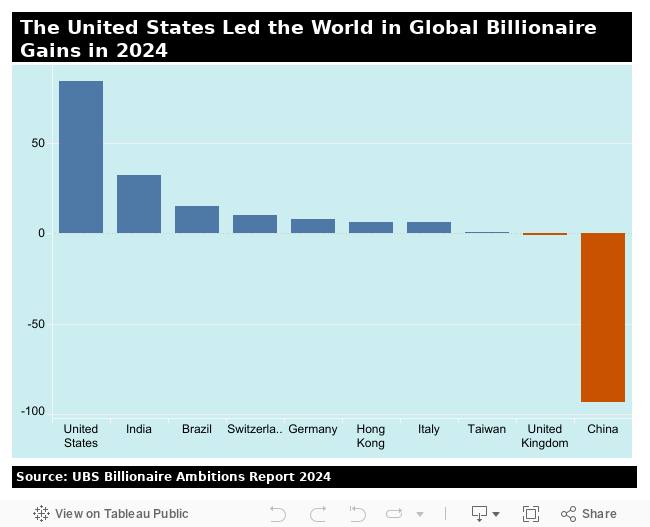
So, nice little chart here:

Seems… bad. At least for America and Europe.

Let’s lay this out:

  1. Most of what you want to buy you can buy from China, you don’t need to get it from the West, so why use dollars?
  2. China almost never uses sanctions or seizes foreign currency. The US often does. US dollars are risky, the right to use them can and is often taken away, and so often are the dollars themselves.

So why use the dollar, except that it’s still easier in some cases?

What happens when it’s no longer easier? The BRICS are spending a lot of time on an international banking system which bypasses the West and it’s allies (Japan and South Korea, basically). As that system becomes easier to use, why use the Western system or the dollar? It only exposes you to risk.

This is similar to what happened after the Huawei sanctions. Chinese firms saw the damage that was done to Huawei (they’ve roared back, but it was touch and go for a couple years.) The cry in Chinese business was “delete America.” If you bought anything important from the US you needed to find another source outside of the West, which for manufactured goods usually meant domestically, and for resources meant Africa, South America and Russia.

For a long time the way the banking system was set up you had to use the dollar, but more and more you don’t. And for a long time some key providers, like oil producers, would only take dollars, but now they’ll take Yuan.

So, again, why use the dollar when there is a safer alternative which can be used to buy or sell almost anything you want?


My writing happens because readers donate or subscribe. If you value that writing, and you can afford to, please support it.

The Necessity Of Surplus For Tech Innovation

by Bruce Wilder

(Ian–this is an elevated comment from my post on Breakout Societal Power. It fills in much of the gap elided to in this phrase “Small groups in competition have the chance, though not the certainty, of fast progress, stuck as they are in a cauldron. It doesn’t always happen…” but does so better than I would have. It’s not just about why some societies in sharp competition don’t make it, however.)

There is an underlying dynamic of solidarity and surplus that seldom gets the attention it deserves.

Ancient Greece at the end of the of the Bronze Age participated in the famous but mysterious collapse and entered a Dark Age of significantly diminished population, political organization and culture. They emerged beginning around 800 BCE, apparently with a new set of technologies, politics and agriculture and trade that generated surplus. People were healthy and well-fed (comparatively). Greece experienced a population boom, increasing in numbers roughly ten times over 400 years and a critical part of the competition among city-states was to found colonies. It wasn’t just Greece, Phoenicia and the Etruscans and others were involved.

Technological innovation is not a merely moral phenomenon; it is a matters of surplus and numbers. There must be a surplus to feed an artisan class and trade and a differentiation of labor.

The surplus that fed the urban civilization that Rome engineered diminished with soil erosion. The extraction of the tradeable surplus from a slave class on the great latifundia was inefficient and self-defeating on many levels, undermining the economic foundation of an urban civilization. People at the bottom of the system were unhealthy. Famines and plagues ensued. Trade declined with falling division of labor in a dimishing artisanal class, compounding the effects of declining agricultural surplus.

The rise of China followed on the creation of enormous agricultural surplus to feed vast armies and an urban civilization with a huge artisanal population, with trade driving deep division of labor and technological inventiveness. The surplus originated in vast hydraulic projects and the elaboration three-crop rice production.

There would be no social barrier in China to ever more labor intensive agriculture: more and more hands in the fields until the extraction of surplus was choked off by congestion losses. By 1500, Chinese peasants could barely feed themselves. Ordinary people were physically weak. The cities were huge, but represented only single-digit percentages of total population.

Europe recovering from the Dark Ages that followed the collapse of Rome saw a revival of surplus, especially after iron plows turned the heavy but fertile soils of Northern Europe and dug deeper in the south. But, the congestion losses of too many hands in the fields showed quickly too and the flowering of the High Middle Ages ended in overpopulation and the Black Death, which was driven as much by imminent famine as rats and fleas.

The contrasting aftermaths of the Plague of Justinian and the Black Death — two, long series of bubonic plagues sweeping thru Europe is worth contemplating. One destroyed a civilization and the other seemed to spark a new civilization.

Agricultural surplus feeding a growth of artisanal production and merchant trade, but being choked off by congestion and extractive oppression is a recurrent dynamic. It underlies the peculiar history of rivalry between England and France. France, with the greatest agricultural potential in western Europe, occupying an extensive well-watered plain, had a vastly greater population than England thruout the Middle Ages and well into the 19th century. But, France became overpopulated. Famine and hunger drove the French Revolution when bad weather triggered bad harvests that threatened the surplus that fed Paris.

England’s ability to feed its industrializing cities was a near-run thing in the 18th and 19th centuries. The additional surplus generated by the British Agricultural Revolution was a paltry thing and Ireland was kept on the edge of famine by overpopulation until pushed over the edge.

The productive often desperate competition that Ian draws attention to has a multi-path causal relation to the generation and/or extraction of surplus. That surplus may originate in accidents, be managed or neglected by elites and be extinguished without intention.

The Conditions For Breakthrough Societal Power

Societies become breakthrough powerful under fairly specific historical conditions.

Competition in a concentrated area.

This covers most breakthrough shifts. Let’s give some examples.

Europe

A large number of kingdoms and republics, in constant competition. If you didn’t advance militarily, culturally (administration and culture matter) and technologically, you were in trouble. As administration improved and military technology changed to favor “despotic kings” like Louis XIV and Henry the VIIth (a very underrated King), decentralized and smaller power, internal (nobles) and external were brought under control. Constant warfare and other forms of competition lead to rapid advancement.

Fail, and you could fall. If the English hadn’t defeated the Spanish armada, well, that would have been the end of an independent England. Many other principalities did fall.

In addition, there was external pressure, from the more advanced, at least initially, Ottomans, whom the Europeans were terrified of. The Ottoman threat was real, and a few key battles and wars could have swung the other way, and Eastern Europe fallen under Ottoman control.

With no central control of the entirety of Europe, people could move easily, and find a place where whatever new thing they wanted to try was allowed.

The end result was a huge increase in technology, administrative control allowing more and more resources to be brought under central control, and swift advancement in the military. Even before the industrial revolution Europeans wound up conquering a vast chunk of the world, one they had industrialized, the world was at their feet, and they wound up in control of about three-quarters of it, with the rest terrified and compliant. (This is the case with China: never actually conquered, but under the thumb, though they did fight as best they could, they were defeated.)

Ancient Greece, then Rome

Greek city states were in ferocious competition with each other. Militarily, culturally and even technologically. The Greeks were far more advanced than the Romans. If you lost, terrible things could happen, like the destruction of your entire city and the enslavement of every survivor.

The Greeks were also under threat by a great neighbouring power: Persia, and the wars against Persia, were, again, close run. They could have gone the other way. By the time of of the Ten Thousand, when Greek mercenaries who had fought for the losing side in a Persian civil were were able to march across much of a hostile Persian empire, crushing all in their way, it was clear to the Greeks that Persia was ripe—their armies were vastly larger, but the Greek way of war was vastly superior.

Greece itself was conquered by Macedonia, which was essentially Greek, but still somewhat Barbarian, then Macedonia, under Alexander, conquered Persia and Egypt. The Persians, even if their leadership hadn’t been cowardly, never stood a chance. Then the Greeks ruled the Eastern Med and the Near East until the Romans. After Alexander, however, they didn’t expand much. The successor states were not dynamic.

Rome was also in savage  competition. Against the Greeks, the other Italian tribes, the Celtic tribes and Carthage. They were almost always at war, and they learned well. Eventually they were able to conquer Greece, Span, most of what is now France, and Egypt, though they never had much luck against most of what had been the Persian Empire.  Once the Republic fell, Rome didn’t spread much. The occasional Emperor would conquer some land, but they could rarely hold it. The dynamism of the Republic, and the pressure required for advancement no longer existed. Indeed, as time went by the Romans lost a fair bit of their technology, as well. The big single Empire was not dynamic.

The Mongols

Before Temujin the Mongols and the other steppe nomads near China were in constant competition against each other, and were also constantly subject to manipulation and war from China, which sought to keep them down, fearing (quite rightly) that they would invade. Most of Temujin’s life was spent conquering and unifying the steppe nomads, then changing their culture to be more disciplined and usefully warlike. The steppe nomads had always been fearsome, but Temujin changed how they fought: ordering them in groups of 10, 100, 1,000 and 10,000 and enforcing amazing levels of discipline. The Mongols were not just disciplined in battle, strategically they moved faster than any other military of the time and were able to pull off amazing coordination. Columns of troops would meet hundreds of miles away, on the exact day planned.

Though horse archers are always dangerous, it was Genghis Khan’s unification PLUS his changes to society and military organization which turned them into a terror so great that they were not defeated for over a hundred years. In their time, they were just as dominant as the Europeans in the late 19th century.

There are other examples: the Zulus, who had the bad luck to run into the British at the height of their power are one. Warring States China is another. Ancient India around the time of the Buddha is a third. The Sengoku period of Japan is a fourth, and once Tokugawa took power, Japan, in many ways stagnated. (During the Sengoku period, the Japanese had more firearms than anywhere else.)

Concluding

Large empires are stagnant. There may be some advancement, though often there is none or even retrogression, but they don’t make breakthroughs into revolutionary power. At best they inherit it.

Small groups in competition have the chance, though not the certainty, of fast progress, stuck as they are in a cauldron. It doesn’t always happen: the tribes of New Guinea were caught in zero, indeed, often negative sum competition and remained backwards.

But the general rule of breakout power is small states in serious competition, usually with an outside threat.


My writing happens because readers donate or subscribe. If you value that writing, and you can afford to, please support it.

Page 53 of 436

Powered by WordPress & Theme by Anders Norén