The horizon is not so far as we can see, but as far as we can imagine

Author: Ian Welsh Page 141 of 437

The Destruction of the United Kingdom

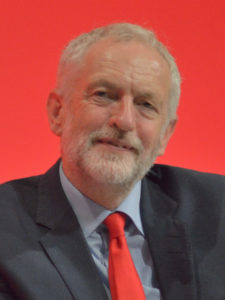
Jeremy Corbyn, the UK’s Last Hope

The more I look at the UK the more I become convinced it’s done. We tend to forget that United Kingdom is the union of Scotland and England and I don’t see a reasonable scenario where Scotland doesn’t leave the UK. The UK will almost certainly also lose Northern Ireland, which post-Brexit does not make sense in the UK (and the EU is FAR more powerful than the UK and wants Ireland re-united). Give it a couple decades and I wouldn’t be surprised if England (they won’t be the UK then) loses control of Wales.

This has been a long time coming. England has been de-industrializing since the late 19th century. After the war they didn’t renew their physical plant and wound up in such bad shape in the 70s they had to go to the IMF for help. They joined the EU to get help, so that the IMF wouldn’t completely immiserate them (which is what it does to countries.)

The EU did bail them out, that’s just a fact, but then came neo-liberalism. Remember that it first took formal power in Britain, with Thatcher, in 79. Oh President Carter in the US had a lot of neoliberal policies, but he wasn’t formally with them. Thatcher was.

Thatcher deliberately accelerated de-industrialization. The decision was made that Britain couldn’t compete, and more importantly, shouldn’t even try: neoliberalism said to open borders, not engage in industrial policy and so on. The policies needed to rejuvenate Britain’s industrial plant and become involved with the next great techological leap (which Britain still had the ability to do, to be clear, it still had good computer companies, for example, and auto firms and so on), were thus ideologically forbidden.

So what happened instead is that Britain completely financialized: everything poured into “the City”, the financial capital and money was made primarily from financial games. The people who lost their jobs were not compensated and did not find good jobs to replace them. The social state was liquidated in wave after wave, starting with Thatcher bribing people by selling them council homes for less that they were worth.

As usual, some people won from this, at least for a generation or two, but the real wealth production of the UK was absolutely shattered (financial games do not count.)

Then came Brexit. It’s worth noting two things about the EU: it is an evil neoliberal institution AND it was less evil than a big chunk of the British establishment: it was stopping them from doing even more evil things (aka. even more immiseration of the population and even more lowering of regulations and privatizing of the state).

The people who had lost their good jobs and been plunged into multi-generation shit-lives blamed the EU. Remain pointed out that the EU was actually keeping those people’s heads above water, but it was also true that the policies required to un-immiserate them were essentially forbidden by EU rules. No matter, it wasn’t decided on that: it was decided on the UK having been in the EU for the entire period when their lives had gotten worse. Maybe the EU was not the villain, but their lives still sucked ass. “The EU makes sure your miserable lives aren’t even more fucking miserable, peasants” was not the winning argument many Remain types seemed to think it was.

So Britain left the EU, and now what is happening is that the population is being even further immiserated. Austerity upon austerity upon austerity. Every pound which can be hoovered further up the chain is being sent up. The ruling class is solidifying its position over a de-industrialized country. It is better to be rich and powerful over a bunch of beggars, than to give any power or money to the hoi polloi.

The route out was offered: elect Corbyn, a 60s style liberal, and do a left wing Brexit. Then engage in actual industrial policy and bring back an economy which actually produces things and services (other than financial games) that both it and the rest of the world needs.

But Corbyn wanted to help reduce poverty, to give more money and power to the poors and the middle class. He wanted to gut the City (which has to be done, because a financial center like that actually harms the rest of the economy outside of it), and to let people into the power-franchise who didn’t go to OxBridge.

He was a direct threat to the elites. They would rather be in charge of a collapsing country returning to poverty than be less powerful in a more prosperous nation returning to true health, though most of them are too ideologically bound to even understand that was what was on offer: all they could see is Corbyn was a threat.

So they took him out, lying about him almost 80% of the time, and enough British voters were fooled.

And now the UK’s days are numbered. The only way to keep Scotland in would have been to make it a good place to be again: to reverse the decline and be seen to be reversing the decline.

The EU sucks, but it’s better than a Britain run by people like Boris Johnson, and the Scots can see that, and soon enough the Irish and Welsh will too.

And so the sun which was never to set, will set on Great Britain.


(My writing helps pay my rent and buys me food. So please consider subscribing or donating if you like my writing.)

Remembering Colin Powell

Colin Powell was the first black secretary of state. He was the consummate insider, who climbed the military bureaucracy with great skill and vigor. A man who always knew what had to be done to get ahead and get along. In Vietnam, for example, he understood his role perfectly:

his time as a young U.S. Army Major posted in Saigon, when, after the My Lai Massacre, he was asked to investigate a soldier’s letter describing atrocities against the Vietnamese people. Powell rejected the charges and famously wrote, “In direct refutation of this portrayal is the fact that relations between American soldiers and the Vietnamese people are excellent.”

Most famously, Powell understood that when it’s time to lie in order to attack a country which is no threat to you, that’s what you do: Powell used his high prestige to help sell the Iraq WMD lies. While we’ll never know how many Iraqis died in the ensuring war, because America sure as hell didn’t want to count, we can round it at a million with reasonable justification. Events like the war with ISIS would also never have happened without the Iraq war, and while it doesn’t bother me, it might bother Americans that the Iraq war actually made the US’s international position substantially weaker, and turned Iraq from an Iranian enemy into an ally.

Powell was also “in the room” during the discussions about what sort of torture was acceptable.

Colin Powell’s Legacy

We have a norm in our society that one shouldn’t speak badly of the dead, but it applies to private citizens, not to war criminals. In a just world Colin Powell would have been tried for his war crimes, then hung from the neck till dead, just like America hung Nazis who had nothing to do with the Holocaust, simply for starting aggressive war, because all the deaths and rapes and orphans and torture and other horrors of war come from the simple decision to have one.

Powell certainly wasn’t the worst criminal. He’s a fair bit below Bush, Cheney, and Rumsfeld. One can argue if he was more guilty than Senators who voted for the war like Clinton, but no matter one’s all-star team of war criminals, Powell’s in the deck.

It shouldn’t have been a surprise, though it was to many. Powell got where he got by being a yes-man, who did what he had to do for his career. Like many such men he reaped the reward he wanted. It only cost him his soul, and the respect of every decent human.

I don’t like the idea of hell, and even someone like Powell doesn’t deserve eternal torment. So I hope, if there is an afterlife, he simply goes somewhere where he comes to understand what he did wrong, and why.

But none of us who remain on this world should excuse his war crimes; doing so makes other men and women more likely to follow in his footsteps.


(My writing helps pay my rent and buys me food. So please consider subscribing or donating if you like my writing.)

Open Thread

Use the comments to discuss topics unrelated to recent posts.

The Judgement of Craig Newell

(This is a reprint from 2008 & 2010. Was thinking of Mr. Newell the other day.)

A few weeks ago I received the news that my old coach and math teacher, Craig Newell, had died. I haven’t written about it till now because I’ve been thinking of him since then. He was an odd man, spare and lean, with the whippet body of a greyhound, and he had a way of cocking his head when he looked at you which was inevitably parodied every year in the seniors annual play.

I spent five years around him, in high school, a boarder in an all boys school. It was an excellent school, well run, with fair rules and no brutality, but I hated the place and was miserable most of the time, though still happier there than I would have been at home. Mr. Newell was my grade 9 math teacher, but I didn’t really make a connection with him till a few months into the year.

The standard punishment at school for infractions was what I like to call brutal exercise. What it was exactly varied by the master or prefect who was in charge of the punishment detail, but one that particularly sticks out in my mind is being told to hold heavy wooden chairs over your head and then made to run around the quadrangle till you collapsed. Pushups and situps featured as well, and through most of my teen years I could easily do over a hundred of each. We often used to joke that the strap would have been easier and less painful.

I don’t remember what I did to get on that particular punishment detail, but since I didn’t feel like doing brutal exercise I talked the master whom I’d offended into letting me run a cross country race happening the next day, which was being supervised by Mr. Newell. Like most folks, the master hated long-distance running and figured it was worse than calisthenics. I found long-distance running easy. So I reported to Mr. Newell and ran the race. I had never run a race before, didn’t run more than twice a year in the school’s mandatory runs, and having been told that if I didn’t put in a credible effort, it wouldn’t count, came in about half way in the pack of runners. Mr. Newell pulled me aside, asked if I’d ever raced before or practiced, and on hearing I hadn’t, suggested I try out for the team.

Now if this was a Hollywood movie, I’d have gone on to be a star. That wasn’t the case, but I did join the team, run track and cross-country most years and do well enough to stay on the team.

More to the point, I found I liked running and I started running a lot more than the 2 days a week the team officially met. And if it was a weekday, when school ended I’d swing past Mr. Newell’s office and see if he wanted to go for a run too. As often as not, he would, and we’d run for 30 or 40 minutes. Usually they weren’t hard runs, we’d pace ourselves just below the point where speech becomes unpleasant, and while we ran we’d talk.

Unlike a lot of coaches, Mr. Newell wasn’t also the math teacher as a way to give him something to do—he’d studied math and philosophy in university and he had an excellent and searching mind. He’d often give me nuggets like the Barber’s paradox to chew over, or we’d discuss other philosophical questions like how we know what we know, or what moral behaviour is.

Mr. Newell didn’t have a lot of answers. He handled me pretty much with the Socratic method. But he did have one question he always asked, that came to define him in my mind. When I’d express disapproval of something someone had done, or someone’s beliefs, he’d ask:

“Why do you feel it necessary to not approve?”

And he’d step it back:

“Have they harmed you?” “Have they harmed anyone else?” “Why do you think they did that?” “Why do they believe what they believe?” “Given what they believe, is what they did reasonable?”

And most important of all he’d ask “Does your disapproval do anything to them? Does it do anything to you? Can you affect this situation?”

Mr. Newell was very interested in understanding what people did and why. He wasn’t very interested in judging them. And even when he did judge someone, usually because it was his job, he shied violently away from being judgemental.

Mr. Newell didn’t let his emotions, didn’t let a need to be judgemental and to feel superior to other people, get in the way of his understanding of other people.

Most people, I have come to believe, have a strong need to judge others. To quickly assign  “good” or “bad” labels. And once they’ve done so the thinking, the understanding and the empathy dies. Once someone is evil, or bad, or immoral they aren’t like us. (Because most of us don’t have the honesty to admit our own evil.) At that point, empathy dies. And without empathy there is no understanding—if you cannot walk a mile in someone else’s shoes you cannot understand them. (And, I suppose I should point out that understanding one’s enemies is the best way to defeat them. Which is why the US loses so much, because it refuses to understand those it fights.)

Now none of this is to say that Mr. Newell thought you should never, ever, judge. He was, after all, a teacher. He was in a job where you have to judge. But he felt you should judge carefully, only as far as the evidence goes, and not let it spill over into your other judgements of the people involved. I have come to simplify this as learning how to “judge without being judgemental”. More than that it implies that moral disapproval, moral judgements, in particular, should be used sparingly and that once used shouldn’t spill over. An example would be that many people (correctly) see Osama Bin Laden as a mass murderer and therefore evil. But that spills over, and they become unwilling to grant that he is an extremely brave man who led troops from the front, that he is a very intelligent man whose plans have been more effective than those of most leaders he’s been fighting, or that he, say, loves his family and is genuinely pious, generous and god-fearing. Yet the evidence is that he’s all of those things.

When you judge too quickly, you get things wrong. When you judge too broadly, you blind yourself to what a person actually is.

And really, why do we love to judge so much? Because it makes us feel better about ourselves. In our contempt for those we judge we can pretend that we’re nothing like them, that we aren’t complicit in the same evils, that we have never harbored the same thoughts, or perhaps even acted on them. Being judgemental makes us feel good about ourselves but the price is that it blinds us, both to those we judge, and to ourselves. In writing off understanding others, we write off understanding ourselves.

And ultimately, that is the lesson I learned from Mr. Newell in those hundreds of hours of running.

  • Always understand before judging
  • Judge sparingly. Is it really necessary to judge this person? Do their beliefs or actions harm anyone but themselves? Is it your place to judge?
  • When you must judge, judge without being judgemental.
  • Listen to what your judgement says about you, more than what it says about others.
  • Satisfaction in condemning another is a danger sign that you may be using the condemnation to blind yourself, to yourself.
  • Don’t judge large, judge small and specific.

I don’t know what comes after this life, but if there is an afterlife, if there is a judging of men and women, I hope that Mr. Newell is judged himself as he judged others. And may it be laid on his scale, that he was kind to a scared and lonely teenager when almost no one else was, and saw the good in that boy that few others did.

The Totalizing Principle Of Profit, and the Death of the Sacred

The UK is experiencing some of the worst shortages of oil. One contributing factor is that the old strategic reserve of oil was privatized, then when it was considered unprofitable to keep it running (repairs and maintainence were needed) most of it was gotten rid of.

A totalizing principle, or system, reduces every part of society to one value, or relationship.

In capitalism, the principle is profit.

In capitalism the assumption is that if something is making a profit, it’s also providing value. You should only do things that provide value and the more money something makes the more value it has. So, the strategic reserve wasn’t providing profits, and had to go, since it provided no value.

The next piece of logic is that someone who is making a profit obviously knows how to provide value. The more money someone has, the more control they have, and the more money they should have. The tendency of capitalism to lead to money concentrating in a few hands is good: those are the people who know how to create money and thus value.

Capitalism, like other totalizing systems, works best when it’s kept in check by something else: religious values, democratic values, enlightenment values, or whatever, backed up by forces powerful enough to resist totalization: governments or churches, for example.

When it doesn’t it tends to destroy the conditions for its own functioning: all the wealth goes to the top, for example, and you get a Great Depression due to a demand crash, as happened in the 30s.

Or capitalism makes massive profits based on damaging the environment, and you have an environmental collapse — ongoing and upcoming.

Capitalism tries to reduce all relationships to monetary ones. When you privatize trains, or healthcare, you’re following the profit motive. When you make everyone work, then have their childrens raised by strangers (daycare, and to an extent school) you’re totalizing it. When people say domestic and emotional work should be paid, they’ve bought into a totalizing system: since they’re creating value, money should pass hands.

Capitalism thus reduces everything to money: if it has value it should involve money, and if it pays little or nothing it obviously doesn’t have value. So if you’re low paid, and you want to be seen as valued, you want money.

Even when we try to fix the problems of capitalism we try to do so thru money: so we have carbon offsets (paid), and there is a movement for a carbon tax, and so on.

It doesn’t seem to occur to us that some things just shouldn’t be allowed: don’t dump more than X amount of carbon into the atmosphere, period, or you go to prison. Or make sure that insulin doesn’t cost $400, or you, yes, go to prison.

In properly functioning societies there are sacred objects: things which money is not allowed to control. Perhaps this is our relationship with God; perhaps it is “don’t cut down all the forests”, perhaps it is access to healthcare for all no matter how little money they have; or perhaps it is access to law, so we provide lawyers to those who can’t afford them (and not overworked lawyers who can’t represent well.)

Perhaps we have public financing of election and limits of private spending to influence elections, since we value democracy and don’t think that rich people should control the government.

When a totalizing systems destroys other values, and degrades sacred goods and values and items, it destroys the circumstances required for its own existence, but in so doing it also brings catastrophe upon the society is totalizing.

You can see this today, not just in the shortages (cause by over-optimizing supply chains to increase profit), or in the environment, or the lack of access to law for most of the population, or in huge prices for health care and a refusal to share vaccines throughout the world, but in almost everything that is causing our societies to degrade. Since nothing is sacred except money to us any more, nothing survives unless it makes maximum profits for the rich.

But the things we need most, like clean air and water, a liveable climate, affordable healthcare, healthy food, and loving family relationships not destroyed by the stress of overwork and poverty, are more valuable for short to mid term profits when sacrificed than when protected and strengthened.

The “solution” of trying to give everything a price and micro-managing incentives doesn’t work. The problem isn’t so much incentives, it is that some things have non-monetary value which cannot and should not have a price put on them. Some things are sacred: democracy, love and unspoiled nature, among many others.

Treated as sacred, these things allow markets to work. Treated as part of markets, their degradation eventually destroys the very environment capitalism needs to continue, and to be more beneficial than harmful.

A world where nothing is sacred, and where no value stands above profit, is a world that will be destroyed.

As it is being.


The Shortages Will Get Worse Before They Get Better

… so stock up if you can.

Depending where you are there may also be rotating power brown-outs or shortages or heating and auto-fuel.

Don’t wait on this, buy now. It’s unlikely most of you can do much about fuel or power outs, but if you can, do. For example, if you have a fireplace or wood stove, stock up on wood. You can buy chargers for your small electronic devices; blankets or sleeping bags rated for real cold, and so on.

Not all areas will have power issues, you’ll have to do a bit of research to see if your area is vulnerable.

Meanwhile stock up the normal purchases: staples, water, medicine and so on. This means keeping a larger supply on hand than you would normally to buffer supply chain shocks.

Remember that the shortage of items which require semiconductors will continue for some time. Not only is there a global shortage, but the US embargo on China causes real issues because China is where final assembly of many products is done: if they can’t get the chips they need, those items don’t get finished.

I’m going to write more on why this happened because it’s not just about Covid, it’s about a system where this was inevitable if the system got hit by big shocks, but I don’t want to dilute this particular post’s message that  you should personally prepare.


(My writing helps pay my rent and buys me food. So please consider subscribing or donating if you like my writing.)

A New Ideology

There is no reality which is not mediated by perception. This is not to say that there is no reality; the famous “I refute you thus,” kicking a rock, applies. It does not mean there are no natural laws, no physics, chemistry, or even truth—or Truth. It means that we decide what reality means through a thick lens of belief. This lens picks out what is important, obscures the unimportant, and distorts everything, and most people are hardly even aware that it exists.

Keynes once wrote that most politicians are slaves of some defunct economist, generally whose name they don’t even know. That we should regulate the world through markets is an idea which would have been absurd to virtually everyone three hundred years ago, even as the divine right of Kings is absurd to us today. That corporations should shield their owners from liability is an idea which was bitterly opposed by most capitalists two hundred years ago. That greed leads to better outcomes was laughable to virtually everyone, including Adam Smith, who thought it worked only in very specific circumstances and lamented that tradespeople were constantly in conspiracy against the public.

That goods, including food, should be primarily divided based on market success is another idea that most of the world, for most of history, has never held.

What is oddest about our modern ideology is the same thing that is odd about virtually all ideologies: It contradicts itself. We do not have either free or competitive markets, and not one in a hundred free market ideologues could define a competitive market, nor would they want one if they could, as an actual competitive market reduces profits to nearly nothing. Free markets cannot exist without government coercion, yet we have come to assume that it is government which makes markets unfree, which is a half truth at best. It’s markets that make governments unfree when they buy government–and the first thing any good capitalist does upon winning a market is try to eliminate the free market, since an actual free market threatens a monopolist or oligopolist.

An ideology tells us what is thinkable and what is unthinkable, what is moral or immoral, ethical or unethical. Right or wrong. It either says that 90 percent taxation is right and good when imposed upon great wealth, or an unthinkable burden on “value” creators. It further defines value, for instance, privileging financial innovation which actually destroys genuine good production. It says that food that makes us sick is acceptable and that banning such food is unethical. It says that it is right and proper that men and women meet their needs by working for other people, without any ability to meet their own needs if the market deems them surplus beyond private or public charity. It says that land that lies fallow is not available for anyone to grow food, that pumping poison into water and food and air is acceptable, that rationing health care by who has the most money is the best way to organize health care. Or, it could say that healthcare is too important to allow people to buy their way to the front of the line.

People think that their individual decisions matter, but so much of what happens is dictated by social contexts. A man goes to war, or not, and that has little to do with him personally. A college student has a huge debt and that is because she is a Millennial, not a Baby Boomer. A generation has fantastic success, but that is because they are the GI Generation in America. These circumstances are not the results of individual decisions, even if it feels like it. Born 30 years earlier, the exact same people would have stagnated on farms. A generation raised in affluence undoes all the protections put on the economy by those who experienced the Great Depression, because they think they know better, really, and they never experienced the Great Depression or the Roaring ’20s.

One of the most important books of the past 200 years was a pamphlet, The Communist Manifesto. You should read it. Virtually every demand in the Communist Manifesto has been met by Western Democracies. Conservatives like Otto Van Bismark looked at it and said, “Oh, you want pensions? We can give you that if it means you don’t rebel and cut our heads off.”

A credible opposing ideology, a credible existential threat to the reigning ideology, creates a reaction. That reaction can be, well, reactionary, but it tends to blend towards that ideology. When the main ideological and material competition to Western Capitalist Democracy is a nasty form of Islam and Chinese Totalitarian State-run crony capitalism, that leads nowhere good, not least because they aren’t credible threats (no, Islamism is not going to conquer Europe, Japan, North America, or South America, sorry).

But an ideology organizes things. The Assyrians, the Babylonians, the Akkadians, the ancient Egyptians, if they wanted to do something, set up a new religion, with a new God. They were quite brazen about creating Gods, really. They ran the banks out of the churches, and indeed, ran some truly terrible usury, with interest rates as high as thirty to forty percent (which is why debt holidays were instituted, it didn’t take long before people owed more grain or silver than existed in the entire universe, with rates like that).

When we want to do something, we fiddle with market design, with little incentives here or there. We make bureaucratic rules, create new laws, set up secret courts and bureaucracies to run them, make small adjustments here or there to make sure things work out as we want. A little tax here or there, a subsidy here or there, a patent or IP law change, a law requiring millions of dollars before one can set up a bank, laws allowing corporations to monetize public research by universities, and all the right people make money and the wrong people don’t, and all is good in the world.

The fundamental idea of our current regime is one that most people have forgotten, because it is associated with Marx, and one must not even talk about the things Marx got right, because the USSR went bad. The fundamental idea to which I refer is that we are wage laborers. We work for other people, we don’t control the means of production. Absent a job, we live in poverty. Sure, there are some exceptions, but they are exceptions. We are impelled, as it were, by Marx’s whip of hunger. It took a lot of work to set up this system, as Polyani notes in his book The Great Transformation, but now that it has happened, it is invisible to us.

A new ideology that leads to prosperity should insist on changing this relation to the means of production. This doesn’t mean a Marxist proletarian “communist” paradise, but it does mean giving ordinary people back real economic power, which means the real ability to say “no” to wage labor, and freedom from needing to take the next job that comes along regardless of what it is. Not only will this lead to a different, much more fair division of goods created by society, it will lead to much better treatment of wage labor workers. The experience of the dotcom boom should be instructive in this regard: When you can walk out because you don’t need this job and it isn’t clear you can be replaced, bosses suddenly start treating you very, very well indeed.

I’ll talk about what that ideology looks like and what that society looks like, at a later date, certainly in my non-fiction book. It will be, not a consumer society, but a producer one, in which most people feel that they can make things, feel that they can provide for much of their own needs. Though many people sneer at the idea that technology matters, in actual fact, technological change makes possible new modes of production, along with new social arrangements. The assembly line and factory imply a type of social arrangement, the heavy plow implies a type of social arrangement, hunter-gatherer implies yet another. Within each of these technological tool kits, however, there are choices: Some hunter-gather bands are the sweetest, most kind, peaceful people you could ever want to meet. Others are high practitioners of torture and head-hunting. Central planning of the Soviet variety and industrial democracy of early to mid-twentieth century America are both within the possibilities of industrialization. Radios were originally used much like the early internet till the government used the excuse of the Titanic sinking to seize the airwaves from the early pioneers and sell them to large companies.

There are, ultimately, two dominant strategies: cooperate or compete. If you want widespread prosperity, the dominant strategy in your ideology must be cooperation, though competition has its place. And ultimately the difference between the right and the left is this: The right thinks you get more out of people by treating them badly, the left thinks you get more out of people by treating them well.

An ideology that believes in treating people well is a lot better to live under. And as a bonus, happy people are a lot more fun to be around. And societies with that ideology, all other things being equal, will tend to out-compete those who believe that fear, misery, and the whip are the best way to motivate people.

Finally, an ideology that succeeds is always universalist. It asserts, for example, that all people have certain rights and does not admit exceptions. This may bother the relativists, but a powerful ideology admits no doubt on core ethical concerns: Democracy is how everyone should rule themselves, no exceptions, or, everyone has a right to a trial and to see the evidence against them, or, anyone who doesn’t worship the True God is going to hell.

A powerful ideology is a scary thing. If your ideology isn’t strong enough, doesn’t create fervent enough belief that people are willing to die for it, then it won’t change the world. But if it does create that level of fervent belief, then it will be misused. The question is simple: Will this do more harm than good?

An ideology which leads to us killing a billion or more people with climate change, allow me to posit, is a bad ideology. At the end of its run, neoliberalism will kill more people than Marxist-Leninism did, and our grandchildren will consider it monstrous. Most of them will be no more able to understand how or why we submitted to it (or even believed in it) than we can understand how Hitler or Stalin or Pol Pot or Mao came to power. Hyperbole? Not in the least, because the body count is going to be phenomenal.

When faced, then, with a monstrous ideology, our duty is to come up with a better one, an opposing one. Because ideology determines what we do. It is both the lens through which we see the world, and the motor that pushes us forward.

(Originally Published October 22, 2013. Back to the top in 2017 as most current readers won’t have seen it, and it’s foundational. Back up again, October 9, 2021, for the same reason.)


If you enjoyed this article, and want me to write more, please DONATE or SUBSCRIBE.

Open Thread

Use comments to discuss topics unrelated to recent posts.

Page 141 of 437

Powered by WordPress & Theme by Anders Norén