The horizon is not so far as we can see, but as far as we can imagine

Category: Freedom Series

Freedom And Power (Freedom Series #4)

Power Comes from the Barrel of a Gun

-Mao

This is part 4 of our Freedom Series. If you missed them, part 1 (Capitalism and Freedom),Part 2 (Freedom And Democracy) and Part 3 (Freedom To, Freedom From) are also available.

In our earlier essays we discussed how the structure of modern life means that we spend most of our time doing what other people tell us to: either in school or work. We are free to choose our masters, but almost none of us are free from having masters. Representative democracy, especially under capitalism tends to really be oligarchy: those with wealth buy the government, and an individual’s vote means much less than the money and votes and influence it can buy that capitalists have.

All of this is underwritten by violence. I live in Canada, some years back a homeless person built themselves a house near town, but on land owned by no one, except the government. You would think this is a good thing, but it wasn’t properly permitted and the land wasn’t hers, so they tore it down. She went back to being homeless.

They were able to tear it down because if she had resisted, big men with guns would have made sure it was torn down.

I’m no libertarian and I don’t think tax is theft, but if you’re American you may have a big problem with paying taxes because you hate that so much of it is used for corporate subsidies and to support a military which regularly engages in genocidal activities and which supports other countries when they commit genocide. (Israel is not the first.)

You’d think that living in a democracy your money would be spent in some semblance of what the public wants, but you’d be wrong. People don’t want to support Israel with massive subsidies, but it happens anyway.Most Americans would like universal health care, but that would mean less corporate profits, so it doesn’t happen. The infamous Princeton study found that what the average citizen wants has zero relationship to what the government does: but the opinions of those with wealth do.

So you might as well not live in Democracy, because a Democracy where what the people want to happen doesn’t happen, isn’t functionally a democracy, no matter how often you vote. This is at heart of the paradox that when polled as to how democratic their societies are, the major society whose citizens think it’s most democratic is—China.

Wait? A one party state is considered by its own citizens to be democratic? What the hell?

But the Communist Party actually does listen to its citizens and often does what they want. It also strives to make them better off, having lifted hundreds of millions of people out of poverty.

You may not get to vote, but the government does a lot of what you want and improves your lives.

Of course it isn’t a democracy by the strict definition: democracy is about procedure—how we choose our leaders, not outcomes

But people might be forgiven for thinking that outcomes matter more. Hell, I can’t argue with it. Democracy exists because monarchies and aristocracies sucked for ordinary citizens and we thought that if we could choose our own leaders they’d be more likely to care for our well-being.

And here’s the thing: the CPC is good right now, or more good than bad. But then so was the US (for its own citizens) at various points, most recently from about 1933 to 79 or so. One can be sure that over time the CPC will devolve or be replaced by something worse. We don’t know exactly when this will happen, but its next sub-ideological cycle is about 40 years out.

This suggests the problem isn’t exactly the form of government.

Perhaps it is, as Thomas Neuberger likes to argue, government itself. Or, more accurately, the state, because every society ever has had some form of government.

States, which started existing about eight thousand years ago, first in Mesopotamia and briefly afterwards in Egypt, are noted for having a monopoly of force as Max Weber famously pointed out. In fact a monopoly of force is what makes a government a state. Your municipal government has a police force, but as Trump has shown with his ICE occupations, it does not have a monopoly on force. Tribes generally don’t have a monopoly on force: individuals often use violence themselves to resolve issues.

The early states were extremely nasty kingdoms, usually with the King either claiming to be a God or saying he was God’s chosen.

But Mao isn’t quite right. Power doesn’t come from guns or swords. It comes from control over the minds of the military class, whoever that is. It took about two thousand years for agriculture to produce the first kingdoms, because the actual task was getting the warriors to agree to be an enforcer class against everyone else, and take the King’s orders. That was a hard ideological task, and it took a long time to convince violent men to oppress everyone but themselves and a few nobles. Tribal warriors simply would not do it. (If you want to read about this process at length, see my Politics Series.)

This is at the heart of the question “will the military fire on citizens?” Will they obey that order?

The answer, usually, is yes. When it’s “maybe” you get more freedom. This is why conscription armies are usually not used for internal control: specialized police forces are used, men trained to beat the shit out of, or shoot, those whom power tells them to.

Most people don’t pay taxes because they want to. They pay taxes because if they don’t men with guns will eventually show up and hurt them, kill them or throw them in a nasty prison.

There are tons of stupid or unjust laws, and we obey most of them, and will obey more of them in the future as ubiquitous surveillance spreads. Oh, some we obey because we agree with them (hopefully things like “don’t murder and don’t rape”) but plenty we obey because we’re scared.

Everything flows from this. Forget law. Remember that woman who wasn’t allowed to keep a house she made with her own hands on land no one was using?

That’s the core. Your boss can’t, usually, call the cops on you. But he can fire you and you might not get another job or not as good a one. You might wind up homeless. You might not be able to afford health care.

And you can’t take care of yourself because it’s illegal. You can’t just go to some land, build a home and plant some crops, say. If someone has way more than they need, and you don’t have enough, you can’t say “Look Elon, if you had a bit less I wouldn’t die homeless so I’m going to just take some of that and you’ll still be more than OK.”

If you do, the police will shoot you or lock you up.

This isn’t the way that it was for most of human existence. Hoarding was not allowed in most societies that ever existed, till those Kings came along. If you tried, the tribe would talk to you, then shun you, and then if you still kept more than you needed while others were going without, they’d either exile you or kill you.

This for hundreds of thousands of years this is probably how humans dealt with hoarders. Then Kings and states inverted it. The rich steal from the poor, the strong from the weak, and if anyone tries to do anything about it they get dead or worse.

Without violence and the state there are no Billionaires. There are no property rights as we understand them (which is why libertarians still want the State to kill people over property. They want to have lots of stuff, be safe when others are poor and they’re rich, they just don’t want to pay for any part of the State except the violent part.

At the end of the day you go to school for twelve years because the state forces parents to send their kids to school. This is the history, when mandatory universal schooling was introduced, parents who didn’t cooperate were dealt with the law, often violently.

You work for someone else at a shitty job you’d never even consider doing if you wouldn’t be homeless otherwise because some people have a lot and don’t want to share. Oh there’s a whole ideology of how capitalism is necessary for prosperity and progress, just as there was one about how Kings were needed, but that’s gloss. There’s way more than enough, but for us to have rich people there must be poor people.

Occasionally a state will, for a few decades, do good. They’re not all evil. See the CPC these days. But the capacity for state control is always there. The CPC forced a lot of peasants off the land who didn’t want to lead. Sure, it was “for their own good” but perhaps the peasants should have been able to decide that? Same thing with the Brits and enclosure. Or America and all the natives they killed.

This is close to the nitty gritty. The stuff about democracy and capitalism was important: but all of that has as its basis violence. Without violent men willing to do what the state says, none of that occurs.

There’s all sorts of arguments that states are better than the alternative, blah, blah, blah. Perhaps. Sometimes.

But the core of states is always violence: that monopoly Weber talked about. That’s how some people get to have a lot more than everyone else and then justify it saying they deserve it. Nobles said it was because they protected the serfs and were chosen by God. Capitalists say it’s because they create the jobs and technology and everything good comes from them so they deserve much, much more. Communists say they serve the people, same as democrats do. And, again, sometimes, for a few decades or even occasionally a whole century, they do. These justifications matter: the violent men need to be convinced to do what the State says.

But the society is still based on coercion underwritten by violent men and you still aren’t free. You are ruled by fear: fear of poverty in a system where if you try and support yourself in a way society doesn’t agree with, that violates property arrangements the elites like, you will be hurt or killed.

This is always true, of course. It was true in tribes. Hoard and eventually someone will do something about it.

But there’s violence to ensure everyone has enough, and there’s violence to ensure some people have more. There’s violence to take away your right to do what you want with your life, so long as it doesn’t harm others, and there’s violence that forces you to spent 60 to 70 years doing what teacher and boss tells you to—or else.

We need to move past the idea that shit systems are the best we can do. We need to conceive of a better way to live together. We need to stop saying “this is a flawed system, but it’s the best we can do.”

We need to dream and imagine. Only by doing so do we make a better, more free, society possible.

What I write here is for the benefit of everyone, but alas, I live in capitalism and I, and the site, take money to keep running. If you value the writing here and can, please subscribe or donate.
Freedom To, Freedom From & Capitalism (Freedom Series #3)

This is the third in the series:

1) Freedom Under Capitalism

2) Freedom Under Representative Democracy

Scholars often divide freedom into two types: negative and positive. Negative freedom is “freedom from”. From arbitrary search and self incrimination, for example. Freedom from is primarily about what other people, including the government, cannot do to you.

Positive freedom is the ability to do things: free speech and freedom to follow any religion are two of the positive freedoms enshrined in American Constitutional law (though freedom of expression is much violated in the practice, as opposed to principle.)

The preamble of the Declaration of Independence says that everyone has the inalienable right to “Life, Liberty and the pursuit of Happiness.”

Obviously, again, these principle are more theoretical than practical, given how busily the American government kills people. (Nothing is said in the preamble about these rights being only for Americans, indeed they are supposed to be for everyone.) And then there’s how many people America locks up, which isn’t exactly liberty.

No rights, positive or negative, to do or to be free of, are actually ordained by the Creator, nor are any of them inalienable. All of them exist exactly and only to the extent that one has the power to enforce them. The English Magna Carta, which gave nobles the right of jury trial was forced by the Barons on the King, not granted by the King out of some beneficience. Later expansions of the right to jury trial were won by Republican and Parliamentary powers, and indeed, right now the British government is removing the right to jury trial for most offenses, in part so that opposition to genocide can be quelled without juries refusing to convict, as they have done.

Israel’s lobby in Britain is more powerful than those who believe in jury trial. And power is all that matters when it comes to freedom and rights.

This is why the actual left is always concerned about restricting concentrations of power and wealth and why most modern liberals are fools, believing that rights can exist with concentrated. Older liberals were not so foolish, FDR knew, and so did Justice Brandeis:

“You can have a great concentration of wealth or you can have democracy. You can’t have both.”

You can have the form of democracy, as the US does. But not the reality.

But there is another type of freedom to. We touched on it when we discussed freedom under capitalism, but let’s revisit it.

Elon Musk has far more freedom to than anyone reading this post. So does Mark Zuckerberg. They have vast wealth, and money is, at its heart, the ability to tell other people what to do and to command the results of their labor. If either man wants to do something, they can get a thousand people to do it for them. If they want almost anything they can buy it. They never have to work for anyone else, and other than (sometimes, but not most of the time) obeying the law, there are few practical limits on what they can do.

Compared to them, or to top political leaders like Trump or Putin or Xi or even Starmer, you and I have no freedom to do things. We obey our lords and masters.

This is especially true under capitalism, because capitalism is a system in which the means of production are controlled by a very few people. Under feudalism or for hunter-gatherers, this was not the case. You had land. You had animals. You could take care of yourself. This isn’t to say such people free in all ways, just that they had a freedom we have mostly lost. Work for the lord for 60 days, give him his cut, and the rest of their time was theirs to do with as they saw fit.

To create capitalism required removing their land and animals and rights from them. In exchange, over time, they received other rights.

But as long as we must work for others, and do what they say, we are not and cannot be free in the sense of having “freedom to do”. Most our life is spent doing what others insist on.

To be free means an end to capitalism and a system where we can, hopefully as individuals, but more likely as small groups, provide most of our own needs and where we do not have to spend most of our time accepting orders from bosses.

This is one of the essential points of this series of essays and we’re working towards looking at what such a society would be like both in principle and in practice. But the bottom line is that if you must spend almost all your days working for someone else, you are not free. And if you cannot create, if you cannot do, you are not free, no matter how much “freedom from” you have—and in the West, we have less and less of that freedom from each year, with the rise of surveillance, the constant assaults on free speech, association, and due process. Almost every Western nation, it seems, is restricting due process and allowing people to be destroyed by administrative order, as for example when the Canadian truckers and opponents of genocide were de-banked and/or sanctioned, making it impossible for them to pay rent or even buy food.

We have very little real freedom. We find that out when we do something the government disapproves of, like saying “please don’t help Israel mass murder children, torture and rape.” We find that out when we realize that we spend 8 or more hours a day obeying a pin-headed boss, and that if we don’t, we’ll wind up homeless and starve.

Neither represenative democracy nor capitalism has worked, and while China is more generous now that most of the West and better run, they have not solved these problems either. Perhaps they will. Perhaps they’ll make that transition to true communism, the withering of the state, and the control of the means of production by the proletariat.

Maybe. But I doubt it. Not without a clear picture of what such freedom would look like. And that’s the real question, and the real problem.

So that’s what we’ll tackle.

What I write here is for the benefit of everyone, but alas, I live in capitalism and I, and the site, take money to keep running. If you value the writing here and can, please subscribe or donate.

Freedom Under Representative Democracy (Freedom Series #2)

In the first article in this series we discussed freedom under capitalism. The conclusion was simple: capitalist freedom for the vast majority of the population means the right to choose your master, your job, if you can find one. Once you have a master, you do what they say for most of the day, for most of your life. If you can’t find a master, you’re free to be homeless, hungry and eventually (few people survive being homeless more than about five years), and soon enough you’re free to die.

Yay Capitalism.

Note that this is structural: yes some people will become capitalists or otherwise escape the master trap, but the vast majority won’t and can’t. Someone is going to lose the dire game of musical chairs (jobs.)

Now let’s look at representative democracy.

In a democracy you’re free to choose your legislators or executives. You can’t vote for just anyone, though, only approved candidates. In most systems if someone runs without belonging to a party, they won’t win, and parties usually control you can become a candidate.

As a group the people who are elected will decide pretty much everything about how your society runs. Sometimes they seem to care about the citizens (FDR say) and sometimes they don’t. (Every American government since Nixon.) I can’t remember the last time food stamps were increased, rather than cut, other than a brief raise during the pandemic.

The number of elected people with real power is small compared to the population, and as an ordinary person your vote is generally meaningless. It’s never YOU who makes the difference. Big donors and other people who can organize groups of votes do, but that’s a vanishingly small number of people. So elected officials, especially at the national and State level pander to people with money or votes (pastors, for example. Used to pander to unions, not so much any more.)

Your choice of ruler is better than having a hereditary monarchy. Yes. But your actual power is insignificant. And Democracies have all the normal powers of government: they can draft you and send you off to die. They can send you to prison. They can take property from you. They can coerce you to work. Ideally they make it so people who lose the musical boss game are taken care of anyway, but often they don’t. Certainly they can do good and sometimes do.

But any freedom you have in a society is contingent on the government. Not drafting you. Making it so you don’t have to have a master. Making it so you can get health care, or not. Your freedom is contingent on what elected officials want: officials who structurally have every reason to pander to those with money or power: and that’s before we even get to the issue of bribery, whether while in office or after: Bill Clinton became very rich after leaving office. He was bribed post-facto and everyone knows that was the case. The last President who didn’t get taken care of this way was Carter.

Trump, of course, is just blatantly accepting bribes while in office, which has the dubious virtue of complete honesty.

A system where the people who decide what freedoms you have are structurally more likely to favor a small minority with wealth and power, and where if they are corrupt, you can’t bribe them, isn’t likely to maintain your freedom very well if important people think they’d benefit from you losing your freedom, is it?

Certainly people with money and power don’t really want you to not need a job and a master, because the people who have influence over them want cheap workers who will do anything they’re told to do.

Churchill quipped that Democracy was the worst system except for all the other ones we’ve tried.

Perhaps so, though the CPC and most Chinese disagree.

But even if true, representative democracy, at least in a system with significant wealth and power differentials, is a shit system where you have freedom only if elites feel it benefits them that you be free.

Perhaps in an egalitarian system it would work better, but under capitalism, which by its nature requires concentration of power, it does not

We’ll discuss other forms of organization as this series continues. For now, just note that representative democracy, by its very design, will tend to be more responsive to people who don’t want ordinary people to have freedom than to those who do want ordinary people to be free.


Everyone reads these articles for free, but the site and Ian take money to run. If you value the writing here and can, please subscribe or donate.

Are We Free Under Capitalism? (Freedom Series #1)

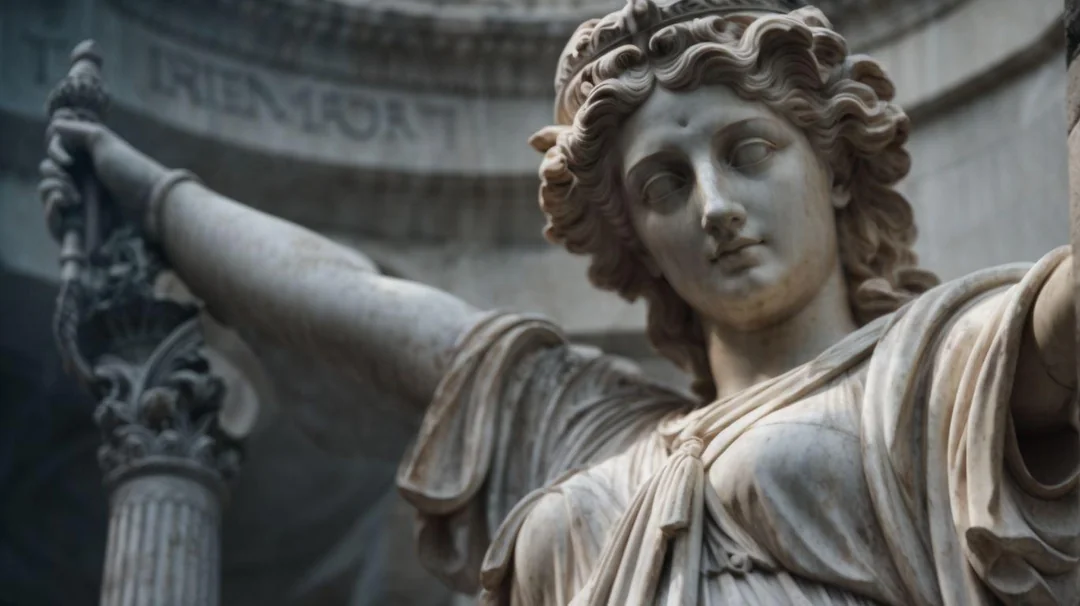
The Goddess Libertas

The Goddess Libertas

Are you free if you need a job? For most people lack of a job means homelessness (indeed many homeless have jobs, that’s how far things have sunk) and you’ll go hungry, and almost certainly wind up dead sooner than otherwise.

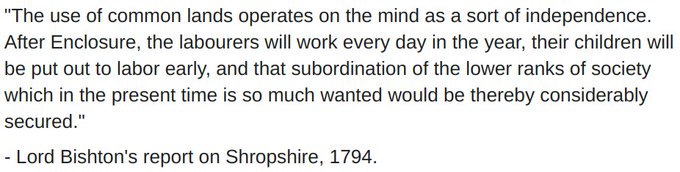
This was well understood by the people who created capitalism. The central requirement of capitalism was enclosure (getting rid of common land which people could use for crops and animals.)

The fact is that peasants worked a lot less than workers. They had more holidays. They had to do some work for their lord, to be sure, but that was far less than the 12 hour days typical of industrialization, or even the eight hour days we now work. And, mostly, they controlled their own time.

The condition of having a job is that you do what your told. It was called wage slavery by Americans being forced off farms by low profits (because of railroad monopolies) for a reason: they had controlled their own time before. To be sure they had to work, even work hard, but they weren’t taking orders from a boss.

The fact that one can, sometimes, choose one’s master (for that’s what a boss is) doesn’t change the fact that they’re a master. In good capitalist times, in my experience before 90 or so, the worst boss behaviour was mitigated by plentiful jobs and easy choice: but today people put out hundreds of applications to get a job. Once you’ve got one, you can’t risk it by telling your master to bugger off if they order you to do things you find distasteful.

Bottom line, modern life is do what you’re told in school for twelve to twenty years, then spend your adult life doing what your told by bosses, then when you’re too old to work maybe you’ll be allowed a few years of declining health without a master. Quite likely you won’t even get that.

This is the modern form of slavery, where we pretend that most people have a choice. Oh a few escape, I have (at the price of poverty), and some others do, but the structure of the economy is that most people, the vast majority, must spend most of their life as wage slaves, doing what their masters tell them to. There is no way around this, it’s what giving control of the means of production (what you need to feed yourself, have shelter and goods) in the hands of a tiny minority of people.

It’s been a while since I discussed fundamental of how societies operate and what to change to make them better. We’re going to come back to freedom, a lot, as part of a series. We’ll also do a series on the fundamentals of societies: what is used to make them stick together, what determines how we run them, and how those are used against us or could be used by us to make a better world for 99% of humanity.

For now it is important simply to understand the chains that bind us, and not to fall for the lie that we are free or that our current civilization is the best that is possible.

Everyone reads these articles for free, but the site and Ian take money to run. If you value the writing here and can, please subscribe or donate.

Powered by WordPress & Theme by Anders Norén